
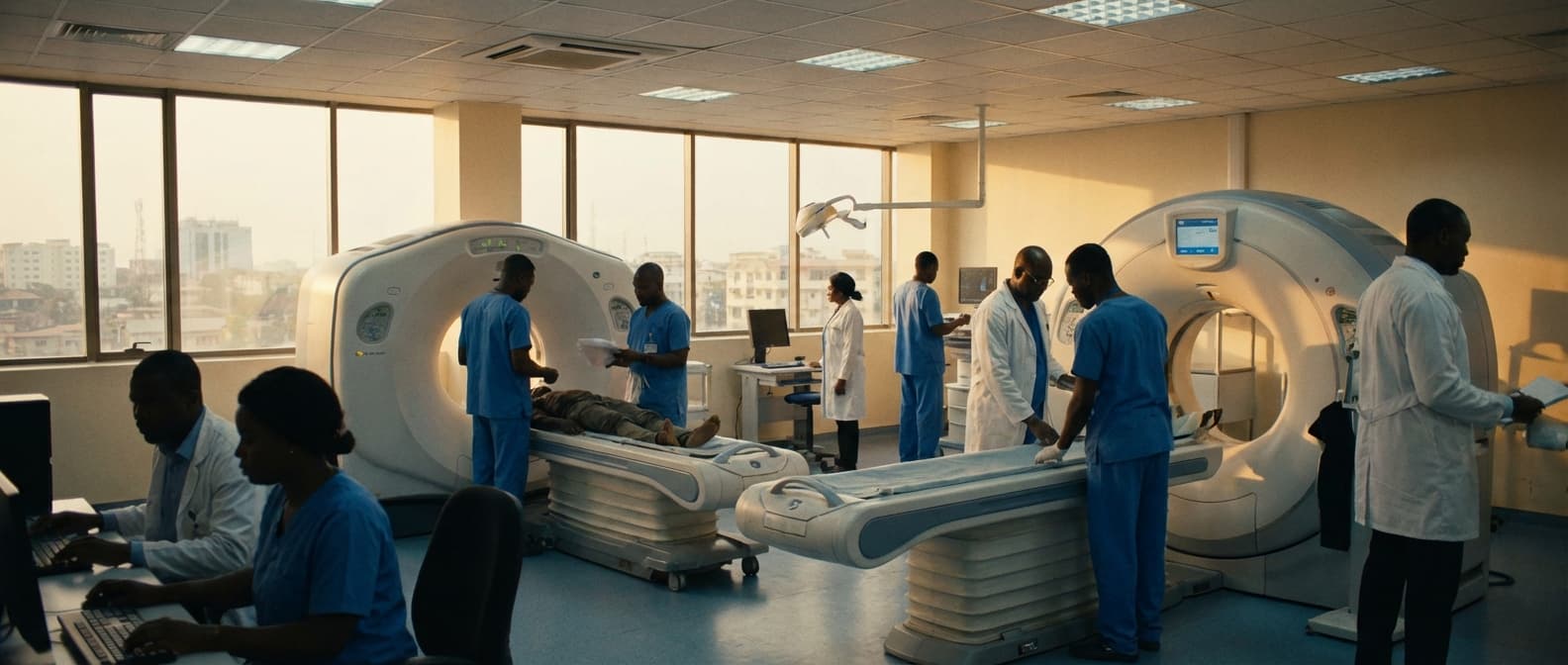
Imaging Acceptance Testing & QA in Ivory Coast
Engineering Excellence & Technical Support
Commissioning and periodic QA for CT/MRI/X‑ray/US/Mammo. High-standard technical execution following OEM protocols and local regulatory frameworks.
Automated Imaging Protocol Verification
Implemented automated scripts for rigorous validation of DICOM imaging protocols against established standards (e.g., DICOM Conformance Statements). This ensures consistent data formatting and metadata integrity, crucial for downstream analysis and PACS integration.
Image Quality & Artifact Detection Suite
Developed and deployed a comprehensive suite of tools for objective image quality assessment, including MTF (Modulation Transfer Function) analysis and automated artifact detection (e.g., motion blur, noise, beam hardening). This proactive approach minimizes the impact of suboptimal image acquisition on diagnostic accuracy.
Secure Data Transfer & Compliance Testing
Established and tested secure data transfer mechanisms (e.g., SFTP, VPN) and performed compliance checks against local and international data privacy regulations (e.g., GDPR principles). This safeguards patient confidentiality and ensures regulatory adherence for imaging data.
What Is Imaging Acceptance Testing & Qa In Ivory Coast?
Imaging Acceptance Testing (IAT) and Quality Assurance (QA) in Côte d'Ivoire refer to the systematic processes employed to verify that medical imaging systems and their associated data acquisition, processing, and storage workflows meet predefined technical specifications, regulatory requirements, and clinical utility standards prior to their deployment, operational integration, and ongoing use within healthcare facilities. This encompasses a rigorous examination of hardware functionality, software performance, image quality, data integrity, interoperability, and adherence to national and international standards for medical devices and healthcare information systems.
| Who Needs Imaging Acceptance Testing & QA in Côte d'Ivoire? | Typical Use Cases & Scenarios | ||||||
|---|---|---|---|---|---|---|---|
| Public and Private Healthcare Facilities: Hospitals, clinics, diagnostic centers, and imaging institutes acquiring new or upgrading existing medical imaging equipment and IT infrastructure. | Procurement of New Imaging Modalities: Ensuring that newly purchased X-ray, CT, MRI, ultrasound, or mammography systems function as specified and produce diagnostically acceptable images. | Implementation of PACS/RIS/EHR Integration: Validating the successful integration of imaging data into broader hospital information systems to streamline clinical workflows. | Software Updates and Patches: Testing the impact of software upgrades on system performance, image quality, and data integrity. | Routine Performance Monitoring: Establishing baseline performance metrics and conducting periodic checks to identify degradation or deviations. | Troubleshooting and Problem Resolution: Investigating and resolving issues related to image quality, system errors, or workflow inefficiencies. | Healthcare IT Vendors and Service Providers: Companies offering imaging solutions, PACS, RIS, or maintenance services to Ivorian healthcare providers. | Regulatory Bodies and Accreditation Agencies: Ensuring that healthcare facilities comply with national imaging standards and quality benchmarks. |
Key Components of Imaging Acceptance Testing & QA in Côte d'Ivoire
- Hardware Verification: Assessing the physical integrity and performance of imaging modalities (e.g., X-ray, CT, MRI, Ultrasound, Mammography), workstations, servers, and network infrastructure.
- Software Validation: Testing the functionality, reliability, and security of imaging software, including Picture Archiving and Communication Systems (PACS), Radiology Information Systems (RIS), vendor-specific applications, and operating systems.
- Image Quality Assessment: Evaluating image parameters such as spatial resolution, contrast, signal-to-noise ratio (SNR), artifact reduction, and dose optimization against established benchmarks and clinical requirements.
- Data Integrity and Workflow Assurance: Verifying the accurate capture, transmission, storage, retrieval, and display of medical images and associated metadata. This includes testing DICOM compliance, data security protocols, and disaster recovery mechanisms.
- Interoperability Testing: Ensuring seamless data exchange and communication between different imaging systems, PACS, RIS, Electronic Health Records (EHRs), and other connected healthcare IT systems.
- Performance Benchmarking: Measuring system response times, throughput, and capacity under simulated clinical loads to ensure efficient operation.
- Regulatory Compliance Verification: Confirming adherence to relevant Ivorian healthcare regulations, standards for medical devices, and data privacy laws.
- User Acceptance Testing (UAT): Involving end-users (radiologists, technologists, IT staff) to validate that the system meets their operational needs and is intuitive to use.
Who Needs Imaging Acceptance Testing & Qa In Ivory Coast?
In Ivory Coast, as healthcare infrastructure evolves and the adoption of advanced medical technologies increases, the need for robust Imaging Acceptance Testing & Quality Assurance (QA) becomes paramount. This ensures that new imaging equipment functions correctly, delivers accurate diagnostic information, and meets international safety and performance standards. Without rigorous testing and QA, the reliability of patient diagnoses can be compromised, leading to potential misinterpretations, unnecessary procedures, and suboptimal patient outcomes. Furthermore, compliance with regulatory requirements and efficient resource utilization are directly impacted by the quality and performance of imaging systems.
| Target Customer/Department | Key Needs Addressed by Imaging Acceptance Testing & QA | Impact of Neglecting Testing & QA |
|---|---|---|
| Radiology Departments | Ensuring image quality, diagnostic accuracy, system reliability, dose optimization, and compliance with protocols. | Misdiagnosis, repeat scans, increased radiation exposure, workflow inefficiencies, system downtime, and patient dissatisfaction. |
| Oncology Centers | Accurate imaging for diagnosis, staging, treatment planning (e.g., radiotherapy), and monitoring treatment response. | Incorrect treatment decisions, suboptimal patient outcomes, delays in treatment, and potential for recurrence due to inaccurate assessments. |
| Cardiology Departments | Precise imaging for diagnosis of cardiac conditions, interventional guidance, and assessment of cardiovascular health. | Misinterpretation of cardiac function, ineffective treatment of heart diseases, and risks to patient safety during procedures. |
| Surgical Departments | Intraoperative imaging for guidance, pre-operative planning, and post-operative assessment. | Surgical errors, increased operative time, complications, and inadequate post-operative care due to unreliable imaging. |
| Infection Control Departments | Ensuring equipment hygiene and preventing cross-contamination through proper functional checks and maintenance protocols. | Spread of hospital-acquired infections, patient safety risks, and potential legal liabilities. |
| IT and Biomedical Engineering Departments | System integration, network compatibility, cybersecurity, performance optimization, and adherence to technical specifications. | Data loss, system failures, interoperability issues, security breaches, and increased maintenance costs. |
Who Needs Imaging Acceptance Testing & QA in Ivory Coast? Target Customers and Departments
- {"title":"Public Hospitals and University Medical Centers","description":"These institutions often operate with the largest patient volumes and are frequently at the forefront of adopting new imaging technologies. They require comprehensive testing to ensure that systems perform reliably for a wide range of diagnostic needs and to maximize their investment in advanced equipment."}
- {"title":"Private Clinics and Diagnostic Centers","description":"As the private healthcare sector in Ivory Coast grows, so does the demand for high-quality diagnostic services. Private entities need to ensure their imaging equipment is accurate and reliable to maintain patient trust and competitive advantage. Acceptance testing is crucial before deployment to avoid operational disruptions and financial losses."}
- {"title":"Government Health Ministries and Regulatory Bodies","description":"These bodies are responsible for setting healthcare standards and ensuring the safety and efficacy of medical devices. They require evidence of proper acceptance testing and ongoing QA to verify that equipment used within the national healthcare system meets established benchmarks and regulatory compliance."}
- {"title":"Medical Equipment Suppliers and Distributors","description":"Companies that import, sell, and install imaging equipment in Ivory Coast have a vested interest in ensuring their products are correctly installed, calibrated, and functioning optimally upon delivery. Acceptance testing serves as a crucial step in their service delivery and client satisfaction."}
- {"title":"Research and Academic Institutions","description":"Institutions involved in medical research or training require highly accurate and consistent imaging data. Acceptance testing and QA are essential to guarantee the integrity of the data collected for research studies and to ensure the reliability of training equipment for future medical professionals."}
Imaging Acceptance Testing & Qa Process In Ivory Coast
This document outlines the Imaging Acceptance Testing and Quality Assurance (QA) process in Ivory Coast, detailing the workflow from initial inquiry to the final execution and sign-off. The objective is to ensure that imaging solutions meet the specified requirements, perform optimally, and are integrated seamlessly into the client's existing infrastructure. This structured approach minimizes risks and guarantees a high-quality outcome.
| Stage | Description | Key Activities | Deliverables | Responsible Parties | Timeline (Indicative) |
|---|---|---|---|---|---|
| Understanding the client's needs and the scope of the imaging solution. | Client meetings, understanding business objectives, functional and non-functional requirements documentation, technical assessment. | Requirements Specification Document, Scope of Work (SOW). | Client, Project Manager, Business Analyst, Technical Architect. | 1-2 Weeks |
| Defining the overall approach to testing, including scope, objectives, resources, and schedule. | Developing the Test Plan, defining test types (functional, performance, security), risk assessment, resource allocation, test schedule. | Test Plan Document, Test Strategy Document. | QA Lead, Project Manager, Technical Architect. | 1 Week |
| Preparing the testing environment to mimic the production setup. | Setting up hardware, software, network configurations, installing imaging software, configuring imaging devices, data preparation. | Configured Test Environment, Test Data. | System Administrator, IT Support, QA Engineer. | 1-2 Weeks |
| Creating detailed step-by-step instructions to verify specific functionalities. | Designing test cases based on requirements, developing test scripts, peer review of test cases, traceability matrix creation. | Test Cases, Test Scripts, Traceability Matrix. | QA Engineer, QA Lead. | 2-3 Weeks |
| Running the designed test cases to identify defects. | Executing functional tests, integration tests, system tests, regression tests, documenting results (pass/fail). | Test Execution Logs, Defect Reports (initial). | QA Engineer, Tester. | 3-5 Weeks (depends on complexity) |
| Tracking, prioritizing, and resolving identified defects. | Logging defects in a defect tracking system, prioritizing defects with client and development team, bug fixing, retesting fixed defects, verifying fixes. | Updated Defect Logs, Re-executed Test Cases. | QA Engineer, Development Team, Project Manager. | Ongoing throughout Test Execution |
| Evaluating the system's responsiveness, stability, and scalability under various loads. | Conducting load testing, stress testing, endurance testing, analyzing performance metrics, recommending optimizations. | Performance Test Reports, Optimization Recommendations. | Performance Test Engineer, QA Lead, Technical Architect. | 1-2 Weeks |
| Allowing end-users to validate the solution against their real-world needs. | End-users execute predefined UAT scenarios, provide feedback, sign-off on specific functionalities or the entire system. | UAT Feedback Forms, UAT Sign-off Documents. | End-Users, Client Stakeholders, QA Lead. | 1-2 Weeks |
| Formal acceptance of the solution and handover of all project documentation. | Reviewing all test results and defect resolutions, final project documentation compilation, formal sign-off by the client, post-implementation review. | Final Test Summary Report, Project Documentation, Formal Sign-off Certificate. | Client, Project Manager, QA Lead. | 1 Week |
Key Stages of the Imaging Acceptance Testing & QA Process
- Initial Inquiry & Requirements Gathering
- Test Planning & Strategy Development
- Environment Setup & Configuration
- Test Case Design & Documentation
- Test Execution
- Defect Management & Retesting
- Performance Testing & Optimization
- User Acceptance Testing (UAT)
- Final Sign-off & Documentation
Imaging Acceptance Testing & Qa Cost In Ivory Coast
Imaging Acceptance Testing & Quality Assurance (QA) services are crucial for ensuring that medical imaging equipment functions correctly and produces diagnostic-quality images in Ivory Coast. The cost of these services can vary significantly based on several factors, including the type of equipment, the complexity of the tests, the vendor providing the services, and the geographical location within Ivory Coast. These services are essential for both new installations and routine maintenance to maintain patient safety and diagnostic accuracy.
| Service Type | Estimated Cost Range (XOF) | Notes |
|---|---|---|
| Basic Acceptance Testing (per modality) | 150,000 - 400,000 | Covers fundamental functionality checks, basic image quality tests for common modalities like X-ray or Ultrasound. |
| Comprehensive Acceptance Testing (per modality) | 300,000 - 800,000+ | Includes advanced image quality assessments, performance benchmarks, full system checks, and integration verification for complex modalities like CT or MRI. |
| Routine QA Testing (per modality, per session) | 100,000 - 300,000 | Scheduled periodic checks to ensure ongoing performance and image quality, typically performed quarterly or semi-annually. |
| Specialized Modality Testing (e.g., Mammography, Interventional Radiology) | 200,000 - 600,000+ | These modalities have specific regulatory and diagnostic requirements, demanding more specialized and in-depth testing. |
| PACS/RIS Integration Testing | 100,000 - 300,000 | Testing the seamless flow of images and data between the imaging modality and the Picture Archiving and Communication System (PACS) or Radiology Information System (RIS). |
| Emergency/Rush Service | Additional 25% - 50% | Charges applied for immediate or urgent testing outside of standard scheduled appointments. |
Key Pricing Factors for Imaging Acceptance Testing & QA in Ivory Coast
- Type of Imaging Modality: Different imaging machines (e.g., X-ray, CT scanners, MRI, Ultrasound, Mammography, Digital Fluoroscopy) have varying levels of complexity and require specialized testing protocols, influencing cost.
- Scope of Testing: The extent of the acceptance testing is a major driver. This can range from basic functionality checks to comprehensive image quality assessments, performance evaluations, and integration testing with PACS/RIS systems.
- New Installation vs. Routine QA: Acceptance testing for new equipment is typically more involved and costly than routine QA checks performed periodically on existing equipment.
- Vendor Reputation and Expertise: Established and reputable service providers with specialized knowledge and certifications may command higher fees.
- Geographical Location: While the primary healthcare hubs are in Abidjan and other major cities, travel and logistical costs for technicians to reach more remote areas can increase pricing.
- Service Level Agreements (SLAs): The duration and terms of an SLA (e.g., response times, availability of spare parts) will impact the overall cost of ongoing QA.
- Software and Hardware Complexity: Advanced features, newer technologies, and intricate software integrations can necessitate more time and expertise for testing.
- Number of Tests Performed: A higher number of individual tests or more rigorous testing protocols will naturally increase the cost.
- Reporting Requirements: The level of detail and formality required in the test reports can also influence the pricing.
- Urgency: Rush services or expedited testing may incur additional charges.
Affordable Imaging Acceptance Testing & Qa Options: Value Bundles And Cost-saving Strategies
Ensuring the quality and reliability of medical imaging systems through Acceptance Testing (AT) and Quality Assurance (QA) is paramount for patient safety and diagnostic accuracy. However, the associated costs can be a significant concern for healthcare providers. This guide explores affordable imaging AT & QA options, highlighting the value of bundled services and effective cost-saving strategies.
| Service Offering | Description | Value Proposition for Affordability |
|---|---|---|
| Core AT/QA Package | Comprehensive testing of fundamental imaging system functions, including image quality, safety, and basic performance metrics. | Streamlined, standardized protocols reduce individual test setup time and increase efficiency for the provider. |
| Bundled Equipment AT | Includes acceptance testing for multiple imaging modalities (e.g., X-ray, CT, MRI) acquired together. | Volume discounts and consolidated scheduling with a single vendor significantly reduce overall testing costs. |
| Routine QA Monitoring (Remote) | Scheduled, remote checks of key image quality and system performance parameters, often utilizing built-in system tools. | Minimizes on-site technician time and travel expenses, offering frequent oversight at a lower per-visit cost. |
| Extended AT/QA Service Plans | Longer-term contracts that include initial acceptance testing and ongoing quality assurance for a set period. | Predictable budgeting, potential for tiered pricing based on service levels, and proactive issue identification can prevent costly emergency repairs. |
| Training and Empowerment Programs | Training in-house biomedical staff on basic QA procedures and system checks. | Reduces reliance on external services for routine tasks, empowering staff and lowering long-term outsourcing costs. |
Why Affordable Imaging AT & QA Matters
- Patient Safety: Detecting issues early prevents misdiagnosis and potential harm.
- Diagnostic Accuracy: Reliable imaging leads to confident clinical decisions.
- Regulatory Compliance: Meeting standards set by governing bodies.
- Operational Efficiency: Minimizing downtime and ensuring systems perform optimally.
- Cost Containment: Managing budgets effectively without compromising quality.
Verified Providers In Ivory Coast
In Ivory Coast, discerning patients seek healthcare providers who not only offer exceptional medical expertise but also possess verified credentials, ensuring a commitment to quality, safety, and ethical practice. Franance Health stands out in this regard, offering a network of accredited and rigorously vetted medical professionals. Their rigorous credentialing process goes beyond standard requirements, examining a provider's educational background, licensure, specialized training, professional experience, and adherence to ethical guidelines. This meticulous approach guarantees that patients engaging with Franance Health are accessing care from the most qualified and trustworthy practitioners in the country. Choosing a Franance Health verified provider means prioritizing peace of mind and the assurance of receiving care that meets the highest international standards.
| Franance Health Verification Aspect | What it Ensures for Patients |
|---|---|
| Educational Background & Licensure Verification | Confirms formal medical training and legal authorization to practice. |
| Specialized Training & Certifications | Guarantees expertise in specific medical fields and advanced procedures. |
| Professional Experience Review | Assesses practical application of knowledge and a history of successful patient care. |
| Ethical Conduct & Professional Standards | Upholds patient trust and ensures respectful, responsible medical treatment. |
| Continuous Professional Development Monitoring | Ensures providers remain up-to-date with the latest medical advancements and techniques. |
| Patient Feedback & Quality Assurance | Incorporates patient experiences to maintain high standards of care and service. |
Why Franance Health Verified Providers are the Best Choice:
- Unwavering commitment to patient safety through stringent vetting.
- Access to highly qualified specialists with proven expertise.
- Ensured adherence to ethical medical practices and patient rights.
- Peace of mind knowing you are receiving care from accredited professionals.
- A network designed for transparency and trust in healthcare.
- Continuously updated credentials to reflect current best practices.
Scope Of Work For Imaging Acceptance Testing & Qa
This Scope of Work (SOW) outlines the requirements for comprehensive Imaging Acceptance Testing (AT) and Quality Assurance (QA) to ensure the delivered imaging system meets all functional, performance, and technical specifications. The objective is to verify the system's ability to capture, process, store, and retrieve images accurately, reliably, and efficiently according to defined standards.
| Phase | Activity | Description | Key Deliverables |
|---|---|---|---|
| Phase 1: Planning & Preparation | Test Plan Development | Define test scope, objectives, strategy, resources, and schedule. Identify test environments and data requirements. | Approved Test Plan document. |
| Phase 1: Planning & Preparation | Test Case Design | Develop detailed test cases covering functional, performance, usability, security, and integration aspects. Define expected results and pass/fail criteria. | Comprehensive Test Case Suite. |
| Phase 2: Functional Testing | Image Acquisition Testing | Verify successful capture of images across all supported modalities and configurations. Test image parameter settings and controls. | Test results for image acquisition functionality. |
| Phase 2: Functional Testing | Image Processing & Manipulation | Validate image enhancement, filtering, segmentation, and other processing functions. Ensure accurate application of algorithms. | Test results for image processing features. |
| Phase 2: Functional Testing | Image Storage & Retrieval | Test archiving, indexing, searching, and retrieval of images. Verify data integrity during storage and retrieval. | Test results for storage and retrieval operations. |
| Phase 2: Functional Testing | User Interface (UI) & User Experience (UX) Testing | Evaluate the intuitiveness, ease of use, and consistency of the system's interface. Test navigation, error handling, and accessibility. | Usability test findings and recommendations. |
| Phase 3: Performance Testing | Load & Stress Testing | Assess system performance under expected and peak loads for image acquisition, processing, and retrieval. | Performance benchmark reports, identification of bottlenecks. |
| Phase 3: Performance Testing | Latency Testing | Measure the time taken for critical operations, such as image display after retrieval or completion of processing. | Latency measurements for key system operations. |
| Phase 4: Quality Assurance (QA) & Validation | Image Quality Assessment | Evaluate image quality against predefined metrics (e.g., SNR, CNR, resolution, artifact reduction). Subjective assessment by domain experts may be included. | Image quality evaluation report, pass/fail for quality standards. |
| Phase 4: Quality Assurance (QA) & Validation | Data Integrity & Security Testing | Verify data consistency, accuracy, and protection against unauthorized access, modification, or deletion. Test compliance with data privacy regulations (e.g., HIPAA). | Security test results, data integrity verification report. |
| Phase 4: Quality Assurance (QA) & Validation | Interoperability Testing (If applicable) | Test data exchange with connected systems (e.g., HL7, DICOM) to ensure seamless workflow integration. | Interoperability test results, confirmation of data exchange. |
| Phase 5: Reporting & Sign-off | Defect Tracking & Management | Log, prioritize, and track all identified defects. Retest fixes to ensure resolution. | Defect log and status reports. |
| Phase 5: Reporting & Sign-off | Test Summary Report | Provide a comprehensive overview of all testing activities, results, identified defects, and recommendations. | Final Test Summary Report. |
| Phase 5: Reporting & Sign-off | Acceptance Sign-off | Formal documentation indicating the system has met the defined acceptance criteria and is ready for deployment. | Signed Acceptance Document. |
Key Objectives and Deliverables
- Validate System Functionality: Ensure all imaging features, user interfaces, and workflows operate as designed and documented.
- Assess Performance: Measure key performance indicators (KPIs) such as image acquisition time, processing speed, and retrieval latency.
- Verify Image Quality: Confirm that captured images meet defined resolution, clarity, contrast, and accuracy standards.
- Ensure Data Integrity and Security: Test the system's ability to maintain image data integrity, prevent unauthorized access, and comply with relevant security regulations.
- Confirm Interoperability: (If applicable) Validate seamless integration with other systems (e.g., PACS, RIS, EMR) through defined interfaces and data exchange protocols.
- Technical Deliverables: The successful completion of all testing phases, documented test results, and sign-off reports.
- Standard Specifications: Adherence to industry-standard imaging protocols and quality metrics relevant to the specific imaging modality and application.
Service Level Agreement For Imaging Acceptance Testing & Qa
This Service Level Agreement (SLA) outlines the performance expectations and guarantees for Imaging Acceptance Testing (IAT) and Quality Assurance (QA) services. It defines the agreed-upon response times for critical issues and the expected uptime for the testing environments and related tools.
| Service Component | Uptime Guarantee | Response Time (Critical Issue) | Response Time (High Priority Issue) | Response Time (Medium Priority Issue) |
|---|---|---|---|---|
| IAT/QA Testing Environments | 99.5% (excluding scheduled maintenance) | 1 Hour | 4 Business Hours | 8 Business Hours |
| Defect Tracking System | 99.9% | 30 Minutes | 2 Business Hours | 4 Business Hours |
| Test Automation Framework/Tools | 99.0% | 2 Hours | 6 Business Hours | 12 Business Hours |
| Support Personnel Availability (during agreed business hours) | N/A | 1 Hour | 4 Business Hours | 8 Business Hours |
Scope of Services
- Imaging Acceptance Testing (IAT): Includes the execution of predefined test cases to validate the functionality, performance, and usability of imaging software or systems.
- Quality Assurance (QA): Encompasses a broader range of activities, including test planning, test case design, defect tracking, regression testing, and performance analysis of imaging solutions.
Frequently Asked Questions

Ready when you are
Let's scope your Imaging Acceptance Testing & QA in Ivory Coast project in Ivory Coast.

Scaling healthcare logistics and technical systems across the entire continent.