
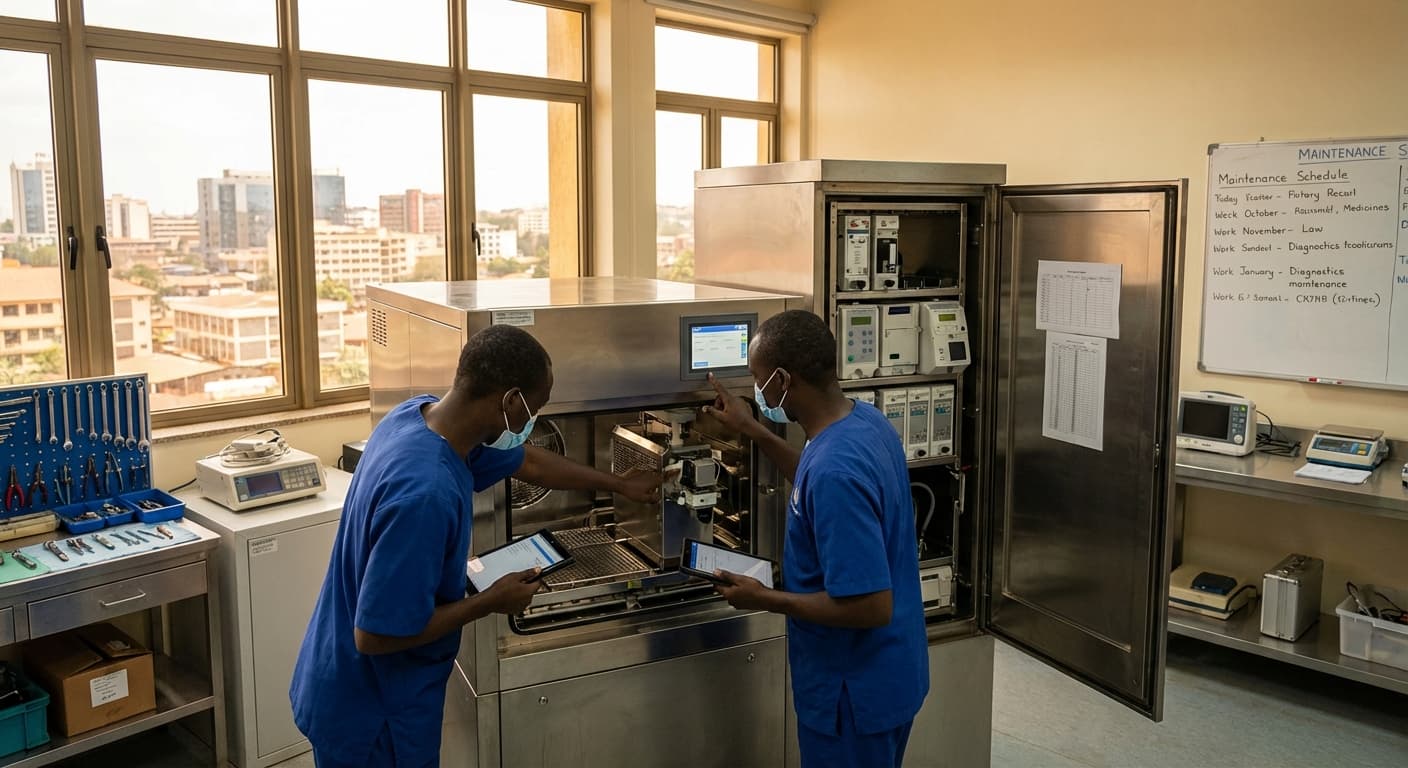
Total Cost of Ownership (TCO) & Lifecycle Budgeting Service in Ivory Coast
Engineering Excellence & Technical Support
Total Cost of Ownership (TCO) & Lifecycle Budgeting Service High-standard technical execution following OEM protocols and local regulatory frameworks.
Predictive Cost Modeling & Optimization
Leverage advanced analytics and granular asset data specific to Ivory Coast's industrial landscape to forecast long-term operational expenses. We identify key cost drivers and proactively implement strategies to minimize waste, optimize resource allocation (energy, water, consumables), and reduce maintenance overhead across the asset lifecycle.
Lifecycle Budgeting & Capital Allocation
Develop comprehensive lifecycle budgets that account for all direct and indirect costs, from initial acquisition and installation to ongoing operations, maintenance, and eventual decommissioning or replacement. Our service provides robust financial modeling to support informed capital expenditure decisions and ensure predictable financial performance within the Ivorian economic context.
Risk Mitigation & Financial Resilience
Integrate geopolitical and economic risk factors relevant to Ivory Coast into TCO analyses. We identify potential financial vulnerabilities (e.g., currency fluctuations, supply chain disruptions, regulatory changes) and develop mitigation strategies, including contingency planning and diversified sourcing recommendations, to build financial resilience and protect your long-term investment.
What Is Total Cost Of Ownership (Tco) & Lifecycle Budgeting Service In Ivory Coast?
Total Cost of Ownership (TCO) and Lifecycle Budgeting (LCB) services in Ivory Coast represent a comprehensive financial management methodology focused on quantifying all direct and indirect costs associated with an asset, system, or project throughout its entire operational lifespan. This extends beyond the initial acquisition price to encompass all phases: acquisition, operation, maintenance, upgrade, and disposal. The objective is to provide stakeholders with a holistic financial perspective, enabling informed decision-making by highlighting the true economic implications of various investment alternatives and operational strategies. These services are crucial for optimizing resource allocation, mitigating long-term financial risks, and achieving sustainable operational efficiency within the Ivorian economic and regulatory context.
| Who Needs TCO & LCB Services? | Typical Use Cases in Ivory Coast |
|---|---|
| Government and Public Sector Agencies (e.g., ministries, state-owned enterprises) | Infrastructure Development Projects (roads, utilities, public transport): Assessing long-term costs of construction, maintenance, and operational efficiency. Public Procurement: Evaluating bids for large-scale asset acquisitions to determine the most economically advantageous option over the asset's life. Asset Management for Public Utilities: Optimizing investment in water, electricity, and telecommunications networks. |
| Large Industrial and Manufacturing Companies | Capital Expenditure Planning: Deciding on the optimal type and scale of machinery, with consideration for energy consumption, maintenance, and eventual decommissioning. Supply Chain Optimization: Evaluating the total cost of logistics, warehousing, and inventory management across various supply chain configurations. Technology Adoption: Assessing the TCO of new enterprise resource planning (ERP) systems or automation solutions. |
| Financial Institutions and Investors | Project Finance: Conducting due diligence on projects to assess long-term financial viability and identify potential cost overruns. Investment Portfolio Management: Analyzing the lifecycle costs of assets within an investment portfolio to optimize returns and manage risk. Mergers and Acquisitions: Evaluating the combined lifecycle costs of merged entities. |
| Real Estate Developers and Facility Managers | Building Lifecycle Costing: Analyzing the TCO of commercial and residential properties, including construction, energy, maintenance, and refurbishment costs over decades. Sustainable Building Design: Quantifying the long-term economic benefits of green building technologies and materials. Property Portfolio Management: Optimizing operational expenses and capital expenditures across a portfolio of properties. |
| International Development Organizations and NGOs | Project Sustainability Assessment: Ensuring that development projects are financially viable and manageable long-term in the Ivorian context. Resource Allocation for Aid Programs: Maximizing the impact of limited resources by understanding the full lifecycle costs of interventions. |
Key Components of TCO & Lifecycle Budgeting Services:
- Cost Element Identification and Categorization
- Data Collection and Validation (including market intelligence specific to Ivory Coast)
- Development of Cost Models and Forecasting Algorithms
- Risk Assessment and Contingency Planning
- Scenario Analysis and Sensitivity Testing
- Benchmarking against industry best practices (local and international)
- Reporting and Visualization of TCO and LCB projections
- Strategic Recommendations for cost optimization and value maximization
- Integration with existing financial and procurement systems
- Post-implementation performance tracking and re-forecasting
Who Needs Total Cost Of Ownership (Tco) & Lifecycle Budgeting Service In Ivory Coast?
In Ivory Coast, businesses and organizations across various sectors are increasingly recognizing the strategic importance of managing their assets and projects not just on initial acquisition cost, but over their entire lifespan. This is where Total Cost of Ownership (TCO) and Lifecycle Budgeting (LCB) services become invaluable. These services provide a comprehensive financial framework to understand, predict, and control all expenses associated with an asset or project from its inception through disposal. This proactive approach leads to better decision-making, optimized resource allocation, and significant long-term cost savings, ultimately enhancing profitability and sustainability for Ivorian enterprises.
| Target Customer Segment | Key Departments Benefiting from TCO/LCB Services |
|---|---|
| Industrial Manufacturers | Operations, Maintenance, Procurement, Finance, Engineering, Asset Management |
| Agribusinesses | Farm Management, Equipment Maintenance, Procurement, Finance, Operations |
| Energy & Utilities | Asset Management, Operations, Maintenance, Planning & Development, Finance, Procurement, Engineering |
| Telecommunications | Network Operations, Infrastructure Planning, Procurement, Finance, IT Department, Maintenance |
| Construction & Infrastructure | Project Management, Procurement, Finance, Operations, Equipment Management, Planning & Design |
| Mining & Extraction | Operations, Maintenance, Procurement, Finance, Engineering, Health & Safety, Environmental Management |
| Transportation & Logistics | Fleet Management, Operations, Maintenance, Procurement, Finance, Supply Chain Management |
| Government Agencies | Public Works, Procurement, Finance, IT Department, Infrastructure Planning, Asset Management, Sector-specific departments (e.g., Health, Education) |
| Financial Institutions | IT Department, Facilities Management, Procurement, Finance, Risk Management |
| Healthcare Providers | Biomedical Engineering, Facilities Management, Procurement, Finance, IT Department, Operations |
| Educational Institutions | Facilities Management, IT Department, Procurement, Finance, Estates Management |
| Real Estate Developers & Property Management | Asset Management, Facilities Management, Procurement, Finance, Operations, Development Planning |
Who Needs TCO & Lifecycle Budgeting Services in Ivory Coast? Target Customers & Departments
- Large Industrial Manufacturers
- Agribusinesses with significant machinery investments
- Energy and Utilities Companies (oil, gas, electricity, water)
- Telecommunications Providers
- Construction and Infrastructure Development Firms
- Mining and Extraction Operations
- Transportation and Logistics Companies
- Government Agencies and Public Sector Institutions
- Financial Institutions with extensive IT infrastructure
- Healthcare Providers with medical equipment investments
- Educational Institutions with building and IT lifecycle needs
- Real Estate Developers and Property Management Companies
Total Cost Of Ownership (Tco) & Lifecycle Budgeting Service Process In Ivory Coast
This document outlines the typical workflow for a Total Cost of Ownership (TCO) and Lifecycle Budgeting Service in Ivory Coast, from the initial inquiry by a client to the final execution of the services. This process is designed to be comprehensive, transparent, and tailored to the specific needs of businesses operating in the Ivorian economic landscape.
| Phase | Description | Key Activities | Deliverables | Estimated Timeline (Typical) |
|---|---|---|---|---|
| The client expresses interest in TCO and Lifecycle Budgeting services and seeks to understand how these can benefit their organization in the Ivorian context. | Initial contact via phone, email, or website. Discussion of client's business, pain points, and objectives related to asset management and financial planning. | Understanding of client's general needs. Initial rapport building. | 1-3 business days |
| A detailed understanding of the client's specific requirements, the assets/projects in scope, and the desired outcomes of the TCO and lifecycle budgeting exercise. | In-depth meetings with key stakeholders (finance, operations, procurement, IT). Identification of specific assets, systems, or projects. Defining the scope, boundaries, and key performance indicators (KPIs). | Detailed Needs Assessment Report. Clearly defined project scope document. | 3-7 business days |
| Based on the needs assessment, a tailored service proposal is created, outlining the methodology, deliverables, timeline, and associated costs. | Development of a comprehensive service proposal. Discussion and refinement of the proposal with the client. Contract negotiation and signing. | Formal Service Proposal. Signed Service Agreement/Contract. | 5-10 business days |
| Gathering all relevant financial, operational, and technical data required to build the TCO and lifecycle budget models. | Working with client teams to collect historical costs (acquisition, operating, maintenance, disposal), projected costs, utilization data, performance metrics, and relevant market information (e.g., inflation rates in Ivory Coast, currency fluctuations). Data validation and cleaning. | Organized and validated dataset. Preliminary cost breakdown analysis. | 1-4 weeks (depending on data complexity and client responsiveness) |
| Constructing a robust TCO model that accurately reflects the full cost of owning and operating an asset or system over its entire lifecycle. | Defining TCO components (direct, indirect, tangible, intangible costs). Applying appropriate cost drivers and discount rates. Incorporating Ivorian economic factors (taxes, duties, import costs, local labor rates). | Developed TCO model (spreadsheet or specialized software). Initial TCO calculations for in-scope items. | 1-3 weeks |
| Extending the TCO analysis to create a comprehensive lifecycle budget, forecasting future costs and capital expenditure requirements. | Forecasting operating expenses, maintenance schedules, upgrade costs, and eventual disposal costs. Developing phased budgets aligned with the asset's lifecycle. Scenario planning and sensitivity analysis. | Lifecycle Budget Report. Future expenditure forecasts. Risk assessment matrix. | 1-3 weeks |
| Summarizing the findings, presenting the TCO and lifecycle budget to the client, and providing actionable insights and recommendations. | Creation of a detailed TCO and Lifecycle Budgeting Report. Development of presentation materials. Presenting findings to client stakeholders, explaining methodologies and recommendations. Q&A session. | Final TCO and Lifecycle Budgeting Report. Executive Summary Presentation. Key insights and recommendations. | 1-2 weeks |
| Assisting the client in integrating the TCO and lifecycle budgeting insights into their decision-making processes and operational plans. | Guidance on implementing recommendations. Support in revising procurement strategies, maintenance plans, and capital investment decisions. Setting up monitoring mechanisms to track actual costs against budgeted costs. | Implementation roadmap. Revised operational plans. Monitoring framework. Regular progress updates. | Ongoing (as per agreement, typically 1-6 months) |
| Evaluating the effectiveness of the implemented TCO and lifecycle budgeting practices and providing ongoing support. | Reviewing the accuracy of forecasts and the impact of recommendations. Identifying areas for continuous improvement. Offering further consulting or updates as needed. | Post-Implementation Review Report. Recommendations for future improvements. Ongoing support services. | As needed |
Service Workflow Phases
- Inquiry & Initial Consultation
- Needs Assessment & Scoping
- Proposal Development & Agreement
- Data Collection & Analysis
- TCO Model Development
- Lifecycle Budgeting & Forecasting
- Reporting & Presentation
- Implementation Support & Monitoring
- Post-Execution Review & Follow-up
Total Cost Of Ownership (Tco) & Lifecycle Budgeting Service Cost In Ivory Coast
In Ivory Coast, understanding the Total Cost of Ownership (TCO) and Lifecycle Budgeting for services is crucial for businesses to make informed financial decisions. TCO encompasses all direct and indirect costs associated with a service over its entire lifespan, from acquisition to disposal. Lifecycle budgeting extends this concept to project and asset management, ensuring sufficient funds are allocated for each phase.
| Service Type | Estimated Cost Range (XOF) | Typical Duration |
|---|---|---|
| Basic TCO Analysis (Single Service/Asset, Shorter Lifecycle) | 300,000 - 800,000 | 1-3 weeks |
| Comprehensive TCO Analysis (Multiple Services/Assets, Medium Lifecycle) | 800,000 - 2,500,000 | 3-8 weeks |
| Full Lifecycle Budgeting & TCO (Complex Projects/Infrastructure, Long Lifecycle) | 2,500,000 - 7,000,000+ | 2-6 months+ |
| Ongoing TCO Monitoring & Optimization Services (Annual Contract) | 1,000,000 - 4,000,000+ per year | Ongoing |
Key Pricing Factors for TCO & Lifecycle Budgeting Services in Ivory Coast
- Scope and Complexity of Service: The breadth of services to be analyzed (e.g., IT infrastructure, fleet management, operational processes) and the intricacy of the underlying systems will significantly impact cost.
- Duration of Lifecycle: Longer lifecycle assessments (e.g., 5, 10, or 15 years) require more detailed data collection and forecasting, increasing service fees.
- Data Availability and Quality: The ease of access to historical data, accuracy of existing records, and the need for data cleansing or validation will affect the time and resources required.
- Consultant Expertise and Reputation: The experience, specialized knowledge, and established reputation of the consulting firm or individual providing the TCO and lifecycle budgeting services will influence their pricing.
- Methodology and Tools Used: The sophistication of the analytical tools and methodologies employed (e.g., proprietary software, advanced modeling techniques) can impact cost.
- Geographic Reach and On-site Requirements: If the service requires extensive on-site work across multiple locations within Ivory Coast or internationally, travel and accommodation expenses will be factored in.
- Reporting and Deliverables: The level of detail in the final reports, the number of presentations, and the customization of deliverables will influence the overall cost.
- Market Demand and Competition: The general demand for these specialized services in the Ivorian market and the competitive landscape among service providers can also affect pricing.
Affordable Total Cost Of Ownership (Tco) & Lifecycle Budgeting Service Options
Our Affordable Total Cost of Ownership (TCO) & Lifecycle Budgeting service is designed to empower your organization with a clear understanding of all direct and indirect costs associated with an asset or system throughout its entire lifespan. By focusing on comprehensive budgeting and strategic cost reduction, we help you make informed decisions, optimize resource allocation, and achieve significant long-term savings. We offer flexible value bundles and implement proven cost-saving strategies to ensure your investments deliver maximum return and minimal unforeseen expenditure.
| Value Bundle Name | Included Services | Target Audience | Typical Cost Savings Potential |
|---|---|---|---|
| Foundation TCO Analysis | Initial TCO assessment, basic lifecycle cost identification, one-time report generation. | Small businesses, individual projects, initial asset evaluation. | 5-10% on initial purchase decisions, identifying obvious cost drivers. |
| Standard Lifecycle Budgeting | In-depth TCO analysis, multi-year lifecycle budgeting, operational cost optimization recommendations, basic risk assessment. | Medium-sized businesses, departmental budgeting, ongoing asset management. | 10-15% on operational expenses, improved budget accuracy, early identification of maintenance needs. |
| Comprehensive TCO & Strategic Budgeting | Full TCO and lifecycle cost modeling, advanced operational efficiency strategies, upgrade/replacement planning, detailed risk mitigation plans, ongoing budget review, stakeholder training. | Large enterprises, complex IT infrastructure, critical asset management, strategic long-term planning. | 15-25%+ on total lifecycle costs, significant reduction in unexpected expenditures, optimized asset utilization, enhanced ROI. |
| Custom TCO Solutions | Tailored TCO and lifecycle budgeting services to meet unique organizational needs, specific industry requirements, and complex asset portfolios. | Organizations with highly specialized needs, unique asset classes, or specific regulatory compliance requirements. | Variable, designed to maximize savings specific to the client's context. |
Key Benefits of Our TCO & Lifecycle Budgeting Service
- Comprehensive Cost Visibility: Uncover all hidden costs beyond the initial purchase price, including operational, maintenance, upgrade, and disposal expenses.
- Improved Financial Planning: Develop accurate and reliable budgets for the entire lifecycle of your assets, reducing financial surprises.
- Strategic Decision-Making: Make data-driven choices regarding procurement, upgrades, and replacements based on a holistic understanding of costs.
- Enhanced Asset Performance: Identify opportunities to optimize asset utilization and performance, leading to greater efficiency.
- Risk Mitigation: Proactively identify and address potential cost overruns and operational risks.
- Maximized ROI: Ensure your investments deliver the highest possible return over their entire lifecycle.
- Sustainability Focus: Integrate environmental and social costs into your budgeting for responsible and sustainable operations.
Verified Providers In Ivory Coast
In the evolving healthcare landscape of Ivory Coast, identifying reliable and competent medical providers is paramount for individuals and organizations seeking quality care. "Verified Providers in Ivory Coast" highlights the critical role of established credentials and certifications in ensuring patient safety and treatment efficacy. This focus is particularly important when considering entities like Franance Health, whose commitment to stringent credentialing processes sets them apart. Understanding these credentials is key to making informed decisions about healthcare partnerships and services.
| Credential Type | Description | Significance for Patients |
|---|---|---|
| National Medical License | Official authorization from the Ivorian Ministry of Health to practice medicine within the country. | Guarantees that providers have met the minimum educational and professional requirements to practice safely. |
| Specialty Board Certification | Recognition by a recognized medical board for advanced training and expertise in a specific medical field. | Indicates a higher level of skill and knowledge in a particular area, leading to more accurate diagnoses and effective treatments. |
| Hospital/Clinic Accreditation | Certification from an independent body recognizing that a healthcare facility meets strict quality, safety, and operational standards. | Ensures that facilities are well-equipped, safe, and provide a high standard of care and patient management. |
| International Affiliations/Partnerships | Collaboration with renowned international healthcare organizations or institutions. | Suggests access to best practices, advanced technologies, and global standards of care. |
| Continuing Medical Education (CME) Records | Documentation of ongoing professional development and learning by healthcare professionals. | Confirms that providers are up-to-date with the latest medical knowledge and techniques. |
Why Franance Health Represents the Best Choice:
- Rigorous Accreditation Standards: Franance Health adheres to internationally recognized accreditation standards, ensuring their facilities and medical professionals meet the highest benchmarks for quality and safety.
- Highly Qualified Medical Professionals: All healthcare providers affiliated with Franance Health undergo a thorough vetting process, confirming their qualifications, experience, and licensing.
- Commitment to Continuous Improvement: Franance Health actively engages in ongoing training and professional development for its staff, staying at the forefront of medical advancements.
- Patient-Centric Approach: The organization prioritizes patient well-being and satisfaction, fostering trust through transparent communication and personalized care.
- Robust Regulatory Compliance: Franance Health operates in strict adherence to all relevant healthcare regulations and ethical guidelines in Ivory Coast.
Scope Of Work For Total Cost Of Ownership (Tco) & Lifecycle Budgeting Service
This Scope of Work (SOW) outlines the services to be provided for a Total Cost of Ownership (TCO) and Lifecycle Budgeting assessment. The objective is to establish a comprehensive understanding of all costs associated with an asset, system, or project from its inception through its eventual disposal. This includes identifying, quantifying, and analyzing direct and indirect costs over the entire lifecycle, enabling informed decision-making, resource allocation, and strategic planning.
| Phase | Description | Key Activities | Technical Deliverables | Standard Specifications |
|---|---|---|---|---|
| Defining the scope, objectives, and methodology of the TCO/Lifecycle Budgeting engagement. | Kick-off meeting, stakeholder identification, scope definition workshops, data requirements gathering, development of project plan. | Project Charter, Stakeholder Register, Data Requirements Document, Project Management Plan. | Alignment with organizational strategic goals, clear definition of the lifecycle period (e.g., 5, 10, 20 years), identification of key cost categories (e.g., acquisition, operation, maintenance, disposal). Use of standard TCO frameworks (e.g., IT TCO, facilities TCO). |
| Gathering all relevant historical, current, and projected cost data. | Identifying data sources (financial systems, operational logs, vendor contracts, expert interviews), data extraction, data cleansing, data validation, and verification. | Comprehensive Cost Database, Data Validation Report, List of Assumptions and Constraints. | Data collected in a structured format (e.g., spreadsheets, databases). Data validation against multiple sources to ensure accuracy and completeness. Documented assumptions for data gaps. |
| Structuring and building the TCO model based on collected data and defined methodologies. | Defining cost categories and sub-categories, establishing cost drivers, developing formulas and algorithms for cost projection, scenario analysis framework development. | Developed TCO Model (e.g., spreadsheet, specialized software), Detailed Model Documentation. | Model should be transparent, auditable, and adaptable. Use of industry-standard costing principles. Clearly defined cost categories aligned with the asset/system's lifecycle stages. |
| Applying the TCO model to forecast costs over the defined lifecycle and creating detailed budget plans. | Projecting annual and multi-year costs, identifying capital expenditure (CAPEX) and operational expenditure (OPEX) requirements, developing phased budget plans, risk assessment and mitigation planning for cost overruns. | Lifecycle Cost Forecast Report, Phased Budget Proposals, Risk Assessment Report. | Forecasts should be presented with clear confidence intervals. Budgets should align with organizational financial reporting cycles. Integration with existing budgeting tools where possible. |
| Analyzing the TCO and lifecycle budget data to derive insights and actionable recommendations. | Performing sensitivity analysis, conducting 'what-if' scenarios, identifying cost optimization opportunities, benchmarking against industry standards, preparing executive summary and detailed reports. | TCO Analysis Report, Lifecycle Budgeting Recommendations, Executive Summary, Presentation Deck. | Reports should be clear, concise, and actionable. Recommendations should be prioritized based on impact and feasibility. Visualizations (charts, graphs) to illustrate key findings. |
| Assisting in the implementation of recommendations and establishing a framework for ongoing TCO/budget management. | Supporting decision-making, providing guidance on cost control measures, establishing periodic review mechanisms, knowledge transfer to internal teams. | Implementation Plan Support, TCO/Budget Review Framework, Training Materials (if applicable). | Ongoing review frequency to be defined (e.g., quarterly, annually). Framework should enable continuous improvement in cost management. Documentation of lessons learned. |
Key Objectives of TCO & Lifecycle Budgeting Service
- To develop a robust TCO model that captures all relevant cost categories.
- To forecast future expenditures for an asset/system/project over its defined lifecycle.
- To identify cost optimization opportunities and potential risks.
- To provide a clear basis for capital and operational budget planning.
- To support strategic investment decisions and procurement processes.
- To establish a framework for ongoing cost management and performance monitoring.
Service Level Agreement For Total Cost Of Ownership (Tco) & Lifecycle Budgeting Service
This Service Level Agreement (SLA) outlines the response times and uptime guarantees for the Total Cost of Ownership (TCO) & Lifecycle Budgeting Service. This service provides clients with comprehensive analysis, forecasting, and ongoing management of all costs associated with the acquisition, operation, maintenance, and disposal of assets throughout their lifecycle. The objective is to ensure predictable budgeting, optimize financial performance, and minimize unforeseen expenses.
| Service Component | Response Time (Business Hours, Mon-Fri 9 AM - 5 PM local time) | Uptime Guarantee (Monthly) |
|---|---|---|
| TCO Analysis and Modeling (Initial Report Generation) | Within 5 business days of data submission | N/A (Project-based) |
| Lifecycle Budgeting and Forecasting (Updates/Revisions) | Within 2 business days | N/A (Project-based) |
| Cost Optimization Strategies (Recommendations) | Within 3 business days | N/A (Project-based) |
| Risk Assessment and Mitigation (Identification/Analysis) | Within 4 business days | N/A (Project-based) |
| Performance Reporting and Dashboards (Access Availability) | N/A (Real-time access) | 99.5% |
| Consultation and Support (General Inquiries) | Within 1 business day | 99.5% |
| Consultation and Support (Urgent Issues/Escalations) | Within 4 business hours | 99.5% |
Service Components
- TCO Analysis and Modeling
- Lifecycle Budgeting and Forecasting
- Cost Optimization Strategies
- Risk Assessment and Mitigation
- Performance Reporting and Dashboards
- Consultation and Support
Frequently Asked Questions

Ready when you are
Let's scope your Total Cost of Ownership (TCO) & Lifecycle Budgeting Service in Ivory Coast project in Ivory Coast.

Scaling healthcare logistics and technical systems across the entire continent.