
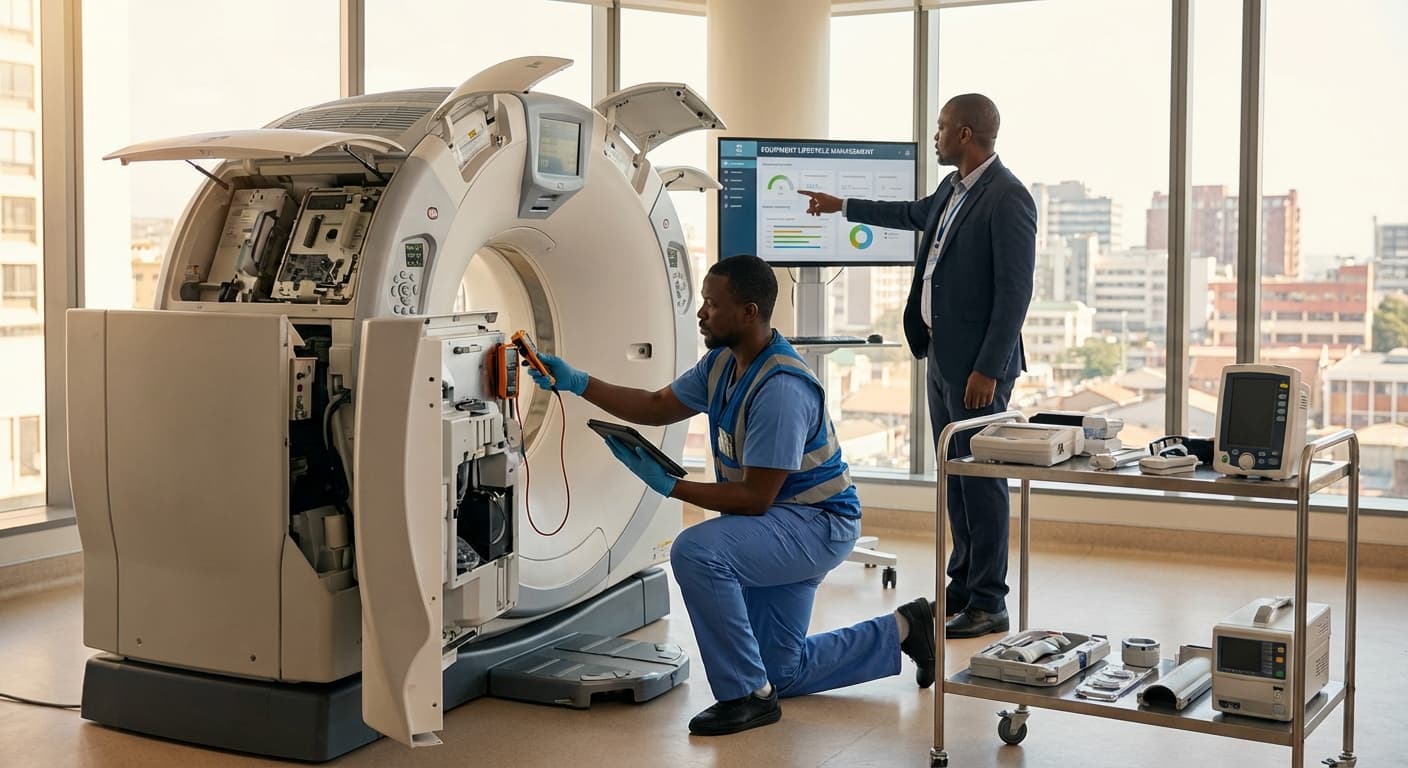
Equipment Replacement Planning & Obsolescence Strategy Service in Ivory Coast
Engineering Excellence & Technical Support
Equipment Replacement Planning & Obsolescence Strategy Service High-standard technical execution following OEM protocols and local regulatory frameworks.
Proactive Obsolescence Mitigation
Leveraging AI-powered predictive analytics to forecast component obsolescence, enabling proactive sourcing and integration of future-proof alternatives before critical equipment failure or production disruption occurs in Ivory Coast's industrial landscape.
Lifecycle Cost Optimization
Implementing a data-driven approach to equipment replacement planning, considering total cost of ownership (TCO) across acquisition, operation, maintenance, and disposal, ensuring sustainable and cost-effective asset management for businesses in Ivory Coast.
Seamless Technology Integration & Transition
Providing expert consultation and execution for the phased replacement of outdated equipment, ensuring minimal downtime and seamless integration of new technologies with existing infrastructure, thereby boosting operational efficiency and competitiveness for Ivorian industries.
What Is Equipment Replacement Planning & Obsolescence Strategy Service In Ivory Coast?
Equipment Replacement Planning & Obsolescence Strategy Service in Ivory Coast refers to a specialized consultancy offering aimed at optimizing the lifecycle management of industrial and critical operational assets within the Ivorian economic landscape. This service addresses the proactive identification of equipment nearing the end of its useful life, the strategic planning for its replacement or upgrade, and the mitigation of risks associated with technological obsolescence. It encompasses a holistic approach to asset management, ensuring business continuity, operational efficiency, and adherence to evolving industry standards and regulatory frameworks prevalent in Ivory Coast. The service leverages data-driven analysis, predictive modeling, and industry best practices to inform investment decisions regarding capital equipment.
| Who Needs This Service? | Typical Use Cases | ||||||||
|---|---|---|---|---|---|---|---|---|---|
| Manufacturing Industries: Factories and production facilities reliant on machinery and process equipment (e.g., textiles, food & beverage, automotive assembly, chemicals, mining). | Energy Sector: Power generation plants, oil & gas facilities, and renewable energy installations requiring critical operational equipment. | Infrastructure and Utilities: Water treatment plants, telecommunications networks, and transportation infrastructure operators facing aging assets. | Heavy Industry: Mining operations, cement plants, and large-scale agricultural processing units with substantial capital equipment investments. | Public Sector Organizations: Government agencies and state-owned enterprises managing fleets of vehicles, critical IT infrastructure, or specialized operational equipment. | Logistics and Transportation: Companies managing fleets of trucks, ships, or aircraft where equipment reliability and operational efficiency are paramount. | Technology-Intensive Businesses: Any organization where the pace of technological change poses a risk of their core equipment becoming outdated and inefficient. | |||
| Predictive Maintenance Optimization: Identifying equipment nearing end-of-life to transition from reactive or preventive maintenance to a proactive replacement strategy. | Capital Budgeting and Investment Planning: Informing annual and multi-year capital expenditure (CAPEX) budgets by providing data-driven justifications for equipment replacement projects. | Risk Mitigation for Critical Operations: Preventing costly downtime and production losses due to unexpected equipment failures caused by age or obsolescence. | Enhancing Operational Efficiency and Productivity: Replacing outdated equipment with modern, more energy-efficient, and higher-output alternatives. | Compliance with Environmental and Safety Regulations: Ensuring that replaced equipment meets current environmental discharge standards and safety protocols. | Negotiating Favorable Procurement Terms: Developing well-defined specifications and strategies to secure competitive pricing and favorable terms for new equipment acquisitions. | Managing Supply Chain Vulnerabilities: Identifying and mitigating risks associated with the discontinuation of spare parts or the inability to service older equipment. | Strategic Technology Adoption: Planning for the integration of new technologies that can enhance operational capabilities and provide a competitive edge. | Mergers & Acquisitions Due Diligence: Assessing the condition and lifecycle of equipment assets during M&A activities to understand potential future liabilities and investment needs. | Sustainability Initiatives: Replacing older, less energy-efficient equipment with newer models that have a lower environmental footprint. |
Key Components of the Service
- Asset Inventory and Condition Assessment: Comprehensive cataloging of existing equipment, coupled with detailed technical condition assessments and performance evaluations.
- Lifespan Prediction and Remaining Useful Life (RUL) Analysis: Employing statistical models, historical data, and expert judgment to forecast equipment lifespan and determine RUL.
- Obsolescence Risk Identification: Analyzing technological trends, supplier discontinuation patterns, and the availability of spare parts and skilled maintenance personnel to identify obsolescence risks.
- Replacement/Upgrade Strategy Development: Formulating strategic plans for equipment replacement, including options for new equipment acquisition, refurbishment, or technological upgrades, considering cost-benefit analyses and total cost of ownership (TCO).
- Business Case Justification and Financial Modeling: Developing robust business cases for replacement investments, including ROI calculations, NPV analysis, and payback period estimations.
- Procurement and Implementation Planning: Advising on procurement strategies, vendor selection, and project management for the successful installation and commissioning of new equipment.
- End-of-Life (EOL) Management: Planning for the safe and environmentally responsible disposal or decommissioning of obsolete equipment, in compliance with Ivorian regulations.
- Technology Scouting and Future-Proofing: Identifying emerging technologies relevant to the specific industry to ensure future investments are aligned with technological advancements and maintain competitive advantage.
- Risk Management and Contingency Planning: Developing strategies to mitigate risks associated with unexpected equipment failures, supply chain disruptions, and obsolescence-related issues.
- Regulatory Compliance and Standards Adherence: Ensuring that replacement plans and strategies align with current and anticipated Ivorian and international standards and regulations.
Who Needs Equipment Replacement Planning & Obsolescence Strategy Service In Ivory Coast?
In Ivory Coast, businesses across various sectors face the critical need for Equipment Replacement Planning & Obsolescence Strategy Services. This is driven by the rapid technological advancements, the operational demands of a growing economy, and the potential for significant financial and operational disruptions if aging or outdated equipment is not proactively managed. These services are essential for ensuring operational continuity, optimizing capital expenditure, mitigating risks associated with failure, and maintaining a competitive edge.
| Industry Sector | Key Equipment Types Requiring Planning | Common Obsolescence Challenges | Strategic Benefits of Service |
|---|---|---|---|
| Manufacturing | Production machinery, assembly lines, control systems, packaging equipment | Availability of spare parts, outdated control software, increased maintenance costs, safety risks | Minimizing downtime, optimizing production efficiency, reducing operational costs, ensuring product quality |
| Telecommunications | Network switches, routers, base stations, transmission equipment, servers | End-of-life support from vendors, security vulnerabilities, inability to support new technologies, higher energy consumption | Maintaining network reliability and performance, enabling new service offerings, enhancing cybersecurity, reducing operational expenses |
| Energy & Utilities | Turbines, generators, transformers, pumps, control systems, water treatment equipment | Lack of specialized technicians, regulatory compliance changes, increased risk of failure, inefficient energy usage | Ensuring grid stability, preventing service disruptions, meeting environmental regulations, optimizing energy generation |
| Mining & Extractive | Heavy earth-moving equipment, crushers, conveyors, drilling rigs, processing plants | High wear and tear, difficulty in sourcing specialized parts, environmental impact of older machinery, safety concerns | Maximizing resource extraction, reducing operational risks, improving worker safety, complying with environmental standards |
| Transportation & Logistics | Aircraft engines, shipping vessel components, fleet vehicles, cargo handling equipment | Strict safety and regulatory requirements, high maintenance costs, fuel inefficiency, integration with modern logistics systems | Ensuring operational safety and compliance, optimizing fuel efficiency, improving delivery times, reducing maintenance expenditure |
Target Customers and Departments in Ivory Coast Needing Equipment Replacement Planning & Obsolescence Strategy Services
- {"customer":"Manufacturing Companies (e.g., Food & Beverage, Textiles, Pharmaceuticals, Automotive Assembly)","departments":["Operations Management","Production Engineering","Maintenance & Reliability","Finance & Accounting","Procurement"]}
- {"customer":"Telecommunications Providers","departments":["Network Operations","Engineering & Planning","Technology & Innovation","Asset Management","Finance"]}
- {"customer":"Energy & Utilities (e.g., Power Generation, Water Treatment, Oil & Gas)","departments":["Asset Management","Operations","Maintenance & Engineering","Capital Projects","Risk Management"]}
- {"customer":"Mining and Extractive Industries","departments":["Operations Management","Maintenance & Reliability","Engineering","Procurement & Supply Chain","Finance"]}
- {"customer":"Transportation & Logistics (e.g., Airlines, Shipping Companies, Port Authorities)","departments":["Fleet Management","Maintenance & Engineering","Operations","Asset Management","Finance"]}
- {"customer":"Large Agricultural Cooperatives and Agribusinesses","departments":["Operations","Farm Management","Equipment Maintenance","Procurement","Finance"]}
- {"customer":"Construction Companies (especially those with large fleets of heavy machinery)","departments":["Fleet Management","Operations","Equipment Maintenance","Procurement","Project Management"]}
- {"customer":"Public Sector Organizations (e.g., Government agencies managing infrastructure, public transport)","departments":["Infrastructure Management","Asset Management","Procurement","Budget & Finance","Operations"]}
- {"customer":"Financial Institutions (with significant IT infrastructure)","departments":["IT Operations","Infrastructure Management","Risk Management","Procurement","Finance"]}
Equipment Replacement Planning & Obsolescence Strategy Service Process In Ivory Coast
This document outlines the standard workflow for our Equipment Replacement Planning & Obsolescence Strategy Service in Ivory Coast. The process is designed to be comprehensive, collaborative, and tailored to the specific needs of our clients, ensuring optimal asset management and mitigation of risks associated with outdated equipment.
| Stage | Description | Key Activities | Deliverables | Responsible Parties |
|---|---|---|---|---|
| Inquiry & Initial Consultation | The client expresses interest in the service and initiates contact. This stage focuses on understanding the client's general requirements and providing an overview of our capabilities. | Client inquiry (phone, email, website form), Initial discussion to understand high-level needs, Brief presentation of service offerings. | Introduction to service capabilities, Preliminary understanding of client needs. | Client, Service Provider (Sales/Business Development) |
| Needs Assessment & Scope Definition | A deeper dive into the client's specific challenges, objectives, and the scope of equipment to be assessed. This ensures the service is precisely aligned with their expectations. | Detailed discussions with key client stakeholders, Understanding current asset management practices, Defining the specific equipment categories/assets to be included, Identifying key performance indicators (KPIs) and desired outcomes. | Client needs document, Agreed-upon scope of work, Preliminary project plan outline. | Client (Operations, Maintenance, Procurement), Service Provider (Consultants, Project Manager) |
| Data Collection & Analysis | Gathering all relevant information about the client's existing equipment. This forms the foundation for all subsequent analyses. | Inventory data collection (asset ID, manufacturer, model, installation date, maintenance history, purchase cost), Performance data collection (usage, downtime, repair costs), Vendor information gathering, Site visits (if necessary). | Comprehensive equipment inventory database, Historical performance reports, Data validation and cleaning. | Client (IT, Maintenance, Operations), Service Provider (Data Analysts, Consultants) |
| Obsolescence Assessment & Risk Evaluation | Analyzing the collected data to determine the current and future obsolescence status of equipment and identifying associated risks. | Lifecycle analysis of equipment, Technical obsolescence assessment (availability of parts, support, technology), Economic obsolescence assessment (cost of maintenance vs. replacement), Risk matrix development (likelihood and impact of failure/obsolescence), Identification of critical equipment at high risk. | Obsolescence report, Risk assessment matrix, Identification of high-priority assets for action. | Service Provider (Technical Experts, Consultants), Client (Subject Matter Experts) |
| Replacement Strategy Development | Formulating a strategic roadmap for equipment replacement based on the obsolescence assessment and client objectives. | Defining replacement criteria (e.g., age, cost, performance thresholds), Developing phased replacement plans, Evaluating replacement options (new equipment, upgrade, refurbishment), Cost-benefit analysis of different strategies, Financial modeling and budget forecasting. | Equipment replacement strategy document, Phased implementation plan, Cost-benefit analysis reports, Financial projections. | Service Provider (Strategic Planners, Financial Analysts), Client (Finance, Procurement, Operations) |
| Proposal & Agreement | Presenting the developed strategy and associated costs to the client for review and approval, leading to a formal agreement. | Presentation of the proposed strategy and deliverables, Detailed cost breakdown and pricing, Contract negotiation, Finalization of the service agreement. | Formal proposal document, Service Level Agreement (SLA), Signed contract. | Service Provider (Sales/Account Management), Client (Management, Procurement) |
| Execution & Implementation | Putting the agreed-upon replacement strategy into action, including procurement, installation, and commissioning. | Procurement of new equipment or services, Project management of installation and integration, Commissioning and testing of new equipment, Decommissioning and disposal of old equipment, Training of client personnel on new equipment. | Successful installation and operationalization of new equipment, Decommissioning records, Training completion reports. | Client (Procurement, Operations, IT), Service Provider (Project Managers, Technical Teams), Vendors |
| Monitoring & Ongoing Support | Ensuring the implemented strategy is effective and providing continued support to the client. | Post-implementation review, Performance monitoring of new assets, Ongoing obsolescence tracking and re-assessment, Recommendations for future planning, Maintenance of replacement strategy documentation. | Performance review reports, Updated obsolescence forecasts, Recommendations for continuous improvement. | Client (Maintenance, Operations), Service Provider (Consultants, Account Manager) |
Workflow Stages
- Inquiry & Initial Consultation
- Needs Assessment & Scope Definition
- Data Collection & Analysis
- Obsolescence Assessment & Risk Evaluation
- Replacement Strategy Development
- Proposal & Agreement
- Execution & Implementation
- Monitoring & Ongoing Support
Equipment Replacement Planning & Obsolescence Strategy Service Cost In Ivory Coast
Planning for equipment replacement and developing an obsolescence strategy are critical for businesses in Ivory Coast to maintain operational efficiency, minimize downtime, and avoid costly emergency replacements. The cost of such a service is influenced by several key factors, making it essential to understand these drivers to estimate potential expenditure in local currency (West African CFA franc - XOF).
Key pricing factors typically include:
- Scope of the Service: Whether the service covers a single piece of equipment, a specific department, or the entire organization's assets significantly impacts cost. A comprehensive audit and strategy development will naturally be more expensive.
- Complexity of Equipment: The type, age, technological sophistication, and interconnectedness of the equipment being assessed play a crucial role. Specialized industrial machinery or highly integrated IT systems will require more expert analysis.
- Data Availability and Quality: The ease with which consultants can access reliable data on equipment inventory, maintenance history, performance metrics, and procurement costs will affect the time and resources required.
- Level of Detail in the Strategy: The depth of the obsolescence strategy – from basic replacement timelines to advanced predictive maintenance integration, spare parts management, and disposal plans – will influence the consulting hours.
- Consultant Expertise and Reputation: Experienced consultants with a proven track record in asset management and strategic planning, particularly within the Ivorian or West African context, will command higher fees.
- Project Timeline: Urgent requests or shorter project durations may incur premium charges.
- Additional Services: The cost can increase if the service includes asset tagging, condition monitoring system implementation, or training for internal staff.
- Geographic Location within Ivory Coast: While major urban centers like Abidjan might have a slightly higher cost of living impacting consultant rates, the primary cost drivers are usually the project specifics rather than minor location variations within the country.
| Service Component/Scope | Estimated Cost Range (XOF) | Notes |
|---|---|---|
| Initial Consultation & Needs Assessment (Small-Medium Business) | 250,000 - 750,000 XOF | Understanding current state, basic inventory review. |
| Comprehensive Asset Audit & Data Collection (Single Department/Product Line) | 750,000 - 2,000,000 XOF | Detailed inventory, condition assessment, basic historical data. |
| Full Organizational Asset Inventory & Condition Survey (Large Enterprise) | 2,000,000 - 7,500,000+ XOF | Extensive data capture, potentially site visits across multiple locations. |
| Basic Replacement Planning (e.g., identifying immediate risks) | 500,000 - 1,500,000 XOF | Focus on immediate needs and short-term projections. |
| Developing a 3-5 Year Replacement & Obsolescence Strategy | 1,500,000 - 5,000,000+ XOF | Includes life cycle costing, risk assessment, technology forecasting. |
| Advanced Obsolescence Strategy (incl. Predictive Maintenance, Spare Parts) | 3,000,000 - 10,000,000+ XOF | Detailed operational plans, integration with maintenance systems. |
| Consultant Hourly Rate (Experienced Specialist) | 30,000 - 75,000+ XOF per hour | Varies significantly by expertise and firm. |
| Day Rate (Consulting Team) | 200,000 - 800,000+ XOF per day | Dependent on team size and seniority. |
Factors Influencing Equipment Replacement Planning & Obsolescence Strategy Service Cost in Ivory Coast
- Scope of Service (single asset vs. entire organization)
- Complexity and Type of Equipment
- Availability and Quality of Asset Data
- Depth and Detail of the Obsolescence Strategy
- Consultant Experience and Specialization
- Project Timeline and Urgency
- Inclusion of Additional Services (e.g., data capture, training)
- Organizational Size and Number of Assets
Affordable Equipment Replacement Planning & Obsolescence Strategy Service Options
Our Affordable Equipment Replacement Planning & Obsolescence Strategy Service helps organizations proactively manage their asset lifecycle, minimize disruptions, and optimize capital expenditures. We offer flexible value bundles designed to meet diverse needs and budgets, coupled with robust cost-saving strategies to ensure you get the most out of your investment. By anticipating obsolescence and planning for replacements, you can avoid costly emergency purchases, extend equipment lifespan, and maintain operational efficiency.
| Cost-Saving Strategy | Description | Key Benefit |
|---|---|---|
| Proactive Replacement Scheduling | Establishing a planned replacement cycle based on age, usage, and obsolescence risk rather than waiting for failure. | Avoids expensive emergency purchases and allows for negotiation of better prices through planned procurement. |
| Bulk Purchasing & Negotiation | Leveraging planned replacements to consolidate orders and negotiate volume discounts with suppliers. | Reduces per-unit cost of new equipment and associated installation/training expenses. |
| Extended Equipment Lifespan Optimization | Implementing preventative maintenance programs and identifying opportunities for upgrades or refurbishment. | Delays capital expenditure for replacements and maximizes return on existing assets. |
| Standardization of Equipment | Reducing the variety of equipment types, which simplifies maintenance, spare parts inventory, and training. | Lowers operational costs, reduces downtime due to part unavailability, and improves technician efficiency. |
| Leasing vs. Buying Analysis | Evaluating the financial implications of leasing versus purchasing equipment based on current market conditions and organizational cash flow. | Optimizes capital allocation and potentially reduces overall ownership costs through flexible financing options. |
| Obsolescence Risk Mitigation | Identifying and addressing potential obsolescence early, including sourcing alternative parts or planning for early migration. | Prevents production stoppages and the need for costly, rushed replacements. |
Value Bundles
- Core Planning: Includes initial asset inventory, depreciation tracking, basic obsolescence risk assessment, and a 1-year rolling replacement schedule. Ideal for smaller organizations or those beginning their asset management journey.
- Advanced Strategy: Builds upon the Core Planning with detailed lifecycle cost analysis, multi-year forecasting (3-5 years), risk mitigation planning for critical assets, and proactive sourcing of potential replacement options. Suited for growing businesses with more complex equipment portfolios.
- Comprehensive Lifecycle Management: Encompasses Advanced Strategy features plus integration with procurement systems, total cost of ownership (TCO) modeling, end-of-life disposal strategies, and ongoing monitoring and re-forecasting. Best for larger enterprises with extensive assets and a focus on continuous improvement.
- Custom Solutions: Tailored bundles designed to address specific industry needs, regulatory compliance requirements, or unique operational challenges. We work collaboratively to create a solution that perfectly fits your organization.
Verified Providers In Ivory Coast
In the Ivory Coast's evolving healthcare landscape, identifying trusted and accredited medical facilities is paramount. Franance Health stands out as a leading provider, distinguished by its rigorous adherence to international standards and a commitment to patient well-being. This credentialing signifies a dedication to quality, safety, and ethical practices that directly translates to superior patient outcomes. Choosing a Franance Health-verified provider ensures access to modern facilities, highly qualified medical professionals, and a healthcare experience built on trust and excellence.
| Credential/Standard | Significance for Patients | Franance Health's Role |
|---|---|---|
| International Accreditation (e.g., JCI) | Ensures highest standards of patient care, safety, and operational efficiency. | Franance Health actively vets and partners with facilities that meet or exceed these benchmarks. |
| Board Certified Physicians | Guarantees expertise and specialized knowledge in various medical fields. | Franance Health verifies the credentials and ongoing training of all affiliated medical professionals. |
| Advanced Diagnostic Equipment | Leads to more accurate diagnoses and targeted treatments. | Franance Health assesses the technological capabilities of its partner institutions. |
| Stringent Sterilization Protocols | Minimizes the risk of infections and ensures a safe treatment environment. | Franance Health mandates and audits adherence to rigorous infection control procedures. |
| Patient Rights & Privacy Policies | Upholds patient autonomy, informed consent, and confidentiality of medical information. | Franance Health verifies that providers adhere to strict patient rights and data protection regulations. |
Key Franance Health Credentials and Their Significance
- International Accreditation Standards: Franance Health aligns with globally recognized accreditation bodies (e.g., Joint Commission International, ISO certifications). This demonstrates adherence to stringent quality management, patient safety protocols, and continuous improvement.
- Medical Staff Qualifications and Expertise: Verification includes a thorough review of physician credentials, board certifications, and ongoing professional development. This guarantees that patients are treated by experienced and up-to-date medical experts.
- Advanced Technology and Equipment: Franance Health-verified providers are equipped with state-of-the-art medical technology and diagnostic tools. This enables accurate diagnoses and effective treatment options.
- Robust Infection Control Measures: Strict protocols for hygiene, sterilization, and infection prevention are a cornerstone of Franance Health verification. This significantly reduces the risk of healthcare-associated infections.
- Patient-Centered Care Philosophy: The credentialing process emphasizes a commitment to patient rights, communication, and personalized care. This ensures that patients feel respected, informed, and actively involved in their treatment journey.
- Ethical and Transparent Practices: Franance Health promotes ethical conduct, data privacy, and transparency in all aspects of healthcare delivery, fostering trust between patients and providers.
Scope Of Work For Equipment Replacement Planning & Obsolescence Strategy Service
This Scope of Work (SOW) outlines the services to be provided for Equipment Replacement Planning and Obsolescence Strategy. The objective is to develop a comprehensive and actionable strategy that ensures optimal equipment lifecycle management, minimizes operational disruption, and mitigates risks associated with obsolescence. The service will encompass a thorough assessment of existing equipment, forecasting future needs, developing replacement criteria, and establishing a proactive obsolescence management plan.
| Technical Deliverable | Description | Standard Specification / Format |
|---|---|---|
| Equipment Inventory Database | A comprehensive, structured database detailing all relevant equipment, including make, model, serial number, installation date, maintenance history, current condition, and criticality. | Microsoft Excel, SQL Database, or dedicated Asset Management System export (e.g., CSV, XML). |
| Obsolescence Risk Assessment Report | Analysis of identified equipment for risks of obsolescence, including factors like manufacturer support, parts availability, technology advancements, and regulatory compliance. Includes a prioritized list of critical equipment. | PDF Document, Executive Summary (PPT). |
| Life Cycle Cost (LCC) Models | Detailed models projecting the total cost of ownership for key equipment over its lifecycle, including acquisition, operation, maintenance, and disposal/replacement costs. | Microsoft Excel Workbooks, PDF reports detailing assumptions and methodologies. |
| Equipment Replacement Plan (ERP) | A strategic plan outlining recommended replacement schedules, budgets, and justifications for prioritized equipment. Includes analysis of different replacement options (e.g., repair, refurbish, replace). | PDF Document, Gantt Chart representation of timelines. |
| Obsolescence Mitigation Strategy Document | Specific strategies and recommended actions to address identified obsolescence risks, such as last-time buy planning, component sourcing strategies, and alternative technology evaluations. | PDF Document. |
| Implementation Roadmap | A phased approach for executing the ERP and Obsolescence Mitigation Strategy, including key milestones, responsibilities, and resource requirements. | PDF Document, Project Management Software export (e.g., MS Project, Asana). |
| Governance Framework & Policy Recommendations | Recommendations for establishing governance structures, roles, responsibilities, and supporting policies for ongoing equipment lifecycle and obsolescence management. | PDF Document. |
| Training Materials & Session Records | Documentation and materials used for training client personnel on the developed strategies and tools, along with records of conducted training sessions. | PowerPoint Presentations, User Manuals (PDF), Training Session Minutes. |
Key Service Components
- Equipment Inventory and Assessment
- Obsolescence Risk Identification and Prioritization
- Life Cycle Cost Analysis
- Replacement Strategy Development
- Obsolescence Mitigation and Prevention Strategies
- Implementation Roadmap and Governance Framework
- Training and Knowledge Transfer
Service Level Agreement For Equipment Replacement Planning & Obsolescence Strategy Service
This Service Level Agreement (SLA) outlines the guaranteed response times and uptime commitments for the Equipment Replacement Planning & Obsolescence Strategy Service. This service aims to proactively manage the lifecycle of your equipment, ensuring optimal performance, minimizing downtime due to obsolescence, and facilitating strategic replacement planning.
| Service Component | Response Time Guarantee (Business Hours) | Uptime Guarantee (for Platform/Reporting Access) |
|---|---|---|
| Initial Obsolescence Risk Notification | Within 4 business hours upon identification | N/A (proactive service) |
| Replacement Plan Update Request | Within 1 business day | 99.5% |
| Obsolescence Risk Mitigation Consultation | Within 2 business days | 99.5% |
| Regular Strategy Review Meeting Preparation | At least 3 business days prior to scheduled meeting | 99.5% |
| Access to Equipment Lifecycle Reporting Platform | N/A | 99.9% |
| Urgent Critical Obsolescence Alert (affecting core operations) | Within 1 business hour | 99.5% |
Service Components & Scope
- Proactive identification of equipment nearing end-of-life or at risk of obsolescence.
- Development and maintenance of a rolling equipment replacement plan.
- Risk assessment and mitigation strategies for obsolescence.
- Recommendations for upgrade, repair, or replacement of equipment.
- Data analysis and reporting on equipment lifecycle status.
- Regular strategy reviews and updates with the client.
Frequently Asked Questions

Ready when you are
Let's scope your Equipment Replacement Planning & Obsolescence Strategy Service in Ivory Coast project in Ivory Coast.

Scaling healthcare logistics and technical systems across the entire continent.