
Department Workflow Mapping Service (Radiology/ICU/OT/Lab/Dialysis) in Ivory Coast
Engineering Excellence & Technical Support
Department Workflow Mapping Service (Radiology/ICU/OT/Lab/Dialysis) High-standard technical execution following OEM protocols and local regulatory frameworks.
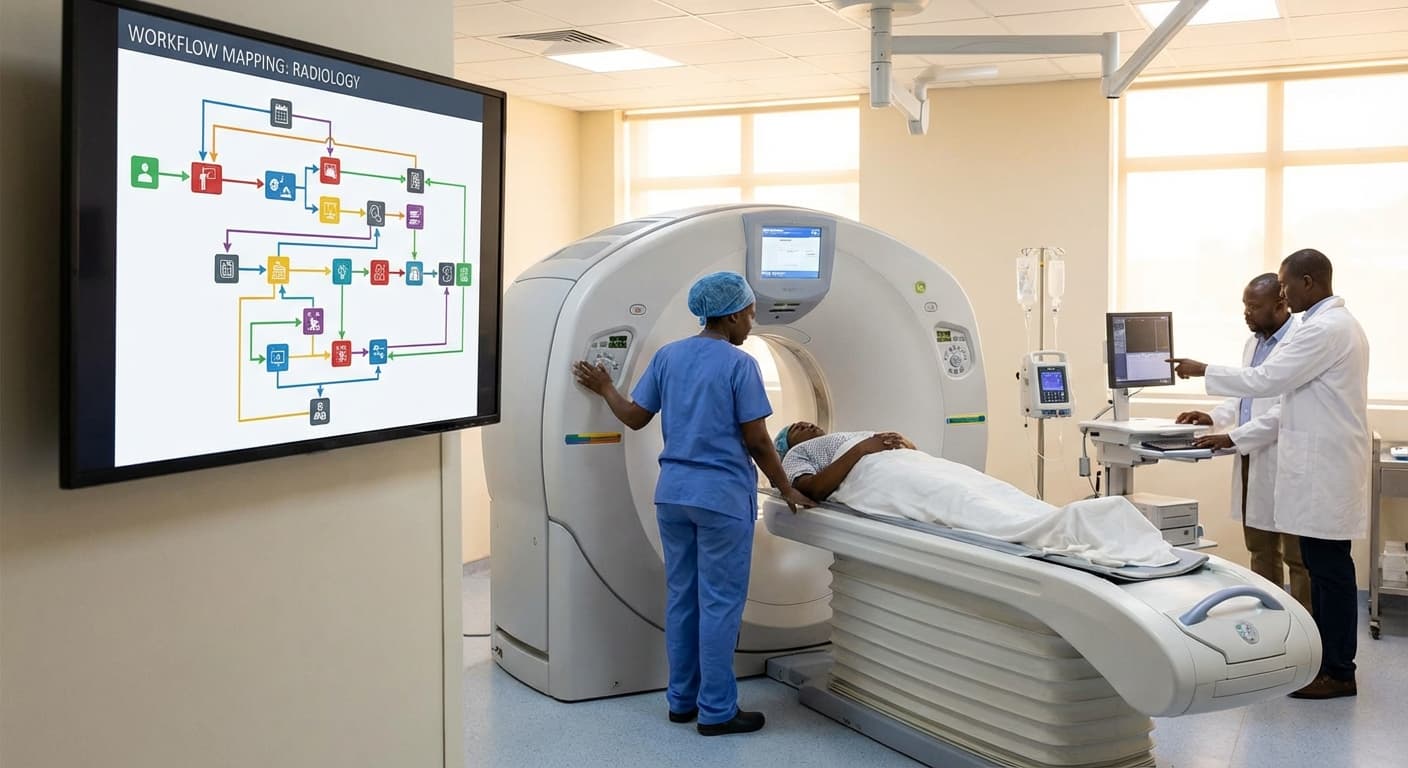
Optimized Radiology Image Acquisition & Reporting Workflow (Ivory Coast)
Streamlined the end-to-end radiology workflow, from patient registration and exam ordering to image acquisition, interpretation, and final report generation. Our service focuses on reducing turnaround times, minimizing bottlenecks, and ensuring accurate, timely diagnoses for improved patient care across leading Ivorian hospitals.
Enhanced ICU Patient Triage & Resource Allocation (Ivory Coast)
Developed a dynamic workflow mapping for Intensive Care Units, enabling efficient patient triage, optimal bed management, and effective allocation of critical resources like ventilators and specialized medical staff. This service addresses the unique challenges of high-acuity patient management in Ivory Coast's healthcare facilities.
Intelligent Operating Theatre Scheduling & Utilization (Ivory Coast)
Designed a comprehensive workflow solution for Operating Theatres, focusing on optimizing surgical scheduling, minimizing downtime, and improving resource utilization. This service ensures seamless coordination between surgical teams, anesthesia, and support staff, leading to increased surgical capacity and reduced patient waiting lists in Ivory Coast.
What Is Department Workflow Mapping Service (Radiology/icu/ot/lab/dialysis) In Ivory Coast?
Department Workflow Mapping Service in Ivory Coast, within specialized medical settings such as Radiology, Intensive Care Units (ICU), Operating Theaters (OT), Laboratories, and Dialysis Units, refers to a systematic process of analyzing, documenting, and visualizing the sequence of operations, tasks, and information flows involved in the delivery of patient care or diagnostic services within these departments. This service aims to identify inefficiencies, bottlenecks, redundancies, and areas for improvement to optimize operational performance, enhance patient safety, and ensure regulatory compliance. It involves a deep dive into the 'as-is' state of a department's processes, often utilizing methodologies like Business Process Mapping (BPM), Value Stream Mapping (VSM), or process flowcharting.
| Stakeholder Group | Need for Workflow Mapping | Typical Use Cases |
|---|---|---|
| Hospital Administrators & Management | To improve overall operational efficiency, reduce costs, enhance resource allocation, and ensure strategic alignment of departmental functions with institutional goals. Crucial for evidence-based decision-making and performance benchmarking. | Optimizing patient throughput in the Emergency Department, streamlining patient admission/discharge processes in the ICU, standardizing imaging request and reporting procedures in Radiology, improving turnaround times in the Laboratory for critical tests. |
| Department Heads & Clinical Leads (Radiology, ICU, OT, Lab, Dialysis) | To enhance the quality and safety of patient care, standardize clinical protocols, improve interdisciplinary communication, and empower staff through clearer process understanding and defined roles. Essential for accreditation and quality improvement initiatives. | Reducing medication errors in the ICU through improved drug administration workflows, standardizing surgical checklists and instrument tracking in OT, optimizing sample collection and processing in the Laboratory, ensuring timely and efficient dialysis treatments, improving image interpretation and reporting turnaround in Radiology. |
| IT & Technology Departments | To identify opportunities for technological integration, automation, and system optimization to support improved workflows. Informing the selection and implementation of Electronic Health Records (EHR), Picture Archiving and Communication Systems (PACS), Laboratory Information Systems (LIS), etc. | Integrating PACS with EHR for seamless image access and reporting, automating lab test ordering and result reporting, optimizing scheduling systems for OT and Dialysis, implementing real-time patient monitoring systems in the ICU. |
| Regulatory & Quality Assurance Bodies | To ensure compliance with national and international healthcare standards, accreditation requirements (e.g., ISO, JCI), and patient safety regulations. Demonstrating adherence to best practices in process management. | Validating adherence to sterile processing protocols in OT, verifying accuracy and traceability of diagnostic tests in the Laboratory, ensuring compliance with radiation safety standards in Radiology, confirming patient identification and safety protocols in all departments. |
| Healthcare Professionals (Nurses, Technicians, Physicians) | To clarify roles and responsibilities, reduce ambiguity, minimize workload associated with inefficient processes, and contribute to a safer and more effective work environment. Facilitates onboarding of new staff. | Understanding clear protocols for patient handover between shifts in the ICU, knowing precise steps for preparing patients for surgery in OT, following standardized procedures for sample handling and analysis in the Lab, efficiently managing patient schedules and equipment in Dialysis, knowing the precise steps for contrast administration and image acquisition in Radiology. |
Key Components of Department Workflow Mapping Service:
- Process Identification & Scope Definition: Precisely delineating the boundaries of the workflow under examination.
- Data Collection: Gathering information through interviews, observation, document analysis, and system logs.
- As-Is Process Mapping: Creating visual representations (flowcharts, diagrams) of current procedures.
- Bottleneck & Inefficiency Analysis: Identifying points of delay, resource underutilization, or unnecessary steps.
- Root Cause Analysis: Determining the underlying reasons for identified problems.
- To-Be Process Design: Developing optimized future-state workflows incorporating best practices and technological advancements.
- Implementation Planning: Outlining strategies for transitioning from the 'as-is' to the 'to-be' state.
- Performance Measurement Framework: Establishing metrics to track the effectiveness of implemented changes.
Who Needs Department Workflow Mapping Service (Radiology/icu/ot/lab/dialysis) In Ivory Coast?
In Ivory Coast, healthcare facilities are increasingly recognizing the critical need to optimize their operational efficiency. Department workflow mapping services are invaluable tools for identifying bottlenecks, reducing errors, improving patient throughput, and enhancing overall service quality. These services are particularly crucial in high-stakes, complex departments where precision and speed are paramount. This document outlines which healthcare entities in Ivory Coast would benefit most from such services, specifying the target customers and the departments that would see the greatest impact.
| Target Customer Type | Key Departments Benefiting from Workflow Mapping | Primary Benefits of Workflow Mapping in these Departments |
|---|---|---|
| Public Hospitals and University Hospitals | Radiology, Intensive Care Unit (ICU), Operating Theatre (OT), Laboratory, Dialysis | Streamlining patient flow, reducing diagnostic turnaround times, optimizing resource utilization, improving patient safety, enhancing inter-departmental communication. |
| Private Tertiary Care Hospitals | Radiology, Intensive Care Unit (ICU), Operating Theatre (OT), Laboratory, Dialysis | Increasing patient satisfaction, reducing operational costs, improving competitive advantage through faster and more accurate service delivery, standardizing best practices. |
| Specialized Diagnostic Centers (e.g., Radiology Clinics, Pathology Labs) | Radiology, Laboratory | Optimizing sample processing, reducing report generation time, improving equipment utilization, minimizing errors and repeat tests, enhancing turnaround time for critical results. |
| Large Polyclinics with multiple specialized units | Radiology, Laboratory, Dialysis, sometimes mini-OTs | Ensuring seamless patient journeys across different services, managing appointment scheduling effectively, improving staff allocation, reducing wait times for patients. |
| Rehabilitation Centers with specialized units (e.g., Dialysis) | Dialysis | Ensuring timely dialysis sessions, optimizing fluid and medication management, improving patient comfort and safety during treatment, efficient scheduling of staff and equipment. |
Who Needs Department Workflow Mapping Services in Ivory Coast?
- Public Hospitals and University Hospitals
- Private Tertiary Care Hospitals
- Specialized Diagnostic Centers
- Large Polyclinics
- Rehabilitation Centers with specialized units
Department Workflow Mapping Service (Radiology/icu/ot/lab/dialysis) Process In Ivory Coast
This document outlines the Department Workflow Mapping Service for key medical departments in Ivory Coast, covering Radiology, Intensive Care Unit (ICU), Operating Theatre (OT), Laboratory, and Dialysis. The service aims to analyze, document, and optimize existing departmental processes to enhance efficiency, reduce errors, and improve patient care delivery. The workflow begins with an initial inquiry from a healthcare facility and concludes with the delivery of a comprehensive workflow map and recommendations for improvement.
| Stage | Description | Key Activities | Deliverables | Responsible Parties |
|---|---|---|---|---|
| Inquiry & Initial Consultation | The healthcare facility expresses interest in the workflow mapping service and initiates contact. | Initial meeting with facility stakeholders to understand their general needs and objectives. Discussion of service scope and preliminary feasibility. | Understanding of client's initial requirements, potential areas of focus. | Client (Hospital Management/Department Heads), Service Provider (Workflow Consultants) |
| Needs Assessment & Scoping | Detailed understanding of the specific department(s) to be mapped and the desired outcomes. | On-site visits to observe current operations. Interviews with staff at all levels. Identification of specific pain points and areas for improvement. Definition of the precise scope of work (e.g., specific patient journeys, administrative processes). | Detailed scope document, agreed-upon objectives, identification of key stakeholders. | Service Provider (Workflow Consultants), Client (Department Managers, Key Staff) |
| Data Collection & Analysis | Gathering comprehensive information about the current state of departmental processes. | Observation of daily operations. Collection of existing process documentation (SOPs, guidelines). Interviews and focus groups with staff. Time studies and data analysis (e.g., patient wait times, resource utilization). | Raw data on current processes, identified bottlenecks and inefficiencies, initial performance metrics. | Service Provider (Workflow Consultants), Client (Departmental Staff for information) |
| Workflow Mapping & Documentation | Visually representing the current departmental processes in a clear and understandable format. | Development of process flowcharts (e.g., using BPMN or similar notations). Creation of swimlane diagrams to show roles and responsibilities. Documentation of each step, decision points, inputs, and outputs. Creation of Standard Operating Procedures (SOPs) for mapped processes. | Detailed workflow diagrams, documented process steps, preliminary SOP drafts. | Service Provider (Workflow Consultants) |
| Validation & Feedback | Ensuring the accuracy and completeness of the documented workflows with the stakeholders. | Presentation of draft workflow maps to departmental staff and management. Facilitated review sessions to gather feedback, identify discrepancies, and confirm understanding. Iterative refinement of the maps based on feedback. | Validated workflow maps, documented feedback, confirmed accuracy of process representation. | Service Provider (Workflow Consultants), Client (Departmental Staff, Management) |
| Recommendations & Optimization Strategies | Developing actionable insights and suggestions for improving the mapped workflows. | Analysis of validated workflows for inefficiencies, redundancies, and potential risks. Identification of opportunities for automation, standardization, and best practice implementation. Development of specific, measurable, achievable, relevant, and time-bound (SMART) recommendations. Prioritization of recommendations based on impact and feasibility. | List of prioritized recommendations, proposed solutions for identified issues, potential benefits of proposed changes. | Service Provider (Workflow Consultants) |
| Final Report & Presentation | Compiling all findings, maps, and recommendations into a comprehensive report and presenting them to the client. | Finalizing workflow maps and all supporting documentation. Drafting a comprehensive report detailing the methodology, findings, current state analysis, and recommendations. Presentation of the final report and recommendations to hospital leadership and relevant department heads. | Final workflow documentation, comprehensive report, presentation materials. | Service Provider (Workflow Consultants), Client (Hospital Leadership, Department Heads) |
| Implementation Support (Optional) | Providing assistance to the client in putting the recommendations into practice. | Facilitating the implementation of recommended changes. Training staff on new processes or technologies. Monitoring progress and providing ongoing support. Revisiting workflows after implementation to assess impact. | Successful implementation of improved processes, measured improvements in key performance indicators, trained staff. | Service Provider (Workflow Consultants), Client (Departmental Staff, IT Department, Management) |
Service Workflow Stages
- Inquiry & Initial Consultation
- Needs Assessment & Scoping
- Data Collection & Analysis
- Workflow Mapping & Documentation
- Validation & Feedback
- Recommendations & Optimization Strategies
- Final Report & Presentation
- Implementation Support (Optional)
Department Workflow Mapping Service (Radiology/icu/ot/lab/dialysis) Cost In Ivory Coast
The cost of Department Workflow Mapping Services for specialized hospital units like Radiology, Intensive Care Units (ICU), Operating Theatres (OT), Laboratories, and Dialysis in Ivory Coast can vary significantly. These services are crucial for optimizing efficiency, identifying bottlenecks, and improving patient care within these critical departments. The pricing is not standardized and depends on a multitude of factors that influence the complexity and duration of the engagement. Understanding these factors is essential for healthcare institutions seeking to budget for such an initiative. The pricing ranges provided are estimates and should be considered as a starting point for negotiation with service providers. It is highly recommended to obtain detailed quotes based on specific project requirements.
| Department Type | Estimated Cost Range (XOF) | Notes |
|---|---|---|
| Radiology | 1,500,000 - 5,000,000 | Mapping patient flow, image acquisition to reporting, equipment utilization, and staff scheduling. Complexity increases with advanced imaging modalities. |
| Intensive Care Unit (ICU) | 2,000,000 - 7,000,000 | Focuses on patient admission, monitoring, treatment protocols, interdisciplinary team communication, and discharge. High complexity due to critical care nature. |
| Operating Theatre (OT) | 1,800,000 - 6,000,000 | Mapping surgical scheduling, patient preparation, surgical procedures, post-operative care handover, and resource management (staff, equipment, consumables). |
| Laboratory | 1,200,000 - 4,000,000 | Covers specimen receiving, processing, testing, quality control, reporting, and inventory management. Can vary based on lab specialization and throughput. |
| Dialysis | 1,300,000 - 4,500,000 | Workflow mapping for patient scheduling, treatment procedures, machine maintenance, water treatment, and staff roles. Focus on patient safety and efficiency. |
Key Pricing Factors for Workflow Mapping Services in Ivory Coast
- Scope of the Project: The size and complexity of the department being mapped. Mapping a single, well-defined process within a lab will be less expensive than mapping the entire patient journey through an ICU.
- Number of Departments/Units: Whether the service is for one specific department or multiple units within the hospital. Bundling services for multiple departments might offer some cost advantages, but also increases the overall project size.
- Level of Detail Required: The depth of analysis needed. This can range from high-level process overviews to granular, step-by-step mapping with detailed timings, resource allocation, and interdependencies.
- Current State vs. Future State Mapping: Whether the service only maps the existing workflow or also includes the design and mapping of an optimized future state, including recommendations for improvement.
- Data Collection Methods: The techniques employed for data gathering, such as interviews, direct observation, time-and-motion studies, and analysis of existing system logs. More intensive data collection methods will increase costs.
- Technology and Tools Used: The sophistication of the software and tools used by the service provider for mapping, analysis, and reporting. Advanced simulation or modeling software can be more expensive.
- Consultant Experience and Reputation: The expertise, track record, and reputation of the consulting firm or individual providing the service. Highly experienced and well-regarded consultants often command higher fees.
- Duration of the Project: The estimated time required to complete the mapping and analysis. This is directly influenced by the scope and complexity.
- Location within Ivory Coast: While less of a primary driver for service cost itself, travel and accommodation expenses for consultants to reach remote hospitals can add to the overall project budget.
- Reporting and Deliverables: The format and comprehensiveness of the final reports, including recommendations, process diagrams, and implementation roadmaps.
- Integration with Existing Systems: The complexity of understanding and mapping how the department's workflow interacts with existing hospital information systems (HIS), PACS (for Radiology), LIS (for Labs), etc.
Affordable Department Workflow Mapping Service (Radiology/icu/ot/lab/dialysis) Options
Our Affordable Department Workflow Mapping Service provides a comprehensive solution to optimize operations within critical hospital departments including Radiology, ICU, Operating Theatre (OT), Laboratory, and Dialysis. We specialize in identifying inefficiencies, streamlining processes, and implementing best practices to enhance patient care, reduce costs, and improve staff satisfaction. Our service includes detailed analysis, visual workflow mapping, recommendations, and implementation support. We offer flexible value bundles and cost-saving strategies tailored to your department's specific needs.
| Cost-Saving Strategy | Description | Impact Area |
|---|---|---|
| Process Standardization | Developing and implementing consistent, evidence-based procedures across all staff for specific tasks. Reduces errors and variability. | Operational Efficiency, Quality of Care, Staff Training |
| Bottleneck Elimination | Identifying and resolving constraints in the workflow that slow down operations, such as equipment availability, staff allocation, or information flow. | Patient Throughput, Resource Utilization, Staff Productivity |
| Technology Integration Optimization | Ensuring existing technology (EMRs, PACS, LIS) is optimally utilized and integrated to reduce manual data entry, improve communication, and automate tasks. | Data Accuracy, Communication, Administrative Overhead |
| Staff Skill Optimization & Cross-Training | Analyzing skill sets and identifying opportunities for cross-training to improve flexibility and cover during absences or peak periods. | Staff Morale, Operational Resilience, Reduced Overtime |
| Lean Principles Application | Applying Lean methodologies to eliminate waste (e.g., unnecessary movement, waiting times, defects) in departmental workflows. | Resource Efficiency, Reduced Waste, Cost Reduction |
| Optimized Resource Allocation | Ensuring equipment, supplies, and personnel are deployed effectively based on demand and workflow analysis. | Equipment Utilization, Supply Chain Management, Staff Scheduling |
| Reduced Rework and Errors | Streamlining processes to minimize mistakes, leading to fewer repeat procedures, less wasted material, and improved patient safety. | Patient Safety, Operational Costs, Staff Frustration |
Value Bundles Explained
- Essentials Bundle: Focused on core workflow mapping for a single department. Includes initial assessment, current state mapping, key bottleneck identification, and a high-level recommendations report. Ideal for departments seeking a foundational understanding of their processes.
- Standard Bundle: Expands on the Essentials Bundle by including detailed current state mapping, root cause analysis of identified issues, and a comprehensive set of actionable recommendations. Also includes a preliminary future state design and a roadmap for implementation. Suitable for departments ready for more in-depth analysis and strategic planning.
- Premium Bundle: Our most comprehensive offering, covering multiple departments or complex interdepartmental workflows. Includes all features of the Standard Bundle, plus advanced future state process design, simulation and modeling (where applicable), change management strategy development, training material outlines, and ongoing post-implementation support for a defined period. Best for organizations aiming for transformative operational improvements across several key areas.
- Custom Bundle: Tailored to meet unique organizational requirements. We work with you to define the scope, deliverables, and budget for a bespoke workflow mapping project.
Verified Providers In Ivory Coast
In Ivory Coast's evolving healthcare landscape, identifying verified providers is paramount for ensuring quality and trustworthy medical services. Franance Health stands out as a beacon of reliability, meticulously vetting its network to offer patients peace of mind. This commitment to credentialing means that every provider associated with Franance Health has undergone a rigorous verification process, scrutinizing their qualifications, licenses, and professional history. This dedication to transparency and quality assurance makes Franance Health the optimal choice for individuals seeking dependable healthcare in Ivory Coast.
| Provider Type | Franance Health Verification Status | Key Credentials Checked |
|---|---|---|
| General Practitioners | Verified | Medical License, Board Certification (if applicable), Primary Qualification Degree |
| Specialist Doctors (e.g., Cardiologists, Dermatologists) | Verified | Medical License, Specialist Certification, Fellowship Training (if applicable) |
| Dentists | Verified | Dental License, Professional Qualification Degree |
| Pharmacies | Verified | Pharmacy License, Operational Permits, Good Pharmacy Practice Compliance |
| Diagnostic Laboratories | Verified | Laboratory Accreditation, Equipment Calibration Records, Qualified Personnel |
| Hospitals and Clinics | Verified | Operating Licenses, Accreditation Status, Quality Management Systems, Facility Inspections |
Why Franance Health is the Best Choice:
- Rigorous Verification Process: Franance Health conducts thorough background checks on all its affiliated medical professionals.
- Credentialing Excellence: We ensure all providers possess valid licenses and up-to-date certifications.
- Patient Safety Focus: Our primary goal is to connect you with safe and competent healthcare providers.
- Trustworthy Network: Access a curated list of healthcare professionals who meet the highest standards.
- Peace of Mind: Rely on Franance Health for a secure and reliable healthcare experience in Ivory Coast.
Scope Of Work For Department Workflow Mapping Service (Radiology/icu/ot/lab/dialysis)
This Scope of Work (SOW) outlines the services for conducting comprehensive workflow mapping for critical hospital departments, including Radiology, Intensive Care Unit (ICU), Operating Theatre (OT), Laboratory (Lab), and Dialysis. The objective is to visually represent, analyze, and optimize existing processes, identify bottlenecks, and propose improvements to enhance efficiency, patient safety, and resource utilization.
| Phase | Description | Key Activities | Deliverables | Standard Specifications |
|---|---|---|---|---|
| Define project scope, objectives, stakeholders, and establish communication protocols. | Conduct kick-off meeting, identify key personnel, confirm access to departments, develop project plan, define data collection methods. | Project Charter, Stakeholder Register, Communication Plan, Detailed Project Schedule. | Adherence to organizational project management guidelines, clear definition of roles and responsibilities, documented approval of project plan. |
| Gather detailed information on existing processes within each department. | Conduct interviews with staff (doctors, nurses, technicians, administrators), observe workflows, collect existing documentation (SOPs, protocols), map patient journeys. | Detailed Current State Workflow Maps (e.g., BPMN 2.0 diagrams), Process Narratives, Identification of Key Performance Indicators (KPIs) and Pain Points. | Standardized notation for process mapping (e.g., BPMN 2.0), consistent level of detail across departments, validated information through stakeholder review. |
| Analyze documented workflows to identify inefficiencies, redundancies, and critical bottlenecks. | Perform root cause analysis of identified issues, quantify delays and resource utilization where possible, identify areas of risk to patient safety. | Analysis Report highlighting bottlenecks, inefficiencies, and root causes, SWOT analysis of current workflows, preliminary recommendations for improvement. | Data-driven analysis, objective assessment of processes, clear articulation of impact of bottlenecks on key metrics. |
| Collaborate with stakeholders to design optimized future state workflows. | Brainstorming sessions, ideation workshops, development of alternative process flows, incorporation of best practices and technological solutions, simulation (if applicable). | Future State Workflow Maps (e.g., BPMN 2.0 diagrams), Proposed SOPs/guidelines for future state, quantified projected improvements (efficiency, safety). | User-centric design principles, alignment with hospital strategy, feasibility assessment of proposed changes, focus on measurable improvements. |
| Develop a plan for implementing the proposed future state workflows and managing the transition. | Develop implementation roadmap, training needs assessment, communication strategy for staff, risk mitigation plan, establishment of monitoring mechanisms. | Implementation Plan, Training Plan, Change Management Strategy Document, Communication Materials. | Phased implementation approach, clear timelines and responsibilities, comprehensive training program, proactive risk management. |
| Consolidate all findings, deliverables, and recommendations into a comprehensive final report. | Final presentation to stakeholders, handover of all project documentation, post-implementation review plan. | Final Project Report (including all deliverables), Presentation Deck, Archived Project Documentation. | Clear, concise, and actionable report, comprehensive documentation for future reference, knowledge transfer to internal teams. |
Key Departments for Workflow Mapping
- Radiology (Diagnostic Imaging, Interventional Radiology)
- Intensive Care Unit (ICU) (Medical, Surgical, Cardiac)
- Operating Theatre (OT) (General Surgery, Specialized Surgery)
- Laboratory (Pathology, Microbiology, Biochemistry, Hematology)
- Dialysis (Hemodialysis, Peritoneal Dialysis)
Service Level Agreement For Department Workflow Mapping Service (Radiology/icu/ot/lab/dialysis)
This Service Level Agreement (SLA) outlines the guaranteed response times and uptime for the Department Workflow Mapping Service, covering Radiology, Intensive Care Unit (ICU), Operating Theatre (OT), Laboratory, and Dialysis departments. This SLA is established between the Service Provider and the Client to ensure efficient and reliable workflow mapping processes.
| Service Component | Response Time Target | Uptime Guarantee | Definition of Availability |
|---|---|---|---|
| Initial Request Acknowledgement (for new mapping projects) | Within 4 business hours | N/A | N/A |
| Preliminary Workflow Diagram Delivery (after initial consultation) | Within 5 business days | N/A | N/A |
| Feedback Incorporation and Revised Diagram Delivery | Within 3 business days per iteration | N/A | N/A |
| Access to Stored Workflow Documentation Platform | 99.5% uptime | 99.5% per calendar month | The platform is accessible and functional for users to view, download, or edit stored workflow documentation. |
| Support for Workflow Documentation Platform Issues | Within 8 business hours for critical issues (e.g., platform inaccessible) | N/A | N/A |
| Support for Workflow Documentation Platform Issues (non-critical, e.g., minor bugs) | Within 24 business hours | N/A | N/A |
| Ad-hoc Workflow Consultation (for urgent queries related to existing maps) | Within 4 business hours | N/A | N/A |
Scope of Service
- Workflow mapping documentation and analysis for Radiology departments.
- Workflow mapping documentation and analysis for Intensive Care Unit (ICU) departments.
- Workflow mapping documentation and analysis for Operating Theatre (OT) departments.
- Workflow mapping documentation and analysis for Laboratory departments.
- Workflow mapping documentation and analysis for Dialysis departments.
Frequently Asked Questions

Ready when you are
Let's scope your Department Workflow Mapping Service (Radiology/ICU/OT/Lab/Dialysis) in Ivory Coast project in Ivory Coast.

Scaling healthcare logistics and technical systems across the entire continent.