
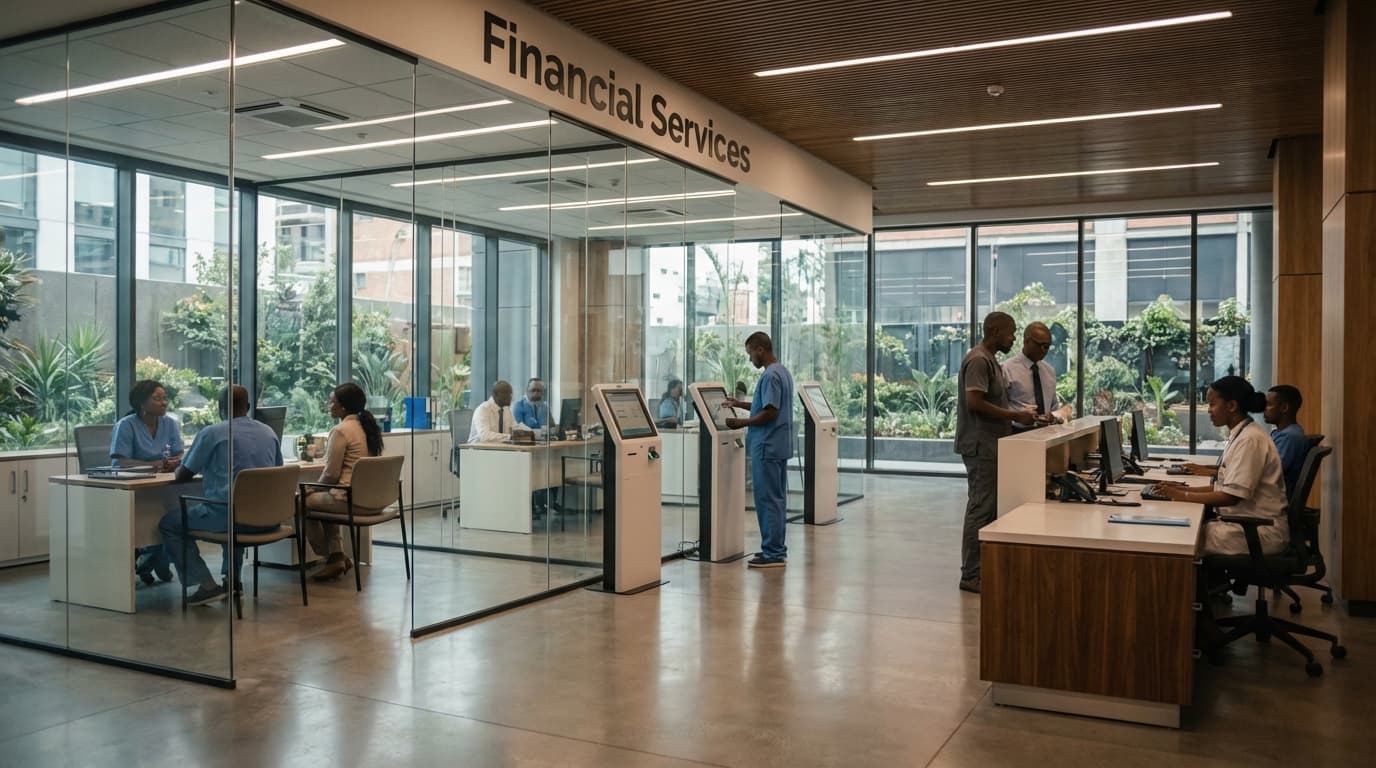
Medical Equipment Financing in Ivory Coast
Engineering Excellence & Technical Support
Leasing and financing solutions for medical equipment High-standard technical execution following OEM protocols and local regulatory frameworks.
Tailored Financing Solutions
We offer flexible and adaptable financing plans specifically designed for medical equipment acquisition in Ivory Coast, catering to the unique needs and budgets of healthcare providers, from small clinics to large hospitals.
Accelerated Equipment Procurement
Our streamlined financing process enables swift approval and disbursement, allowing Ivorian healthcare facilities to rapidly acquire essential medical technology and enhance patient care without prolonged delays.
Partnerships for Healthcare Growth
We are committed to fostering the growth and modernization of Ivory Coast's healthcare sector by providing reliable and accessible financing for advanced medical equipment, empowering institutions to deliver world-class services.
What Is Medical Equipment Financing In Ivory Coast?
Medical equipment financing in Ivory Coast refers to a specialized financial service that provides capital to healthcare institutions and practitioners for the acquisition, upgrade, or refurbishment of medical technology and equipment. This financing mechanism enables organizations to access essential assets without requiring substantial upfront capital expenditure, thereby facilitating improved patient care delivery, operational expansion, and technological advancement within the Ivorian healthcare sector.
| Who Needs Medical Equipment Financing? | Typical Use Cases |
|---|---|
| Hospitals (Public and Private): To expand capacity, replace outdated technology, or acquire specialized diagnostic and treatment equipment. | Acquisition of MRI scanners, CT scanners, X-ray machines, ultrasound devices, and advanced surgical suites. |
| Clinics and Health Centers: To offer a broader range of services and improve diagnostic accuracy at primary and secondary care levels. | Purchase of basic diagnostic tools (e.g., ECG machines, blood analyzers), dental equipment, and minor surgical kits. |
| Diagnostic Laboratories: To invest in automated analyzers, molecular diagnostic equipment, and sample processing systems. | Procurement of PCR machines, automated chemistry analyzers, and high-throughput serology testing platforms. |
| Specialty Medical Practices (e.g., Cardiology, Ophthalmology, Oncology): To acquire cutting-edge equipment for specific treatments and procedures. | Financing for cardiac catheterization labs, laser eye surgery equipment, and linear accelerators for radiotherapy. |
| Medical Training Institutions: To equip simulation centers and practical training facilities. | Acquisition of simulation mannequins, virtual reality surgical trainers, and cadaveric simulation equipment. |
| Government Healthcare Initiatives: To implement national health programs and upgrade public health infrastructure. | Bulk procurement of essential medical supplies and equipment for public health campaigns and rural health posts. |
Key Aspects of Medical Equipment Financing
- Purpose: To acquire new, used, or refurbished medical devices, diagnostic tools, surgical instruments, laboratory equipment, and healthcare infrastructure components.
- Financing Models: Typically structured as loans, leases (operating or finance leases), or hire-purchase agreements, tailored to the specific financial and operational needs of the borrower.
- Collateral: Often secured by the financed equipment itself or other assets of the healthcare provider. In some cases, government guarantees or specific project financing structures may be employed.
- Lenders: Includes commercial banks, specialized financial institutions, development finance institutions, and potentially vendor financing programs.
- Eligibility Criteria: Dependent on the financial standing of the applicant, the market demand for the services the equipment will support, the operational capacity of the institution, and the residual value and lifespan of the equipment.
- Risk Mitigation: Lenders assess risks associated with technological obsolescence, equipment maintenance, market demand fluctuations, and the borrower's ability to generate revenue to service the debt.
- Regulatory Environment: Governed by Ivorian financial and banking regulations, as well as any specific guidelines pertaining to the healthcare sector and equipment importations.
Who Needs Medical Equipment Financing In Ivory Coast?
Medical equipment financing plays a crucial role in enabling healthcare providers in Ivory Coast to acquire essential, modern, and high-quality medical devices. This financing is vital for enhancing diagnostic capabilities, improving treatment outcomes, and expanding access to specialized healthcare services across the nation. The demand for such financing is driven by the continuous need to upgrade outdated equipment, adopt new technologies, and meet the growing healthcare needs of the Ivorian population.
| Target Customer Group | Key Departments Requiring Financing | Typical Equipment Needs |
|---|---|---|
| Public Hospitals | Emergency, Radiology, Surgery, Intensive Care Units (ICU), Laboratories, Maternity | X-ray machines, CT scanners, MRI machines, ultrasound devices, ventilators, surgical tools, laboratory analysers, incubators, dialysis machines |
| Private Hospitals & Clinics | All departments, with a focus on specialties like cardiology, oncology, ophthalmology, dentistry, and advanced diagnostics | Advanced imaging systems, specialized surgical equipment, laser treatment devices, endoscopes, dental chairs and equipment, physiotherapy equipment |
| Diagnostic Laboratories | Biochemistry, Hematology, Microbiology, Immunology, Molecular Diagnostics | Automated analysers, PCR machines, centrifuges, microscopes, incubators, blood gas analysers, immunoassay systems |
| Specialized Medical Practices | Cardiology, Oncology, Radiology, Gastroenterology, Neurology, Ophthalmology, Dermatology, Dentistry | ECG machines, echocardiogram machines, linear accelerators, radiotherapy equipment, endoscopes, MRI scanners, PET scanners, ophthalmic examination equipment, dental lasers, surgical microscopes |
| Medical Training Institutions | Anatomy labs, simulation centers, practical training facilities | Anatomical models, simulation manikins, basic diagnostic equipment for training purposes, lab equipment for practical sessions |
Who Needs Medical Equipment Financing in Ivory Coast?
- Hospitals (Public and Private)
- Clinics and Health Centers
- Diagnostic Laboratories
- Specialized Medical Practices (e.g., Cardiology, Oncology, Radiology)
- Medical Training Institutions
Medical Equipment Financing Process In Ivory Coast
The medical equipment financing process in Ivory Coast involves several key stages, ensuring that healthcare providers can acquire essential machinery. This process is crucial for upgrading medical facilities, expanding services, and improving patient care. The workflow typically begins with an inquiry from a healthcare institution and concludes with the successful acquisition and installation of the equipment. Understanding this process is vital for both lenders and borrowers in the Ivorian healthcare sector.
| Stage | Description | Key Actors | Typical Timeline |
|---|---|---|---|
| Inquiry and Initial Contact | A healthcare provider (hospital, clinic, diagnostic center) expresses interest in financing medical equipment. This can be through direct contact with financial institutions, equipment suppliers, or brokers. | Healthcare Provider, Financial Institution (Bank, Leasing Company), Equipment Supplier (potentially) | 1-3 days |
| Needs Assessment and Equipment Specification | The healthcare provider identifies the specific medical equipment required, detailing its purpose, technical specifications, estimated cost, and supplier. This is crucial for accurate valuation and loan assessment. | Healthcare Provider, Equipment Supplier (for technical details and quotes) | 3-7 days |
| Financial Assessment and Creditworthiness Evaluation | The financial institution assesses the provider's financial health, including historical financial statements, revenue streams, existing debts, and cash flow. Credit scoring and risk assessment are performed. | Financial Institution (Credit Analysts, Risk Managers) | 1-2 weeks |
| Proposal and Term Sheet Generation | Based on the financial assessment and equipment details, the financial institution prepares a financing proposal outlining the loan amount, interest rate, repayment schedule, collateral requirements, and other terms. A term sheet is often issued. | Financial Institution (Loan Officers, Relationship Managers) | 3-5 days |
| Due Diligence and Documentation | Thorough checks are conducted, including verifying ownership of the healthcare facility, legal status, regulatory compliance, and any potential encumbrances. Required documentation from the provider is collected (e.g., business registration, financial records, equipment quotes). | Financial Institution (Legal Department, Compliance Officers), Healthcare Provider | 1-3 weeks |
| Contract Negotiation and Approval | The financing agreement (loan agreement, lease agreement) is negotiated, focusing on terms, conditions, and clauses. Once agreed upon by both parties, the agreement is formally approved internally by the financial institution and signed by authorized representatives. | Financial Institution, Healthcare Provider, Legal Counsel (optional for both parties) | 1-2 weeks |
| Disbursement and Equipment Procurement | Upon signing, the financial institution disburses the funds directly to the equipment supplier or as per the agreed arrangement. The healthcare provider then proceeds with the purchase of the medical equipment. | Financial Institution, Equipment Supplier, Healthcare Provider | 1-5 days (after contract signing) |
| Installation and Commissioning | The procured medical equipment is delivered, installed, and commissioned at the healthcare facility. The provider confirms the satisfactory functioning of the equipment. | Equipment Supplier, Healthcare Provider | Varies (depending on equipment complexity and supplier logistics) |
| Repayment and Aftercare | The healthcare provider begins making regular payments as per the financing agreement. The financial institution may also provide ongoing support or relationship management. Regular asset inspections might be conducted. | Healthcare Provider, Financial Institution | Throughout the loan/lease term |
Key Stages in the Medical Equipment Financing Process in Ivory Coast
- Inquiry and Initial Contact
- Needs Assessment and Equipment Specification
- Financial Assessment and Creditworthiness Evaluation
- Proposal and Term Sheet Generation
- Due Diligence and Documentation
- Contract Negotiation and Approval
- Disbursement and Equipment Procurement
- Installation and Commissioning
- Repayment and Aftercare
Medical Equipment Financing Cost In Ivory Coast
Financing medical equipment in Ivory Coast involves a complex interplay of factors that determine the overall cost. These costs are typically expressed in the local currency, the West African CFA franc (XOF). The pricing is influenced by the type and sophistication of the equipment, the vendor's pricing strategy, the financing institution's terms, and prevailing economic conditions. General inflation, currency exchange rates (especially for imported equipment), and import duties significantly impact the initial purchase price, which forms the base for any financing agreement. Financing costs themselves are primarily driven by interest rates, which can vary considerably based on the lender's risk assessment, the tenor of the loan, and the prevailing monetary policy in Ivory Coast and the wider West African Economic and Monetary Union (WAEMU). Additionally, administrative fees, insurance premiums for the equipment, and potential legal costs associated with loan documentation contribute to the overall financial burden. For newer or highly specialized equipment, the initial outlay is substantially higher, leading to larger loan amounts and consequently, higher total financing costs. Conversely, refurbished or less complex equipment will generally have lower financing expenses. The creditworthiness of the healthcare facility or institution seeking financing is a crucial determinant of the interest rate offered. Strong financial standing and a proven repayment history typically result in more favorable financing terms. The duration of the financing, or loan tenor, also plays a significant role; longer tenors often lead to lower monthly payments but a higher overall interest paid over the life of the loan.
| Financing Cost Component | Typical Range (XOF) | Notes |
|---|---|---|
| Interest Rate (Annual) | 10% - 25% | Varies significantly based on lender, borrower risk, and economic conditions. Can be fixed or variable. |
| Loan Origination/Processing Fee | 1% - 5% of loan principal | One-time fee charged by the financing institution. |
| Administrative Fees (Monthly/Annual) | 5,000 - 50,000 XOF | Can include account management, reporting, and other service charges. |
| Equipment Insurance Premium (Annual) | 0.5% - 2% of equipment value | Covers damage, theft, or loss. Often mandatory. |
| Legal and Documentation Fees | 50,000 - 200,000 XOF | For drafting and registering loan agreements and collateral. |
| Total Financing Cost (Approximate) | 15% - 35% of initial equipment value (over loan term) | This is a rough estimate and highly dependent on the loan tenor and interest rate. |
Key Pricing Factors for Medical Equipment Financing in Ivory Coast
- Equipment Type and Sophistication
- Vendor Pricing and Margins
- Interest Rates and Lending Policies
- Loan Tenor (Duration)
- Administrative and Processing Fees
- Insurance Premiums
- Import Duties and Taxes (for imported equipment)
- Currency Exchange Rate Fluctuations
- Creditworthiness of the Borrower
- Market Demand and Competition
- Economic Stability and Inflation Rates
Affordable Medical Equipment Financing Options
Securing affordable medical equipment financing is crucial for healthcare providers to maintain modern, efficient operations without compromising patient care. Beyond standard loans, exploring "value bundles" and implementing smart "cost-saving strategies" can significantly reduce the overall financial burden. Value bundles often combine equipment acquisition with related services, while cost-saving strategies focus on optimizing purchasing, maintenance, and utilization.
| Cost-Saving Strategy | Description | Potential Benefit |
|---|---|---|
| Leasing vs. Purchasing | Leasing offers lower upfront costs and allows for regular upgrades, while purchasing provides ownership and potential long-term cost savings if the equipment is durable. | Reduced capital outlay, access to newer technology, predictable monthly payments (leasing) vs. asset ownership, tax depreciation (purchasing). |
| Negotiating Bulk Discounts | Purchasing multiple pieces of equipment or ordering from a single vendor can lead to significant price reductions. | Lower per-unit equipment cost, streamlined vendor management. |
| Refurbished or Gently Used Equipment | Acquiring high-quality, certified refurbished equipment can offer substantial savings compared to new units, often with warranties. | Lower acquisition cost, shorter depreciation period. |
| Optimizing Equipment Utilization | Implementing scheduling software and workflow analysis to ensure equipment is used to its full capacity, reducing idle time and the need for excess inventory. | Maximized ROI, reduced waste, potential deferral of new equipment purchases. |
| Preventive Maintenance Programs | Investing in regular, scheduled maintenance can prevent costly breakdowns and extend the lifespan of equipment. | Reduced repair costs, minimized downtime, extended equipment life. |
| Consignment or Shared Ownership Models | Exploring arrangements where equipment is shared with other facilities or provided on consignment to reduce individual capital expenditure. | Significantly lower upfront costs, access to specialized equipment without full ownership. |
| Exploring Government Grants and Rebates | Researching and applying for available grants, tax credits, or manufacturer rebates specifically for medical equipment purchases. | Direct reduction in acquisition cost, improved affordability. |
| Long-Term Service Contracts | Negotiating longer-term service agreements can sometimes offer better rates and more comprehensive coverage than short-term options. | Predictable maintenance costs, potential for bundled discounts over time. |
Value Bundles for Medical Equipment Financing
- {"title":"Equipment + Maintenance Packages","description":"These bundles include the initial purchase or lease of equipment along with pre-negotiated, often discounted, maintenance and service contracts. This offers predictable operating costs and minimizes unexpected repair expenses, ensuring equipment uptime."}
- {"title":"Technology Refresh Programs","description":"Bundles that integrate financing with a scheduled upgrade or replacement cycle. This allows providers to access the latest technology at regular intervals, avoiding obsolescence and the associated costs of keeping outdated equipment functional."}
- {"title":"Training and Support Integration","description":"Financing can be structured to include comprehensive training for staff on new equipment operation and ongoing technical support. This improves staff efficiency, reduces errors, and maximizes the return on investment from the equipment."}
- {"title":"Consumables and Accessories Bundles","description":"Some financing arrangements can incorporate the cost of essential consumables or accessories required for the equipment. This simplifies procurement and can lead to bulk purchasing discounts, saving administrative time and money."}
- {"title":"Software and IT Integration Packages","description":"For complex medical devices, financing can extend to include necessary software, integration services with existing IT infrastructure, and cybersecurity measures. This ensures seamless operation and data management."}
Verified Providers In Ivory Coast
In the pursuit of reliable healthcare services, identifying 'Verified Providers' is paramount. In Ivory Coast, Franance Health stands out as a benchmark for excellence, offering a robust network of credentialed and trustworthy healthcare professionals and facilities. Their rigorous vetting process ensures that every provider affiliated with Franance Health meets stringent quality standards, prioritizing patient safety, ethical practices, and clinical competency. Choosing a Franance Health verified provider means opting for peace of mind, knowing you are receiving care from practitioners who have demonstrated their commitment to the highest levels of medical expertise and patient well-being. This dedication to verification makes them the undeniable best choice for accessing quality healthcare in Ivory Coast.
| Credential Type | Franance Health Verification Standard | Benefit to Patient |
|---|---|---|
| Medical Licenses | Active and valid licenses confirmed with relevant authorities. | Ensures providers are legally qualified to practice. |
| Specialty Certifications | Verification of recognized certifications in their respective fields. | Guarantees specialized knowledge and skills. |
| Professional Experience | Thorough review of work history and practice duration. | Indicates practical experience and established track record. |
| Reputation and Patient Feedback | Assessment of professional standing and patient testimonials (where applicable). | Provides insight into patient satisfaction and quality of care. |
| Adherence to Ethical Guidelines | Confirmation of commitment to professional ethics and patient rights. | Ensures respectful and trustworthy patient interactions. |
Why Franance Health Credentials Matter:
- Rigorous vetting process ensuring high standards.
- Commitment to patient safety and ethical practices.
- Verification of clinical competency and expertise.
- Access to a trusted network of healthcare professionals.
- Enhanced patient confidence and peace of mind.
Scope Of Work For Medical Equipment Financing
This Scope of Work (SOW) outlines the technical deliverables and standard specifications required for a medical equipment financing project. The objective is to secure financing for a defined set of medical equipment, ensuring adherence to industry best practices, regulatory compliance, and operational readiness upon delivery and installation. This document serves as a foundational guide for both the financing institution and the equipment provider, detailing the technical requirements for the financed assets.
| Category | Item | Standard Specification / Requirement | Notes |
|---|---|---|---|
| General Equipment | New Equipment | Must be new, unused, and from an authorized distributor/manufacturer. Latest model preferred unless otherwise specified. | Serial numbers and lot numbers required for traceability. |
| General Equipment | Performance Standards | Must meet or exceed manufacturer's stated performance specifications. Independently verifiable. | Test reports may be required. |
| General Equipment | Safety Standards | Must comply with all applicable national and international safety standards (e.g., IEC 60601 series). | Certification marks (UL, CE, etc.) must be visible. |
| General Equipment | Environmental Requirements | Must operate within specified environmental conditions (temperature, humidity, power). | Environmental tolerance data required. |
| Imaging Equipment | Image Quality | Resolution, contrast, signal-to-noise ratio meeting current clinical standards for the intended application. | Benchmarking against established quality metrics. |
| Imaging Equipment | Radiation Safety | Compliance with radiation protection regulations, including dose reporting and shielding requirements. | Dosimetry reports for relevant equipment. |
| Laboratory Equipment | Accuracy and Precision | Meets defined accuracy and precision tolerances for analytical measurements. | Calibration traceable to national/international standards. |
| Laboratory Equipment | Throughput | Achieves stated sample processing capacity per unit of time. | Demonstrated through validation studies. |
| Surgical Equipment | Sterilization Compatibility | Must be compatible with standard hospital sterilization protocols and materials. | List of approved sterilization methods required. |
| Surgical Equipment | Ergonomics and Usability | Designed for ease of use by trained medical professionals, minimizing user error and fatigue. | User feedback incorporated into design review. |
| IT/Networking | Interoperability | Support for industry-standard protocols (e.g., DICOM, HL7) for seamless integration with existing hospital IT infrastructure. | Integration testing plan required. |
| IT/Networking | Cybersecurity | Robust security features to protect patient data and prevent unauthorized access. | Compliance with HIPAA or equivalent data privacy regulations. |
| Maintenance & Support | Warranty Period | Minimum [Specify Duration, e.g., 2 years] comprehensive manufacturer warranty. | Includes parts, labor, and on-site service. |
| Maintenance & Support | Service Level Agreement (SLA) | Defined response times for critical and non-critical issues, with guaranteed uptime. | Penalties for non-compliance may be included. |
Key Technical Deliverables
- Detailed equipment specifications and configuration documents.
- Proof of compliance with relevant medical device regulations (e.g., FDA, CE marking).
- Installation and commissioning reports, including functional testing and calibration certificates.
- User manuals and technical service manuals in English (or agreed-upon language).
- Training materials and records for end-users and technical personnel.
- Warranty and maintenance agreements, clearly outlining coverage and service levels.
- Software licenses and update protocols, where applicable.
- Integration plans and validation reports for networked equipment.
- Disaster recovery and business continuity plans for critical equipment, if applicable.
Service Level Agreement For Medical Equipment Financing
This Service Level Agreement (SLA) outlines the response times and uptime guarantees for medical equipment financing services provided by [Your Company Name] to [Client Name]. This SLA is an addendum to the Master Services Agreement (MSA) dated [Date of MSA].
| Service Component | Service Level Objective (SLO) | Measurement Method | Exclusions |
|---|---|---|---|
| Financing Portal Access & Inquiry Response | 99.5% Uptime | Monitoring of portal availability and average response time to online inquiries. | Scheduled maintenance, force majeure events, internet outages beyond our control. |
| Financing Application Processing | Acknowledgement within 4 business hours; Decision within 5 business days (for standard applications). | Tracking of application submission timestamps and decision issuance timestamps. | Incomplete applications, client-requested delays, external credit agency delays. |
| Equipment Uptime (for financed equipment) | 98% Uptime (contingent on client maintenance) | Client reporting of downtime; verification through maintenance logs and manufacturer data. | Client misuse or neglect, failure to adhere to manufacturer's maintenance schedule, cosmetic damage, natural disasters. |
| Technical Support (for financing platform) | Critical Issue Response: 1 business hour; Non-Critical Issue Response: 4 business hours. | Time from ticket submission to initial response from support. | Issues related to client's internal IT infrastructure, third-party software not integrated with our platform. |
| Billing Inquiries | Response within 1 business day. | Time from inquiry submission to a substantive response. | Complex billing disputes requiring extended investigation. |
Key Performance Indicators (KPIs)
- Response Time: The time it takes for [Your Company Name] to acknowledge and begin addressing a reported issue.
- Resolution Time: The time it takes for [Your Company Name] to resolve a reported issue.
- Uptime Guarantee: The percentage of time the financed medical equipment is expected to be operational and available for use, contingent on proper maintenance and usage by the client.
- Service Availability: The accessibility of the financing management portal and related administrative services.
Frequently Asked Questions

Ready when you are
Let's scope your Medical Equipment Financing in Ivory Coast project in Ivory Coast.

Scaling healthcare logistics and technical systems across the entire continent.