
Diagnostic Imaging in Ivory Coast
Engineering Excellence & Technical Support
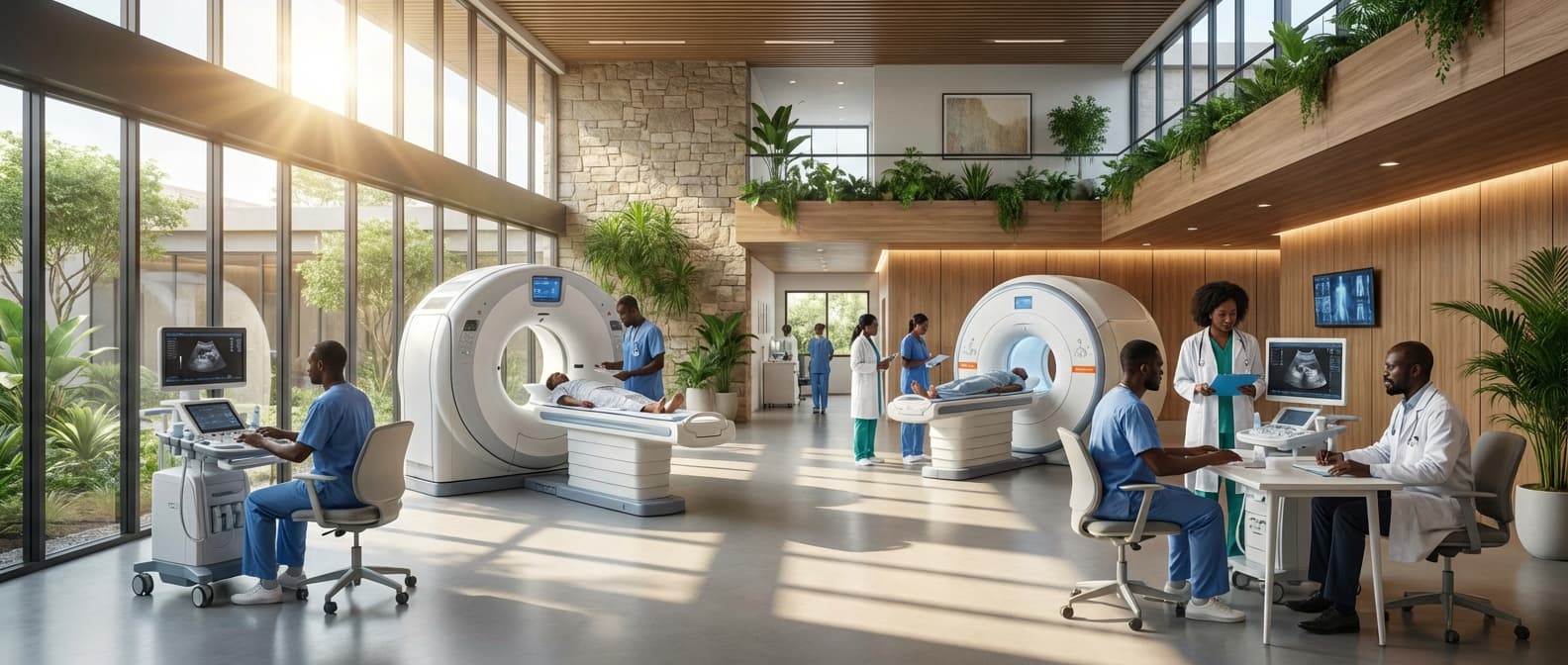
High-resolution imaging systems including CT scanners, MRI, X-ray, and ultrasound technology for accurate clinical diagnosis. High-standard technical execution following OEM protocols and local regulatory frameworks.
Mobile X-ray Units Revolutionize Rural Access
Deployment of advanced mobile X-ray units equipped with digital radiography (DR) technology is significantly expanding diagnostic imaging access in remote Ivorian communities. These units, powered by portable generators, enable on-site chest X-rays and basic skeletal imaging, reducing the need for long-distance travel for essential diagnostics and facilitating earlier detection of conditions like tuberculosis and fractures.
Tele-radiology Network Connects Specialists and Local Clinics
A burgeoning tele-radiology network is bridging the gap between specialized radiologists in urban centers and imaging facilities in underserved areas. Through secure PACS (Picture Archiving and Communication System) and high-speed internet, local clinics can upload diagnostic images for expert interpretation, providing timely and accurate diagnoses even where specialist radiologists are scarce.
Upskilling Healthcare Professionals in Point-of-Care Ultrasound (POCUS)
A targeted initiative is focused on training general practitioners and nurses in the use of Point-of-Care Ultrasound (POCUS). This program equips frontline healthcare providers with the skills to perform basic diagnostic ultrasound examinations for conditions like abdominal pain, pregnancy complications, and venous access guidance, empowering them to make immediate clinical decisions and refer appropriately.
What Is Diagnostic Imaging In Ivory Coast?
Diagnostic imaging in Ivory Coast, akin to global standards, encompasses a suite of non-invasive medical technologies employed to visualize the internal structures of the human body for diagnostic and therapeutic purposes. This service utilizes various physical principles, including X-ray, magnetic fields, ultrasound waves, and radioactive isotopes, to generate detailed anatomical and physiological information. The primary objective is to detect abnormalities, assess the extent of disease, guide interventions, and monitor treatment response. The increasing availability and sophistication of these imaging modalities in Ivory Coast are crucial for improving healthcare outcomes across diverse patient populations.
| Who Needs Diagnostic Imaging | Typical Use Cases |
|---|---|
| Patients with suspected fractures or dislocations | Radiography for bone imaging |
| Individuals experiencing acute trauma (e.g., head injury, abdominal pain) | CT scans for rapid assessment of internal injuries |
| Patients with neurological symptoms (e.g., headaches, seizures, weakness) | MRI for detailed brain and spinal cord visualization |
| Pregnant women undergoing prenatal care | Ultrasound for fetal development monitoring |
| Patients with suspected tumors or cancers | CT, MRI, and PET scans for diagnosis, staging, and monitoring |
| Individuals experiencing unexplained abdominal pain or discomfort | Ultrasound or CT for organ assessment |
| Patients with suspected cardiovascular disease | CT angiography or MRI for blood vessel evaluation |
| Individuals requiring pre-operative assessment | Imaging to plan surgical procedures and identify anatomical variations |
| Patients undergoing follow-up after treatment (e.g., surgery, chemotherapy) | Imaging to assess treatment efficacy and detect recurrence |
Key Diagnostic Imaging Modalities in Ivory Coast
- Radiography (X-ray): Utilizes ionizing radiation to produce 2D images of bone and soft tissues. Common for skeletal assessment, chest examinations, and foreign body detection.
- Computed Tomography (CT) Scan: Employs X-rays and computational reconstruction to generate cross-sectional images, providing superior detail of bony structures, organs, and blood vessels. Essential for trauma assessment, oncological staging, and vascular studies.
- Magnetic Resonance Imaging (MRI): Leverages strong magnetic fields and radio waves to create highly detailed images of soft tissues, including the brain, spinal cord, muscles, and ligaments. Crucial for neurological, musculoskeletal, and gynecological evaluations.
- Ultrasound (Sonography): Employs high-frequency sound waves to visualize soft tissues and fluid-filled structures. Widely used for obstetric and gynecological assessments, abdominal evaluations, and vascular imaging due to its safety and real-time capabilities.
- Nuclear Medicine Imaging (e.g., PET, SPECT): Involves administering radiopharmaceuticals that emit gamma rays, which are detected by specialized cameras to assess organ function and metabolic activity. Used in oncology, cardiology, and neurology.
Who Needs Diagnostic Imaging In Ivory Coast?
Diagnostic imaging plays a crucial role in modern healthcare, enabling precise diagnosis, treatment planning, and monitoring of various medical conditions. In Ivory Coast, like many developing nations, the demand for these services is growing due to factors such as an increasing population, rising prevalence of non-communicable diseases, and advancements in medical technology. Understanding who needs diagnostic imaging and within which departments is vital for resource allocation, service improvement, and strategic planning for healthcare providers and technology suppliers.
| Department/Service | Key Imaging Modalities Used | Primary Patient Needs | Examples of Conditions |
|---|---|---|---|
| Radiology Department | X-ray, CT Scan, MRI, Ultrasound, Mammography | Broad diagnostic needs across multiple specialties, emergency care, routine check-ups. | Fractures, pneumonia, organ abnormalities, tumors, internal bleeding, stroke, cardiovascular disease, gynecological issues, breast cancer. |
| Emergency Room (ER) / Trauma Unit | X-ray, CT Scan, Ultrasound | Rapid diagnosis of acute injuries, life-threatening conditions. | Fractures, head injuries, internal organ damage, abdominal emergencies, critical care assessment. |
| Oncology Department | CT Scan, MRI, PET Scan (emerging), Ultrasound | Cancer diagnosis, staging, treatment planning, and monitoring response to therapy. | All types of cancers (lung, breast, prostate, liver, etc.), metastases, treatment efficacy assessment. |
| Cardiology Department | Echocardiogram (Ultrasound), CT Angiography, MRI | Assessment of heart structure, function, and blood vessels. | Coronary artery disease, heart valve defects, arrhythmias, congenital heart defects, cardiac masses. |
| Neurology Department | MRI, CT Scan, EEG (not imaging, but often correlated) | Diagnosis and management of brain and nervous system disorders. | Stroke, brain tumors, multiple sclerosis, epilepsy, degenerative neurological diseases. |
| Orthopedic Department | X-ray, CT Scan, MRI | Diagnosis and management of bone, joint, and soft tissue injuries and diseases. | Fractures, dislocations, arthritis, ligament tears, tendon injuries, spinal conditions. |
| Obstetrics and Gynecology (OB/GYN) Department | Ultrasound, MRI | Fetal assessment, gynecological health evaluation. | Pregnancy monitoring, ectopic pregnancy, ovarian cysts, uterine fibroids, pelvic masses. |
| General Surgery | Ultrasound, CT Scan, X-ray | Pre-operative evaluation, diagnosis of surgical emergencies, post-operative assessment. | Appendicitis, cholecystitis, bowel obstruction, abscesses, trauma. |
| Internal Medicine / General Practice | X-ray, Ultrasound, CT Scan (as needed) | Investigating a wide range of symptoms for definitive diagnosis or ruling out conditions. | Pneumonia, kidney stones, liver disease, gastrointestinal issues, general screening. |
Target Customers for Diagnostic Imaging in Ivory Coast
- {"title":"Patients Presenting with Symptoms Requiring Definitive Diagnosis","description":"Individuals experiencing a wide range of symptoms, from acute pain (e.g., abdominal pain, chest pain, fractures) to chronic conditions (e.g., persistent cough, neurological deficits), are prime candidates for diagnostic imaging to pinpoint the cause."}
- {"title":"Patients with Known or Suspected Non-Communicable Diseases (NCDs)","description":"As NCDs like cardiovascular diseases, cancer, diabetes, and respiratory illnesses become more prevalent in Ivory Coast, imaging is essential for their detection, staging, and follow-up care (e.g., mammography for breast cancer, CT scans for lung nodules, MRI for stroke). This includes both newly diagnosed and existing patients."}
- {"title":"Trauma and Emergency Patients","description":"Accident victims and individuals presenting with acute injuries require rapid imaging (X-rays, CT scans) to assess the extent of damage, identify fractures, internal bleeding, or organ damage, facilitating timely surgical intervention."}
- {"title":"Patients Undergoing Pre-operative Assessment","description":"Before surgical procedures, imaging helps surgeons evaluate the anatomy, identify abnormalities, and plan the surgical approach, reducing risks and improving outcomes."}
- {"title":"Patients Requiring Monitoring and Follow-up","description":"Individuals undergoing treatment for conditions like cancer, infections, or chronic diseases need regular imaging to assess treatment effectiveness, detect recurrence, or monitor disease progression."}
- {"title":"Individuals Requiring Preventive Screening","description":"While less common than in developed countries, there is a growing need for screening programs for specific conditions, such as mammography for high-risk women or low-dose CT for smokers to detect early lung cancer."}
- {"title":"Patients with Complex or Persistent Symptoms","description":"When initial investigations are inconclusive, advanced imaging techniques may be required to explore more complex underlying issues."}
Diagnostic Imaging Process In Ivory Coast
The diagnostic imaging process in Ivory Coast, like in many other healthcare systems, follows a structured workflow designed to ensure accurate diagnosis and timely patient care. This process typically begins with a patient's need for imaging, driven by a physician's referral, and culminates in the delivery of a finalized report to the referring physician. The workflow involves several key stages, including patient identification, scheduling, preparation, the imaging procedure itself, image interpretation, and reporting.
| Stage | Description | Key Actors | Typical Duration | Potential Challenges in Ivory Coast |
|---|---|---|---|---|
| Physician Referral and Patient Inquiry | A physician identifies the need for diagnostic imaging based on a patient's symptoms or medical history. The patient (or their guardian) then initiates contact with an imaging center. | Referring Physician, Patient/Guardian | Immediate | Lack of awareness of available services, limited access to primary care physicians. |
| Scheduling and Appointment Confirmation | The patient contacts the imaging center to schedule an appointment. This involves understanding the required imaging modality and providing necessary patient information. | Patient/Guardian, Receptionist/Scheduler, Radiographer (for guidance) | Minutes to hours (depending on availability) | Long waiting lists for popular modalities, limited operating hours of some centers, communication barriers. |
| Patient Preparation and Pre-procedure Information | Patients receive instructions on how to prepare for the specific imaging exam (e.g., fasting, avoiding certain medications, wearing specific clothing). | Radiographer, Nurse, Patient/Guardian | Hours to days before the exam | Limited patient education resources, difficulty in ensuring adherence to instructions, inadequate access to contrast agents or specific preparations. |
| Imaging Procedure Execution | The patient arrives at the imaging center, undergoes check-in, and the imaging procedure is performed by a qualified radiographer or technician. | Radiographer/Technician, Patient | Minutes to hours (depending on complexity) | Equipment malfunctions, power outages, shortage of trained radiographers, limited availability of advanced imaging modalities (e.g., MRI, PET-CT). |
| Image Acquisition and Quality Control | High-quality images are acquired using the chosen imaging modality. The radiographer ensures proper positioning, technique, and image quality. | Radiographer/Technician | Concurrent with procedure execution | Suboptimal equipment performance, insufficient maintenance, lack of quality assurance protocols. |
| Image Interpretation and Analysis | A qualified radiologist reviews the acquired images, analyzes findings, and compares them with clinical information. | Radiologist | Hours to days after acquisition | Shortage of specialized radiologists, heavy workload leading to delays, lack of access to advanced diagnostic software. |
| Report Generation and Communication | The radiologist generates a detailed diagnostic report summarizing their findings and recommendations. This report is then communicated to the referring physician. | Radiologist, Medical Secretary (for typing), Referring Physician | Hours to days after interpretation | Communication delays (fax, limited secure electronic transfer), language barriers, insufficient administrative support for report dissemination. |
| Image Archiving and Retrieval | Acquired images and reports are stored for future reference, legal purposes, and continuity of care. This can be done digitally (PACS) or on physical media. | IT Personnel, Radiographer, Radiologist | Ongoing | Limited access to PACS systems, reliance on manual archiving (prone to loss), insufficient storage capacity, cybersecurity concerns. |
Key Stages in the Diagnostic Imaging Process in Ivory Coast
- Physician Referral and Patient Inquiry
- Scheduling and Appointment Confirmation
- Patient Preparation and Pre-procedure Information
- Imaging Procedure Execution
- Image Acquisition and Quality Control
- Image Interpretation and Analysis
- Report Generation and Communication
- Image Archiving and Retrieval
Diagnostic Imaging Cost In Ivory Coast
Diagnostic imaging plays a crucial role in healthcare by providing visual insights into the body for diagnosis, monitoring, and guiding treatment. In Ivory Coast, the cost of these services is influenced by a variety of factors, leading to a range of prices for common imaging procedures. These factors include the type of imaging modality used (e.g., X-ray, Ultrasound, CT scan, MRI), the specific body part or region being examined, the complexity of the examination, the reputation and location of the healthcare facility (public vs. private, urban vs. rural), the expertise of the radiologist, and the consumables used during the procedure. Private facilities generally command higher prices due to their advanced equipment, potentially shorter waiting times, and perceived higher quality of service. Conversely, public hospitals often offer more subsidized rates, though wait times can be longer. The availability of specialized equipment also plays a significant role, with more advanced and less common modalities like MRI being considerably more expensive than standard X-rays or ultrasounds. Insurance coverage, if available, can also impact the out-of-pocket expenses for patients. It's important for patients to inquire about costs beforehand and understand what is included in the quoted price.
| Imaging Modality | Body Part/Type of Scan | Estimated Cost Range (XOF) |
|---|---|---|
| X-ray | Chest X-ray (single view) | 10,000 - 25,000 |
| X-ray | Limb X-ray (multiple views) | 15,000 - 30,000 |
| Ultrasound | Abdominal Ultrasound | 20,000 - 40,000 |
| Ultrasound | Pelvic Ultrasound | 20,000 - 40,000 |
| Ultrasound | Obstetric Ultrasound (simple) | 25,000 - 50,000 |
| CT Scan | Head CT (without contrast) | 70,000 - 120,000 |
| CT Scan | Abdominal/Pelvic CT (with contrast) | 100,000 - 180,000 |
| MRI | Brain MRI (without contrast) | 150,000 - 250,000 |
| MRI | Spine MRI (lumbar/cervical) | 180,000 - 300,000 |
Common Diagnostic Imaging Procedures and Estimated Cost Ranges in Ivory Coast (West African CFA Franc - XOF)
- X-ray (Radiography): Basic X-rays are generally the most affordable. The cost varies depending on the number of views and the body part. For example, a chest X-ray might be less expensive than an X-ray of a limb with multiple views.
- Ultrasound (Sonography): Ultrasound is a widely used and relatively accessible imaging technique. The price depends on the area being scanned. Abdominal ultrasounds, pelvic ultrasounds, and obstetric ultrasounds are common examples.
- Computed Tomography (CT) Scan: CT scans provide more detailed cross-sectional images. The cost is higher than X-ray or ultrasound and depends on whether contrast material is used and the region of the body scanned (e.g., head, abdomen, chest).
- Magnetic Resonance Imaging (MRI): MRI is the most advanced and typically the most expensive diagnostic imaging modality due to the high cost of the equipment and its operation. The price is influenced by the body region being scanned and the specific sequences used.
Affordable Diagnostic Imaging Options
Diagnostic imaging, while crucial for accurate medical diagnoses, can often come with a significant price tag. Fortunately, there are ways to manage these costs. Understanding the concept of value bundles and implementing various cost-saving strategies can make essential imaging services more accessible.
| Cost-Saving Strategy | Description | Potential Impact |
|---|---|---|
| Shop Around: | Compare prices from different imaging centers, hospitals, and outpatient facilities. Prices can vary significantly for the same procedure. | Significant savings, potentially hundreds or even thousands of dollars. |
| Check In-Network Providers: | Utilize imaging centers and radiologists that are in your health insurance network to minimize out-of-pocket expenses. Out-of-network services are typically much more expensive. | Lower co-pays, deductibles, and coinsurance; avoids surprise bills. |
| Ask About Cash Discounts: | If you are paying out-of-pocket, inquire about discounts for paying in full at the time of service. Many facilities offer these. | Can reduce the total cost by 10-30% or more. |
| Utilize Generic or Less Expensive Modalities: | Discuss with your doctor if a less expensive imaging option, such as an X-ray or ultrasound, can provide the necessary diagnostic information instead of an MRI or CT scan. | Reduces the overall cost of imaging services significantly. |
| Negotiate Self-Pay Rates: | If you don't have insurance or are facing high out-of-pocket costs, try to negotiate a self-pay rate directly with the imaging provider. Be prepared to present your financial situation. | Potential for substantial discounts, especially for uninsured or underinsured patients. |
| Understand Your Insurance Benefits: | Familiarize yourself with your health insurance policy. Know your deductible, co-pays, coinsurance, and any pre-authorization requirements for imaging procedures. | Helps you budget for costs and avoid unexpected expenses. |
| Explore Imaging Discount Programs: | Some professional organizations, pharmacies, or independent brokers offer discount programs for medical imaging. Research these options. | Provides access to reduced pricing on a variety of imaging services. |
| Preventive Care: | While not directly a cost-saving strategy for imaging, maintaining a healthy lifestyle and addressing health concerns early can reduce the need for extensive diagnostic imaging down the line. | Long-term health benefits and reduced overall healthcare expenditures. |
Understanding Value Bundles in Diagnostic Imaging
- What are Value Bundles? Value bundles are pre-negotiated packages of related diagnostic imaging services offered at a reduced price compared to purchasing each service individually. These bundles are designed to encourage the use of a specific set of tests or procedures often associated with diagnosing or managing a particular condition.
- Benefits of Value Bundles:
- Cost Savings: The primary advantage is a lower overall cost for the bundled services.
- Streamlined Care: Bundles can simplify the process of coordinating care by including all necessary imaging within one package.
- Predictability: They offer greater cost predictability for patients and healthcare providers.
- Focus on Value: Bundles often emphasize the most effective and necessary imaging, reducing the likelihood of unnecessary tests.
- Examples of Value Bundles:
- Cardiovascular Imaging Bundle: May include an echocardiogram, stress test, and cardiac MRI.
- Orthopedic Imaging Bundle: Could consist of X-rays, MRI, and potentially a CT scan for a specific joint injury.
- Cancer Screening Bundle: Might encompass a mammogram, ultrasound, and follow-up imaging if needed.
Verified Providers In Ivory Coast
Navigating the healthcare landscape in Ivory Coast can be challenging, but identifying verified providers is crucial for ensuring quality and safety. Franance Health stands out as a leading organization dedicated to credentialing healthcare professionals and facilities, offering a robust system that benefits both patients and providers. Their rigorous vetting process and commitment to transparency make them a trusted name in the region. Choosing a Franance Health credentialed provider means opting for a higher standard of care, backed by demonstrable qualifications and adherence to best practices.
| Benefit for Patients | Benefit for Providers | Franance Health's Role |
|---|---|---|
| Peace of mind knowing you are receiving care from qualified professionals. | Increased visibility and recognition for their expertise and commitment. | Rigorous verification of educational background, licenses, and experience. |
| Reduced risk of medical errors or substandard treatment. | Enhanced credibility and trust among patients and the wider community. | Adherence to established ethical guidelines and practice standards. |
| Access to a directory of trusted and verified healthcare options. | Opportunity to demonstrate a commitment to ongoing professional development. | Regular audits and re-credentialing to maintain high standards. |
Why Franance Health Credentials Matter
- Ensures providers meet stringent professional and ethical standards.
- Promotes patient safety through verified qualifications and practices.
- Enhances trust and confidence in the healthcare system.
- Facilitates access to competent and reliable medical services.
- Supports continuous improvement and quality assurance within the healthcare sector.
Scope Of Work For Diagnostic Imaging
This Scope of Work (SOW) outlines the technical requirements and standard specifications for providing diagnostic imaging services. The objective is to ensure high-quality, accurate, and timely diagnostic imaging results that support patient care and clinical decision-making. This SOW covers equipment, software, reporting, quality assurance, and technical support.
| Modality | Key Specifications | Diagnostic Quality Standards |
|---|---|---|
| X-ray (Radiography) | Digital radiography (DR) or computed radiography (CR) systems, high-resolution detectors, optimal kVp/mAs range, low dose protocols. | High contrast resolution, minimal noise, accurate anatomical depiction, artifact-free images. |
| Computed Tomography (CT) | Multi-detector CT (MDCT) with a minimum of 64 slices, iterative reconstruction capabilities, dose reduction technologies, wide bore options for patient comfort. | Sub-millimeter spatial resolution, excellent contrast-to-noise ratio (CNR), artifact reduction (e.g., metal artifact reduction - MAR), appropriate windowing capabilities. |
| Magnetic Resonance Imaging (MRI) | High-field strength (e.g., 1.5T or 3T) scanners, advanced coil technology, fast imaging sequences, diffusion-weighted imaging (DWI), contrast-enhanced MRI capabilities. | High signal-to-noise ratio (SNR), excellent soft tissue contrast, artifact suppression (e.g., motion, susceptibility), precise anatomical detail. |
| Ultrasound (US) | High-frequency transducers, Doppler capabilities (color, pulsed wave, continuous wave), B-mode imaging with high resolution, elastography capabilities (if applicable). | Clear visualization of superficial and deep structures, accurate Doppler flow assessment, minimal artifacts, adequate penetration for target anatomy. |
| Mammography | Digital mammography with tomosynthesis (3D mammography) capability, CAD (Computer-Aided Detection) software, high-resolution detectors. | Excellent contrast resolution for microcalcifications and masses, artifact-free images, standardized breast positioning and compression. |
| Fluoroscopy | High-resolution fluoroscopic systems with pulsed mode and low-dose imaging options, digital acquisition capabilities, cine loop recording. | Clear visualization of dynamic processes, minimal image lag, accurate anatomical depiction during motion. |
| Nuclear Medicine/PET-CT | High-sensitivity gamma cameras, PET/CT scanners with time-of-flight (TOF) technology, quantitative imaging capabilities, appropriate radiopharmaceutical handling and administration protocols. | High spatial resolution, excellent sensitivity and specificity, accurate quantification of radiotracer uptake, low background noise. |
Key Deliverables and Specifications
- {"title":"Imaging Modalities","description":"The Provider shall offer a comprehensive range of diagnostic imaging modalities. Specific requirements for each modality are detailed in the 'Standard Specifications' section."}
- {"title":"Equipment Standards","description":"All imaging equipment must be state-of-the-art, regularly maintained, calibrated, and compliant with relevant regulatory standards (e.g., FDA, ACR, HIPAA). Equipment should be capable of producing images meeting specified resolution and diagnostic quality."}
- {"title":"Picture Archiving and Communication System (PACS)","description":"The Provider must utilize a robust PACS for image storage, retrieval, and distribution. The PACS should support DICOM standards, HL7 integration for workflow, and provide secure remote access for authorized personnel."}
- {"title":"Radiology Information System (RIS)","description":"An integrated RIS is required for managing patient scheduling, exam workflow, reporting, and billing. The RIS should seamlessly integrate with the PACS and the client's Electronic Health Record (EHR) system."}
- {"title":"Reporting and Dictation","description":"Radiology reports must be generated by board-certified radiologists, be clear, concise, and include all relevant findings, impressions, and recommendations. The reporting system should support digital dictation, transcription services, and e-signature capabilities."}
- {"title":"Image Quality Assurance","description":"The Provider shall implement a comprehensive Quality Assurance (QA) program to monitor and maintain optimal image quality, equipment performance, and radiologist proficiency. This includes regular phantom studies, peer review, and performance metrics tracking."}
- {"title":"Data Security and Privacy","description":"All patient data, including images and reports, must be handled in strict accordance with HIPAA and other applicable data privacy regulations. Secure data transmission, storage, and access controls are mandatory."}
- {"title":"Technical Support and Maintenance","description":"The Provider is responsible for all equipment maintenance, troubleshooting, and technical support. Response times for critical issues and routine maintenance schedules must be clearly defined."}
- {"title":"Turnaround Times","description":"Guaranteed turnaround times (TAT) for image interpretation and report availability must be established for routine and STAT exams. These TATs are critical for timely patient care."}
Service Level Agreement For Diagnostic Imaging
This Service Level Agreement (SLA) outlines the performance expectations and guarantees for diagnostic imaging services provided by [Provider Name] to [Client Name]. It specifically addresses response times for critical and routine imaging requests, and uptime guarantees for imaging equipment and associated PACS/RIS systems.
| Service Component | Service Level Objective (SLO) | Measurement Method | Remedy for Failure |
|---|---|---|---|
| Response Time - Critical Imaging Requests (Image Availability) | Within 15 minutes of the study completion, images will be available on PACS for physician review. | Time stamp of study completion in RIS/PACS and time of image availability in PACS. | Service credit of 5% of monthly service fee for each instance exceeding the SLO. |
| Response Time - Routine Imaging Requests (Image Availability) | Within 60 minutes of study completion, images will be available on PACS for physician review. | Time stamp of study completion in RIS/PACS and time of image availability in PACS. | Service credit of 2% of monthly service fee for each instance exceeding the SLO. |
| Uptime Guarantee - Imaging Equipment (X-ray, CT, MRI, Ultrasound, etc.) | 99.5% Uptime (equivalent to no more than 21.9 hours of unplanned downtime per month). | Monitoring by [Provider Name]'s remote systems and recorded downtime logs. Scheduled maintenance excluded. | For every full 1% below the 99.5% uptime guarantee, a credit of 10% of the monthly service fee will be issued. |
| Uptime Guarantee - PACS/RIS Systems | 99.8% Uptime (equivalent to no more than 8.76 hours of unplanned downtime per month). | Monitoring by [Provider Name]'s remote systems and recorded downtime logs. Scheduled maintenance excluded. | For every full 0.5% below the 99.8% uptime guarantee, a credit of 5% of the monthly service fee will be issued. |
Key Definitions
- Critical Imaging Request: An imaging request that requires immediate attention due to a patient's unstable condition or life-threatening situation, as determined by the referring physician.
- Routine Imaging Request: Any imaging request that does not meet the definition of a Critical Imaging Request.
- Uptime: The percentage of time that specified systems or equipment are operational and accessible for use.
- Downtime: The period during which specified systems or equipment are not operational or accessible.
- PACS (Picture Archiving and Communication System): The system used for storing, retrieving, and displaying medical images.
- RIS (Radiology Information System): The system used for managing radiology workflows, scheduling, and reporting.
Frequently Asked Questions

Ready when you are
Let's scope your Diagnostic Imaging in Ivory Coast project in Ivory Coast.

Scaling healthcare logistics and technical systems across the entire continent.