
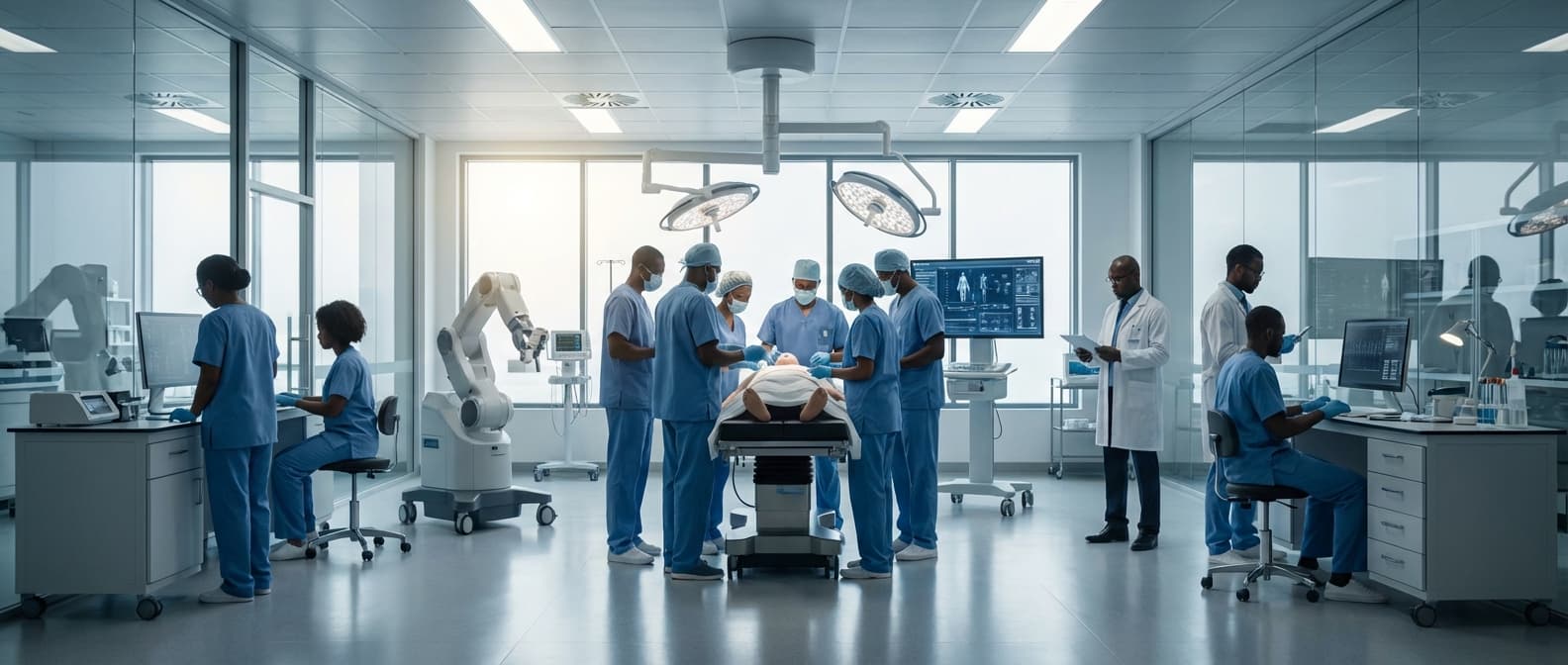
Managed Equipment Service (MES) in Ivory Coast
Engineering Excellence & Technical Support
Long‑term equipment provision with uptime SLAs and lifecycle management. High-standard technical execution following OEM protocols and local regulatory frameworks.
Proactive Maintenance for Critical Healthcare Equipment
Our MES program in Ivory Coast offers advanced remote monitoring and predictive maintenance for vital medical devices. We leverage IoT sensors and data analytics to identify potential equipment failures before they occur, minimizing downtime and ensuring uninterrupted patient care in clinics and hospitals across the nation.
Optimized Workflow and Inventory Management
We streamline operational efficiency through intelligent equipment management. Our MES solutions in Ivory Coast provide real-time inventory tracking, automated replenishment of consumables, and optimized scheduling of maintenance tasks. This empowers healthcare facilities to reduce operational costs and reallocate resources towards core patient services.
Enhanced Technical Expertise and Training
Our commitment extends beyond equipment to empowering local expertise. MES in Ivory Coast includes comprehensive training programs for biomedical technicians, ensuring they are proficient in operating, troubleshooting, and maintaining advanced medical equipment. This builds sustainable in-country technical capacity and ensures long-term equipment reliability.
What Is Managed Equipment Service (Mes) In Ivory Coast?
Managed Equipment Service (MES) in Ivory Coast refers to a comprehensive outsourcing model where a third-party provider assumes responsibility for the procurement, installation, operation, maintenance, and eventual decommissioning of specialized equipment for a client organization. This service is typically employed when the client lacks the internal expertise, capital for upfront investment, or the desire to manage the lifecycle of complex or critical equipment.
MES encompasses a broad spectrum of activities, from initial needs assessment and vendor selection to day-to-day operational support, performance monitoring, scheduled and unscheduled maintenance, spare parts management, and compliance with relevant industry standards and regulations. The core objective is to ensure the reliable and efficient performance of the equipment, allowing the client to focus on their core business operations.
| Who Needs MES? | Typical Use Cases |
|---|---|
| Hospitals and Healthcare Facilities (e.g., imaging equipment, laboratory analyzers, surgical instruments) | Telecommunications Companies (e.g., base stations, network infrastructure, transmission equipment) |
| Manufacturing Companies (e.g., production lines, specialized machinery, industrial automation systems) | Energy and Utilities Sector (e.g., power generation equipment, grid infrastructure, specialized measurement devices) |
| Research and Development Institutions (e.g., advanced scientific instruments, testing equipment) | Logistics and Transportation Companies (e.g., specialized handling equipment, fleet management systems) |
| Government Agencies and Public Services (e.g., defense equipment, public works machinery, IT infrastructure) | Agricultural Sector (e.g., large-scale farming machinery, processing equipment) |
Key Components of Managed Equipment Service (MES) in Ivory Coast
- Equipment Procurement and Installation
- Operational Management and Monitoring
- Preventive and Corrective Maintenance
- Spare Parts Inventory Management
- Performance Optimization and Upgrades
- Decommissioning and Disposal
- Risk Management and Compliance
- Reporting and Analytics
Who Needs Managed Equipment Service (Mes) In Ivory Coast?
Managed Equipment Service (MES) is a crucial offering for organizations in Ivory Coast that rely heavily on sophisticated and often expensive equipment to deliver their core services. Instead of purchasing, maintaining, and upgrading this equipment outright, MES providers take on these responsibilities, allowing clients to focus on their primary mission. This model is particularly beneficial for entities that experience rapid technological changes, require specialized technical expertise, or operate with tight budgetary constraints and prefer predictable operational costs.
| Target Customer Segment | Key Departments Benefiting from MES | Typical Equipment Covered |
|---|---|---|
| Hospitals & Clinics | Radiology, Pathology, Surgery, Intensive Care Units (ICUs), Laboratories | MRI machines, CT scanners, X-ray machines, ultrasound devices, laboratory analyzers, surgical equipment |
| Telecommunications Providers | Network Operations Centers (NOCs), Field Operations, IT Departments | Base stations, routers, switches, servers, optical equipment, customer premises equipment (CPE) |
| Manufacturing & Industrial Firms | Production Lines, Maintenance Departments, Quality Control | CNC machines, robotic arms, conveyor systems, industrial automation equipment, testing instruments |
| Government Agencies & Public Institutions | IT Departments, Research Labs, Educational Technology, Public Service Delivery | Computers, servers, networking equipment, specialized research instruments, AV equipment, printing solutions |
| Large Commercial Enterprises | IT Departments, Operations, Branch Management | POS systems, ATMs, servers, networking infrastructure, security systems, office equipment |
Who Needs Managed Equipment Service (MES) in Ivory Coast? Target Customers and Departments
- {"title":"Healthcare Sector","description":"Hospitals, clinics, and diagnostic centers are prime candidates for MES. The rapid advancement of medical technology and the high cost of acquisition and maintenance make MES an attractive proposition. This ensures that healthcare providers have access to the latest, properly functioning medical equipment without the burden of ownership and upkeep."}
- {"title":"Telecommunications Companies","description":"The ever-evolving nature of telecommunications infrastructure demands continuous upgrades and expert maintenance. MES can cover everything from base stations and network switches to customer premises equipment, ensuring reliable service delivery and keeping pace with technological innovations."}
- {"title":"Manufacturing and Industrial Enterprises","description":"Businesses involved in production, particularly those with complex machinery or automated processes, can benefit immensely from MES. This service helps minimize downtime, optimize equipment performance, and ensure compliance with safety and environmental standards."}
- {"title":"Government and Public Sector Organizations","description":"Government agencies, educational institutions, and research facilities that require specialized equipment for public services, education, or scientific advancement can leverage MES to manage their assets effectively and cost-efficiently."}
- {"title":"Large Commercial Enterprises (e.g., Banks, Retail Chains)","description":"Organizations with widespread operations and a need for reliable IT infrastructure, point-of-sale systems, or other specialized equipment can utilize MES to streamline operations and ensure consistent service delivery across multiple locations."}
Managed Equipment Service (Mes) Process In Ivory Coast
The Managed Equipment Service (MES) process in Ivory Coast outlines the systematic workflow for procuring, implementing, and maintaining specialized medical equipment for healthcare facilities. This process is designed to ensure access to advanced technology, improve healthcare delivery, and manage the associated financial and operational burdens. It typically begins with an identified need and progresses through a series of defined stages until the equipment is fully operational and managed throughout its lifecycle.
| Stage | Key Activities | Key Stakeholders | Deliverables/Outcomes |
|---|---|---|---|
| Healthcare facility identifies a need for specific medical equipment. Initial consultations with potential MES providers to understand service offerings. Detailed assessment of current infrastructure, patient load, and clinical requirements. | Healthcare Facility Management, Clinical Staff, Ministry of Health (potentially), MES Providers | Documented equipment needs, preliminary understanding of MES capabilities, feasibility report. |
| MES provider develops a comprehensive proposal detailing equipment specifications, service levels (maintenance, consumables, training), financial model (lease, purchase, revenue share), and implementation timeline. Proposal submitted to the healthcare facility. | MES Provider, Healthcare Facility Procurement Department | Detailed MES proposal, cost breakdown, technical specifications, service level agreements (SLAs). |
| Discussions and negotiations between the healthcare facility and the MES provider on contractual terms, pricing, SLAs, performance metrics, and payment schedules. Finalization of the Master Service Agreement (MSA). | Healthcare Facility Legal and Procurement Teams, MES Provider Legal and Commercial Teams | Signed Master Service Agreement (MSA), detailed contract terms and conditions. |
| MES provider procures the specified equipment from reputable manufacturers. This includes quality checks, customs clearance, and adherence to local regulations. | MES Provider (Procurement & Logistics), Manufacturers, Customs Authorities | Sourced and cleared medical equipment, proof of purchase, import documentation. |
| Transportation of equipment to the healthcare facility. Site preparation and infrastructure checks. Professional installation and rigorous commissioning to ensure equipment functions as per specifications. Calibration and initial testing. | MES Provider (Technical Team), Healthcare Facility Engineering/Biomedical Department, Manufacturers' Technicians | Installed and commissioned equipment, site readiness report, commissioning certificates. |
| Comprehensive training for clinical and technical staff on the operation, use, and basic maintenance of the new equipment. Ongoing training and knowledge transfer. | MES Provider (Training Specialists), Healthcare Facility Clinical and Technical Staff | Trained personnel, training manuals, competency assessments. |
| Routine preventative maintenance, unscheduled repairs, supply of consumables and spare parts. Remote monitoring of equipment performance. Technical support availability. | MES Provider (Technical & Support Teams), Healthcare Facility Clinical & Technical Staff | Operational equipment, reduced downtime, timely repairs, adequate consumables. |
| Regular monitoring of equipment performance against agreed SLAs. Generation of performance reports for the healthcare facility, including uptime, usage, maintenance records, and cost analysis. Feedback mechanisms. | MES Provider (Management & Reporting), Healthcare Facility Management | Performance reports, SLA adherence analysis, utilization data, feedback summaries. |
| Planning for the eventual replacement or decommissioning of equipment. Options may include refurbishment, resale, or environmentally sound disposal. Transition to new equipment if applicable. | MES Provider, Healthcare Facility Management, Environmental Agencies (potentially) | Decommissioned or replaced equipment, disposal certificates, transition plan. |
Managed Equipment Service (MES) Workflow in Ivory Coast
- Inquiry and Needs Assessment
- Proposal Development and Submission
- Negotiation and Contract Finalization
- Equipment Sourcing and Procurement
- Logistics, Installation, and Commissioning
- Training and Capacity Building
- Operational Management and Maintenance
- Performance Monitoring and Reporting
- End-of-Life Management
Managed Equipment Service (Mes) Cost In Ivory Coast
Managed Equipment Service (MES) in Ivory Coast offers a comprehensive solution for healthcare facilities to acquire, maintain, and upgrade medical equipment without the burden of direct capital expenditure. This model shifts the financial and operational responsibility for equipment to a service provider. The cost of MES in Ivory Coast is influenced by several key pricing factors, leading to a broad range of potential expenses. Understanding these factors is crucial for healthcare institutions to accurately budget and negotiate MES contracts. The local currency, the West African CFA franc (XOF), is used for all pricing considerations.
Key Pricing Factors for MES in Ivory Coast:
- Equipment Type and Technology: High-end, specialized, or advanced imaging equipment (e.g., MRI, CT scanners, advanced surgical robots) will inherently carry higher MES costs compared to general diagnostic tools or basic laboratory equipment. The complexity of the technology, its lifespan, and the cost of consumables and spare parts are significant drivers.
- Service Level Agreements (SLAs): The scope and quality of services included in the MES contract dramatically impact pricing. This includes response times for repairs, guaranteed uptime percentages, preventative maintenance schedules, training for staff, software updates, and the provision of consumables. More comprehensive and higher-tier SLAs will command higher fees.
- Contract Duration: Longer MES contracts often allow for a more spread-out cost of equipment and services, potentially leading to lower annual or monthly fees. Shorter contracts might require a higher initial investment or more frequent price adjustments.
- Volume and Scope of Equipment: The total number of equipment units and the breadth of different types of equipment covered under a single MES contract will influence the overall cost. Larger, more comprehensive contracts may benefit from economies of scale, but the sheer volume will increase the base price.
- Provider's Overhead and Profit Margin: Like any service, the MES provider's operational costs, including staffing, logistics, warehousing, and administrative expenses, are factored into the pricing. Their desired profit margin also plays a role.
- Installation and Decommissioning Costs: The initial setup of the equipment, including installation, calibration, and integration into existing hospital systems, as well as the eventual decommissioning and replacement, can be included in the MES fee or charged separately. These are important to clarify.
- Geographic Location within Ivory Coast: While less impactful than other factors, the logistical challenges and associated costs of servicing facilities in remote areas might slightly influence pricing due to travel and accessibility.
- Financing Costs: MES providers often finance the acquisition of equipment. The cost of capital and interest rates will be passed on to the client through the MES fees.
- Consumables and Accessories: The inclusion of specific consumables (e.g., contrast agents, reagents, disposables) and accessories within the MES contract will directly affect the monthly or annual cost. These can be a significant portion of the expenditure for certain equipment types.
Estimated Pricing Ranges in XOF:
It's challenging to provide precise figures without a specific equipment list and detailed SLA requirements. However, based on industry trends and the factors above, the following ranges can be considered indicative for MES in Ivory Coast. These are typically structured as monthly or annual fees per equipment item or as a comprehensive package fee for a suite of services.
- Basic Diagnostic Equipment (e.g., Ultrasound, X-ray without advanced features): This could range from 150,000 XOF to 500,000 XOF per month per unit, depending on the model, age, and the SLA's comprehensiveness.
- Mid-range Imaging Equipment (e.g., Digital X-ray, Echocardiogram): Expect prices in the range of 400,000 XOF to 1,200,000 XOF per month per unit.
- Advanced Imaging Equipment (e.g., CT Scanners, MRI Scanners): These high-value assets will have MES costs ranging from 2,000,000 XOF to 10,000,000+ XOF per month per unit, heavily dependent on the specific technology (e.g., 1.5T vs. 3T MRI), features, and the included service package.
- Laboratory Equipment (e.g., Hematology Analyzers, Chemistry Analyzers): Costs can vary widely based on complexity and throughput, typically from 200,000 XOF to 1,500,000 XOF per month per unit.
- Surgical Equipment (e.g., Endoscopes, basic surgical sets): Pricing might fall between 300,000 XOF and 2,000,000 XOF per month per unit.
- Comprehensive Hospital-wide MES Solutions: For a large hospital implementing MES across a broad range of departments, the total annual cost could range from tens of millions to several hundred million XOF, depending on the scale and sophistication of the equipment and services. This would be a negotiated, bespoke contract.
It is imperative for healthcare providers in Ivory Coast to conduct thorough market research, obtain multiple quotes, and carefully scrutinize all contract terms to secure an MES solution that aligns with their clinical needs, operational capacity, and financial objectives. The long-term partnership and the quality of service provided by the MES vendor are as critical as the pricing itself.
| Equipment Category | Estimated Monthly Cost Range (XOF) |
|---|---|
| Basic Diagnostic Equipment (e.g., Ultrasound, X-ray) | 150,000 - 500,000 |
| Mid-range Imaging Equipment (e.g., Digital X-ray, Echocardiogram) | 400,000 - 1,200,000 |
| Advanced Imaging Equipment (e.g., CT Scanners, MRI Scanners) | 2,000,000 - 10,000,000+ |
| Laboratory Equipment (e.g., Hematology Analyzers, Chemistry Analyzers) | 200,000 - 1,500,000 |
| Surgical Equipment (e.g., Endoscopes, basic surgical sets) | 300,000 - 2,000,000 |
Key Pricing Factors for Managed Equipment Service (MES) in Ivory Coast
- Equipment Type and Technology
- Service Level Agreements (SLAs)
- Contract Duration
- Volume and Scope of Equipment
- Provider's Overhead and Profit Margin
- Installation and Decommissioning Costs
- Geographic Location within Ivory Coast
- Financing Costs
- Consumables and Accessories
Affordable Managed Equipment Service (Mes) Options
Managed Equipment Service (MES) can be a strategic investment for organizations looking to optimize their IT infrastructure and control costs. MES involves outsourcing the management, maintenance, and support of IT hardware and software to a third-party provider. This allows businesses to focus on their core competencies while benefiting from expert IT management, reduced capital expenditure, and predictable operational costs. Exploring affordable MES options, including value bundles and effective cost-saving strategies, is crucial for maximizing return on investment.
| Value Bundle Type | Description | Cost-Saving Benefit |
|---|---|---|
| Hardware + Software + Support | Comprehensive package covering the purchase or lease of equipment, necessary software licenses, and ongoing technical support and maintenance. | Streamlined procurement, consolidated billing, reduced administrative overhead, and guaranteed support across all components. |
| Preventive Maintenance Focus | Bundle prioritizing regular inspections, cleaning, software updates, and performance tuning to prevent issues before they arise. | Minimizes unexpected breakdowns and expensive emergency repairs, extends equipment lifespan, and reduces downtime. |
| Performance Monitoring & Optimization | Includes advanced monitoring tools and services to track equipment performance, identify bottlenecks, and optimize resource utilization. | Ensures efficient operation, prevents underutilization, and can identify opportunities for consolidation or upgrades to more cost-effective solutions. |
| Security & Compliance Bundle | Integrates security patching, vulnerability assessments, and compliance management for IT equipment. | Reduces the risk of costly data breaches and regulatory fines, ensures business continuity, and saves on potential legal fees. |
| End-of-Life Management | Includes services for the responsible disposal, recycling, or refurbishment of retired IT assets. | Avoids disposal fees, potential environmental fines, and can sometimes generate revenue through resale or responsible recycling programs. |
Key Components of Affordable MES Options
- Flexible Service Level Agreements (SLAs): Tailoring SLAs to meet specific business needs, avoiding over-provisioning of services.
- Scalable Solutions: Choosing providers that offer scalable MES plans that can adapt to changing business requirements.
- Predictable Budgeting: MES often shifts costs from unpredictable capital expenditures to predictable operational expenses.
- Technology Refresh Cycles: Optimizing hardware refresh cycles to leverage the latest, more energy-efficient, and cost-effective technology.
- Proactive Maintenance: Implementing proactive monitoring and maintenance to prevent costly downtime and emergency repairs.
- Remote Management Capabilities: Utilizing remote tools for troubleshooting and maintenance reduces on-site visit costs.
Verified Providers In Ivory Coast
In the Republic of Ivory Coast, accessing reliable and high-quality healthcare is paramount. For those seeking medical services, understanding the credentials and benefits of verified providers is crucial. Franance Health stands out as a leading example of such a provider, offering a robust framework of assurances that make them the best choice for many.
| Credential Type | Verification Standard | Benefit to Patients |
|---|---|---|
| Medical Licenses & Certifications | Verified with Ivorian Ministry of Health and relevant professional bodies. | Ensures practitioners meet foundational legal and professional requirements for practice. |
| Specialist Qualifications | Independent verification of postgraduate education, residencies, and fellowships. | Guarantees access to highly trained specialists for complex medical conditions. |
| Professional Experience & Track Record | Background checks and review of practice history, peer endorsements. | Confirms a history of competent and ethical patient care. |
| Ethical Conduct & Compliance | Adherence to a strict code of ethics and regular compliance audits. | Protects patients from malpractice and unethical practices. |
| Facility Accreditation | Verification of facility licenses, equipment, and safety protocols (where applicable). | Ensures a safe and well-equipped environment for medical procedures. |
Why Franance Health Represents the Best Choice in Ivory Coast:
- Rigorous Vetting Process: Franance Health employs a stringent selection and verification process for all healthcare providers within its network. This ensures that only qualified and ethical professionals are included.
- Commitment to Excellence: Their standards go beyond basic licensing, focusing on continuous quality improvement, patient satisfaction, and adherence to international best practices.
- Comprehensive Service Network: Franance Health collaborates with a wide array of medical facilities and specialists across Ivory Coast, offering a broad spectrum of services to meet diverse healthcare needs.
- Patient-Centric Approach: The organization prioritizes the patient experience, ensuring accessibility, transparency in pricing, and responsive communication.
- Technological Integration: Leveraging modern technology, Franance Health streamlines appointment booking, medical record management, and communication, enhancing efficiency and convenience.
- Trust and Reliability: By maintaining high standards and a transparent operational model, Franance Health has built a reputation for trust and reliability among patients and stakeholders in Ivory Coast.
Scope Of Work For Managed Equipment Service (Mes)
This Scope of Work (SOW) outlines the requirements for a Managed Equipment Service (MES) for [Client Name]'s [Specify Equipment Type/Department, e.g., Medical Imaging Equipment, Laboratory Instruments, IT Infrastructure]. The MES aims to ensure the optimal performance, availability, and lifecycle management of the specified equipment through a comprehensive service agreement with [Service Provider Name]. This document details the technical deliverables, standard specifications, and key performance indicators (KPIs) expected from the MES provider.
| Technical Deliverable | Description | Standard Specification / Requirement | Key Performance Indicator (KPI) | |
|---|---|---|---|---|
| Equipment Inventory Management | Comprehensive cataloging and tracking of all managed equipment. | Accurate and up-to-date inventory database including make, model, serial number, location, purchase date, warranty status, and service history. | 100% inventory accuracy within 30 days of contract commencement. | |
| Preventive Maintenance (PM) | Scheduled maintenance to ensure equipment reliability and longevity. | PM schedules to be developed in accordance with manufacturer recommendations and regulatory requirements. PM tasks to include inspection, cleaning, lubrication, calibration, functional testing, and replacement of wear parts. | PM completion rate of 95% within scheduled windows. | Uptime percentage of X% (e.g., 98%) for critical equipment. |
| Corrective Maintenance (CM) / Repair Services | Rapid response to equipment failures and breakdowns. | On-site response time for critical equipment: X hours (e.g., 4 hours). On-site response time for non-critical equipment: Y hours (e.g., 8 hours). Resolution time targets to be defined per equipment criticality. | Average CM resolution time: < Z hours (e.g., 24 hours). | First-time fix rate: > A% (e.g., 85%). |
| Spare Parts Management | Ensuring availability of necessary spare parts for repairs and PMs. | Maintain an agreed-upon stock of critical spare parts. Implement a robust system for parts ordering, tracking, and inventory control. | Availability of critical spare parts: > B% (e.g., 95%). | |
| Calibration and Performance Verification | Ensuring equipment operates within specified tolerances. | Regular calibration and performance verification according to manufacturer guidelines and relevant standards (e.g., ISO, FDA). | All managed equipment to be calibrated and verified within manufacturer-specified intervals. | |
| Technical Support and Troubleshooting | Providing expert assistance to end-users for operational and minor technical issues. | 24/7 remote technical support availability for critical equipment. On-site support as required. | Average call handling time: < C minutes (e.g., 10 minutes). | Customer satisfaction score for technical support: > D% (e.g., 90%). |
| Reporting and Documentation | Providing regular reports on service activities, equipment status, and performance. | Monthly/Quarterly reports including PM status, CM incidents, equipment uptime, response times, parts usage, and cost analysis. Detailed service reports for each CM event. | Timeliness of report submission: Within 10 business days of the reporting period end. | |
| Technology Refresh and Obsolescence Management | Planning for the end-of-life and replacement of aging equipment. | Proactive identification of obsolescence risks. Recommendations for replacement or upgrade cycles based on performance, cost, and technological advancements. | Identification of at-risk equipment X months/years in advance of obsolescence. | |
| Training and Knowledge Transfer | Ensuring end-users are proficient in the operation of the equipment. | Provision of initial and ongoing training for new equipment or significant software updates. Development of user guides and standard operating procedures (SOPs). | User competency demonstrated through post-training assessments. | |
| Quality Assurance and Audits | Ensuring the quality and effectiveness of the MES. | Implementation of quality management processes. Regular internal audits and potential for client audits of service delivery. | Zero major non-conformities identified during client audits. |
Key Objectives of the Managed Equipment Service
- Maximize equipment uptime and availability.
- Ensure equipment performance meets manufacturer specifications and clinical/operational requirements.
- Implement proactive maintenance strategies to prevent failures and extend equipment lifespan.
- Provide efficient and responsive repair services for unplanned breakdowns.
- Manage spare parts inventory to minimize downtime.
- Ensure regulatory compliance and safety standards are met.
- Provide regular reporting on equipment status, performance, and service activities.
- Facilitate technology refresh and obsolescence management.
- Optimize equipment utilization and operational efficiency.
- Provide technical training and support to end-users.
Service Level Agreement For Managed Equipment Service (Mes)
This Service Level Agreement (SLA) outlines the response times and uptime guarantees for the Managed Equipment Service (MES). It defines the commitment to service availability and the expected performance of the managed equipment. This SLA is an addendum to the Master Service Agreement (MSA) between [Your Company Name] (hereinafter referred to as "Provider") and [Client Company Name] (hereinafter referred to as "Client").
| Service Level | Response Time Target | Resolution Time Target | Uptime Guarantee |
|---|---|---|---|
Key Definitions
- Managed Equipment: All hardware, software, and related accessories provided and maintained by the Provider as part of the MES.
- Downtime: Any period during which the Managed Equipment is unavailable for use due to a failure, malfunction, or scheduled maintenance that exceeds the agreed-upon maintenance window.
- Response Time: The maximum time allowed for the Provider's technical support team to acknowledge and begin addressing a reported issue.
- Resolution Time: The maximum time allowed for the Provider to resolve a reported issue and restore the Managed Equipment to full functionality.
- Uptime Guarantee: The percentage of time the Managed Equipment is expected to be available and operational over a defined period.
Frequently Asked Questions

Ready when you are
Let's scope your Managed Equipment Service (MES) in Ivory Coast project in Ivory Coast.

Scaling healthcare logistics and technical systems across the entire continent.