
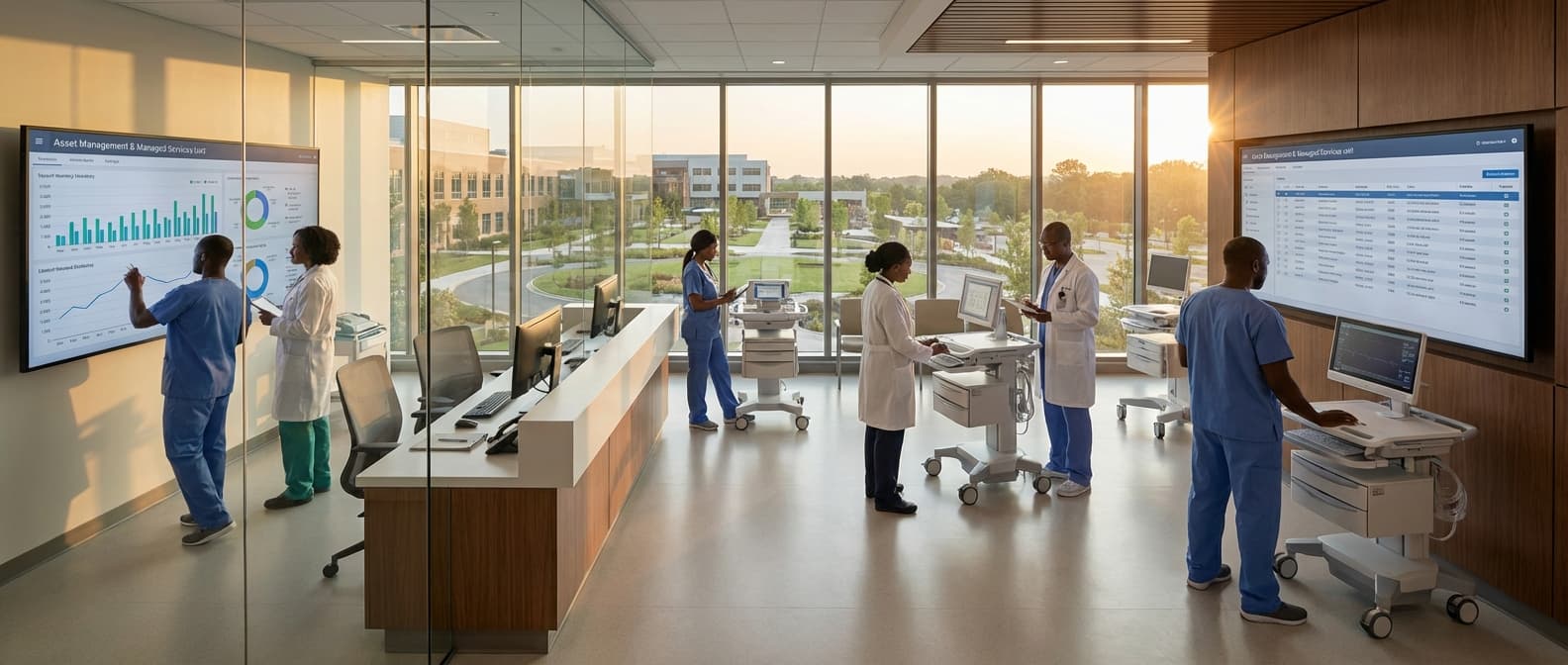
Maintenance KPI Reporting Service (Uptime/MTBF/MTTR) in Ivory Coast
Engineering Excellence & Technical Support
Maintenance KPI Reporting Service (Uptime/MTBF/MTTR) High-standard technical execution following OEM protocols and local regulatory frameworks.
Real-time Uptime Monitoring
Gain instant visibility into asset operational status across Ivory Coast. Our service provides live uptime data, enabling proactive identification of deviations and minimizing production downtime.
Optimized MTBF Analysis
Leverage advanced analytics to pinpoint root causes of equipment failures. We deliver actionable Mean Time Between Failures (MTBF) insights, empowering your teams to implement targeted preventive maintenance strategies and reduce recurring breakdowns.
Accelerated MTTR Reduction
Streamline your repair processes with intelligent Mean Time To Repair (MTTR) reporting. Our service highlights bottlenecks in repair cycles, providing data-driven recommendations to shorten response times and restore operations faster in Ivory Coast.
What Is Maintenance Kpi Reporting Service (Uptime/mtbf/mttr) In Ivory Coast?
Maintenance KPI Reporting Service (Uptime/MTBF/MTTR) in Ivory Coast refers to a specialized offering that collects, analyzes, and presents key performance indicators related to the operational availability and reliability of industrial assets and systems. This service leverages data derived from monitoring systems, maintenance logs, and operational databases to generate actionable insights for optimizing maintenance strategies, minimizing downtime, and improving overall equipment effectiveness (OEE). The core KPIs typically include:
- Uptime: The percentage of time a system or asset is operational and available for use. It's a direct measure of reliability and a critical indicator of operational efficiency.
- Mean Time Between Failures (MTBF): The average time elapsed between inherent failures of a repairable system or equipment during normal operation. A higher MTBF signifies greater reliability.
- Mean Time To Repair (MTTR): The average time required to repair a failed system or equipment and return it to operational status. A lower MTTR indicates efficient maintenance and quicker recovery from downtime.
These KPIs are instrumental in moving from reactive to proactive and predictive maintenance paradigms, enabling organizations to make data-driven decisions regarding maintenance scheduling, resource allocation, spare parts management, and capital investment in asset upgrades or replacements.
| Typical Use Cases | Description |
|---|---|
| Downtime Reduction Strategy | Analyzing Uptime and MTTR to identify root causes of frequent failures and inefficient repair processes, leading to targeted interventions and optimized maintenance schedules. |
| Asset Reliability Improvement | Monitoring MTBF to assess the inherent reliability of equipment. Trends in MTBF can inform decisions about preventative maintenance frequencies, component upgrades, or equipment replacement. |
| Predictive Maintenance Implementation | Using historical KPI data (especially failure patterns indicated by MTBF) in conjunction with sensor data to forecast potential equipment failures, allowing for scheduled maintenance before a breakdown occurs. |
| Maintenance Budget Optimization | Justifying maintenance expenditures by demonstrating the ROI through improved Uptime and reduced costs associated with unplanned downtime. Efficient MTTR can also lower labor costs. |
| Spare Parts Inventory Management | Forecasting spare part requirements based on failure rates (MTBF) and repair times (MTTR), reducing inventory holding costs while ensuring critical parts are available. |
| Performance Benchmarking | Comparing KPI performance against industry standards or historical internal data to identify areas for continuous improvement. |
| Service Level Agreement (SLA) Compliance | Ensuring that critical systems meet agreed-upon uptime guarantees for internal operations or external clients. |
| Operational Risk Management | Quantifying the risk associated with equipment failure through KPI analysis, enabling better risk mitigation strategies. |
Who Needs Maintenance KPI Reporting Service (Uptime/MTBF/MTTR) in Ivory Coast?
- Industrial Manufacturing Facilities (e.g., food processing, textiles, chemicals, automotive)
- Energy Production and Distribution Companies (e.g., power plants, oil and gas facilities)
- Mining and Extractive Industries
- Telecommunications Infrastructure Providers
- Transportation and Logistics Companies (e.g., fleet management, port operations)
- Water and Wastewater Treatment Plants
- Commercial Building Management (for critical systems like HVAC, elevators, generators)
- Any organization with significant capital investment in machinery and equipment where operational continuity is paramount.
Who Needs Maintenance Kpi Reporting Service (Uptime/mtbf/mttr) In Ivory Coast?
In Ivory Coast, businesses across various sectors are increasingly recognizing the critical importance of proactive and efficient maintenance strategies. A Maintenance KPI Reporting Service, focusing on key metrics like Uptime, Mean Time Between Failures (MTBF), and Mean Time To Repair (MTTR), offers significant value by enabling data-driven decision-making, optimizing resource allocation, and ultimately minimizing costly downtime. This service is particularly crucial for industries that rely heavily on continuous operations and where equipment failure can have a substantial economic and reputational impact.
| Target Customer Type | Key Departments | Why they need Maintenance KPI Reporting |
|---|---|---|
| Manufacturing Companies | Maintenance, Operations, Engineering, Senior Management | Maximize production uptime, reduce scrap/rework due to equipment failure, optimize maintenance schedules, and control operational costs. |
| Oil & Gas Sector | Operations, Maintenance, Safety & Compliance, Asset Management | Ensure continuous flow, prevent costly shutdowns, maintain stringent safety standards, and extend asset lifespan in harsh environments. |
| Mining & Resources Companies | Maintenance, Operations, Logistics, Finance | Minimize downtime of heavy machinery, optimize extraction and processing efficiency, reduce operational costs, and improve overall output. |
| Energy & Utilities Providers | Operations, Maintenance, Engineering, Regulatory Affairs | Ensure reliable and consistent power/water supply, meet regulatory demands for service availability, minimize disruptions to the public, and optimize energy generation. |
| Telecommunication Companies | Network Operations, Maintenance, Engineering, IT Infrastructure | Maintain high network availability, ensure seamless customer service, reduce signal downtime, and optimize the performance of critical infrastructure. |
| Logistics & Transportation Companies | Operations, Fleet Management, Maintenance, Supply Chain | Ensure timely delivery, minimize delays due to equipment breakdown, optimize fleet utilization, and reduce operational disruptions. |
Target Customers and Departments in Ivory Coast for Maintenance KPI Reporting Service:
- Industries:
- Manufacturing: Factories with high-volume production lines, food and beverage processing, textiles, automotive parts, etc.
- Oil & Gas: Refineries, offshore platforms, exploration and production facilities, distribution networks.
- Mining & Resources: Processing plants, heavy machinery operations, transportation infrastructure.
- Energy & Utilities: Power generation plants (thermal, hydro, renewable), water treatment facilities, distribution grids.
- Telecommunications: Mobile network towers, data centers, fiber optic infrastructure.
- Logistics & Transportation: Ports, airports, large warehousing facilities, fleet management companies.
- Agriculture (Large Scale): Large-scale processing plants, irrigation systems, heavy agricultural machinery.
- Heavy Construction: Large equipment operators, infrastructure development projects.
- Pulp & Paper: Production facilities.
- Target Departments within these Organizations:
- Maintenance Department: Directly responsible for the upkeep and repair of assets. They need this data to assess performance, identify recurring issues, and justify resource requests.
- Operations Department: Heavily impacted by equipment downtime. They require insights into asset reliability to ensure production targets are met and to forecast potential disruptions.
- Engineering Department: Involved in asset design, selection, and long-term reliability improvements. KPI data helps them evaluate the effectiveness of engineering decisions and identify areas for future enhancement.
- Asset Management Department: Focuses on the lifecycle management of assets. Uptime, MTBF, and MTTR are fundamental metrics for understanding asset performance and optimizing total cost of ownership.
- Finance Department: Interested in the financial impact of maintenance activities, including the cost of downtime, repair expenses, and the return on investment for maintenance programs. KPI reporting provides quantifiable data for financial planning and budgeting.
- Procurement Department: Can use KPI data to inform decisions about spare parts inventory, service contracts, and the selection of new equipment based on proven reliability.
- Senior Management/Executives: Need high-level summaries of asset performance and maintenance effectiveness to make strategic decisions about capital investments, operational efficiency, and risk management.
Maintenance Kpi Reporting Service (Uptime/mtbf/mttr) Process In Ivory Coast
This document outlines the workflow for the Maintenance KPI Reporting Service (Uptime/MTBF/MTTR) in Ivory Coast. This service provides clients with crucial data on the reliability and maintainability of their assets, enabling informed decision-making for operational efficiency and cost reduction. The process encompasses a structured approach from initial client inquiry to the final delivery of comprehensive KPI reports.
| Step | Description | Responsible Party | Key Activities | Deliverables/Outcomes | Notes/Considerations |
|---|---|---|---|---|---|
| Initial contact from a client expressing interest in the Maintenance KPI Reporting Service. | Client, Sales/Business Development Team | Client contacts service provider. Discusses specific assets, reporting needs, and desired KPIs. Provider assesses scope and feasibility. | Understanding of client's requirements. Preliminary agreement on service scope. | Clarity on client's industry, asset types, and existing data collection methods is crucial. |
| Formal proposal detailing the service offering, pricing, methodology, and reporting schedule. | Sales/Business Development Team, Client | Provider develops and submits a customized proposal. Client reviews and negotiates terms. Agreement (contract/SOW) is finalized. | Signed contract/Statement of Work (SOW). | Clearly define data ownership, confidentiality, and service level agreements (SLAs). |
| Establishing the mechanisms for collecting raw data related to asset operation and maintenance. | Technical Team, Client IT/Operations | Provider works with the client to identify data sources (e.g., SCADA systems, CMMS, manual logs). Implements data collection tools or integrates with existing systems. May involve sensor installation or software deployment. | Operational data collection infrastructure in place. Data flow established. | Data accuracy and completeness are paramount. Training for client personnel may be required. |
| Continuous gathering of operational and maintenance data from the client's assets. | Technical Team, Client Operations | Data is collected in real-time or at defined intervals. Monitoring of data streams for anomalies or missing information. Adherence to agreed-upon collection frequency. | Raw operational and maintenance data repository. | Regular data validation and quality checks are essential. |
| Transforming raw data into meaningful information and calculating the specified KPIs. | Technical Team (Data Analysts) | Data is cleaned, standardized, and validated. Calculations for Uptime, MTBF, and MTTR are performed using established formulas and algorithms. Identification of trends and patterns. | Calculated KPI values for the reporting period. Preliminary analysis insights. | Utilize robust analytical tools and methodologies. Ensure consistency in calculation methods. |
| Compiling the analyzed data and KPI results into comprehensive and user-friendly reports. | Technical Team (Report Specialists) | Design and generation of reports, typically including dashboards, charts, and detailed explanations. Reports are tailored to client's requirements and communication preferences. | Draft KPI reports. | Reports should be visually appealing and easy to understand. Include executive summaries and actionable recommendations. |
| Presenting the generated reports to the client for review and formal delivery. | Technical Team, Sales/Business Development Team, Client | Provider presents the draft reports to the client for feedback. Revisions are made as necessary. Final reports are delivered via agreed-upon channels (e.g., secure portal, email, in-person presentation). | Final, approved KPI reports. Client sign-off. | Schedule regular review meetings to ensure alignment and address any queries. |
| Post-reporting discussion with the client to discuss findings and identify opportunities for improvement. | Sales/Business Development Team, Technical Team, Client | Discuss report insights and their implications. Gather client feedback on the service. Identify areas for optimization in data collection, analysis, or reporting. Plan for future reporting cycles. | Actionable insights for the client. Improved service delivery in subsequent cycles. | Foster a collaborative relationship. Proactively suggest optimization strategies based on KPI trends. |
Key Maintenance KPIs Covered:
- Uptime: The percentage of time an asset is operational and available for use.
- Mean Time Between Failures (MTBF): The average time an asset operates successfully between breakdowns. A higher MTBF indicates greater reliability.
- Mean Time To Repair (MTTR): The average time it takes to repair a failed asset and restore it to operational status. A lower MTTR indicates faster recovery.
Maintenance Kpi Reporting Service (Uptime/mtbf/mttr) Cost In Ivory Coast
Estimating the precise cost of a Maintenance KPI Reporting Service (focused on Uptime, Mean Time Between Failures (MTBF), and Mean Time To Repair (MTTR)) in Ivory Coast requires a nuanced understanding of various influencing factors. These services are crucial for optimizing operational efficiency, minimizing downtime, and improving overall asset reliability. The pricing structure typically varies based on the complexity of the reporting, the number of assets monitored, the level of customization required, and the provider's expertise and reputation.
| Service Component | Estimated Cost Range (XOF) - Monthly | Notes |
|---|---|---|
| Basic Uptime Reporting (Standardized Format, Limited Assets) | 150,000 - 300,000 | Suitable for small businesses with a few critical assets and simple reporting needs. |
| Comprehensive KPI Reporting (Uptime, MTBF, MTTR, Basic Analysis, Moderate Assets) | 300,000 - 750,000 | Includes more detailed analysis, integration with basic data sources, and reporting for a moderate number of assets. |
| Advanced & Customized Reporting (In-depth Analysis, Root Cause, Predictive Insights, Numerous Assets, Integrations) | 750,000 - 2,500,000+ | Tailored solutions with sophisticated analytics, integration with complex systems, and extensive asset coverage. May involve upfront setup fees. |
| On-Demand/Project-Based Reporting | Negotiable (per project/report) | For specific audits, historical data analysis, or one-time reporting needs. |
| Setup & Integration Fees (One-time) | 200,000 - 1,500,000+ | Varies significantly based on the complexity of data sources, customization, and system integration. |
Key Factors Influencing Maintenance KPI Reporting Service Costs in Ivory Coast
- Scope of Reporting: The breadth and depth of the reporting are paramount. A basic report summarizing Uptime percentages will be less expensive than a comprehensive analysis including detailed MTBF and MTTR breakdowns, root cause analysis, and predictive maintenance insights.
- Number of Assets/Equipment Monitored: The more assets or pieces of equipment that require monitoring and reporting, the higher the cost will generally be. This scales with data collection and analysis requirements.
- Data Collection Methods: The method used to collect data (e.g., manual input, SCADA systems, IoT sensors, integration with existing CMMS/EAM) significantly impacts cost. Automated, real-time data collection often requires more upfront investment but can lead to more accurate and timely reports.
- Customization and Integration: Clients requiring bespoke dashboards, custom report formats, or integration with their existing Enterprise Asset Management (EAM) or Computerized Maintenance Management Systems (CMMS) will likely incur higher costs due to development and configuration efforts.
- Frequency of Reporting: Daily, weekly, monthly, or quarterly reports will have different pricing structures. More frequent reporting, especially if it involves live dashboards, generally commands a higher fee.
- Level of Analysis and Expertise: Basic KPI aggregation is less costly than services that include advanced analytics, trend analysis, root cause identification, or recommendations for improvement from experienced maintenance engineers.
- Provider's Reputation and Experience: Established providers with a proven track record and specialized expertise in the Ivorian industrial sector will typically charge more than newer or less experienced vendors.
- Service Level Agreement (SLA): The guaranteed uptime of the reporting system, response times for support, and data accuracy levels stipulated in the SLA will influence pricing.
- Geographic Coverage within Ivory Coast: While less common for pure reporting services, if site visits or on-the-ground data verification are part of the service, travel and logistical costs might be factored in.
- Software Licensing and Infrastructure: The cost of the reporting software, databases, and any necessary cloud infrastructure will be integrated into the service fee.
- Training and Support: The level of training provided to client personnel and ongoing technical support will also impact the overall cost.
Affordable Maintenance Kpi Reporting Service (Uptime/mtbf/mttr) Options
Our Affordable Maintenance KPI Reporting Service offers businesses a cost-effective way to gain critical insights into their operational uptime, Mean Time Between Failures (MTBF), and Mean Time To Repair (MTTR). By leveraging data analytics and streamlined reporting, we empower you to optimize maintenance schedules, minimize downtime, and ultimately improve profitability. We provide flexible value bundles and employ smart cost-saving strategies to make this essential service accessible to organizations of all sizes.
| Value Bundle | Description | Included KPIs | Key Features | Cost-Saving Strategies | Starting Price (Monthly) |
|---|---|---|---|---|---|
| Essential Insights | Our foundational package for businesses new to KPI reporting. Focuses on core metrics for initial optimization. | Uptime Percentage, Basic MTBF, Basic MTTR | Automated data collection (integration required), Monthly PDF reports, Basic trend analysis | Reduced reliance on manual data compilation, Identification of high-impact downtime causes | $299 |
| Performance Pro | A comprehensive solution for businesses seeking deeper analysis and actionable insights to drive significant improvements. | Uptime Percentage (by asset/line), Detailed MTBF (by failure mode), Detailed MTTR (by repair type/technician) | Enhanced data visualization dashboards, Customizable reports, Root cause analysis support, Alerting for critical deviations | Optimized spare parts inventory, Targeted technician training, Proactive identification of recurring issues | $599 |
| Enterprise Excellence | Our premium package for large organizations requiring advanced analytics, predictive capabilities, and full integration with existing systems. | All Performance Pro KPIs plus Predictive MTBF, Predictive MTTR, Cost of Downtime Analysis, OEE Integration | Real-time dashboards, API integration, Predictive maintenance recommendations, Strategic consulting on maintenance optimization | Minimized catastrophic failures, Significant reduction in costly emergency repairs, Improved capital investment planning | $999+ |
Key Benefits of Our Service
- Enhanced Uptime: Proactively identify and address issues that lead to equipment downtime, maximizing operational availability.
- Improved Reliability: Understand failure patterns to implement preventative maintenance strategies, increasing MTBF.
- Faster Recovery: Streamline repair processes and reduce resolution times, lowering MTTR.
- Data-Driven Decisions: Make informed choices about maintenance budgets, resource allocation, and spare parts inventory.
- Cost Reduction: Minimize unplanned downtime, reduce emergency repair costs, and optimize labor efficiency.
- Increased Productivity: Ensure your assets are running when you need them, boosting overall output.
Verified Providers In Ivory Coast
In the Ivory Coast's burgeoning healthcare landscape, identifying genuinely qualified and ethical medical providers is paramount for patient safety and optimal health outcomes. This pursuit often leads to the question: who are the verified providers, and what makes them stand out? Franance Health emerges as a leading entity, meticulously vetting and credentialing healthcare professionals and institutions. Their rigorous assessment process ensures that affiliated providers meet the highest standards of medical practice, patient care, and ethical conduct. Choosing a Franance Health credentialed provider in Ivory Coast signifies a commitment to quality, safety, and a patient-centered approach to healthcare. This verification offers a crucial layer of trust and confidence in a market where discerning reliable medical services can be challenging.
| Credential Type | Description | Benefit for Patients |
|---|---|---|
| Medical Doctor Certification | Verification of a physician's license to practice, specialization, and board certifications. | Ensures the doctor possesses the necessary expertise and legal authority to provide medical treatment. |
| Hospital/Clinic Accreditation | Assessment of healthcare facilities based on infrastructure, equipment, hygiene, and quality of care protocols. | Confirms the facility meets established standards for safe and effective medical services. |
| Specialist Qualifications | Confirmation of advanced training and expertise in specific medical fields (e.g., cardiology, oncology, pediatrics). | Guarantees access to highly skilled professionals for complex or specialized medical needs. |
| Ethical Conduct Review | Scrutiny of past professional conduct and adherence to a code of medical ethics. | Provides assurance that the provider prioritizes patient interests and maintains professional integrity. |
| Continuing Medical Education (CME) Compliance | Verification that providers regularly update their knowledge and skills through approved educational programs. | Indicates a commitment to staying current with the latest medical advancements and best practices. |
Why Franance Health Credentials Represent the Best Choice:
- Rigorous Verification Process: Franance Health employs a multi-faceted evaluation encompassing professional qualifications, clinical experience, regulatory compliance, and ethical adherence.
- Commitment to Patient Safety: Credentials signify that providers have passed stringent checks designed to minimize risks and ensure the highest standards of patient care.
- Upholding Ethical Standards: Franance Health ensures that all credentialed providers adhere to a strict code of ethics, prioritizing patient well-being and transparency.
- Access to Competent Professionals: Patients gain access to a network of demonstrably skilled and knowledgeable healthcare professionals.
- Enhanced Patient Trust and Confidence: A Franance Health credential acts as a beacon of reliability, empowering patients to make informed decisions about their healthcare.
- Continuous Quality Improvement: Franance Health's credentialing often involves ongoing monitoring, encouraging providers to maintain and enhance their practice standards.
Scope Of Work For Maintenance Kpi Reporting Service (Uptime/mtbf/mttr)
This Scope of Work (SOW) outlines the requirements for a Maintenance KPI Reporting Service focused on critical operational metrics: Uptime, Mean Time Between Failures (MTBF), and Mean Time To Repair (MTTR). The service will involve the collection, processing, analysis, and reporting of data to provide insights into asset reliability and maintenance effectiveness. The technical deliverables will ensure timely, accurate, and actionable reporting to support informed decision-making and continuous improvement initiatives.
| Deliverable | Description | Format/Specification | Frequency | Owner/Responsibility |
|---|---|---|---|---|
| Data Collection and Validation Framework | Establish a robust framework for collecting raw maintenance data from designated systems (e.g., CMMS, SCADA, IoT sensors). Includes data validation and cleansing processes to ensure accuracy and completeness. | Documented data collection protocols, data dictionaries, validation rules, and error handling procedures. Data integrated via APIs or scheduled file transfers. | Real-time/Daily | Service Provider (Data Integration Team) |
| Raw Data Repository | A secure repository for storing validated raw data used for KPI calculation. This repository will maintain historical data for trend analysis. | Cloud-based object storage (e.g., AWS S3, Azure Blob Storage) or on-premise database. Data archived according to retention policies. | Continuous | Service Provider (Data Engineering Team) |
| KPI Calculation Engine | A programmatic engine that accurately calculates Uptime, MTBF, and MTTR based on validated data and defined formulas. | Code repository with version control, documented algorithms, and unit tests. Calculation scripts executed on a scheduled basis. | Daily/Weekly (depending on data granularity) | Service Provider (Analytics Team) |
| Standard KPI Report | A comprehensive report detailing Uptime, MTBF, and MTTR for key assets or asset groups. Includes trend analysis, comparison against targets, and identification of outliers. | PDF and/or interactive dashboard (e.g., Tableau, Power BI). Report includes executive summary, detailed KPI breakdowns, historical trends, and graphical representations. | Weekly/Monthly | Service Provider (Reporting Team) |
| Alerting and Notification Mechanism | System for generating automated alerts when KPIs fall below predefined thresholds or exhibit significant negative deviations. | Email, SMS, or integration with existing incident management systems. Configurable alert thresholds and notification groups. | Real-time/As triggered | Service Provider (Operations/Support Team) |
| Root Cause Analysis (RCA) Support Data | Provision of detailed data sets and analysis relevant to identified failures or extended downtime, to facilitate client-led Root Cause Analysis. | Exportable data files (CSV, Excel) and analytical summaries. Drill-down capabilities within the reporting dashboard. | As requested/Upon significant KPI deviation | Service Provider (Analytics Team) |
| Data Model for Analytics | A structured data model designed for ad-hoc querying and deeper analytical exploration of maintenance data. | Relational database or data warehouse schema. Documented data lineage and transformation logic. | Ongoing updates | Service Provider (Data Architecture Team) |
| API for Data Access | An API allowing authorized client systems to programmatically access calculated KPIs and raw data (as permitted). | RESTful API with clear documentation (Swagger/OpenAPI). Secure authentication and authorization mechanisms. | Available on-demand | Service Provider (Development Team) |
| Documentation and User Guides | Comprehensive documentation covering system architecture, data definitions, KPI calculation methodologies, reporting features, and API usage. | Online knowledge base, user manuals, API documentation. | Initial delivery and ongoing updates | Service Provider (Technical Writing Team) |
Key Performance Indicators (KPIs)
- Uptime: The percentage of time an asset or system is operational and available for use. Calculated as (Total Operational Time - Downtime) / Total Operational Time.
- Mean Time Between Failures (MTBF): The average time an asset operates between one failure and the next. Calculated as Total Uptime / Number of Failures.
- Mean Time To Repair (MTTR): The average time it takes to repair a failed asset and restore it to operational status. Calculated as Total Downtime / Number of Repairs.
Service Level Agreement For Maintenance Kpi Reporting Service (Uptime/mtbf/mttr)
This Service Level Agreement (SLA) outlines the terms and conditions for the Maintenance KPI Reporting Service, specifically focusing on Uptime, Mean Time Between Failures (MTBF), and Mean Time To Repair (MTTR). It defines the guaranteed response times and uptime percentages for the reporting service itself. This SLA applies to the availability and performance of the KPI reporting platform, not the underlying infrastructure or assets being monitored.
| Incident Priority | Response Time (Target) | Resolution Target (for critical/high priority) |
|---|---|---|
| Critical (Service Unavailability/Major Functionality Failure) | Within 30 minutes | 4 hours |
| High (Significant Degredation of Service/Partial Functionality Loss) | Within 2 hours | 12 hours |
| Normal (Minor Issues/Non-critical Functionality Problems) | Within 8 business hours | As soon as practicable, within 2 business days |
Key Performance Indicators (KPIs) and Guarantees
- Uptime Guarantee: The Maintenance KPI Reporting Service will be available 99.5% of the time, measured on a monthly basis.
- Response Time for Critical Incidents: For critical incidents impacting the reporting service, a response will be initiated within 30 minutes.
- Response Time for High Priority Incidents: For high priority incidents, a response will be initiated within 2 hours.
- Response Time for Normal Incidents: For normal priority incidents, a response will be initiated within 8 business hours.
- MTBF (Mean Time Between Failures): This metric applies to the reporting service's internal components and infrastructure, aiming for an MTBF of at least 500 hours.
- MTTR (Mean Time To Repair): For critical and high priority incidents impacting the reporting service, the MTTR will be a maximum of 4 hours for critical and 12 hours for high priority.
Frequently Asked Questions

Ready when you are
Let's scope your Maintenance KPI Reporting Service (Uptime/MTBF/MTTR) in Ivory Coast project in Ivory Coast.

Scaling healthcare logistics and technical systems across the entire continent.