
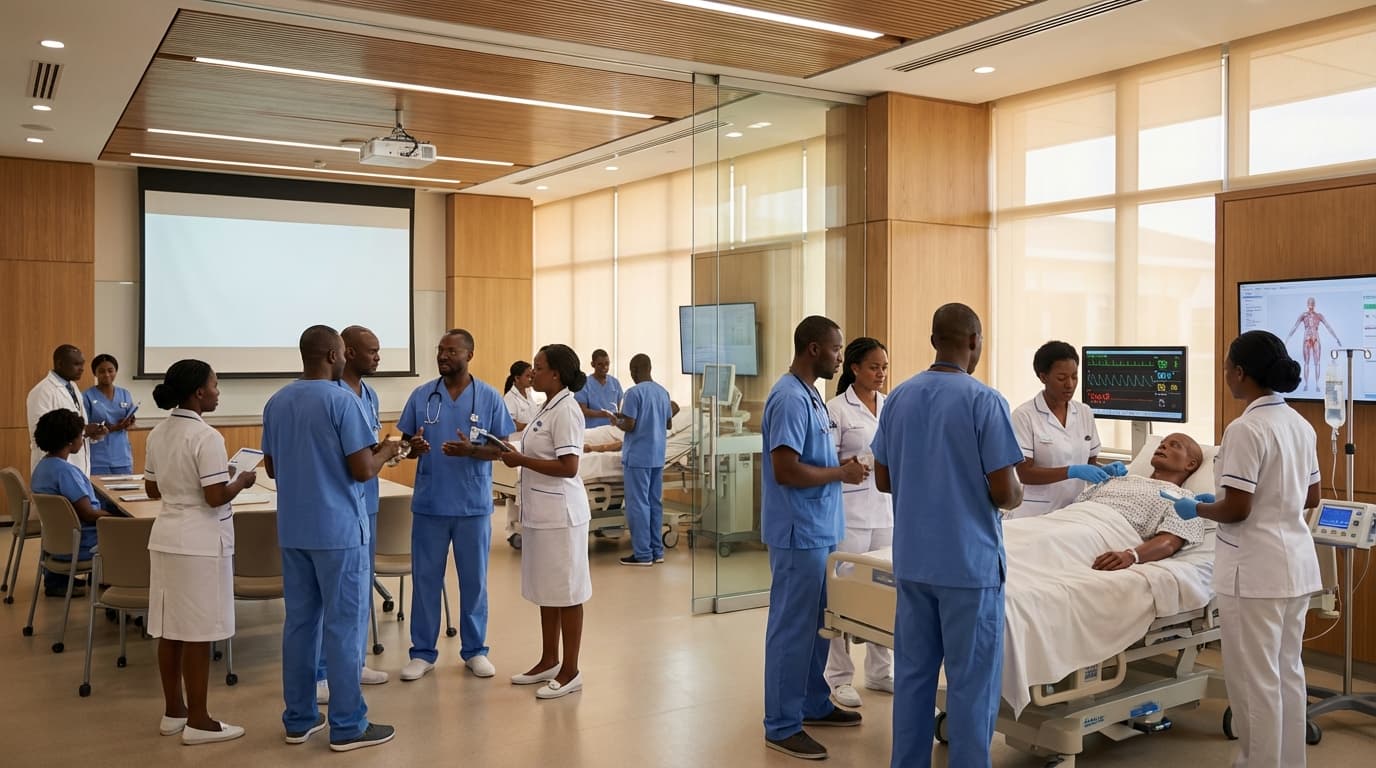
Equipment Training & Education in Guinea
Engineering Excellence & Technical Support
Comprehensive equipment training and certification programs High-standard technical execution following OEM protocols and local regulatory frameworks.
Interactive Skills Workshops
Hands-on, practical workshops delivered by certified trainers, focusing on safe and efficient operation of key mining and construction equipment. Participants gain direct experience with machinery through simulations and supervised practical sessions.
Digital Learning Modules
Accessible online modules featuring high-definition video demonstrations, animated explanations of complex systems, and interactive quizzes. This allows for flexible learning and reinforcement of theoretical knowledge at the trainee's own pace.
Train-the-Trainer Programs
Empowering local expertise through comprehensive train-the-trainer initiatives. This program equips experienced Guinean personnel with the pedagogical skills and technical knowledge to deliver ongoing, localized equipment training within their organizations.
What Is Equipment Training & Education In Guinea?
Equipment training and education in Guinea refers to the formal instructional processes designed to impart knowledge and practical skills necessary for the safe, efficient, and effective operation, maintenance, and troubleshooting of specific industrial, agricultural, medical, or construction equipment. This service encompasses theoretical understanding of equipment principles, hands-on practical application, safety protocols, diagnostic procedures, and best practices specific to the Guinean operational context, including local environmental conditions and regulatory frameworks. The objective is to enhance operator competence, reduce equipment downtime, minimize operational risks, and optimize productivity.
| Target Audience | Need for Training | Typical Use Cases |
|---|---|---|
| Heavy Machinery Operators (Construction, Mining) | Ensuring safe operation of excavators, bulldozers, cranes, and haul trucks; minimizing damage to equipment and infrastructure; improving project timelines. | Infrastructure development projects (roads, buildings, dams); resource extraction (mining, quarrying); agricultural mechanization (large-scale farming). |
| Agricultural Equipment Technicians & Farmers | Optimizing the use of tractors, harvesters, irrigation systems, and processing machinery; enhancing crop yields and efficiency; reducing post-harvest losses. | Large-scale agricultural enterprises; government-supported agricultural modernization programs; cooperatives and farmer associations. |
| Medical Equipment Technicians & Healthcare Professionals | Ensuring accurate diagnosis and treatment delivery; proper functioning and calibration of diagnostic imaging equipment (X-ray, ultrasound), laboratory analyzers, and patient monitoring systems; patient safety. | Hospitals, clinics, diagnostic laboratories; deployment of new medical technologies; international health initiatives. |
| Industrial Plant Operators & Maintenance Personnel | Safe and efficient operation of manufacturing, processing, and power generation equipment (e.g., turbines, pumps, control systems, assembly lines); preventing production stoppages and ensuring product quality. | Manufacturing facilities (food processing, textiles, cement); energy sector (power plants); water treatment facilities; chemical plants. |
| IT & Telecommunications Technicians | Installation, configuration, and maintenance of network infrastructure, servers, communication devices, and specialized software. | Deployment of mobile networks; establishment of internet connectivity in rural areas; corporate IT system management. |
Key Components of Equipment Training & Education
- Theoretical Instruction: Principles of operation, technical specifications, system architecture, and underlying scientific concepts.
- Practical Hands-on Training: Simulated or real-world operation, calibration, adjustment, and basic troubleshooting under expert supervision.
- Safety Procedures & Compliance: Hazard identification, risk assessment, personal protective equipment (PPE) usage, emergency response, and adherence to national safety standards.
- Maintenance & Troubleshooting: Routine maintenance schedules, diagnostic techniques, component identification, and repair strategies for common failures.
- Regulatory & Environmental Considerations: Understanding local regulations pertaining to equipment usage, emissions, waste disposal, and environmental impact mitigation.
- Documentation & Record Keeping: Proper utilization of operator manuals, maintenance logs, and reporting procedures.
Who Needs Equipment Training & Education In Guinea?
In Guinea, robust equipment training and education are crucial for a wide array of individuals and organizations to ensure safe, efficient, and productive operations. The need spans across numerous sectors, driven by the increasing reliance on machinery and specialized tools for economic development and service delivery. Investing in training mitigates risks, enhances skill sets, and ultimately contributes to better outcomes and longevity of expensive equipment.
| Target Customer/Department | Specific Needs/Equipment | Impact of Training |
|---|---|---|
| Construction Sector (Private & Public) | Heavy machinery (excavators, bulldozers, cranes), power tools, safety equipment, scaffolding. | Improved safety records, reduced accidents, increased project efficiency, extended equipment lifespan, compliance with safety regulations. |
| Agriculture Sector | Tractors, harvesters, irrigation systems, processing machinery, pesticide application equipment. | Enhanced crop yields, reduced wastage, efficient resource utilization, improved food security, safer handling of chemicals. |
| Mining & Extractive Industries | Drilling rigs, processing plants, haul trucks, heavy-duty vehicles, specialized safety gear. | Safe and efficient extraction processes, reduced environmental impact, compliance with mining regulations, lower operational costs. |
| Healthcare Sector | Diagnostic equipment (X-ray, MRI, ultrasound), surgical instruments, laboratory equipment, patient monitoring systems. | Accurate diagnoses, safe patient care, reduced equipment malfunction, improved healthcare outcomes, compliance with medical standards. |
| Manufacturing & Industrial Sector | Assembly line machinery, welding equipment, CNC machines, material handling equipment, safety systems. | Higher product quality, increased production output, reduced defects, improved worker safety, efficient maintenance. |
| Logistics & Transportation | Forklifts, cranes, trucks, specialized cargo handling equipment. | Efficient loading/unloading, reduced cargo damage, improved supply chain reliability, enhanced road safety. |
| Energy Sector (Oil & Gas, Power Generation) | Drilling equipment, refining machinery, turbines, generators, safety equipment for hazardous environments. | Safe operation in high-risk environments, optimized energy production, reduced downtime, adherence to strict safety protocols. |
| Water & Sanitation Departments | Pumps, filtration systems, treatment plant machinery, testing equipment. | Reliable water supply, effective waste treatment, prevention of waterborne diseases, efficient management of public utilities. |
| Government & Public Works | Road construction equipment, civil engineering tools, maintenance machinery for public infrastructure. | Effective execution of public projects, improved infrastructure quality, responsible use of public funds, long-term asset management. |
| Vocational Training Institutes | All types of industrial, agricultural, and construction equipment used for practical training. | Producing a skilled workforce, meeting industry demands, empowering individuals with employable skills, contributing to national development. |
Who Needs Equipment Training & Education in Guinea?
- Construction workers and supervisors
- Agricultural workers and farm managers
- Mining and extraction personnel
- Healthcare professionals and technicians
- Industrial and manufacturing operators
- Logistics and transportation staff
- Energy sector workers (oil, gas, power generation)
- Water and sanitation utility operators
- Government officials overseeing infrastructure projects
- Educational institutions and vocational training centers
Equipment Training & Education Process In Guinea
This document outlines the standard workflow for equipment training and education processes in Guinea, covering the journey from initial inquiry to the successful execution of training sessions. The process is designed to ensure that clients receive appropriate training tailored to their specific equipment needs, leading to enhanced operational efficiency and safety.
| Stage | Description | Key Activities | Responsible Party | Output/Deliverable |
|---|---|---|---|---|
| Inquiry & Needs Assessment | The client expresses interest in equipment training and provides initial details about their requirements. | Receive and acknowledge client inquiry; Conduct initial consultation to understand equipment type, number of trainees, existing knowledge level, specific operational goals, and desired outcomes; Identify any unique site-specific considerations. | Client, Sales/Training Coordinator | Understanding of client's training needs; Preliminary assessment of required training scope. |
| Proposal & Quotation | Based on the needs assessment, a formal proposal and quotation are prepared and submitted to the client. | Develop a detailed training proposal outlining the scope of training, learning objectives, curriculum modules, duration, methodology (e.g., classroom, hands-on, on-site), required resources, and expected outcomes; Prepare a comprehensive quotation including costs for trainers, materials, travel, accommodation, and any additional services. | Training Department/Sales Team | Formal Training Proposal; Detailed Quotation. |
| Training Program Design & Customization | Once the proposal is accepted, the training program is finalized and tailored to the client's specific requirements. | Review and confirm the training curriculum with the client; Customize training materials (presentations, manuals, practical exercises) to align with the specific equipment model and the client's operational context; Identify and select qualified trainers with relevant expertise. | Training Department/Lead Trainer | Finalized Training Curriculum; Customized Training Materials; Selected Trainer(s). |
| Logistics & Scheduling | Arrangements are made for the practical execution of the training program. | Confirm training dates and duration with the client; Book training venue (if off-site); Arrange travel and accommodation for trainers and, if applicable, trainees; Coordinate equipment availability for practical sessions; Communicate schedule and logistical details to all parties. | Training Coordinator/Logistics Team | Confirmed Training Schedule; Confirmed Logistics (travel, accommodation, venue); Pre-training briefing for participants. |
| Pre-Training Preparations | Ensuring all necessary resources and preparations are in place before the training commences. | Prepare and distribute training materials to trainees; Ensure all training equipment is functional and readily available; Confirm attendance of trainees; Final review of training plan and materials by the trainer. | Trainer, Training Coordinator | Ready training environment; Distributed training materials; Prepared equipment. |
| Training Execution | The actual delivery of the training program. | Conduct theoretical sessions (lectures, presentations, discussions); Facilitate practical, hands-on training sessions on the equipment; Monitor trainee progress and provide feedback; Address participant questions and concerns; Ensure adherence to safety protocols. | Trainer(s) | Successful delivery of training modules; Trainee engagement and learning. |
| Post-Training Evaluation & Follow-up | Assessing the effectiveness of the training and providing ongoing support. | Administer post-training assessments (e.g., written tests, practical evaluations); Collect feedback from trainees and the client on the training delivery and content; Conduct a post-training review meeting with the client to discuss outcomes and address any lingering issues; Provide initial technical support or clarification as needed. | Trainer(s), Training Coordinator, Client | Trainee Assessment Results; Training Feedback Reports; Post-Training Review Meeting Minutes. |
| Certification & Documentation | Formalizing the completion of the training and providing necessary documentation. | Issue training certificates to successful trainees; Compile and provide a comprehensive training report to the client, including assessment results and recommendations; Maintain training records for future reference. | Training Department | Training Certificates; Final Training Report; Archived Training Records. |
Key Stages of the Equipment Training & Education Process in Guinea
- Inquiry & Needs Assessment
- Proposal & Quotation
- Training Program Design & Customization
- Logistics & Scheduling
- Pre-Training Preparations
- Training Execution
- Post-Training Evaluation & Follow-up
- Certification & Documentation
Equipment Training & Education Cost In Guinea
Acquiring specialized equipment training and education in Guinea involves a range of costs influenced by several key factors. The complexity and type of equipment, the duration and depth of the training program, the qualifications and reputation of the training provider, and the location within Guinea (e.g., major cities vs. remote areas) all contribute to the overall pricing. Specialized technical skills, such as those required for operating heavy machinery, advanced medical equipment, or complex industrial systems, generally command higher fees due to the scarcity of qualified trainers and the sophisticated nature of the subject matter. Similarly, programs leading to recognized certifications or diplomas will be more expensive than introductory workshops. Demand for specific skills, the need for customized training modules, and the inclusion of practical, hands-on components also play a significant role in determining the final cost. Prices are typically quoted in Guinean Francs (GNF).
| Training Category | Typical Price Range (GNF) | Notes |
|---|---|---|
| Basic Equipment Operation (e.g., light machinery, office equipment) | 200,000 - 500,000 GNF | Short duration, introductory courses. May include basic safety. |
| Intermediate Technical Skills (e.g., general maintenance, specific industrial tools) | 400,000 - 1,200,000 GNF | Several days to a week of training. Focus on practical application. |
| Advanced Equipment Operation & Maintenance (e.g., heavy construction, mining, medical devices) | 800,000 - 3,000,000+ GNF | Can range from a week to several months. Often includes certification. Varies significantly by equipment. |
| Specialized Software/IT Equipment Training | 500,000 - 2,000,000 GNF | Depends on software complexity and duration. May be online or in-person. |
| Customized Corporate Training Programs | Negotiable (often per day or per participant) | Tailored to specific company needs and equipment. Can be significantly higher. |
| Certification Courses (e.g., welding, specific engineering tools) | 700,000 - 2,500,000 GNF | Includes assessment and formal certification. Duration and difficulty vary. |
Key Pricing Factors for Equipment Training & Education in Guinea
- Equipment Complexity and Type
- Training Program Duration and Depth
- Trainer Qualifications and Provider Reputation
- Geographical Location of Training
- Level of Specialization and Technical Skill Required
- Certification or Diploma Requirements
- Market Demand for Specific Skills
- Customization of Training Modules
- Inclusion of Practical, Hands-on Components
Affordable Equipment Training & Education Options
Investing in proper equipment training and education is crucial for safety, efficiency, and productivity. Fortunately, numerous affordable options exist that don't break the bank. Value bundles and smart cost-saving strategies can significantly reduce the financial burden while ensuring your team gains the necessary skills. These approaches prioritize getting the most bang for your buck, whether you're a small business or a larger enterprise looking to upskill your workforce.
| Strategy/Concept | Description | Cost-Saving Benefit | Example |
|---|---|---|---|
| Value Bundles | Combining multiple training modules, courses, or certifications into a single package at a discounted price. | Reduces overall cost per module/course compared to purchasing individually. Encourages comprehensive training. | A bundle might include basic operation, safety protocols, and advanced maintenance for a specific machine, offered at 15% less than separate purchases. |
| Subscription Services | Access to a library of online courses, resources, and updates for a recurring fee (monthly or annual). | Predictable costs, continuous learning opportunities, access to a broad range of topics without individual purchase costs. | An annual subscription to an e-learning platform offering hundreds of equipment-related courses for all employees. |
| Group Discounts | Reduced per-person pricing when a larger number of individuals from the same organization enroll. | Significant savings for companies with multiple employees needing training. | A training provider offers a 10% discount for groups of 5 or more employees attending a specific workshop. |
| Leveraging Free Resources | Utilizing publicly available manuals, safety guidelines, and basic operational videos. | Zero direct cost for foundational knowledge. Can supplement formal training. | Downloading and reviewing the manufacturer's operation manual for a new piece of equipment before formal training. |
| Inter-Company Collaboration | Partnering with other businesses to share training resources, instructors, or facilities. | Splits costs, expands access to specialized training, and can create bulk discounts. | Two local construction companies sharing the cost of an instructor for a specialized crane operation course. |
| Phased Training Approach | Breaking down complex training into smaller, manageable modules delivered over time, rather than one intensive, expensive session. | Spreads costs over a longer period, allows for practical application between modules, and can be more effective for retention. | Training on basic forklift operation first, followed by advanced load management and safety in a separate, later session. |
| Instructor-Led vs. Self-Paced Online | Comparing the cost and effectiveness of different delivery methods. | Self-paced online courses are often cheaper than in-person, instructor-led sessions, especially for large groups. | Opting for an online certification course for equipment maintenance that employees can complete at their own pace, saving on travel and instructor fees. |
Affordable Equipment Training & Education Options
- Online Courses & Webinars
- Community College & Technical Schools
- Manufacturer-Provided Training
- On-the-Job Training (OJT) with Mentorship
- Industry Association Workshops
- E-learning Platforms with Subscription Models
- Train-the-Trainer Programs
Verified Providers In Guinea
Navigating healthcare in a foreign country can be daunting. In Guinea, ensuring you access quality medical services requires identifying verified and credentialed providers. Franance Health stands out as a premier choice due to its rigorous vetting process and commitment to patient well-being. This section details what makes Franance Health credentials a hallmark of excellence in Guinean healthcare.
| Provider Type | Franance Health Verification Criteria | Benefits to Patients |
|---|---|---|
| Doctors (GPs & Specialists) | Valid Medical License (Ginouean & International Recognition), Board Certification, Verified Years of Practice, Specialization Accreditation, Clean Disciplinary Record | Access to highly qualified and experienced medical professionals, accurate diagnosis and effective treatment plans. |
| Hospitals & Clinics | Accreditation from relevant health bodies, Compliance with Safety & Hygiene Standards, Availability of Advanced Medical Equipment, Qualified Nursing and Support Staff | Safe and well-equipped facilities, adherence to international quality and safety protocols, comprehensive care services. |
| Diagnostic Laboratories | Certification for laboratory practices, Use of calibrated and modern equipment, Qualified Technicians and Pathologists, Adherence to quality control procedures | Accurate and reliable diagnostic results, crucial for effective treatment. |
| Pharmacies | Valid Pharmacy License, Stocking of Genuine Medications, Qualified Pharmacists, Proper Storage and Dispensing Practices | Access to safe and authentic pharmaceuticals, expert advice on medication usage. |
What Franance Health Credentials Signify:
- Rigorous Qualification Checks: Franance Health meticulously verifies the educational background, medical licenses, and professional certifications of all affiliated healthcare providers. This ensures they meet international standards of medical practice.
- Experience and Specialization Verification: Beyond basic credentials, Franance Health assesses the practical experience and any specialized training of its providers, matching patients with the most suitable experts for their specific needs.
- Commitment to Ethical Practice: Franance Health partners with providers who demonstrate a strong adherence to medical ethics, patient privacy, and compassionate care. This includes background checks to ensure a trustworthy and professional environment.
- Continuous Professional Development: The organization encourages and often requires its affiliated professionals to engage in ongoing training and education, keeping them abreast of the latest medical advancements and techniques.
- Patient-Centric Approach: Franance Health prioritizes providers who are dedicated to patient satisfaction, clear communication, and a collaborative approach to treatment planning.
Scope Of Work For Equipment Training & Education
This Scope of Work (SOW) outlines the requirements for providing comprehensive training and educational services for the specified equipment. The objective is to ensure all designated personnel possess the necessary knowledge, skills, and understanding to operate, maintain, and troubleshoot the equipment effectively and safely. This SOW details the technical deliverables, standard specifications for training content and delivery, and the expected outcomes.
| Category | Technical Deliverables | Standard Specifications | Acceptance Criteria |
|---|---|---|---|
| Training Program Design | Curriculum for Operator Training, Curriculum for Maintenance Training, Curriculum for Advanced Troubleshooting | Modular design, competency-based learning objectives, clearly defined learning outcomes for each module, tailored to specific equipment models and intended user roles. Includes theoretical knowledge and practical application components. Maximum class size of 15 participants. | Approved training curricula by Client representative. Demonstrated alignment with equipment operational manuals and safety data sheets. |
| Training Materials | Operator Manuals (annotated for training), Maintenance Manuals (annotated for training), Trainer's Guides, Participant Workbooks, Visual Aids (slides, diagrams, videos), Hands-on Practice Scenarios | Materials must be accurate, up-to-date, and reflect the latest equipment revisions. Language to be [Specify Language, e.g., English]. Format to be [Specify Format, e.g., PDF for digital, printed copies for hardcopy]. Visual aids to be high-resolution and clear. | Review and approval of all training materials by Client representative. No factual errors or omissions identified during review. |
| Training Delivery | Instructor-Led Classroom Sessions, Hands-on Practical Training Sessions, On-Site Training Delivery, Remote/Virtual Training Delivery (if applicable) | Qualified and certified instructors with verifiable experience in the specific equipment. Training to be conducted in a controlled environment (if on-site) or suitable venue. Practical sessions to include real-time equipment operation and simulated fault-finding. Minimum of [Specify %] practical application time. | Successful completion of training modules by participants as evidenced by post-training assessments. Positive participant feedback scores (average of [Specify Score, e.g., 4 out of 5]). |
| Assessment & Evaluation | Pre-Training Knowledge Assessment, Post-Training Knowledge Assessment, Practical Skills Assessment, Competency Evaluation Report | Assessments to be objective and directly measure the achievement of learning objectives. Practical assessments to simulate real-world tasks. Competency evaluation report to summarize individual participant performance and identify any areas requiring further development. | Demonstrated improvement in assessment scores (e.g., average increase of [Specify %] between pre and post-assessments). Clear justification for competency pass/fail status for each participant. |
| Post-Training Support | Q&A Sessions, Refresher Training Module (optional), Access to Training Resources (online portal/repository) | Availability of instructors for a limited period post-training for clarification of queries (e.g., [Specify Duration, e.g., 2 weeks]). Refresher training module to cover key concepts and address common issues. Online resources to be accessible for [Specify Duration, e.g., 1 year]. | Resolution of at least [Specify %] of submitted queries within [Specify Timeframe, e.g., 2 business days]. Confirmation of access and functionality of post-training resources. |
| Documentation & Reporting | Training Schedule, Participant Attendance Records, Assessment Results Summary, Final Training Report | Detailed training schedule including dates, times, locations, and topics. Accurate attendance records for all sessions. Summary of assessment results, highlighting overall class performance and individual achievements. Final report to include a summary of training activities, participant feedback, and recommendations for future training needs. | Submission of all required documentation within [Specify Timeframe, e.g., 5 business days] of training completion. Report to be comprehensive and informative, addressing all aspects of the SOW. |
Key Objectives of Equipment Training & Education
- Enhance operator proficiency in safe and efficient equipment operation.
- Develop maintenance personnel's ability to perform routine and preventative maintenance.
- Equip technicians with diagnostic and troubleshooting skills for common issues.
- Ensure compliance with all relevant safety regulations and manufacturer guidelines.
- Promote a deeper understanding of equipment functionality and capabilities.
- Reduce downtime and improve overall equipment lifespan through proper usage and maintenance.
Service Level Agreement For Equipment Training & Education
This Service Level Agreement (SLA) outlines the terms and conditions for Equipment Training & Education services, focusing specifically on response times for support requests and uptime guarantees for training platforms and resources. This SLA aims to ensure reliable and efficient access to training content and expert assistance.
| Service Component | Service Level Objective (SLO) | Measurement Period | Reporting Frequency |
|---|---|---|---|
Key Definitions
- {"term":"Equipment Training & Education","definition":"Refers to the provision of educational materials, instructional sessions, and support related to the operation, maintenance, and troubleshooting of specific equipment."}
- {"term":"Support Request","definition":"Any request submitted by the Client to the Service Provider for assistance with training materials, platform access, or technical issues related to the training environment."}
- {"term":"Uptime","definition":"The percentage of time during a measurement period that the training platform and associated resources are operational and accessible to the Client."}
- {"term":"Downtime","definition":"The percentage of time during a measurement period that the training platform and associated resources are not operational or accessible."}
- {"term":"Response Time","definition":"The maximum time allowed for the Service Provider to acknowledge and begin addressing a Support Request after it has been submitted."}
- {"term":"Resolution Time","definition":"The maximum time allowed for the Service Provider to fully resolve a Support Request. (Note: This may vary based on complexity and is often addressed in separate clauses or the main agreement)."}
Frequently Asked Questions

Ready when you are
Let's scope your Equipment Training & Education in Guinea project in Guinea.

Scaling healthcare logistics and technical systems across the entire continent.