
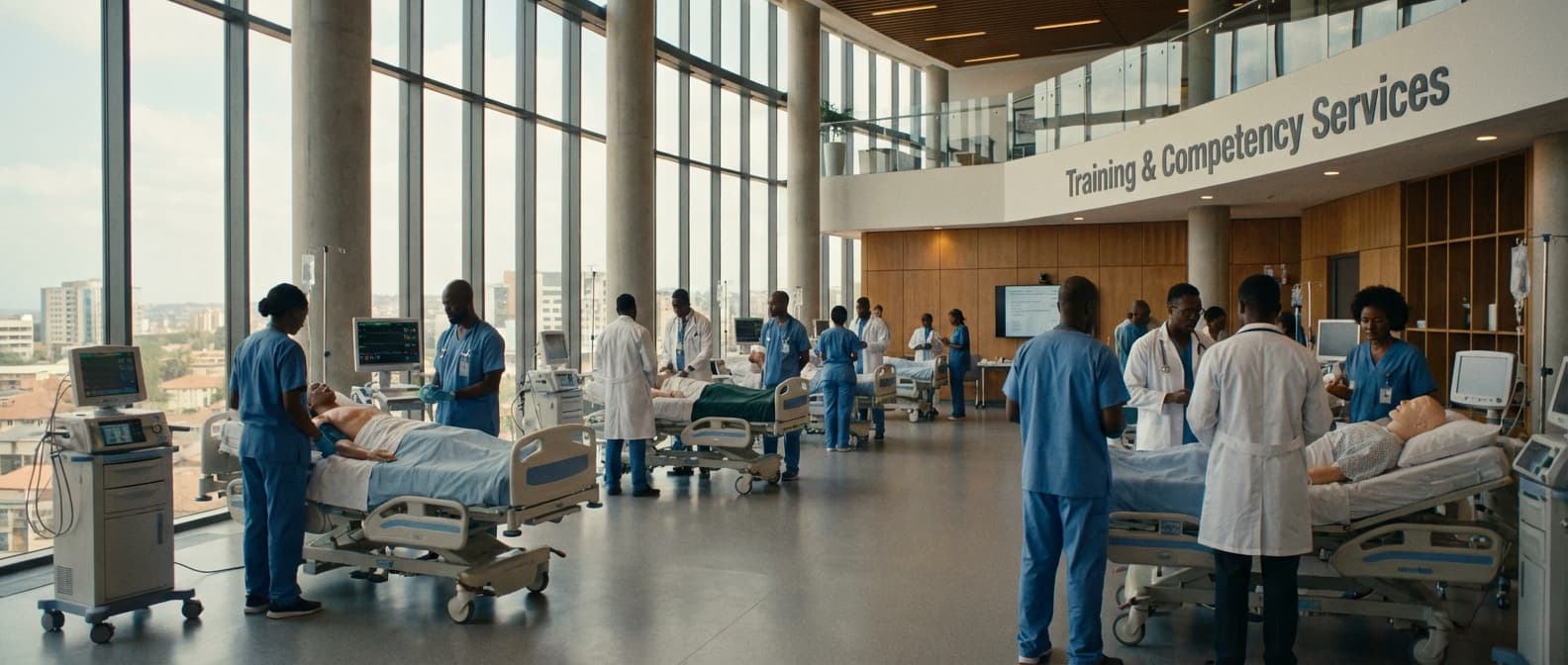
Ultrasound Application Training Service (Protocol-Based) in Guinea
Engineering Excellence & Technical Support
Ultrasound Application Training Service (Protocol-Based) High-standard technical execution following OEM protocols and local regulatory frameworks.
Standardized Protocol Mastery
Gain proficiency in evidence-based, protocol-driven ultrasound examinations, ensuring consistent, high-quality diagnostic imaging for critical conditions specific to Guinea's healthcare landscape.
Expert-Led, Hands-On Training
Benefit from interactive workshops and simulation sessions led by experienced sonographers, focusing on practical application and troubleshooting relevant to local patient demographics and common pathologies.
Accessible Mobile Learning Modules
Reinforce learning with on-demand digital resources and mobile applications, allowing continuous skill development and protocol review anytime, anywhere in Guinea, overcoming geographical barriers.
What Is Ultrasound Application Training Service (Protocol-based) In Guinea?
Ultrasound Application Training Service (Protocol-Based) in Guinea refers to a structured and standardized educational program designed to impart proficiency in the application of ultrasound imaging technologies. This service focuses on a systematic approach to ultrasound examinations, adhering to established protocols for specific clinical scenarios and anatomical regions. The training emphasizes the correct operation of ultrasound equipment, image acquisition techniques, artifact recognition and mitigation, and accurate interpretation of ultrasound findings within the context of established diagnostic pathways. The protocol-based methodology ensures consistency, reproducibility, and adherence to best practices, thereby enhancing diagnostic accuracy and patient care in the Guinean healthcare landscape.
| Who Needs It | Typical Use Cases |
|---|---|
| Medical professionals in Guinea, including radiologists, sonographers, physicians (obstetricians, gynecologists, cardiologists, general practitioners), nurses, and technicians who utilize or intend to utilize ultrasound as a diagnostic tool. | Enhancing diagnostic capabilities in primary and secondary healthcare facilities for conditions such as pregnancy monitoring (obstetric ultrasound), abdominal pathology (gallstones, liver disease, renal abnormalities), cardiac assessment (echocardiography), vascular assessment (deep vein thrombosis, carotid artery stenosis), and soft tissue evaluations. |
| Healthcare institutions in Guinea seeking to standardize ultrasound practice, improve the quality of ultrasound services, and ensure compliance with international guidelines. | Training newly graduated medical personnel in specialized ultrasound applications. Upskilling existing staff to handle new ultrasound technologies or advanced protocols. Supporting the deployment of mobile ultrasound units in underserved rural areas by providing trained personnel. |
| Individuals pursuing specialized careers in diagnostic imaging or sonography. | Facilitating the implementation of point-of-care ultrasound (POCUS) in emergency medicine and critical care settings. Providing essential training for humanitarian missions and public health initiatives requiring mobile diagnostic imaging capabilities. |
Key Components of Ultrasound Application Training Service (Protocol-Based):
- Theoretical instruction on ultrasound physics, instrumentation, and safety.
- Didactic sessions covering specific ultrasound protocols (e.g., abdominal, obstetric, gynecological, vascular, cardiac, musculoskeletal).
- Hands-on practical sessions with ultrasound phantoms and simulated patients.
- Supervised clinical scanning on actual patients under the guidance of experienced sonographers and radiologists.
- Image optimization and artifact management techniques.
- Principles of image interpretation and reporting according to standardized protocols.
- Case-based learning and scenario analysis.
- Assessment of competency through practical examinations and knowledge tests.
Who Needs Ultrasound Application Training Service (Protocol-based) In Guinea?
This document outlines the essential training needs for protocol-based ultrasound application services in Guinea. Such specialized training is crucial for healthcare professionals to effectively utilize ultrasound technology for accurate diagnosis and patient care within the Guinean healthcare system. The focus on protocol-based training ensures standardization, reproducibility, and improved diagnostic quality.
| Customer Type | Specific Departments/Roles | Training Needs/Benefits | ||||||||||
|---|---|---|---|---|---|---|---|---|---|---|---|---|
| Hospitals (Public) | Radiology/Imaging Department | General practitioners performing basic ultrasounds, radiologists, radiographers. Training in abdominal, obstetric, gynecological, and potentially pediatric ultrasound protocols. Benefits: Improved diagnostic accuracy, reduced misdiagnosis, enhanced patient management. | Emergency Department | Emergency physicians, nurses. Training in focused assessment with sonography for trauma (FAST) and other point-of-care ultrasound (POCUS) protocols. Benefits: Rapid diagnosis of life-threatening conditions, timely intervention, better patient outcomes. | Obstetrics & Gynecology Department | Obstetricians, gynecologists, midwives. Training in obstetric ultrasound protocols (dating scans, anomaly scans, fetal well-being) and gynecological ultrasound. Benefits: Improved prenatal care, detection of fetal abnormalities, better management of gynecological conditions. | Pediatric Department | Pediatricians, pediatric nurses. Training in pediatric ultrasound protocols (e.g., for infantile hip dysplasia, abdominal pain). Benefits: Non-invasive diagnostic tool for children, reduced need for radiation-based imaging. | Cardiology Department | Cardiologists, cardiac technicians. Training in echocardiography protocols. Benefits: Diagnosis and management of heart conditions. | Internal Medicine Department | Internists, general practitioners. Training in basic abdominal and pelvic ultrasound protocols. Benefits: Enhanced diagnostic capabilities for common conditions. |
| Hospitals (Private) | Radiology/Imaging Department | Radiologists, sonographers, technicians. Advanced training in specific sub-specialties (e.g., vascular, musculoskeletal, interventional ultrasound). Benefits: Competitive advantage, provision of specialized services. | All clinical departments | Similar to public hospitals, with a potential focus on more advanced or niche applications based on the hospital's service offerings. | ||||||||
| Clinics & Health Centers | General practitioners, nurses with advanced training | Basic ultrasound protocols for common conditions (e.g., abdominal pain, urinary tract infections, basic obstetric scans). Benefits: Increased access to diagnostic imaging in underserved areas, early detection of common ailments. | ||||||||||
| Government Health Ministries/Agencies | Public health officials, training coordinators | Development of national ultrasound guidelines and protocols, training of trainers (TOT) programs, quality assurance and accreditation of ultrasound services. Benefits: Standardization of care, equitable access to ultrasound services, improved national health outcomes. | Regional and District Health Offices | Health managers, supervisors | Understanding of ultrasound service needs, monitoring and evaluation of ultrasound utilization, capacity building for local health facilities. | |||||||
| Medical Training Institutions | Faculty members, curriculum developers | Integration of protocol-based ultrasound training into medical and allied health professional curricula, development of standardized training materials. Benefits: Ensuring future healthcare professionals are equipped with essential ultrasound skills. | Students (Medical, Nursing, Radiography) | Hands-on training in specific ultrasound protocols relevant to their future practice. Benefits: Practical skills development, enhanced employability. | ||||||||
| NGOs & International Aid Organizations | Healthcare project managers, field clinicians | Training for healthcare workers in project areas, deployment of ultrasound services in resource-limited settings, capacity building for local healthcare systems. Benefits: Strengthening healthcare delivery in critical regions, improved maternal and child health outcomes. |
Target Customers and Departments for Ultrasound Application Training Service (Protocol-Based) in Guinea
- Healthcare Facilities: Hospitals (public and private), clinics, health centers, and specialized medical centers.
- Government Health Ministries and Agencies: To ensure nationwide standardization and quality assurance in ultrasound services.
- Medical Training Institutions: Universities, medical schools, and nursing colleges offering diagnostic imaging programs.
- Non-Governmental Organizations (NGOs) and International Aid Organizations: Involved in healthcare delivery and capacity building in Guinea.
Ultrasound Application Training Service (Protocol-based) Process In Guinea
This document outlines the typical workflow for an Ultrasound Application Training Service (Protocol-Based) in Guinea, from the initial inquiry to the successful execution of the training. This process ensures a structured and efficient delivery of specialized ultrasound training tailored to specific protocols and regional needs.
| Step | Description | Key Activities | Responsible Parties |
|---|---|---|---|
| Initial contact from a client in Guinea seeking ultrasound application training. | Client contacts the training provider (phone, email, website). | Client, Training Provider |
| Understanding the client's specific requirements, target audience, and desired ultrasound applications/protocols. | Discussion of existing ultrasound equipment, skill levels, specific clinical needs (e.g., obstetrics, cardiology, general imaging), and training duration. | Training Provider, Client |
| A detailed proposal outlining the training program, objectives, curriculum, methodology, trainers, duration, location, and cost. | Development of a customized training plan aligned with client needs and specific protocols. Inclusion of learning outcomes and assessment methods. | Training Provider |
| The client reviews the proposal and may request modifications. | Clarification of terms, pricing adjustments, and agreement on training scope. | Client, Training Provider |
| Formal agreement between the client and the training provider. | Legal documentation outlining responsibilities, payment terms, intellectual property, and service level agreements. | Client, Training Provider |
| Selecting qualified trainers and finalizing the training content based on the agreed protocols. | Assigning trainers with relevant expertise. Customizing presentation materials, case studies, and practical exercises. | Training Provider |
| Organizing travel, accommodation, training venue, and necessary equipment. | Booking flights/transport for trainers, securing hotel rooms, arranging the training space, ensuring availability of ultrasound machines and phantom models for practice. | Training Provider, Client (for venue access) |
| Informing participants about the training schedule, prerequisites, and any pre-reading materials. | Sending out welcome packs, detailed agendas, and participant information forms. | Training Provider |
| Conducting the theoretical and practical ultrasound application training as per the agreed protocols. | Lectures, demonstrations, hands-on scanning sessions, case study discussions, and interactive Q&A. Adherence to the specified protocols. | Training Provider (Trainers), Participants |
| Evaluating participant understanding and providing immediate feedback during the training. | Quizzes, practical skills assessment, and observation of scanning techniques. Gathering participant feedback on the training. | Training Provider (Trainers), Participants |
| Assessing the overall effectiveness of the training and providing a report. | Collecting comprehensive feedback from participants and the client. Analyzing assessment results. Submitting a detailed training report with recommendations. | Training Provider |
| Providing participants with certificates of completion. | Issuing formal certificates acknowledging successful completion of the protocol-based ultrasound training. | Training Provider |
| Offering continued guidance and support after the training. | Remote assistance, access to online resources, or refresher sessions as per the agreement. | Training Provider |
Ultrasound Application Training Service (Protocol-Based) Workflow in Guinea
- {"title":"Phase 1: Inquiry and Needs Assessment","description":"The process begins with a potential client (e.g., a hospital, clinic, or healthcare institution in Guinea) expressing interest in ultrasound application training."}
- {"title":"Phase 2: Proposal Development","description":"Based on the identified needs, a detailed proposal is drafted."}
- {"title":"Phase 3: Contract and Agreement","description":"Upon acceptance of the proposal, a formal contract is established."}
- {"title":"Phase 4: Pre-Training Preparation","description":"This phase involves meticulous planning and logistical arrangements."}
- {"title":"Phase 5: Training Execution","description":"The core of the service delivery where the training takes place."}
- {"title":"Phase 6: Post-Training Support and Evaluation","description":"The engagement continues after the training sessions conclude."}
Ultrasound Application Training Service (Protocol-based) Cost In Guinea
This document outlines the typical cost of Ultrasound Application Training Services (Protocol-Based) in Guinea. These services are crucial for healthcare professionals seeking to enhance their diagnostic skills in specific ultrasound applications, adhering to established protocols. The pricing is influenced by several key factors, making a fixed cost difficult to provide without specific details. Understanding these factors will help institutions and individuals budget effectively for such training in Guinea.
| Training Type/Duration | Estimated Cost Range (GNF) | Notes |
|---|---|---|
| Basic Ultrasound Application (e.g., General Abdomen - 2 Days) | 500,000 - 1,500,000 | Covers fundamental protocols, suitable for general practitioners or new sonographers. Cost assumes a small group and local trainer. |
| Intermediate Ultrasound Application (e.g., Obstetrics & Gynecology - 3-4 Days) | 1,000,000 - 3,000,000 | Includes more detailed protocols for maternal-fetal medicine. Assumes moderate group size and provision of some training materials. |
| Advanced Ultrasound Application (e.g., Echocardiography or Advanced Doppler - 5 Days) | 2,000,000 - 6,000,000+ | Focuses on highly specialized areas. May involve international trainers or advanced simulation equipment, influencing the higher end of the range. |
| Customized/On-site Training (Per Day Rate) | 300,000 - 1,000,000 | This is a general daily rate and will vary significantly based on the factors mentioned above. It typically excludes trainer travel and accommodation unless specified. |
| Individual / One-on-One Training (Per Day Rate) | 500,000 - 1,500,000 | Higher per-day rate due to lack of group scaling, but offers personalized attention. |
Key Pricing Factors for Ultrasound Application Training in Guinea
- Training Duration: The number of days or hours dedicated to the training directly impacts the cost. Longer, more intensive courses will naturally be more expensive.
- Number of Participants: Group training often has a per-participant cost, which can be lower than individual training due to economies of scale. Conversely, private or specialized group training might incur higher overall fees.
- Expertise of the Trainer: Highly specialized or internationally renowned trainers will command higher fees. Local trainers may offer more competitive pricing.
- Training Venue and Facilities: If the training is conducted at a dedicated facility provided by the training provider, this cost will be factored in. If the client provides the venue, it may reduce the provider's fee.
- Scope of the Application: Training for advanced or niche ultrasound applications (e.g., specific cardiology protocols, advanced obstetric Doppler) will generally be more expensive than general abdominal or basic OB/GYN training.
- Equipment Provision: Whether the training provider supplies ultrasound machines and phantoms for hands-on practice, or if the client's own equipment is used, will affect the cost.
- Training Materials and Resources: The provision of comprehensive manuals, digital resources, case studies, and post-training support contributes to the overall price.
- Accreditation and Certification: Training programs that offer recognized accreditation or certification may have higher costs due to the administrative and validation processes involved.
- Travel and Accommodation: If the trainer needs to travel to a specific location in Guinea, or if participants require accommodation, these expenses will be added to the training cost.
- Customization of the Protocol: Tailoring the training protocol to a specific hospital's needs or a particular set of patient demographics can influence the development time and thus the cost.
Affordable Ultrasound Application Training Service (Protocol-based) Options
Our Affordable Ultrasound Application Training Service (Protocol-Based) offers comprehensive, hands-on training designed to equip healthcare professionals with the skills and knowledge to confidently perform and interpret ultrasound examinations. We focus on standardized protocols to ensure consistency and accuracy in patient care. Our training is delivered by experienced sonographers and is tailored to various levels of expertise, from beginners to advanced practitioners. We understand the financial pressures in healthcare and are committed to providing high-value training solutions that minimize costs without compromising quality.
| Value Bundle Name | Includes | Key Benefits | Estimated Cost-Saving |
|---|---|---|---|
| Foundational Proficiency Bundle | Introduction to Ultrasound Physics & Instrumentation, Core Anatomy & Physiology, Basic Abdominal & Pelvic Protocols, Hands-on Scanning Fundamentals. | Establishes a strong base for new sonographers and general practitioners. Reduces initial learning curve and potential errors. | Up to 15% reduction compared to individual module purchases. |
| Specialty Focus Bundle (e.g., Cardiac, OB/GYN, Vascular) | Advanced protocol training for a specific specialty, common pathologies and their sonographic appearances, case study reviews, image optimization techniques. | Develops expertise in high-demand areas. Improves diagnostic confidence and efficiency within a specialty. | Up to 20% reduction compared to individual module purchases. |
| Institutional Comprehensive Package | On-site training for a team, customized curriculum based on institutional needs, train-the-trainer components, ongoing support and assessment tools. | Standardizes practice across an entire department or facility. Maximizes return on investment through workforce development. | Significant savings based on group size and customization; potential for over 25% reduction. |
Key Features of Our Ultrasound Training:
- Protocol-Driven Curriculum: Standardized scanning techniques for improved diagnostic accuracy and reproducibility.
- Hands-On Practice: Extensive supervised scanning sessions on phantoms and potentially simulated patient scenarios.
- Expert Instruction: Training delivered by certified and experienced sonographers with diverse clinical backgrounds.
- Flexible Learning Options: In-person workshops, on-site training for institutions, and hybrid models available.
- Customizable Modules: Ability to tailor training content to specific clinical needs and specialties.
- Ongoing Support: Access to resources and post-training consultations to reinforce learning.
Verified Providers In Guinea
In Guinea's evolving healthcare landscape, identifying reliable and trustworthy medical providers is paramount for individuals seeking quality care. Franance Health has emerged as a leading platform dedicated to verifying healthcare professionals and institutions, ensuring a higher standard of medical service. This verification process not only elevates the reputation of the providers but also offers patients the confidence that they are engaging with credentialed and competent practitioners. Franance Health's rigorous vetting mechanisms are designed to safeguard patient well-being and promote transparency within the healthcare sector.
| Key Verification Aspect | Franance Health's Approach | Benefit to Patients |
|---|---|---|
| Licensing and Certifications | Thorough validation of all official medical licenses and specialty certifications. | Guarantees that providers meet the minimum legal and professional requirements to practice. |
| Educational Background | Verification of degrees and diplomas from accredited institutions. | Ensures a strong foundation in medical knowledge and training. |
| Professional Experience | Assessment of past practice, surgical records (where applicable), and references. | Confirms practical skills and a track record of successful patient care. |
| Ethical Conduct | Background checks and adherence to professional codes of conduct. | Promotes a safe and respectful patient experience. |
| Facility Standards (for institutions) | Inspection of infrastructure, equipment, and hygiene protocols. | Ensures a safe and well-equipped environment for treatment. |
Why Franance Health Verified Providers are the Best Choice in Guinea:
- Uncompromising Quality Assurance: Franance Health's verification process goes beyond surface-level checks. It involves in-depth scrutiny of medical licenses, certifications, educational backgrounds, and professional experience. This ensures that only genuinely qualified individuals and facilities earn their verified status.
- Enhanced Patient Safety: By partnering with verified providers, patients significantly reduce the risk of encountering unqualified or fraudulent practitioners. This directly contributes to improved patient safety and outcomes.
- Access to Specialized Expertise: Franance Health's network often includes specialists across various medical disciplines. Their verification process identifies those with proven expertise, allowing patients to find the right doctor for their specific needs.
- Increased Trust and Transparency: The Franance Health badge signifies a commitment to ethical practices and high standards. This fosters a greater sense of trust between patients and providers, creating a more transparent healthcare ecosystem.
- Streamlined Healthcare Navigation: Navigating the healthcare system can be challenging. Franance Health simplifies this by providing a curated list of vetted professionals, saving patients time and effort in their search for reliable care.
- Commitment to Continuous Improvement: Franance Health often incorporates feedback mechanisms and ongoing monitoring to ensure that their verified providers maintain their high standards over time.
Scope Of Work For Ultrasound Application Training Service (Protocol-based)
This document outlines the Scope of Work (SOW) for a Protocol-Based Ultrasound Application Training Service. The objective is to provide comprehensive training to [Target Audience, e.g., sonographers, radiologists, medical students] on specific ultrasound applications, adhering to established protocols and best practices. The training will focus on both theoretical knowledge and practical scanning skills, ensuring proficiency and competency in the designated ultrasound modalities.
| Phase | Activities | Technical Deliverables | Standard Specifications |
|---|---|---|---|
| Phase 1: Planning & Preparation | Needs Assessment, Curriculum Development, Material Customization | Detailed Training Curriculum, Customized Training Manuals (Digital/Print), Pre-Training Assessment Tools | Curriculum aligned with relevant professional guidelines (e.g., AIUM, ARDMS). Manuals formatted for clarity and accessibility, meeting industry standards for technical documentation. |
| Phase 2: Theoretical Training | Lectures, Presentations, Case Studies, Q&A Sessions | Presentation Slides (Digital), Recorded Lecture Sessions (Optional), Case Study Library | High-resolution slides with clear diagrams and legible text. Case studies representative of real-world clinical scenarios, with detailed explanations. |
| Phase 3: Practical Scanning Training | Demonstrations, Supervised Scanning Sessions, Simulation Exercises | Live Scanning Demonstrations (on manikins or simulated patients), Real-time Feedback Logs, Simulated Scanning Scenarios | Demonstrations using industry-standard ultrasound machines. Feedback logs documenting participant performance against protocol checklists. Simulation exercises mirroring actual clinical workflows. |
| Phase 4: Assessment & Evaluation | Post-Training Quizzes, Practical Skill Assessments, Participant Feedback Surveys | Post-Training Knowledge Assessment Reports, Practical Proficiency Evaluation Forms, Summary of Participant Feedback | Assessments designed to measure retention of theoretical knowledge and demonstrated practical skills. Feedback surveys designed to capture satisfaction and identify areas for improvement. |
| Phase 5: Post-Training Support | Follow-up Q&A, Access to Digital Resources, Certificate of Completion | Post-Training Support Portal/Email, Access to Updated Training Materials, Digital Certificate of Completion | Support channels clearly defined. Digital resources maintained and updated regularly. Certificates issued upon successful completion, meeting recognized credentialing standards. |
Training Objectives
- To impart foundational knowledge of ultrasound physics, instrumentation, and safety relevant to the targeted applications.
- To familiarize participants with standard ultrasound protocols for specific examinations (e.g., abdominal, obstetric, vascular).
- To develop hands-on scanning skills, enabling accurate image acquisition according to protocol guidelines.
- To train participants in image optimization techniques for diagnostic quality.
- To enhance participants' ability to identify anatomical structures and recognize common pathologies within the scope of the trained applications.
- To ensure understanding and application of quality assurance measures in ultrasound examinations.
- To foster critical thinking and problem-solving skills in relation to ultrasound image interpretation and patient management.
Service Level Agreement For Ultrasound Application Training Service (Protocol-based)
This Service Level Agreement (SLA) outlines the agreed-upon response times and uptime guarantees for the Ultrasound Application Training Service (Protocol-Based). It is designed to ensure the reliability and availability of the training platform and associated support.
| Severity Level | Initial Response Time | Resolution Target Time |
|---|---|---|
| Critical (Severity 1) | 1 Hour | 4 Business Hours |
| High (Severity 2) | 2 Business Hours | 8 Business Hours |
| Medium (Severity 3) | 4 Business Hours | 2 Business Days |
| Low (Severity 4) | 8 Business Hours | 5 Business Days |
Key Service Metrics and Guarantees
- Uptime Guarantee: The Ultrasound Application Training Service (Protocol-Based) will be available and operational for a minimum of 99.5% of the time during scheduled operational hours.
- Scheduled Downtime: Planned maintenance and upgrades will be communicated to the client at least 72 hours in advance. Scheduled downtime will occur outside of peak training hours whenever possible.
- Response Times for Support Tickets: Support tickets submitted through the designated portal will be addressed within the following timeframes based on severity.
- Severity Levels: Support ticket severity is defined as follows:
- Critical (Severity 1): Complete outage or severe degradation of the training application preventing access or core functionality for multiple users.
- High (Severity 2): Significant issue impacting a core training function or a small number of users.
- Medium (Severity 3): Minor issue affecting a non-critical function or a single user.
- Low (Severity 4): General query, feature request, or cosmetic issue.
Frequently Asked Questions

Ready when you are
Let's scope your Ultrasound Application Training Service (Protocol-Based) in Guinea project in Guinea.

Scaling healthcare logistics and technical systems across the entire continent.