
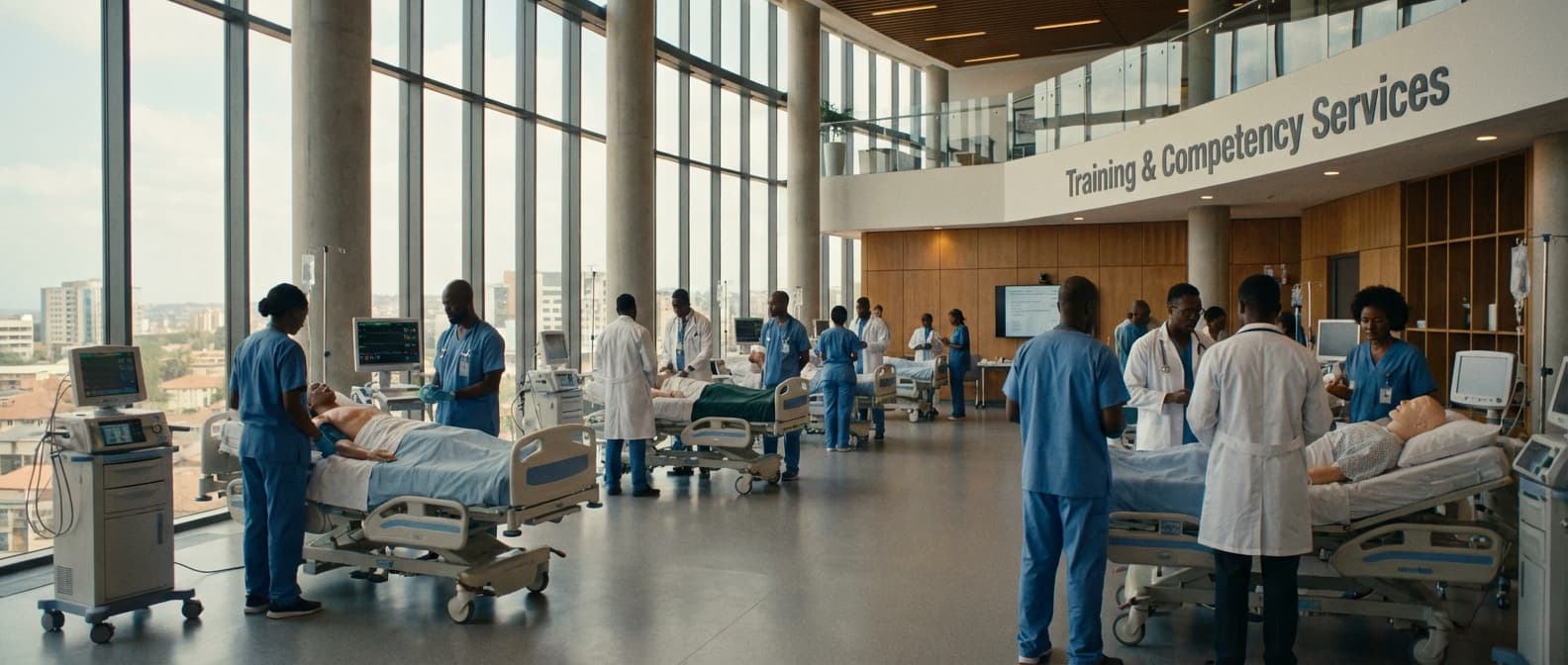
MRI Operator Training Service (Radiographers) in Guinea
Engineering Excellence & Technical Support
MRI Operator Training Service (Radiographers) High-standard technical execution following OEM protocols and local regulatory frameworks.
Advanced MRI Safety Protocols for Guinea
Comprehensive training on the latest MRI safety guidelines, including screening procedures, patient monitoring, and emergency response, tailored to the specific healthcare environment and resources available in Guinea. This ensures the highest level of patient and staff safety during MRI examinations.
Optimized MRI Sequence and Protocol Development
Hands-on training in selecting, optimizing, and troubleshooting a wide range of MRI pulse sequences and protocols. Radiographers will learn to tailor imaging parameters to specific clinical indications and patient anatomy, maximizing diagnostic image quality within the constraints of local infrastructure and equipment.
Image Post-Processing and Artifact Reduction Techniques
In-depth instruction on advanced image post-processing software and techniques to enhance image clarity, detect subtle abnormalities, and effectively identify and mitigate common MRI artifacts. This empowers radiographers in Guinea to deliver precise and reliable diagnostic interpretations.
What Is Mri Operator Training Service (Radiographers) In Guinea?
MRI Operator Training Service (Radiographers) in Guinea refers to specialized educational programs and instructional courses designed to equip radiographers with the necessary knowledge and practical skills to operate Magnetic Resonance Imaging (MRI) scanners safely and effectively within the Guinean healthcare context. This service focuses on the technical aspects of MRI operation, including patient positioning, image acquisition protocols, artifact identification and reduction, basic quality control, and understanding of MRI physics principles relevant to clinical practice. The training aims to ensure radiographers can perform diagnostic MRI examinations accurately, contributing to improved patient care and diagnostic precision in Guinean medical facilities.
| Who Needs MRI Operator Training? | Typical Use Cases | ||||
|---|---|---|---|---|---|
| Newly qualified radiographers in Guinea seeking to specialize in MRI. | Hospitals and diagnostic imaging centers in Guinea acquiring or upgrading MRI equipment. | Existing radiographers in Guinea needing to upskill or cross-train for MRI operation. | Medical facilities in Guinea aiming to expand their diagnostic imaging services. | Radiographers working in environments with limited direct supervision or access to experienced MRI technologists. | Radiographers preparing for professional certifications or advanced roles in medical imaging. |
| Performing diagnostic neuroimaging (e.g., brain tumors, stroke, multiple sclerosis). | Conducting musculoskeletal imaging (e.g., joint pathology, sports injuries). | Executing abdominal and pelvic imaging (e.g., organ assessment, cancer staging). | Facilitating cardiac and vascular MRI examinations (requiring advanced training). | Assisting in specialized MRI procedures, such as functional MRI (fMRI) or MR spectroscopy (MRS) (typically requiring further sub-specialization). | Ensuring consistent image quality for routine and complex MRI scans across various clinical indications. |
Key Components of MRI Operator Training Service (Radiographers) in Guinea
- Theoretical Instruction on MRI Physics: Principles of nuclear magnetic resonance, pulse sequences, contrast mechanisms, and safety guidelines.
- Practical Scanner Operation: Hands-on training with various MRI scanner models, including console operation, parameter adjustments, and protocol selection.
- Patient Care and Safety Protocols: Radiation safety (though MRI is non-ionizing, magnetic field safety is paramount), contraindication screening, emergency procedures, and patient comfort management.
- Image Acquisition Techniques: Understanding and applying appropriate sequences for different anatomical regions and pathologies (e.g., T1-weighted, T2-weighted, FLAIR, diffusion-weighted imaging).
- Artifact Recognition and Mitigation: Identifying common artifacts (motion, susceptibility, aliasing) and implementing strategies to minimize their impact on image quality.
- Quality Assurance (QA) and Quality Control (QC): Basic understanding of routine QA/QC procedures to ensure optimal scanner performance and image consistency.
- Introduction to Post-Processing and PACS Integration: Familiarization with basic image manipulation and the Picture Archiving and Communication System (PACS) workflow.
- Regulatory Compliance: Awareness of relevant national and international guidelines pertaining to MRI operation and patient safety in Guinea.
Who Needs Mri Operator Training Service (Radiographers) In Guinea?
MRI operator training is crucial for radiographers in Guinea to ensure the safe, effective, and efficient use of MRI technology. This specialized training enhances diagnostic capabilities, improves patient care, and promotes the adoption of advanced imaging techniques within the country's healthcare system. The need for such services extends to various healthcare facilities and specialized departments involved in medical imaging.
| Customer Type | Relevant Departments | Specific Needs/Benefits of Training |
|---|---|---|
| Public Hospitals | Radiology Department, Neurology, Cardiology, Orthopedics, Oncology | Upskilling existing radiographers, standardizing MRI protocols, improving diagnostic accuracy for a wider patient population, ensuring safe operation with limited resources. |
| Private Hospitals & Clinics | Radiology Department, Neurology, Cardiology, Orthopedics, Oncology, Private Practices | Enhancing service offerings, attracting specialized cases, ensuring competitive diagnostic capabilities, staff development to attract and retain talent. |
| University Teaching Hospitals | Radiology Department, Medical Education Units, Research Departments | Training future radiologists and radiographers, supporting clinical research, staying abreast of technological advancements, developing specialized MRI expertise. |
| Radiology Clinics & Imaging Centers | Radiology Department, Imaging Specialists | Expanding service portfolios, improving efficiency, ensuring compliance with international standards, offering advanced diagnostic services. |
| Government Health Ministries | Public Health Planning, Medical Equipment Procurement & Management | Developing national standards for MRI operation, ensuring trained personnel for public healthcare infrastructure, workforce development planning. |
| NGOs & International Aid Organizations | Healthcare Program Management, Medical Missions | Providing essential MRI services in underserved areas, training local healthcare professionals for sustainable operations, supporting specialized medical initiatives. |
Target Customers and Departments for MRI Operator Training Service (Radiographers) in Guinea:
- Hospitals (Public and Private)
- University Teaching Hospitals
- Specialized Medical Centers
- Radiology Clinics and Imaging Centers
- Government Health Ministries and Departments
- Non-Governmental Organizations (NGOs) involved in healthcare
- Research Institutions utilizing medical imaging
Mri Operator Training Service (Radiographers) Process In Guinea
This document outlines the typical workflow for an MRI Operator Training Service (Radiographers) in Guinea, from initial inquiry to the successful execution of the training program. The process is designed to be comprehensive, ensuring all logistical, administrative, and educational aspects are addressed for both the training provider and the participating radiographers.
| Stage | Key Activities | Responsible Parties | Deliverables/Outcomes |
|---|---|---|---|
| Initial contact from a client (hospital, clinic, government health agency) inquiring about MRI operator training.
Discussions to understand the client's specific training needs, including:
| Client (e.g., Hospital Administrator, HR Manager, Head of Radiology) Training Provider (Sales/Business Development Team) | Understanding of client's training requirements. Initial scope of work defined. Potential for a training partnership established. |
| Training provider develops a detailed proposal based on the needs assessment.
Proposal typically includes:
| Training Provider (Curriculum Developers, Subject Matter Experts) Client (Decision-making committee) | Comprehensive training proposal. Agreed-upon training plan and budget. Foundation for contractual agreement. |
| Formalization of the training agreement.
Includes:
| Client (Legal Department, Procurement) Training Provider (Legal Department, Management) | Legally binding contract. Clear understanding of mutual obligations. Authorization to proceed with training preparations. |
| Logistics and administrative arrangements:
| Training Provider (Logistics Coordinator, Administrative Staff) Client (HR Department, Radiology Department) | Confirmed training schedule and venue. All necessary training materials prepared. Logistical arrangements in place for smooth execution. |
| Delivery of the training program as per the agreed curriculum and schedule.
Includes:
| Training Provider (Lead Trainer, Instructors) Trainees (Radiographers) | Completion of all training modules. Acquisition of theoretical knowledge and practical skills by radiographers. Improved competency in MRI operation. |
| Assessment of trainee performance:
| Training Provider (Trainers, Evaluation Team) Trainees (Radiographers) Client (Supervisors) | Trainee performance reports. Assessment of training program effectiveness. Identification of areas for improvement. Client satisfaction assessment. |
| Issuance of certificates of completion to successful trainees. Final report to the client detailing training outcomes, trainee performance, and recommendations. Follow-up discussions with the client for any further training needs or program refinements. Potential for advanced training modules or refresher courses. | Training Provider (Management, Administration) Client (Management, Radiology Department) | Certified radiographers. Comprehensive training report. Strengthened client relationship. Potential for future training engagements. |
MRI Operator Training Service (Radiographers) Process in Guinea
- Inquiry and Needs Assessment
- Proposal Development and Negotiation
- Contract Finalization
- Pre-Training Preparations
- Training Execution
- Post-Training Evaluation and Support
- Certification and Follow-up
Mri Operator Training Service (Radiographers) Cost In Guinea
Providing MRI operator training services for radiographers in Guinea involves various cost factors. The overall expense is influenced by the duration and depth of the training, the expertise of the instructors, the location of the training (on-site at a facility or off-site at a dedicated training center), the number of participants, and any specific equipment or simulation technology utilized. Furthermore, the cost of travel and accommodation for instructors, as well as the development of training materials, are significant components. Regulatory compliance and certification requirements in Guinea can also add to the overall investment. While precise figures are highly variable and dependent on the specific provider and program, a general understanding of pricing can be established.
| Training Component/Range | Estimated Cost Range (GNF - Guinean Franc) | Notes |
|---|---|---|
| Daily Instructor Fee (Local) | 150,000 - 400,000 GNF | Varies based on experience and specialization. |
| Daily Instructor Fee (International) | 400,000 - 1,000,000+ GNF | Includes higher expected expertise, potential travel overhead. |
| Basic Theoretical Training (1-2 Days) | 750,000 - 2,500,000 GNF per participant | Covers fundamental principles, image interpretation basics. |
| Comprehensive Theoretical & Practical Training (1-2 Weeks) | 3,000,000 - 15,000,000+ GNF per participant | Includes hands-on simulator or scanner time, protocols, advanced techniques. |
| Custom Curriculum Development | 1,000,000 - 5,000,000+ GNF (one-time) | Depends on complexity and depth of customization. |
| Training Materials (per participant) | 50,000 - 200,000 GNF | Manuals, handouts, access to online resources. |
| On-site Facility Fee (if applicable) | Negotiable/Varies greatly | Depends on existing infrastructure and duration of use. |
| Travel & Accommodation (for trainer, per trip) | 200,000 - 800,000 GNF | Covers local transport, lodging, and meals. |
Key Pricing Factors for MRI Operator Training in Guinea
- Training Duration and Intensity: Longer and more comprehensive courses naturally incur higher costs.
- Instructor Expertise and Credentials: Highly specialized and experienced MRI radiographers command higher fees.
- Training Location: On-site training at a hospital might have lower logistical costs for the client, but off-site training at a specialized facility could offer better resources.
- Number of Participants: Group discounts are common, but a larger group might necessitate more instructors or resources, potentially increasing the per-participant cost if not managed efficiently.
- Training Materials and Resources: Development and provision of high-quality manuals, case studies, and access to simulators impact pricing.
- Travel and Accommodation: For external trainers, these expenses are directly passed on to the client.
- Equipment and Technology Usage: If the training involves hands-on practice with actual MRI scanners or advanced simulation software, this will be factored into the cost.
- Certification and Accreditation: Costs associated with any formal certification processes will be included.
- Customization of Curriculum: Tailoring the training to specific departmental needs can increase development costs.
- Market Demand and Provider Competition: The number of available training providers and the demand for such services in Guinea can influence pricing.
Affordable Mri Operator Training Service (Radiographers) Options
Seeking affordable MRI operator training for radiographers is a crucial investment for healthcare facilities. This service aims to equip radiographers with the essential skills and knowledge to safely and effectively operate MRI scanners, ensuring high-quality diagnostic imaging. We offer flexible training solutions designed to be cost-effective without compromising on the depth and quality of education. Our approach focuses on practical, hands-on experience combined with theoretical understanding, preparing radiographers for real-world clinical scenarios. We understand the budgetary constraints faced by many institutions, which is why our services are structured to maximize value and minimize expenditure.
| Training Component | Standard Cost (Estimated) | Cost-Saving Approach | Value Proposition |
|---|---|---|---|
| On-site Classroom Instruction | $1,500 - $3,000 per trainee | Remote/Hybrid learning, Train-the-Trainer | Reduced travel, accommodation, and trainer fees. Enables continuous internal development. |
| Hands-on Scanner Training | $2,000 - $4,000 per trainee | Simulation software, Equipment-specific focus | Develops practical skills in a safe environment. Maximizes immediate clinical applicability. |
| Online Learning Modules | $500 - $1,000 per trainee | Bundled with other services, Subscription model | Flexible learning at trainee's pace. Lower per-module cost when part of a package. |
| Assessment & Certification | $200 - $500 per trainee | Integrated into training package, Digital certification | Verifies competency and provides recognized credentials. Streamlined process. |
| Ongoing Support & Updates | $300 - $800 per trainee/year | Subscription model, Online resource library | Ensures knowledge remains current. Continuous access to valuable learning materials. |
Value Bundles and Cost-Saving Strategies for Affordable MRI Operator Training
- Tiered Training Packages: Offering different levels of training (e.g., basic, intermediate, advanced) to cater to varying experience levels and budgets.
- Group Discounts: Significant savings for multiple radiographers from the same institution enrolling in training programs.
- Remote/Online Learning Components: Incorporating virtual lectures, simulations, and online assessments to reduce travel and accommodation costs for trainees and trainers.
- Train-the-Trainer Programs: Empowering senior radiographers within your institution to deliver ongoing internal training, creating a sustainable and cost-effective learning ecosystem.
- Customized Curriculum: Tailoring training modules to focus on specific MRI modalities or patient populations relevant to your facility, avoiding unnecessary expense on generalized content.
- Off-Peak Training Scheduling: Flexible scheduling options outside of peak operational hours to minimize disruption and potential overtime costs.
- Equipment-Specific Training: Focusing training on the specific MRI scanner models used by your facility, ensuring practical application and immediate benefit.
- Bundled Services: Combining operator training with related services like quality assurance protocols or advanced imaging techniques for a comprehensive and cost-efficient solution.
- Subscription-Based Models: Offering ongoing access to updated training materials, online resources, and refresher courses through a predictable subscription fee.
- Partnerships with Equipment Manufacturers: Leveraging potential training partnerships or discounts offered by MRI equipment vendors.
Verified Providers In Guinea
In Guinea, identifying reliable and trustworthy healthcare providers is paramount for individuals and organizations seeking quality medical services. Franance Health has emerged as a leading platform, rigorously vetting and credentialing healthcare professionals and facilities. This commitment to verification ensures that patients have access to competent, ethical, and well-equipped medical practitioners. This document outlines Franance Health's credentials and explains why they represent the best choice for verified providers in Guinea.
| Benefit | Description | Why Franance Health Excels |
|---|---|---|
| Enhanced Patient Safety | Ensures patients are treated by qualified and ethical professionals, reducing risks. | Franance Health's multi-faceted verification process goes beyond basic licensing to include ethical conduct and facility standards. |
| Improved Access to Quality Care | Connects individuals with reputable doctors, clinics, and hospitals. | Our curated network of verified providers eliminates the guesswork in finding competent healthcare. |
| Increased Trust and Transparency | Provides clear and accessible information about provider credentials and services. | Franance Health prioritizes transparency, allowing patients to make informed decisions with confidence. |
| Reduced Healthcare Costs (Indirectly) | Minimizes the need for follow-up treatments due to initial misdiagnosis or poor care. | By partnering with only the best, we help reduce potential long-term healthcare expenses for our users. |
| Streamlined Healthcare Navigation | Simplifies the process of finding the right specialist or facility for specific needs. | Our platform offers a user-friendly interface and a comprehensive directory of verified providers. |
Franance Health's Verification Process and Credentials
- Rigorous professional licensing and qualification checks.
- Verification of ongoing professional development and continuing education.
- Thorough background checks for criminal records and ethical breaches.
- Assessment of facility infrastructure, equipment, and adherence to hygiene standards.
- Patient feedback and satisfaction surveys integrated into the credentialing process.
- Commitment to transparent and accessible information about provider qualifications.
- Adherence to national and international healthcare standards.
Scope Of Work For Mri Operator Training Service (Radiographers)
This Scope of Work (SOW) outlines the requirements for providing comprehensive MRI Operator Training Services specifically tailored for radiographers. The objective is to equip radiographers with the necessary theoretical knowledge and practical skills to safely and effectively operate MRI scanners, perform various imaging protocols, and ensure high-quality diagnostic imaging. This SOW details the technical deliverables and standard specifications for the training program.
| Technical Deliverable | Description | Standard Specification / Content |
|---|---|---|
| Training Curriculum | A comprehensive, structured curriculum covering all aspects of MRI operation. | Includes modules on: MRI Physics (Magnetism, RF pulses, K-space, Gradients), Pulse Sequences (Spin Echo, Gradient Echo, FLAIR, DWI, etc.), Image Reconstruction, Artifacts and Correction, Patient Safety (Screening, MR Safe/Unsafe/Conditional), Contrast Agents, Protocol Optimization, Image Quality Assessment, Basic Troubleshooting, PACS integration, and MRI Applications. |
| Training Materials | High-quality, up-to-date training materials for both theoretical and practical sessions. | Includes: Detailed lecture notes, slide presentations, visual aids, anatomical diagrams, case studies, troubleshooting guides, and online learning resources (if applicable). |
| Practical Training Sessions | Hands-on practical training conducted on an operational MRI scanner. | Minimum of X hours (e.g., 40 hours) of supervised practical experience covering: Patient positioning, protocol selection and modification, scan execution, real-time monitoring, data acquisition, and basic equipment checks. |
| Simulated Scenarios | Training incorporating simulated real-world scenarios to enhance problem-solving skills. | Includes: Practice with common artifact types, managing anxious or claustrophobic patients, and responding to unexpected equipment behavior. |
| Assessment Tools | Methods for evaluating radiographer understanding and competency. | Includes: Written examinations (multiple choice, short answer), practical skill assessments, case study analysis, and final competency evaluation. |
| Certification | Formal certification upon successful completion of the training program. | Issued by the training provider, verifying the radiographer has met the defined learning objectives and competency standards. |
| Instructor Qualifications | Experienced and qualified MRI professionals responsible for delivering the training. | Instructors should possess: Advanced degrees in Radiography/Medical Imaging, extensive experience as MRI technologists/radiographers, and proven training/teaching capabilities. |
| Equipment Requirements (for training) | Access to a functional MRI scanner and associated workstations. | Scanner must be representative of modern MRI technology, with capabilities to demonstrate various pulse sequences and imaging protocols. |
| Reporting and Feedback | Regular progress reports and constructive feedback provided to trainees and the client organization. | Includes: Mid-training assessments, performance reviews, and a final training report summarizing trainee progress and recommendations. |
| Compliance Documentation | Documentation verifying adherence to relevant regulatory and professional standards. | Training curriculum should align with recommendations from bodies such as the ARRT (American Registry of Radiologic Technologists) or equivalent national accreditation bodies, and include aspects of radiation safety (though MRI is non-ionizing, general patient safety is paramount). |
Training Objectives
- To impart a thorough understanding of MRI physics, principles, and image formation.
- To train radiographers on the safe operation of MRI scanners, including safety protocols, patient screening, and artifact reduction techniques.
- To develop proficiency in selecting and executing appropriate MRI pulse sequences and imaging protocols for various anatomical regions and pathologies.
- To ensure competence in post-processing of MRI images and data management.
- To foster an understanding of MRI contrast agents and their administration.
- To provide hands-on experience with actual MRI scanner operation and troubleshooting.
- To adhere to established quality assurance and quality control (QA/QC) procedures for MRI.
- To promote ethical considerations and patient care within the MRI environment.
Service Level Agreement For Mri Operator Training Service (Radiographers)
This Service Level Agreement (SLA) outlines the guaranteed response times and uptime for the MRI Operator Training Service provided by [Your Company Name] to [Client Name]. This SLA is an addendum to the Master Service Agreement (MSA) dated [MSA Date].
| Service Component | Service Level Objective (SLO) | Measurement Metric | Reporting Frequency |
|---|---|---|---|
| Emergency Support Response Time (On-site) | Within 4 hours during business hours (9 AM - 5 PM, Mon-Fri) | Time from incident report to acknowledgement by on-site personnel. | Monthly |
| Standard Support Response Time (Remote) | Within 8 business hours | Time from ticket creation to first response from support team. | Monthly |
| Training Session Uptime Guarantee | 98.5% during scheduled training hours | Percentage of scheduled training time that is uninterrupted due to technical issues with the training equipment or software provided by [Your Company Name]. | Per Training Session / Monthly |
| Curriculum Availability | 100% | Availability of agreed-upon training materials and modules as per schedule. | Per Training Session / Monthly |
Scope of Service
- Provision of qualified and certified MRI radiographers for training purposes.
- Delivery of training modules as per the agreed curriculum and schedule.
- On-site support during scheduled training sessions.
- Access to remote support for technical queries related to training equipment and software.
Frequently Asked Questions

Ready when you are
Let's scope your MRI Operator Training Service (Radiographers) in Guinea project in Guinea.

Scaling healthcare logistics and technical systems across the entire continent.