
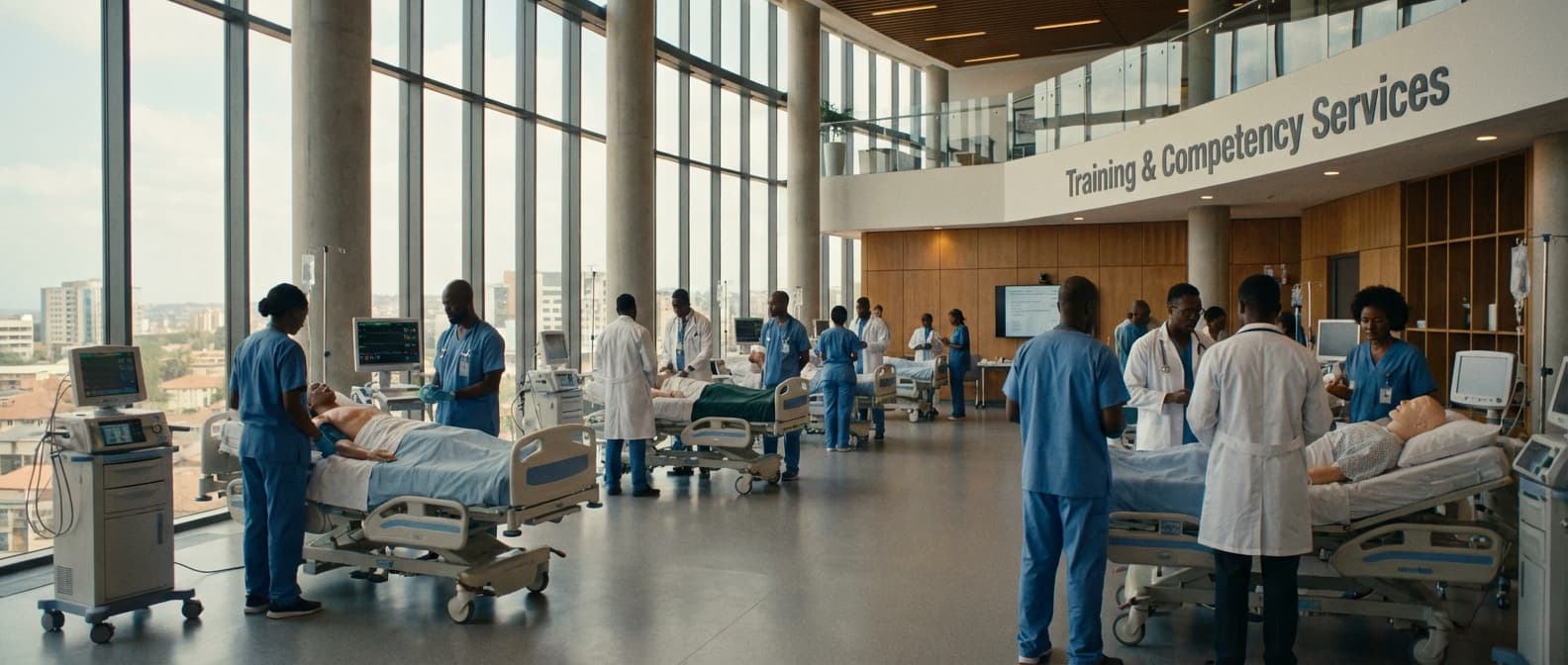
CT Operator Training Service (Radiographers) in Guinea
Engineering Excellence & Technical Support
CT Operator Training Service (Radiographers) High-standard technical execution following OEM protocols and local regulatory frameworks.
Advanced CT Imaging Techniques
Master cutting-edge CT protocols and image acquisition strategies tailored to diverse clinical scenarios prevalent in Guinea, ensuring optimal diagnostic accuracy and patient care.
Radiation Dose Optimization & Safety
Implement best practices for radiation safety and dose reduction techniques specific to Guinea's healthcare infrastructure, prioritizing patient and staff well-being while maintaining image quality.
CT Equipment Quality Assurance
Develop and execute robust quality assurance procedures for CT scanners, ensuring equipment reliability and consistent diagnostic image output within the Guinean operational context.
What Is Ct Operator Training Service (Radiographers) In Guinea?
The CT Operator Training Service (Radiographers) in Guinea refers to specialized educational programs designed to equip qualified radiographers with the necessary theoretical knowledge and practical skills to safely and effectively operate Computed Tomography (CT) scanners. This training is crucial for ensuring diagnostic image quality, patient safety, and adherence to international radiation protection standards within healthcare facilities in Guinea. The service focuses on a comprehensive understanding of CT principles, scanner hardware, image acquisition protocols, patient positioning, radiation dose management, artifact reduction, and post-processing techniques.
| Who Needs CT Operator Training? | Typical Use Cases | |||||
|---|---|---|---|---|---|---|
| Newly qualified radiographers seeking to specialize in CT imaging. | Hospitals and diagnostic imaging centers requiring trained personnel to operate CT scanners. | Existing radiographers needing to upgrade their skills or operate new CT technology. | Radiographers working in remote or underserved areas where advanced training resources are limited. | Public and private healthcare institutions aiming to meet regulatory compliance and accreditation standards. | ||
| Diagnosis of acute conditions like stroke, pulmonary embolism, and appendicitis. | Staging and monitoring of oncological diseases. | Assessment of trauma injuries (e.g., head trauma, abdominal injuries). | Evaluation of vascular abnormalities (e.g., aneurysms, dissections). | Pre-operative planning and post-operative follow-up. | Interventional procedures guided by CT (e.g., biopsies, drainages). | Research and development in medical imaging. |
Key Components of CT Operator Training Service:
- Fundamental principles of CT physics and image formation.
- Detailed overview of CT scanner components and their functions (gantry, X-ray tube, detectors, computer system).
- Standard and advanced image acquisition protocols for various anatomical regions.
- Patient preparation, screening, and safe positioning techniques.
- Radiation safety principles, dose monitoring, and optimization strategies (ALARA principle).
- Identification and mitigation of common image artifacts.
- Basic image processing and manipulation techniques.
- Understanding of contrast media administration and associated safety precautions.
- Emergency procedures and troubleshooting for CT scanner operation.
- Quality assurance and quality control (QA/QC) procedures for CT equipment.
Who Needs Ct Operator Training Service (Radiographers) In Guinea?
CT Operator Training Service (Radiographers) in Guinea is crucial for ensuring the safe, efficient, and high-quality delivery of CT imaging services. This training caters to a diverse range of healthcare professionals involved in CT scan operations, aiming to equip them with the necessary skills and knowledge to operate CT scanners, manage patient care during scans, and interpret imaging protocols. The need for such services is driven by the increasing adoption of CT technology in Guinea and the importance of maintaining a skilled workforce to utilize these advanced diagnostic tools effectively.
| Target Customer Type | Specific Departments/Roles | Reasons for Training Need | Potential Impact of Training |
|---|---|---|---|
| Public Hospitals | Radiology Departments, Diagnostic Centers | Increasing CT scanner installations, need for standardized protocols, patient safety, and image quality. | Improved diagnostic accuracy, reduced radiation exposure, increased patient throughput, and enhanced reputation. |
| Private Hospitals & Clinics | Radiology Units, Imaging Centers | Expansion of services, competitive advantage, client satisfaction, and adherence to international standards. | Attracting more patients, offering advanced diagnostic options, and ensuring efficient service delivery. |
| Research Institutions | Medical Research Departments utilizing imaging | Acquisition of new CT equipment, specific research protocols, and advanced imaging techniques. | Successful execution of research studies, reliable data collection, and contribution to medical advancements. |
| Ministry of Health / Regional Health Offices | Public Health Facilities Management, Training & Development Units | National health strategy implementation, capacity building in underserved areas, and quality assurance. | Standardization of CT services nationwide, improved access to diagnostic imaging, and better public health outcomes. |
| Tertiary Care Centers | Advanced Imaging Departments | Complex patient cases, specialized CT protocols (e.g., cardiac CT, interventional CT), and continuous professional development. | Handling challenging imaging requirements, improved patient outcomes for complex conditions, and fostering expertise. |
| Non-Governmental Organizations (NGOs) & International Aid Organizations | Medical Mission Teams, Health Program Implementers | Setting up or supporting diagnostic services in resource-limited settings, emergency response imaging. | Enabling effective diagnosis in critical situations and supporting sustainable healthcare infrastructure. |
Target Customers and Departments for CT Operator Training Service in Guinea
- Radiographers and Radiologic Technologists
- Medical Imaging Technicians
- Physicians (Radiologists, Surgeons, Internists requiring CT interpretation skills)
- Nurses (involved in patient preparation and monitoring during CT scans)
- Biomedical Engineers (involved in the maintenance and basic troubleshooting of CT equipment)
- Healthcare Administrators (for understanding the value and operational needs of CT services)
Ct Operator Training Service (Radiographers) Process In Guinea
This document outlines the workflow for the CT Operator Training Service (Radiographers) in Guinea, from initial inquiry to the successful execution of the training program.
| Stage | Description | Key Activities | Responsible Parties | Key Deliverables/Outcomes |
|---|---|---|---|---|
| Inquiry & Needs Assessment | The initial phase where potential clients express interest in CT operator training and their specific training needs are understood. | Client contacts training provider; Initial discussion of training requirements (e.g., number of trainees, existing skill levels, specific CT modalities, desired outcomes); Site visit (if necessary) to assess existing infrastructure and equipment. | Client (Hospital/Clinic Administration, Radiology Department Head); Training Provider (Business Development/Sales Team) | Understanding of client's training needs, target audience, and objectives; Preliminary assessment of feasibility and scope. |
| Proposal Development & Negotiation | Based on the needs assessment, a detailed proposal is prepared and negotiated with the client. | Develop comprehensive training proposal (curriculum outline, training methodology, duration, trainers, equipment requirements, cost breakdown); Present proposal to client; Address client feedback and negotiate terms and conditions. | Training Provider (Technical Team, Curriculum Developers, Sales Team); Client (Procurement, Radiology Department) | Agreed-upon training proposal; Understanding of scope, cost, and timelines. |
| Contracting & Agreement | Formalizing the training service agreement between the training provider and the client. | Drafting of the training contract; Review and legal approval of the contract; Signing of the contract by both parties. | Client (Legal Department, Administration); Training Provider (Legal Department, Management) | Signed and executed training contract; Legal and financial commitment. |
| Curriculum Customization & Planning | Tailoring the training curriculum to meet the specific needs identified and planning the training execution. | Detailed curriculum design and content development (modules, lectures, practical sessions, case studies); Selection of appropriate training materials and resources; Development of training schedule and timetable; Identification and confirmation of trainers' availability and expertise. | Training Provider (Curriculum Developers, Technical Experts, Training Managers); Client (Radiology Department Head for input on specific CT systems) | Finalized training curriculum; Detailed training plan and schedule; Confirmed trainer assignments. |
| Logistics & Resource Allocation | Ensuring all necessary resources and logistical arrangements are in place for effective training delivery. | Booking of training venue(s); Arranging for CT scanner access and simulation equipment; Procuring training materials (handouts, presentations, software); Arranging for trainee accommodation and transportation (if applicable); Confirming technical support for equipment during training. | Training Provider (Logistics Coordinator, Training Managers); Client (Facility Management, IT Department) | Readiness of training venue and equipment; Availability of all required training materials; Smooth logistical arrangements for trainees and trainers. |
| Training Delivery | The actual execution of the training program. | Conducting theoretical lectures and presentations; Performing practical demonstrations and hands-on exercises on CT scanners; Facilitating case study discussions and problem-solving sessions; On-the-job training and supervision (if applicable); Continuous feedback and Q&A sessions. | Training Provider (Certified Trainers); Client (Trainees - Radiographers) | Trainees acquire knowledge and skills in CT operation; Improved competency in CT imaging procedures; Practical application of learned skills. |
| Assessment & Evaluation | Measuring the effectiveness of the training and the trainees' learning outcomes. | Administering pre- and post-training knowledge assessments (quizzes, tests); Conducting practical skill assessments and competency evaluations; Gathering feedback from trainees and trainers on the training program; Post-training performance monitoring (if feasible). | Training Provider (Trainers, Assessment Team); Client (Radiology Department Head for feedback) | Assessment reports of trainee performance; Evaluation of training program effectiveness; Identification of areas for improvement. |
| Certification & Follow-up | Issuing certificates to successful trainees and providing ongoing support. | Awarding certificates of completion to trainees who meet the required standards; Providing post-training support and resources; Offering refresher courses or advanced training modules (optional); Maintaining communication for future training needs. | Training Provider (Training Administration, Management); Client (HR Department, Radiology Department) | Certified CT Operators; Strengthened radiology department capacity; Long-term client relationship. |
Key Stages of the CT Operator Training Service Workflow
- Inquiry & Needs Assessment
- Proposal Development & Negotiation
- Contracting & Agreement
- Curriculum Customization & Planning
- Logistics & Resource Allocation
- Training Delivery
- Assessment & Evaluation
- Certification & Follow-up
Ct Operator Training Service (Radiographers) Cost In Guinea
The cost of CT operator training (radiographers) in Guinea can vary significantly due to a range of factors. These factors influence both the pricing of the training programs themselves and the overall investment required for a radiographer to become proficient. It's important for healthcare facilities and individuals to consider these elements when budgeting for such training. The local currency in Guinea is the Guinean Franc (GNF).
| Training Type/Scope | Estimated Range (GNF) | Notes |
|---|---|---|
| Basic CT Operator Familiarization (Short Course, ~1-2 weeks) | 500,000 - 1,500,000 GNF | Covers fundamental principles, safety, basic scan protocols. Often for introductory staff or those transitioning from other modalities. |
| Comprehensive CT Operator Training (Standard, ~4-8 weeks) | 2,000,000 - 5,000,000 GNF | Includes in-depth theory, various common protocols, image acquisition techniques, and basic quality control. May include limited supervised practicals. |
| Advanced/Specialized CT Operator Training (e.g., CT Angiography, Cardiac CT, Interventional CT - variable duration) | 4,000,000 - 10,000,000+ GNF | Focuses on specific advanced applications, complex protocols, and hands-on experience with specialized procedures. Duration and cost are highly variable. |
| On-Site Hospital Training (customized) | Negotiable (often per-course or per-day rates) | Costs depend on the scope, duration, number of trainees, and the provider's fees. May be more cost-effective for multiple staff members. |
| International Training/Workshops (if no local options are available) | Significantly higher (USD equivalent often converted, plus travel) | This is a broad estimate, and the actual cost would include tuition, travel, accommodation, and visas, making it a substantial investment. |
Key Pricing Factors for CT Operator Training in Guinea
- Duration and Intensity of the Training: Shorter, introductory courses will naturally be less expensive than comprehensive, in-depth programs that cover a wider range of CT procedures and advanced techniques.
- Provider Reputation and Accreditation: Established training institutions or those with recognized accreditation may command higher fees due to their perceived quality, experienced instructors, and the credibility of their certifications.
- Trainer Expertise and Qualifications: The experience and specific specializations of the instructors play a crucial role. Highly qualified and experienced radiographers or medical physicists as trainers will often lead to higher training costs.
- Curriculum Content and Specialization: Training focused on general CT operation will likely be more affordable than specialized courses in areas like CT angiography, cardiac CT, or interventional CT procedures.
- Training Location and Facilities: Training conducted at a dedicated facility with advanced CT simulators and equipment might be more expensive than on-site training at a hospital that already possesses the necessary infrastructure.
- Inclusion of Practical/Hands-on Experience: Programs that offer extensive supervised practical sessions on actual CT scanners will typically have a higher cost compared to purely theoretical courses.
- Materials and Resources Provided: The cost of training manuals, software licenses, and other learning materials can influence the overall price.
- Certification and Assessment Fees: Fees associated with examinations, assessments, and the issuance of certificates need to be factored in.
- Travel and Accommodation (if applicable): For trainees or trainers traveling to different regions within Guinea or internationally, travel and accommodation expenses will add to the total cost.
- Governmental or Regulatory Requirements: Any mandated training or certification requirements by Guinean health authorities could influence the availability and pricing of specific programs.
- Market Demand and Competition: The number of training providers and the demand for skilled CT operators in Guinea can affect pricing dynamics.
Affordable Ct Operator Training Service (Radiographers) Options
This document outlines affordable CT operator training service options specifically for radiographers. We understand the budgetary constraints faced by many healthcare facilities and aim to provide cost-effective solutions that ensure your staff receives high-quality, comprehensive CT training. This includes exploring various value bundles and implementing strategic cost-saving measures.
| Training Option | Description | Cost-Saving Benefit | Ideal For |
|---|---|---|---|
| Basic CT Operator Certification | Covers fundamental CT physics, safety, image acquisition, and basic interpretation. | Lower price point for foundational knowledge. | New CT operators, those transitioning from other modalities. |
| Comprehensive CT Specialist Program | Includes advanced protocols, specialized applications (e.g., cardiac, angiography), and advanced artifact analysis. | Bundled pricing significantly reduces cost per module. | Experienced radiographers seeking specialized skills. |
| Online Self-Paced Modules | Access to a library of pre-recorded lectures and interactive exercises. | Eliminates travel and accommodation costs, flexible scheduling. | All radiographers; ideal for self-motivated learners. |
| Virtual Instructor-Led Training (VILT) | Live, interactive sessions conducted remotely. | Reduces on-site facility needs, offers direct interaction at a lower cost than in-person. | Radiographers requiring live Q&A and guided learning. |
| On-Site Group Training | Instructor travels to your facility for hands-on training. | Cost-effective for larger groups; can be customized. | Facilities with a significant number of staff to train simultaneously. |
Key Value Bundles and Cost-Saving Strategies
- Core Competency Bundle: This foundational package covers essential CT physics, patient positioning, image acquisition protocols, safety procedures, and basic artifact recognition. It's designed for radiographers new to CT or those needing a refresher on fundamental principles. This bundle offers significant cost savings compared to purchasing individual modules.
- Advanced Protocol Development Bundle: For experienced CT operators looking to expand their expertise, this bundle focuses on advanced techniques such as CT angiography, cardiac CT, interventional CT guidance, and specialized neuroimaging protocols. Bundling these advanced modules provides a discounted rate.
- Blended Learning Approach: Combining online self-paced modules with live, instructor-led virtual sessions. The online component reduces the need for in-person travel and facility rental, while the live sessions ensure direct interaction, Q&A opportunities, and hands-on (simulated) experience. This hybrid model offers flexibility and significant cost reductions.
- Group Training Discounts: Significant discounts are available for facilities enrolling multiple radiographers in the same training program. The more staff trained, the lower the per-person cost.
- Train-the-Trainer Programs: Empower your senior radiographers to become in-house CT trainers. This investment in your internal resources leads to substantial long-term cost savings by reducing reliance on external training providers for ongoing staff development.
- Customizable Curriculum: We can tailor training packages to your specific equipment and common imaging needs, eliminating unnecessary modules and focusing on what's most relevant to your practice. This targeted approach optimizes cost and training effectiveness.
- Subscription-Based Access: Consider a subscription model for ongoing access to our training library, allowing your staff to revisit modules, learn about new techniques, and stay up-to-date with minimal recurring costs.
- Early Bird Registration: Registering for training programs well in advance often comes with discounted pricing.
- Partnerships with Equipment Manufacturers: Inquire about potential training subsidies or bundled training offers when purchasing new CT equipment.
Verified Providers In Guinea
Navigating the healthcare landscape in Guinea can be challenging, but choosing verified providers is paramount for ensuring quality and trustworthy medical services. Franance Health stands out as a premier choice, offering a robust network of credentialed and vetted medical professionals and facilities across the country. Their stringent verification process goes beyond basic licensing, delving into the expertise, experience, and ethical standards of each provider. This dedication to thorough vetting means that when you engage with a Franance Health-affiliated provider, you are accessing a level of care that prioritizes patient safety, clinical excellence, and compassionate service. Their commitment to transparency and accountability makes them the benchmark for reliable healthcare in Guinea.
| Provider Type | Verification Criteria | Benefits for Patients |
|---|---|---|
| Hospitals | Accreditation, Medical Equipment Standards, Staff Qualifications, Patient Safety Protocols | Access to advanced diagnostic and treatment facilities, well-trained medical teams, and a safe environment. |
| Clinics | Licensing, Practitioner Credentials, Hygiene Standards, Record Keeping | Reliable outpatient care, specialized consultations, and accessible primary healthcare services. |
| Specialist Doctors | Medical Board Certification, Years of Experience, Peer Reviews, Continuing Medical Education | Expert diagnosis and treatment for specific medical conditions by highly qualified professionals. |
| General Practitioners | Medical Licensing, Practice History, Patient Feedback, Ethical Conduct | Trusted primary care physicians for routine check-ups, early diagnosis, and health management. |
Why Franance Health is Your Best Choice for Verified Providers in Guinea
- Rigorous Verification Process: Franance Health employs a multi-faceted approach to credentialing, ensuring providers meet high standards of expertise, experience, and ethical conduct.
- Access to Top-Tier Professionals: Our network includes some of Guinea's most skilled and reputable doctors, specialists, and healthcare institutions.
- Patient-Centric Care: Providers affiliated with Franance Health are committed to delivering compassionate, personalized, and effective healthcare solutions.
- Enhanced Trust and Safety: By choosing Franance Health, you gain peace of mind knowing you are engaging with verified and accountable medical professionals.
- Comprehensive Healthcare Network: We cover a wide range of medical specialties and services, catering to diverse healthcare needs across Guinea.
- Commitment to Quality Improvement: Franance Health continuously monitors and evaluates its network to ensure ongoing adherence to the highest quality standards.
Scope Of Work For Ct Operator Training Service (Radiographers)
This document outlines the Scope of Work for CT Operator Training Services specifically designed for Radiographers. It details the technical deliverables, standard specifications, and expected outcomes of the training program.
| Deliverable | Description | Standard Specification | Evaluation Method |
|---|---|---|---|
| Training Manual | Comprehensive document covering all aspects of CT operation and theory. | Clear, concise language; up-to-date information; illustrations and diagrams; accessible format (e.g., PDF). | Review and feedback from subject matter experts. |
| Practical Training Sessions | Hands-on experience with CT scanner operation and patient scenarios. | Minimum of X hours per trainee; diverse range of examination types; simulated and/or supervised live scanning. | Direct observation by trainer; trainee competency assessment checklist. |
| Case Studies and Scenarios | Realistic clinical examples to reinforce learning and problem-solving skills. | Minimum of Y case studies covering common and complex CT examinations; interactive discussions. | Trainee participation in discussions; quiz on case resolutions. |
| Competency Assessment | Formal evaluation of the trainee's knowledge and practical skills. | Written examination (multiple choice, short answer); practical examination involving scanner operation and protocol selection. | Passing score of Z% on both written and practical assessments. |
| Certification | Official documentation confirming successful completion of the training program. | Digital or hard copy certificate; includes trainee name, course title, dates of training, and trainer signature. | Issuance upon successful completion of all training modules and assessments. |
| Post-Training Support | Ongoing assistance for trainees after program completion. | Access to online resources; email/phone support for specific queries; refresher session options. | Defined response times for queries; availability of resources for a specified period. |
Key Training Objectives
- Comprehensive understanding of CT physics and principles.
- Proficiency in operating CT scanners, including patient positioning and protocol selection.
- Ability to perform a wide range of CT imaging examinations.
- Knowledge of radiation safety principles and dose optimization techniques.
- Competency in image acquisition, reconstruction, and post-processing.
- Familiarity with common CT artifacts and troubleshooting methods.
- Understanding of quality assurance and quality control procedures for CT.
- Awareness of advanced CT applications and emerging technologies.
Service Level Agreement For Ct Operator Training Service (Radiographers)
This Service Level Agreement (SLA) outlines the guaranteed response times and uptime for the CT Operator Training Service (Radiographers) provided by [Your Company Name] to [Client Name]. This agreement is effective from [Start Date] to [End Date].
| Service Component | Response Time (Business Hours) | Uptime Guarantee | Downtime Allowance (Per Month) |
|---|---|---|---|
| Access to Online Training Modules and Resources | 4 Business Hours | 99.5% | 3.5 Hours |
| Simulation Exercise Availability | 4 Business Hours | 99.5% | 3.5 Hours |
| Support for Practical Demonstration Scheduling | 8 Business Hours | N/A (Service dependent on external scheduling) | N/A |
| Competency Assessment Platform Availability | 4 Business Hours | 99.5% | 3.5 Hours |
| Technical Support (Platform Issues) | 2 Business Hours | 99.8% | 1.5 Hours |
Service Level Objectives
- CT Operator Training Service (Radiographers): Refers to the provision of online modules, simulation exercises, practical demonstration support, and competency assessments designed to train and certify radiographers in the safe and effective operation of CT scanners.
- Response Time: The maximum time allowed for [Your Company Name] to acknowledge and begin addressing a reported issue or request for support.
- Uptime Guarantee: The percentage of time the CT Operator Training Service platform and its core functionalities are available and operational for use by authorized users.
- Downtime: Any period during which the CT Operator Training Service is unavailable to users due to planned maintenance or unplanned service interruptions.
Frequently Asked Questions

Ready when you are
Let's scope your CT Operator Training Service (Radiographers) in Guinea project in Guinea.

Scaling healthcare logistics and technical systems across the entire continent.