
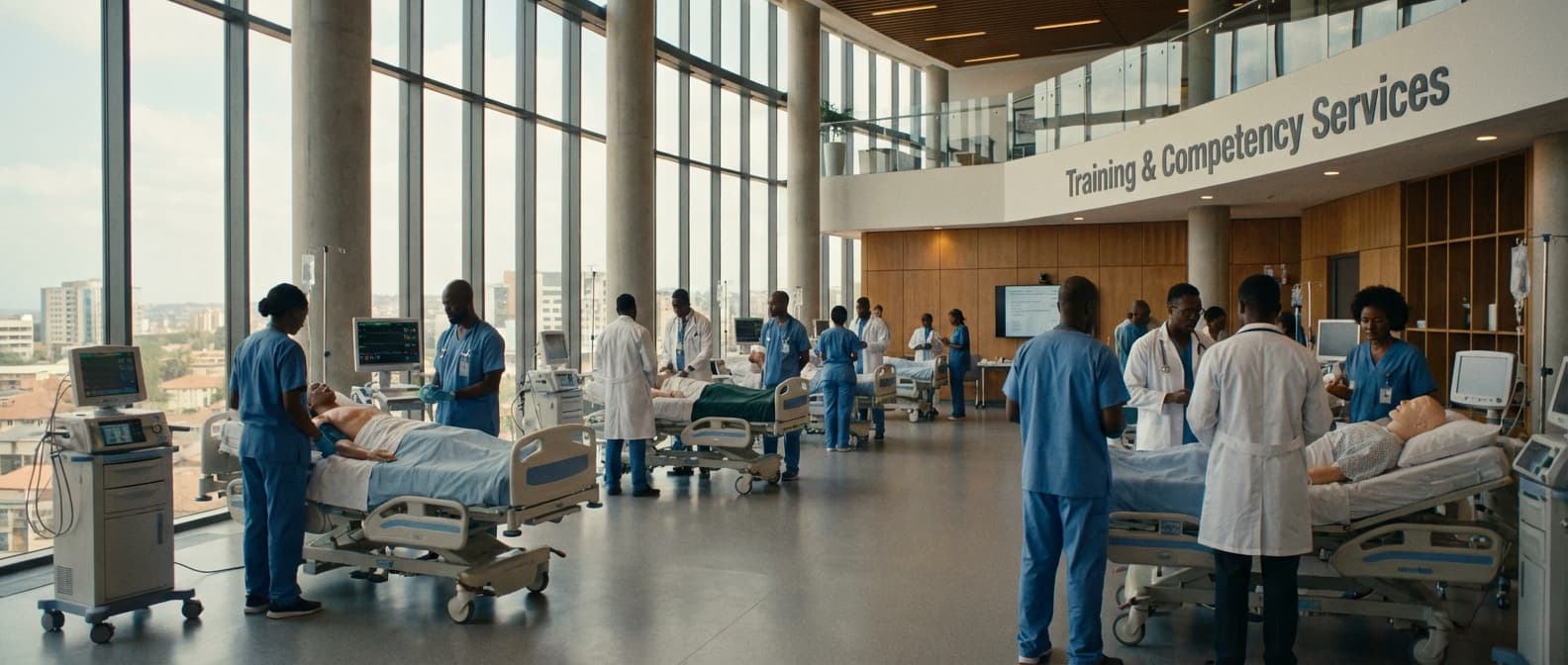
Biomedical Engineering First-Line Support Training Service in Guinea
Engineering Excellence & Technical Support
Biomedical Engineering First-Line Support Training Service High-standard technical execution following OEM protocols and local regulatory frameworks.
Diagnostic Equipment Proficiency
Hands-on training in the operation and basic troubleshooting of essential biomedical diagnostic equipment, including ECG machines, vital signs monitors, and portable ultrasound devices, ensuring rapid and accurate patient assessment in critical situations.
Preventive Maintenance Protocols
Mastering foundational preventive maintenance schedules and procedures for common medical devices, extending their lifespan, minimizing downtime, and ensuring reliable performance to support continuous healthcare delivery.
Biomedical Safety & Sterilization Best Practices
Comprehensive training on patient and personnel safety protocols, including electrical safety testing and proper sterilization techniques for reusable medical instruments, crucial for infection control and safe medical practices in Guinea's healthcare facilities.
What Is Biomedical Engineering First-line Support Training Service In Guinea?
Biomedical Engineering First-Line Support Training Service in Guinea refers to the provision of foundational technical education and practical skill development for individuals tasked with the initial troubleshooting, maintenance, and basic repair of medical equipment within healthcare facilities. This service aims to empower local personnel to address common equipment malfunctions promptly, thereby ensuring operational continuity and patient safety. It encompasses theoretical instruction on medical device principles, diagnostic procedures, preventative maintenance protocols, and safe handling practices, complemented by hands-on training with representative equipment prevalent in the Guinean healthcare landscape. The objective is to build a robust, localized capacity for medical equipment management, reducing reliance on external expertise for routine issues and improving the overall lifespan and reliability of deployed biomedical assets.
| Who Needs the Service? | Typical Use Cases | ||
|---|---|---|---|
| Biomedical Technicians (entry-level and newly recruited) | Responding to a malfunctioning infusion pump in an ICU. | Performing scheduled preventative maintenance on a patient monitor. | Replacing a consumable part on a sterilizer. |
| Clinical Staff (nurses, doctors) with designated equipment oversight responsibilities | Conducting basic visual inspections of portable ultrasound machines. | Troubleshooting a malfunctioning diagnostic balance. | Ensuring the proper functioning of a defibrillator before use. |
| Hospital Engineers and Facility Managers | Overseeing a team of first-line support technicians. | Managing the maintenance logs and inventory of medical equipment. | Planning for equipment upgrades and replacements based on maintenance history. |
| Personnel in remote or underserved healthcare facilities | Establishing local capacity for equipment upkeep where specialized engineers are scarce. | Reducing downtime of essential diagnostic and therapeutic devices. | Improving the reliability of equipment in resource-constrained environments. |
Key Components of Biomedical Engineering First-Line Support Training in Guinea:
- Foundational principles of medical device operation (e.g., electrical safety, fluidics, mechanics).
- Common failure modes and diagnostic techniques for essential medical equipment.
- Preventative maintenance schedules and procedures.
- Basic troubleshooting methodologies and repair techniques.
- Safe operation, calibration, and user-level quality control.
- Documentation and reporting of maintenance activities.
- Understanding of relevant regulatory standards and guidelines.
- Hands-on practical exercises with diverse medical equipment types.
Who Needs Biomedical Engineering First-line Support Training Service In Guinea?
This document outlines the critical need for specialized first-line support training services in Biomedical Engineering within Guinea. Such training is essential to enhance the operational capacity and reliability of medical equipment across the nation's healthcare infrastructure. By empowering local technicians and engineers with advanced troubleshooting and maintenance skills, Guinea can significantly improve patient care outcomes, reduce equipment downtime, and foster a more sustainable healthcare system.
| Target Customer Segment | Primary Departments Requiring Training | Rationale for Training Need |
|---|---|---|
| Public Hospitals (e.g., Donka Hospital, Ignace Deen Hospital) | Biomedical Engineering Department, Clinical Engineering Department, Maintenance Department, IT Department (for networked equipment) | To ensure the reliable functioning of essential medical equipment (diagnostic, therapeutic, life support), reduce patient safety risks due to equipment failure, and optimize resource allocation for maintenance and repair. |
| Private Clinics and Hospitals | Technical Services Department, Biomedical Unit, Facilities Management | To maintain a competitive edge through well-functioning equipment, attract and retain patients, and comply with regulatory standards for medical device maintenance. |
| Health Centers and Rural Clinics | Facility Manager, Designated Technical Personnel (often multi-skilled) | To provide basic troubleshooting and preventive maintenance for critical but often limited equipment, ensuring access to essential healthcare services in underserved areas. |
| Ministry of Health (MoH) and Regional Health Directorates | Equipment Management Unit, Technical Services Division, Public Health Infrastructure Department | To standardize maintenance protocols, build a skilled national workforce, oversee the effective utilization of public health investments in medical technology, and develop national capacity for equipment lifecycle management. |
| Medical Equipment Suppliers/Distributors | After-Sales Service Department, Technical Support Team, Field Service Engineers | To enhance their service offerings, improve customer satisfaction, reduce warranty claim costs, and ensure compliance with manufacturer service standards. |
| NGOs/International Aid Organizations (e.g., WHO, MSF, UNICEF) | Logistics and Technical Support Teams, Project Management | To ensure the sustainability of equipment deployed in their projects, empower local staff with maintenance capabilities, and maximize the impact of their healthcare initiatives. |
| Technical and Vocational Training Centers | Instructors of Biomedical Technology, Electrical Engineering, and Related Fields | To update curricula with current industry best practices, equip future technicians with relevant first-line support skills, and ensure graduates are job-ready for the Guinean healthcare sector. |
Target Customers and Departments for Biomedical Engineering First-Line Support Training Service in Guinea:
- Healthcare Facilities: Hospitals (public and private), clinics, health centers, and specialized medical institutions.
- Government Health Agencies: Ministry of Health, regional health directorates, and national health agencies responsible for equipment management and infrastructure.
- Medical Equipment Suppliers and Distributors: Companies that import, sell, and service medical devices in Guinea.
- Non-Governmental Organizations (NGOs) and International Aid Organizations: Groups involved in healthcare provision and infrastructure development in Guinea.
- Academic and Training Institutions: Universities, technical colleges, and vocational training centers that offer biomedical engineering or related technical programs.
Biomedical Engineering First-line Support Training Service Process In Guinea
This document outlines the Biomedical Engineering First-Line Support Training Service Process for Guinea, detailing the workflow from initial inquiry to the successful execution of the training. The process is designed to be clear, efficient, and responsive to the needs of healthcare facilities in Guinea requiring specialized training for their biomedical engineering staff.
| Step | Description | Responsible Party | Key Deliverables/Outcomes |
|---|---|---|---|
| A healthcare facility or government agency in Guinea expresses interest in first-line biomedical engineering support training. This can be through email, phone, or a formal request. | Client (Healthcare Facility/Agency), Service Provider (Training Organization) | Acknowledgement of inquiry, initial contact established. |
| The service provider conducts a detailed assessment of the client's specific training needs. This involves understanding the types of equipment used, existing skill levels, identified gaps, and desired outcomes. | Service Provider (Training Organization), Client (Technical Staff, Management) | Training needs analysis report, identified training modules, target audience profile. |
| Based on the needs assessment, a comprehensive training proposal is developed. This includes training objectives, curriculum, methodology, duration, trainer qualifications, expected outcomes, and cost breakdown. | Service Provider (Training Organization) | Formal training proposal submitted to the client. |
| The client reviews the proposal, and discussions are held to clarify any points. Upon agreement, a formal contract or Memorandum of Understanding (MOU) is signed, outlining the terms of service. | Client (Management), Service Provider (Management) | Signed contract/MOU, confirmed training scope and budget. |
| The training curriculum and materials are finalized and, if necessary, customized to the specific equipment and context of Guinea. This includes presentations, practical exercises, manuals, and assessment tools. | Service Provider (Training Team, Subject Matter Experts) | Finalized training modules, participant handbooks, practical assessment guides. |
| Arrangements are made for the training, including scheduling dates, booking training venues, confirming participant lists, and arranging for any necessary equipment or tools for practical sessions. Travel and accommodation for trainers (if applicable) are also organized. | Service Provider (Logistics Coordinator), Client (Facility Manager, HR) | Confirmed training schedule, secured venue, participant registration, confirmed trainer travel arrangements. |
| The training is conducted by qualified trainers. This involves a combination of theoretical instruction, practical demonstrations, hands-on exercises, case studies, and Q&A sessions. | Service Provider (Trainers), Client (Participants) | Successful completion of training modules, active participant engagement. |
| Participants are assessed to evaluate their understanding and retention of the training material. This can be through written tests, practical evaluations, or observation of their performance. | Service Provider (Trainers) | Individual assessment results, identification of areas for further development. |
| Immediate follow-up support is provided to address any initial questions or challenges participants may encounter after the training. This can be via email or phone. | Service Provider (Training Team) | Resolved immediate participant queries. |
| The effectiveness of the training is evaluated by collecting feedback from participants and, if possible, observing the application of learned skills in their work environment. A post-training report is compiled. | Service Provider (Training Coordinator), Client (Participants, Management) | Participant feedback forms, training effectiveness report. |
| A comprehensive final report is submitted to the client, detailing the training conducted, assessment results, evaluation findings, and recommendations for future training or support. The project is then officially closed. | Service Provider (Project Manager) | Final training report, invoice settlement, project closure confirmation. |
Key Stages of the Training Service Process
- Inquiry and Needs Assessment
- Proposal Development and Agreement
- Training Material Preparation
- Logistics and Scheduling
- Training Delivery
- Post-Training Support and Evaluation
- Reporting and Closure
Biomedical Engineering First-line Support Training Service Cost In Guinea
Providing first-line support training services for Biomedical Engineering in Guinea involves several key pricing factors that influence the overall cost. These factors are crucial for training providers to consider when developing their service offerings and for institutions to understand when budgeting for such training. The local currency, the Guinean Franc (GNF), is the primary medium of exchange, and costs are typically quoted in this denomination.
Key Pricing Factors:
- Training Content and Curriculum Depth: The complexity and breadth of the topics covered significantly impact cost. Basic troubleshooting and maintenance of common equipment will be less expensive than advanced diagnostic procedures or specialized equipment training.
- Duration of Training: Longer training programs naturally incur higher costs due to extended instructor time, facility usage, and materials.
- Number of Participants: While per-participant costs might decrease with larger groups due to economies of scale, the total project cost will increase. Pricing models can vary, with some providers offering tiered pricing based on group size.
- Instructor Expertise and Qualifications: Highly experienced and specialized biomedical engineers with proven training experience will command higher fees. Their ability to deliver practical, relevant knowledge is a key differentiator.
- Training Location and Logistics: If training is conducted at a client's site, travel, accommodation, and per diem expenses for instructors need to be factored in. Conversely, using a dedicated training facility incurs rental and overhead costs.
- Materials and Resources: The cost of training manuals, handouts, simulation tools, or access to specialized software and equipment for hands-on practice contributes to the overall price.
- Accreditation and Certification: If the training leads to any form of recognized certification, this often adds to the cost due to the administrative and assessment requirements involved.
- Provider Reputation and Track Record: Established training organizations with a strong reputation for quality and successful outcomes may charge a premium.
- Customization Requirements: Tailoring the training program to the specific needs and equipment of an institution will generally increase the cost compared to a standardized curriculum.
- Language of Instruction: While French is an official language in Guinea, if training needs to be delivered in local dialects or requires translation services, this can add to the expense.
Estimated Price Ranges in Guinean Francs (GNF):
It's important to note that these are estimates and actual costs can vary significantly based on the specific provider and the factors listed above. For precise quotations, direct engagement with training service providers in Guinea is recommended.
- Basic 1-3 Day First-Line Support Workshop (e.g., introductory troubleshooting, basic maintenance): 500,000 GNF to 1,500,000 GNF per participant.
- Standard 5-Day First-Line Support Training (e.g., covering a range of common equipment, practical sessions): 1,000,000 GNF to 3,000,000 GNF per participant.
- Specialized or Extended Training Programs (e.g., 1-2 weeks, focus on specific medical devices, including simulations): 2,000,000 GNF to 6,000,000 GNF or more per participant.
- On-site Training Packages (may include all-inclusive fees for a group, covering logistics): Costs are highly variable but could range from 5,000,000 GNF to 20,000,000 GNF or more for a group of 5-10 participants, depending on the duration and complexity.
These figures are intended to provide a general understanding of the potential investment required for biomedical engineering first-line support training in Guinea. Organizations should seek detailed proposals from multiple reputable training providers to ensure they secure the best value for their specific requirements.
| Training Type/Duration | Estimated Cost Range (GNF) per Participant |
|---|---|
| Basic 1-3 Day Workshop (Introductory) | 500,000 - 1,500,000 |
| Standard 5-Day Training (Comprehensive) | 1,000,000 - 3,000,000 |
| Specialized/Extended Programs (1-2 Weeks) | 2,000,000 - 6,000,000+ |
| On-site Training Package (Group Estimate) | 5,000,000 - 20,000,000+ |
Factors Influencing Biomedical Engineering First-Line Support Training Costs in Guinea
- Training Content and Curriculum Depth
- Duration of Training
- Number of Participants
- Instructor Expertise and Qualifications
- Training Location and Logistics
- Materials and Resources
- Accreditation and Certification
- Provider Reputation and Track Record
- Customization Requirements
- Language of Instruction
Affordable Biomedical Engineering First-line Support Training Service Options
Providing effective first-line biomedical engineering support is crucial for the seamless operation of healthcare facilities. This involves training technicians to handle initial troubleshooting, basic maintenance, and proper equipment handling. However, comprehensive training can be expensive. This document outlines affordable options for first-line biomedical engineering support training, focusing on value bundles and cost-saving strategies to maximize investment and ensure competent support staff.
| Value Bundle Option | Description | Cost-Saving Strategies | Estimated Price Range (per technician, illustrative) |
|---|---|---|---|
| Online Self-Paced Modules + Virtual Labs | Comprehensive theoretical knowledge delivered through interactive online courses, supplemented by virtual simulation labs for hands-on practice without physical equipment. | Reduces travel and accommodation costs. Scalable for large teams. Leverage existing IT infrastructure. Consider bulk discounts for multiple enrollments. | $200 - $600 |
| Blended Learning: On-Demand E-Learning + In-House Supervised Practical Sessions | Combines flexible online learning for theory with on-site practical training led by experienced internal staff or a visiting trainer, focusing on facility-specific equipment. | Minimizes external trainer fees and travel. Utilizes existing technical expertise within the organization. Focuses training on high-priority equipment. Schedule sessions efficiently. | $400 - $1000 |
| Regional Training Cohorts + Shared Resources | Multiple healthcare facilities in a region pool resources to bring in trainers for group sessions or to share access to specialized training equipment. Can include train-the-trainer components. | Distributes trainer costs and equipment rental expenses across multiple organizations. Fosters collaborative learning and best practice sharing. Negotiate bulk rates with training providers. | $500 - $1200 |
| Manufacturer-Specific Basic Training + Generalist Skills Development | Focuses on foundational training directly from medical device manufacturers for their key equipment, supplemented by general troubleshooting and safety courses available through industry associations or online platforms. | Leverages vendor-provided training which can be more affordable or even free for certain equipment. Builds core competency across diverse device types. Prioritize training on high-volume, critical equipment. | $300 - $800 |
Key Components of First-Line Biomedical Engineering Support Training
- Basic electronics and electrical safety principles
- Understanding of common medical device categories (e.g., patient monitoring, diagnostic imaging, therapeutic devices)
- Troubleshooting methodologies and diagnostic tools
- Preventive maintenance procedures
- Equipment inventory and asset management
- Regulatory compliance (e.g., FDA, HIPAA) related to medical device maintenance
- Medical device cybersecurity fundamentals
- Effective communication and customer service skills for interacting with clinical staff
- Proper documentation and reporting practices
Verified Providers In Guinea
Ensuring access to quality healthcare is paramount in Guinea. Verified providers are crucial for peace of mind and effective treatment. Franance Health stands out as a premier organization committed to connecting individuals with these trusted healthcare professionals. This document outlines Franance Health's credentials and explains why they represent the best choice for navigating healthcare in Guinea.
| Why Franance Health is the Best Choice | Key Benefits for Patients | Examples of Verified Provider Attributes |
|---|---|---|
| Unparalleled Trust and Reliability | Access to safe and effective medical care, reducing the risk of encountering unqualified practitioners. | Licensed specialists with demonstrable expertise in their respective fields. |
| Streamlined Healthcare Navigation | Easy discovery of reputable healthcare options tailored to specific needs, saving time and effort. | Providers with positive patient feedback and a history of successful treatments. |
| Empowered Decision-Making | Detailed provider information allows for informed choices based on qualifications, experience, and patient reviews. | Clinics and hospitals adhering to strict hygiene and safety protocols. |
| Commitment to Excellence | Peace of mind knowing that you are engaging with healthcare professionals vetted for their competence and ethical conduct. | Providers actively participating in continuing medical education and professional development. |
Franance Health's Credentials and Commitment to Quality:
- Rigorous Verification Process: Franance Health employs a multi-faceted verification system that thoroughly assesses healthcare providers' qualifications, licenses, and professional standing. This includes background checks, peer reviews, and verification of educational achievements.
- Focus on Patient Safety and Outcomes: The organization prioritizes patient well-being by ensuring that only providers who demonstrate a commitment to ethical practices, patient-centered care, and positive health outcomes are listed.
- Comprehensive Provider Network: Franance Health has cultivated an extensive network of doctors, specialists, clinics, and hospitals across Guinea, offering a wide range of medical services.
- Transparency and Information Accessibility: Franance Health provides detailed profiles of its verified providers, including their specializations, experience, and patient reviews, empowering individuals to make informed decisions.
- Commitment to Continuous Improvement: The organization actively engages with providers and patients to gather feedback and continuously refine its verification standards and services.
- Adherence to International Healthcare Standards: Franance Health aligns its practices with recognized national and international healthcare best practices, ensuring a high level of service.
Scope Of Work For Biomedical Engineering First-line Support Training Service
This Scope of Work (SOW) outlines the requirements for providing a comprehensive first-line support training service for Biomedical Engineering personnel. The objective is to equip technicians with the fundamental skills and knowledge necessary to effectively troubleshoot and resolve common issues with medical devices, ensuring minimal downtime and optimal patient safety. This SOW details the technical deliverables and standard specifications for the training program.
| Deliverable | Description | Standard Specifications | Format | Acceptance Criteria |
|---|---|---|---|---|
| Training Curriculum Document | Detailed outline of all modules, learning objectives, and content covered. | Includes learning objectives for each module, module duration, and prerequisite knowledge. | Approved by the Biomedical Engineering Department lead. Content aligns with identified support needs. | |
| Training Materials (Presentations, Handouts) | Slide decks and supplementary documents for each training module. | Clear, concise language, visually appealing, and relevant to the target audience. Include case studies and practical examples. | PDF, PowerPoint (.pptx) | Content accuracy verified. Materials are easy to understand and follow. |
| Practical Training Exercises/Simulations | Hands-on activities and simulated scenarios to reinforce learning. | Utilize mock equipment or simulation software where possible. Exercises should mirror common real-world troubleshooting scenarios. | Documented exercise instructions, scenario descriptions | Exercises are clearly defined, achievable within the allocated time, and demonstrably reinforce learning objectives. |
| Assessment Tools (Quizzes, Practical Assessments) | Methods for evaluating trainee comprehension and skill acquisition. | Quizzes should cover theoretical knowledge; practical assessments should evaluate troubleshooting skills. Minimum passing score of 80% for both. | PDF (for quizzes), documented rubrics (for practical assessments) | Assessments accurately measure achievement of learning objectives. Grading is objective and consistent. |
| Trainer Qualifications | Demonstrated expertise and experience of the training personnel. | Minimum of 5 years of experience in biomedical engineering first-line support or training. Relevant certifications (e.g., CBET) are highly desirable. | Resumes, certifications, and references | Trainer credentials meet or exceed specified requirements. |
| Post-Training Evaluation Report | Summary of training effectiveness, participant feedback, and recommendations. | Includes aggregate assessment scores, participant satisfaction ratings, and suggestions for improvement. | Report is comprehensive, objective, and provides actionable insights. |
Key Training Modules & Topics
- Introduction to Biomedical Engineering First-Line Support
- Medical Device Fundamentals (General Principles)
- Common Medical Device Categories and Their Functions (e.g., Patient Monitoring, Ventilators, Infusion Pumps)
- Basic Troubleshooting Methodologies (e.g., Isolate, Identify, Resolve, Verify)
- Safety Protocols and Procedures for Biomedical Equipment
- Introduction to Documentation and Reporting
- Basic Preventative Maintenance Procedures
- Common Error Codes and Their Meanings
- Introduction to Diagnostic Tools and Test Equipment
- Communication Skills for First-Line Support (e.g., with Clinical Staff)
Service Level Agreement For Biomedical Engineering First-line Support Training Service
This Service Level Agreement (SLA) outlines the guaranteed response times and uptime for the Biomedical Engineering First-Line Support Training Service. This training service aims to equip first-line support personnel with the fundamental knowledge and skills required to address common issues with biomedical equipment, enabling faster resolution and improved patient care.
| Service Component | Response Time Guarantee | Uptime Guarantee |
|---|---|---|
| Access to Training Platform and Materials | 99.5% availability during scheduled training hours | 99.9% uptime |
| Live/Virtual Instructor Support (during scheduled sessions) | Immediate response for critical questions, within 15 minutes for non-critical questions | N/A (Dependent on scheduled session availability) |
| Technical Support for Training Platform Issues | Within 4 business hours for critical issues (e.g., cannot access training), within 8 business hours for non-critical issues (e.g., minor display error) | 99.9% uptime |
| Access to Recorded Training Sessions (if applicable) | Available within 24 hours of live session completion | 99.9% uptime |
Key Service Components
- Biomedical Equipment Fundamentals Training Modules
- Common Troubleshooting Scenarios and Solutions
- Introduction to Safety Standards and Protocols
- Basic Equipment Maintenance and Inspection
- Escalation Procedures to Specialized Teams
- Hands-on Practical Sessions (where applicable)
- Post-training assessment and feedback
Frequently Asked Questions

Ready when you are
Let's scope your Biomedical Engineering First-Line Support Training Service in Guinea project in Guinea.

Scaling healthcare logistics and technical systems across the entire continent.