
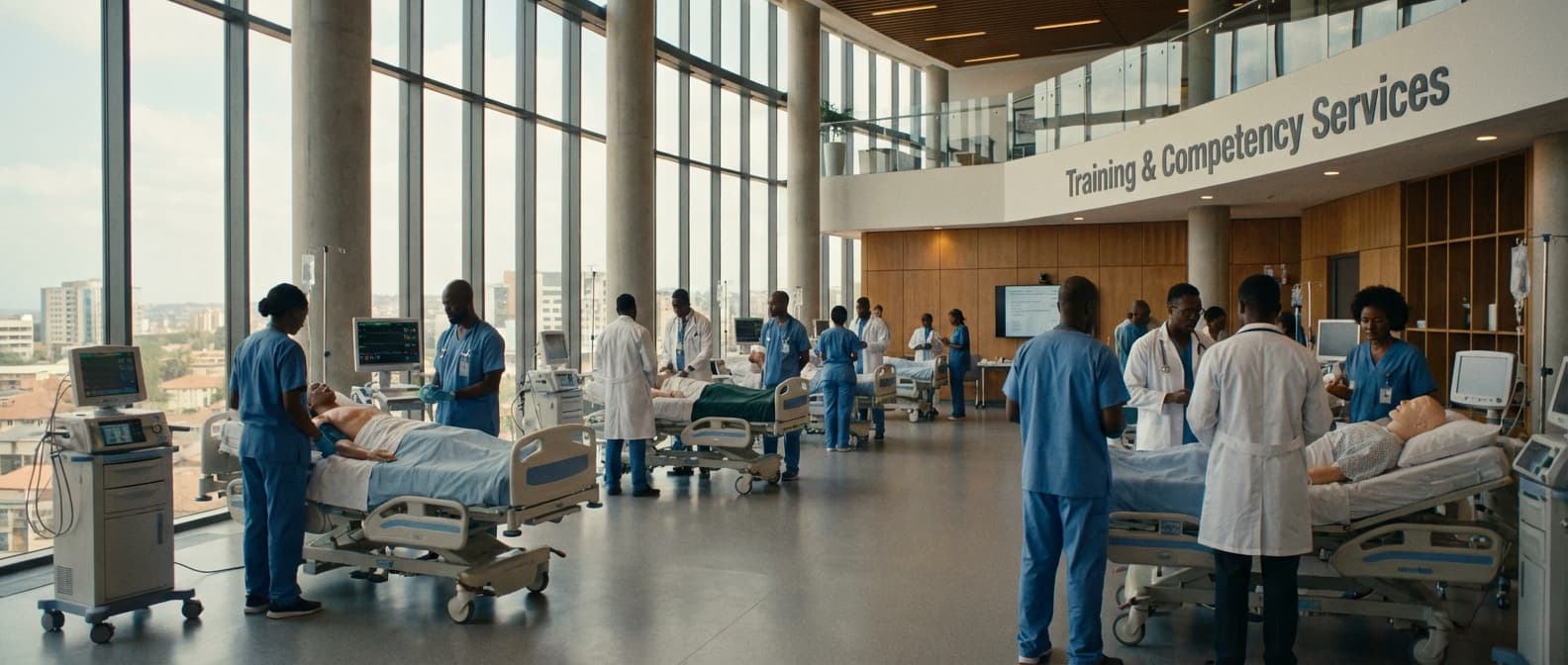
Anesthesia Workstation User Training Service in Guinea
Engineering Excellence & Technical Support
Anesthesia Workstation User Training Service High-standard technical execution following OEM protocols and local regulatory frameworks.
Mastering Core Anesthesia Workstation Functions
Gain in-depth knowledge of essential functions, including ventilation modes, gas delivery, agent monitoring, and patient data acquisition, ensuring safe and effective anesthetic delivery. Our hands-on training empowers Guinean healthcare professionals to confidently operate the workstation in critical situations.
Troubleshooting and Maintenance Best Practices
Learn essential troubleshooting techniques for common workstation issues and implement preventative maintenance strategies to ensure optimal performance and longevity. This module focuses on practical solutions to keep your anesthesia workstations reliable in the Guinean healthcare setting.
Advanced Features and Workflow Optimization
Explore advanced functionalities like electronic health record integration, waveform analysis, and alarm management to enhance patient safety and streamline workflows. Our training guides Guinean clinicians in leveraging these features for improved anesthetic care and operational efficiency.
What Is Anesthesia Workstation User Training Service In Guinea?
Anesthesia workstation user training service in Guinea refers to a specialized educational program designed to equip healthcare professionals with the knowledge and practical skills necessary to safely and effectively operate advanced anesthesia workstations. These workstations are complex medical devices that integrate multiple functionalities for patient monitoring, ventilation, and anesthetic gas delivery. The training aims to ensure users understand the device's architecture, operational parameters, safety features, troubleshooting procedures, and maintenance protocols within the specific context of the Guinean healthcare infrastructure.
| Target Audience | Purpose | Typical Use Cases |
|---|---|---|
| Anesthesiologists | Enhance proficiency in operating advanced anesthesia delivery and monitoring systems, optimize patient safety, and ensure adherence to modern anesthetic techniques. | Routine surgical procedures, complex surgeries requiring precise anesthetic control, critical care settings, and remote healthcare facilities lacking specialized technical support. |
| Anesthesia Technicians/Nurses | Develop competence in setting up, operating, and troubleshooting anesthesia workstations, supporting the anesthesiologist during procedures, and performing basic maintenance. | Assisting in all surgical specialties, managing anesthesia equipment in operating rooms and recovery units, and contributing to efficient workflow. |
| Medical Engineers/Biomedical Technicians | Acquire in-depth knowledge for installation, calibration, preventative maintenance, and repair of anesthesia workstations, ensuring device reliability and longevity. | Installation of new equipment, routine servicing of existing units, troubleshooting complex technical issues, and ensuring compliance with manufacturer specifications and safety standards. |
| Healthcare Administrators/Procurement Officers | Gain an understanding of the training requirements and operational demands of anesthesia workstations to inform purchasing decisions and resource allocation. | Evaluating the suitability of different workstation models, budgeting for training and maintenance, and developing strategies for optimal equipment utilization. |
Key Components of Anesthesia Workstation User Training:
- Device Anatomy and Functionality: In-depth exploration of the hardware and software components, including vaporizers, ventilators, gas mixers, flow meters, and integrated monitoring systems.
- Operational Procedures: Step-by-step guidance on pre-use checks, patient setup, initiation of anesthesia, mode selection, parameter adjustment, and weaning protocols.
- Patient Monitoring Integration: Understanding how to interpret and respond to vital signs displayed by the workstation's integrated monitors (e.g., ECG, SpO2, EtCO2, NIBP).
- Ventilator Management: Comprehensive training on various ventilation modes, setting mechanical ventilation parameters, and managing common ventilation-related complications.
- Anesthetic Gas Delivery and Control: Principles of anesthetic gas pharmacokinetics and pharmacodynamics, safe administration of volatile agents and nitrous oxide, and agent monitoring.
- Alarms and Safety Features: Recognition and management of alarm conditions, understanding safety interlocks, and emergency procedures.
- Troubleshooting and Maintenance: Basic diagnostic procedures for common malfunctions, routine cleaning, and preventative maintenance tasks.
- Regulatory Compliance and Best Practices: Adherence to local healthcare regulations and international standards for anesthesia practice.
- Hands-on Simulation: Practical exercises using simulators or actual workstations under supervised conditions.
Who Needs Anesthesia Workstation User Training Service In Guinea?
Anesthesia Workstation User Training Services are crucial for ensuring the safe, efficient, and optimal utilization of advanced anesthesia equipment in healthcare facilities. These services are designed to equip medical professionals, particularly anesthesiologists, nurse anesthetists, and biomedical engineers, with the necessary knowledge and practical skills to operate complex anesthesia workstations. This includes understanding the workstation's features, functionalities, patient monitoring capabilities, ventilation modes, drug delivery systems, and emergency procedures. Proper training minimizes the risk of human error, enhances patient safety, and maximizes the lifespan and performance of the equipment.
| Department/Role | Key Responsibilities Requiring Training | Specific Training Needs |
|---|---|---|
| Anesthesiology Department | Administering anesthesia, managing patient vital signs, operating ventilators, drug administration, troubleshooting equipment during procedures. | Advanced ventilation modes, waveform analysis, integrated monitoring, drug synergy calculations, emergency scenario simulation, software updates and calibration. |
| Nurse Anesthesia Department | Assisting anesthesiologists, independently administering anesthesia in certain settings, monitoring patient status, setting up and managing anesthesia machines. | Basic and advanced operation of the workstation, patient monitoring parameters, alarms and their management, circuit maintenance, sterile field procedures. |
| Intensive Care Unit (ICU) | Mechanical ventilation, patient monitoring, weaning from ventilation, managing critically ill patients requiring respiratory support. | Long-term ventilation strategies, advanced modes for critically ill patients, integration with other ICU monitoring devices, ventilator-associated pneumonia (VAP) prevention protocols. |
| Surgical Departments (e.g., General Surgery, Cardiology, Orthopedics) | Understanding the anesthesia workstation's capabilities and limitations to facilitate safe and effective surgical procedures. Coordinating with the anesthesia team. | Basic understanding of the workstation's interface, alarm response, and communication protocols with the anesthesia provider. |
| Biomedical Engineering Department | Installation, maintenance, repair, calibration, and quality assurance of anesthesia workstations. Ensuring compliance with safety standards. | Detailed technical specifications, troubleshooting complex hardware and software issues, preventative maintenance schedules, calibration procedures, regulatory compliance, safe installation protocols. |
| Operating Room (OR) Nursing Staff | Preparation of the OR, setup of anesthesia equipment, assisting the anesthesia provider, maintaining the sterile field. | Basic setup and connection of the anesthesia workstation, understanding common alarms and their immediate response, infection control protocols related to the equipment. |
Target Customers and Departments Requiring Anesthesia Workstation User Training Services in Guinea:
- {"description":"All hospitals, from large tertiary care centers to smaller regional hospitals, that utilize anesthesia workstations for surgical procedures, intensive care units (ICUs), and emergency departments.","customerType":"Hospitals"}
- {"description":"Clinics specializing in surgery (e.g., orthopedic, cardiovascular, ophthalmic), pain management, and critical care that perform procedures requiring anesthesia.","customerType":"Specialty Clinics"}
- {"description":"Teaching hospitals and universities that not only use anesthesia workstations for patient care but also for training future generations of anesthesiologists and healthcare professionals.","customerType":"Academic Medical Centers"}
- {"description":"Entities responsible for setting healthcare standards, procuring medical equipment for public health facilities, and ensuring quality of care across the nation.","customerType":"Government Health Ministries & Agencies"}
- {"description":"Companies that sell and service anesthesia workstations in Guinea, as providing comprehensive user training is often a critical part of their service offering and product support.","customerType":"Medical Equipment Suppliers & Distributors"}
- {"description":"Organizations involved in providing healthcare services, medical equipment, and training in resource-limited settings like Guinea.","customerType":"Non-Governmental Organizations (NGOs) & International Aid Organizations"}
Anesthesia Workstation User Training Service Process In Guinea
This document outlines the standard workflow for the Anesthesia Workstation User Training Service Process in Guinea, from the initial inquiry to the successful execution of the training. This process ensures that healthcare professionals are adequately trained to operate anesthesia workstations safely and effectively, thereby improving patient care.
| Stage | Description | Key Activities | Responsible Parties | Deliverables | Timeline (Typical) |
|---|---|---|---|---|---|
| The initial contact from a healthcare facility or individual seeking anesthesia workstation training. | Receive inquiry, understand training needs (specific workstation model, number of participants, existing knowledge, desired learning outcomes), clarify initial questions. | Client (Hospital/Clinic), Training Provider Representative | Initial understanding of training requirements. | 1-3 business days |
| Formal offer detailing the training program, costs, and terms. | Develop a tailored training proposal based on the needs assessment, define training modules, duration, content, trainers, and provide a detailed quotation. | Training Provider | Formal Training Proposal, Financial Quotation | 2-5 business days |
| Formalization of the training service agreement. | Review and negotiation of the proposal, signing of a service contract or agreement, outlining scope of work, payment terms, cancellation policies, and liability. | Client (Legal Department/Procurement), Training Provider (Legal/Sales Department) | Signed Service Contract/Agreement | 3-7 business days |
| Adaptation of training content to specific workstation models and local context. | Review existing training materials, customize them to the specific anesthesia workstation model(s) in use, and incorporate any relevant local clinical guidelines or protocols. Translate materials if necessary. | Training Provider (Technical Specialists/Instructors) | Customized Training Manuals, Presentations, Practical Exercises | 5-10 business days (depending on complexity) |
| Arrangement of all practical aspects for the training delivery. | Confirm training dates and times, book training venue (on-site or off-site), arrange for necessary equipment (anesthesia workstations for hands-on practice), confirm participant list, manage travel and accommodation for trainers (if applicable). | Client (Training Coordinator), Training Provider (Operations/Logistics) | Confirmed Training Schedule, Logistics Plan | 7-14 business days |
| The actual execution of the training program. | Conduct theoretical sessions (lectures, presentations), practical hands-on sessions with anesthesia workstations, case studies, Q&A sessions, demonstrations by trainers. | Training Provider (Certified Instructors) | Delivered Training Sessions | Duration varies based on program scope (e.g., 1-3 days per module) |
| Evaluation of participant learning and issuance of qualifications. | Administer knowledge tests (written/oral), practical skill assessments (observation of performance), and issue certificates of completion or proficiency to participants who meet the required standards. | Training Provider (Instructors/Assessors) | Assessment Results, Certificates of Completion/Proficiency | 1-3 business days post-training |
| Ongoing assistance and collection of feedback for continuous improvement. | Provide post-training support (e.g., answering follow-up questions via email/phone), collect feedback from participants and the client regarding the training effectiveness and satisfaction, analyze feedback for service improvement. | Training Provider (Support Team/Management), Client | Post-Training Support, Feedback Report, Service Improvement Recommendations | Ongoing (initial feedback collection within 1 week post-training) |
Anesthesia Workstation User Training Service Process in Guinea: Workflow Stages
- Inquiry and Needs Assessment
- Proposal and Quotation
- Contracting and Agreement
- Training Material Customization
- Logistics and Scheduling
- Training Delivery
- Assessment and Certification
- Post-Training Support and Feedback
Anesthesia Workstation User Training Service Cost In Guinea
The cost of anesthesia workstation user training services in Guinea can vary significantly based on several factors. These factors influence the pricing structure and the overall investment required for comprehensive and effective training. Understanding these elements is crucial for healthcare institutions seeking to equip their staff with the necessary skills to operate anesthesia workstations safely and efficiently. The local currency in Guinea is the Guinean Franc (GNF).
| Training Type/Duration | Estimated Cost Range (GNF) | Notes |
|---|---|---|
| Basic Operator Training (1-2 days) | 500,000 - 1,500,000 GNF | Covers fundamental operation, safety checks, and basic troubleshooting for standard models. |
| Intermediate User Training (3-4 days) | 1,200,000 - 3,000,000 GNF | Includes more advanced features, ventilation modes, and specific drug delivery protocols. May involve hands-on simulation. |
| Advanced/Specialized Training (5+ days or customized) | 2,500,000 - 6,000,000+ GNF | For complex workstations, specific clinical applications (e.g., pediatrics, cardiac), or in-depth maintenance and troubleshooting. Often tailored to institution needs. |
| On-site Training (per day, excluding trainer travel) | 300,000 - 800,000 GNF | This is a supplemental cost for the trainer's time on-site at the facility. Actual trainer travel and accommodation would be additional. |
| Per-Participant Fee (for larger groups, introductory session) | 50,000 - 150,000 GNF | A potential add-on or alternative pricing for bulk training, typically for basic introductory sessions. |
Key Pricing Factors for Anesthesia Workstation User Training in Guinea
- Type and Complexity of the Anesthesia Workstation: More advanced and sophisticated workstations with a wider range of functionalities will typically require more in-depth and specialized training, leading to higher costs. Basic models may have simpler training modules.
- Duration of Training: The total number of hours or days dedicated to the training program directly impacts the cost. Longer, more comprehensive programs will naturally be more expensive.
- Number of Trainees: Training is often priced per participant or on a group basis. A larger group may lead to a lower per-person cost but a higher overall training expenditure. Conversely, smaller, more personalized training sessions can be more expensive per individual.
- Trainer's Expertise and Experience: Highly experienced and certified trainers with specialized knowledge of specific anesthesia workstation models and local clinical practices often command higher fees.
- Location of Training: Whether the training is conducted on-site at the healthcare facility in Guinea or at a separate training center can affect costs due to travel, accommodation, and facility rental expenses for the trainers. On-site training might be more cost-effective for the institution if the trainer can accommodate it.
- Training Content and Customization: Standardized training modules will generally be less expensive than customized programs tailored to the specific needs and protocols of a particular hospital or clinic in Guinea.
- Training Materials and Resources: The provision of high-quality training manuals, simulations, hands-on practice equipment, and post-training support can add to the overall cost.
- Certification and Assessment: If the training includes formal certification or rigorous assessments, these elements can contribute to the final price.
- Provider Reputation and Credentials: Reputable training providers, often affiliated with medical equipment manufacturers or specialized training organizations, may have higher pricing due to their established track record and quality assurance.
- Geographic Region within Guinea: While not as significant as other factors, logistical challenges and local economic conditions in different regions of Guinea might subtly influence pricing.
Affordable Anesthesia Workstation User Training Service Options
This document outlines user training service options for affordable anesthesia workstations, focusing on value bundles and cost-saving strategies to ensure healthcare providers can effectively and safely utilize these essential pieces of equipment without incurring prohibitive training expenses. Investing in comprehensive training is crucial for patient safety, efficient workflow, and maximizing the return on investment for the workstation. We offer flexible training packages designed to cater to diverse institutional needs and budgets.
| Cost-Saving Strategy | Description | Benefit |
|---|---|---|
| Group Discounts | Register multiple staff members from the same institution for any training bundle and receive a tiered discount. | Reduces per-user training cost, encouraging broader team adoption. |
| Early Bird Registration | Book training sessions well in advance of the scheduled date to secure preferential pricing. | Lower upfront costs and allows for better budget planning. |
| Blended Learning Approach | Combining online self-paced modules with shorter, targeted on-site or virtual sessions reduces travel and accommodation expenses. | Minimizes disruption and logistical costs associated with full on-site training. |
| Train-the-Trainer Program | Investing in a select few to become internal trainers creates a sustainable and cost-effective long-term training solution. | Significantly reduces future training expenses and ensures knowledge retention within the institution. |
| Remote Support Packages | Opt for ongoing remote technical and clinical support post-training, rather than repeated on-site visits for common queries. | Provides timely assistance at a fraction of the cost of on-site interventions. |
| Bundled Equipment & Training Purchase | Inquire about potential package deals when purchasing anesthesia workstations and user training services concurrently. | May offer integrated discounts and streamline the procurement process. |
Value Bundles for Anesthesia Workstation User Training
- {"title":"Basic User Training Bundle","description":"Ideal for new staff or those requiring a refresher on fundamental operations. Covers essential workstation setup, basic ventilation modes, alarm management, and emergency procedures. Delivered via online modules and a single on-site practical session."}
- {"title":"Advanced User Training Bundle","description":"Designed for experienced users or those needing proficiency in more complex functionalities. Includes all Basic Bundle features plus advanced ventilation strategies, specialized gas delivery, integrated monitoring interpretation, and troubleshooting. Delivered via a blended approach: online modules, virtual instructor-led sessions, and two on-site practical sessions."}
- {"title":"Train-the-Trainer Bundle","description":"Empowers a select group of your staff to become in-house experts, capable of training new personnel on an ongoing basis. Covers all Advanced Bundle content, plus instructional techniques, curriculum development, and best practices for internal training. Delivered through intensive on-site workshops and ongoing remote support."}
- {"title":"Customized Departmental Training Bundle","description":"Tailored to the specific needs and equipment configurations of individual departments or specialties. We work with your team to develop a curriculum addressing unique clinical scenarios and workflow requirements. Delivery methods are flexible and agreed upon with the client."}
Verified Providers In Guinea
Ensuring access to high-quality healthcare is paramount, and in Guinea, identifying verified providers is crucial for patient safety and well-being. Franance Health stands out as a premier organization dedicated to establishing and maintaining stringent standards for healthcare professionals. Their rigorous credentialing process not only validates the expertise and qualifications of medical practitioners but also fosters trust and confidence among those seeking medical services. This commitment to excellence makes Franance Health credentials a definitive indicator of superior care, offering patients peace of mind and assuring them they are in capable hands. Choosing a provider with Franance Health credentials signifies a commitment to receiving care from a medically sound and ethically responsible professional.
| Credentialing Aspect | Franance Health's Focus | Benefit to Patients |
|---|---|---|
| Educational Background | Verification of degrees and diplomas from accredited institutions. | Ensures foundational medical knowledge and training. |
| Clinical Experience | Thorough review of past work history and practice settings. | Confirms practical application of skills and patient management experience. |
| Licensure and Certifications | Validation of current and relevant medical licenses and board certifications. | Guarantees legal authorization to practice and specialized expertise. |
| Professional References | Contacting peers and supervisors for performance evaluation. | Provides insights into a provider's ethical conduct and collaborative abilities. |
| Continuing Medical Education (CME) | Ensuring providers stay updated with the latest medical advancements. | Affirms commitment to lifelong learning and modern treatment approaches. |
Why Franance Health Credentials Represent the Best Choice:
- Rigorous Verification Process: Franance Health employs a comprehensive and meticulous process to authenticate a provider's education, training, licensure, and professional experience.
- Commitment to Quality: Their standards are designed to identify practitioners who consistently deliver high-quality, evidence-based medical care.
- Enhanced Patient Safety: By vetting providers, Franance Health significantly contributes to a safer healthcare environment for all patients.
- Professional Accountability: Certified providers are held to a high level of professional conduct and ethical practice.
- Increased Patient Trust: The Franance Health seal of approval provides a clear signal of reliability and competence, building essential trust between patients and their healthcare providers.
- Access to Expertise: Credentials ensure patients can find specialists and general practitioners with proven knowledge and skills.
Scope Of Work For Anesthesia Workstation User Training Service
This Scope of Work (SOW) outlines the requirements for providing comprehensive user training services for Anesthesia Workstations. The training aims to equip healthcare professionals with the necessary knowledge and skills to operate the anesthesia workstation safely, efficiently, and effectively in a clinical setting. This includes understanding its features, functionalities, troubleshooting common issues, and adhering to best practices for patient care.
| Parameter | Standard Specification | Description |
|---|---|---|
| Training Audience | Anesthesiologists, Certified Registered Nurse Anesthetists (CRNAs), Anesthesia Residents, Anesthesia Technicians | Identifies the target groups who will benefit from the training. |
| Training Methodology | Blended learning approach (lectures, demonstrations, hands-on practice, case studies, simulations) | Specifies the combination of teaching methods to be employed. |
| Training Duration | Minimum 8 hours per module, adaptable based on workstation complexity and audience experience | Defines the expected time commitment for each training segment. |
| Training Location | On-site at the healthcare facility, or designated training center | Specifies where the training will be conducted. |
| Workstation Access | Functional anesthesia workstation(s) equivalent to the production model, with simulated patient scenarios | Ensures availability of appropriate equipment for practical training. |
| Trainer-to-Participant Ratio | Maximum 1:8 for hands-on sessions, 1:20 for lectures | Establps a guideline for effective instruction and supervision. |
| Assessment Criteria | Demonstrated proficiency in setup, ventilation modes, alarm management, drug delivery, and emergency procedures | Defines the key skills and knowledge to be evaluated. |
| Language | English (or specified language) | Indicates the primary language of instruction and materials. |
| Customization | Ability to customize modules based on specific hospital protocols and equipment configurations | Allows for tailoring the training to the unique needs of the client. |
Technical Deliverables
- Training Curriculum Document: A detailed outline of all training modules, learning objectives, and assessment methods.
- Training Materials: Comprehensive user manuals, presentations, quick reference guides, and hands-on simulation exercises.
- Trainer Qualifications: Documentation verifying the expertise and experience of the training personnel in anesthesia and the specific workstation model.
- Training Schedule: A clear timeline for the delivery of training sessions, including dates, times, and locations.
- Attendance Records: A log of all participants attending each training session.
- Competency Assessments: Pre- and post-training assessments (e.g., quizzes, practical demonstrations) to measure learning and proficiency.
- Training Completion Certificates: Certificates issued to participants who successfully complete the training program.
- Post-Training Support Plan: Details on how users can access ongoing support and resources after the initial training.
- Feedback Mechanism: A system for collecting participant feedback on the training program for continuous improvement.
Service Level Agreement For Anesthesia Workstation User Training Service
This Service Level Agreement (SLA) outlines the terms and conditions for the Anesthesia Workstation User Training Service provided by [Your Company Name]. It defines the expected response times for support requests and the uptime guarantees for the training platform and associated resources. This SLA is designed to ensure that our clients receive prompt and reliable support, facilitating effective and uninterrupted training for anesthesia professionals.
| Service Component | Uptime Guarantee | Response Time for Critical Issues | Response Time for Standard Issues | Resolution Time Target (Critical) | Resolution Time Target (Standard) |
|---|---|---|---|---|---|
| Anesthesia Workstation User Training Platform Access | 99.5% Uptime | 2 Business Hours | 4 Business Hours | 8 Business Hours | 2 Business Days |
| On-Demand Training Modules | 99.5% Availability | 4 Business Hours | 8 Business Hours | 1 Business Day | 3 Business Days |
| Live Virtual Training Sessions (scheduled) | 100% Availability (for scheduled sessions) | 1 Business Hour (prior to session start) | N/A | Immediate (during session) | N/A |
| Technical Support for Training Platform | N/A (Service is support-based) | 2 Business Hours | 4 Business Hours | 8 Business Hours | 2 Business Days |
| Content Updates and Maintenance | N/A (Scheduled maintenance) | 24 Business Hours (notice provided) | N/A | N/A | N/A |
Key Service Components
- Anesthesia Workstation User Training Platform Access
- On-Demand Training Modules
- Live Virtual Training Sessions (scheduled)
- Technical Support for Training Platform
- Content Updates and Maintenance
Frequently Asked Questions

Ready when you are
Let's scope your Anesthesia Workstation User Training Service in Guinea project in Guinea.

Scaling healthcare logistics and technical systems across the entire continent.