
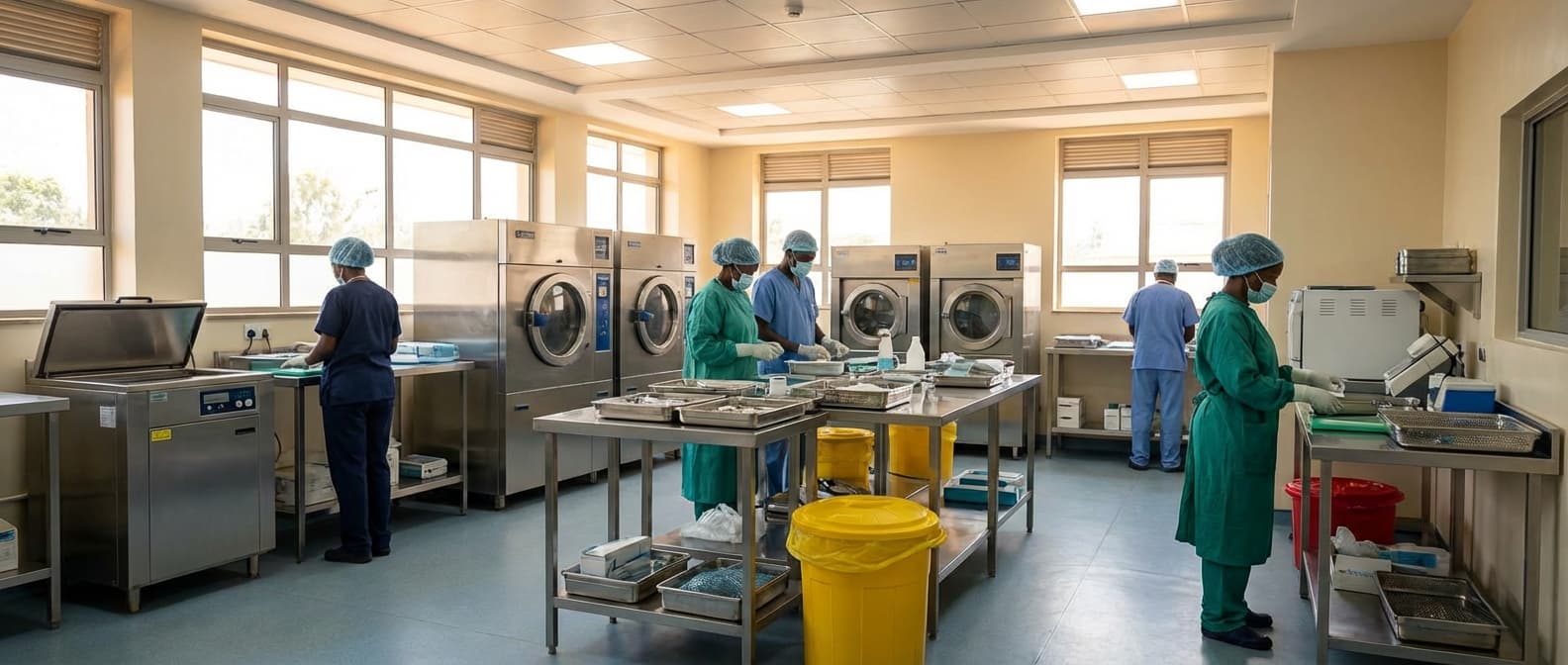
Medical Equipment Decontamination Service (Pre-Repair/Pre-Relocation) in Guinea
Engineering Excellence & Technical Support
Medical Equipment Decontamination Service (Pre-Repair/Pre-Relocation) High-standard technical execution following OEM protocols and local regulatory frameworks.
Validated Sterilization Protocols
Our service adheres to internationally recognized sterilization and disinfection protocols, ensuring the complete elimination of bioburden from medical equipment prior to repair or relocation, safeguarding against cross-contamination in Guinean healthcare facilities.
Comprehensive Traceability & Documentation
We provide detailed, auditable records of each decontamination cycle, including equipment serial numbers, cleaning agents used, and batch logs. This ensures full compliance and transparency for medical equipment undergoing service in Guinea.
Specialized Biohazard Handling Expertise
Our highly trained technicians possess specialized knowledge in handling potentially hazardous medical waste and equipment, implementing stringent safety measures to protect personnel and the environment during decontamination processes in Guinea.
What Is Medical Equipment Decontamination Service (Pre-repair/pre-relocation) In Guinea?
Medical Equipment Decontamination Service (Pre-Repair/Pre-Relocation) in Guinea refers to the specialized process of rendering medical devices safe for handling, repair, or transportation. This service is critical for mitigating the risks associated with biohazards, chemical contaminants, and radioactive materials that may be present on medical equipment due to its use in clinical settings. The decontamination process aims to eliminate or neutralize these hazardous agents to protect personnel involved in maintenance, logistics, and subsequent use, as well as to prevent cross-contamination of the environment.
| Service Component | Description | Relevance to Guinea Context |
|---|---|---|
| Pre-Repair Decontamination | Cleaning and disinfection of medical equipment prior to its transport to a repair facility or prior to in-house repair. This ensures technicians are not exposed to infectious agents or hazardous chemicals. | Crucial for maintaining the health and safety of biomedical engineers and technicians, especially in facilities with limited resources for infection control or specialized PPE. Addresses potential risks from prevalent infectious diseases. |
| Pre-Relocation Decontamination | Thorough cleaning and disinfection of medical equipment before it is moved between departments, facilities, or transported out of the country for disposal or repurposing. Prevents the spread of contaminants during transit. | Essential for preventing the inadvertent transmission of pathogens between healthcare facilities or across borders, which is a significant public health concern in many regions, including Guinea. Facilitates compliant and safe disposal of obsolete equipment. |
| Hazard Assessment | Initial evaluation of the equipment to identify potential hazards (biohazards, chemical residues, radiological materials) and determine the appropriate decontamination strategy. | Necessary due to the diverse range of clinical applications and potential for varied contaminant types encountered in Guinea's healthcare landscape. |
| Cleaning and Disinfection Procedures | Application of pre-defined protocols using approved cleaning agents and disinfectants to remove visible soil and reduce microbial load to safe levels. May involve high-level disinfection or sterilization depending on the equipment and its intended use. | Standard practice, but the availability and cost of validated disinfectants and equipment are critical considerations for widespread implementation in Guinea. |
| Verification and Validation | Processes to confirm the effectiveness of the decontamination procedure, which might include visual inspection, microbial sampling, or chemical testing. | Ensures the service is effective and provides assurance of safety for subsequent handling and prevents the propagation of healthcare-associated infections. |
Key Aspects of Medical Equipment Decontamination Service (Pre-Repair/Pre-Relocation) in Guinea
- Objective: To render medical equipment safe for subsequent handling, repair, or relocation by eliminating or reducing bioburden, chemical residues, and other potential contaminants to acceptable levels.
- Scope: Encompasses a range of medical devices, from simple diagnostic tools to complex surgical and imaging equipment.
- Methodologies: Utilizes validated disinfection, sterilization, and/or cleaning protocols, often involving chemical agents, physical methods (e.g., UV irradiation), or a combination thereof.
- Regulatory Compliance: Adherence to national and international standards and guidelines for medical device decontamination and waste management is paramount.
- Documentation: Rigorous record-keeping is essential, detailing the decontamination process, agents used, verification methods, and personnel involved.
- Personnel Training: Service providers must employ trained and competent personnel equipped with appropriate personal protective equipment (PPE) and knowledge of hazard identification and mitigation.
Who Needs Medical Equipment Decontamination Service (Pre-repair/pre-relocation) In Guinea?
Medical equipment decontamination is a critical, yet often overlooked, step in the lifecycle of healthcare technology. Before medical devices can be safely repaired or relocated within Guinea, they must undergo thorough decontamination to eliminate bioburden and prevent cross-contamination. This specialized service is essential for ensuring patient safety, protecting healthcare workers, and maintaining the integrity of sensitive medical equipment. Identifying who requires this service in Guinea means looking at the institutions and individuals responsible for managing and utilizing medical devices.
| Target Customer/Department | Specific Needs and Responsibilities | Why Decontamination is Crucial for Them |
|---|---|---|
| Hospitals (Public and Private) | Central sterile supply departments (CSSD), Biomedical engineering departments, individual clinical departments (e.g., surgery, ICU, radiology). Responsible for maintaining a wide range of medical equipment. | Ensures instruments are safe for repair technicians, prevents spread of infections during equipment downtime, and maintains sterile fields post-relocation. Crucial for infection control protocols. |
| Clinics and Health Centers | Clinical staff, administrative staff responsible for equipment maintenance. Often have limited resources and may outsource these services. | Guarantees that equipment transferred to repair facilities is free of pathogens, protecting external service personnel and ensuring equipment is clean upon return to patient care. |
| Diagnostic Laboratories | Laboratory technicians, lab managers. Handle samples that can harbor infectious agents. | Essential for decontaminating analytical instruments, microscopes, and other diagnostic equipment before they are sent for calibration or repair, preventing lab contamination and protecting repair staff. |
| Surgical Centers | Surgical teams, sterile processing staff. Handle high-risk procedures. | Ensures surgical instruments and equipment are thoroughly cleaned and decontaminated before being sent for repair to prevent potential transmission of bloodborne pathogens to repair personnel. |
| Medical Device Manufacturers/Distributors | Service and repair divisions, logistics departments. Handle returned, refurbished, or loaned equipment. | Critical for ensuring all returned devices are decontaminated before inspection, repair, or resale to prevent any potential biohazard risk to their own staff and subsequent users. |
| Government Health Agencies | Procurement departments, asset management units, public health laboratories. Manage large fleets of medical equipment across the country. | Ensures that equipment procured, distributed, or transferred between facilities is safe and decontaminated, supporting national health security and efficient resource allocation. |
| Non-Governmental Organizations (NGOs) | Program managers, field staff, logistics coordinators. Often operate in remote or resource-limited settings. | Provides a vital service to ensure medical equipment used in challenging environments is safely decontaminated before transport for repair or relocation, maintaining the functionality of essential healthcare tools. |
| Research Institutions | Researchers, laboratory managers, equipment custodians. Utilize specialized and often sensitive equipment. | Protects valuable research equipment from contamination and ensures that any technicians involved in maintenance or repair are not exposed to potentially hazardous biological materials used in research. |
Who Needs Medical Equipment Decontamination Service (Pre-Repair/Pre-Relocation) in Guinea?
- Hospitals (Public and Private)
- Clinics and Health Centers
- Diagnostic Laboratories
- Surgical Centers
- Medical Device Manufacturers and Distributors (for returned or refurbished equipment)
- Government Health Agencies (for public health initiatives and asset management)
- Non-Governmental Organizations (NGOs) involved in healthcare delivery
- Research Institutions utilizing medical equipment
Medical Equipment Decontamination Service (Pre-repair/pre-relocation) Process In Guinea
This document outlines the comprehensive workflow for the Medical Equipment Decontamination Service (Pre-Repair/Pre-Relocation) in Guinea. This process is crucial for ensuring the safety of technicians, the integrity of repair facilities, and the successful transportation of medical equipment, thereby preventing the spread of potential biohazards. The service adheres to stringent safety protocols and national health guidelines. The workflow begins with an initial client inquiry and progresses through detailed assessment, scheduling, execution of decontamination, and final documentation.
| Stage Number | Stage Name | Description | Responsible Party | Key Activities | Outputs/Deliverables | Potential Challenges | Mitigation Strategies |
|---|---|---|---|---|---|---|---|
| 1 | Client Inquiry & Initial Contact | The process begins when a client (hospital, clinic, repair center, relocation company) contacts the decontamination service provider. | Client, Decontamination Service Provider (DSP) | Client explains needs (equipment type, quantity, reason for decontamination - repair or relocation). DSP provides initial information about the service. | Initial understanding of client's needs. Appointment for assessment. | Miscommunication of needs, unavailability of client contact. | Clear communication protocols. Flexible appointment scheduling. |
| 2 | Needs Assessment & Quotation | A representative from the DSP assesses the equipment and the client's site to determine the scope of work, required resources, and cost. | DSP Representative, Client | Physical inspection of equipment, identification of potential biohazards, assessment of accessibility and site conditions. DSP prepares a detailed quotation. | Agreed-upon scope of work. Formal quotation with pricing and service details. | Underestimation of complexity, access issues to equipment, changes in equipment condition. | Thorough pre-assessment, contingency planning for unforeseen issues, clear communication of potential price adjustments. |
| 3 | Scheduling & Logistics Planning | Once the quotation is accepted, the decontamination service is scheduled, and all logistical arrangements are made. | DSP Logistics Coordinator, Client | Setting the date and time for decontamination. Arranging transportation of specialized equipment and personnel. Ensuring availability of necessary decontamination agents and tools. | Confirmed service schedule. Logistics plan including transport routes and timings. | Scheduling conflicts, transport delays, unavailability of specialized equipment. | Flexible scheduling options, backup transport arrangements, pre-maintenance of decontamination equipment. |
| 4 | On-Site Decontamination Execution | The trained decontamination team arrives at the client's site and performs the decontamination process according to established protocols. | DSP Decontamination Team | Preparation of the work area, application of approved disinfectants/sterilants, physical cleaning, rinsing (if applicable), and drying of equipment. Adherence to safety protocols for personnel and environment. | Decontaminated medical equipment. Initial safety checks. | Inadequate disinfection, damage to equipment from cleaning agents, exposure risks for personnel. | Use of validated disinfection protocols, pre-testing cleaning agents on non-critical areas, rigorous PPE usage and training. |
| 5 | Post-Decontamination Verification & Packaging | After decontamination, the equipment is verified, and prepared for repair or relocation. | DSP Decontamination Team, Client | Visual inspection for residual contamination, confirmation of dryness, and appropriate packaging for transport to prevent re-contamination. Labeling with decontamination status. | Certified decontaminated equipment. Secure packaging. Decontamination status labels. | Re-contamination during packaging, incorrect labeling, verification challenges. | Strict packaging procedures, double-checking labels, using specialized non-shedding packaging materials. |
| 6 | Documentation & Handover | All records pertaining to the decontamination process are meticulously documented and provided to the client. | DSP Project Manager, Client | Issuing a decontamination certificate, providing a detailed report of the process undertaken, chemicals used, date, time, and personnel involved. Obtaining client sign-off. | Decontamination Certificate. Service Report. Client sign-off. | Incomplete documentation, disputes over service provided. | Standardized reporting templates, digital record-keeping, clear sign-off procedures. |
| 7 | Follow-up & Feedback | A follow-up is conducted to ensure client satisfaction and to identify areas for service improvement. | DSP Customer Service, Client | Contacting the client to gather feedback on the service quality, timeliness, and effectiveness. Addressing any post-service concerns. | Client satisfaction confirmation. Input for service improvement. | Lack of client feedback, unresolved issues. | Proactive follow-up calls, dedicated customer support channels, complaint resolution process. |
Key Stages of the Medical Equipment Decontamination Service Workflow
- Client Inquiry & Initial Contact
- Needs Assessment & Quotation
- Scheduling & Logistics Planning
- On-Site Decontamination Execution
- Post-Decontamination Verification & Packaging
- Documentation & Handover
- Follow-up & Feedback
Medical Equipment Decontamination Service (Pre-repair/pre-relocation) Cost In Guinea
The cost of medical equipment decontamination services in Guinea, specifically for pre-repair or pre-relocation needs, is influenced by several critical factors. These factors determine the overall price charged by specialized service providers. Understanding these elements is crucial for healthcare facilities budgeting for such essential services. The primary cost drivers include the type and complexity of the medical equipment, the extent of contamination, the required decontamination method, the time and labor involved, and the geographic location within Guinea. Specialized decontamination may involve techniques like high-level disinfection, sterilization, or even specialized chemical treatments, each carrying its own cost implications. Emergency or rush services will also command a premium.
| Equipment Category | Estimated Cost Range (GNF) Per Unit | Notes |
|---|---|---|
| Small Instruments (e.g., surgical tools, biopsy forceps) | 50,000 - 150,000 | Basic disinfection; higher end for specialized sterilization |
| Medium Equipment (e.g., endoscopes, ultrasound probes) | 150,000 - 500,000 | Requires higher-level disinfection; complexity of internal channels |
| Large Equipment (e.g., X-ray machines, anesthesia machines, ventilators) | 500,000 - 2,000,000+ | Extensive surface area, complex components, specialized cleaning agents, on-site service may be required |
| Specialized/High-Risk Equipment (e.g., C-arms, CT scanners, laboratory analyzers) | 1,000,000 - 5,000,000+ | Requires advanced decontamination protocols, potential for internal contamination, specialized technicians |
| Decontamination of Contaminated Waste | Varies significantly | Depends on volume and hazard level; often charged separately |
Key Pricing Factors for Medical Equipment Decontamination in Guinea (Pre-Repair/Pre-Relocation)
- Type and complexity of medical equipment (e.g., diagnostic imaging, surgical instruments, laboratory equipment)
- Severity and type of contamination (biological, chemical, radiological)
- Decontamination method required (e.g., high-level disinfection, sterilization, specialized cleaning)
- Labor and expertise required (skilled technicians, specialized knowledge)
- Time and urgency of the service (standard vs. rush/emergency)
- Geographic location within Guinea (access to facilities, transportation costs)
- Volume of equipment to be decontaminated
- Disposal of contaminated materials
Affordable Medical Equipment Decontamination Service (Pre-repair/pre-relocation) Options
Ensuring medical equipment is properly decontaminated before repair or relocation is crucial for safety, compliance, and operational efficiency. Our Affordable Medical Equipment Decontamination Service offers pre-service cleaning solutions designed to be cost-effective for healthcare facilities. We understand the budgetary constraints many institutions face, and we've developed value bundles and cost-saving strategies to make essential decontamination accessible.
| Service Bundle | Description | Included Services | Value Proposition | Target Use Case | Estimated Cost Savings (vs. ad-hoc services) |
|---|---|---|---|---|---|
| Basic Decon Lite | Our most economical option for non-critical equipment. | Surface disinfection with EPA-approved hospital-grade disinfectants, visual inspection. | Essential safety and compliance at the lowest price point. | Low-risk equipment (e.g., non-invasive monitoring devices, basic diagnostic tools) awaiting routine maintenance. | 15-25% |
| Standard Pre-Service Clean | A balanced option for a wide range of medical devices. | Comprehensive surface disinfection, removal of visible debris, basic antimicrobial wipe-down of accessible components. | Ensures a good level of decontamination for most equipment types. | Mid-range equipment (e.g., infusion pumps, patient monitors, portable ultrasound probes) awaiting repair. | 20-35% |
| Advanced Bio-Burden Mitigation | Designed for equipment with higher potential for bio-contamination. | Thorough disinfection, targeted cleaning of crevices and ports, application of virucidal/tuberculocidal agents (as appropriate), documentation of cleaning process. | Addresses higher-risk scenarios and ensures thorough decontamination. | High-risk equipment (e.g., ventilators, anesthesia machines, surgical instruments, patient beds) requiring thorough cleaning. | 25-45% |
| Relocation Ready Package | Bundled decontamination and preparation for transport. | Includes Standard Pre-Service Clean plus secure packaging consultation and labeling for safe transport. | Simplifies the relocation process and ensures compliance during transit. | Any equipment being moved between departments, facilities, or for storage. | 10-20% (on combined services) |
Why Decontaminate Before Repair/Relocation?
- Patient Safety: Prevents the spread of infections from potentially bio-burdened equipment to new users or technicians.
- Technician Safety: Protects repair and relocation personnel from exposure to hazardous biological materials.
- Equipment Integrity: Removes contaminants that could interfere with diagnostic accuracy or functional testing.
- Regulatory Compliance: Meets industry standards and facility protocols for equipment handling.
- Reduced Downtime: Streamlines the repair/relocation process by eliminating a potential bottleneck.
- Environmental Protection: Ensures proper disposal of biohazardous waste.
Verified Providers In Guinea
In Guinea, navigating the healthcare landscape to find truly reliable and skilled medical practitioners can be a significant challenge. Patients often seek assurance that the providers they choose are not only qualified but also uphold the highest ethical and professional standards. This is where the importance of verified credentials and reputable healthcare organizations comes into play. Franance Health has emerged as a leading entity in this regard, establishing a robust system for vetting and recognizing healthcare providers within Guinea. Their rigorous credentialing process and commitment to quality assurance make them a benchmark for excellence, offering patients unparalleled peace of mind.
| Credential Verification Aspect | Franance Health's Approach | Benefit to Patients in Guinea |
|---|---|---|
| Educational and Professional Qualifications | Thorough review of degrees, certifications, and residency completion. | Ensures providers possess the fundamental knowledge and skills required for safe practice. |
| Licensure and Regulatory Compliance | Verification of active and valid medical licenses with relevant authorities. | Guarantees that providers are legally permitted to practice and adhere to national regulations. |
| Specialized Training and Experience | Assessment of specific training and years of practical experience in their field. | Connects patients with specialists who have proven expertise in their medical needs. |
| Professional Reputation and Disciplinary History | Background checks for any past disciplinary actions or malpractice claims. | Mitigates the risk of engaging with providers who have a history of substandard care or ethical breaches. |
| Commitment to Ethical Practice | Evaluation of adherence to medical ethics and patient rights principles. | Promotes a healthcare experience characterized by honesty, respect, and informed consent. |
Why Franance Health Credentials Represent the Best Choice in Guinea:
- Rigorous Vetting Process: Franance Health employs a multi-faceted approach to verify the qualifications, licenses, and professional history of every provider. This includes scrutinizing educational backgrounds, specialized training, and adherence to established medical practices.
- Commitment to Patient Safety: The core of Franance Health's mission is ensuring patient safety. By only affiliating with credentialed providers, they significantly minimize risks associated with unqualified practitioners and promote a higher standard of care.
- Ethical Standards Enforcement: Beyond technical skills, Franance Health assesses providers for their ethical conduct and commitment to patient-centered care. This ensures that patients are treated with respect, dignity, and receive transparent information about their health.
- Access to Expertise: The network of Franance Health-verified providers grants access to a diverse range of medical specialties, from general practitioners to highly specialized surgeons and consultants, all meeting a consistent benchmark of quality.
- Continuous Professional Development: Franance Health often encourages or requires its affiliated providers to engage in ongoing education and training, ensuring they remain at the forefront of medical advancements and best practices.
- Enhanced Patient Trust and Confidence: For individuals seeking medical attention in Guinea, the Franance Health seal of approval acts as a powerful indicator of reliability and quality, fostering greater trust and confidence in the healthcare system.
Scope Of Work For Medical Equipment Decontamination Service (Pre-repair/pre-relocation)
This Scope of Work (SOW) outlines the requirements for medical equipment decontamination services to be performed prior to scheduled repair or relocation. The objective is to ensure the safe handling, transportation, and maintenance of medical devices by minimizing biological and chemical hazards. This service is crucial for protecting personnel, preventing cross-contamination, and facilitating efficient repair or relocation processes.
| Section | Description | Standard Specifications / Technical Deliverables |
|---|---|---|
| Visual inspection of equipment to identify gross contamination, visible bioburden, or residual chemical agents. Documentation of findings. |
|
| Application of appropriate cleaning and disinfection agents to render the equipment safe for handling. Methods will vary based on equipment type and known contaminants. |
|
| For equipment requiring sterile handling prior to repair or relocation, sterilization will be performed using validated methods. |
|
| Proper containment and disposal of all contaminated materials (wipes, gloves, packaging, etc.) according to biohazard waste regulations. |
|
| Provision of a certificate of decontamination, confirming that the equipment has been treated and is safe for subsequent handling. |
|
| All personnel performing decontamination services must be adequately trained and equipped. |
|
| Provision of all necessary cleaning agents, disinfectants, sterilization supplies (if applicable), PPE, waste disposal materials, and documentation tools. |
|
Key Objectives
- Minimize biological hazards associated with medical equipment.
- Prevent cross-contamination during repair or relocation.
- Ensure the safety of technicians, healthcare personnel, and patients.
- Facilitate efficient and safe transport of equipment.
- Comply with relevant regulatory standards and institutional policies.
Service Level Agreement For Medical Equipment Decontamination Service (Pre-repair/pre-relocation)
This Service Level Agreement (SLA) outlines the agreed-upon response times and uptime guarantees for the Pre-Repair/Pre-Relocation Decontamination Service provided by [Your Company Name] for [Client Name]'s medical equipment. This SLA is effective as of [Start Date] and remains in effect until [End Date].
| Service Component | Description | Service Level Target | Measurement |
|---|---|---|---|
| Initial Response to Service Request (Non-Critical Equipment) | Time from request initiation to on-site arrival or remote commencement of decontamination for standard equipment. | Within 4 business hours | Time elapsed from request initiation to technician arrival or initiation of remote services. |
| Initial Response to Service Request (Critical Equipment) | Time from request initiation to on-site arrival or remote commencement of decontamination for critical equipment. | Within 2 business hours | Time elapsed from request initiation to technician arrival or initiation of remote services. |
| Decontamination Completion Time (Standard Equipment) | Maximum time allowed for the decontamination process itself, excluding any repair or relocation activities. | 48 business hours (for standard decontamination procedures) | Time elapsed from commencement of decontamination to notification of completion. |
| Decontamination Completion Time (Complex/Specialized Equipment) | Maximum time allowed for decontamination of equipment requiring specialized procedures or multiple stages. | Up to 72 business hours (case-by-case assessment required) | Time elapsed from commencement of decontamination to notification of completion. |
| Uptime Guarantee (Post-Decontamination) | The percentage of time the medical equipment is expected to be operational and available for use after the decontamination process is completed. | 98% | Calculated based on total scheduled operating hours minus documented downtime. Downtime includes scheduled decontamination and unscheduled periods caused by [Your Company Name]'s failure to meet SLA targets. |
| Notification of Service Disruption | Timely communication from [Your Company Name] regarding any unforeseen delays or issues that may impact the agreed-upon response or completion times. | Immediate notification (within 1 business hour of identification) | Time of notification to [Client Name] after identification of disruption. |
Definitions
- Decontamination Service: The process of cleaning, disinfecting, and/or sterilizing medical equipment to a specified standard, preparing it for repair or relocation.
- Downtime: The period during which the medical equipment is unavailable for its intended use due to the decontamination process or related issues.
- Response Time: The maximum allowable time from when a service request is initiated (e.g., phone call, email, portal submission) until [Your Company Name] acknowledges and begins work on the request.
- Uptime Guarantee: The percentage of time the medical equipment is expected to be available for use, excluding scheduled decontamination periods.
- Critical Equipment: Medical equipment identified by [Client Name] as essential for immediate patient care and requiring the highest priority for decontamination and return to service.
Frequently Asked Questions

Ready when you are
Let's scope your Medical Equipment Decontamination Service (Pre-Repair/Pre-Relocation) in Guinea project in Guinea.

Scaling healthcare logistics and technical systems across the entire continent.