
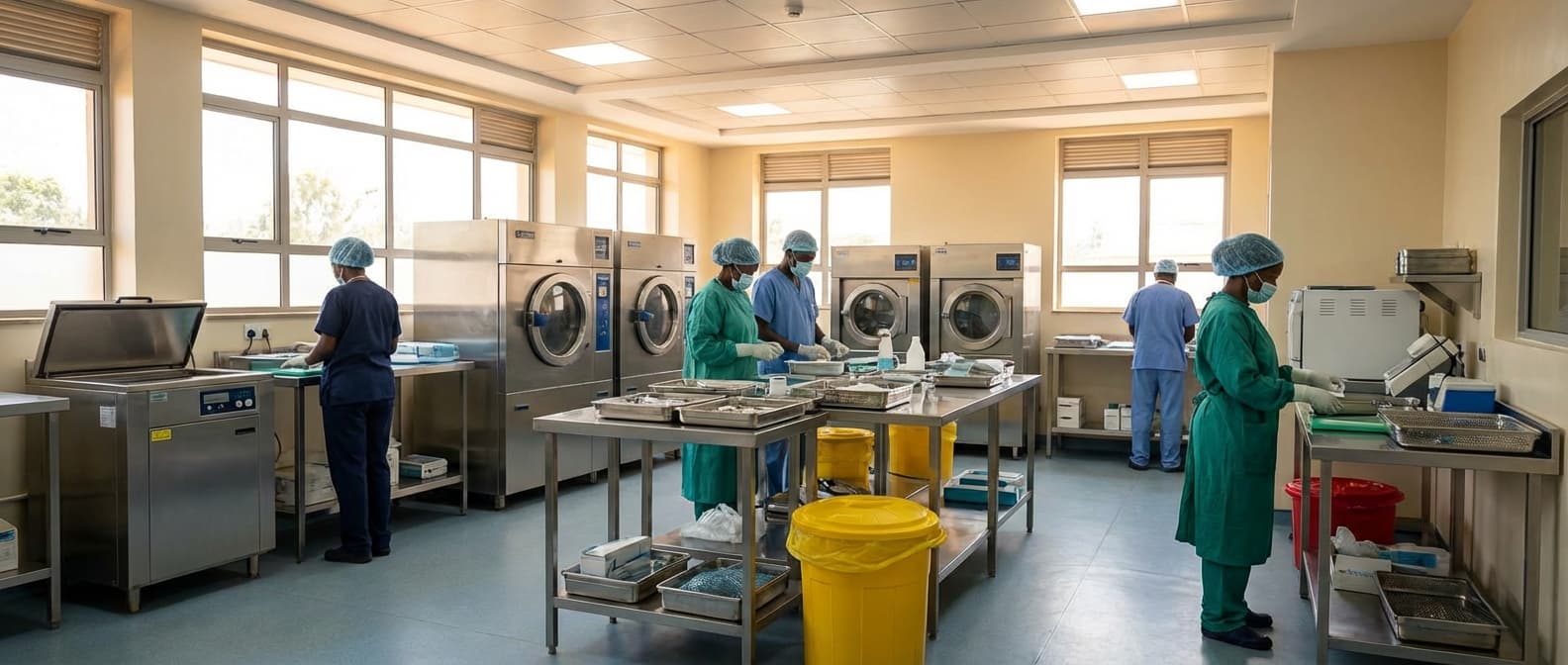
Endoscope Reprocessing Equipment Support Service in Guinea
Engineering Excellence & Technical Support
Endoscope Reprocessing Equipment Support Service High-standard technical execution following OEM protocols and local regulatory frameworks.
Enhanced Reprocessing Throughput
Our expert technicians in Guinea ensure your endoscope reprocessing equipment operates at peak efficiency, minimizing downtime and maximizing the number of scopes processed per day. This directly contributes to improved patient care delivery and reduced operational bottlenecks.
Guaranteed Regulatory Compliance
We provide comprehensive technical support and preventative maintenance for your endoscope reprocessing equipment, ensuring strict adherence to Guinea's healthcare regulations and international sterilization standards. Our services guarantee the safety and efficacy of your reprocessing cycles.
Advanced Diagnostic & Rapid Resolution
Leveraging cutting-edge diagnostic tools and extensive expertise, our Guinean-based support team swiftly identifies and resolves technical issues with your endoscope reprocessing equipment. We prioritize rapid response times to minimize disruption and maintain the integrity of your infection control protocols.
What Is Endoscope Reprocessing Equipment Support Service In Guinea?
Endoscope reprocessing equipment support service in Guinea refers to the provision of specialized technical assistance, maintenance, repair, and calibration for automated and semi-automated equipment used in the cleaning, disinfection, and sterilization of endoscopes. This service is crucial for ensuring the safety and efficacy of endoscopic procedures by preventing the transmission of healthcare-associated infections (HAAs). Guinea, like many nations, relies on these advanced systems to manage the complex reprocessing cycles required for reusable medical devices such as flexible endoscopes, rigid endoscopes, and associated accessories. The service encompasses a range of activities designed to maintain optimal operational status, regulatory compliance, and extended equipment lifespan.
| Stakeholder Group | Reasons for Need | Typical Use Cases |
|---|---|---|
| Hospitals and Clinics (Public & Private) | Ensuring patient safety by preventing HAA transmission; meeting infection control standards; maintaining operational efficiency of endoscopy suites; compliance with national healthcare regulations. | Routine servicing of automated endoscope reprocessors (AERs); repair of washer-disinfectors; calibration of chemical dosing systems; validation of disinfection cycles post-repair; training on new equipment features. |
| Surgical Centers | Maintaining the integrity and functionality of shared endoscopic instruments; minimizing turnaround time for procedures; adhering to stringent hygiene protocols. | Regular maintenance of cleaning stations; troubleshooting of drying systems; replacement of filters in flushing devices; annual equipment validation. |
| Government Health Agencies | Overseeing healthcare quality and safety standards; ensuring availability of critical medical equipment services; supporting the national health infrastructure. | Establishing service contracts for public hospitals; monitoring equipment uptime and maintenance records; facilitating access to specialized repair expertise. |
| Medical Equipment Suppliers/Distributors | Fulfilling warranty obligations; providing post-sales support to their client base; maintaining customer satisfaction and reputation. | Performing warranty repairs on newly installed reprocessors; offering extended service agreements; providing spare parts for equipment sold. |
| Biomedical Engineering Departments | Managing the lifecycle of medical equipment; ensuring uptime and reliability; cost-effective maintenance strategies; in-house technical expertise development. | Performing routine preventive maintenance; conducting basic troubleshooting and minor repairs; coordinating external support for complex issues; managing spare parts inventory. |
Key Components of Endoscope Reprocessing Equipment Support Service in Guinea:
- Preventive Maintenance: Scheduled inspections, cleaning, lubrication, and component replacement to avert potential failures and ensure consistent performance.
- Corrective Maintenance and Repair: On-site or depot repair services for equipment malfunctions, including diagnostics, parts replacement, and functional testing.
- Calibration and Validation: Regular calibration of critical parameters (e.g., temperature, flow rates, chemical concentrations) and validation of disinfection/sterilization cycles to meet established standards and regulatory requirements.
- Technical Training and Consultation: Training for hospital biomedical engineers, sterile processing technicians, and clinical staff on the proper operation, maintenance, and troubleshooting of endoscope reprocessing equipment.
- Parts and Consumables Supply: Provision of genuine spare parts, filters, seals, and specialized cleaning/disinfection agents compatible with the equipment.
- Documentation and Compliance Support: Assistance with maintaining service records, calibration certificates, and documentation to support regulatory audits and accreditation processes.
- Software Updates and Upgrades: Installation of firmware updates and software upgrades to enhance functionality, security, and adherence to evolving guidelines.
- Emergency Support: Rapid response services for urgent equipment failures to minimize downtime and disruption to patient care.
Who Needs Endoscope Reprocessing Equipment Support Service In Guinea?
Endoscope reprocessing equipment support services are crucial for maintaining the safety and efficiency of medical procedures involving endoscopes in Guinea. These services ensure that vital equipment for diagnosis and minimally invasive surgery is consistently functional, sterile, and compliant with international standards. This is particularly important in a healthcare landscape where access to advanced medical technology is growing, and the demand for safe and effective patient care is paramount.
| Customer Type | Key Departments Involved | Specific Needs Addressed by Support Service |
|---|---|---|
| Public Hospitals | Gastroenterology, Pulmonology, Urology, Surgery, Central Sterile Supply Department (CSSD) | Preventative maintenance to minimize downtime, emergency repairs for critical equipment, training for CSSD staff on operation and minor troubleshooting, calibration and validation services to ensure sterility efficacy, spare parts management. |
| Private Hospitals & Clinics | Endoscopy Suites, Surgical Departments, CSSD/Sterilization Units | Similar to public hospitals, with a potential emphasis on rapid response times due to higher patient throughput and profitability tied to equipment availability. Service contracts for predictable costs and uptime guarantees. Software updates and integration support. |
| Specialized Diagnostic Centers | Gastroenterology Units, Respiratory Clinics, Urology Centers | Focus on high-volume reprocessing for specific procedures. Ensuring accuracy of disinfection cycles, compliance with regulatory requirements, and longevity of specialized reprocessing machines. |
| Medical Training Institutions | Simulation Labs, Clinical Departments | Ensuring training equipment is functional and safe for students. Support for setting up and maintaining demonstration reprocessing units. Providing training on best practices in reprocessing. |
| Government Health Ministries | Procurement and Technical Oversight Departments | Developing standards for reprocessing equipment, ensuring compliance in public facilities, managing tenders for support services, advising on technology upgrades and maintenance strategies for national healthcare infrastructure. |
| NGOs and Humanitarian Organizations | Mobile Clinics, Field Hospitals, Refugee Camp Healthcare Facilities | Robust and reliable support for equipment in potentially remote or challenging environments. Training local staff on basic maintenance and troubleshooting. Ensuring equipment operates effectively with limited local infrastructure. Emergency deployment of technicians. |
Target Customers and Departments Requiring Endoscope Reprocessing Equipment Support Service in Guinea
- Hospitals (Public and Private)
- Specialized Clinics (e.g., Gastroenterology, Pulmonology, Urology, Surgery)
- Diagnostic Centers
- Medical Training Institutions with Clinical Affiliations
- Government Health Ministries (for oversight and public facilities)
- International NGOs and Humanitarian Organizations Operating Healthcare Facilities
Endoscope Reprocessing Equipment Support Service Process In Guinea
This document outlines the Endoscope Reprocessing Equipment Support Service Process in Guinea, detailing the workflow from initial inquiry to the final execution of the service. The process is designed to ensure efficient and effective support for critical healthcare equipment used in endoscopic procedures.
| Step | Description | Key Activities | Responsible Party | Deliverables | Timelines (Indicative) |
|---|---|---|---|---|---|
| The client (healthcare facility in Guinea) initiates a request for support or maintenance for their endoscope reprocessing equipment. | Contacting the service provider via phone, email, or dedicated portal. Providing details of the equipment, nature of the issue (malfunction, preventive maintenance), and urgency. | Healthcare Facility | Service Request Form/Ticket | Immediate upon realization of need |
| The service provider acknowledges the request and performs an initial evaluation to understand the problem and determine the necessary course of action. | Gathering detailed information about the equipment model, serial number, error codes, and symptoms. Remote troubleshooting (if applicable). Scheduling an on-site visit if remote diagnosis is insufficient. | Service Provider (Technical Support Team) | Initial Assessment Report, Preliminary Diagnosis | Within 24-48 hours of inquiry |
| Based on the diagnosis, the service provider provides a detailed quotation for the required services, parts, and labor. Upon agreement, a formal service contract is established. | Preparing a comprehensive quote including parts cost, labor charges, travel expenses, and estimated service duration. Presenting the quote to the client. Signing of the Service Agreement/Work Order. | Service Provider (Commercial/Sales Team), Healthcare Facility | Quotation, Signed Service Agreement/Work Order | Within 48-72 hours of initial assessment |
| Necessary spare parts and specialized tools are procured, and the service technician is scheduled for the on-site visit. | Ordering genuine or approved spare parts from manufacturers or authorized distributors. Arranging travel and accommodation for the service technician. Ensuring all required tools and documentation are ready. | Service Provider (Logistics & Technical Team) | Procured Parts, Scheduled Technician Visit | Varies based on parts availability and travel logistics (typically 3-7 days) |
| The qualified service technician travels to the healthcare facility in Guinea to perform the necessary repairs or maintenance. | Performing diagnostic checks, disassembling and reassembling equipment, replacing faulty parts, cleaning and lubricating components, and adhering to safety protocols. | Service Provider (Field Service Technician) | Completed Repair/Maintenance Work | As per agreed schedule (typically 1-3 days depending on complexity) |
| After the service is completed, the equipment is thoroughly tested to ensure it is functioning correctly and meets all performance standards. | Running operational tests, calibration checks, performance validation using simulated cycles, and ensuring compliance with reprocessing standards. | Service Provider (Field Service Technician), Healthcare Facility (User Representative) | Test Results Report, Validation Documentation | Concurrent with or immediately after service execution |
| The service is officially concluded, and the equipment is handed back to the client with all necessary documentation. | Providing the client with a service completion report, including details of work performed, parts replaced, and test results. Demonstrating the operational status of the equipment. Obtaining client sign-off. | Service Provider (Field Service Technician), Healthcare Facility | Service Completion Report, Signed Handover Form | End of service execution |
| Invoicing for the services rendered is issued, and a follow-up is conducted to ensure client satisfaction and address any lingering concerns. | Issuing the final invoice based on the service agreement and actual work performed. Following up with the client for feedback on the service quality. Offering post-service support or training if needed. | Service Provider (Finance & Customer Relations Team) | Final Invoice, Client Feedback, Post-Service Support | Within 5-10 business days of completion |
Endoscope Reprocessing Equipment Support Service Process Workflow
- Inquiry & Service Request
- Initial Assessment & Diagnosis
- Quotation & Service Agreement
- Parts & Resource Procurement
- On-site Service Execution
- Testing & Validation
- Completion & Handover
- Billing & Follow-up
Endoscope Reprocessing Equipment Support Service Cost In Guinea
Providing support services for endoscope reprocessing equipment in Guinea involves a range of costs influenced by several critical factors. These factors dictate the overall price, from routine maintenance to complex repairs and the installation of new systems. Understanding these elements is crucial for healthcare facilities to budget effectively and ensure the continuous, safe operation of their vital endoscopic equipment.
The pricing structure for endoscope reprocessing equipment support services in Guinea is not standardized and can vary significantly between service providers. However, several key pricing factors consistently influence the cost. These include:
- Type and Complexity of Equipment: The specific make, model, and technological sophistication of the endoscope reprocessing equipment are primary cost drivers. High-end automated washer-disinfectors, complex sterilization units, and integrated tracking systems will naturally incur higher service fees than simpler, manual processes or older generation equipment due to specialized parts, diagnostic tools, and technician expertise required.
- Service Level Agreements (SLAs): Service contracts are a significant determinant of cost. Facilities can opt for various SLAs, ranging from basic on-demand repair services to comprehensive preventative maintenance packages with guaranteed response times, remote diagnostics, and extended warranties. More comprehensive SLAs offering higher levels of uptime and proactive support will command higher prices.
- Frequency and Scope of Service: The planned maintenance schedule (e.g., annual, bi-annual, quarterly) and the scope of work planned (e.g., routine cleaning, calibration, parts replacement, software updates) directly impact the overall cost. Emergency or ad-hoc repairs outside of an SLA are typically more expensive per incident.
- Parts and Consumables: The cost of replacement parts, specialized cleaning agents, filters, and other consumables necessary for reprocessing and equipment maintenance is a direct cost. The availability and origin of these parts (e.g., original manufacturer parts vs. third-party alternatives) can also influence pricing.
- Technician Expertise and Travel: The qualifications, certifications, and experience of the service technicians play a role. Highly specialized technicians may command higher rates. Additionally, travel and accommodation costs for technicians, especially if they need to travel to remote areas of Guinea, will be factored into the service fee.
- Geographic Location and Accessibility: The specific location of the healthcare facility within Guinea can affect costs due to logistical challenges, transportation expenses, and potentially the availability of local service providers. Facilities in major urban centers like Conakry might have more competitive pricing due to a higher density of service options compared to more remote regions.
- Brand and Manufacturer: Services provided directly by the original equipment manufacturer (OEM) or their authorized distributors are often more expensive than those offered by independent third-party service providers. However, OEM services may offer greater assurance of genuine parts and specialized knowledge.
- Urgency of Service: Emergency call-outs or requests for immediate service outside of standard business hours will typically incur premium charges. Response time guarantees within SLAs are a key factor here.
- Installation and Training: The initial installation of new reprocessing equipment and the training of staff on its operation and basic maintenance also represent a significant cost component that can be bundled with support services or billed separately.
Given these factors, providing precise price ranges in Guinean Francs (GNF) is challenging due to market fluctuations, the bespoke nature of service contracts, and the limited public availability of such specific pricing data. However, based on general market understanding of similar technical support services in West Africa, one can infer potential ranges.
Estimated Price Ranges (Illustrative and Subject to Significant Variation):
- Routine Preventative Maintenance (Annual Contract): This could range from 1,000,000 GNF to 5,000,000 GNF or more, depending on the size and complexity of the equipment fleet and the comprehensiveness of the service plan.
- On-Demand Repair Services (per incident): This can be highly variable, potentially ranging from 200,000 GNF to 1,500,000 GNF for a basic service call, excluding the cost of parts. More complex repairs could easily exceed this.
- Comprehensive Service Level Agreements (Annual): For facilities requiring high uptime guarantees, proactive monitoring, and rapid response, annual contracts could be in the range of 5,000,000 GNF to 20,000,000 GNF or significantly higher for large hospital networks or advanced equipment.
- Spare Parts: Individual spare parts can range from 50,000 GNF for small components to several million GNF for major parts like pumps, control boards, or heating elements.
- Emergency Call-out Fee: This might add 100,000 GNF to 500,000 GNF on top of the standard service charge, particularly outside of business hours.
It is imperative for healthcare institutions in Guinea to solicit detailed quotes from multiple reputable service providers, clearly outlining their specific equipment, desired service levels, and expected response times to obtain accurate and competitive pricing. Building strong relationships with trusted service partners is key to ensuring the reliable and cost-effective maintenance of critical endoscope reprocessing equipment.
| Service Type | Estimated Price Range (GNF - Illustrative) |
|---|---|
| Routine Preventative Maintenance (Annual Contract) | 1,000,000 - 5,000,000+ |
| On-Demand Repair Services (per incident, excluding parts) | 200,000 - 1,500,000+ |
| Comprehensive Service Level Agreements (Annual) | 5,000,000 - 20,000,000+ |
| Spare Parts (per item, variable) | 50,000 - Several Million |
| Emergency Call-out Fee (additional) | 100,000 - 500,000 |
Key Factors Influencing Endoscope Reprocessing Equipment Support Service Costs in Guinea
- Type and Complexity of Equipment
- Service Level Agreements (SLAs)
- Frequency and Scope of Service
- Parts and Consumables
- Technician Expertise and Travel
- Geographic Location and Accessibility
- Brand and Manufacturer
- Urgency of Service
- Installation and Training
Affordable Endoscope Reprocessing Equipment Support Service Options
Maintaining a reliable and compliant endoscope reprocessing program is critical for patient safety and operational efficiency. However, the cost of equipment maintenance and repair can be a significant budgetary concern for healthcare facilities. This document outlines affordable endoscope reprocessing equipment support service options, focusing on value bundles and cost-saving strategies to optimize your investment.
| Service Type | Description | Potential Cost Savings |
|---|---|---|
| Manufacturer-Provided Service Contracts | Comprehensive contracts offered by the original equipment manufacturer (OEM). Often include PM, CM, parts, and priority response. Typically the most expensive option but offers the highest level of assurance. | Reduces emergency repair costs; can include discounted parts; predictable budgeting. Savings are often indirect through minimized downtime and avoidance of catastrophic failures. |
| Third-Party Independent Service Organizations (ISOs) | Specialized companies that service equipment from multiple manufacturers. Can offer more flexible contracts and potentially lower prices than OEMs. | Often lower labor rates and parts costs compared to OEMs; can bundle services for multiple equipment types; competitive pricing often drives down overall costs. |
| Hybrid Service Models | A combination of in-house capabilities and outsourced support. For example, performing basic PM internally and contracting out complex repairs. | Leverages existing staff and resources; reduces reliance on external vendors for routine tasks; significant cost savings if internal staff are well-trained and equipped. |
| Parts Procurement Strategies | Sourcing genuine OEM parts, approved aftermarket parts, or even refurbished parts. Establishing relationships with multiple suppliers. | Aftermarket and refurbished parts can be significantly cheaper than OEM; bulk purchasing discounts; exploring local suppliers can reduce shipping costs and lead times. |
| Service Level Agreements (SLAs) Negotiation | Clearly defining response times, resolution times, and uptime guarantees within contracts. | Guaranteed uptime reduces lost productivity and patient care delays; well-defined SLAs prevent scope creep and unexpected charges. |
Understanding Endoscope Reprocessing Equipment Support Services
- {"title":"Why is Endoscope Reprocessing Equipment Support Crucial?","description":"Ensuring the proper functioning of endoscope reprocessing equipment (e.g., automated endoscope reprocessors - AERs, washer-disinfectors, drying and storage cabinets) is paramount for: \n* Patient Safety: Inadequate reprocessing can lead to the transmission of infections. \n* Regulatory Compliance: Adherence to guidelines from bodies like the CDC, AAMI, and FDA is mandatory. \n* Equipment Longevity: Regular maintenance prevents costly breakdowns and extends the lifespan of your valuable assets.\n* Operational Continuity: Minimizing downtime ensures your endoscopy services can operate without interruption."}
- {"title":"Key Components of Endoscope Reprocessing Equipment Support","description":"Support services typically encompass:\n* Preventive Maintenance (PM): Scheduled inspections, cleaning, calibration, and replacement of wear-and-tear parts to prevent issues before they arise.\n* Corrective Maintenance (CM)/Repair Services: On-demand service for unexpected equipment malfunctions and breakdowns.\n* Parts and Consumables: Access to genuine or equivalent replacement parts and necessary chemicals.\n* Technical Support: Access to expert advice and troubleshooting assistance.\n* Training: For your in-house staff on proper equipment operation and basic maintenance."}
Verified Providers In Guinea
When seeking healthcare in Guinea, identifying verified providers is paramount for ensuring quality, safety, and ethical medical practices. Franance Health stands out as a beacon of trust in this regard. Their rigorous credentialing process for healthcare professionals and institutions sets them apart, offering patients peace of mind and confidence in the care they receive. This commitment to verification means that all listed providers have met stringent standards, encompassing qualifications, experience, adherence to ethical guidelines, and a proven track record of patient satisfaction. Choosing Franance Health-verified providers is not just about finding a doctor or clinic; it's about opting for a higher caliber of healthcare, characterized by expertise, reliability, and a patient-centered approach.
| Credentialing Aspect | Franance Health's Approach | Patient Benefit |
|---|---|---|
| Professional Licensing & Certifications | Confirms validity and current standing of all medical licenses and board certifications. | Ensures providers are legally qualified and have met recognized professional benchmarks. |
| Educational Background & Training | Verifies medical school diplomas, residency completion, and specialized training. | Confirms a strong foundation of medical knowledge and specialized skills. |
| Clinical Experience & Competence | Assesses years of practice, surgical logs, and case review where applicable. | Guarantees hands-on experience and proven ability to manage diverse medical conditions. |
| Ethical Conduct & Disciplinary History | Screens for any past malpractice suits, ethical violations, or disciplinary actions. | Protects patients from providers with a history of misconduct. |
| Patient Feedback & Reputation | Gathers insights from previous patients and professional references. | Provides an indicator of patient satisfaction and a provider's interpersonal skills. |
| Continuing Medical Education (CME) | Ensures providers are actively engaged in ongoing learning and staying updated with medical advancements. | Confirms that providers are practicing with the latest knowledge and techniques. |
Why Franance Health Credentials Matter
- Rigorous Vetting Process: Franance Health employs a multi-stage verification system that scrutinizes professional licenses, educational backgrounds, clinical experience, and peer reviews.
- Commitment to Ethical Standards: Providers are vetted for their adherence to ethical medical practices and patient rights, ensuring compassionate and respectful care.
- Continuous Monitoring: Franance Health actively monitors its network to maintain the highest standards, addressing any concerns or emerging issues promptly.
- Enhanced Patient Safety: Verification significantly reduces the risk of encountering unqualified or unethical practitioners, prioritizing patient well-being.
- Access to Expertise: The credentialing process identifies specialists and practitioners with proven expertise in various medical fields.
- Building Trust and Transparency: Franance Health's transparent approach to verification builds essential trust between patients and healthcare providers.
- International Recognition: Their credentials align with international healthcare standards, offering a reliable benchmark for quality.
Scope Of Work For Endoscope Reprocessing Equipment Support Service
This Scope of Work (SOW) outlines the requirements for Endoscope Reprocessing Equipment Support Services. This service aims to ensure the optimal performance, reliability, and regulatory compliance of all endoscope reprocessing equipment within the healthcare facility. This includes preventative maintenance, corrective maintenance, calibration, validation, and technical support.
| Equipment Type | Make/Model | Minimum Service Interval (PM) | Calibration Frequency | Validation Requirements | Relevant Standards |
|---|---|---|---|---|---|
| Automated Endoscope Reprocessor (AER) | Manufacturer A, Model X / Manufacturer B, Model Y | Quarterly | Not applicable (internal checks) | IQ/OQ/PQ upon installation and significant repair | AAMI ST91, FDA Guidance |
| Ultrasonic Cleaner | Manufacturer C, Model Z | Semi-annually | Not applicable (internal checks) | IQ/OQ upon installation | AAMI ST91 |
| Leak Tester | Manufacturer D, Model A | Annually | Annually | IQ/OQ upon installation | AAMI ST91 |
| Drying/Storage Cabinet | Manufacturer E, Model B | Annually | Not applicable | IQ/OQ upon installation | AAMI ST91 |
| Endoscope Light Source | Manufacturer F, Model C | Annually | Not applicable | Not applicable | |
| Endoscope Camera Head | Manufacturer G, Model D | Annually | Not applicable | Not applicable | |
| Insufflator | Manufacturer H, Model E | Annually | Not applicable | Not applicable | |
| Video Processor | Manufacturer I, Model F | Annually | Not applicable | Not applicable |
Technical Deliverables
- Preventative Maintenance (PM) Reports for each scheduled service.
- Corrective Maintenance (CM) Reports detailing issues, resolutions, and parts replaced.
- Calibration Certificates for all instruments and equipment requiring calibration, traceable to national standards.
- Validation Reports (IQ/OQ/PQ) for new installations and after significant repairs or modifications, ensuring equipment meets intended performance specifications.
- Service Logs documenting all activities performed on each piece of equipment.
- Spare Parts Inventory Management Plan and periodic inventory reports.
- User Training Materials and session summaries for facility staff on equipment operation and basic troubleshooting.
- Technical Support Logs detailing inquiries, responses, and resolutions.
- Regular performance review meetings with facility stakeholders.
- Compliance documentation demonstrating adherence to relevant regulatory standards (e.g., FDA, AAMI, ISO).
Service Level Agreement For Endoscope Reprocessing Equipment Support Service
This Service Level Agreement (SLA) outlines the guaranteed response times and uptime for the support service of endoscope reprocessing equipment. It is designed to ensure minimal disruption to clinical workflows and maintain the highest standards of patient safety and infection control.
| Service Level | Response Time (Critical Issue) | Response Time (High Priority Issue) | Response Time (Standard Issue) | Resolution Time (Target) | Uptime Guarantee |
|---|---|---|---|---|---|
| 24/7 Support | 1 Hour | 2 Hours | 4 Business Hours | 8 Business Hours (for standard issues) | 98% (monthly average) |
| Standard Business Hours Support (Mon-Fri, 8 AM - 6 PM) | 2 Hours | 4 Hours | 8 Business Hours | 2 Business Days (for standard issues) | 97% (monthly average) |
Key Performance Indicators (KPIs)
- The following KPIs define the service commitment for endoscope reprocessing equipment support.
- Response Time: The maximum time allowed for the service provider to acknowledge a reported issue and initiate troubleshooting. This is measured from the time of official notification by the client.
- Resolution Time: The maximum time allowed for the service provider to resolve a reported issue, or provide a clear plan for resolution, depending on the complexity.
- Uptime Guarantee: The minimum percentage of time the endoscope reprocessing equipment is expected to be operational and functional under normal operating conditions.
Frequently Asked Questions

Ready when you are
Let's scope your Endoscope Reprocessing Equipment Support Service in Guinea project in Guinea.

Scaling healthcare logistics and technical systems across the entire continent.