
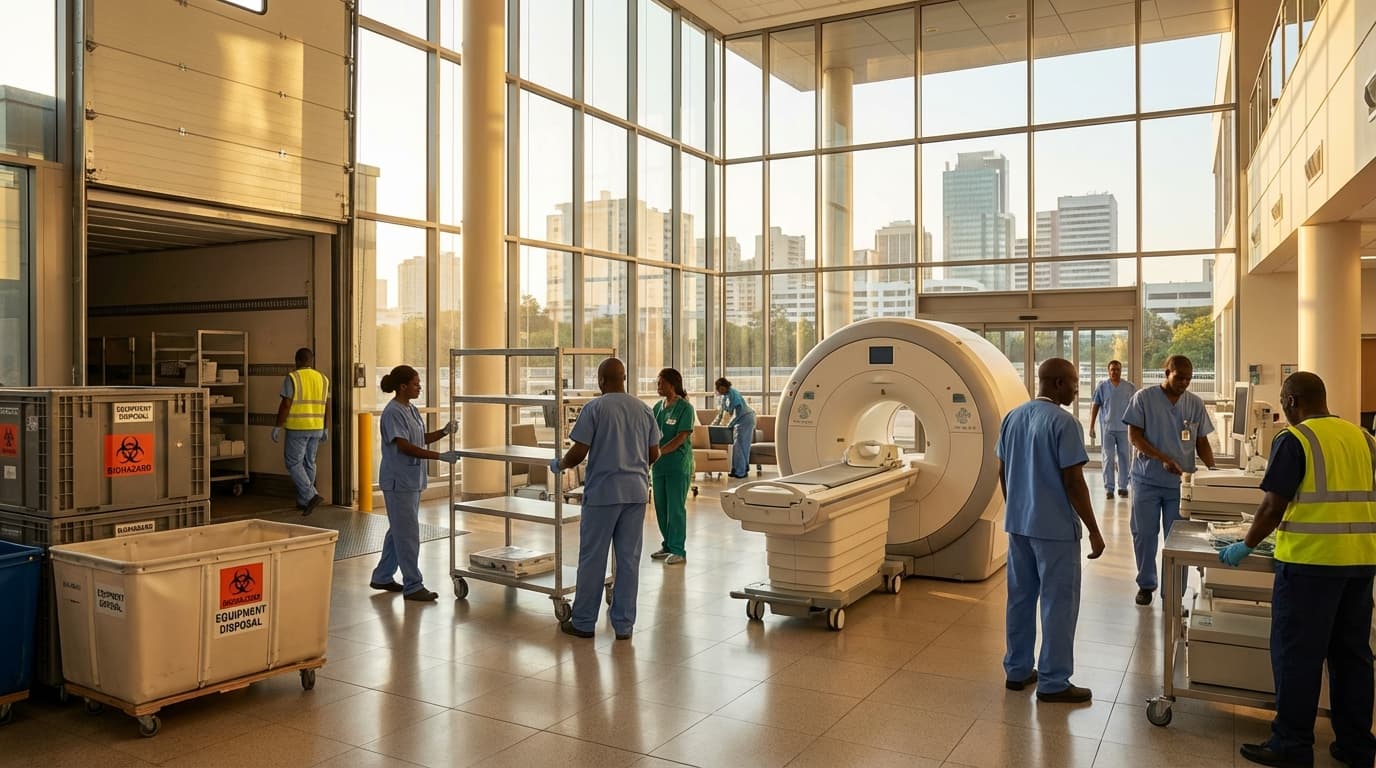
Medical Equipment Relocation Service (Move & Re-Install) in Guinea
Engineering Excellence & Technical Support
Medical Equipment Relocation Service (Move & Re-Install) High-standard technical execution following OEM protocols and local regulatory frameworks.
Expert Medical Equipment Transport
We employ specialized, climate-controlled vehicles and trained personnel to ensure the safe and secure transit of sensitive medical devices across Guinea, minimizing transit risks and preserving equipment integrity.
Certified Re-Installation & Calibration
Our certified technicians are proficient in the re-installation and precise calibration of a wide range of medical equipment, adhering to manufacturer specifications and local regulatory standards for immediate operational readiness.
Optimized Logistics & Risk Mitigation
Leveraging our deep understanding of Guinean infrastructure and logistics, we meticulously plan each relocation, incorporating risk mitigation strategies for seamless project completion and minimal disruption to your healthcare services.
What Is Medical Equipment Relocation Service (Move & Re-install) In Guinea?
Medical Equipment Relocation Service (Move & Re-Install) in Guinea refers to the specialized process of physically transporting medical devices from one location to another within Guinea, followed by their expert reinstallation and functional verification. This comprehensive service ensures that sensitive and often complex medical apparatus are handled, moved, and recommissioned with minimal disruption to operational continuity and patient care. It encompasses all logistical, technical, and regulatory considerations associated with the transfer of such equipment, from initial site assessment to final operational readiness in the new environment.
| Who Needs This Service? | Typical Use Cases | ||||||||
|---|---|---|---|---|---|---|---|---|---|
| Hospitals and Clinics (public and private) undergoing renovations, expansions, or relocations. | Transfer of equipment within a hospital campus (e.g., from one department to another). | Opening of new healthcare facilities or satellite clinics. | Upgrading or replacing existing medical infrastructure. | Relocation of specialized medical units (e.g., mobile diagnostic units, surgical theaters). | Healthcare providers responding to emergency situations requiring the rapid deployment of medical facilities. | Research institutions or universities requiring the movement of laboratory diagnostic and imaging equipment. | Government health agencies managing national medical asset distribution. | International aid organizations establishing or relocating medical infrastructure in remote or underserved areas. | Sale or lease of medical equipment requiring transfer between facilities. |
| Imaging Equipment: MRI scanners, CT scanners, X-ray machines, Ultrasound devices. | Surgical Equipment: Operating tables, surgical lights, anesthesia machines, electrosurgical units. | Laboratory Equipment: Analyzers, centrifuges, microscopes, incubators. | Life Support Systems: Ventilators, incubators, dialysis machines. | Sterilization Equipment: Autoclaves. | Diagnostic Equipment: ECG machines, patient monitors. | Pharmacy Automation: Automated dispensing cabinets. |
Key Components of Medical Equipment Relocation Service (Move & Re-Install):
- Site Assessment and Planning: Pre-relocation evaluation of both origin and destination sites to identify logistical challenges, power/utility requirements, space constraints, and necessary infrastructure modifications.
- De-installation and Disconnection: Professional disassembly and disconnection of medical equipment by trained technicians, adhering to manufacturer specifications and safety protocols. This includes power, data, and pneumatic lines.
- Specialized Packaging and Transport: Utilization of custom-built crates, shock-absorbent materials, and climate-controlled vehicles to protect sensitive medical devices during transit. Specialized rigging and lifting equipment may be employed for heavy or oversized items.
- Transportation: Secure and compliant transit of equipment within Guinea, often requiring specialized permits and routes for oversized or hazardous materials.
- Re-installation and Re-connection: Precise reassembly and reconnection of equipment at the destination site, ensuring all components are correctly aligned and integrated.
- Calibration and Performance Testing: Rigorous calibration of all re-installed equipment to manufacturer specifications. Comprehensive functional testing and performance verification to confirm operational integrity.
- Technical Documentation and Handover: Provision of updated documentation, test reports, and training for local personnel on the operation and maintenance of the re-installed equipment.
- Regulatory Compliance Checks: Ensuring that the re-installed equipment meets all relevant Guinean health and safety regulations.
Who Needs Medical Equipment Relocation Service (Move & Re-install) In Guinea?
Medical equipment relocation and re-installation services are essential for a wide range of healthcare facilities and organizations operating in Guinea. These services ensure the safe, efficient, and compliant transfer of sensitive medical devices, minimizing downtime and maintaining operational continuity. The target customers encompass diverse entities that either possess or utilize medical equipment and require expert handling for moves, whether it's within a single facility, between different branches, or to new locations.
| Customer Type | Key Departments Involved | Specific Relocation Needs |
|---|---|---|
| Hospitals (Public and Private) | Radiology, Cardiology, Surgery, Intensive Care Units (ICU), Operating Rooms (OR), Laboratories, Pharmacy, Rehabilitation Centers, Administration | Moving large imaging machines (MRI, CT scanners), surgical equipment, life support systems, laboratory analyzers, sterilization equipment during renovations, expansions, or facility upgrades. |
| Clinics and Medical Centers | General Practice, Specialized Clinics (e.g., dental, ophthalmology, dermatology), Treatment Rooms, Reception/Administration | Relocation of examination tables, diagnostic tools (ECG, ultrasound), sterilizers, small laboratory equipment, and administrative systems to new clinic locations or during office reconfigurations. |
| Diagnostic Laboratories | Hematology, Biochemistry, Microbiology, Pathology, Molecular Diagnostics, Phlebotomy | Careful transport of sensitive analytical instruments (e.g., spectrophotometers, centrifuges, DNA sequencers, automated analyzers), incubators, and cold storage units to prevent damage and maintain calibration. |
| Research Institutions | Biomedical Research, Clinical Trials, Pharmaceutical Research | Relocation of advanced research equipment such as microscopes, flow cytometers, mass spectrometers, bioreactors, and specialized data acquisition systems, often requiring specialized environmental controls. |
| Government Health Ministries and Agencies | Public Health Programs, Disease Control Centers, Health Infrastructure Development | Coordinating the relocation of medical equipment for public health initiatives, establishing new health posts, or equipping facilities in remote areas. Oversight and logistical support for large-scale equipment transfers. |
| Non-Governmental Organizations (NGOs) | Field Hospitals, Mobile Clinics, Health Education Programs, Disease Prevention Initiatives | Transporting and setting up medical equipment in challenging or temporary locations, including remote villages or disaster-stricken areas. Ensuring equipment is operational for immediate use. |
| International Aid Organizations | Emergency Medical Response, Long-Term Development Projects, Humanitarian Aid | Deploying medical equipment to support crisis response, building or renovating healthcare infrastructure in developing regions, and ensuring the effective transfer and installation of donated medical assets. |
| Medical Equipment Manufacturers and Distributors | Sales, Technical Support, Service Departments | Delivering and installing new equipment at customer sites, moving equipment for servicing or upgrades, and managing the logistics of equipment returns or exchanges. |
| Specialized Medical Facilities (e.g., Imaging Centers, Surgical Centers) | Radiology, Interventional Radiology, Anesthesiology, Surgical Suites, Post-Anesthesia Care Units (PACU) | Precise relocation of high-precision imaging systems, surgical robots, anesthesia machines, patient monitoring systems, and laser equipment with minimal disruption to specialized services. |
| Educational Institutions with Medical Training Programs | Simulation Labs, Anatomy Labs, Pathology Labs, Nursing Schools, Medical Schools | Moving anatomical models, surgical simulators, laboratory equipment for training purposes, and general medical supplies to new or updated training facilities. |
Target Customers and Departments Requiring Medical Equipment Relocation Services in Guinea:
- Hospitals (Public and Private)
- Clinics and Medical Centers
- Diagnostic Laboratories
- Research Institutions
- Government Health Ministries and Agencies
- Non-Governmental Organizations (NGOs) involved in healthcare
- International Aid Organizations
- Medical Equipment Manufacturers and Distributors (for installations and relocations)
- Specialized Medical Facilities (e.g., imaging centers, surgical centers)
- Educational Institutions with medical training programs
Medical Equipment Relocation Service (Move & Re-install) Process In Guinea
This document outlines the comprehensive workflow for medical equipment relocation and re-installation services in Guinea, ensuring a smooth and secure transition for healthcare facilities. The process begins with an initial inquiry and concludes with the successful handover of the re-installed equipment.
| Stage | Description | Key Activities | Responsible Parties | Deliverables |
|---|---|---|---|---|
| Inquiry & Initial Consultation | The client expresses interest in medical equipment relocation services. | Receive inquiry, schedule initial discussion, understand client's needs, equipment details, and relocation scope. | Client, Relocation Service Provider (RSP) | Understanding of client requirements, preliminary equipment list, and relocation scope. |
| Site Assessment & Planning | On-site evaluation of both origin and destination locations. | Detailed inspection of equipment, access routes, building infrastructure, power requirements, and safety protocols at both sites. Develop a detailed relocation plan. | RSP (Technical team, Project Manager) | Detailed site survey report, risk assessment, finalized relocation plan, equipment inventory, and special handling requirements. |
| Quotation & Agreement | Formal proposal and contractual agreement for the service. | Prepare a detailed quotation based on the site assessment, including all costs. Finalize terms and conditions, and sign a service agreement. | RSP, Client | Formal quotation, signed service agreement, and payment schedule. |
| Dismantling & Packing | Careful disassembly and secure packing of medical equipment. | Disassemble equipment following manufacturer guidelines, document each step, use specialized packing materials (anti-static, shock-absorbent), and label all components clearly. | RSP (Specialized technicians, packing crew) | Dismantled and securely packed equipment, detailed packing inventory, and photographic documentation. |
| Transportation & Logistics | Safe and timely transport of equipment to the destination. | Select appropriate transport vehicles (climate-controlled if necessary), plan optimal routes, ensure secure loading, and provide real-time tracking if available. | RSP (Logistics team, drivers) | Transported equipment, proof of delivery, and logistics manifest. |
| Customs Clearance & Import/Export (if applicable) | Navigating import/export regulations for international relocations. | Prepare necessary documentation (invoices, packing lists, certificates of origin), liaise with customs authorities, and handle duties and taxes. | RSP (Customs brokers, logistics team) | Cleared customs documentation, release of equipment. |
| Delivery & Unpacking | Safe arrival and careful unpacking at the new location. | Unload equipment at the designated area, inspect for any transit damage, and unpack components systematically. | RSP (Delivery crew, unpacking team) | Unpacked equipment at the destination, initial damage report. |
| Re-installation & Calibration | Proper reassembly and precise adjustment of equipment. | Reassemble equipment according to manufacturer specifications, connect to power and other utilities, and perform initial calibration based on site conditions. | RSP (Specialized technicians, engineers) | Re-installed and initial calibration of equipment. |
| Testing & Commissioning | Verifying the functionality and performance of the equipment. | Conduct comprehensive operational tests, safety checks, and performance validation to ensure equipment meets required standards and is fully functional. | RSP (Technical team, client's biomedical engineers) | Test reports, commissioning certificate, and performance validation documentation. |
| Training & Handover | Educating end-users on the re-installed equipment. | Provide training to hospital staff on the operation, basic maintenance, and safety features of the re-installed equipment. Formally hand over the equipment. | RSP (Trainers, Project Manager), Client (End-users) | Training session completion records, user manuals, and formal handover document. |
| Post-Relocation Support | Ongoing assistance after the successful relocation. | Address any post-installation queries, provide troubleshooting assistance, and offer recommendations for future maintenance. | RSP (Customer support, technical team) | Resolution of any outstanding issues, client satisfaction confirmation. |
Key Stages of Medical Equipment Relocation in Guinea
- Inquiry & Initial Consultation
- Site Assessment & Planning
- Quotation & Agreement
- Dismantling & Packing
- Transportation & Logistics
- Customs Clearance & Import/Export (if applicable)
- Delivery & Unpacking
- Re-installation & Calibration
- Testing & Commissioning
- Training & Handover
- Post-Relocation Support
Medical Equipment Relocation Service (Move & Re-install) Cost In Guinea
Relocating specialized medical equipment in Guinea, especially from one facility to another or across regions, involves intricate logistics and requires careful consideration of various factors that influence the overall cost. This service typically encompasses not just the physical transportation but also the essential steps of dismantling, secure packaging, transport, re-assembly, and recalibration at the new site. The cost can vary significantly based on the complexity of the equipment, the distance of the move, and the level of specialized handling required. Local currency, the Guinean Franc (GNF), is used for all pricing, and transparency in the breakdown of these costs is crucial for budgeting and planning.
| Equipment Category | Estimated Cost Range (GNF) |
|---|---|
| Small Medical Equipment (e.g., Exam Tables, Stethoscopes, Basic Lab Tools) | 500,000 - 2,000,000 GNF |
| Medium Medical Equipment (e.g., Ultrasound Machines, Dental Chairs, Diagnostic Analyzers) | 2,000,000 - 10,000,000 GNF |
| Large/Complex Medical Equipment (e.g., X-ray Units, Endoscopy Systems, Sterilizers) | 10,000,000 - 50,000,000 GNF |
| Very Large/Specialized Medical Equipment (e.g., MRI, CT Scanners, Linear Accelerators) | 50,000,000 - 250,000,000+ GNF |
Key Pricing Factors for Medical Equipment Relocation in Guinea
- Type and Size of Equipment: Larger, heavier, or more sensitive equipment (e.g., MRI machines, CT scanners, X-ray units, surgical robots) will incur higher costs due to specialized lifting gear, larger transport vehicles, and more extensive disassembly/reassembly procedures. Smaller items like examination tables or basic lab equipment will be less expensive.
- Dismantling and Re-assembly Complexity: Equipment requiring intricate technical dismantling and re-assembly by certified technicians will add to the labor costs. This is particularly true for high-tech diagnostic or therapeutic devices that may have delicate components and require recalibration after movement.
- Packaging and Protection: The need for specialized packaging materials (e.g., custom crates, anti-vibration padding, climate-controlled containers) to protect sensitive equipment from damage during transit will influence the price. Standard packaging is generally cheaper than bespoke solutions.
- Distance and Accessibility: The geographical distance between the origin and destination is a primary cost driver. Moving equipment within the same city will be considerably less expensive than relocating it between major cities like Conakry and Kankan, or to more remote areas. Road conditions, potential for delays, and fuel costs all play a role.
- Specialized Personnel and Expertise: The requirement for highly skilled technicians, engineers, or specialized riggers to handle the equipment will increase labor costs. Their expertise ensures safe and proper handling, minimizing the risk of damage.
- Insurance: Adequate insurance coverage for the high-value medical equipment during transit is essential and will be factored into the overall cost. The value of the equipment will directly impact the insurance premium.
- Timeliness and Urgency: If the relocation needs to be completed within a tight deadline or outside of regular working hours, rush fees may apply.
- Ancillary Services: Additional services such as site surveys, planning, waste disposal of old packaging, or temporary storage at the destination will contribute to the final price.
- Permits and Regulatory Compliance: Depending on the type of equipment and the locations involved, there might be specific permits or regulatory compliance requirements that add to the administrative and logistical costs.
Affordable Medical Equipment Relocation Service (Move & Re-install) Options
Moving sensitive and often expensive medical equipment requires specialized care and expertise. Our Affordable Medical Equipment Relocation Service offers comprehensive move and re-installation options designed to minimize downtime, ensure equipment integrity, and provide peace of mind. We understand the critical nature of your medical devices and strive to deliver cost-effective solutions without compromising on safety or quality.
| Value Bundle Name | Included Services | Target Scenario | Cost-Saving Strategies | Estimated Price Range (USD) |
|---|---|---|---|---|
| Essential Move & Re-install | Standard packing, transportation, loading/unloading, basic re-installation (plug-and-play). | Smaller clinics, single-room equipment moves, non-complex devices. | Bulk scheduling, standardized packing materials, shorter transit distances. | $500 - $2,000 per item |
| Comprehensive Care Package | Advanced crating, climate-controlled transport, on-site technician for re-installation & basic calibration, decontamination. | Mid-sized practices, multi-room equipment moves, moderately complex equipment. | Bundled services, efficient route planning, off-peak moving discounts. | $1,500 - $5,000 per item |
| Full-Service Elite Relocation | Custom crating, specialized handling equipment, climate-controlled transport, expert on-site re-installation, full calibration & testing, site preparation assistance, extended warranty on re-installation. | Hospitals, large medical centers, highly sensitive or complex imaging/surgical equipment, complete departmental moves. | Long-term contracts, customized logistics planning, dedicated project management, preventative maintenance integration. | $5,000+ per item |
| Decommission & Re-commission Only | Expert disassembly, secure packaging, transportation, and re-assembly at the new location. Calibration and testing may be separate. | Clients who have their own transportation or wish to manage it separately. | Focus on specialized labor only, reduced overhead for transport. | Varies based on equipment complexity |
Our Affordable Medical Equipment Relocation Service Includes:
- Specialized packing and crating for delicate instruments.
- Climate-controlled transportation to maintain optimal conditions.
- Experienced technicians for safe loading and unloading.
- On-site re-installation and calibration services.
- Decontamination and cleaning protocols.
- Comprehensive insurance coverage for your valuable equipment.
- Flexible scheduling to minimize disruption to your operations.
Verified Providers In Guinea
Ensuring access to reliable and high-quality healthcare is paramount in Guinea. "Verified Providers in Guinea" highlights organizations and initiatives dedicated to upholding these standards. Among these, Franance Health stands out as a leading credentialing body. Their rigorous evaluation process and commitment to excellence make them a crucial partner in identifying and promoting trustworthy healthcare services. This document details Franance Health's credentials and elucidates why choosing providers accredited by them represents the most informed and secure decision for individuals seeking healthcare in Guinea.
| Franance Health Verification Criteria | Description | Significance for Patients |
|---|---|---|
| Clinical Competency and Qualifications | Assessment of medical professionals' education, training, board certifications, and ongoing professional development. | Ensures patients are treated by highly skilled and knowledgeable doctors, nurses, and specialists. |
| Patient Safety and Infection Control | Evaluation of protocols for preventing medical errors, managing infections, and maintaining a safe clinical environment. | Minimizes risks associated with healthcare procedures and provides a secure treatment setting. |
| Ethical Standards and Professional Conduct | Review of adherence to medical ethics, patient rights, and professional codes of conduct. | Guarantees respectful, compassionate, and transparent patient care. |
| Infrastructure and Equipment Adequacy | Verification of the quality and maintenance of medical facilities, equipment, and technology. | Ensures access to appropriate diagnostic and treatment tools for effective care. |
| Patient Feedback and Satisfaction Mechanisms | Assessment of systems in place for collecting, analyzing, and acting upon patient feedback. | Demonstrates a commitment to continuous improvement based on patient experience. |
Why Franance Health Credentials Matter
- Rigorous Vetting Process: Franance Health employs a multi-faceted approach to verify providers, encompassing clinical expertise, adherence to ethical practices, and patient safety protocols.
- Commitment to Quality: Accreditation signifies a provider's dedication to meeting and exceeding established healthcare quality benchmarks.
- Enhanced Patient Trust: Choosing a Franance Health-verified provider offers peace of mind, assuring patients they are receiving care from reputable and qualified professionals.
- Promotes Best Practices: The credentialing process encourages healthcare facilities to adopt and maintain the highest standards of care and operational efficiency.
- International Recognition: Franance Health's standards often align with international best practices, making verified providers attractive for both local and international patients.
Scope Of Work For Medical Equipment Relocation Service (Move & Re-install)
This Scope of Work (SOW) outlines the requirements for the relocation and re-installation of medical equipment. This document defines the technical deliverables and standard specifications to ensure a safe, efficient, and compliant transfer of equipment from the original site to the new facility.
| Phase | Activities | Technical Deliverables | Standard Specifications/Requirements |
|---|---|---|---|
| Phase 1: Planning & Preparation | Site Assessment & Survey | Detailed relocation plan, including equipment inventory, floor plans of both sites, risk assessment report. | Compliance with HIPAA, OSHA, and relevant local/national health and safety regulations. Manufacturer's installation manuals and guidelines. Accessibility requirements for new location. |
| Phase 1: Planning & Preparation | Equipment De-installation Planning | De-installation checklist for each equipment type, communication plan for stakeholders. | Manufacturer-recommended de-installation procedures, safety protocols for handling hazardous materials (if applicable). |
| Phase 1: Planning & Preparation | Logistics & Transportation Planning | Transportation routes, specialized vehicle requirements, insurance certificates. | Climate-controlled transport for sensitive equipment. Secure packaging materials. Valid driver's licenses and certifications for transport personnel. |
| Phase 2: De-installation | Shutdown & Disconnection | Verification of power off and disconnection, labeling of all cables and components. | Following manufacturer's recommended shutdown procedures. Safe disconnection of power, data, and medical gas lines. |
| Phase 2: De-installation | Dismantling & Packaging | Secure packaging of equipment and all accessories, detailed inventory of packed items. | Use of anti-static, shock-absorbent, and protective materials. Custom crating for fragile or oversized equipment. Proper labeling of all packages with origin, destination, and contents. |
| Phase 3: Transportation | Loading & Transit | Secure loading onto specialized transport vehicles, real-time tracking information. | Trained and certified personnel for loading/unloading. Adherence to transport weight and dimension limits. Minimization of vibration and shock during transit. |
| Phase 3: Transportation | Unloading & Placement | Careful unloading at the new facility, placement in designated staging areas. | Following pre-defined floor plans and placement instructions. Immediate inspection for any transit damage. |
| Phase 4: Re-installation | Assembly & Connection | Re-assembly of equipment, connection of all necessary utilities and peripherals. | Following manufacturer's installation procedures and diagrams. Proper connection of power, data, medical gases, and other required services. |
| Phase 4: Re-installation | Calibration & Testing | Comprehensive calibration and performance testing reports for each equipment unit. | Manufacturer-recommended calibration procedures and tolerances. Verification of all critical functions and safety features. Use of calibrated testing equipment. |
| Phase 4: Re-installation | Integration & Verification | Confirmation of successful integration with existing systems (if applicable), final functional verification. | Testing of network connectivity, PACS integration, and other relevant system interactions. Sign-off by authorized medical personnel. |
| Phase 5: Documentation & Handover | Final Documentation | Complete handover package including: updated inventory list, de-installation/re-installation reports, calibration certificates, testing results, operator manuals, and any warranty information. | All documentation must be clear, concise, and easily accessible. Digital and hard copy formats as requested. |
| Phase 5: Documentation & Handover | Client Sign-off | Formal acceptance and sign-off from the client representative. | Confirmation that all objectives have been met and equipment is fully functional and operational. |
Project Objectives
- To successfully relocate specified medical equipment from the current location to the new designated facility.
- To ensure the integrity and functionality of all relocated equipment.
- To re-install and calibrate equipment according to manufacturer specifications and regulatory requirements.
- To minimize downtime of critical medical services during the relocation process.
- To provide comprehensive documentation of the relocation and re-installation process.
Service Level Agreement For Medical Equipment Relocation Service (Move & Re-install)
This Service Level Agreement (SLA) outlines the response times and uptime guarantees for the Medical Equipment Relocation Service (Move & Re-Install). It is intended to ensure minimal disruption to patient care during equipment transfer and re-installation.
| Equipment Type | Response Time (Acknowledgement & Initial Action) | Uptime Guarantee (Post Re-Installation) |
|---|---|---|
| Critical Equipment | 1 hour (during business hours) / 2 hours (outside business hours) | 99.5% |
| Non-Critical Equipment | 4 business hours (during business hours) | 98.0% |
Key Definitions
- {"title":"Critical Equipment","description":"Medical devices whose malfunction or unavailability would pose an immediate and significant risk to patient safety and/or continuity of critical care services. Examples include life support systems, diagnostic imaging equipment, and operating room essential devices."}
- {"title":"Non-Critical Equipment","description":"Medical devices whose unavailability would cause inconvenience or minor disruption but would not pose an immediate threat to patient safety or critical care."}
- {"title":"Service Request","description":"A formal notification submitted by the Client to the Service Provider requesting relocation and re-installation of medical equipment."}
- {"title":"Response Time","description":"The maximum time allowed for the Service Provider to acknowledge and begin working on a Service Request after it has been officially received."}
- {"title":"Uptime Guarantee","description":"The percentage of time that re-installed medical equipment is expected to be fully operational and available for use after successful re-installation."}
- {"title":"Downtime","description":"The period during which re-installed medical equipment is non-operational or unavailable for use due to issues related to the relocation and re-installation process."}
Frequently Asked Questions

Ready when you are
Let's scope your Medical Equipment Relocation Service (Move & Re-Install) in Guinea project in Guinea.

Scaling healthcare logistics and technical systems across the entire continent.