
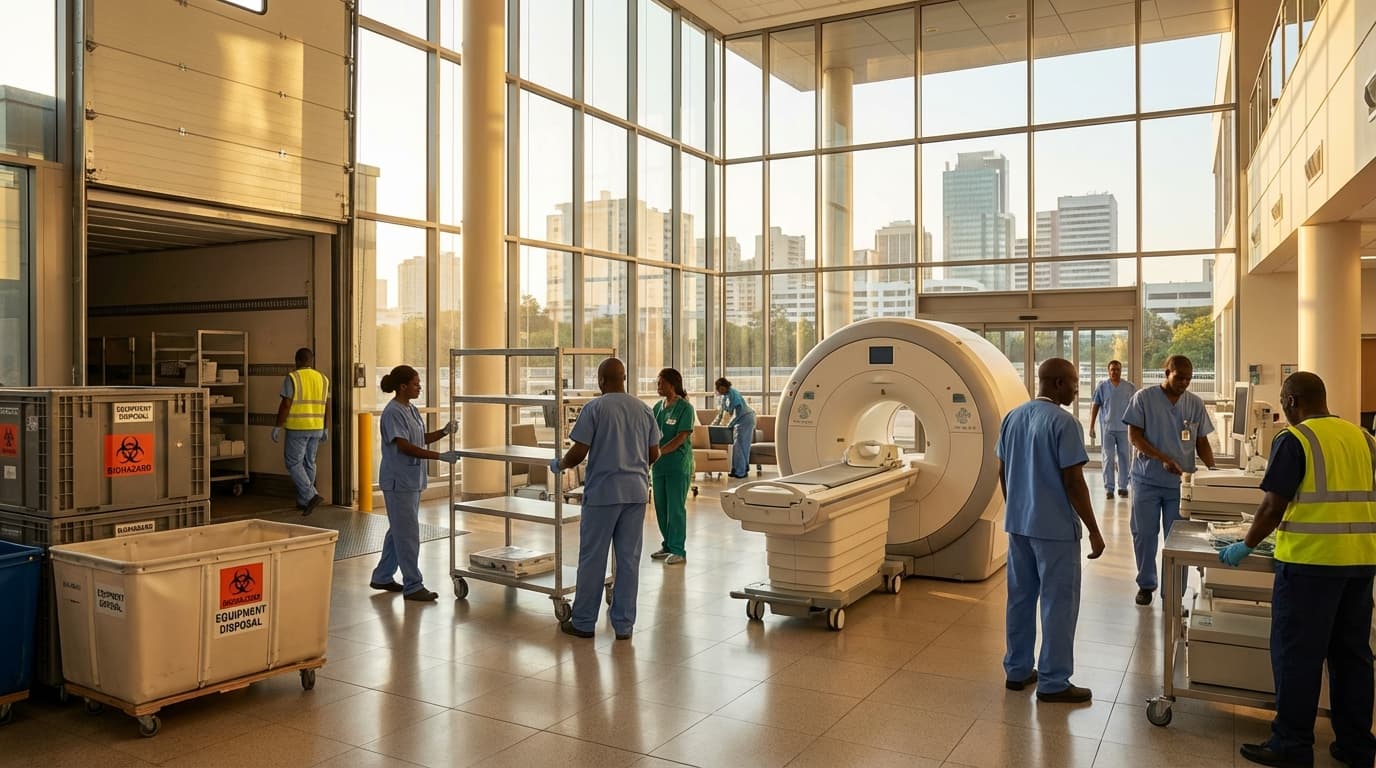
Heavy Medical Equipment De-Installation Service (MRI/CT/Cath Lab) in Guinea
Engineering Excellence & Technical Support
Heavy Medical Equipment De-Installation Service (MRI/CT/Cath Lab) High-standard technical execution following OEM protocols and local regulatory frameworks.
Specialized Safety Protocols
We adhere to stringent international safety standards for the de-installation of high-risk medical imaging equipment like MRI, CT, and Cath Labs. Our certified technicians employ advanced lockout/tagout procedures, controlled power-down sequences, and comprehensive risk assessments to ensure zero harm to personnel and the environment in Guinea.
Precision De-installation & Logistics
Our expert team utilizes custom-designed lifting and rigging equipment, including heavy-duty cranes and specialized dollies, for the meticulous dismantling and secure transportation of complex medical systems. We manage all aspects of logistics, from site access planning to final delivery, minimizing downtime for your facility in Guinea.
Environmentally Conscious Decommissioning
Beyond safe removal, we prioritize responsible decommissioning. Our services include the proper handling and disposal of refrigerants (e.g., helium for MRI), hazardous materials, and the segregation of components for recycling or refurbishment, ensuring compliance with environmental regulations in Guinea.
What Is Heavy Medical Equipment De-installation Service (Mri/ct/cath Lab) In Guinea?
Heavy Medical Equipment De-Installation Service (MRI/CT/Cath Lab) in Guinea refers to the specialized, complex, and highly regulated process of safely and systematically dismantling, preparing for transport, and disconnecting high-value, large-format medical imaging and diagnostic systems such as Magnetic Resonance Imaging (MRI) scanners, Computed Tomography (CT) scanners, and Cardiac Catheterization (Cath Lab) suites within healthcare facilities in Guinea. This service requires a multidisciplinary team with expertise in engineering, medical physics, specialized rigging, electrical and structural engineering, and logistics, adhering to international safety standards and local regulations. The primary objective is to ensure the integrity of the equipment during disassembly, minimize disruption to facility operations, and prepare the system for relocation, disposal, or decommissioning.
| Who Needs This Service? | Typical Use Cases | ||||
|---|---|---|---|---|---|
| Hospitals and Diagnostic Centers in Guinea: Facilities undergoing renovation, relocation, or upgrading their imaging or interventional cardiology departments. | Equipment Upgrade/Replacement: When an existing MRI, CT scanner, or Cath Lab is being replaced with a newer model or a different technology. | Facility Relocation: Moving a healthcare facility to a new site, requiring the transfer of major capital equipment. | System Decommissioning: Permanently retiring an old system from service due to obsolescence or end-of-life. | Inter-Facility Transfer: Moving equipment between different branches of a healthcare network within Guinea. | Consolidation of Services: Merging departments or facilities, leading to the consolidation or redistribution of heavy medical equipment. |
| MRI: Removal of a superconducting magnet, gradient coils, RF system, and patient table for relocation or disposal. Special consideration for cryogen management (helium, nitrogen) is critical. | CT: Disassembly of the gantry, X-ray tube, detector arrays, and patient couch. Managing the radiation shielding and electrical power requirements. | Cath Lab: Dismantling of the C-arm imaging system, patient table, injector system, monitoring equipment, and associated control consoles. Careful handling of complex cabling and plumbing for contrast media and cooling. |
Key Components of Heavy Medical Equipment De-Installation Service:
- Site Assessment and Planning: Detailed evaluation of the installation site, including structural integrity, access routes, power supply, cooling systems, and shielding requirements. Development of a comprehensive de-installation plan outlining procedures, timelines, safety protocols, and required resources.
- System Disconnection and Preparation: Safely shutting down power, disconnecting all ancillary systems (e.g., cryogen lines for MRI, water cooling for CT/Cath Lab), and neutralizing any hazardous materials or residual energies. This involves careful disassembly of components, including magnets, gantry systems, power supplies, and patient tables.
- Specialized Rigging and Handling: Utilization of heavy-duty lifting equipment, such as cranes, specialized dollies, and hydraulic jacks, along with skilled riggers to manage the considerable weight and bulk of individual components. This phase requires precise coordination to avoid damage to the equipment and the facility infrastructure.
- Environmental Control and Protection: Implementing measures to protect delicate components from environmental factors like dust, moisture, and temperature fluctuations during the de-installation process and subsequent storage or transport.
- Component Labeling and Inventory: Meticulous labeling of all disassembled parts and creation of a detailed inventory to facilitate reassembly and ensure all components are accounted for.
- Packaging and Transportation Logistics: Ensuring appropriate packaging for each component, considering its size, weight, and fragility. Coordinating with specialized logistics providers for secure and compliant transportation to the destination.
- Documentation and Compliance: Comprehensive documentation of the entire de-installation process, including safety checklists, disassembly records, and adherence to relevant international (e.g., IEC standards) and Guinean regulatory requirements. This often includes a de-installation certificate.
Who Needs Heavy Medical Equipment De-installation Service (Mri/ct/cath Lab) In Guinea?
Heavy medical equipment de-installation, particularly for advanced imaging and interventional systems like MRI, CT scanners, and Cath Labs, is a specialized service crucial for a variety of healthcare facilities and organizations in Guinea. This process involves the safe, efficient, and compliant dismantling, packaging, and preparation for relocation or disposal of complex and high-value medical machinery. The need arises from several scenarios including facility upgrades, renovations, equipment replacement, closure of facilities, or strategic relocations within the country or internationally. Ensuring proper de-installation is vital to prevent damage, maintain equipment integrity, adhere to safety regulations, and minimize downtime for critical medical services.
| Customer Type | Key Departments Involved | Reason for De-Installation |
|---|---|---|
| Large Public Hospitals | Radiology/Medical Imaging Department, Cardiology Department, IT Department, Facilities Management, Procurement Department | Equipment upgrades, renovations, replacement due to age/obsolescence, facility expansion or consolidation. |
| Private Hospitals and Clinics | Radiology/Imaging Department, Interventional Cardiology Department, Biomedical Engineering, Operations Management | Modernization of services, acquisition of newer technology, space optimization, facility relocation. |
| Diagnostic Imaging Centers | Operations Manager, Chief Radiologist, Technical Services | Replacing older models with newer technology, capacity expansion, consolidation of multiple sites. |
| Research and Academic Medical Institutions | Research Department, Biomedical Engineering, Facilities Management, Principal Investigators | Relocating specialized research equipment, upgrading for new research protocols, end-of-life for research equipment. |
| Government Health Agencies | Planning and Infrastructure Department, Public Health Services, Procurement | National healthcare infrastructure projects, consolidating services, decommissioning outdated public facilities. |
| International Aid Organizations/NGOs | Program Managers, Logistics, Technical Advisors | Phasing out donated equipment, relocating functional equipment to other projects, supporting local capacity building. |
| Medical Equipment Vendors/Distributors | Service Department, Sales Department, Logistics | De-installing old equipment as part of a trade-in or new installation deal, relocating equipment for refurbishment or resale, asset management. |
Target Customers and Departments for Heavy Medical Equipment De-Installation Services in Guinea
- Hospitals (Public and Private)
- Specialized Medical Centers (e.g., Cardiology Centers, Oncology Centers)
- Diagnostic Imaging Clinics
- Research Institutions with Medical Imaging Facilities
- Government Health Ministries and Agencies (for public health infrastructure projects)
- International Aid Organizations and NGOs involved in healthcare development
- Medical Equipment Vendors and Distributors (for servicing and asset management)
Heavy Medical Equipment De-installation Service (Mri/ct/cath Lab) Process In Guinea
This document outlines the comprehensive workflow for the Heavy Medical Equipment De-Installation Service (MRI/CT/Cath Lab) in Guinea, from the initial client inquiry to the successful completion of the de-installation process. This process is designed to be thorough, safe, and compliant with all relevant regulations and best practices.
| Stage | Description | Key Activities | Responsible Parties | Deliverables/Outcomes |
|---|---|---|---|---|
| Inquiry & Initial Consultation | The client contacts the service provider with a request for de-installation of heavy medical equipment. | Receive inquiry, understand client needs, gather initial equipment details (type, manufacturer, model, location). | Client, Service Provider Sales/Operations Team. | Understanding of client requirements, preliminary equipment information. |
| Site Assessment & Planning | A detailed on-site evaluation is conducted to assess the feasibility and plan the de-installation. | Site visit to inspect equipment, surrounding infrastructure (power, cooling, access routes), structural integrity, safety hazards. Develop detailed de-installation plan, risk assessment, and timeline. | Service Provider Technical Team, Site Manager, Client Representative. | Comprehensive site assessment report, detailed de-installation plan, risk mitigation strategy, preliminary timeline. |
| Quotation & Contract Finalization | Based on the assessment, a formal proposal and contract are prepared. | Prepare detailed quotation including scope of work, labor, materials, timeline, and costs. Negotiate and finalize contract with the client. | Service Provider Sales/Contracts Team, Client. | Formal quotation, signed service contract, payment schedule. |
| Preparation & Pre-De-Installation | All necessary preparations are made before the actual de-installation begins. | Secure necessary permits and approvals, mobilize specialized tools and equipment, inform relevant stakeholders (e.g., hospital administration, regulatory bodies), ensure power and cooling systems are safely disconnected and managed, secure the work area. | Service Provider Project Manager, Technical Team, Site Personnel. | All permits acquired, specialized equipment on-site, work area secured, pre-de-installation checks completed. |
| Equipment De-Installation | The core process of safely and systematically dismantling the medical equipment. | Execute the de-installation plan, including disconnection of all utilities, disassembly of components, careful handling of sensitive parts, adherence to safety protocols, and internal documentation of each step. | Service Provider Technical Team (certified technicians). | Dismantled equipment components, safe disconnection of all services, adherence to de-installation procedures. |
| Logistics & Transportation | Managing the safe packaging and transportation of the de-installed equipment. | Package equipment components securely for transit, arrange for specialized transport vehicles, coordinate with logistics partners, ensure compliance with transportation regulations. | Service Provider Logistics Team, Specialized Transport Company. | Packaged and secured equipment, scheduled and executed transportation, proof of shipment. |
| Post-De-Installation & Documentation | Concluding the process with documentation and final checks. | Complete detailed de-installation report, including photos, checklists, and any incident reports. Provide client with asset list of de-installed components. Conduct a final site walk-through. | Service Provider Project Manager, Technical Team, Client Representative. | Comprehensive de-installation report, asset inventory, signed site completion form. |
| Client Sign-off & Final Payment | Formal acceptance of the service by the client and completion of financial obligations. | Client reviews and approves the de-installation report and associated documentation. Final invoicing and settlement of payment as per contract. | Client, Service Provider Finance Team. | Client's formal sign-off, final payment received, successful completion of service. |
Key Stages of the De-Installation Service
- Inquiry & Initial Consultation
- Site Assessment & Planning
- Quotation & Contract Finalization
- Preparation & Pre-De-Installation
- Equipment De-Installation
- Logistics & Transportation
- Post-De-Installation & Documentation
- Client Sign-off & Final Payment
Heavy Medical Equipment De-installation Service (Mri/ct/cath Lab) Cost In Guinea
De-installing heavy medical equipment like MRI, CT scanners, and Cath Labs in Guinea is a specialized and complex undertaking. The cost is influenced by several critical factors, leading to a broad pricing range. These services require experienced technicians, specific tools, and adherence to safety regulations, especially when dealing with high-voltage and magnetic field equipment. The final price will be determined by a combination of the equipment's complexity, accessibility, the required timeline, and the specific vendor's expertise and overheads.
| Equipment Type | Estimated De-Installation Cost Range (GNF - Guinean Franc) | Notes |
|---|---|---|
| CT Scanner | 5,000,000 - 15,000,000 | Varies based on model, size, and accessibility. Includes basic disconnection and dismantling. |
| MRI Scanner (non-cryogenic/low field) | 8,000,000 - 25,000,000 | Requires specialized handling due to magnetic fields and size. Cryogen management can add significant cost. |
| MRI Scanner (high field/superconducting) | 15,000,000 - 50,000,000+ | Complex superconducting magnets require expert handling, specialized cooling, and robust safety protocols. Significant cost for cryogen management and potential venting. |
| Cath Lab (Angiography System) | 7,000,000 - 20,000,000 | Involves heavy imaging equipment, gantries, and associated power/cooling systems. Integration complexity plays a role. |
| Combined/Full Facility De-installation | Contact vendor for a custom quote | For multiple equipment types or a complete medical facility shutdown, a tailored quote is essential. |
Key Pricing Factors for Heavy Medical Equipment De-Installation in Guinea
- Equipment Type and Complexity: MRI, CT scanners, and Cath Labs vary significantly in size, weight, and the number of components. The more intricate the system (e.g., superconducting magnets in MRI), the longer and more specialized the de-installation process, increasing labor and specialized tooling costs.
- Site Accessibility and Logistics: The physical location of the equipment within the hospital or clinic is a major determinant. If the equipment is located on a high floor, in a confined space, or requires extensive rigging and hoisting, the logistical challenges and associated costs will rise. Transportation of components to and from the site also adds to the expense.
- Required Timeline and Urgency: Emergency or expedited de-installation services will typically command a premium. Standard scheduling allows for more efficient planning and resource allocation, resulting in lower costs.
- Vendor Expertise and Reputation: Experienced and reputable de-installation companies often charge more due to their proven track record, specialized training, and insurance. Less experienced providers might offer lower quotes but carry a higher risk of delays or damage.
- Additional Services: De-installation may include related services such as disconnection from power and cooling systems, documentation, packaging, and basic site restoration. The scope of these additional services will impact the overall cost.
- Permits and Regulatory Compliance: Depending on local regulations, specific permits might be required for the de-installation and transportation of such heavy machinery. Obtaining these can incur administrative fees.
- Dismantling vs. Full Removal: The quote may differ if the service only includes dismantling the equipment into manageable parts for on-site storage versus a complete removal from the facility.
Affordable Heavy Medical Equipment De-installation Service (Mri/ct/cath Lab) Options
Navigating the de-installation of heavy medical equipment like MRI, CT scanners, and Cath Labs can be a significant undertaking, involving specialized skills, logistics, and safety protocols. Choosing an affordable service provider is crucial for healthcare facilities to manage costs effectively while ensuring the process is handled professionally and securely. This document outlines options for affordable heavy medical equipment de-installation services, focusing on value bundles and cost-saving strategies.
| Value Bundle Option | Key Features | Cost-Saving Strategy |
|---|---|---|
| Basic De-installation & Disassembly | Includes: Professional disassembly of the equipment according to manufacturer guidelines. Site assessment for access and safety. Basic packaging of components. | DIY Support: If your facility has in-house technical staff capable of assisting with some aspects of disassembly or packaging, this can reduce labor costs. Off-Peak Scheduling: De-installation during slower periods can sometimes offer lower rates. |
| Standard De-installation & Logistics | Includes: Basic de-installation, professional rigging and lifting, secure packaging, and loading onto transport. Coordination of transport to a designated location (e.g., storage, another facility). | Bundle Discount: Opting for a package that includes disassembly, rigging, and transport often provides a more competitive price than booking each service separately. Long-Term Contracts: For facilities with ongoing equipment relocation needs, negotiating longer-term contracts can lead to volume discounts. |
| Comprehensive De-installation & Relocation Management | Includes: Full de-installation, rigging, secure packaging, transport, site restoration (e.g., minor wall repairs), and coordination of re-installation at a new site (if applicable). | Integrated Services: Choosing a provider that offers a turnkey solution from de-installation to re-installation can streamline the process, reduce coordination headaches, and potentially offer better overall pricing. Flexible Site Restoration: Discussing the extent of site restoration needed can help tailor the service and avoid unnecessary costs. |
| Equipment Decommissioning & Disposal Service | Includes: De-installation, safe dismantling, environmentally compliant disposal of materials, and provision of certificates of destruction or recycling. | Recycling Partnerships: Providers with strong partnerships with certified recycling facilities can often offer more competitive rates for disposal and may even provide a small return for valuable components. |
Key Considerations for Affordable De-Installation Services
- Specialized Expertise: Ensure the service provider has proven experience with the specific type of equipment being de-installed (MRI, CT, Cath Lab). This includes knowledge of specific manufacturer requirements and safety regulations.
- Comprehensive Scope of Work: Understand exactly what is included in the service. Does it cover disassembly, rigging, packaging, transportation, and site restoration? Clarifying this upfront prevents unexpected charges.
- Licensing and Insurance: Verify that the provider holds all necessary licenses and has adequate insurance coverage for potential accidents or damages.
- Logistical Planning: The provider's ability to efficiently plan and execute the de-installation and transport is a major cost factor. Look for established logistical capabilities.
- Environmental Compliance: Ensure compliance with regulations for the disposal or relocation of hazardous materials that might be associated with medical equipment.
- Communication and Project Management: Clear and consistent communication throughout the process is vital for staying on schedule and budget. A dedicated project manager can be a significant benefit.
Verified Providers In Guinea
In the realm of healthcare services in Guinea, identifying and engaging with verified providers is paramount for ensuring quality, safety, and ethical practice. Franance Health stands out as a leading platform committed to this principle, meticulously credentialing its network of healthcare professionals. This rigorous vetting process is not merely a formality; it's a cornerstone of their commitment to patient well-being and a key differentiator that positions Franance Health as the best choice for accessing reliable medical care in Guinea.
| Credentialing Aspect | Franance Health Standard | Benefit for Patients |
|---|---|---|
| Educational Background | Verification of diplomas, degrees, and specialized training. | Ensures providers possess the foundational knowledge and expertise. |
| Professional Licensing | Confirmation of valid and current medical licenses with relevant authorities. | Guarantees legal and authorized practice within Guinea. |
| Clinical Experience | Assessment of practical experience and track record in relevant medical fields. | Indicates proven ability and familiarity with common and complex cases. |
| Certifications | Validation of specialized certifications and ongoing professional development. | Confirms expertise in specific medical disciplines and commitment to learning. |
| Reputation and Ethics | Consideration of professional references and ethical standing. | Promotes a safe and respectful patient-provider relationship. |
Why Franance Health Credentials Represent the Best Choice:
- Rigorous Verification Process: Franance Health implements a multi-stage verification protocol that goes beyond basic licensing. This includes thorough checks of educational qualifications, professional licenses, certifications, and work experience, ensuring that every provider meets the highest standards of expertise.
- Commitment to Ethical Practice: Beyond clinical skills, Franance Health scrutinizes providers for their adherence to ethical guidelines and professional conduct. This commitment helps to foster a trustworthy and patient-centric healthcare environment.
- Focus on Specialization and Competency: The credentialing process often involves verifying specific areas of specialization and competency. This ensures that patients are connected with the most appropriate medical professionals for their unique health needs, leading to more effective treatment outcomes.
- Ongoing Monitoring and Re-credentialing: Franance Health doesn't stop at initial verification. They maintain a system for ongoing monitoring and periodic re-credentialing, ensuring that providers continue to meet their standards over time and stay updated with the latest medical advancements.
- Enhanced Patient Trust and Confidence: The transparent and robust credentialing process builds significant trust between patients and the healthcare providers listed on the Franance Health platform. Knowing that providers have been thoroughly vetted provides peace of mind and confidence in the quality of care received.
- Reduced Risk for Patients: By partnering exclusively with verified providers, Franance Health significantly reduces the risk of patients encountering unqualified or unethical practitioners, thereby safeguarding their health and safety.
- Streamlined Access to Quality Care: The platform simplifies the process of finding and accessing high-quality healthcare in Guinea. Patients can be assured that the providers they find through Franance Health have met stringent criteria, saving them time and effort in their search for reliable medical services.
Scope Of Work For Heavy Medical Equipment De-installation Service (Mri/ct/cath Lab)
This Scope of Work (SOW) outlines the requirements for the professional de-installation of heavy medical imaging equipment, specifically Magnetic Resonance Imaging (MRI) scanners, Computed Tomography (CT) scanners, and Cardiac Catheterization (Cath Lab) systems. The service includes the safe and efficient disconnection, dismantling, removal from the facility, and preparation for transport of these complex and high-value systems. All work will adhere to manufacturer guidelines, industry best practices, and relevant safety regulations. This SOW also defines the expected technical deliverables and standard specifications to ensure a successful project completion.
| Deliverable | Description | Standard Specification / Requirement | Acceptance Criteria |
|---|---|---|---|
| De-installation Plan | A detailed plan outlining the sequence of operations, safety protocols, resource allocation, and timeline for the de-installation process. | Must include risk assessment, equipment-specific procedures (referencing manufacturer manuals), logistics for removal, and communication plan. | Plan approved by the client prior to commencement of work. All critical safety measures identified. |
| De-installation Report | Comprehensive documentation of the entire de-installation process, including photographs, logs, and confirmation of compliance with the plan. | Includes pre- and post-de-installation site photos, component manifests, dates of key milestones, and signatures of responsible personnel. | Report submitted within 5 business days of completion. All required information present and verifiable. |
| Equipment Isolation & Safety Verification | Ensuring all power sources, cooling systems, and potential hazards (e.g., cryogen containment for MRI) are safely isolated and verified. | Verification by qualified personnel using calibrated testing equipment. Confirmation of zero energy state. | Signed off verification forms for each system. No unexpected power or energy readings. |
| Component Dismantling | Careful and systematic dismantling of the equipment into manageable components for safe removal. | Following manufacturer-specific de-installation manuals. Use of appropriate tools and techniques to prevent damage. | All removed components cataloged and accounted for. No visible damage to primary equipment components beyond normal wear and tear expected from use. |
| Site Restoration | Returning the de-installation area to a safe and agreed-upon condition. | Removal of all debris, tools, and temporary structures. Minor repairs to flooring or walls if necessitated by the removal process (as agreed in the SOW). | Site is clean, safe, and free of contractor-supplied materials. Any agreed-upon repairs completed to satisfaction. |
| Transportation Preparation | Securing and preparing all de-installed components for safe transport. | Appropriate crating, padding, and bracing of delicate components. Labeling of all crates with asset information. | All components are securely packed and labeled. Suitable for loading onto transport vehicles without risk of damage during transit. |
| Compliance with Regulations | Adherence to all local, state, and federal regulations related to equipment handling, hazardous materials (if applicable), and environmental disposal. | Awareness and implementation of OSHA, EPA, and any specific medical equipment handling standards. Proper disposal of any waste materials. | No regulatory non-compliance issues identified during or after the project. |
Key Activities and Deliverables
- Site assessment and planning
- Equipment isolation and safety checks
- Disconnection of all power, cooling, data, and RF/magnetic systems
- Dismantling of equipment components
- Removal of equipment from the existing location
- Preparation of equipment for transportation (e.g., crating, securing)
- Site cleanup and restoration (to agreed-upon condition)
- De-installation documentation and handover
Service Level Agreement For Heavy Medical Equipment De-installation Service (Mri/ct/cath Lab)
This Service Level Agreement (SLA) outlines the response times and uptime guarantees for the de-installation of heavy medical equipment, specifically Magnetic Resonance Imaging (MRI) scanners, Computed Tomography (CT) scanners, and Cardiac Catheterization (Cath Lab) systems. This SLA is intended to ensure minimal disruption to operations during equipment removal and to provide clear expectations for both the service provider and the client.
| Service Type | Response Time (Business Hours) | Uptime Guarantee | Notes |
|---|---|---|---|
| Scheduled De-Installation (MRI/CT/Cath Lab) | 4 business hours from confirmation of readiness | 98% of scheduled service duration | Service availability is strictly between agreed-upon scheduled dates and times. Uptime guarantee applies to the duration the service provider is actively on-site and able to perform the de-installation. Excludes delays caused by site not being ready, access issues, or client-related interruptions. |
| Emergency De-Installation (MRI/CT/Cath Lab) | 2 business hours from confirmation of emergency request and site readiness | Not applicable (priority service focus) | Subject to availability and may incur additional charges. Focus is on rapid deployment rather than a strict uptime guarantee. Client must confirm immediate site readiness. |
Key Definitions
- Scheduled De-Installation: De-installation services planned and agreed upon by both parties in advance.
- Emergency De-Installation: De-installation required due to unforeseen circumstances, facility closures, or critical equipment replacement needs, which may be subject to different response times and potentially higher charges.
- Downtime: The period during which the de-installation service is unavailable or unable to proceed as scheduled, excluding client-induced delays or site readiness issues.
- Response Time: The time elapsed from the moment a support request is formally submitted by the client to the service provider until a qualified technician is actively engaged in addressing the request at the client's site.
- Resolution Time: The time elapsed from the moment a support request is formally submitted by the client until the de-installation service is completed, excluding any unforeseen delays outside the control of the service provider.
- Service Availability: Refers to the readiness and availability of the service provider's technicians and specialized equipment to perform the de-installation service during agreed-upon hours.
- Service Provider: The entity responsible for performing the de-installation services.
- Client: The entity receiving the de-installation services.
Frequently Asked Questions

Ready when you are
Let's scope your Heavy Medical Equipment De-Installation Service (MRI/CT/Cath Lab) in Guinea project in Guinea.

Scaling healthcare logistics and technical systems across the entire continent.