
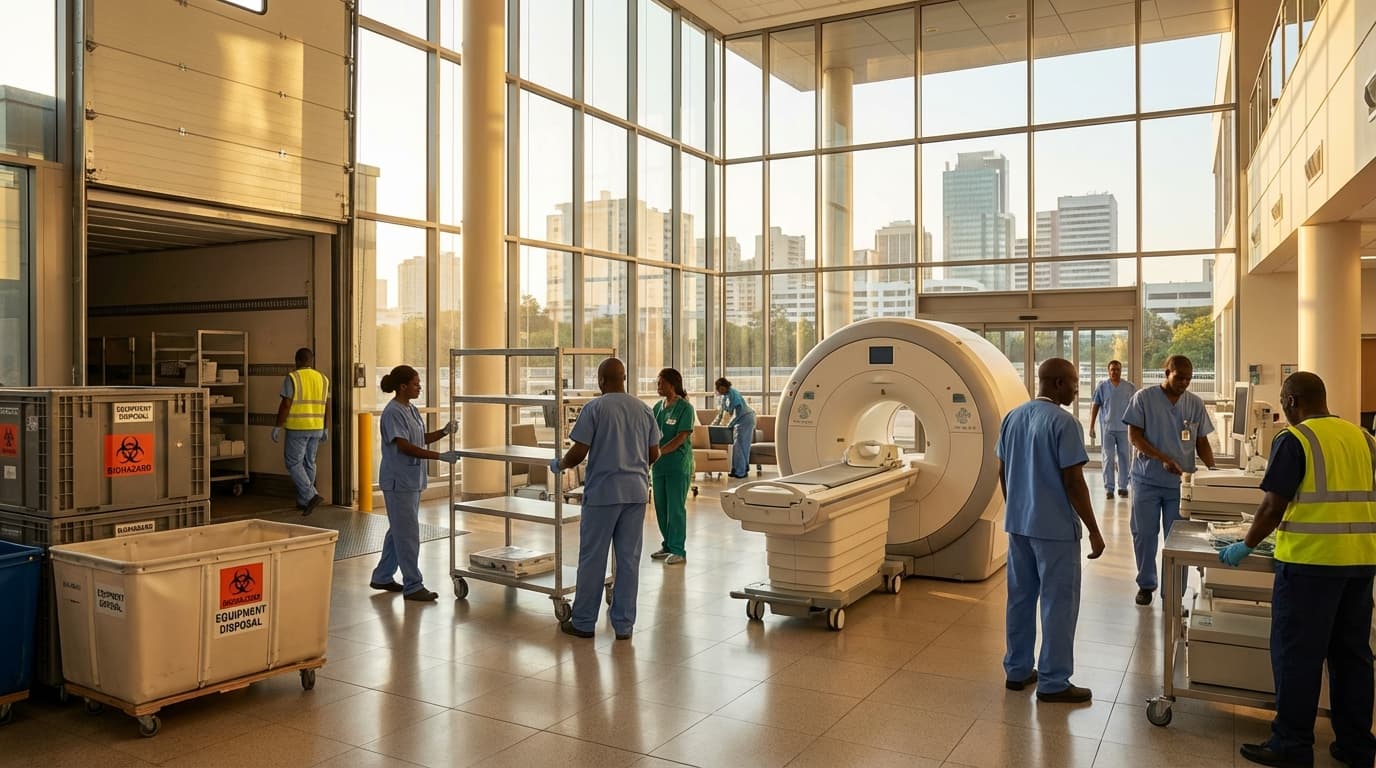
Decommissioning Service for Medical Devices in Guinea
Engineering Excellence & Technical Support
Decommissioning Service for Medical Devices High-standard technical execution following OEM protocols and local regulatory frameworks.
Expert Handling of Radioactive Medical Devices
Our specialized team in Guinea is trained and equipped to safely decommission and dispose of medical devices containing radioactive isotopes. We ensure strict adherence to international safety protocols and local regulations for the secure management of radioactive waste, protecting both personnel and the environment.
Biocontainment and Biohazard Waste Management
We provide comprehensive services for the safe decommissioning of medical equipment that may have been exposed to biohazardous materials. Our protocols include effective decontamination, containment, and regulated disposal of infectious waste, minimizing risks associated with biological hazards in healthcare facilities across Guinea.
Certified Transportation and Secure Disposal Logistics
Leveraging our certified fleet and experienced logistics network in Guinea, we guarantee the secure and compliant transportation of decommissioned medical devices to approved disposal or recycling facilities. Our end-to-end service ensures chain of custody and complete traceability from removal to final disposition.
What Is Decommissioning Service For Medical Devices In Guinea?
Decommissioning service for medical devices in Guinea refers to the systematic and controlled process of removing medical equipment from active clinical service. This encompasses all activities required to render the device inoperable, safe for handling, and compliant with relevant environmental, safety, and data privacy regulations prior to its disposal, donation, or repurposing. The service ensures that the lifecycle of a medical device is managed responsibly from procurement to its final disposition. Key phases often include assessment, data sanitization, physical dismantling, and regulated waste management.
| Who Needs Decommissioning Services? | Typical Use Cases | |||||||
|---|---|---|---|---|---|---|---|---|
| Hospitals and Healthcare Facilities (public and private) | Replacement of obsolete or malfunctioning equipment. | Upgrade to newer technological platforms. | Expansion or restructuring of clinical departments. | Closure or relocation of healthcare facilities. | End-of-lease agreements for leased equipment. | Non-functional or irreparable devices. | Devices used in clinical trials that are no longer needed. | Donation of functional but surplus equipment to other institutions. |
| Medical Clinics and Diagnostic Centers | End-of-life for specialized diagnostic equipment. | Transitioning to new imaging modalities. | Consolidation of services. | |||||
| Research and Educational Institutions | Decommissioning of laboratory equipment no longer in use. | Upgrading research infrastructure. | ||||||
| Medical Device Manufacturers and Distributors (for returned or recalled devices) | Safe disposal of recalled or returned devices that cannot be refurbished. |
Key Components of Medical Device Decommissioning in Guinea
- Device Assessment and Identification: Cataloging devices slated for decommissioning, including serial numbers, model numbers, and current operational status.
- Data Sanitization/Destruction: Eradicating all patient data and sensitive information stored on the device to comply with data protection regulations (e.g., ensuring HIPAA-equivalent standards if applicable to data transfer). This may involve software-based data wiping or physical destruction of storage media.
- Functional Disablement: Rendering the device inoperable to prevent unauthorized use and ensure patient safety.
- Disassembly and Component Separation: Carefully dismantling the device into its constituent parts for proper sorting and disposal or recycling.
- Hazardous Material Management: Identifying and safely handling any hazardous materials (e.g., mercury, batteries, biohazards) in accordance with national environmental regulations.
- Environmental Disposal/Recycling: Ensuring that disposed components are handled by licensed waste management facilities, adhering to environmental protection standards.
- Documentation and Certification: Providing comprehensive records of the decommissioning process, including certificates of destruction and compliance, for audit and regulatory purposes.
- Logistical Management: Coordinating the safe transport and removal of decommissioned devices from the facility.
Who Needs Decommissioning Service For Medical Devices In Guinea?
Medical device decommissioning services are essential for healthcare facilities and related organizations in Guinea to ensure the safe, secure, and compliant disposal or repurposing of outdated, damaged, or end-of-life medical equipment. This process is critical for data privacy, environmental protection, and regulatory adherence.
| Target Customer Type | Specific Departments Involved | Key Decommissioning Needs |
|---|---|---|
| Hospitals (Public and Private) | Biomedical Engineering Department, IT Department, Administration, Procurement, Clinical Departments (Radiology, Surgery, ICU, etc.) | Secure data sanitization from imaging equipment and patient monitoring devices, proper disposal of hazardous materials, asset tracking and inventory management, compliance with national health regulations. |
| Clinics and Health Centers | Clinic Manager/Administrator, Clinical Staff, Procurement | Safe disposal of basic diagnostic equipment, sterilizers, and examination tools, adherence to local waste management guidelines. |
| Diagnostic Laboratories | Laboratory Manager, Technical Staff, IT Department | Decommissioning of analytical instruments, centrifuges, microscopes, ensuring complete data eradication from diagnostic systems, environmental disposal of reagents and consumables. |
| Research Institutions | Research Leads, Laboratory Managers, IT Department, Procurement | Secure disposal or transfer of specialized research equipment, data sanitization from experimental apparatus, compliance with research ethics and data integrity standards. |
| Medical Training Facilities | Department Heads, Technical Support, Administration | Safe removal and disposal of outdated training models and equipment, ensuring compliance with educational standards and safety regulations. |
| Medical Device Manufacturers/Distributors | Customer Service, Product Lifecycle Management, Logistics, Regulatory Affairs | Recycling programs for returned or obsolete devices, sustainable end-of-life management, compliance with manufacturer warranties and environmental regulations. |
| Government Health Agencies | Procurement, Asset Management, Health Services Directorate, Environmental Health Department | Overseeing decommissioning protocols for public health facilities, ensuring national compliance, managing large-scale equipment disposal initiatives. |
| NGOs operating healthcare programs | Program Managers, Logistics Officers, Finance Department | Decommissioning of equipment deployed in remote or temporary healthcare settings, ensuring responsible asset disposal in accordance with donor and organizational policies. |
Target Customers for Medical Device Decommissioning Services in Guinea
- Hospitals (Public and Private)
- Clinics and Health Centers
- Diagnostic Laboratories
- Research Institutions
- Medical Training Facilities
- Medical Device Manufacturers and Distributors (for end-of-life product management)
- Government Health Agencies
- Non-Governmental Organizations (NGOs) operating healthcare programs
Decommissioning Service For Medical Devices Process In Guinea
This document outlines the workflow for decommissioning medical devices in Guinea, from initial inquiry to final execution. The process is designed to ensure compliance with national regulations, environmental safety, and data security. It involves multiple stakeholders and distinct phases, each with specific objectives and deliverables.
| Phase | Step | Description | Responsible Party | Deliverables/Outcomes |
|---|---|---|---|---|
| 1.1 Submission of Decommissioning Request | The healthcare facility or device owner formally requests decommissioning services for specific medical devices. | Healthcare Facility/Device Owner | Decommissioning Request Form |
| 1.2 Service Provider Contact & Information Gathering | The authorized decommissioning service provider receives the request and gathers preliminary information about the devices (type, model, age, condition, location). | Authorized Decommissioning Service Provider | Initial Device Inventory | |
| 1.3 Site Visit & Detailed Assessment | A site visit is conducted to physically inspect the devices, assess their complexity, determine the required tools and expertise, and identify any potential hazards or data security concerns. | Authorized Decommissioning Service Provider | Detailed Device Assessment Report, Quotation | |
| 2.1 Submission of Decommissioning Proposal | The service provider submits a detailed proposal outlining the scope of work, methodology, timeline, costs, and safety protocols. | Authorized Decommissioning Service Provider | Decommissioning Proposal |
| 2.2 Review & Negotiation | The healthcare facility/device owner reviews the proposal, negotiates terms, and provides feedback. | Healthcare Facility/Device Owner, Authorized Decommissioning Service Provider | Agreed Proposal | |
| 2.3 Contract Finalization & Signing | A formal service agreement is drafted, reviewed, and signed by both parties, outlining the rights and responsibilities. | Healthcare Facility/Device Owner, Authorized Decommissioning Service Provider | Signed Decommissioning Contract | |
| 3.1 Regulatory Compliance Check | The service provider verifies all necessary permits and approvals from the Ministry of Health and other relevant authorities. | Authorized Decommissioning Service Provider | Regulatory Approvals Documentation |
| 3.2 Development of Detailed Decommissioning Plan | A comprehensive plan is created, detailing the sequence of operations, safety procedures, waste segregation, transportation, and disposal methods. | Authorized Decommissioning Service Provider | Detailed Decommissioning Plan | |
| 3.3 Resource Allocation | Necessary personnel, specialized equipment, and disposal resources are identified and scheduled. | Authorized Decommissioning Service Provider | Resource Schedule | |
| 4.1 Site Preparation & Safety Briefing | The work area is secured, and a safety briefing is conducted for all involved personnel. | Authorized Decommissioning Service Provider | Secured Work Area, Safety Briefing Confirmation |
| 4.2 Data Sanitization/Destruction | If the device stores patient data, it is securely sanitized or physically destroyed according to established protocols. | Authorized Decommissioning Service Provider | Data Sanitization/Destruction Certificate | |
| 4.3 Disassembly & Component Separation | The device is carefully disassembled, and components are separated based on material type for proper disposal or recycling. | Authorized Decommissioning Service Provider | Disassembled Device Components | |
| 4.4 Hazardous Material Handling | Any hazardous materials (e.g., mercury, batteries) are identified, segregated, and managed according to environmental regulations. | Authorized Decommissioning Service Provider | Segregated Hazardous Materials | |
| 4.5 Packaging & Labeling | Components are packaged and labeled appropriately for safe transportation. | Authorized Decommissioning Service Provider | Packaged and Labeled Waste | |
| 5.1 Transportation to Disposal Facility | Devices and their components are transported by authorized personnel to designated licensed disposal facilities. | Authorized Decommissioning Service Provider, Specialized Waste Management Company | Manifest of Transported Waste |
| 5.2 Disposal/Recycling | Materials are disposed of or recycled in an environmentally sound manner, adhering to national and international standards. | Authorized Decommissioning Service Provider, Specialized Waste Management Company | Proof of Disposal/Recycling Certificate | |
| 6.1 Final Report Generation | A comprehensive report is compiled, detailing all aspects of the decommissioning process, including waste manifests, certificates, and any deviations from the plan. | Authorized Decommissioning Service Provider | Final Decommissioning Report |
| 6.2 Submission to Regulatory Bodies | The final report and relevant certificates are submitted to the Ministry of Health and other required authorities for record-keeping and compliance. | Authorized Decommissioning Service Provider | Submitted Documentation to Authorities | |
| 6.3 Archiving of Records | All documentation related to the decommissioning process is securely archived by both the service provider and the healthcare facility. | Authorized Decommissioning Service Provider, Healthcare Facility/Device Owner | Archived Decommissioning Records |
Key Stakeholders in Medical Device Decommissioning
- Healthcare Facility (User of the device)
- Medical Device Owner/Administrator
- Authorized Decommissioning Service Provider
- Ministry of Health (Regulatory Body)
- Environmental Protection Agency (if applicable)
- Waste Management Company (specialized for medical waste)
Decommissioning Service For Medical Devices Cost In Guinea
Decommissioning medical devices in Guinea involves a structured process to ensure safe and environmentally responsible disposal. The cost of these services is influenced by several key factors. Primary among these are the type and complexity of the medical device, with more sophisticated equipment like MRI scanners or CT machines generally incurring higher decommissioning costs than simpler devices like basic examination tables. The volume of devices requiring decommissioning also plays a significant role, with bulk services often offering a reduced per-unit cost. Regulatory compliance and documentation requirements are crucial, as proper waste management and disposal certifications are mandated by Guinean health and environmental authorities, adding to the overall expense. The geographical location within Guinea can also impact costs due to transportation expenses for specialized equipment and personnel. Finally, the condition and hazardous nature of the device (e.g., containing radioactive isotopes, mercury, or biohazardous materials) will necessitate specialized handling and disposal methods, significantly increasing the price. Pricing is typically provided in Guinean Francs (GNF).
| Device Category | Estimated Cost Range (GNF) | Notes |
|---|---|---|
| Simple Medical Equipment (e.g., examination tables, basic lab equipment) | 50,000 - 250,000 GNF | Relatively straightforward disposal, minimal specialized handling. |
| Intermediate Medical Devices (e.g., basic X-ray machines, incubators, centrifuges) | 250,000 - 750,000 GNF | May involve some specialized dismantling or material separation. |
| Complex Medical Devices (e.g., CT scanners, MRI machines, advanced surgical equipment) | 750,000 - 5,000,000+ GNF | Requires highly specialized expertise, potential for hazardous materials, significant dismantling and transport considerations. |
| Highly Hazardous Devices (e.g., those with radioactive isotopes, high levels of mercury, or significant biohazards) | Priced on a case-by-case basis, potentially exceeding 5,000,000 GNF | Extensive regulatory protocols, specialized containment, transportation, and disposal facilities are mandatory. |
Key Pricing Factors for Medical Device Decommissioning in Guinea
- Type and Complexity of the Medical Device
- Volume of Devices for Decommissioning
- Regulatory Compliance and Documentation
- Geographical Location within Guinea
- Condition and Hazardous Nature of the Device
Affordable Decommissioning Service For Medical Devices Options
Decommissioning medical devices is a critical but often overlooked process. Ensuring secure data erasure, proper disposal, and environmental compliance can be complex and costly. This guide outlines affordable decommissioning service options, focusing on value bundles and cost-saving strategies to help healthcare facilities manage this essential task efficiently and economically.
| Service Component | Typical Cost Component | Cost-Saving Strategies |
|---|---|---|
| Data Sanitization (HIPAA Compliant) | Per device or per GB of data | Bundle with other services, volume discounts, choose certified software-based wiping over physical destruction for less sensitive data (if compliant). |
| Physical Media Destruction (Hard Drives, SSDs) | Per drive/device | Bundle with sanitization, volume discounts, consider on-site shredding for added security and reduced transport. |
| E-Waste Recycling | Per device or by weight | Choose providers with R2/e-Stewards certification, long-term contracts, explore local recycling centers for bulk disposal. |
| Transportation and Logistics | Per pickup or mileage-based | Strategic scheduling with other services, partner with local providers, consolidate pickups. |
| Certification and Reporting | Included in bundle or per report | Ensure comprehensive reporting is included in value bundles, negotiate for detailed asset tracking reports. |
| Refurbishment/Resale | Varies based on device value | Partner with specialized refurbishers, compare buy-back offers from decommissioning services. |
| Hazardous Material Disposal | Per device or specialized handling fee | Ensure provider is licensed for hazardous waste, bundle with other services, inquire about proper segregation to reduce specialized fees. |
Affordable Decommissioning Service Options & Strategies
- Value Bundling for Comprehensive Services: Many service providers offer bundled packages that combine several essential decommissioning steps at a reduced overall cost compared to individual service bookings. These bundles often include data sanitization (meeting HIPAA standards), physical destruction of storage media, proper recycling of electronic components, and certification of disposal.
- Tiered Service Packages: Look for providers offering tiered service levels. Basic packages might cover essential data erasure and recycling, while premium tiers include more advanced features like on-site decommissioning, detailed asset tracking, and specialized waste handling for hazardous materials. Choose the tier that best aligns with your specific needs and budget.
- Volume Discounts and Long-Term Contracts: Negotiate discounts based on the volume of devices you need decommissioned. For facilities with ongoing needs, consider long-term service contracts. These can lock in favorable rates and ensure predictable budgeting for decommissioning services throughout the year.
- Local and Certified Providers: Partnering with local, certified decommissioning specialists can reduce transportation costs and lead times. Ensure providers hold relevant certifications (e.g., R2, e-Stewards) to guarantee environmentally sound and secure practices.
- In-House Training and Auditing: While not a direct service purchase, investing in training your internal IT or biomedical engineering staff on basic decommissioning procedures can equip them to handle simpler tasks, reducing reliance on external services. Regular audits of your decommissioning process, whether internal or external, can identify inefficiencies and potential cost savings.
- Refurbishment and Resale Programs: For devices that are still functional but no longer needed, explore providers who offer refurbishment and resale programs. This can offset decommissioning costs and even generate revenue, turning a disposal expense into a financial benefit.
- Strategic Scheduling: Coordinate decommissioning efforts to coincide with other planned equipment upgrades or facility renovations. This can allow for more efficient logistics and potentially consolidated service calls, leading to cost savings.
- Data Security Beyond Erasure: Understand the different levels of data erasure. Simple deletion isn't sufficient. Secure data sanitization (wiping) and physical destruction of hard drives or other storage media are crucial. Ensure your chosen service provider explicitly outlines their methods and provides certificates of destruction.
- Environmental Compliance and Reporting: Affordable services should not compromise environmental regulations. Inquire about the provider's adherence to EPA guidelines and local environmental laws. Request documentation and reports that demonstrate proper and compliant disposal of all device components.
Verified Providers In Guinea
In Guinea, navigating the healthcare landscape requires trusting in reliable and credentialed providers. Franance Health stands out as a leading organization that not only understands these needs but actively addresses them by rigorously verifying its network of healthcare professionals and facilities. This commitment to verification is crucial for ensuring patients receive safe, effective, and ethical care. Franance Health's credentials are a testament to their dedication to quality assurance, making them the best choice for anyone seeking dependable healthcare services in Guinea.
| Credential Type | Verification Standard | Benefit to Patients |
|---|---|---|
| Medical Licenses | Up-to-date and valid with national regulatory bodies | Ensures providers are legally authorized to practice medicine. |
| Specialty Certifications | Recognized by reputable medical boards and institutions | Confirms expertise in specific medical fields. |
| Professional Experience | Thorough review of past practice and employment history | Validates practical skills and track record. |
| Continuing Medical Education (CME) | Mandatory participation and documentation of ongoing learning | Guarantees providers are current with the latest medical advancements and techniques. |
| Reputation and Feedback | Scrutiny of patient reviews and peer recommendations | Identifies providers with a positive history of care and patient satisfaction. |
Why Franance Health is the Best Choice:
- Rigorous Verification Process: Franance Health employs a multi-stage vetting system for all providers, checking licenses, certifications, qualifications, and practice history.
- Commitment to Patient Safety: Their verification standards are designed to prioritize patient well-being and minimize risks associated with unqualified practitioners.
- Access to Top-Tier Professionals: By partnering with thoroughly vetted providers, Franance Health ensures access to some of the most skilled and experienced healthcare professionals in Guinea.
- Transparency and Trust: The credentials held by Franance Health providers offer a layer of transparency, building trust between patients and their caregivers.
- Comprehensive Network: Their verified network spans various medical specialties, ensuring a broad range of healthcare needs can be met.
- Ethical Practice Standards: Franance Health's verification includes adherence to ethical guidelines and professional conduct, promoting responsible healthcare delivery.
Scope Of Work For Decommissioning Service For Medical Devices
This Scope of Work (SOW) outlines the decommissioning services required for medical devices. It details the technical deliverables, standard specifications, and associated activities to ensure the safe, secure, and compliant removal of medical equipment from service. The objective is to render devices inoperable, erase sensitive data, and prepare them for disposal or recycling according to regulatory requirements and organizational policies.
| Task | Description | Deliverable | Standard Specifications/Notes |
|---|---|---|---|
| Site Assessment and Planning | Conduct a thorough assessment of the site(s) where devices are located to identify all medical devices requiring decommissioning. Develop a detailed project plan, including timelines, resource allocation, and risk mitigation strategies. | Decommissioning Project Plan | Includes site maps, device list, schedule, safety protocols, waste management plan, and contact information. |
| Device Identification and Inventory | Tag and inventory each medical device to be decommissioned. This includes recording make, model, serial number, asset tag, location, and current operational status. | Master Device Inventory List | Must be accurate and auditable. Cross-reference with existing asset management systems. |
| Data Backup and Transfer (if applicable) | If devices contain patient data or critical operational settings, ensure secure backup and transfer to an authorized destination before erasure. | Data Backup Confirmation Report | Must adhere to HIPAA/GDPR and other relevant data privacy regulations. Encrypted backups are preferred. |
| Data Eradication | Securely erase all sensitive data from device memory, storage media, and firmware. This includes patient data, user credentials, and configuration settings. | Data Eradication Certificate (per device) | Methods must comply with industry standards (e.g., NIST SP 800-88 Rev. 1 for media sanitization). Options include cryptographic erasure, secure overwrite, or physical destruction of storage media. |
| Physical Decommissioning | Disassemble, disconnect, and render devices inoperable. This may involve removal of specific components or complete destruction of the unit. | Physically Decommissioned Device Status | Confirmation of device rendered inoperable. Ensure electrical and mechanical safety during this process. |
| Component Segregation and Recycling/Disposal | Segregate device components for proper recycling, disposal, or refurbishment based on material type and regulatory requirements (e.g., e-waste, hazardous materials). | Waste Manifest/Disposal Certificate | Must comply with local, state, and federal environmental regulations. Use certified e-waste recyclers. |
| Final Site Cleanup | Ensure the decommissioning area is clean and free of debris, equipment, and any hazardous materials. | Site Clearance Report | Confirmation that the site is returned to a safe and orderly condition. |
| Project Reporting and Documentation | Provide comprehensive reports detailing all aspects of the decommissioning process, including completed tasks, any deviations, and final disposition of devices. | Final Decommissioning Report | Includes inventory lists, data eradication certificates, disposal certificates, and any other relevant documentation. Must be maintained for audit purposes. |
| Asset Tag Removal | Remove all organizational asset tags from decommissioned devices. | Confirmation of Asset Tag Removal | Prevents future confusion or fraudulent use of assets. |
Key Stages of Medical Device Decommissioning
- Planning and Preparation
- Device Identification and Inventory
- Data Eradication and Security
- Physical Decommissioning
- Documentation and Certification
- Disposal/Recycling/Resale
Service Level Agreement For Decommissioning Service For Medical Devices
This Service Level Agreement (SLA) outlines the response times and uptime guarantees for the Decommissioning Service for Medical Devices provided by [Your Company Name] (hereinafter referred to as "Provider") to [Client Company Name] (hereinafter referred to as "Client"). This SLA is an addendum to the Master Service Agreement (MSA) between the Provider and the Client dated [Date of MSA].
| Service Component | Priority Level | Response Time Target | Uptime Guarantee |
|---|---|---|---|
| Decommissioning Service Availability (during scheduled business hours) | High (Critical Service Interruption) | 1 hour | 99.5% |
| Decommissioning Service Availability (during scheduled business hours) | Medium (Service Degradation) | 4 hours | N/A (focus on resolution) |
| Decommissioning Service Availability (during scheduled business hours) | Low (Minor Issue/Inquiry) | 8 business hours | N/A (focus on resolution) |
| Scheduled Maintenance Notifications | N/A | Minimum 7 days advance notice | N/A |
| Documentation and Reporting (post-decommissioning) | N/A | Within 5 business days of completion | N/A |
Key Definitions
- Decommissioning Service: The comprehensive process of safely and securely retiring medical devices from service, including data sanitization, physical destruction (if required), documentation, and disposal in compliance with relevant regulations.
- Medical Device: Any instrument, apparatus, implant, machine, tool, or other article, including a component part or accessory, which is intended for use in the diagnosis of disease or other conditions, or in the cure, mitigation, treatment, or prevention of disease, in man or other animals.
- Downtime: The period during which the Decommissioning Service is unavailable to the Client due to a failure of the Provider's systems or personnel, excluding scheduled maintenance or events outside the Provider's reasonable control.
- Response Time: The maximum time allowed for the Provider to acknowledge and begin addressing a reported incident related to the Decommissioning Service.
- Resolution Time: The maximum time allowed for the Provider to resolve an incident and restore the Decommissioning Service to its operational state.
- Scheduled Maintenance: Planned periods of service interruption for routine updates, upgrades, or repairs, which will be communicated to the Client in advance.
Frequently Asked Questions

Ready when you are
Let's scope your Decommissioning Service for Medical Devices in Guinea project in Guinea.

Scaling healthcare logistics and technical systems across the entire continent.