
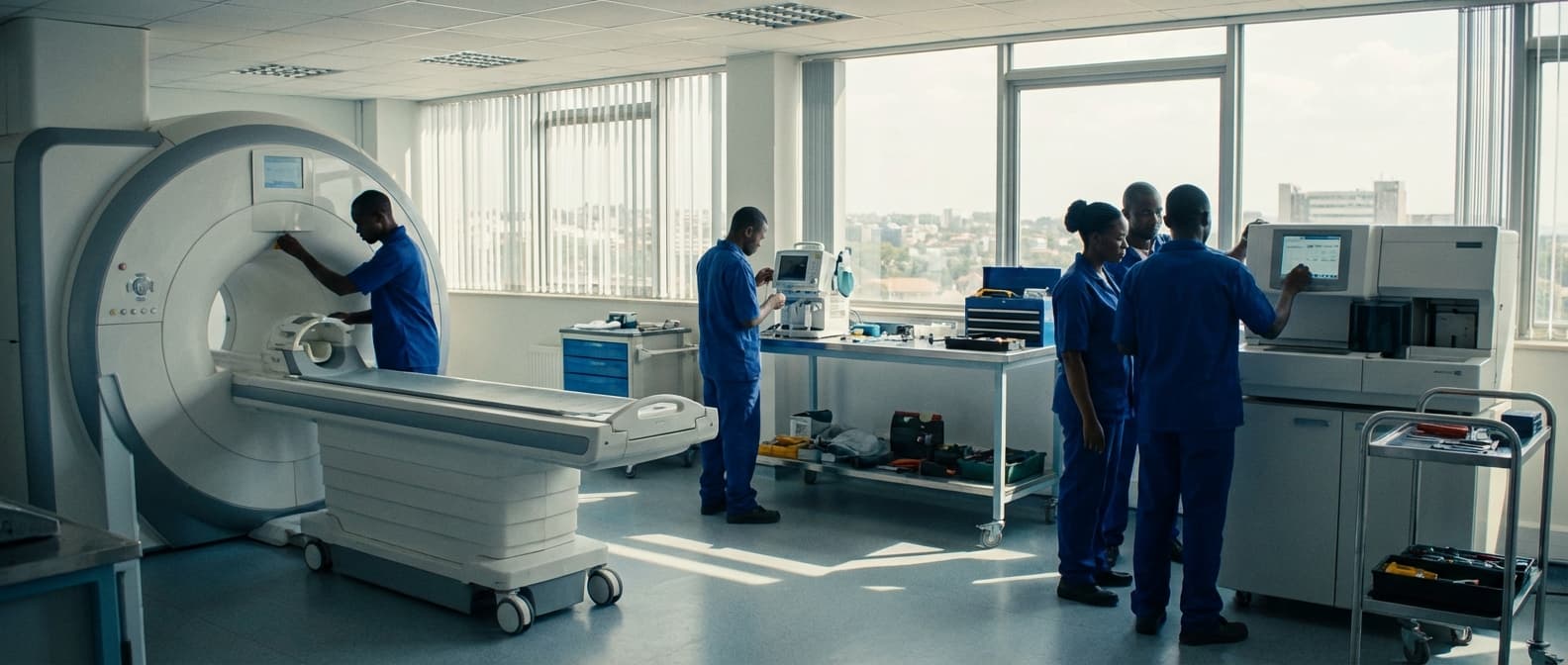
Uptime, Downtime & Root-Cause Analysis Reporting Service in Guinea
Engineering Excellence & Technical Support
Uptime, Downtime & Root-Cause Analysis Reporting Service High-standard technical execution following OEM protocols and local regulatory frameworks.
Proactive Uptime Monitoring & Alerting
Leveraging cutting-edge, geographically distributed probes, our service delivers real-time performance metrics for your applications and infrastructure across Guinea. Receive immediate, actionable alerts via SMS and email upon detecting any deviations from baseline, enabling rapid response to prevent minor issues from escalating into significant outages.
Precise Downtime Detection & Classification
Our sophisticated algorithms accurately detect and categorize all downtime events, distinguishing between network, application, and infrastructure failures. We provide granular timestamped data, including failure duration and impacted services, ensuring a clear understanding of service availability across all your Guinean operations.
Automated Root-Cause Analysis & Trend Reporting
Go beyond just identifying downtime. Our service automates the root-cause analysis process by correlating incident data with system logs and performance trends. Receive comprehensive, easily digestible reports that pinpoint the underlying issues, empowering you to implement permanent solutions and optimize system stability within Guinea.
What Is Uptime, Downtime & Root-cause Analysis Reporting Service In Guinea?
Uptime, Downtime & Root-Cause Analysis (RCA) Reporting Service in Guinea refers to a comprehensive suite of monitoring, measurement, and investigative services designed to ensure and optimize the operational availability of IT infrastructure and business-critical applications within the Guinean market. This service quantifies the periods during which systems are functional and accessible (uptime) and conversely, the intervals of inoperability or unresponsiveness (downtime). Crucially, it extends to detailed post-incident analysis to identify the fundamental reasons (root causes) behind any disruptions, thereby enabling the implementation of preventative measures and continuous improvement strategies.
This service is essential for any organization operating in Guinea that relies on digital systems for its core operations, revenue generation, or service delivery. It provides objective data for performance assessment, service level agreement (SLA) compliance, and informed decision-making regarding IT investments and risk management.
| Service Component | Description | Target Audience | Typical Use Cases |
|---|---|---|---|
| Uptime Monitoring | Real-time verification of system availability and accessibility. | IT Operations Teams, System Administrators, Business Stakeholders | Ensuring business continuity, meeting SLA targets, verifying service provider performance. |
| Downtime Detection | Automated identification and alerting of service interruptions. | IT Support Desks, On-Call Engineers, Management | Minimizing Mean Time To Detect (MTTD), enabling rapid incident response, reducing financial impact of outages. |
| Root-Cause Analysis (RCA) | In-depth investigation to identify the fundamental reasons for system failures. | Senior IT Management, Network Engineers, Application Support Specialists | Preventing recurring incidents, improving system stability, identifying architectural weaknesses, optimizing troubleshooting processes. |
| SLA Reporting | Quantifiable evidence of service availability against contractual obligations. | Procurement Departments, Legal Teams, Business Unit Managers | Validating vendor performance, negotiating service contracts, demonstrating internal IT efficiency. |
| Performance Trend Analysis | Analysis of historical data to understand system behavior over time. | Capacity Planners, IT Architects, Strategic Planners | Forecasting resource requirements, optimizing infrastructure, identifying performance bottlenecks before they impact users. |
Key Components of Uptime, Downtime & RCA Reporting Service
- Proactive Uptime Monitoring: Continuous, real-time surveillance of network devices, servers, applications, and cloud services to verify accessibility and performance.
- Downtime Detection and Notification: Automated alerts triggered upon detection of service outages or performance degradation, with configurable escalation paths.
- Performance Metric Tracking: Collection and analysis of key performance indicators (KPIs) such as response times, latency, error rates, and resource utilization.
- Incident Logging and Categorization: Detailed recording of all service interruptions, including timestamps, affected components, and initial impact assessments.
- Root-Cause Analysis (RCA): Methodical investigation using various diagnostic tools and methodologies (e.g., log analysis, trace route, packet capture, topological mapping) to pinpoint the underlying cause of downtime.
- Post-Incident Reporting: Comprehensive reports detailing the incident, its impact, the identified root cause, remediation steps taken, and recommendations for preventing recurrence.
- SLA Compliance Reporting: Metrics and reports to demonstrate adherence to agreed-upon service level agreements.
- Trend Analysis and Capacity Planning: Utilization of historical data to identify patterns, predict future needs, and optimize resource allocation.
Who Needs Uptime, Downtime & Root-cause Analysis Reporting Service In Guinea?
This reporting service is crucial for a wide range of businesses and organizations operating in Guinea, particularly those where continuous operation, reliability, and efficient problem resolution are paramount. Downtime, whether planned or unexpected, can lead to significant financial losses, reputational damage, and customer dissatisfaction. Root-cause analysis (RCA) is essential for identifying the underlying issues leading to downtime, preventing recurrence, and optimizing system performance.
| Customer/Industry | Key Departments/Roles Requiring Service | Why Uptime/Downtime/RCA is Critical |
|---|---|---|
| Telecommunications Providers | Network Operations Center (NOC), Technical Support, Service Assurance, Infrastructure Management | Minimizing service disruptions, maintaining customer satisfaction, ensuring revenue continuity, identifying network bottlenecks. |
| Financial Institutions | IT Operations, Security Operations Center (SOC), Risk Management, Business Continuity Planning, Branch Operations | Preventing financial losses due to transaction failures, safeguarding sensitive data, maintaining customer trust, complying with regulations. |
| Energy & Utilities | Operations Control Centers, Grid Management, Maintenance & Repair Teams, Customer Service | Ensuring public safety and welfare, preventing economic disruption, maintaining essential services, optimizing resource allocation. |
| Mining Operations | Mine Operations Management, IT/OT (Operational Technology) Teams, Safety & Environment Departments, Maintenance Departments | Maximizing productivity, preventing accidents, ensuring equipment reliability, minimizing costly shutdowns in remote areas. |
| Transportation & Logistics | Operations Control, Fleet Management, IT Infrastructure Teams, Customer Service | Ensuring timely deliveries, preventing flight/ship delays, maintaining safety and security, optimizing supply chain efficiency. |
| Government Agencies | IT Departments, Public Service Delivery Units, Infrastructure Management, National Security | Ensuring continuity of essential public services, protecting national infrastructure, maintaining civic order, efficient resource utilization. |
| Healthcare Providers | IT Departments, Biomedical Engineering, Clinical Operations, Patient Records Management | Ensuring uninterrupted patient care, reliable operation of critical medical equipment, protecting patient data, minimizing health risks from downtime. |
| Manufacturing & Industrial Plants | Production Management, Plant Operations, Maintenance Teams, Quality Control, IT/OT Departments | Maximizing production output, minimizing waste, ensuring product quality, preventing damage to sensitive machinery, worker safety. |
| ISPs & Data Centers | Network Operations, System Administration, Customer Support, Security Teams | Guaranteeing service availability for clients, protecting data integrity, maintaining high performance, attracting and retaining customers. |
| Oil & Gas Companies | Operations Management, SCADA/ICS Teams, Maintenance Departments, HSE (Health, Safety, Environment) Teams | Ensuring operational safety, preventing environmental incidents, maximizing resource extraction, protecting high-value assets, regulatory compliance. |
Target Customers & Departments in Guinea Requiring Uptime, Downtime & Root-Cause Analysis Reporting Services
- Telecommunications Providers: Essential for ensuring uninterrupted voice and data services.
- Financial Institutions (Banks, Microfinance): Critical for secure and reliable transaction processing and customer access.
- Energy & Utilities (Electricity, Water): Maintaining continuous supply to homes and businesses is vital.
- Mining Operations: Essential for maximizing extraction efficiency and ensuring safety in remote locations.
- Transportation & Logistics: Ensuring smooth operations for air travel, shipping, and ground transport.
- Government Agencies: Maintaining public services and national infrastructure.
- Healthcare Providers: Crucial for uninterrupted patient care and critical medical equipment operation.
- Manufacturing & Industrial Plants: Minimizing production halts to meet output targets.
- Internet Service Providers (ISPs) & Data Centers: Guaranteeing network availability and data integrity.
- Oil & Gas Companies: Ensuring safe and continuous operations in a high-risk environment.
Uptime, Downtime & Root-cause Analysis Reporting Service Process In Guinea
This document outlines the standard workflow for the Uptime, Downtime & Root-Cause Analysis (RCA) Reporting Service offered in Guinea. The process is designed to efficiently manage client inquiries, conduct thorough investigations, and deliver comprehensive RCA reports.
| Stage | Description | Key Activities | Responsible Party | Deliverables | Timeline (Estimated) |
|---|---|---|---|---|---|
| Initial contact from the client to request the RCA reporting service. This stage involves understanding the client's needs and defining the scope of the analysis. | Receive and acknowledge client inquiry. Discuss the incident(s) requiring analysis. Define the scope (e.g., specific system, timeframe, impact). Agree on reporting format and desired outcomes. Provide a quotation/service agreement. | Client, Service Provider (Sales/Account Management) | Signed Service Agreement/Work Order, Defined Scope Document | 1-2 Business Days |
| Gathering all relevant information pertaining to the uptime/downtime event from various sources. | Accessing system logs, monitoring data, audit trails, configuration changes, incident tickets, network traffic logs, and interviewing relevant personnel. Performing initial data validation and filtering. | Service Provider (Technical Analysts, System Administrators) | Raw Data Logs, Monitoring Metrics, Interview Notes | Variable (Depends on data volume and complexity, typically 2-7 Business Days) |
| Analyzing the collected data to pinpoint the fundamental reason(s) for the downtime. | Applying RCA methodologies (e.g., 5 Whys, Fishbone Diagram, Fault Tree Analysis). Identifying contributing factors and differentiating between direct causes and symptoms. Validating potential root causes with evidence. | Service Provider (Senior Technical Analysts, RCA Specialists) | Identified Root Cause(s), List of Contributing Factors | Variable (Overlaps with Data Collection & Analysis, typically 1-3 Business Days) |
| Compiling the findings into a structured and comprehensive RCA report. | Documenting the incident summary, timeline of events, impact assessment, detailed analysis of data, identified root cause(s), contributing factors, and recommendations for prevention. Ensuring clarity, accuracy, and conciseness. | Service Provider (Technical Writers, RCA Specialists) | Draft RCA Report | 2-4 Business Days |
| Presenting the draft report to the client for their review and feedback. | Submitting the draft report to the client. Scheduling a review meeting (virtual or in-person). Addressing client questions and incorporating feedback. Finalizing the report based on approved changes. | Service Provider (Project Manager, Technical Lead), Client | Final RCA Report | 2-3 Business Days |
| Collaborating with the client to develop and track corrective and preventive actions. | Discussing the recommendations with the client. Assisting in the development of an action plan. Potentially scheduling follow-up meetings to track the implementation of recommendations and verify effectiveness. Closing the service engagement. | Service Provider (Account Management, Technical Lead), Client | Action Plan (Optional), Service Completion Confirmation | Ongoing/As agreed |
Key Stages of the RCA Reporting Service Workflow
- Inquiry & Scope Definition
- Data Collection & Analysis
- Root-Cause Identification
- Report Generation
- Report Delivery & Review
- Action Planning & Follow-up
Uptime, Downtime & Root-cause Analysis Reporting Service Cost In Guinea
Providing Uptime, Downtime, and Root-Cause Analysis (RCA) reporting services in Guinea involves a multifaceted pricing structure influenced by several key factors. The complexity of the systems being monitored, the volume of data, the frequency of reporting, the required level of detail in RCA, and the service provider's expertise all contribute to the final cost. Local economic conditions, currency fluctuations (primarily the Guinean Franc - GNF), and the competitive landscape also play a role. Service providers may offer tiered packages or customized solutions based on a client's specific needs.
| Service Component | Typical Range (GNF per month) | Notes |
|---|---|---|
| Basic Uptime & Downtime Monitoring (Limited Scope) | 500,000 - 2,000,000 GNF | Covers a few critical systems, standard reporting. |
| Comprehensive Uptime & Downtime Monitoring (Mid-Scale) | 2,000,000 - 7,000,000 GNF | Broader system coverage, more detailed metrics, regular reporting. |
| Enterprise-Level Uptime & Downtime Monitoring (Large Scale) | 7,000,000 - 25,000,000+ GNF | Extensive infrastructure, high granularity, custom dashboards. |
| Basic Root-Cause Analysis (RCA) Reporting | 300,000 - 1,500,000 GNF (per incident/report) | Identifies immediate cause for common issues. |
| Advanced Root-Cause Analysis (RCA) Reporting | 1,500,000 - 6,000,000+ GNF (per incident/report) | In-depth analysis, historical data correlation, preventive recommendations. |
| Integrated Uptime, Downtime & RCA Service Package (Monthly) | 3,000,000 - 30,000,000+ GNF | Bundles ongoing monitoring and a set number of RCA investigations. |
| Consulting & Implementation Fees (One-time) | 2,000,000 - 10,000,000+ GNF | For setting up monitoring infrastructure and initial RCA framework. |
Key Pricing Factors for Uptime, Downtime & RCA Reporting in Guinea
- Scope of Monitoring: The number of servers, applications, network devices, and critical infrastructure components to be monitored directly impacts cost. More extensive coverage means higher expenses.
- Data Volume & Granularity: The amount of data generated by monitoring tools and the level of detail required in the reports (e.g., second-by-second metrics vs. hourly summaries) influence processing and storage costs.
- Reporting Frequency & Customization: Daily, weekly, monthly, or ad-hoc reporting schedules, along with the need for custom report formats or dashboards, affect pricing.
- Root-Cause Analysis (RCA) Depth: The complexity and thoroughness of RCA are significant cost drivers. Basic RCA might involve identifying the immediate cause, while advanced RCA could include forensic analysis, historical data correlation, and preventive recommendations.
- Service Level Agreements (SLAs): Guarantees on uptime, response times for critical alerts, and resolution times for incidents will influence the service provider's operational overhead and therefore the pricing.
- Technology Stack & Integration: The existing IT infrastructure and the need for integrating monitoring tools with specific technologies or platforms can add to the cost.
- Provider Expertise & Reputation: Established providers with a proven track record and specialized expertise in RCA may command higher fees.
- Geographic Coverage: While the reporting is for Guinea, the location of the service provider (local vs. international with local presence) can have an impact.
- Support & Maintenance: Ongoing support, maintenance of monitoring tools, and proactive system health checks are often bundled into service packages.
- Contract Duration: Longer-term contracts may offer discounted rates compared to short-term or project-based engagements.
- Currency Fluctuations: The value of the Guinean Franc (GNF) against major international currencies can affect the cost of imported software, hardware, or services used by the provider, indirectly influencing local pricing.
Affordable Uptime, Downtime & Root-cause Analysis Reporting Service Options
Maintaining consistent application uptime is crucial for business success. Our service offers comprehensive reporting and analysis to ensure your systems are performing optimally. We provide detailed insights into uptime, downtime incidents, and root-cause analysis (RCA) to proactively identify and resolve issues, minimizing future disruptions. Our value-based bundles are designed to cater to different needs and budgets, offering cost-effective solutions for organizations of all sizes.
| Service Bundle | Key Inclusions | Ideal For | Estimated Monthly Cost Range (USD) |
|---|---|---|---|
| Basic Uptime Essentials | Automated uptime monitoring, weekly uptime reports, basic incident alerts. | Small businesses or applications with critical but not mission-critical uptime requirements. | $50 - $150 |
| Standard Performance Analyzer | All features of Basic, plus detailed downtime reports, initial RCA for critical incidents, monthly trend analysis. | Growing businesses, SaaS providers, e-commerce platforms with moderate uptime needs. | $150 - $400 |
| Premium Reliability Suite | All features of Standard, plus 24/7 critical incident RCA, proactive performance recommendations, quarterly deep-dive analysis, dedicated account manager. | Enterprises, mission-critical applications, organizations with stringent uptime SLAs. | $400 - $1000+ |
Key Features & Benefits
- Proactive Uptime Monitoring: Real-time tracking of application availability and performance.
- Detailed Downtime Reporting: Comprehensive analysis of incident duration, impact, and frequency.
- Root-Cause Analysis (RCA): In-depth investigation to identify the underlying causes of failures.
- Trend Analysis: Identification of recurring issues and patterns for preventative measures.
- Actionable Recommendations: Clear steps to improve system reliability and prevent future outages.
- Cost Savings: Reduced downtime translates directly to increased revenue and customer satisfaction.
Verified Providers In Guinea
In Guinea, navigating the healthcare landscape to find reliable and qualified providers is paramount. Franance Health stands out as a beacon of trust, offering a rigorous credentialing process that ensures patients receive the highest standard of care. Their commitment to verification not only builds confidence but also directly translates into better health outcomes.
| Credential Aspect | Franance Health Verification Process | Benefit to Patients |
|---|---|---|
| Medical Licenses & Certifications | Rigorous check of all current and valid licenses and certifications issued by recognized medical boards. | Ensures providers are legally authorized and possess the foundational knowledge and skills to practice medicine. |
| Professional Experience & Education | Thorough review of academic records, residency completion, and documented clinical experience. | Guarantees that providers have practical experience and a strong educational background relevant to their specialization. |
| Background Checks | Comprehensive checks for any disciplinary actions, malpractice claims, or criminal history. | Protects patients from potential risks and ensures providers operate with integrity. |
| Peer Reviews & Recommendations | Where applicable, assessment of professional reputation and feedback from peers. | Offers an additional layer of assurance regarding a provider's competence and collegiality. |
| Adherence to Ethical Standards | Confirmation of commitment to professional codes of conduct and ethical medical practice. | Ensures providers will treat patients with respect, dignity, and confidentiality. |
Why Franance Health Credentials Matter:
- Unwavering Commitment to Quality: Franance Health's credentialing process meticulously scrutinizes each provider's qualifications, experience, and adherence to ethical standards. This ensures that only competent and dedicated healthcare professionals join their network.
- Patient Safety First: By verifying licenses, certifications, and backgrounds, Franance Health actively mitigates risks, prioritizing patient safety and well-being above all else.
- Access to Expertise: Their verified network comprises specialists across various disciplines, offering patients access to a broad spectrum of medical knowledge and advanced treatment options within Guinea.
- Enhanced Trust and Transparency: The Franance Health credential signifies a provider who has met stringent criteria, fostering a transparent and trustworthy relationship between patients and their healthcare providers.
- Improved Healthcare Outcomes: When you choose a Franance Health verified provider, you are choosing a professional committed to evidence-based practices and continuous professional development, leading to more effective treatments and better recovery.
Scope Of Work For Uptime, Downtime & Root-cause Analysis Reporting Service
This Scope of Work (SOW) outlines the services to be provided for Uptime, Downtime, and Root-Cause Analysis (RCA) Reporting. This service aims to provide comprehensive insights into system availability, identify reasons for outages, and recommend corrective actions to prevent recurrence. The technical deliverables and standard specifications are detailed below.
| Deliverable | Description | Frequency/Trigger | Standard Specifications |
|---|---|---|---|
| Uptime/Downtime Monitoring Report | Regular reports detailing the percentage of system uptime and total downtime experienced over a specified period. | Daily, Weekly, Monthly (configurable) | Includes: Total Uptime (%), Total Downtime (minutes/hours), Average Downtime per incident, Peak Downtime periods. Data visualized with graphs and charts. Clearly identifies any service level agreement (SLA) breaches. |
| Downtime Incident Notification | Immediate alerts upon detection of a critical system downtime event. | Real-time (upon detection of downtime) | Includes: Timestamp of detection, affected system(s)/service(s), initial impact assessment. Delivered via email, SMS, or integrated ticketing system. |
| Root-Cause Analysis (RCA) Report | Detailed investigation into the underlying causes of significant downtime incidents. | For each incident exceeding a pre-defined threshold (e.g., >15 minutes downtime) or as per contractual agreement. | Includes: Incident summary, timeline of events, symptoms observed, identified root cause(s) (e.g., hardware failure, software bug, human error, network issue), contributing factors, impact assessment, and recommended corrective/preventative actions. Analysis methodologies (e.g., 5 Whys, Fishbone Diagram) will be employed where appropriate. |
| Action Item Tracking and Resolution Report | Follow-up on recommended actions identified in RCA reports to ensure their implementation and effectiveness. | Bi-weekly or Monthly, as per agreed follow-up schedule. | Includes: List of open action items, owner, status (e.g., In Progress, Completed, Deferred), expected resolution date, evidence of completion. Verification of effectiveness of implemented solutions. |
| Trend Analysis Report | Analysis of historical uptime, downtime, and RCA data to identify recurring patterns, common vulnerabilities, and areas for strategic improvement. | Quarterly or Annually (configurable) | Includes: Identification of most frequent causes of downtime, system performance trends, effectiveness of implemented solutions over time, recommendations for architectural or process improvements. Data presented with trend lines and statistical analysis. |
Service Objectives
- To accurately monitor and report on system uptime and downtime.
- To conduct thorough root-cause analysis for all significant downtime incidents.
- To provide actionable recommendations for preventing future outages and improving system reliability.
- To maintain clear, concise, and timely reporting of all findings.
Service Level Agreement For Uptime, Downtime & Root-cause Analysis Reporting Service
This Service Level Agreement (SLA) outlines the guaranteed uptime, acceptable downtime, and response times for the Uptime, Downtime & Root-Cause Analysis Reporting Service. It also specifies the procedures and timelines for root-cause analysis (RCA) reporting following any service disruption.
| Service Component | Uptime Guarantee | Response Time (Critical Incident) | Response Time (Major Incident) | Response Time (Minor Incident) | Downtime Allowance (Monthly) |
|---|---|---|---|---|---|
| Core Reporting & Monitoring Functionality | 99.9% (excluding Scheduled Maintenance) | < 15 minutes (initial acknowledgement) | < 30 minutes (initial acknowledgement) | < 60 minutes (initial acknowledgement) | Approximately 43.8 minutes |
| Data Ingestion & Processing | 99.5% (excluding Scheduled Maintenance) | < 30 minutes (initial acknowledgement) | < 60 minutes (initial acknowledgement) | < 120 minutes (initial acknowledgement) | Approximately 2 hours 21 minutes |
| API Access | 99.8% (excluding Scheduled Maintenance) | < 20 minutes (initial acknowledgement) | < 40 minutes (initial acknowledgement) | < 80 minutes (initial acknowledgement) | Approximately 1 hour 26 minutes |
Key Definitions
- Service: The Uptime, Downtime & Root-Cause Analysis Reporting Service, accessible via [Specify access method, e.g., web portal, API].
- Uptime: The percentage of time the Service is available and performing its intended functions.
- Downtime: The percentage of time the Service is unavailable or unable to perform its intended functions.
- Scheduled Maintenance: Pre-announced periods where the Service may be unavailable for upgrades, patches, or other necessary maintenance. Scheduled maintenance windows will be communicated at least [Number] days in advance.
- Unscheduled Downtime: Any downtime that is not classified as Scheduled Maintenance.
- Service Credit: A credit applied to the customer's account as compensation for failing to meet the uptime guarantees.
- Root-Cause Analysis (RCA): A process of identifying the fundamental causes of a problem or incident, aimed at preventing recurrence.
Frequently Asked Questions

Ready when you are
Let's scope your Uptime, Downtime & Root-Cause Analysis Reporting Service in Guinea project in Guinea.

Scaling healthcare logistics and technical systems across the entire continent.