
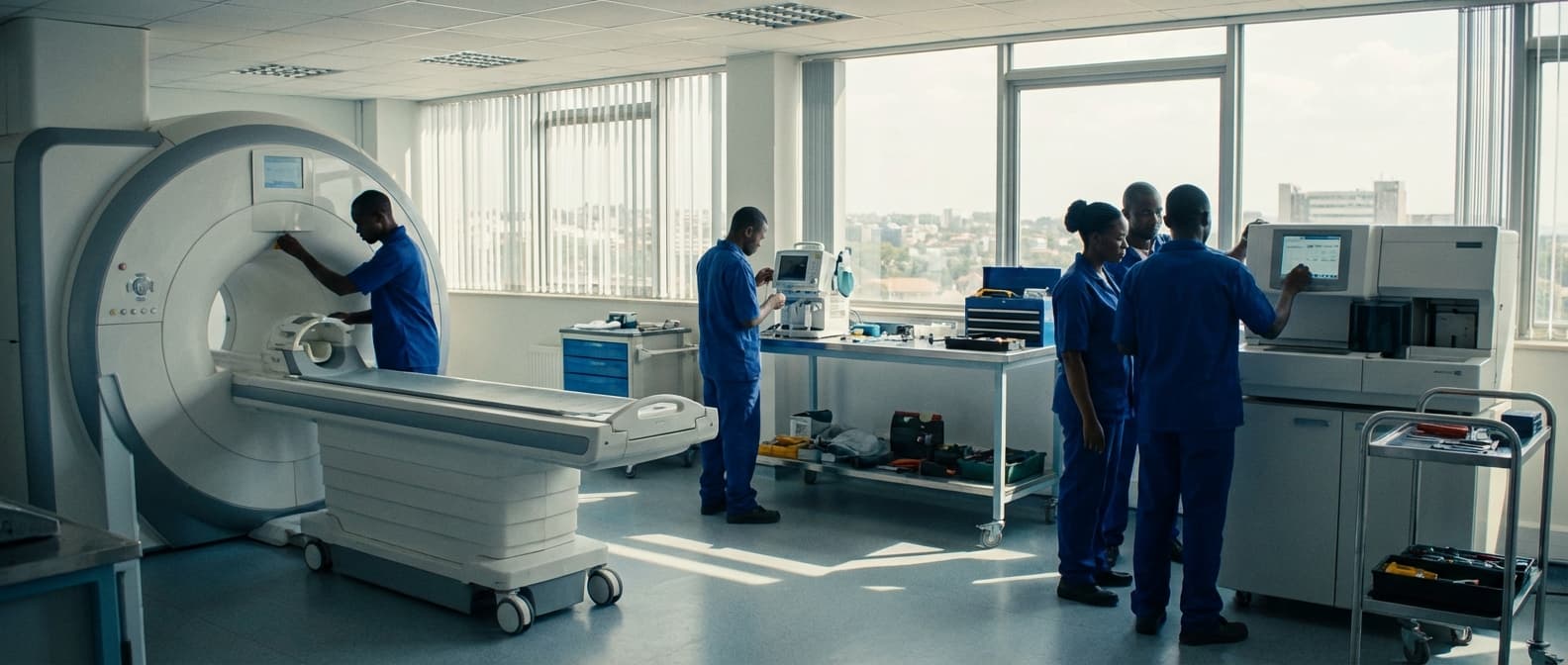
Planned Shutdown Coordination Service for Critical Equipment in Guinea
Engineering Excellence & Technical Support
Planned Shutdown Coordination Service for Critical Equipment High-standard technical execution following OEM protocols and local regulatory frameworks.
Precision Scheduling & Risk Mitigation
Leveraging advanced simulation tools and historical data, we meticulously plan and synchronize critical equipment shutdowns, minimizing operational disruptions and proactively identifying potential risks across Guinea's industrial landscape.
Optimized Resource Allocation
Our service ensures the strategic deployment of specialized personnel, equipment, and materials during planned shutdowns, maximizing efficiency and minimizing downtime for vital industrial assets throughout Guinea.
Enhanced Equipment Uptime & Longevity
By executing perfectly coordinated shutdowns for critical equipment maintenance and upgrades in Guinea, we significantly extend operational lifespan, improve reliability, and ensure sustained productivity for key industries.
What Is Planned Shutdown Coordination Service For Critical Equipment In Guinea?
The Planned Shutdown Coordination Service for Critical Equipment in Guinea is a specialized operational and maintenance management framework designed to ensure the safe, efficient, and synchronized cessation of operations for vital industrial and infrastructure assets. It encompasses a comprehensive suite of activities aimed at minimizing downtime, mitigating risks, optimizing resource allocation, and maintaining the integrity of high-value equipment during scheduled maintenance, repair, or upgrade interventions. This service is crucial for entities operating in Guinea's key economic sectors, where the reliability and availability of critical infrastructure are paramount to national productivity and safety.
| Who Needs This Service? | Typical Use Cases | |||||
|---|---|---|---|---|---|---|
| Mining Operations: Particularly companies involved in bauxite, iron ore, and gold extraction, requiring planned outages for heavy machinery (crushers, conveyors, haul trucks), processing plants, and power generation facilities. | Power Generation Facilities: Hydroelectric dams, thermal power plants (gas, diesel) necessitating maintenance on turbines, generators, transformers, and associated control systems. | Industrial Processing Plants: Refineries, cement plants, and food processing facilities requiring downtime for critical process equipment, pipelines, and control instrumentation. | Port and Logistics Infrastructure: Major ports requiring maintenance on cranes, bulk handling equipment, and associated infrastructure to prevent disruption to trade. | Transportation Networks: Maintenance on critical railway infrastructure (signaling systems, track maintenance) and associated rolling stock. | Water and Wastewater Treatment Facilities: Ensuring uninterrupted service through scheduled maintenance on pumps, filtration systems, and distribution networks. | Telecommunications Infrastructure: Scheduled maintenance on critical backbone network equipment and data centers. |
| Major Overhauls and Component Replacements: Scheduled replacement of high-wear components or entire units (e.g., a turbine, a large pump). | Preventive Maintenance Programs: Executing comprehensive scheduled maintenance tasks that require equipment to be taken offline. | Upgrades and Modernization Projects: Implementing new technology or significant modifications to existing equipment. | Regulatory Compliance Inspections: Conducting mandatory safety and performance inspections that require equipment shutdown. | Emergency Preparedness Drills: Simulating shutdown scenarios to test response capabilities. | Debottlenecking and Efficiency Improvement Projects: Modifications to improve throughput or energy efficiency. |
Key Components of Planned Shutdown Coordination Service
- Scope Definition and Planning: Establishing clear objectives, defining the precise extent of work, identifying all affected equipment, and developing detailed project timelines.
- Risk Assessment and Mitigation: Comprehensive hazard identification, consequence analysis, and the implementation of robust safety protocols and contingency plans.
- Resource Management: Efficient allocation of specialized personnel (engineers, technicians, safety officers), specialized tools, equipment, and materials.
- Logistics and Scheduling: Precise coordination of all activities, including equipment isolation, decontamination, work execution, testing, and recommissioning.
- Stakeholder Communication: Maintaining clear and consistent communication channels with all relevant internal and external stakeholders, including operational teams, maintenance crews, regulatory bodies, and external contractors.
- Quality Assurance and Control: Implementing rigorous inspection and testing procedures to ensure work is performed to specification and equipment integrity is maintained.
- Post-Shutdown Analysis: Conducting a thorough review of the shutdown process, identifying lessons learned, and recommending improvements for future events.
- Regulatory Compliance: Ensuring all activities adhere to Guinean national and international safety, environmental, and industrial standards.
Who Needs Planned Shutdown Coordination Service For Critical Equipment In Guinea?
Planned shutdown coordination services for critical equipment are essential for a wide range of industries in Guinea that rely on the continuous and efficient operation of their machinery. These services are crucial for minimizing downtime, ensuring safety, and optimizing maintenance schedules. Without proper coordination, unexpected failures or prolonged maintenance periods can lead to significant financial losses, production halts, and potential safety hazards. The target customers are organizations with complex operational environments and a high dependence on the reliability of their critical assets.
| Customer Segment | Key Departments Involved |
|---|---|
| Mining and Extractive Industries (e.g., Bauxite, Iron Ore, Gold) | Operations Management, Maintenance Department, Production Department, Safety and Environmental Department, Logistics Department |
| Oil and Gas Sector (e.g., Exploration, Production, Refining) | Production Operations, Maintenance Engineering, Process Safety, Turnaround Planning, Supply Chain Management |
| Manufacturing and Processing Plants (e.g., Cement, Textiles, Chemicals) | Plant Management, Engineering and Maintenance, Production Planning, Quality Control, Procurement |
| Power Generation and Utilities (e.g., Hydroelectric, Thermal Power Plants, Water Treatment) | Plant Operations, Electrical Maintenance, Mechanical Maintenance, Civil Engineering, Safety and Compliance |
| Large-Scale Agriculture and Food Processing (e.g., Sugar Mills, Edible Oil Refineries) | Farm Management, Processing Plant Operations, Maintenance and Engineering, Quality Assurance, Logistics |
| Infrastructure and Transportation Hubs (e.g., Ports, Airports, Major Rail Lines) | Port Operations, Airport Management, Railway Operations, Engineering and Infrastructure Maintenance, Security, Emergency Response |
Target Customers and Departments in Guinea Requiring Planned Shutdown Coordination Services
- Mining and Extractive Industries
- Oil and Gas Sector
- Manufacturing and Processing Plants
- Power Generation and Utilities
- Large-Scale Agriculture and Food Processing
- Infrastructure and Transportation Hubs
Planned Shutdown Coordination Service For Critical Equipment Process In Guinea
The Planned Shutdown Coordination Service for Critical Equipment Process in Guinea aims to streamline and ensure the safe, efficient, and timely execution of planned maintenance shutdowns for essential industrial and operational equipment. This service is crucial for minimizing downtime, preventing unexpected failures, and optimizing asset performance. The workflow encompasses a structured approach, beginning with an initial inquiry and culminating in the post-shutdown review.
| Phase | Key Stages | Activities | Deliverables | Key Stakeholders |
|---|---|---|---|---|
| 1: Inquiry & Initial Assessment | Initial Contact | Client submits an inquiry for planned shutdown coordination. | Acknowledgement of Inquiry, Preliminary Scope Identification | Client (Operations, Maintenance, Asset Management), Service Provider (Business Development, Lead Coordinator) |
| Scope Definition Meeting | Discuss objectives, critical equipment, desired shutdown window, historical data, safety requirements. | Draft Scope of Work, Preliminary Risk Assessment | Client (Operations, Maintenance, Safety, Procurement), Service Provider (Lead Coordinator, Technical Experts) | |
| Feasibility Study & Proposal Development | Assess technical feasibility, resource requirements, potential challenges, and develop a detailed proposal. | Detailed Proposal, Cost Estimate, Project Timeline Outline | Service Provider (Project Management, Technical Team, Commercial Team), Client (Procurement, Finance) | |
| 2: Planning & Scheduling | Detailed Planning Workshop | Collaborative session to define detailed shutdown scope, specific tasks, dependencies, resource allocation, and safety protocols. | Detailed Shutdown Plan, Work Breakdown Structure (WBS), Master Schedule | Client (All relevant departments), Service Provider (Project Management, Engineering, Safety, Logistics, Procurement) |
| Resource & Material Planning | Identify and secure all necessary personnel (internal & external), equipment, tools, spare parts, and consumables. | Resource Matrix, Material & Equipment List, Procurement Plan | Client (Procurement, Stores), Service Provider (Logistics, Procurement) | |
| Risk Management & Mitigation Planning | Identify potential risks (safety, operational, environmental), develop mitigation strategies, and establish emergency response plans. | Comprehensive Risk Register, Emergency Response Plan, Safety Procedures | Client (Safety Department), Service Provider (Safety Officer, Project Management) | |
| Communication & Stakeholder Management Plan | Define communication channels, frequency, and key messages for all stakeholders. | Communication Plan, Stakeholder Register | Service Provider (Project Management), Client (All relevant departments) | |
| 3: Pre-Shutdown Preparation | Site Mobilization & Briefings | Mobilize personnel, equipment, and materials to the site. Conduct pre-shutdown briefings and inductions. | Site Readiness Report, Personnel Inductions Completed | Service Provider (Site Management, Supervisors), Client (Site Security, Operations) |
| Pre-Shutdown Inspections & Testing | Conduct necessary pre-shutdown inspections, functional tests, and isolations of equipment. | Inspection & Testing Reports, Isolation Certificates | Client (Maintenance, Operations), Service Provider (Technical Team) | |
| Final Plan Review & Approval | Final review and sign-off of all plans and preparations by all relevant stakeholders. | Approved Shutdown Plan & Procedures | Client (Management, Operations, Maintenance, Safety), Service Provider (Project Management) | |
| 4: Shutdown Execution | Controlled Shutdown Initiation | Safely bring critical equipment offline according to the approved plan. | Equipment Offline Notification, Initial Progress Report | Client (Operations), Service Provider (Supervisors) |
| Maintenance & Repair Activities | Execute planned maintenance, repair, inspection, and testing tasks as per the schedule. | Work Order Completion Reports, Inspection Findings | Service Provider (Technicians, Engineers), Client (Supervisors, Quality Control) | |
| Progress Monitoring & Reporting | Daily monitoring of progress against the schedule, identification of deviations, and communication of status. | Daily Progress Reports, Issue Logs, Revised Schedules (if needed) | Service Provider (Project Management, Site Management), Client (Project Management, Operations) | |
| Safety Management & Compliance | Strict adherence to safety protocols, regular safety audits, and incident reporting. | Safety Audit Reports, Incident Reports (if any) | Service Provider (Safety Officer), Client (Safety Department) | |
| 5: Post-Shutdown & Review | Equipment Restart & Testing | Safely restart and test all critical equipment to ensure proper functionality. | Startup & Testing Reports, Performance Verification | Client (Operations, Maintenance), Service Provider (Technical Team) |
| Demobilization & Site Restoration | Dismantle temporary facilities, remove equipment, and restore the site to its pre-shutdown condition. | Site Clearance Certificate, Demobilization Report | Service Provider (Logistics, Site Management), Client (Site Security, Facilities) | |
| Post-Shutdown Review Meeting | Evaluate the overall success of the shutdown, identify lessons learned, and discuss areas for improvement. | Post-Shutdown Report, Lessons Learned Document, Final Project Report | Client (All relevant departments), Service Provider (Project Management, Key Personnel) | |
| Final Reporting & Documentation | Provide a comprehensive final report including all completed work, test results, costs, and recommendations. | Final Project Documentation, Invoices | Service Provider (Project Management, Finance), Client (Procurement, Finance, Asset Management) |
Planned Shutdown Coordination Service Workflow
- Phase 1: Inquiry & Initial Assessment
- Phase 2: Planning & Scheduling
- Phase 3: Pre-Shutdown Preparation
- Phase 4: Shutdown Execution
- Phase 5: Post-Shutdown & Review
Planned Shutdown Coordination Service For Critical Equipment Cost In Guinea
The cost of a Planned Shutdown Coordination Service for critical equipment in Guinea is influenced by several key factors. These include the complexity and duration of the shutdown, the specific types and number of critical equipment involved, the level of expertise and experience required from the coordination team, the geographical location of the facility within Guinea, and the extent of external services or resources that need to be managed (e.g., specialized contractors, spare parts logistics). The service typically involves meticulous planning, scheduling, resource allocation, risk assessment, safety management, communication, and post-shutdown reporting. The pricing structure can be a fixed fee, a time-and-materials basis, or a combination, often determined through a detailed proposal after an initial site assessment and scope definition.
| Service Component | Typical Price Range (GNF - Guinean Franc) |
|---|---|
| Initial Planning & Scope Definition | 2,000,000 - 7,000,000 |
| Detailed Shutdown Planning & Scheduling | 5,000,000 - 15,000,000 |
| On-site Coordination (per day, per coordinator) | 500,000 - 1,500,000 |
| Risk Assessment & Safety Management | 2,000,000 - 8,000,000 |
| Vendor & Contractor Management | 3,000,000 - 12,000,000 |
| Logistics & Resource Coordination | 1,500,000 - 6,000,000 |
| Post-Shutdown Reporting & Analysis | 2,000,000 - 7,000,000 |
| Comprehensive Project Management Fee (Percentage of total shutdown cost, or separate) | 5% - 15% |
| Small to Medium Scale Shutdown (Estimated Total) | 15,000,000 - 50,000,000 |
| Large Scale / Highly Complex Shutdown (Estimated Total) | 50,000,000 - 200,000,000+ |
Pricing Factors for Planned Shutdown Coordination Service in Guinea
- Complexity and Duration of the Shutdown
- Number and Type of Critical Equipment
- Required Expertise and Experience of the Coordination Team
- Geographical Location of the Facility
- Scope of External Services and Resource Management
- In-depth Planning and Risk Assessment Requirements
- On-site Presence and Duration of the Coordination Team
- Emergency Response and Contingency Planning Needs
Affordable Planned Shutdown Coordination Service For Critical Equipment Options
Our Affordable Planned Shutdown Coordination Service is designed to minimize downtime and maximize efficiency for your critical equipment maintenance. We offer flexible value bundles and implement robust cost-saving strategies to ensure your planned shutdowns are executed smoothly and economically. Our service encompasses meticulous planning, scheduling, resource allocation, and on-site supervision, all tailored to your specific needs and budget.
| Cost-Saving Strategy | Description | Impact |
|---|---|---|
| Optimized Scheduling & Critical Path Management | Identifying and prioritizing critical tasks to minimize overall shutdown duration. Efficient sequencing of activities to avoid delays. | Reduced labor costs, minimized lost production time, faster return to service. |
| Proactive Resource Allocation | Ensuring the right personnel, tools, and materials are available at the right time, preventing idle time and last-minute rushes. | Lower overtime costs, reduced material spoilage or loss, improved team productivity. |
| Pre-Shutdown Risk Mitigation | Identifying potential hazards and developing contingency plans before the shutdown begins, avoiding unexpected issues and costly rectifications. | Fewer safety incidents, reduced equipment damage, minimized unforeseen delays and associated costs. |
| Consolidated Procurement | Leveraging our network and bulk purchasing power to secure parts and services at competitive rates. Coordinating orders to minimize shipping costs. | Direct savings on equipment and materials, reduced logistics expenses. |
| Efficient Communication & Coordination | Streamlined communication channels and regular updates to all parties involved, preventing miscommunication and rework. | Fewer errors, reduced wasted effort, improved overall efficiency. |
| Post-Shutdown Performance Review | Analyzing the shutdown process to identify areas for improvement in future planning and execution. | Continuous improvement leading to progressively more cost-effective shutdowns. |
Value Bundles
- Basic Bundle: Includes essential shutdown planning, scheduling assistance, and a basic communication plan. Ideal for smaller operations or routine maintenance.
- Standard Bundle: Encompasses comprehensive shutdown planning, detailed scheduling with critical path analysis, risk assessment, and proactive communication with all stakeholders. This is our most popular option.
- Premium Bundle: Offers all Standard Bundle features plus advanced scenario planning, detailed contractor management, real-time progress tracking, post-shutdown analysis, and dedicated 24/7 support throughout the shutdown period. For high-stakes or complex operations.
- Custom Bundle: Tailored to your unique requirements, combining elements from different bundles or adding specialized services like specialized equipment sourcing or advanced safety protocols.
Verified Providers In Guinea
In Guinea, ensuring access to quality healthcare is paramount. Franance Health has emerged as a leading force, offering a network of verified providers that distinguish themselves through rigorous credentialing and a commitment to excellence. This dedication to vetting their medical professionals is not just a procedural step; it's a fundamental guarantee for patients seeking reliable and competent care. The Franance Health credentialing process goes beyond basic licensing, encompassing a comprehensive evaluation of experience, specialized training, ethical conduct, and patient satisfaction records. This meticulous approach ensures that every provider associated with Franance Health meets the highest standards of medical practice and patient care. By choosing Franance Health, patients are not just selecting a doctor or a clinic; they are choosing a healthcare partner that has done the exhaustive work of confirming the quality and integrity of their medical network.
| Provider Type | Franance Health Advantage | Patient Benefit |
|---|---|---|
| General Practitioners | Verified to offer comprehensive primary care services with updated knowledge. | Access to reliable, first-line medical advice and treatment for common ailments. |
| Specialist Physicians | Credentials confirmed for specialized areas such as cardiology, pediatrics, surgery, etc. | Ensured expertise and appropriate treatment for complex medical conditions. |
| Hospitals & Clinics | Accreditation and operational standards verified for quality infrastructure and patient safety. | Trustworthy facilities with the resources and trained staff to handle various medical needs. |
| Diagnostic Centers | Verification of equipment calibration, personnel qualifications, and accurate reporting. | Reliable and precise diagnostic results for informed medical decisions. |
Key Aspects of Franance Health's Credentialing Process
- Comprehensive verification of medical licenses and certifications.
- Thorough review of educational background and specialized training.
- Evaluation of professional experience and practice history.
- Assessment of ethical conduct and disciplinary records.
- Consideration of patient feedback and satisfaction surveys.
- Ongoing monitoring and re-credentialing to maintain high standards.
Scope Of Work For Planned Shutdown Coordination Service For Critical Equipment
This Scope of Work (SOW) outlines the services required for the Planned Shutdown Coordination for Critical Equipment. The objective is to ensure a safe, efficient, and well-coordinated shutdown and restart process to minimize downtime and associated risks. This includes detailed planning, execution oversight, and post-shutdown review for critical equipment maintenance, repairs, or upgrades. The service provider will act as a central point of coordination, liaising with all relevant stakeholders and ensuring adherence to all safety and operational procedures.
| Phase | Activity | Description | Deliverable(s) |
|---|---|---|---|
| Planning | Shutdown Strategy Development | Define overall shutdown goals, scope, and approach. Identify critical equipment and dependencies. | Shutdown Strategy Document |
| Planning | Detailed Work Package Definition | Break down maintenance/repair tasks into manageable work packages, including required resources, permits, and safety procedures. | Detailed Work Packages |
| Planning | Scheduling and Sequencing | Develop a master shutdown schedule, identifying critical path activities and interdependencies. Optimize sequencing for efficiency. | Master Shutdown Schedule |
| Planning | Resource Management Plan | Identify and secure all necessary internal and external resources (personnel, equipment, materials, tools). | Resource Allocation Plan |
| Planning | Risk Assessment and Mitigation Plan | Conduct comprehensive risk assessments for all shutdown activities and develop mitigation strategies. Include safety, environmental, and operational risks. | Risk Assessment & Mitigation Plan |
| Planning | Stakeholder Communication Plan | Establish clear communication channels and protocols for all stakeholders (operations, maintenance, contractors, management). | Communication Plan |
| Planning | Permit to Work (PTW) System Integration | Ensure seamless integration with the existing PTW system for all shutdown activities. | PTW Integration Strategy |
| Execution | On-site Coordination | Provide on-site coordination for all shutdown activities, ensuring adherence to the schedule and safety procedures. | Daily Progress Reports |
| Execution | Safety Supervision | Oversee all safety aspects during the shutdown, conduct safety toolbox talks, and enforce safety regulations. | Safety Compliance Records |
| Execution | Progress Monitoring and Reporting | Track progress against the schedule, identify deviations, and implement corrective actions. Provide regular updates to stakeholders. | Real-time Progress Dashboards |
| Execution | Issue Resolution | Proactively identify and resolve any issues or bottlenecks that arise during the shutdown. | Issue Log and Resolution Tracker |
| Execution | Equipment Isolation and Tagging | Ensure proper isolation, lockout/tagout (LOTO), and verification of all equipment. | LOTO Compliance Documentation |
| Restart | Pre-Restart Checks | Conduct thorough pre-restart checks and functional tests on all repaired/maintained equipment. | Pre-Restart Checklist Completion |
| Restart | Controlled Restart Execution | Oversee the phased and controlled restart of critical equipment according to the approved procedure. | Restart Procedure Compliance Records |
| Restart | Performance Verification | Monitor equipment performance post-restart and verify adherence to operational parameters. | Performance Verification Reports |
| Post-Shutdown | Post-Shutdown Review Meeting | Conduct a comprehensive review of the shutdown, identifying lessons learned and areas for improvement. | Lessons Learned Report |
| Post-Shutdown | Final Report Preparation | Compile a final shutdown report detailing all activities, outcomes, deviations, costs, and recommendations. | Final Shutdown Report |
| Post-Shutdown | Documentation Archival | Ensure all shutdown-related documentation is properly archived for future reference. | Archived Documentation |
Key Objectives
- Minimize unplanned downtime and associated production losses.
- Ensure the safety of all personnel involved in the shutdown and restart activities.
- Optimize the execution timeline and resource allocation.
- Facilitate effective communication and coordination among all stakeholders.
- Ensure all maintenance and repair activities are performed to the highest quality standards.
- Document all activities and outcomes for future reference and continuous improvement.
Service Level Agreement For Planned Shutdown Coordination Service For Critical Equipment
This Service Level Agreement (SLA) outlines the terms and conditions for the Planned Shutdown Coordination Service for Critical Equipment. It defines the expected response times for outage notifications and the uptime guarantees for the coordination service itself. This SLA is applicable to all contracted users of the Planned Shutdown Coordination Service.
| Service Component | Response Time (for Outage Notification) | Uptime Guarantee |
|---|---|---|
| Planned Shutdown Coordination Service (Core Functionality) | 15 minutes for critical impact outage notifications, 60 minutes for standard outage notifications | 99.9% (excluding scheduled maintenance) |
| Communication Channels (e.g., notification alerts, portal access) | Within 5 minutes of notification receipt | 99.5% (excluding scheduled maintenance) |
| Support Personnel Availability (during business hours) | Immediate response for critical impact outage notifications | N/A (as per defined business hours) |
| Support Personnel Availability (after business hours/weekends/holidays for critical impact notifications) | Within 30 minutes of notification receipt | N/A (as per defined business hours) |
Definitions
- Critical Equipment: Any piece of hardware or software infrastructure deemed essential for the uninterrupted operation of business processes. Its failure or unavailability would result in significant financial loss or operational disruption.
- Planned Shutdown: A scheduled cessation of operations for critical equipment for maintenance, upgrades, or other pre-determined activities.
- Planned Shutdown Coordination Service: A service providing tools, communication channels, and support to effectively plan, schedule, and execute planned shutdowns of critical equipment, minimizing disruption.
- Outage Notification: An alert or communication received by the Planned Shutdown Coordination Service indicating an unexpected or planned interruption of critical equipment.
- Response Time: The maximum allowable time from the initiation of an Outage Notification to the first documented acknowledgement and/or action taken by the Planned Shutdown Coordination Service.
- Uptime Guarantee: The percentage of time the Planned Shutdown Coordination Service is available and functional, excluding scheduled maintenance windows.
- Scheduled Maintenance: Pre-announced periods when the Planned Shutdown Coordination Service may be temporarily unavailable for necessary updates or maintenance. These windows will be communicated with ample notice.
Frequently Asked Questions

Ready when you are
Let's scope your Planned Shutdown Coordination Service for Critical Equipment in Guinea project in Guinea.

Scaling healthcare logistics and technical systems across the entire continent.