
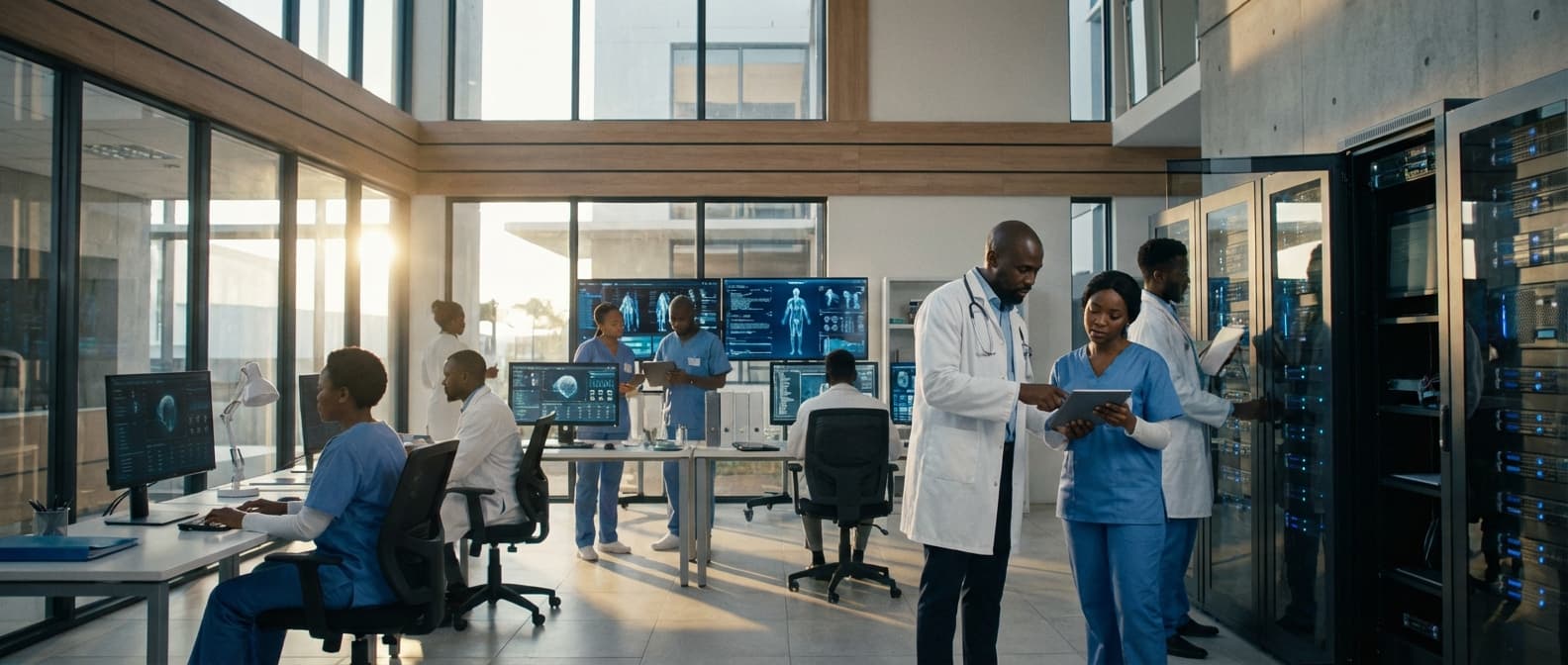
Tele-Radiology in Guinea
Engineering Excellence & Technical Support
24/7 access to certified radiologists providing rapid, accurate remote interpretation of diagnostic imaging studies. High-standard technical execution following OEM protocols and local regulatory frameworks.
Expert Teleradiology Access
Bridging geographical gaps, our teleradiology platform provides instant access to specialized radiologists, offering accurate and timely diagnoses for patients in remote areas of Guinea, overcoming the shortage of on-site specialists.
Secure Cloud-Based Image Sharing
Leveraging secure, encrypted cloud infrastructure, medical imaging data from Guinean healthcare facilities is transmitted safely and efficiently to our remote reading centers, ensuring data integrity and patient privacy.
AI-Powered Diagnostic Support
Integrating advanced AI algorithms, our teleradiology solution enhances diagnostic accuracy by flagging critical findings, streamlining workflows, and supporting our radiologists in delivering faster and more precise interpretations.
What Is Tele-radiology In Guinea?
Tele-radiology, also known as teleradiology, is a subspecialty of radiology that utilizes telecommunications technology to transmit radiological images (such as X-rays, CT scans, MRIs, and ultrasounds) from one location to another for interpretation. In the context of Guinea, a nation with significant geographical disparities in healthcare access and a nascent radiology infrastructure, tele-radiology represents a critical advancement in extending diagnostic capabilities to underserved populations. This service involves the remote reading and interpretation of medical images by qualified radiologists, regardless of their physical location. The process typically entails capturing images at a primary healthcare facility or imaging center, securely transmitting these digital files over a network to a remote radiologist, who then analyzes the images and generates a diagnostic report. This report is subsequently sent back to the referring physician for clinical decision-making. The integration of tele-radiology in Guinea aims to overcome challenges such as the scarcity of trained radiologists, limited availability of advanced imaging equipment in remote areas, and logistical difficulties in transporting patients for specialized consultations.
| Use Case | Description | Clinical Impact in Guinea |
|---|---|---|
| Stroke Diagnosis | Remote interpretation of CT scans for suspected stroke, enabling rapid identification of ischemic or hemorrhagic events. | Facilitates timely administration of thrombolytic therapy or surgical intervention, improving patient outcomes and reducing disability in areas with limited access to neurologists. |
| Tuberculosis (TB) Screening and Diagnosis | Analysis of chest X-rays for the detection of pulmonary TB, particularly in remote communities and during outbreaks. | Enhances diagnostic accuracy and efficiency in identifying TB cases, supporting public health efforts for disease control and treatment initiation. |
| Pediatric Imaging Interpretation | Remote reading of X-rays, ultrasounds, and other pediatric imaging studies for congenital anomalies, trauma, and developmental disorders. | Provides access to expert pediatric radiology interpretation for a vulnerable population, leading to earlier diagnosis and intervention. |
| Emergency Trauma Assessment | Rapid interpretation of X-rays and CT scans for patients with severe injuries, aiding in surgical planning and management. | Crucial for critical care in resource-limited settings, ensuring prompt and accurate assessment of life-threatening injuries. |
| Oncological Imaging Evaluation | Remote review of CT, MRI, and PET scans for cancer staging, treatment response assessment, and follow-up surveillance. | Enables access to specialized oncological radiology expertise, supporting multidisciplinary cancer care and improving treatment efficacy. |
| Musculoskeletal Injury Diagnosis | Interpretation of X-rays and MRIs for fractures, ligament tears, and other orthopedic conditions. | Assists orthopedic surgeons and primary care physicians in diagnosing and managing musculoskeletal injuries, preventing long-term complications. |
| Abdominal and Pelvic Imaging | Remote reading of ultrasounds, CT scans, and MRIs for suspected appendicitis, bowel obstruction, renal stones, and gynecological conditions. | Improves diagnostic confidence for common abdominal and pelvic pathologies, guiding appropriate medical or surgical management. |
Key Components and Beneficiaries of Tele-radiology in Guinea
- Remote Image Acquisition and Transmission: Digital imaging equipment (CR, DR, CT, MRI, Ultrasound) at local facilities captures patient scans. These images are then anonymized, compressed, and securely transmitted via high-speed internet or satellite links to a central tele-radiology hub or individual remote radiologists.
- Remote Interpretation and Reporting: Board-certified or fellowship-trained radiologists, located either within Guinea or internationally, access the transmitted images. They perform a comprehensive analysis and generate a detailed diagnostic report, often within a predefined turnaround time (TAT).
- Secure Data Management and Storage: Robust Picture Archiving and Communication Systems (PACS) and electronic medical record (EMR) integration are essential for securely storing, retrieving, and managing patient images and reports, adhering to data privacy regulations.
- Referral and Communication Network: A system for seamless communication between referring physicians, the tele-radiology service, and the patient's primary care provider is crucial for timely feedback and follow-up.
- Technical Support and Training: Local IT personnel require training on operating imaging equipment, basic troubleshooting, and managing the tele-radiology platform. Remote radiologists also need familiarization with the local context and common pathologies.
- Primary Healthcare Facilities: Clinics and smaller hospitals in rural or remote regions lacking on-site radiology expertise or advanced imaging modalities.
- District Hospitals: Larger regional hospitals that may have basic imaging capabilities but insufficient specialized radiologist coverage for complex cases.
- Emergency Departments: Providing rapid interpretation of critical imaging studies (e.g., trauma, stroke, acute abdomen) when on-site radiologists are unavailable.
- Specialty Clinics: Facilitating consultations for patients requiring specialized imaging interpretations in fields like neurology, cardiology, or oncology.
- Public Health Initiatives: Supporting screening programs and epidemiological studies requiring widespread image analysis.
Who Needs Tele-radiology In Guinea?
Tele-radiology offers a vital solution for improving diagnostic imaging access and expertise in Guinea, a country facing significant challenges in healthcare infrastructure and specialist availability. The core need stems from a scarcity of trained radiologists, particularly in remote and underserved areas, leading to delayed or missed diagnoses and suboptimal patient outcomes. Tele-radiology bridges this gap by connecting local healthcare facilities with remote, qualified radiologists who can interpret medical images (X-rays, CT scans, MRIs) and provide timely reports and consultations. This not only enhances diagnostic accuracy and efficiency but also supports the professional development of local medical staff through knowledge sharing and remote training opportunities.
| Customer Type | Key Departments/Specialties | Primary Needs Addressed | Impact of Tele-Radiology |
|---|---|---|---|
| Primary Healthcare Centers (PHCs) | General Medicine, Emergency Services, Maternal & Child Health | Limited access to imaging interpretation, lack of specialist radiologists, delayed diagnosis of common conditions (e.g., fractures, pneumonia, tuberculosis). | Enables early detection and management of critical conditions, reduces patient travel burden, improves referral decisions, supports primary care physician training. |
| District Hospitals | General Surgery, Internal Medicine, Pediatrics, Emergency Medicine, Obstetrics & Gynecology | Inconsistent availability of radiologists, backlog of imaging studies, need for expert consultation for complex cases, limited capacity for advanced imaging interpretation. | Provides timely and accurate diagnostic reports, improves surgical planning, facilitates management of trauma and critical care patients, enhances capacity for handling a wider range of medical conditions. |
| Regional Hospitals | Orthopedics, Neurology, Cardiology, Oncology, Radiology Departments (if any staff present) | Shortage of sub-specialty radiologists, need for second opinions, support for training junior radiologists, managing increased imaging volume. | Offers access to sub-specialty expertise, improves diagnostic confidence, aids in complex case management, supports continuous professional development for on-site staff. |
| Tertiary Care Centers/University Hospitals | All medical and surgical specialties, particularly highly specialized fields like neurosurgery, cardiac surgery, advanced oncology. | Potential for localized radiology staff shortages, need for rapid interpretation of large volumes of complex imaging, supporting teaching and research activities. | Ensures consistent diagnostic support for complex procedures, facilitates efficient patient throughput, contributes to academic and research endeavors by providing rapid imaging analysis. |
| Mobile Diagnostic Units | Public health screening programs, remote community outreach, disaster response. | Need for immediate interpretation of images obtained in situ, logistical challenges in transporting patients to fixed facilities. | Allows for real-time diagnosis and treatment decisions during mobile screening or in emergency situations, maximizing the utility of mobile units. |
Target Customers and Departments for Tele-Radiology in Guinea
- Primary Healthcare Centers (PHCs) in rural and remote areas
- District Hospitals
- Regional Hospitals
- Tertiary Care Centers/University Hospitals
- Mobile Diagnostic Units
Tele-radiology Process In Guinea
Tele-radiology in Guinea aims to bridge the gap in specialized radiology services, particularly in remote or underserved areas. The process involves multiple stakeholders, from the referring physician and the patient to the radiologist and the healthcare facility. The workflow is designed to ensure efficient and accurate diagnostic imaging interpretation. It begins with an inquiry from a healthcare facility or physician, leading to patient preparation, image acquisition, secure transmission, expert interpretation, and finally, the delivery of the report back to the referring physician. Challenges in Guinea's context often include infrastructure limitations (internet connectivity, power supply), equipment availability, and the need for robust training and standardization.
| Stage | Description | Key Actors Involved | Technology/Tools Used | Potential Challenges in Guinea |
|---|---|---|---|---|
| Inquiry and Case Referral | A healthcare facility or physician identifies a need for specialized radiology interpretation and initiates a request. | Referring Physician, Healthcare Facility Administrator | Phone, Email, Secure Communication Platform (if available) | Lack of awareness about tele-radiology services, poor communication channels. |
| Patient Registration and Preparation | The patient's details are collected, and they are prepared for the imaging procedure according to standard protocols. | Referring Physician, Nurse, Patient | Patient Management System (if available), Paper-based records | Limited patient registration systems, potential language barriers, patient literacy. |
| Image Acquisition | Diagnostic images (X-ray, CT, MRI, Ultrasound) are acquired using available imaging equipment at the referring facility. | Radiographer, Technologist, Patient | X-ray machines, CT scanners, MRI scanners, Ultrasound machines | Outdated or malfunctioning equipment, lack of trained personnel, power outages affecting equipment. |
| Image Transmission | Acquired images are securely transmitted from the referring facility to the tele-radiology service provider. | Radiographer, IT Support (if available), Tele-radiology Platform | DICOM viewer/PACS, Secure internet connection (e.g., VPN), Cloud storage, Satellite internet (in some cases) | Unreliable internet connectivity, slow transmission speeds, lack of secure networks, power instability for transmission equipment. |
| Image Quality Control and Triage | Received images are reviewed for technical quality and the urgency of the case is assessed. | Technical Staff at Tele-radiology Hub, Triage Radiologist | PACS, Triage protocols | Subjective quality assessment, difficulty in immediate triage without direct patient context. |
| Radiologist Interpretation | A qualified radiologist reviews the images and provides a diagnostic interpretation. | Radiologist | Workstation with high-resolution monitor, Tele-radiology software (e.g., RIS/PACS) | Shortage of qualified radiologists, workload for available radiologists, potential distractions at the interpretation site. |
| Report Generation | The radiologist creates a comprehensive diagnostic report based on their interpretation. | Radiologist | Reporting software, Speech recognition software (if available) | Language barriers for non-local radiologists, need for standardized reporting templates. |
| Report Delivery and Discussion | The final report is securely transmitted back to the referring physician, who then discusses findings with the patient. | Radiologist, Referring Physician, Patient | Secure email, Tele-radiology platform, Phone | Delayed report delivery due to transmission issues, difficulty in direct consultation between radiologists and referring physicians. |
| Follow-up and Billing | Any necessary follow-up imaging or consultations are arranged, and services are billed. | Referring Physician, Healthcare Facility, Tele-radiology Provider | Billing software, Administrative processes | Complex billing procedures, lack of standardized pricing, potential for payment delays. |
Tele-Radiology Workflow in Guinea
- Inquiry and Case Referral
- Patient Registration and Preparation
- Image Acquisition
- Image Transmission
- Image Quality Control and Triage
- Radiologist Interpretation
- Report Generation
- Report Delivery and Discussion
- Follow-up and Billing
Tele-radiology Cost In Guinea
Tele-radiology, the practice of interpreting medical images remotely, is a burgeoning field in Guinea, offering a potential solution to the scarcity of specialized radiologists in many regions. The cost of tele-radiology services in Guinea is influenced by several key factors, leading to a range of pricing structures. These factors include the complexity and modality of the imaging study (e.g., X-ray, CT scan, MRI), the urgency of the report, the radiologist's sub-specialization, and the established reputation and infrastructure of the tele-radiology provider. While specific pricing is often negotiated on a case-by-case basis, general cost estimations can be provided in the local currency, the Guinean Franc (GNF).
| Imaging Modality/Complexity | Estimated Cost Range (GNF) | Notes |
|---|---|---|
| Standard X-ray (e.g., chest, limb) | 50,000 - 150,000 GNF | Basic interpretation, common pathologies. |
| Specialized X-ray (e.g., mammography, specific orthopedic views) | 80,000 - 200,000 GNF | Requires more detailed analysis or specific expertise. |
| CT Scan (e.g., brain, abdomen, chest) | 200,000 - 800,000 GNF | Varies significantly with the number of slices and clinical question. |
| MRI Scan (e.g., brain, spine, joints) | 300,000 - 1,200,000 GNF | Generally the most expensive due to complexity and acquisition time. |
| Ultrasound Interpretation | 70,000 - 250,000 GNF | Depends on the area scanned (e.g., abdominal, obstetric). |
| Urgent/STAT Reports | +25% to +100% of base fee | Added surcharge for rapid turnaround time. |
| Sub-specialty Consultation | Additional 50,000 - 200,000 GNF | On top of base interpretation fee for expert opinion. |
Key Factors Influencing Tele-Radiology Costs in Guinea:
- Imaging Modality: Different imaging techniques have varying levels of complexity and acquisition costs, directly impacting the interpretation fees.
- Study Complexity: A standard X-ray interpretation will be less expensive than a complex CT scan with multiple slices or an MRI.
- Report Urgency: Expedited or STAT (statim - immediately) reports often incur a surcharge.
- Radiologist's Sub-specialization: Highly specialized radiologists (e.g., neuroradiologists, pediatric radiologists) may command higher fees.
- Provider Reputation and Infrastructure: Established tele-radiology companies with robust technology and a strong network of radiologists may have different pricing than smaller or newer entrants.
- Volume of Services: Hospitals or clinics contracting for a high volume of tele-radiology services may negotiate bulk discounts.
- Connectivity and Data Transfer Costs: While often bundled, the underlying costs of reliable internet and secure data transfer can indirectly influence pricing.
- Ancillary Services: Some providers may offer bundled services like report archiving, quality assurance, or preliminary reads, which can affect the overall cost.
Affordable Tele-radiology Options
Tele-radiology, the practice of interpreting medical images remotely, offers a compelling solution for healthcare providers seeking to improve efficiency, access specialized expertise, and manage costs. Affordable tele-radiology options are increasingly available, driven by technological advancements and evolving service models. A key strategy for achieving cost savings lies in understanding and leveraging 'value bundles' and implementing smart cost-saving strategies.
| Cost-Saving Strategy | Description | Impact on Affordability |
|---|---|---|
| Volume-Based Pricing & Contracts | Negotiating pricing based on the anticipated volume of studies. Longer-term contracts often secure more favorable rates. | Lower per-study cost, especially for high-volume providers. |
| Tiered Service Levels | Selecting service tiers that match the complexity and urgency of your needs (e.g., routine reads vs. STAT interpretations). | Avoids paying premium prices for services not always required. |
| Subspecialty Pooling | Utilizing tele-radiology providers who can access a broad network of subspecialists, rather than contracting with multiple niche providers. | Consolidates costs and access to diverse expertise. |
| Technology Integration & Efficiency | Investing in seamless integration between your PACS/RIS and the tele-radiology platform to minimize manual work and data entry. | Reduces administrative overhead and potential for errors, indirectly lowering costs. |
| Standardized Reporting Templates | Working with tele-radiology providers who utilize standardized reporting templates, improving efficiency for both the radiologist and the referring physician. | Faster turnaround times and reduced ambiguity can lead to quicker clinical decision-making and potentially fewer follow-up tests. |
| Off-Peak Hour Utilization | Leveraging tele-radiology services during off-peak hours for non-urgent studies, often at a reduced rate. | Optimizes resource utilization and lowers cost for less time-sensitive cases. |
| Partnership & Collaboration | Collaborating with other healthcare facilities to share tele-radiology resources and negotiate larger, more cost-effective contracts. | Achieves economies of scale and shared access to expertise. |
| Focus on Core Needs | Clearly defining your tele-radiology needs and avoiding unnecessary add-on services. | Ensures you are paying only for what you truly need. |
Understanding Value Bundles in Tele-Radiology
- Definition: Value bundles are pre-defined packages of tele-radiology services designed to address specific clinical needs or operational challenges at a predictable cost. Instead of paying for individual reads, clients contract for a comprehensive service offering.
- Components: These bundles often include a combination of reading services (e.g., routine, STAT, subspecialty), preliminary reports, final reports, IT integration support, quality assurance measures, and sometimes even teleradiology platform access.
- Benefits:
- Predictable Budgeting: Fixed pricing allows for better financial planning.
- Comprehensive Care: Ensures all necessary aspects of remote image interpretation are covered.
- Streamlined Operations: Simplifies procurement and management of tele-radiology services.
- Potential for Discounts: Bundling often comes with volume-based pricing or discounts compared to à la carte services.
Verified Providers In Guinea
In Guinea, ensuring access to reliable healthcare is paramount. The emergence of verified providers, such as Franance Health, signifies a crucial step towards a more trustworthy and accessible healthcare system. This document outlines the credentials of Franance Health and explains why they represent the best choice for healthcare services in Guinea.
| Credential/Feature | Description | Benefit to Patients in Guinea |
|---|---|---|
| Official Accreditation | Compliance with Guinean Ministry of Health regulations and certifications. | Ensures services are legal, safe, and meet national standards, providing peace of mind. |
| Experienced Medical Staff | Professionals with diverse backgrounds, including international training. | Access to expert diagnoses and treatments, leading to better health outcomes. |
| Modern Infrastructure | Up-to-date medical equipment and facilities. | Accurate diagnostics and effective treatment options, comparable to international standards. |
| Patient-Centric Care Philosophy | Emphasis on communication, empathy, and personalized treatment plans. | A more comfortable and reassuring healthcare experience, fostering trust and adherence to treatment. |
| Quality Assurance Protocols | Adherence to stringent quality and safety guidelines. | Reduced risk of errors and infections, ensuring a safe healing environment. |
| Integrated Healthcare Services | A broad range of medical specialties and services available. | Convenience and accessibility, allowing patients to receive most of their healthcare needs from a single, trusted provider. |
Franance Health Credentials & Why They Are the Best Choice
- Accreditation and Licensing: Franance Health operates with full compliance with Guinean healthcare regulations, holding all necessary licenses and accreditations from the Ministry of Health and relevant regulatory bodies. This demonstrates their commitment to operating legally and ethically.
- Qualified Medical Professionals: The organization employs a team of highly qualified and experienced doctors, nurses, specialists, and support staff. Many of their professionals have international training and experience, bringing global best practices to Guinean healthcare.
- State-of-the-Art Facilities and Equipment: Franance Health invests in modern medical facilities and equipment, ensuring that patients receive diagnoses and treatments that are up-to-date and effective. This includes advanced diagnostic tools and comfortable patient care areas.
- Patient-Centered Approach: A core tenet of Franance Health is their dedication to patient well-being and satisfaction. They prioritize clear communication, empathy, and personalized care plans, ensuring that each patient's unique needs are met.
- Commitment to Quality and Safety: Franance Health adheres to stringent quality control measures and international patient safety protocols. This commitment minimizes risks and ensures the highest standards of care are maintained throughout all their services.
- Comprehensive Service Offerings: From general consultations and specialized treatments to preventive care and emergency services, Franance Health provides a wide spectrum of healthcare solutions under one roof. This convenience is a significant advantage for patients.
- Community Engagement and Health Education: Beyond direct patient care, Franance Health actively engages with the community through health education programs and outreach initiatives, contributing to the overall health and well-being of the Guinean population.
- Technological Integration: The adoption of modern healthcare technologies, such as electronic health records and telemedicine capabilities (where applicable), enhances efficiency, improves record-keeping, and can potentially expand access to care.
Scope Of Work For Tele-radiology
This document outlines the Scope of Work (SOW) for the provision of Tele-Radiology services, detailing technical deliverables and standard specifications. The objective is to ensure high-quality, efficient, and secure remote radiological image interpretation and reporting.
| Category | Deliverable/Specification | Details/Requirements | Acceptance Criteria |
|---|---|---|---|
| Service Provision | Radiologist Availability | 24/7/365 coverage for all requested modalities. Minimum staffing levels defined by service level agreements (SLAs). | Radiologists available within agreed-upon response times for STAT reads. Consistent availability as per SLA. |
| Service Provision | Turnaround Time (TAT) | Standard reads: within X hours. STAT reads: within Y minutes. Specific TATs for different modalities and urgency levels. | All reports delivered within defined TATs. <1% deviation from agreed TATs. |
| Service Provision | Subspecialty Coverage | Availability of subspecialists (e.g., Neuroradiology, Musculoskeletal, Pediatric Radiology) as required by the client. | Ability to request and receive subspecialty reads within defined TATs. Access to a pool of certified subspecialists. |
| Technical Infrastructure | Picture Archiving and Communication System (PACS) Integration | Seamless integration with the client's existing PACS. Compatibility with HL7, DICOM standards. Secure data transfer protocols. | Successful and stable bi-directional data flow between the vendor's system and the client's PACS. Zero data loss or corruption. |
| Technical Infrastructure | Workstation and Software | High-resolution diagnostic workstations with certified medical imaging software. User-friendly interface. Advanced visualization tools (e.g., MPR, 3D rendering). | Workstations meeting IHE profiles. Software licensed and updated. User training provided. |
| Technical Infrastructure | Network Connectivity | High-bandwidth, secure, and reliable internet connection. Redundant network paths. Minimum bandwidth as specified by the client. | Consistent connection speed and uptime exceeding 99.9%. Successful image transfer within specified timeframes. |
| Reporting | Report Generation | Standardized report templates. Customizable templates. Integration with Electronic Health Records (EHRs) via HL7. | Reports generated in clear, concise language. All critical findings highlighted. Successful HL7 messaging for report integration. |
| Reporting | Report Content | Comprehensive findings, impression, and recommendations. Comparison with prior studies where available. Inclusion of relevant clinical information. | Reports accurately reflect imaging findings. All requested information included. Adherence to best practice reporting guidelines. |
| Security and Compliance | Data Security | HIPAA/GDPR compliance. Encryption of data in transit and at rest. Secure access controls and audit trails. Regular security audits. | Evidence of compliance certifications. Successful penetration testing. No security breaches reported. |
| Security and Compliance | Data Privacy | Strict adherence to patient privacy regulations. Data anonymization/pseudonymization where applicable. Secure data storage and destruction policies. | Signed Business Associate Agreement (BAA) or equivalent. Documentation of data handling policies. |
| Quality Assurance | Quality Control | Peer review process for reports. Regular performance monitoring of radiologists. Continuous professional development. | Defined QA metrics and performance targets. Regular QA reports provided to the client. |
| Quality Assurance | Radiologist Credentials | Board-certified radiologists with relevant subspecialty qualifications. Verified credentials and licenses. | Copies of certifications and licenses provided. Verifiable credentials. |
Key Objectives of Tele-Radiology Service
- Enhance access to expert radiological interpretation, particularly in underserved areas or during off-peak hours.
- Improve turnaround times for radiological reports.
- Provide specialized subspecialty interpretations not available locally.
- Optimize workflow and resource utilization within the healthcare facility.
- Ensure compliance with all relevant regulatory and data privacy standards.
Service Level Agreement For Tele-radiology
This Service Level Agreement (SLA) outlines the response times and uptime guarantees provided by [Tele-Radiology Provider Name] for its tele-radiology services. This SLA is an integral part of the Master Service Agreement (MSA) between [Tele-Radiology Provider Name] and [Client Name].
| Service Component | Availability Guarantee | Response Time (Critical Incidents) | Response Time (Major Incidents) | Response Time (Minor Incidents) |
|---|---|---|---|---|
| Tele-Radiology Platform (PACS, Reporting System, Communication Channels) | 99.9% (excluding scheduled maintenance) | 15 minutes | 60 minutes | 4 business hours |
| Radiologist Access for Reporting | 99.5% (during agreed-upon reporting hours) | 30 minutes (for urgent cases) | 90 minutes (for routine cases) | Next business day |
| Image Transmission and Retrieval | 99.8% | 10 minutes | 30 minutes | 2 business hours |
Definitions
- Availability: The percentage of time the tele-radiology platform and its associated services are operational and accessible to the Client.
- Downtime: Any period during which the tele-radiology platform or its associated services are unavailable to the Client.
- Incident: Any event that causes or may cause a disruption or degradation of the tele-radiology services.
- Response Time: The time elapsed from when a critical incident is reported by the Client to [Tele-Radiology Provider Name] until [Tele-Radiology Provider Name] acknowledges the incident and begins active work towards resolution.
- Resolution Time: The time elapsed from when a critical incident is reported by the Client to [Tele-Radiology Provider Name] until the incident is resolved and the tele-radiology services are restored to normal operation.
- Service Window: The period during which the tele-radiology services are expected to be available, excluding scheduled maintenance.
- Scheduled Maintenance: Planned periods during which the tele-radiology platform may be unavailable for updates, upgrades, or other necessary maintenance. Advance notice of scheduled maintenance will be provided.
Frequently Asked Questions

Ready when you are
Let's scope your Tele-Radiology in Guinea project in Guinea.

Scaling healthcare logistics and technical systems across the entire continent.