
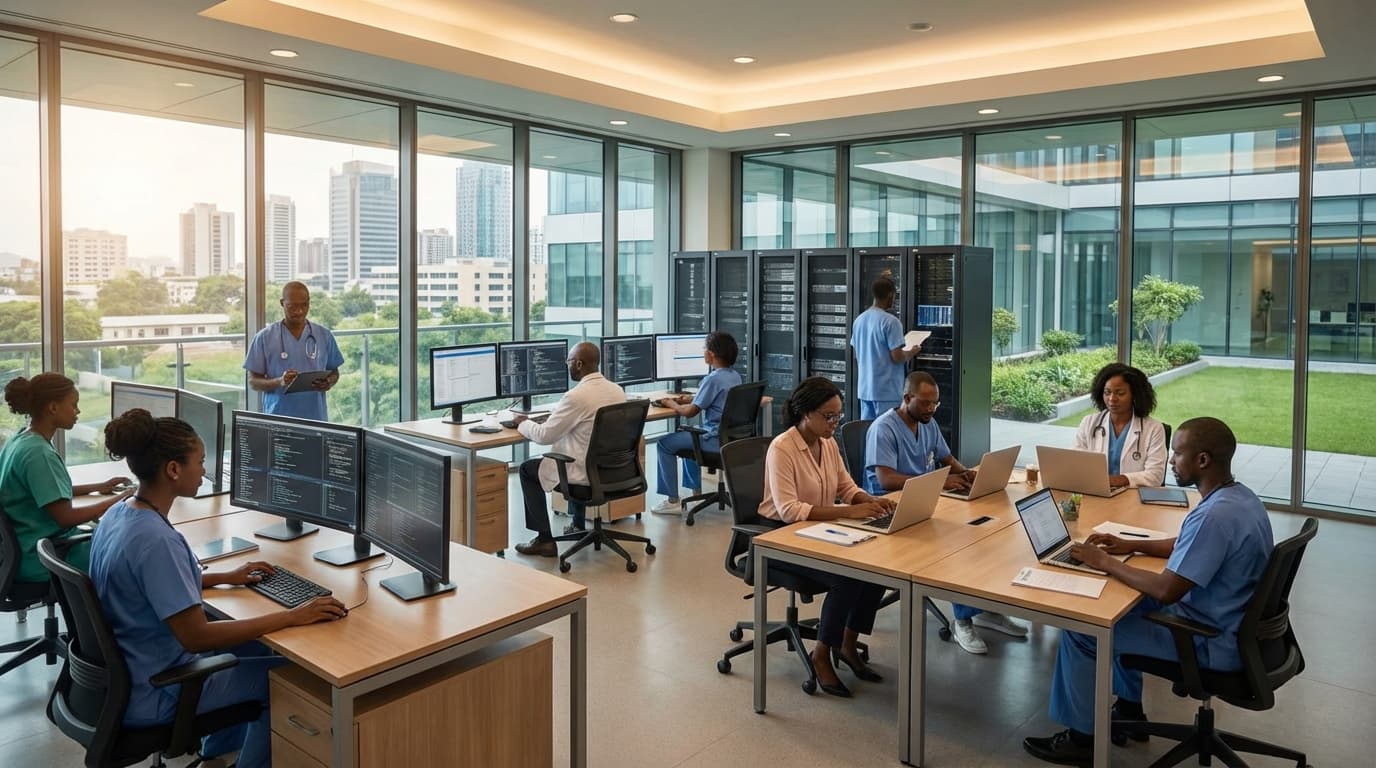
Radiology Reader & Reporting Support in Guinea
Engineering Excellence & Technical Support
Remote radiology reading and reporting services High-standard technical execution following OEM protocols and local regulatory frameworks.
AI-Powered Image Enhancement & Anomaly Detection
Leveraging advanced AI algorithms to automatically enhance image quality, reduce noise, and highlight potential anomalies, significantly improving diagnostic accuracy and reducing radiologist fatigue in resource-limited settings.
Secure Remote Consultation & Second Opinions
Facilitating secure, real-time collaboration with remote specialists. Radiologists can share cases, receive expert second opinions, and engage in virtual case reviews, overcoming geographical barriers and enhancing diagnostic confidence.
Streamlined Workflow & Reporting Automation
Integrating seamlessly with existing Picture Archiving and Communication Systems (PACS) and Electronic Health Records (EHRs). The system automates routine reporting tasks, standardizes terminology, and provides intelligent report generation, freeing up radiologist time for complex interpretations.
What Is Radiology Reader & Reporting Support In Guinea?
Radiology Reader & Reporting Support in Guinea refers to the provision of specialized services aimed at enhancing the interpretation of medical imaging studies and the generation of comprehensive, accurate diagnostic reports. This support is typically delivered by highly qualified radiologists, often remotely, to healthcare facilities that may have limited access to on-site radiology expertise or require supplementary reading capacity. The service involves the review of various imaging modalities, including X-ray, CT scans, MRI, ultrasound, and mammography, followed by the creation of structured, actionable reports for referring physicians. These reports are crucial for diagnosis, treatment planning, and patient management. The demand for such services in Guinea is driven by a shortage of trained radiologists, geographical disparities in healthcare access, and the increasing prevalence of medical imaging technologies.
| Service Component | Description | Beneficiary | Typical Use Case |
|---|---|---|---|
| Remote Image Interpretation | Radiologists interpret medical images (X-ray, CT, MRI, etc.) from a remote location. | Hospitals, clinics, imaging centers in Guinea lacking on-site radiologists. | Interpreting emergency scans after hours; managing high imaging volumes. |
| Expert Reporting | Generating comprehensive and structured diagnostic reports based on image findings. | Healthcare providers who require accurate and timely diagnostic information. | Providing detailed reports for complex cases or when local reporting capacity is limited. |
| Subspecialty Consultations | Access to radiologists with advanced training in specific areas of radiology. | Facilities dealing with specialized medical conditions (e.g., neurological disorders, cancer). | Consulting on challenging neurological scans (MRI brain) or oncologic staging (CT chest/abdomen/pelvis). |
| Quality Control and Peer Review | Reviewing and validating interpretations and reports for accuracy and adherence to standards. | Healthcare institutions aiming to maintain high standards of diagnostic quality. | Periodic review of a sample of radiology reports to identify areas for improvement or training. |
| Workflow Optimization | Streamlining the radiology workflow from image acquisition to report delivery. | Imaging departments seeking to improve efficiency and reduce turnaround times. | Implementing a teleradiology platform to facilitate rapid interpretation of scans from remote sites. |
Key Components of Radiology Reader & Reporting Support:
- Image Interpretation: Expert review of medical images by board-certified radiologists.
- Report Generation: Creation of detailed, structured, and diagnostically relevant reports.
- Second Opinions: Providing supplementary interpretations to confirm or refine initial diagnoses.
- Teleradiology Integration: Utilizing secure, cloud-based platforms for image transfer and report dissemination.
- Quality Assurance: Implementing protocols to ensure the accuracy and consistency of interpretations and reports.
- Subspecialty Expertise: Access to radiologists with specialized knowledge in areas such as neuroradiology, musculoskeletal radiology, or oncologic imaging.
- Turnaround Time Management: Adhering to defined service level agreements for report delivery.
Who Needs Radiology Reader & Reporting Support In Guinea?
Radiology is a critical component of modern healthcare, offering vital diagnostic and interventional services. However, in many regions, access to highly specialized radiologists and efficient reporting systems can be a significant challenge. This is particularly true in countries like Guinea, where healthcare infrastructure may be developing. Radiology reader and reporting support services can bridge these gaps, enhancing diagnostic accuracy, improving patient outcomes, and optimizing the workflow for existing medical professionals. These services can cater to a diverse range of healthcare providers, from large public hospitals to smaller private clinics, and even remote healthcare facilities.
| Target Customer/Department | Specific Needs Addressed | Benefits of Support |
|---|---|---|
| Public Hospitals | High patient volume, potential shortage of in-house radiologists, need for specialized interpretation (e.g., neuroimaging, pediatric radiology), urgent case turnaround. | Improved diagnostic accuracy, reduced radiologist workload, faster turnaround times for critical diagnoses, access to subspecialty expertise, enhanced patient care, training opportunities for local staff. |
| Private Hospitals and Clinics | Demand for advanced imaging services, competitive market, need for efficient reporting to maintain patient satisfaction, potential for niche specialties. | Enhanced service offerings, increased revenue potential, improved patient flow, consistent and high-quality reporting, competitive advantage, reduced operational overhead for in-house reading. |
| Diagnostic Imaging Centers | Focus on throughput, need for consistent and timely reporting across various modalities (X-ray, CT, MRI, Ultrasound), quality assurance. | Scalability of services, standardized reporting quality, ability to handle peak loads, expanded service offerings without significant capital investment in personnel, improved efficiency. |
| University Hospitals and Teaching Institutions | Training of medical students and residents, research activities requiring expert interpretation, need for peer review and quality control. | Support for educational programs, access to expert subspecialists for teaching and consultation, facilitation of research projects, reinforcement of quality standards in training. |
| Remote and Rural Healthcare Facilities | Limited access to on-site radiologists, challenges in interpreting complex imaging studies, reliance on general practitioners for initial assessments. | Bridging the geographic divide in healthcare access, enabling diagnosis of conditions that would otherwise require patient travel, empowering local healthcare providers with expert insights, improved patient outcomes in underserved areas. |
| Government Health Initiatives and Programs | Screening programs (e.g., for cancer, tuberculosis), public health surveillance, outbreak investigation, capacity building in radiology. | Efficient and scalable interpretation for public health campaigns, data collection for epidemiological studies, support for national health priorities, strengthening of national radiology infrastructure. |
| Non-Governmental Organizations (NGOs) focused on health | Provision of medical services in areas with limited resources, specialized medical missions, diagnostic support for specific disease eradication programs. | Enabling NGOs to provide comprehensive diagnostic services, ensuring accurate diagnosis for their target populations, facilitating specialized medical interventions, cost-effective access to expert radiology. |
| Radiology Departments (Internal) | Managing workload fluctuations, covering for absent radiologists (leave, illness), obtaining second opinions, subspecialty interpretation for complex cases. | Improved workflow efficiency, reduced burnout for local radiologists, enhanced diagnostic confidence, access to a wider range of subspecialty expertise without hiring additional full-time staff. |
Target Customers and Departments for Radiology Reader & Reporting Support in Guinea
- Public Hospitals
- Private Hospitals and Clinics
- Diagnostic Imaging Centers
- University Hospitals and Teaching Institutions
- Remote and Rural Healthcare Facilities
- Government Health Initiatives and Programs
- Non-Governmental Organizations (NGOs) focused on health
Radiology Reader & Reporting Support Process In Guinea
This document outlines the workflow for Radiology Reader & Reporting Support in Guinea. This process ensures efficient and accurate interpretation of radiological images and timely generation of reports to support clinical decision-making. The workflow begins with an inquiry from a clinical department or physician and concludes with the delivery of a finalized radiology report.
| Step | Description | Key Actors | Inputs | Outputs | Tools/Systems |
|---|---|---|---|---|---|
| A clinical request for a radiological examination is made. | Referring Physician/Clinical Staff | Patient Information, Clinical Indication, Requested Modality | Formal Request Order | Electronic Health Record (EHR) / PACS Request Module |
| The radiological images are acquired using the appropriate modality and transmitted to the Picture Archiving and Communication System (PACS). | Radiographer/Technologist | Patient Identification, Imaging Protocol | DICOM Images | Radiology Modality (X-ray, CT, MRI, Ultrasound), PACS |
| The acquired images are added to the radiologist's worklist for interpretation, prioritized based on urgency and protocol. | PACS Administrator / Radiologist | Incoming DICOM Images, Patient Data, Urgency Level | Radiologist Worklist | PACS Worklist Module |
| A radiologist reviews the images, performs analysis, and formulates a diagnosis and findings. | Radiologist | Patient Images, Clinical History, Previous Reports (if available) | Preliminary Findings/Impression | PACS Viewer, Diagnostic Workstation |
| The radiologist dictates their findings, impression, and recommendations into a reporting system. | Radiologist | Dictated Voice Recording | Audio File / Structured Data Entry | Speech Recognition Software / Dictation Software |
| A medical transcriptionist transcribes the dictated report, or speech recognition software generates a draft report. This is then reviewed for accuracy by the radiologist or a designated reviewer. | Medical Transcriptionist / Speech Recognition System / Radiologist | Audio File / Draft Report | Transcribed Report Draft | Word Processing Software / Reporting Software |
| The radiologist reviews the transcribed/generated report for completeness, accuracy, and adherence to institutional standards, and formally approves it. | Radiologist | Transcribed Report Draft, Image Findings | Finalized Radiology Report | Reporting Software / PACS Reporting Module |
| The approved report is electronically distributed to the referring physician and archived within the EHR and PACS. | PACS Administrator / EHR System | Finalized Radiology Report | Accessible Report in EHR/PACS, Archived Report | EHR System, PACS Archive |
Radiology Reader & Reporting Support Process Overview
- Inquiry Initiation
- Image Acquisition & Transmission
- Worklist Management
- Image Interpretation (Reading)
- Report Dictation
- Report Transcription & Review
- Report Validation & Approval
- Report Distribution & Archiving
Radiology Reader & Reporting Support Cost In Guinea
Radiology reader and reporting support in Guinea is a critical service for diagnostic imaging facilities, impacting patient care and operational efficiency. The cost is influenced by several factors, including the complexity of the imaging modality, the volume of cases, the radiologist's experience and specialization, and the specific services required (e.g., preliminary readings, final reports, second opinions). Due to the nascent stage of advanced radiology services in some regions of Guinea, pricing can vary significantly. The local currency is the Guinean Franc (GNF). It's important to note that reliable, publicly available price lists for these specialized services are scarce. Costs are often negotiated directly with radiologists or through radiology service providers.
| Imaging Modality | Estimated Price Range (GNF) - Preliminary/Standard Reading | Estimated Price Range (GNF) - Comprehensive Report/Specialized Reading |
|---|---|---|
| X-ray (Single View) | 50,000 - 150,000 | 100,000 - 250,000 |
| X-ray (Multiple Views) | 100,000 - 250,000 | 150,000 - 400,000 |
| Ultrasound (Abdomen/Pelvis) | 150,000 - 400,000 | 250,000 - 600,000 |
| Ultrasound (Other Specialized) | 200,000 - 500,000 | 300,000 - 800,000 |
| CT Scan (Unenhanced, Single Area) | 300,000 - 800,000 | 500,000 - 1,200,000 |
| CT Scan (Contrast Enhanced, Multiple Areas) | 500,000 - 1,500,000 | 800,000 - 2,500,000 |
| MRI (Single Area) | 700,000 - 2,000,000 | 1,000,000 - 3,500,000 |
| MRI (Complex/Full Body) | 1,200,000 - 3,000,000+ | 1,800,000 - 5,000,000+ |
Key Pricing Factors for Radiology Reader & Reporting Support in Guinea
- Modality Complexity: X-rays are generally less expensive to read than CT scans, MRIs, or ultrasound examinations, which require more specialized expertise and time.
- Volume of Cases: Facilities with a high volume of studies may negotiate bulk discounts or lower per-case rates.
- Radiologist's Experience & Specialization: Highly experienced radiologists or those with subspecialties (e.g., neuroradiology, musculoskeletal radiology) often command higher fees.
- Turnaround Time: Urgent or STAT readings typically incur additional charges due to the expedited nature of the service.
- Reporting Detail: The level of detail required in the report can influence cost. Comprehensive reports with detailed descriptions and recommendations will be more expensive than brief preliminary assessments.
- Location within Guinea: Costs might differ slightly between major urban centers like Conakry and more remote areas, due to variations in living costs and the availability of specialized personnel.
- Service Provider: Whether engaging an independent radiologist or a dedicated radiology reporting service will affect pricing structures.
- Technology & Infrastructure: The use of advanced PACS (Picture Archiving and Communication System) and AI-powered tools can sometimes be factored into pricing, though this is less common currently.
Affordable Radiology Reader & Reporting Support Options
Radiology practices, particularly smaller ones or those facing budget constraints, are constantly seeking ways to optimize costs while maintaining high-quality patient care. Outsourcing aspects of radiology reading and reporting can offer significant advantages. This document explores affordable radiology reader and reporting support options, focusing on the value of service bundles and effective cost-saving strategies.
| Service Component | Description | Cost-Saving Impact | Value Bundle Potential |
|---|---|---|---|
| Remote Radiology Reading (Teleradiology) | Interpreting medical images (X-ray, CT, MRI, Ultrasound) remotely by qualified radiologists. | Eliminates need for in-house radiologists for all shifts/subspecialties; reduces overhead. | Can be bundled with reporting, preliminary reads, or overflow coverage. |
| Radiology Report Generation & Transcription | Professional services for creating, dictating, and typing radiology reports based on radiologist interpretations. | Reduces administrative burden on radiologists; lowers transcription costs. | Often included as part of a comprehensive reading service bundle. |
| Preliminary Reading Services | Providing initial, often rapid, interpretations of urgent studies to facilitate timely patient management. | Ensures critical findings are identified quickly, potentially improving patient outcomes and reducing ED wait times. | Can be a standalone service or bundled with final reporting and interpretation. |
| Overflow & Backlog Management | Handling excess workload or backlogged studies during peak times or when internal staff are unavailable. | Prevents burnout of internal staff; ensures consistent turnaround times. | Ideal for flexible, as-needed bundling with core reading services. |
| Quality Assurance (QA) & Peer Review | Independent review of reports and interpretations to ensure accuracy and adherence to standards. | Enhances diagnostic accuracy; mitigates risk; improves patient safety. | Can be a value-add to reading services or a separate audit function. |
Key Considerations for Affordable Radiology Support:
- Subspecialty Expertise on Demand: Accessing niche subspecialists without the overhead of full-time employment.
- Flexible Capacity Management: Scaling reading services up or down based on caseload fluctuations.
- Reduced Infrastructure Costs: Minimizing the need for in-house IT, PACS, and personnel.
- Improved Turnaround Times: Leveraging dedicated teams to expedite report generation.
- Enhanced Quality Control: Partnering with providers who have robust QA processes.
- Focus on Core Clinical Operations: Allowing internal radiologists to concentrate on complex cases and patient interaction.
Verified Providers In Guinea
In the realm of healthcare in Guinea, identifying truly reliable and credentialed providers is paramount for ensuring quality and safe medical care. Franance Health stands out as a leading organization dedicated to this crucial task. Their rigorous verification process ensures that healthcare professionals and facilities operating under their banner meet the highest standards of expertise, ethical practice, and patient safety. Choosing Franance Health-verified providers means opting for a level of trust and assurance that is indispensable in healthcare.
| Verification Area | Franance Health Focus | Benefit to Patients |
|---|---|---|
| Professional Qualifications | Verification of degrees, certifications, and specializations. | Ensures providers possess the necessary expertise for specific medical needs. |
| Clinical Experience | Assessment of practical experience and track record in relevant medical fields. | Guarantees providers have hands-on experience and are adept at handling various cases. |
| Ethical Conduct | Adherence to a strict code of medical ethics and patient rights. | Provides peace of mind regarding fair treatment and professional integrity. |
| Facility Standards | Evaluation of medical infrastructure, equipment, and hygiene for healthcare facilities. | Ensures a safe, clean, and well-equipped environment for treatment and recovery. |
| Continuous Professional Development | Confirmation of ongoing training and updates in medical knowledge and techniques. | Patients receive care based on the most current medical understanding and practices. |
Why Franance Health Credentials Represent the Best Choice:
- Uncompromising Standards: Franance Health employs a multi-faceted verification process that goes beyond basic licensing. They assess qualifications, experience, continuous professional development, and adherence to ethical guidelines.
- Enhanced Patient Safety: By ensuring providers meet strict safety protocols and have access to appropriate resources, Franance Health significantly reduces risks for patients.
- Improved Healthcare Outcomes: Verified providers are more likely to be up-to-date with the latest medical advancements and best practices, leading to more effective treatments and better patient recovery.
- Transparency and Accountability: The Franance Health verification mark signifies a commitment to transparency. Patients can be confident in the credentials of their chosen healthcare provider.
- Access to Quality Care: Partnering with Franance Health allows patients to easily identify and access reputable healthcare services across Guinea, streamlining the search for competent medical professionals.
- Commitment to Excellence: Franance Health is dedicated to fostering a culture of excellence within the Guinean healthcare sector, continuously raising the bar for medical service delivery.
Scope Of Work For Radiology Reader & Reporting Support
This Scope of Work (SOW) outlines the requirements for Radiology Reader & Reporting Support services. The objective is to provide qualified radiologists to interpret medical imaging studies and generate comprehensive, accurate, and timely reports. This service will support [Client Name/Department] by augmenting existing radiology capacity, ensuring efficient workflow, and maintaining high-quality diagnostic standards. The scope includes remote reading, reporting, and communication of findings as per established clinical protocols and client specifications.
| Technical Deliverable | Standard Specification | Description | Acceptance Criteria |
|---|---|---|---|
| Radiology Reports | HL7/DICOM Conformance | Digitally signed diagnostic reports generated for each interpreted study, formatted for integration into the client's RIS/EHR. Reports will include clinical history, technique, findings, impression, and recommendations. | Reports are legible, accurate, complete, and delivered within the agreed SLA timeframe. Reports are in a format compatible with the client's RIS/EHR and are digitally signed by a qualified radiologist. |
| Image Interpretation | DICOM Standard Compliance | Interpretation of medical images provided via secure PACS connection or image transfer protocols. Ensures proper image display and manipulation tools are utilized. | All relevant images for a given study are reviewed. Interpretation aligns with established radiological principles and best practices. |
| Critical Finding Communication | Secure Communication Channel | Establishment and utilization of a secure and reliable communication channel for promptly relaying critical or urgent findings to designated clinical personnel. | Critical findings are communicated to the designated recipient within the predefined time window (e.g., < 30 minutes from interpretation completion), with confirmation of receipt. |
| System Integration | API/HL7/DICOM Interface | Integration with client's PACS/RIS for seamless image retrieval, worklist management, and report upload. Requires a stable and secure connection. | Successful bidirectional data flow for worklists and reports. Minimal disruption to existing client workflows. Secure and authenticated access. |
| Quality Assurance | Internal QA Protocols | Adherence to established internal QA processes for reporting accuracy, completeness, and turnaround time. Regular review of reports by senior radiologists or designated QA personnel. | Demonstrable adherence to QA procedures. Improvement in report error rates over time. Positive feedback from client QA reviews. |
| Data Security & Privacy | HIPAA Compliance, Encryption | All data transmission and storage must be encrypted. Strict adherence to patient privacy regulations (e.g., HIPAA, GDPR). Secure access controls and audit trails. | No data breaches or privacy violations. Successful completion of security audits. All access logs are maintained and auditable. |
Key Responsibilities and Services
- Remote interpretation of various medical imaging modalities (e.g., X-ray, CT, MRI, Ultrasound, Mammography, Nuclear Medicine).
- Generation of clear, concise, and medically accurate diagnostic reports.
- Adherence to all relevant medical guidelines, professional standards, and regulatory requirements.
- Timely turnaround of reports based on agreed-upon service level agreements (SLAs).
- Communication of critical findings to referring physicians or designated personnel as per client protocol.
- Participation in peer review and quality assurance activities as required.
- Maintenance of secure and confidential patient data in compliance with HIPAA and other privacy regulations.
- Use of client-provided or mutually agreed-upon PACS (Picture Archiving and Communication System) and RIS (Radiology Information System) or compatible viewers.
- Provision of radiologists with appropriate sub-specialty expertise based on demand.
Service Level Agreement For Radiology Reader & Reporting Support
This Service Level Agreement (SLA) outlines the terms and conditions for the Radiology Reader & Reporting Support service, including response times for critical issues and uptime guarantees for the associated platform. The objective is to ensure timely and reliable access to radiology reading and reporting services.
| Service Component | Service Level Objective (SLO) | Measurement Metric | Escalation Procedure |
|---|---|---|---|
| Critical Report Turnaround Time (e.g., STAT reads) | 95% of Critical reports delivered within 1 hour of image upload completion. | Time from image upload completion to report availability. | Immediate notification to on-call radiologist and senior support staff. Automated alerts for exceeding 90 minutes. |
| Routine Report Turnaround Time | 90% of Routine reports delivered within 24 hours of image upload completion. | Time from image upload completion to report availability. | Daily monitoring by reporting manager. Escalation to radiologist lead for consistent delays. |
| Platform Uptime | 99.9% uptime during scheduled operational hours (24/7/365). | Percentage of time the reporting platform is accessible and functional. | Real-time monitoring with automated alerts for downtime. On-call IT and radiology management for immediate restoration efforts. |
| Technical Support - Critical Issues | Response within 15 minutes to acknowledge and begin troubleshooting. | Time from ticket submission to initial response from technical support. | Priority ticket assignment. Direct line to senior technical support engineer for unresolved issues. |
| Technical Support - Non-Critical Issues | Response within 4 business hours to acknowledge and begin troubleshooting. | Time from ticket submission to initial response from technical support. | Standard ticket assignment. Follow-up within 24 business hours. |
Key Service Components
- Radiology Image Interpretation and Report Generation by qualified radiologists.
- Access to a secure, web-based reporting platform.
- Technical support for platform-related issues.
Frequently Asked Questions

Ready when you are
Let's scope your Radiology Reader & Reporting Support in Guinea project in Guinea.

Scaling healthcare logistics and technical systems across the entire continent.