
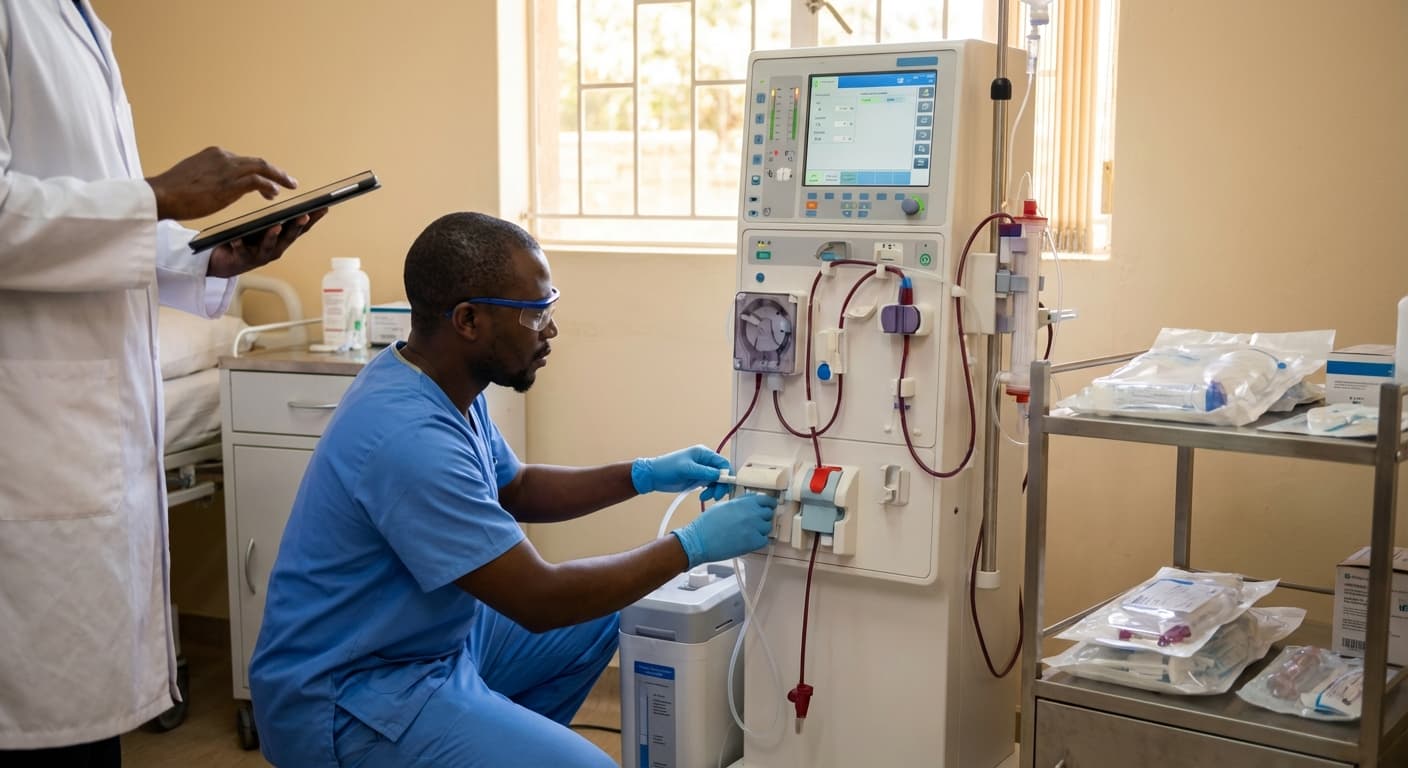
Hemodialysis Machine Installation Service in Guinea
Engineering Excellence & Technical Support
Hemodialysis Machine Installation Service High-standard technical execution following OEM protocols and local regulatory frameworks.
Expert Site Assessment & Preparation
Our certified technicians conduct thorough on-site assessments in Guinea to evaluate power, water, and waste disposal infrastructure, ensuring optimal machine placement and seamless integration with existing facilities for reliable hemodialysis operations.
Precision Installation & Calibration
We perform meticulous installation of hemodialysis machines adhering to international standards, including precise calibration of all critical parameters. This guarantees accurate and safe treatment delivery for patients across Guinea.
Comprehensive Training & Support
Our service includes in-depth, hands-on training for local medical staff in Guinea on machine operation, maintenance, and troubleshooting. We provide ongoing technical support to ensure continuous and efficient functionality of your hemodialysis equipment.
What Is Hemodialysis Machine Installation Service In Guinea?
Hemodialysis machine installation service in Guinea refers to the comprehensive process of setting up and preparing hemodialysis machines for clinical use within healthcare facilities in the Republic of Guinea. This service encompasses the physical placement, calibration, testing, and initial operational validation of hemodialysis equipment to ensure it meets manufacturer specifications and regulatory requirements for patient treatment. It is a critical step in establishing or expanding dialysis services, guaranteeing the safety and efficacy of extracorporeal blood purification for patients with end-stage renal disease (ESRD) or acute kidney injury (AKI).
| Who Needs Hemodialysis Machine Installation Service in Guinea? | Typical Use Cases | |||||
|---|---|---|---|---|---|---|
| Newly established or expanding hospitals and clinics offering nephrology or urology services in Guinea. | Setting up new dialysis units within existing healthcare facilities to cater to a growing patient population requiring renal replacement therapy. | Healthcare institutions acquiring new or replacement hemodialysis machines to upgrade their existing infrastructure or replace outdated equipment. | International aid organizations or NGOs involved in public health initiatives and the establishment of medical infrastructure in Guinea. | Government health ministries or agencies responsible for overseeing and equipping public healthcare facilities. | Private healthcare providers looking to offer specialized renal care services. | Renovation or relocation projects involving existing dialysis units, requiring de-installation and re-installation of equipment. |
| Treatment of End-Stage Renal Disease (ESRD) for chronic kidney patients requiring regular hemodialysis sessions. | Management of Acute Kidney Injury (AKI) in patients requiring temporary blood purification. | Support for patients undergoing specific medical treatments or surgeries where kidney function is compromised. | Emergency response during public health crises that may lead to an increase in AKI cases. | Provision of routine dialysis services in remote or underserved areas of Guinea through mobile dialysis units or newly established centers. |
Key Components of Hemodialysis Machine Installation Service:
- Site Assessment and Preparation: Evaluating the designated installation area for power, water (including purification systems), drainage, ventilation, and structural integrity. Modifications or upgrades to the facility may be recommended or required.
- Machine Unpacking and Physical Placement: Carefully unpacking the hemodialysis machines and positioning them according to facility layout and workflow, ensuring proper clearance and accessibility.
- Electrical and Plumbing Connections: Connecting the machines to dedicated power outlets and water supply lines, often involving specialized adapters and pressure regulators.
- Water Treatment System Integration: Connecting the hemodialysis machine to the facility's water purification system (e.g., reverse osmosis unit) to ensure the production of ultrapure dialysate, a critical component for patient safety.
- Calibration and Configuration: Performing initial calibration of machine parameters (e.g., blood flow rates, dialysate composition, pressure limits) based on manufacturer guidelines and anticipated patient needs.
- Functional Testing and Validation: Conducting rigorous tests using simulated blood and dialysate to verify all machine functions, safety alarms, and treatment protocols operate correctly.
- Operator Training (Initial Phase): Providing foundational training to biomedical engineers and nursing staff on the basic operation, troubleshooting, and maintenance of the installed machines.
- Documentation and Handover: Completing all necessary installation records, test reports, and providing user manuals and warranty information to the healthcare facility.
- Compliance Checks: Ensuring the installation adheres to relevant national and international standards for medical equipment and healthcare facility infrastructure.
Who Needs Hemodialysis Machine Installation Service In Guinea?
The installation of hemodialysis machines is a critical step in establishing and maintaining essential renal care services. This service is particularly vital for facilities in Guinea aiming to expand or upgrade their dialysis capabilities, thereby improving patient outcomes and access to life-sustaining treatments. The complexity of these machines, coupled with the stringent requirements for their operation, necessitates professional installation by qualified technicians. This ensures proper calibration, integration with existing infrastructure (water treatment, power supply), and adherence to safety standards, ultimately leading to reliable and effective dialysis treatments for patients suffering from kidney failure.
| Customer Type | Specific Departments/Areas of Focus | Key Needs | Impact of Installation Service |
|---|---|---|---|
| Public Hospitals | Nephrology Department, Dialysis Unit, Surgical Services (for access creation) | Expansion of existing dialysis capacity, replacement of outdated equipment, establishment of new renal care wings. | Improved patient survival rates, reduced waiting lists for dialysis, enhanced diagnostic and treatment capabilities for kidney disease. |
| Private Hospitals | Nephrology Department, Dedicated Dialysis Center, Intensive Care Unit (ICU) for acute kidney injury. | Upgrading to state-of-the-art technology, increasing patient throughput, offering specialized dialysis modalities. | Enhanced service offering, increased patient satisfaction, competitive advantage in healthcare provision. |
| Dedicated Dialysis Centers | Main Dialysis Hall, Water Treatment Room, Sterilization Area, Laboratory Services. | Setting up new centers, increasing the number of dialysis stations, ensuring compliance with international standards. | Increased accessibility to dialysis services in underserved areas, efficient patient management, improved quality of care. |
| Clinics with Renal Units | Outpatient Nephrology Clinic, Small Dialysis Bay. | Establishing basic dialysis capabilities, serving local communities with chronic kidney disease. | Decentralized healthcare access, reduced travel burden for patients, early intervention for renal complications. |
| NGOs & Government Health Ministries | Procurement and Distribution Departments, Public Health Infrastructure Development Teams, National Renal Disease Programs. | Facilitating the deployment of dialysis equipment in public health facilities, ensuring nationwide access to essential treatment. | Strengthening the national healthcare system, addressing public health crises related to kidney disease, ensuring equitable access to life-saving treatments. |
Target Customers & Departments for Hemodialysis Machine Installation Service in Guinea
- Hospitals (Public & Private)
- Dialysis Centers
- Clinics with Renal Units
- Non-Governmental Organizations (NGOs) involved in healthcare
- Government Health Ministries & Agencies
Hemodialysis Machine Installation Service Process In Guinea
This document outlines the comprehensive workflow for Hemodialysis Machine Installation Services in Guinea, from initial client inquiry to the successful completion of the installation and subsequent handover. The process is designed to be transparent, efficient, and tailored to the specific needs of healthcare facilities in Guinea, ensuring optimal performance and longevity of the vital hemodialysis equipment.
| Phase | Key Activities | Responsible Party | Deliverables | Estimated Timeline (Days) |
|---|---|---|---|---|
| Phase 1: Inquiry & Consultation | Receive and acknowledge client's interest in hemodialysis machine installation. Conduct initial consultation to understand client's facility, existing infrastructure, and specific requirements. Discuss machine models, features, and service scope. | Service Provider (Sales/Technical Team) | Understanding of client needs, preliminary advice. | 1-3 |
| Phase 2: Site Assessment & Planning | Conduct a thorough on-site assessment of the installation location. Evaluate space availability, power supply, water quality and treatment systems, plumbing, ventilation, and any other relevant infrastructure. Confirm technical specifications and identify potential challenges. | Service Provider (Technical Team) | Detailed site assessment report, confirmed technical requirements. | 3-5 |
| Phase 3: Proposal & Quotation | Develop a detailed proposal outlining the scope of work, recommended machine models, installation plan, timeline, and associated costs. Provide a comprehensive quotation based on the site assessment and client requirements. | Service Provider (Sales/Project Management) | Formal proposal and quotation document. | 2-4 |
| Phase 4: Contract & Agreement | Review and negotiate the proposal with the client. Upon agreement, finalize and sign a formal service contract specifying terms, conditions, payment schedule, warranty, and support agreements. | Client & Service Provider | Signed service contract. | 3-7 |
| Phase 5: Logistics & Procurement | Procure the selected hemodialysis machine(s) and all necessary accessories, consumables, and installation materials. Arrange for safe transportation and import/customs clearance if applicable. | Service Provider (Logistics/Procurement) | Acquired equipment and materials, ready for shipment. | Variable (depends on equipment availability and import processes) |
| Phase 6: Pre-Installation Preparation | Prepare the installation site according to agreed-upon specifications. This may include electrical upgrades, plumbing modifications, water treatment system setup, and ensuring all safety measures are in place. Confirm arrival of equipment. | Client & Service Provider (Technical Team) | Site readiness confirmation, equipment arrival notification. | 5-10 |
| Phase 7: On-site Installation | Transport the hemodialysis machine(s) and accessories to the installation site. Unpack, assemble, and physically install the equipment following manufacturer guidelines and industry best practices. Connect to power, water, and drainage systems. | Service Provider (Installation Technicians) | Physically installed hemodialysis machine(s). | 2-5 |
| Phase 8: Testing & Commissioning | Perform rigorous testing of all machine functions, including priming, dialysate preparation, blood flow, pressure monitoring, and safety features. Calibrate the equipment to ensure accurate performance. Conduct preliminary patient simulation runs if required. | Service Provider (Certified Technicians) | Tested and calibrated hemodialysis machine, operational readiness report. | 2-4 |
| Phase 9: Training & Handover | Provide comprehensive training to the client's clinical and technical staff on the operation, routine maintenance, troubleshooting, and safety protocols of the hemodialysis machine. Formally hand over the installed equipment and all associated documentation. | Service Provider (Clinical Trainer/Technical Expert) | Trained staff, handover documentation (manuals, warranty, service records). | 1-3 |
| Phase 10: Post-Installation Support | Provide initial post-installation support, including on-call assistance and troubleshooting for a defined period. Schedule and conduct the first routine maintenance check as per the service contract. | Service Provider (Support Team/Maintenance Technicians) | Ongoing support, scheduled maintenance. | Ongoing (as per contract) |
Hemodialysis Machine Installation Service Workflow in Guinea
- Client Inquiry & Initial Consultation
- Site Assessment & Requirement Gathering
- Proposal Generation & Quotation
- Contract Negotiation & Signing
- Logistics & Equipment Procurement
- Pre-Installation Preparation
- On-site Installation Execution
- Testing, Calibration & Commissioning
- Client Training & Handover
- Post-Installation Support & Documentation
Hemodialysis Machine Installation Service Cost In Guinea
Installing a hemodialysis machine is a critical and complex process that requires specialized expertise and adherence to strict medical and electrical standards. The cost of this service in Guinea can vary significantly due to several factors. These include the type and complexity of the hemodialysis machine, the required infrastructure modifications at the healthcare facility, the location within Guinea, and the specific service provider chosen. It's essential for healthcare providers to obtain detailed quotes and understand all included components of the installation package.
| Service Component | Estimated Cost Range (West African CFA Franc - XOF) |
|---|---|
| Initial Site Survey and Consultation | 50,000 - 150,000 |
| Machine Transportation and Unpacking | 75,000 - 200,000 |
| Electrical and Plumbing Modifications (if required) | 200,000 - 1,000,000+ |
| Water Purification System Integration/Installation | 300,000 - 1,500,000+ |
| Machine Installation and Calibration | 400,000 - 1,200,000 |
| Testing, Commissioning, and Initial Setup | 150,000 - 400,000 |
| Staff Training (Basic Operation & Maintenance) | 200,000 - 750,000 |
| Travel and Accommodation for Technicians (if applicable) | 100,000 - 500,000+ |
| Total Estimated Installation Cost (excluding machine purchase) | 1,475,000 - 5,700,000+ XOF |
Key Pricing Factors for Hemodialysis Machine Installation in Guinea
- Type and Model of Hemodialysis Machine: More advanced machines with integrated features (e.g., online dialysis, advanced monitoring systems) often have higher installation costs due to more complex calibration and integration requirements.
- Infrastructure Assessment and Preparation: This includes assessing existing water purification systems, electrical wiring (ensuring adequate power supply and grounding), plumbing, and ventilation. Modifications or upgrades to these systems will directly impact the cost.
- Site Location: Installation costs can differ based on the accessibility of the healthcare facility. Remote locations may incur higher travel and logistical expenses for the installation team.
- Service Provider Expertise and Reputation: Established companies with a proven track record and certified technicians may charge more due to their reliability and specialized knowledge.
- Ancillary Equipment and Consumables: While not strictly installation, the cost of initial setup of related equipment (e.g., water treatment units, backup power generators, specialized chairs) and essential consumables for testing can be bundled into the service.
- Training and Commissioning: Comprehensive training for medical staff on the operation and maintenance of the machine is crucial and often included in the installation package, adding to the overall cost.
- Warranty and Post-Installation Support: The duration and scope of warranty and ongoing support services can influence the initial installation price.
- Regulatory Compliance and Testing: Ensuring the installation meets all local health and safety regulations, followed by rigorous testing and certification, adds to the cost.
- Permits and Approvals: Obtaining necessary permits from local authorities for the installation and operation of medical equipment can incur fees.
Affordable Hemodialysis Machine Installation Service Options
Installing a hemodialysis machine is a critical step for clinics and healthcare facilities. This service encompasses not just the physical placement of the machine but also essential setup, calibration, and initial operational checks. The cost of installation can vary significantly based on the complexity of the setup, the type of machine, the need for specialized infrastructure (like water treatment systems), and the chosen service provider. Fortunately, there are ways to manage these costs effectively through strategic planning and understanding available service options.
| Value Bundle Type | Inclusions | Potential Cost Savings | Best For |
|---|---|---|---|
| Manufacturer Basic Installation | Machine placement, power connection, basic functional check, and initial calibration. | Often included with machine purchase or offered at a standard fee. Predictable cost. | Facilities with in-house biomedical technicians who can handle more complex aspects. |
| Comprehensive Installation Package | Includes site assessment, full plumbing and electrical integration, water treatment system setup, advanced calibration, and initial staff training. | Bundled pricing can be more economical than individual services. Reduces the need for multiple vendor coordination. | New facilities or those upgrading significantly, requiring a turnkey solution. |
| Third-Party Service Provider - Standard Installation | Similar to manufacturer's basic installation but may offer more flexibility in scheduling and potentially competitive pricing. | Can be more affordable than manufacturer's standalone service. Wider choice of providers. | Clinics looking for cost-effective installation without compromising essential services. |
| Third-Party Service Provider - Premium Installation & Support | Includes all aspects of comprehensive installation plus extended warranty, ongoing maintenance contracts, and advanced training modules. | Long-term cost savings through preventative maintenance and reduced downtime. Predictable operational expenses. | Facilities prioritizing long-term reliability and operational efficiency, willing to invest upfront for sustained benefits. |
| Customized Installation Solutions | Tailored to specific clinic needs, including integration with existing IT systems, unique water purification requirements, or specialized room modifications. | Avoids paying for unnecessary services. Optimizes budget for essential requirements. | Facilities with unique infrastructure or specific operational needs not covered by standard packages. |
Understanding Hemodialysis Machine Installation Costs
- {"title":"Key Cost Components","description":"Factors influencing installation expenses include: site assessment, machine delivery and unboxing, physical placement and anchoring, electrical and plumbing connections, water treatment system integration (if applicable), calibration and testing, staff training on basic operation, and any necessary modifications to existing infrastructure."}
- {"title":"Types of Installation Services","description":"Installation services can range from basic setup by the manufacturer to comprehensive solutions offered by third-party medical equipment service providers. The scope of work and the level of expertise will impact the price."}
- {"title":"Importance of Professional Installation","description":"Professional installation ensures the machine operates optimally, safely, and in compliance with regulatory standards, minimizing the risk of equipment malfunction and patient harm."}
Verified Providers In Guinea
In the pursuit of reliable and high-quality healthcare services in Guinea, identifying verified providers is paramount. Franance Health has established itself as a leading entity, offering a rigorous credentialing process that ensures their network comprises the most competent and trustworthy medical professionals and institutions. This commitment to verification translates into tangible benefits for patients seeking care, guaranteeing access to skilled practitioners, adherence to international standards, and a focus on patient well-being.
| Benefit for Patients | Franance Health Verification Assurance |
|---|---|
| Access to Competent Medical Professionals | Confirms that doctors, nurses, and specialists have valid licenses, demonstrated expertise, and good standing. |
| Trustworthy Healthcare Facilities | Ensures that hospitals and clinics meet established safety, hygiene, and operational standards. |
| Improved Health Outcomes | Increases the likelihood of receiving accurate diagnoses and effective treatments from qualified practitioners. |
| Reduced Risk of Medical Errors | Minimizes the chance of encountering unqualified or inadequately trained providers. |
| Peace of Mind During Medical Care | Provides reassurance that the chosen healthcare provider has undergone thorough vetting. |
Why Franance Health Credentials Represent the Best Choice:
- Rigorous Vetting Process: Franance Health employs a multi-faceted verification system that scrutinizes the qualifications, licenses, and experience of all healthcare providers within their network. This goes beyond basic checks to ensure a deep understanding of each professional's capabilities.
- Commitment to Quality Standards: Their credentials signify adherence to both national and international healthcare quality standards. This ensures that patients receive care that is safe, effective, and up-to-date with global best practices.
- Patient Safety and Trust: The 'verified' status provided by Franance Health offers an invaluable layer of trust and assurance. Patients can be confident that they are accessing providers who have met stringent criteria, prioritizing their safety and the quality of their treatment.
- Access to Specialized Expertise: Through their verification, Franance Health identifies and highlights providers with specialized skills and advanced training, making it easier for patients to find the right expert for their specific medical needs.
- Continuous Monitoring and Compliance: Franance Health's commitment doesn't end with initial verification. They maintain ongoing monitoring to ensure providers continue to meet their standards, providing an extra layer of accountability and assurance.
- Enhanced Patient Experience: By partnering with verified providers, patients are more likely to experience efficient service, clear communication, and positive health outcomes, leading to a more satisfactory healthcare journey.
Scope Of Work For Hemodialysis Machine Installation Service
This Scope of Work (SOW) outlines the requirements for the professional installation of hemodialysis machines at designated healthcare facilities. The service includes the unpacking, physical placement, connection to necessary utilities (water, power, waste), initial setup and configuration, and functional testing of the hemodialysis machines to ensure they are ready for clinical use. This SOW also specifies the technical deliverables expected from the service provider and the standard specifications that the installed machines must meet.
| Specification Category | Standard Specification | Verification Method |
|---|---|---|
| Physical Installation | Machine securely positioned on a stable, level surface. Clearances around the machine maintained as per manufacturer guidelines for ventilation and access. | Visual inspection and site assessment. |
| Water Supply | Connection to approved medical-grade water source. Flow rate and pressure meeting or exceeding manufacturer's minimum requirements (e.g., X L/min at Y psi). Water quality compliant with relevant medical standards (e.g., AAMI standards for hemodialysis water). | Flow meter, pressure gauge, and water quality testing kit. |
| Drainage System | Connection to a suitable medical waste drainage system with adequate capacity and slope. No backflow or blockage observed. | Visual inspection, flow test, and air admittance check. |
| Electrical Power | Dedicated power outlet with correct voltage and amperage as per machine requirements. Grounding verified. Protection against power surges and fluctuations implemented. | Voltage meter, continuity tester, and surge protector inspection. |
| Connectivity (if applicable) | Network connectivity (LAN/Wi-Fi) established and verified for data transfer to Electronic Medical Records (EMR) or monitoring systems, if required. | Network cable testing, Wi-Fi signal strength check, and test data transmission. |
| Machine Configuration | Machine software version updated to the latest approved version. User-specific settings (if any) configured. | Machine display verification and software version check. |
| Functional Testing | All machine modes (e.g., dialysis, rinse, disinfection) successfully executed. Alarms and safety features tested and validated. Basic dialyzer setup and blood circuit priming simulated. | Machine's built-in test protocols and simulated patient treatment scenario. |
| Environmental Conditions | Installation environment within the temperature and humidity ranges specified by the manufacturer. | Thermometer and hygrometer. |
Technical Deliverables
- Professionally installed and functional hemodialysis machine(s) at the designated location(s).
- All necessary utilities (water supply, drainage, power) connected and verified for compliance with machine requirements.
- Machine configured and calibrated according to manufacturer's specifications.
- Successful completion of all pre-installation checks and post-installation functional tests.
- Detailed installation report including all test results, calibration records, and any deviations encountered.
- Operator training session (if specified in the contract) covering basic operation, safety features, and routine checks.
- All packaging materials and debris removed from the installation site, leaving it clean and tidy.
Service Level Agreement For Hemodialysis Machine Installation Service
This Service Level Agreement (SLA) outlines the performance standards for Hemodialysis Machine Installation Services provided by [Your Company Name] (hereinafter referred to as 'Provider') to [Client Name] (hereinafter referred to as 'Client'). This SLA defines response times for service requests and uptime guarantees for installed hemodialysis machines. This agreement is effective as of [Start Date] and will remain in effect until terminated according to its terms.
| Service Level Component | Service Level Objective (SLO) | Measurement Method | Remedy for Non-Compliance |
|---|---|---|---|
| Installation Service Response Time (Critical Issue - Machine Non-Operational) | Within 4 business hours of notification. | Time of initial notification to the Provider's designated support channel. | 5% discount on the next scheduled maintenance service for each instance of exceeding the SLO. |
| Installation Service Response Time (Urgent Issue - Impaired Functionality) | Within 8 business hours of notification. | Time of initial notification to the Provider's designated support channel. | 2.5% discount on the next scheduled maintenance service for each instance of exceeding the SLO. |
| Installation Service Response Time (Routine Request - Non-Urgent) | Within 24 business hours of notification. | Time of initial notification to the Provider's designated support channel. | Verbal acknowledgement and scheduling of a visit within 48 business hours. |
| Hemodialysis Machine Uptime Guarantee (Per Machine) | 98% uptime during scheduled operating hours, excluding scheduled preventative maintenance. | Measured monthly, calculated as (Total Scheduled Operating Hours - Downtime Hours) / Total Scheduled Operating Hours * 100. | For each full 1% below the 98% uptime guarantee, a credit of 1% of the monthly lease/service fee (if applicable) for the affected machine will be applied to the next invoice. |
Key Definitions
- Service Request: Any request from the Client to the Provider for technical support, repair, maintenance, or troubleshooting related to installed hemodialysis machines.
- Response Time: The maximum time allowed for the Provider's support team to acknowledge and initiate a response to a Service Request.
- Resolution Time: The maximum time allowed for the Provider to resolve a Service Request and restore the affected hemodialysis machine to full operational status.
- Downtime: The period during which a hemodialysis machine is not operational due to a malfunction or required maintenance that prevents its use for patient treatment.
- Uptime Guarantee: The percentage of time a hemodialysis machine is expected to be available and functional for patient use.
- Business Hours: [Specify Business Hours, e.g., Monday to Friday, 9:00 AM to 5:00 PM, excluding public holidays]
Frequently Asked Questions

Ready when you are
Let's scope your Hemodialysis Machine Installation Service in Guinea project in Guinea.

Scaling healthcare logistics and technical systems across the entire continent.