
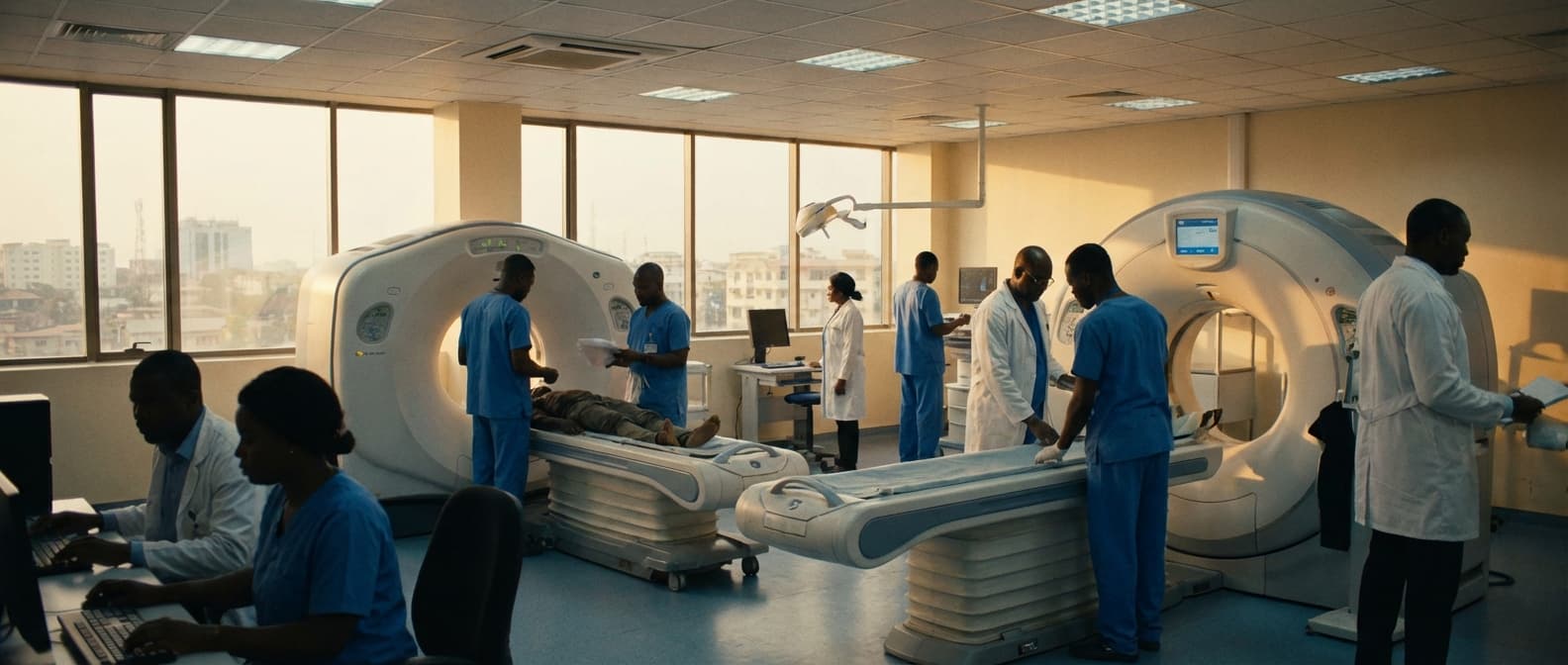
Imaging Acceptance Testing & QA in Guinea
Engineering Excellence & Technical Support
Commissioning and periodic QA for CT/MRI/X‑ray/US/Mammo. High-standard technical execution following OEM protocols and local regulatory frameworks.
Advanced Imaging Performance Validation
Conducting rigorous acceptance testing on diagnostic imaging equipment (e.g., X-ray, Ultrasound, CT, MRI) in Guinean healthcare facilities. This includes verifying image quality, spatial resolution, contrast detectability, noise levels, and artifact reduction, ensuring adherence to international standards and optimal diagnostic accuracy for local patient populations.
Radiation Safety & Dose Optimization QA
Implementing comprehensive quality assurance protocols for radiation-producing equipment, focusing on patient and staff safety. This involves precise measurement and calibration of radiation output, verification of shielding integrity, and optimization of imaging protocols to minimize radiation dose while maintaining diagnostic efficacy, critical for long-term public health in Guinea.
PACS & DICOM Interoperability Assurance
Ensuring seamless integration and data integrity within Picture Archiving and Communication Systems (PACS) and adherence to Digital Imaging and Communications in Medicine (DICOM) standards for all imaging modalities. This guarantees efficient image archiving, retrieval, and sharing across different departments and potentially remote locations in Guinea, facilitating collaborative diagnosis and improved workflow.
What Is Imaging Acceptance Testing & Qa In Guinea?
Imaging Acceptance Testing (IAT) and Quality Assurance (QA) in Guinea refers to the systematic validation and verification processes applied to medical imaging systems and their associated workflows. This encompasses ensuring that imaging equipment (e.g., X-ray, CT, MRI, Ultrasound, PACS, RIS) functions according to specified technical standards, clinical requirements, and regulatory mandates within the Guinean healthcare context. The objective is to confirm that these systems produce diagnostic-quality images, maintain data integrity, adhere to safety protocols, and integrate seamlessly into the clinical environment, ultimately supporting accurate diagnoses and effective patient care. This rigorous testing is crucial before the formal handover and operational deployment of new imaging technology or after significant upgrades and repairs.
| Stakeholder Group | Need for IAT & QA | Typical Use Cases |
|---|---|---|
| Healthcare Facilities (Public & Private Hospitals, Clinics) | To ensure that newly acquired or upgraded imaging equipment meets diagnostic standards, is safe for patients and staff, and integrates seamlessly with existing IT infrastructure, thereby minimizing operational disruptions and financial losses due to equipment malfunction or underperformance. | Pre-purchase evaluation of vendor proposals, post-installation verification of imaging modalities (CT, MRI, X-ray, Ultrasound), validation of PACS/RIS implementation or upgrades, routine equipment calibration and performance checks. |
| Ministry of Health & Regulatory Bodies | To enforce national healthcare standards, ensure patient safety, and verify that medical imaging services comply with legal and ethical guidelines. This supports informed procurement decisions and maintains public trust in healthcare quality. | Oversight of large-scale national imaging infrastructure projects, certification of new medical device installations, validation of radiation safety protocols, ensuring compliance with international best practices. |
| Medical Imaging Vendors & Service Providers | To demonstrate adherence to contractual obligations, validate product performance, and ensure customer satisfaction. Successful IAT/QA is critical for final payment, warranty activation, and future business opportunities. | Pre-delivery inspections, on-site installation and commissioning of equipment, post-repair verification, software updates and validation, provision of maintenance and support services. |
| Radiologists & Imaging Technologists | To confirm that imaging systems produce images of sufficient diagnostic quality for accurate interpretation, that workflows are efficient, and that equipment is safe and reliable for daily clinical practice. | End-user acceptance testing of image quality, verification of image acquisition protocols, validation of user interface usability, identification of potential clinical workflow impediments. |
| Insurance Providers & Funding Agencies | To ensure that medical imaging services are delivered using validated and reliable technology, thereby justifying reimbursement claims and ensuring efficient use of healthcare resources. | Verification of equipment standards for accreditation purposes, assessment of technology effectiveness for investment decisions, validation of service delivery quality. |
Key Components of Imaging Acceptance Testing & QA in Guinea
- Technical Performance Verification: Assessing the physical and operational parameters of imaging modalities (e.g., spatial resolution, contrast resolution, signal-to-noise ratio, radiation dose monitoring, image artifact detection).
- Image Quality Assessment: Evaluating the diagnostic efficacy of acquired images against established clinical benchmarks and phantom studies. This includes subjective assessment by qualified radiologists and objective metrics.
- System Integration Testing: Verifying the interoperability of imaging devices with Picture Archiving and Communication Systems (PACS), Radiology Information Systems (RIS), and other hospital information systems (HIS).
- Data Management and Archiving: Confirming the integrity, security, and accessibility of archived images and associated metadata according to established retention policies and relevant data privacy regulations.
- Workflow Validation: Testing the end-to-end imaging process, from patient scheduling and image acquisition to image interpretation, reporting, and billing, to identify and rectify bottlenecks or inefficiencies.
- Safety and Radiation Protection Compliance: Ensuring that all imaging equipment adheres to national and international radiation safety standards, including calibration, shielding, and dose management protocols.
- User Training and Documentation Review: Verifying that the operational and technical documentation is comprehensive and accurate, and that end-users are adequately trained to operate the systems.
- Software and Hardware Configuration: Confirming that all software versions, hardware components, and network configurations are correctly installed and optimized for performance and security.
Who Needs Imaging Acceptance Testing & Qa In Guinea?
Imaging Acceptance Testing & Quality Assurance (QA) are critical for ensuring that medical imaging systems in Guinea function accurately, reliably, and safely. This process validates that new or updated imaging equipment and software meet predefined specifications and user requirements, ultimately impacting patient care and diagnostic efficacy. Without rigorous testing, healthcare providers risk misdiagnosis, inefficient workflows, increased costs due to rework, and potential harm to patients.
| Target Customer/Department | Specific Needs & Benefits of Imaging Acceptance Testing & QA |
|---|---|
| Radiology Departments | Ensures diagnostic image quality, accurate measurements, proper image display and storage (PACS integration), and optimal performance of X-ray, CT, MRI, Ultrasound, and Mammography machines. Reduces the likelihood of repeat scans and improves diagnostic confidence. |
| Cardiology Departments | Crucial for testing echocardiography, cardiac CT, and MRI systems, verifying image resolution, Doppler accuracy, and temporal resolution for precise cardiac assessment. Essential for interventional cardiology imaging. |
| Oncology Departments | Validates the accuracy of imaging for radiation therapy planning (e.g., CT simulators), tumor localization, and response assessment. Ensures consistency and reliability of imaging across treatment cycles. |
| Emergency Departments (ED) | Guarantees the swift and accurate acquisition of diagnostic images for trauma and acute conditions. Tests must ensure high throughput and immediate availability of critical images. |
| Surgical Departments | Ensures the reliability of intraoperative imaging systems (e.g., C-arms, mobile X-ray) for guidance and verification during procedures. Crucial for patient safety and surgical outcomes. |
| IT & PACS Administrators | Confirms seamless integration of new imaging devices with existing Picture Archiving and Communication Systems (PACS) and Electronic Health Records (EHR). Verifies data integrity, security, and accessibility. |
| Biomedical Engineering Departments | Provides essential validation of equipment functionality, safety features, and adherence to manufacturer specifications before clinical deployment. Facilitates efficient maintenance and troubleshooting. |
| Infection Control Departments | Ensures imaging equipment is properly cleaned and disinfected, and that testing protocols address any potential infection control risks associated with the equipment's operation. |
| Procurement & Administration | Verifies that purchased imaging equipment meets contractual obligations and performance standards, preventing costly disputes and ensuring value for money. |
| Patients & General Public | Ultimately benefits from accurate diagnoses, effective treatment planning, and reduced exposure to unnecessary radiation. Ensures trust in the healthcare system's imaging services. |
| Ministry of Health & Regulatory Bodies | Supports the establishment of quality standards, ensures compliance with national health regulations, and promotes the overall safety and effectiveness of medical imaging services across the country. |
Target Customers & Departments in Guinea Needing Imaging Acceptance Testing & QA
- Hospitals (Public & Private)
- Clinics & Diagnostic Centers
- Medical Training Institutions
- Government Health Agencies
- Research Facilities
Imaging Acceptance Testing & Qa Process In Guinea
This document outlines the typical workflow for Imaging Acceptance Testing (AT) and Quality Assurance (QA) processes in Guinea. It covers the journey from the initial inquiry or request for imaging services to the final execution and delivery of tested results. The process emphasizes meticulous planning, rigorous testing, and comprehensive documentation to ensure the quality and integrity of imaging data.
| Phase | Key Activities | Deliverables | Responsible Parties |
|---|---|---|---|
| Inquiry & Requirements Gathering | Client defines imaging needs, scope, and objectives. | Detailed requirements document, scope of work definition. | Client, Project Manager |
| Proposal & Agreement | Drafting of proposal, negotiation, contract signing. | Signed proposal/contract/MOU. | Service Provider, Client |
| Protocol Development & Standardization | Designing/adapting imaging protocols, defining parameters. | Approved imaging protocol document. | Imaging Scientist, Radiologist, Project Manager |
| Phantom & Calibration Studies | Testing equipment and protocol with phantoms. | Calibration reports, phantom study results. | Technical Staff, Imaging Scientist |
| Acceptance Testing (AT) | Systematic testing against predefined criteria. | AT report, list of verified parameters, pass/fail status. | QA Team, Technical Staff |
| Quality Assurance (QA) Implementation | Establishing and executing ongoing QC measures. | QA plan, QC checklists, ongoing image quality logs. | QA Team, Technologists |
| Data Acquisition | Performing imaging procedures according to protocol. | Raw imaging data. | Technologists |
| Image Processing & Analysis | Applying processing algorithms and performing analysis. | Processed images, analysis results, preliminary reports. | Data Analysts, Imaging Scientists |
| Quality Control (QC) of Processed Data | Verifying accuracy and consistency of processed data. | QC reports, inter-observer agreement scores. | QA Team, Data Analysts |
| Reporting & Documentation | Compiling all project documentation and results. | Final comprehensive report, all supporting documents. | Project Manager, QA Team, Data Analysts |
| Final Delivery & Review | Transmitting final data and report, client review. | Approved and delivered imaging data and report. | Project Manager, Client |
Imaging Acceptance Testing & QA Process Workflow in Guinea
- 1. Inquiry & Requirements Gathering: Initiated by a client or project requiring imaging services. This involves understanding the scope, specific imaging modalities, resolution requirements, target tissues/structures, and any regulatory or ethical considerations.
- 2. Proposal & Agreement: Based on the gathered requirements, a detailed proposal is drafted, outlining the scope of work, methodologies, timelines, deliverables, and associated costs. Upon agreement, a formal contract or Memorandum of Understanding (MOU) is established.
- 3. Protocol Development & Standardization: A specific imaging protocol is developed or adapted, ensuring it meets the project's objectives and adheres to best practices. This includes defining parameters, sequences, contrast agent usage (if applicable), and image acquisition settings.
- 4. Phantom & Calibration Studies: Before patient/subject imaging, phantom studies are conducted to calibrate equipment and validate the imaging protocol. These studies ensure consistent image quality, accurate measurements, and reproducible results.
- 5. Site Preparation & Equipment Verification: The imaging facility is prepared, ensuring appropriate environmental conditions (e.g., temperature, humidity). All imaging equipment undergoes pre-operational checks and is verified for functionality and compliance with standards.
- 6. Personnel Training & Qualification: All personnel involved in imaging acquisition, processing, and analysis receive adequate training on the specific protocol, equipment, and QA procedures. Their qualifications are documented.
- 7. Pilot Imaging & Protocol Refinement: A small pilot study is conducted using the developed protocol. Images are reviewed by experts to identify any issues and refine the protocol for optimal performance and data quality.
- 8. Acceptance Testing (AT): This phase involves systematic testing of the imaging system and protocol against predefined acceptance criteria. This may include assessing image resolution, signal-to-noise ratio (SNR), contrast resolution, geometric accuracy, and artifact levels.
- 9. Quality Assurance (QA) Implementation: Ongoing QA procedures are established and implemented throughout the imaging process. This includes regular equipment maintenance, image quality checks during acquisition, and blinded review of a subset of images.
- 10. Data Acquisition: Imaging is performed according to the standardized protocol. Strict adherence to the AT and QA checks is maintained during this phase.
- 11. Image Processing & Analysis: Acquired images are processed using validated software and algorithms. Analysis is performed by qualified personnel according to pre-defined analysis pipelines.
- 12. Quality Control (QC) of Processed Data: Processed images and analysis results undergo QC checks to ensure accuracy, consistency, and absence of errors. This may involve inter-observer reliability checks for analysis.
- 13. Reporting & Documentation: Comprehensive reports are generated, detailing the imaging protocol, AT/QA procedures, results, and any deviations. All documentation from inquiry to final report is meticulously maintained.
- 14. Final Delivery & Review: Tested and approved imaging data, along with the final report, are delivered to the client or stakeholder. A final review meeting may be held to discuss the results and address any outstanding queries.
- 15. Archiving & Data Management: All imaging data and associated documentation are securely archived according to agreed-upon retention policies and data management protocols.
Imaging Acceptance Testing & Qa Cost In Guinea
Imaging Acceptance Testing (IAT) and Quality Assurance (QA) costs in Guinea are subject to a variety of factors, making precise pricing a challenge without specific project details. These factors include the complexity and scale of the imaging project, the type of imaging technology used (e.g., medical imaging, satellite imagery, industrial inspection), the required level of detail and accuracy, the vendor's experience and reputation, and the overall project timeline. Local market dynamics, including the availability of specialized imaging expertise and the general cost of doing business in Guinea, also play a significant role. Testing methodologies, whether automated or manual, and the extent of data validation required will further influence the final cost. It's important to note that pricing is typically quoted on a project basis, often including labor, equipment usage, software licenses, and reporting.
While providing exact figures is difficult due to these variables, we can discuss typical pricing factors and potential ranges in Guinean Francs (GNF).
| Service Component | Potential Pricing Factors | Estimated Range (GNF - Per Project/Day) |
|---|---|---|
| Initial Assessment & Planning | Complexity of imaging, required standards, vendor consultation | 500,000 - 2,000,000 GNF |
| Data Validation & Verification | Volume of images, accuracy thresholds, data format | 1,000 GNF - 5,000 GNF per image (depending on complexity) |
| Image Quality Assessment | Resolution, noise levels, artifacts, contrast, sharpness | Included in Data Validation, or specific assessment fees |
| Metadata Verification | Completeness, accuracy, and consistency of associated metadata | 200 GNF - 1,000 GNF per image (for metadata checks) |
| Automated Testing Script Development | Complexity of tests, number of parameters, integration needs | 1,000,000 - 5,000,000 GNF (one-time development fee) |
| Manual Inspection & Analysis | Expertise required, time per image, subjective quality judgments | 5,000 GNF - 15,000 GNF per hour of specialist time |
| Reporting & Documentation | Level of detail, custom report formats, executive summaries | 500,000 - 3,000,000 GNF (depending on report complexity) |
| Project Management | Overall coordination, communication, risk management | 10-15% of total project cost |
| Daily Rate (for dedicated QA team/expert) | Seniority of QA personnel, specialization | 50,000 GNF - 200,000 GNF per person per day |
Key Pricing Factors for Imaging Acceptance Testing & QA in Guinea:
- Project Scope and Volume: The sheer number of images to be tested and the overall size of the dataset.
- Imaging Technology and Modality: Different imaging types (e.g., X-ray, MRI, drone imagery, aerial photography) have varying complexity and associated QA needs.
- Accuracy and Precision Requirements: Higher precision and stringent accuracy standards necessitate more rigorous testing.
- Data Complexity and Resolution: High-resolution or complex datasets require more processing power and expertise.
- Testing Methodology: The choice between manual inspection, automated algorithms, or a hybrid approach.
- Vendor Expertise and Reputation: Established and experienced vendors may command higher prices.
- Project Timeline: Urgent projects with tight deadlines often incur premium charges.
- Reporting Requirements: The level of detail and format of the final QA report.
- Geographical Location within Guinea: While less of a primary driver, logistical costs for on-site testing might vary.
- Software and Hardware Costs: Licensing for specialized QA software or rental of testing equipment.
Affordable Imaging Acceptance Testing & Qa Options
Ensuring the quality and accuracy of medical imaging is paramount for patient care and regulatory compliance. However, comprehensive Imaging Acceptance Testing (IAT) and Quality Assurance (QA) can be costly. This document explores affordable options, focusing on value bundles and cost-saving strategies to make essential IAT/QA accessible to a wider range of healthcare providers.
| Strategy | Description | Cost-Saving Mechanism | Value Proposition |
|---|---|---|---|
| Value Bundles | Pre-defined packages of IAT/QA services tailored to specific imaging modalities (e.g., X-ray, CT, MRI, Ultrasound) or facility sizes. Often includes a set of core tests performed at regular intervals. | Economies of scale, predictable pricing, reduced administrative overhead for procurement, discounts for bundled services. | Comprehensive coverage at a lower per-unit cost, simplified budgeting, ensures essential QA is performed consistently. |
| Modular Service Offerings | Allows clients to select specific IAT/QA modules or tests based on their immediate needs, regulatory requirements, or identified risks. Can be combined with core bundle services. | Pay-as-you-go for services genuinely needed, avoids paying for redundant testing, flexibility to address specific issues. | Cost-effective for facilities with unique needs or limited budgets, allows for targeted quality improvements. |
| Remote & Automated Testing | Leveraging remote access and automated software tools to perform certain IAT/QA tasks, reducing the need for on-site engineer visits. | Significant reduction in travel costs, faster testing cycles, minimized disruption to clinical operations. | Increased efficiency, quicker issue identification, allows for more frequent performance monitoring. |
| Training & Certification Programs (In-house) | Empowering internal staff (e.g., radiographers, physicists) with the knowledge and skills to perform certain routine IAT/QA tasks under supervision or with validated procedures. | Reduces reliance on external vendors for routine checks, builds internal expertise, fosters a culture of quality. | Long-term cost savings, improved staff engagement, greater control over QA processes. |
| Risk-Based QA Scheduling | Prioritizing IAT/QA activities based on equipment criticality, age, usage, and historical performance data, rather than a strict, uniform schedule for all devices. | Optimized resource allocation, focuses efforts on high-risk areas, avoids unnecessary testing on stable equipment. | More efficient use of QA budget, reduces overall testing frequency while maintaining patient safety. |
| Partnerships & Group Purchasing | Collaborating with other healthcare organizations to collectively procure IAT/QA services, leveraging larger volumes for better pricing. | Negotiating power through increased volume, shared service provider management. | Significant discounts due to collective bargaining power. |
Key Components of Imaging Acceptance Testing & QA
- Image Quality Assessment (Resolution, Noise, Artifacts)
- Equipment Performance Verification (Calibration, Dose, Stability)
- System Functionality Testing (Workflows, Connectivity, DICOM Conformance)
- Radiation Safety and Protection Checks
- User Interface and Ergonomics Evaluation
- Documentation and Reporting
Verified Providers In Guinea
In Guinea's evolving healthcare landscape, identifying trusted and qualified medical professionals is paramount. Franance Health stands out as a leading platform dedicated to connecting patients with verified providers. This commitment to rigorous vetting ensures that individuals seeking healthcare services in Guinea have access to competent and ethical practitioners. Franance Health's credentialing process is designed to instill confidence, offering a transparent and reliable pathway to finding the best care available. By prioritizing verification, Franance Health not only supports patients but also elevates the standards of medical practice within the nation.
| Credential/Attribute | Franance Health Verification Step | Benefit for Patients |
|---|---|---|
| Medical License | Verification with the Guinean Ministry of Health/relevant licensing bodies | Ensures legal and authorized practice |
| Educational Qualifications | Confirmation of degrees and certifications from recognized institutions | Guarantees foundational medical knowledge |
| Professional Experience | Review of past employment, references, and practice history | Validates practical skills and real-world application |
| Specialization Certification | Validation of specific training and qualifications in a medical specialty | Allows for targeted and expert care |
| Ethical Conduct | Background checks and review of professional conduct records (where applicable) | Promotes patient safety and trust |
Why Franance Health Verified Providers are the Best Choice in Guinea:
- Rigorous Vetting Process: Franance Health employs a comprehensive screening system that goes beyond basic qualifications. This includes verifying medical licenses, professional certifications, and educational backgrounds of all listed providers.
- Commitment to Ethical Standards: Beyond technical skills, Franance Health assesses providers for their adherence to ethical medical practices and patient care principles. This ensures a focus on patient well-being and trust.
- Verified Experience and Specializations: The platform confirms the practical experience and specific specializations of healthcare professionals, allowing patients to find providers who are best suited for their unique medical needs.
- Patient Trust and Safety: By offering a directory of only verified providers, Franance Health significantly enhances patient trust and safety, reducing the risk of encountering unqualified or fraudulent medical practitioners.
- Streamlined Access to Quality Care: Franance Health simplifies the process of finding reliable healthcare, saving patients valuable time and reducing the stress often associated with seeking medical assistance.
- Continuous Monitoring and Updates: The verification process is not a one-time event. Franance Health is committed to ongoing monitoring and updating of provider credentials to maintain the highest level of accuracy and reliability.
Scope Of Work For Imaging Acceptance Testing & Qa
This Scope of Work (SOW) outlines the requirements for Imaging Acceptance Testing and Quality Assurance (QA) to ensure delivered imaging solutions meet specified technical requirements and industry standards. The objective is to verify the functionality, performance, and reliability of the imaging system before final acceptance. This includes defining the processes, responsibilities, and deliverables for a comprehensive testing and QA phase.
| Technical Deliverable | Description | Standard Specification / Reference |
|---|---|---|
| Test Plan | Detailed document outlining the strategy, objectives, scope, resources, and schedule for testing. | IEEE 829-1998 - Standard for Software Test Documentation |
| Test Cases | Specific steps and expected results for validating individual functionalities or requirements. | IEEE 829-1998 - Standard for Software Test Documentation |
| Test Scripts (if applicable) | Automated scripts used to execute test cases. | Industry best practices for test automation frameworks (e.g., Selenium, Appium) |
| Defect/Bug Reports | Detailed documentation of identified issues, including severity, impact, and reproduction steps. | Agile or Waterfall project management methodologies; JIRA, Azure DevOps, or similar bug tracking tools |
| Test Execution Logs | Records of tests performed, results obtained, and any deviations. | IEEE 829-1998 - Standard for Software Test Documentation |
| Status Reports | Regular updates on testing progress, identified issues, and risks. | Project management best practices |
| Acceptance Test Report (ATR) | Final document summarizing all testing performed, results, identified defects, and a recommendation for acceptance. | Client-specific acceptance criteria; industry best practices |
| Quality Assurance Plan (QAP) | Document outlining the QA strategy, processes, metrics, and roles/responsibilities. | ISO 9001; CMMI models; Industry best practices |
| Performance Test Results | Data and analysis of system performance under various load conditions. | Industry benchmarks for imaging systems; SPECjAppServer, LoadRunner metrics |
| Security Test Results | Findings from security vulnerability assessments and penetration testing. | OWASP Top 10; NIST Cybersecurity Framework; ISO 27001 |
Key Activities and Deliverables
- Define comprehensive test plans and test cases based on system requirements and functional specifications.
- Execute functional testing to verify all features and functionalities operate as designed.
- Perform performance testing to assess system responsiveness, throughput, and resource utilization under various load conditions.
- Conduct usability testing to evaluate the ease of use and user-friendliness of the imaging interface and workflows.
- Execute integration testing to ensure seamless interaction with other systems (e.g., PACS, RIS, EMR).
- Implement security testing to validate data integrity, access controls, and compliance with relevant regulations (e.g., HIPAA, GDPR).
- Perform regression testing to confirm that new changes or bug fixes do not negatively impact existing functionalities.
- Document all test results, including identified defects, their severity, and reproduction steps.
- Track and manage defects through a defined bug tracking system.
- Provide regular status reports on testing progress, risks, and issues.
- Develop and deliver a final Acceptance Test Report (ATR) summarizing all testing activities and outcomes.
- Develop and deliver a comprehensive Quality Assurance Plan (QAP) detailing the QA strategy, methodologies, and metrics.
- Ensure all deliverables adhere to agreed-upon standard specifications and best practices.
Service Level Agreement For Imaging Acceptance Testing & Qa
This Service Level Agreement (SLA) outlines the performance expectations and guarantees for Imaging Acceptance Testing and Quality Assurance (QA) services provided by [Your Company Name] to [Client Company Name]. It defines the agreed-upon response times for critical issues and the guaranteed uptime for the testing environment and related systems.
| Service Component | Uptime Guarantee (Monthly) | Response Time for Critical Issues | Resolution Target for Critical Issues | Response Time for Major Issues | Resolution Target for Major Issues | Response Time for Minor Issues |
|---|---|---|---|---|---|---|
| Imaging Testing Environment (Servers, Storage, Network) | 99.5% | 1 Hour | 4 Business Hours | 2 Business Hours | 8 Business Hours | 4 Business Hours |
| Imaging QA Software Platform | 99.8% | 30 Minutes | 2 Business Hours | 1 Business Hour | 4 Business Hours | 2 Business Hours |
| Access to Testing Data Repositories | 99.7% | 1 Hour | 3 Business Hours | 1.5 Business Hours | 6 Business Hours | 3 Business Hours |
| Support for Core Testing Tools/Scripts | 99.5% | 45 Minutes | 3 Business Hours | 1.5 Business Hours | 6 Business Hours | 3 Business Hours |
Key Definitions
- Acceptance Testing: The process of verifying that imaging systems meet specified requirements and are fit for their intended purpose.
- Quality Assurance (QA): The process of ensuring that imaging data and workflows adhere to predefined quality standards.
- Testing Environment: The dedicated hardware, software, and network infrastructure used for conducting imaging acceptance testing and QA.
- Production Environment: The live, operational imaging systems used by the client for daily operations.
- Critical Issue: A problem that renders the testing environment or a significant portion of its functionality unusable, preventing the execution of planned acceptance testing or QA activities.
- Major Issue: A problem that impacts a core functionality of the testing environment or a significant subset of testing scenarios, but does not completely halt all testing activities.
- Minor Issue: A problem that affects non-critical functionality or has a limited impact on testing efficiency.
Frequently Asked Questions

Ready when you are
Let's scope your Imaging Acceptance Testing & QA in Guinea project in Guinea.

Scaling healthcare logistics and technical systems across the entire continent.