
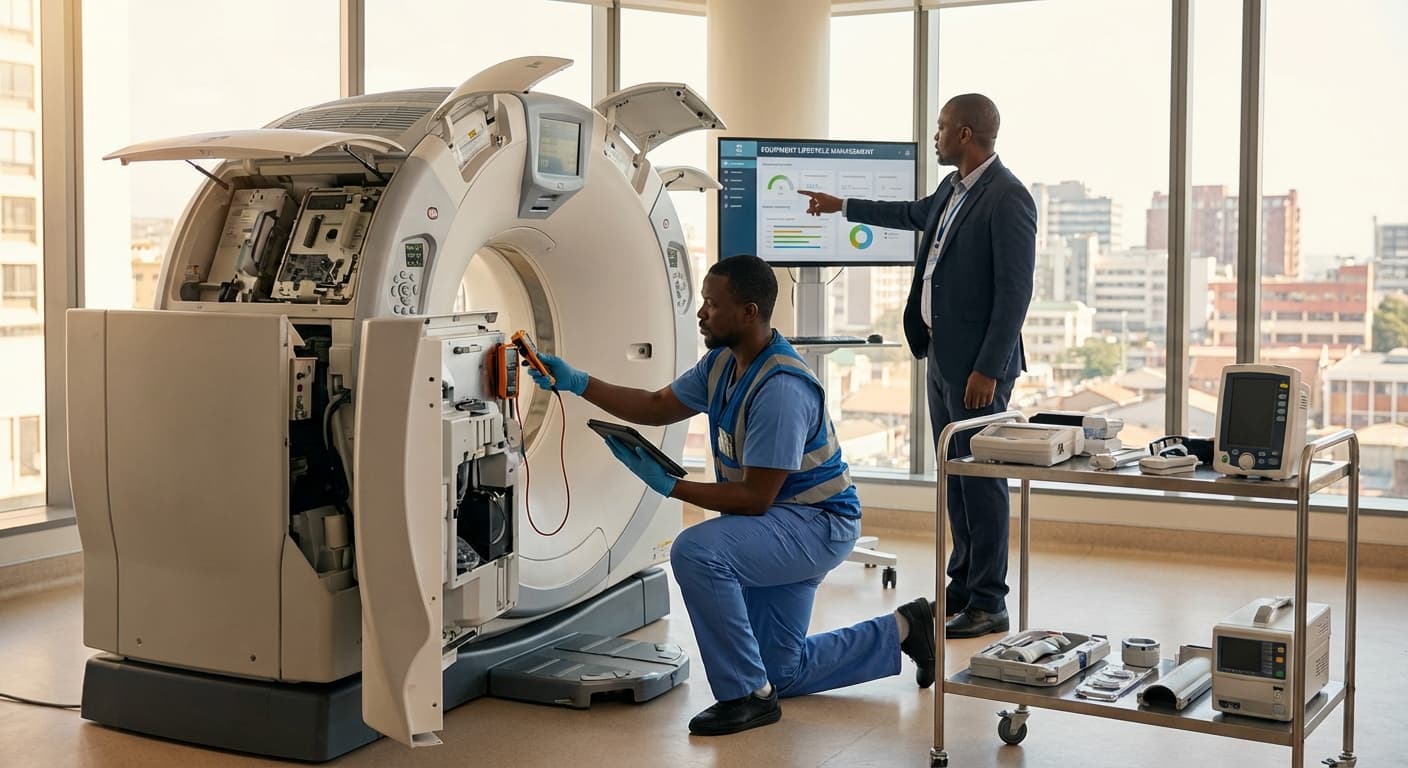
Equipment Replacement Planning & Obsolescence Strategy Service in Guinea
Engineering Excellence & Technical Support
Equipment Replacement Planning & Obsolescence Strategy Service High-standard technical execution following OEM protocols and local regulatory frameworks.
Proactive Obsolescence Mitigation for Critical Mining Equipment
Leveraging advanced data analytics and supply chain intelligence, we identify and forecast potential obsolescence risks in your critical mining machinery (e.g., excavators, haul trucks, crushers). Our strategic recommendations include multi-sourcing critical components, engaging in strategic long-term supplier agreements, and exploring certified refurbished or remanufactured options, ensuring uninterrupted operations and minimizing costly downtime in Guinea's demanding mining sector.
Lifecycle Cost Analysis and Optimized Replacement Scheduling
Our service provides a comprehensive lifecycle cost analysis for your fleet of processing plant equipment. By meticulously tracking maintenance expenditure, repair frequency, and performance degradation, we develop optimized replacement schedules. This ensures you replace assets at the most economically advantageous point, balancing capital investment with operational efficiency and avoiding unexpected failures within your Guinean processing facilities.
Risk-Based Asset Decommissioning and Sustainable Disposal
We implement a robust, risk-based strategy for equipment decommissioning and obsolescence management. This includes thorough end-of-life assessments, evaluation of environmental and safety compliance requirements in Guinea, and the development of sustainable disposal and recycling plans. Our approach safeguards your company against liabilities and promotes responsible asset management throughout the equipment lifecycle.
What Is Equipment Replacement Planning & Obsolescence Strategy Service In Guinea?
Equipment Replacement Planning & Obsolescence Strategy Service in Guinea refers to a specialized consulting and implementation offering designed to proactively manage the lifecycle of industrial and technological assets within Guinean organizations. It encompasses the systematic evaluation of existing equipment, forecasting future needs, and developing strategic approaches to mitigate risks associated with obsolescence, performance degradation, and end-of-life scenarios. The service aims to optimize capital expenditure, minimize operational disruptions, and ensure continued operational efficiency and competitiveness in the Guinean market.
| Who Needs This Service? | Typical Use Cases in Guinea | ||||||
|---|---|---|---|---|---|---|---|
| Manufacturing and Industrial Companies: Organizations operating factories, processing plants, and production lines where equipment reliability and efficiency are paramount for output and quality. | Mining and Extractive Industries: Companies dealing with heavy machinery, exploration equipment, and processing facilities in remote locations where maintenance and replacement logistics are complex. | Energy and Utilities Sector: Power generation plants, water treatment facilities, and distribution networks requiring long-term asset management to ensure continuous service delivery. | Telecommunications Providers: Managing aging network infrastructure, switching equipment, and transmission systems susceptible to rapid technological obsolescence. | Healthcare Institutions: Hospitals and clinics with critical medical equipment (imaging systems, laboratory analyzers) that require regular upgrades and maintenance to ensure patient safety and diagnostic accuracy. | Transportation and Logistics Companies: Airlines, shipping lines, and road transport operators managing fleets of vehicles and specialized handling equipment with significant lifecycle implications. | Government Agencies and Public Infrastructure: Managing public assets such as water systems, public transport, and administrative IT infrastructure requiring long-term planning for public service continuity. | Large-Scale Agricultural Operations: Businesses utilizing sophisticated farm machinery and processing equipment that require timely replacement for optimal yield and operational efficiency. |
| Replacing aging production machinery in a bauxite processing plant to improve throughput and reduce energy consumption. | Developing a phased replacement plan for mining haul trucks and excavators to minimize downtime and optimize operational costs. | Strategizing the upgrade of power grid control systems to enhance reliability and integrate renewable energy sources. | Managing the obsolescence of legacy mobile network base stations and planning the transition to 5G infrastructure. | Establishing a replacement schedule for MRI scanners and CT machines in a major hospital to ensure access to modern diagnostic capabilities. | Planning the fleet renewal for a national airline, considering fuel efficiency, maintenance costs, and passenger capacity. | Developing a long-term investment plan for municipal water treatment plants to meet growing population demands and regulatory standards. | Implementing a strategy for upgrading harvesting and processing equipment on large cocoa or cashew plantations. |
Key Components of the Service
- Asset Inventory and Condition Assessment: Comprehensive cataloging of all relevant equipment, including specifications, acquisition dates, maintenance history, and current operational status. This often involves physical inspections, performance testing, and data analysis.
- Obsolescence Risk Assessment: Identification of equipment facing technological, functional, or support obsolescence. This includes evaluating the availability of spare parts, vendor support, and the increasing cost or difficulty of maintenance for older systems.
- Performance Degradation Analysis: Evaluation of how equipment performance is declining over time due to wear and tear, technological limitations, or evolving operational requirements. This informs the timing of replacement or upgrade.
- Total Cost of Ownership (TCO) Modeling: Calculation of all costs associated with an asset throughout its lifecycle, including acquisition, operation, maintenance, energy consumption, and eventual disposal or replacement. This aids in informed decision-making.
- Lifecycle Costing and Forecasting: Predicting future expenditure related to equipment maintenance, repair, and eventual replacement, allowing for better budgetary planning.
- Replacement/Upgrade Strategy Development: Formulating optimal strategies for replacing or upgrading equipment, considering factors such as lead times, integration challenges, capital availability, and potential return on investment.
- Risk Mitigation Planning: Developing contingency plans to address potential disruptions caused by equipment failure or obsolescence, including strategies for interim solutions or rapid deployment of replacements.
- Disposal and Decommissioning Planning: Establishing environmentally sound and cost-effective procedures for retiring and disposing of obsolete equipment in compliance with Guinean regulations.
- Technology Scouting and Future-Proofing: Researching emerging technologies and industry trends relevant to the organization's sector to inform long-term strategic planning and ensure future compatibility.
- Implementation Support: Assisting organizations with the procurement, installation, integration, and commissioning of new equipment as per the developed strategy.
Who Needs Equipment Replacement Planning & Obsolescence Strategy Service In Guinea?
Equipment replacement planning and obsolescence strategy services are crucial for organizations in Guinea that rely on a diverse range of physical assets to operate. Proactive planning prevents costly downtime, ensures compliance with safety and environmental regulations, and optimizes capital expenditure. Without such strategies, businesses risk operational disruptions, increased maintenance costs, and the inability to leverage newer, more efficient technologies.
| Target Customer Type | Key Departments Involved | Primary Needs Addressed |
|---|---|---|
| Mining & Extractive | Operations, Maintenance, Engineering, Procurement, Finance | Maximizing asset lifespan, minimizing downtime, ensuring safety of heavy machinery, managing wear and tear, compliance with environmental standards. |
| Energy & Utilities | Operations, Engineering, Maintenance, Asset Management, Regulatory Affairs, Finance | Ensuring reliable power/water supply, managing aging infrastructure, compliance with grid standards, planning for technological upgrades (e.g., renewable energy integration). |
| Manufacturing | Production, Maintenance, Engineering, Quality Control, Supply Chain, Finance | Maintaining production efficiency, reducing defect rates, adapting to new manufacturing technologies, managing spare parts inventory. |
| Telecommunications | Network Operations, Engineering, IT Infrastructure, Procurement, Finance | Keeping up with rapid technological advancements (e.g., 4G/5G rollout), managing aging network hardware, ensuring service continuity. |
| Transportation & Logistics | Fleet Management, Maintenance, Operations, Procurement, Safety, Finance | Optimizing fleet performance, ensuring safety of vehicles and infrastructure, managing maintenance schedules, compliance with transportation regulations. |
| Government & Public Sector | Public Works, Facilities Management, Procurement, Budgeting & Finance, IT Departments, Safety & Compliance Officers | Managing public infrastructure (roads, bridges, utilities), ensuring the functionality of government assets, efficient use of taxpayer funds, ensuring public safety. |
| Healthcare | Biomedical Engineering, Facilities Management, IT, Procurement, Clinical Departments, Finance | Ensuring the reliability of medical equipment, patient safety, managing the lifecycle of specialized diagnostic and treatment devices, compliance with health regulations. |
Target Customers & Departments in Guinea
- {"items":["Mining and Extractive Industries (e.g., gold, bauxite, iron ore)","Energy and Utilities (e.g., power generation, water treatment, oil & gas)","Manufacturing and Industrial Production","Telecommunications","Transportation and Logistics","Agriculture and Agribusiness (processing and large-scale operations)"],"title":"Industries with Significant Capital Equipment Investment"}
- {"items":["Public Works and Infrastructure Departments","National Defense and Security Forces","Public Healthcare Providers (hospitals, clinics)","Educational Institutions (universities, technical colleges)","State-Owned Enterprises"],"title":"Government and Public Sector Entities"}
- {"items":["Companies with strict safety or environmental standards.","Businesses operating in sectors with rapidly evolving technological requirements."],"title":"Organizations Facing Regulatory Compliance"}
Equipment Replacement Planning & Obsolescence Strategy Service Process In Guinea
This document outlines the workflow for the Equipment Replacement Planning & Obsolescence Strategy Service Process, specifically tailored for operations in Guinea. The process is designed to systematically address the identification, evaluation, and strategic replacement of aging or obsolete equipment to ensure operational efficiency, minimize downtime, and comply with relevant regulations. The workflow spans from the initial client inquiry to the successful execution of the replacement plan.
| Stage | Activities | Deliverables | Key Considerations (Guinea) |
|---|---|---|---|
| Client expresses need for equipment replacement planning. Initial meeting to understand scope, objectives, and existing challenges. | Scope of Work document, Project Kick-off Meeting minutes. | Language barriers, local business customs, establishing trust with local stakeholders. |
| Collect comprehensive data on existing equipment (age, condition, maintenance history, performance metrics). Conduct on-site inspections and functional tests. | Equipment Inventory database, Condition Assessment reports, Performance Analysis reports. | Access to remote sites, availability of local technical expertise for inspections, ensuring safety protocols are followed. |
| Evaluate equipment against obsolescence criteria (e.g., end-of-life support, spare parts availability, technological advancements, regulatory changes). Quantify risks associated with continued use. | Obsolescence Risk Matrix, Risk Mitigation Recommendations. | Understanding of specific industry regulations in Guinea, potential for counterfeit spare parts in the local market. |
| Propose various replacement options (e.g., direct replacement, upgrade, refurbishment, outsourcing). Develop a phased approach based on criticality and budget. Define performance and technical specifications for new equipment. | Equipment Replacement Strategy document, Specification Sheets for new equipment. | Local availability of suitable replacement technologies, need for training local personnel on new equipment. |
| Estimate costs for new equipment, installation, training, and decommissioning. Develop a financial model, explore funding options, and identify potential ROI. | Detailed Project Budget, Financial Projections, ROI Analysis. | Currency fluctuations, import duties and taxes, local financing options and regulations. |
| Develop tender documents. Identify and vet potential suppliers (local and international). Manage the procurement process, including contract negotiation. | Tender documents, Vendor Evaluation reports, Signed Purchase Orders/Contracts. | Understanding of Guinean procurement laws, identifying reliable local suppliers and service providers, anti-corruption due diligence. |
| Coordinate delivery and installation of new equipment. Oversee commissioning and testing. Provide training to operational and maintenance staff. | Installation & Commissioning Reports, Training Material, Trained Personnel. | Logistics and transportation challenges, availability of qualified local installation teams, ensuring smooth transition with minimal disruption. |
| Plan and execute the safe and environmentally responsible decommissioning and disposal of old equipment, adhering to local regulations. | Decommissioning Plan, Disposal Certificates, Environmental Compliance reports. | Local environmental regulations for waste disposal, availability of certified disposal facilities, potential for asset recovery or resale. |
| Assess the success of the replacement project against initial objectives. Monitor the performance of new equipment. Establish ongoing maintenance and monitoring plans. | Post-Implementation Review Report, Performance Monitoring Plan, Lessons Learned document. | Establishing long-term service agreements with local providers, continuous training needs assessment, adapting to evolving operational requirements. |
Key Stages of the Equipment Replacement Planning & Obsolescence Strategy Service Process
- Inquiry & Initial Consultation
- Data Gathering & Equipment Assessment
- Obsolescence Risk Analysis
- Replacement Strategy Development
- Budgeting & Financial Planning
- Procurement & Vendor Selection
- Implementation & Installation
- Decommissioning & Disposal
- Post-Implementation Review & Monitoring
Equipment Replacement Planning & Obsolescence Strategy Service Cost In Guinea
The cost of Equipment Replacement Planning & Obsolescence Strategy services in Guinea can vary significantly based on several key factors. Businesses looking to engage such services should be aware of these determinants to accurately budget and understand pricing structures. The primary drivers influencing the cost include the complexity and scale of the asset inventory, the level of detail required in the analysis, the expertise and reputation of the service provider, and the duration of the engagement. For example, a comprehensive assessment of a large industrial facility with a diverse range of equipment will naturally incur higher costs than a focused evaluation of a smaller office IT infrastructure. Similarly, providers with deep industry-specific knowledge and a proven track record in delivering actionable obsolescence strategies will command higher fees.
| Service Component | Typical Cost Range (GNF - Guinean Franc) | Notes |
|---|---|---|
| Initial Consultation & Scope Definition | 500,000 - 2,000,000 GNF | Covers initial discussions, understanding needs, and defining project scope. |
| Asset Inventory & Data Gathering (Per Asset/Category) | 10,000 - 100,000 GNF | Cost can vary greatly depending on asset complexity and data accessibility. |
| Obsolescence Assessment & Risk Analysis | 1,000,000 - 15,000,000 GNF | Dependent on the number of assets and the sophistication of the analysis. |
| Development of Replacement Strategy | 2,000,000 - 20,000,000 GNF | Includes outlining replacement schedules, budget projections, and vendor considerations. |
| Development of Obsolescence Mitigation Strategy | 1,500,000 - 18,000,000 GNF | Focuses on strategies like extended support, alternative sourcing, or re-engineering. |
| Full Project Management & Reporting | 5,000,000 - 50,000,000+ GNF | This is an overarching cost for comprehensive projects, including ongoing management and final reports. |
| Specialized Expertise (e.g., Industrial, IT Infrastructure) | Variable Addition | May add a premium based on the specific industry niche required. |
Key Pricing Factors for Equipment Replacement Planning & Obsolescence Strategy Services in Guinea:
- Scope of Asset Inventory: The number, type, and criticality of the equipment to be assessed.
- Depth of Analysis: The level of detail in assessing operational status, maintenance history, availability of spare parts, and end-of-life projections.
- Provider Expertise & Reputation: The experience, qualifications, and established credibility of the consulting firm or individual.
- Data Availability & Quality: The ease of accessing accurate and complete data on the existing equipment.
- Required Deliverables: The format and comprehensiveness of the final reports, strategies, and recommendations.
- Project Timeline: Urgent or accelerated project timelines may incur premium charges.
- Geographic Location within Guinea: While less impactful than other factors, on-site presence in remote areas might involve additional logistical costs.
- Technology & Tools Used: Utilization of advanced software or analytical tools can influence pricing.
Affordable Equipment Replacement Planning & Obsolescence Strategy Service Options
Our Affordable Equipment Replacement Planning & Obsolescence Strategy Service is designed to proactively manage your asset lifecycle, minimizing disruptive downtime and preventing costly emergency replacements. We offer flexible value bundles and cost-saving strategies to ensure you receive tailored support that fits your budget and operational needs. By focusing on strategic planning, we help you avoid the financial strain of unexpected failures and the inefficiencies of outdated equipment.
| Service Component | Cost-Saving Benefit | Typical Value Bundle Inclusion |
|---|---|---|
| Initial Equipment Audit | Identifies immediate risks and opportunities for savings. | All Bundles |
| Lifecycle Status Reporting | Prioritizes assets needing attention, preventing unexpected costs. | Basic, Standard, Comprehensive |
| Obsolescence Forecasting | Allows for planned, budget-friendly replacements rather than emergencies. | Standard, Comprehensive |
| Risk Assessment | Focuses resources on the most critical equipment for maximum impact. | Standard, Comprehensive |
| Budget Allocation Guidance | Ensures capital is spent efficiently and predictably. | Standard, Comprehensive |
| Proactive Maintenance Recommendations | Extends equipment life, deferring capital expenditure. | Standard, Comprehensive |
| Component Sourcing Strategies | Secures parts before they become unavailable or prohibitively expensive. | Comprehensive |
| Vendor Negotiation Support | Achieves better pricing and terms on replacements and parts. | Comprehensive |
Value Bundles & Cost-Saving Strategies
- {"items":["Basic Visibility Package: Includes an initial equipment audit, a lifecycle status report for critical assets, and basic obsolescence flagging. Ideal for smaller organizations or those starting their asset management journey.","Standard Strategic Planning Bundle: Expands on the basic package with detailed replacement forecasting, risk assessment for critical equipment, and preliminary budget allocation guidance. Offers a balanced approach to proactive planning.","Comprehensive Obsolescence Mitigation Suite: Our most robust offering, encompassing advanced predictive analytics for failure, proactive component sourcing strategies, vendor relationship management for end-of-life support, and detailed long-term capital expenditure planning. Designed for organizations with complex operations and a strong emphasis on operational continuity."],"title":"Value Bundles"}
- {"items":["Early Identification of Obsolescence: Spotting potential issues before they impact operations drastically reduces emergency repair and replacement costs, which are often significantly higher.","Negotiated Bulk Purchasing Discounts: By consolidating planned replacements, we can leverage your collective buying power to secure better pricing from manufacturers and suppliers.","Extended Equipment Lifespan through Proactive Maintenance: Our planning often identifies opportunities for optimized maintenance schedules that can extend the useful life of your existing equipment, delaying capital expenditure.","Phased Replacement Programs: Instead of overwhelming your budget with a large, single capital outlay, we help you implement phased replacement strategies that align with your financial capacity and operational priorities.","Leveraging Refurbished or Certified Pre-Owned Equipment Options: For non-critical systems, we can identify cost-effective, reliable refurbished or certified pre-owned equipment as a viable alternative to new purchases.","Standardization of Equipment: Where possible, we assist in standardizing equipment across your organization, simplifying maintenance, spare parts inventory, and vendor negotiations.","Improved Inventory Management of Spare Parts: Accurate forecasting of needs reduces the overstocking of spare parts, freeing up capital and reducing storage costs. Conversely, it ensures critical parts are available when needed, preventing costly downtime."],"title":"Cost-Saving Strategies Integrated into Our Services"}
Verified Providers In Guinea
Ensuring access to quality healthcare is paramount, and in Guinea, this means partnering with verified and reputable providers. Franance Health stands out as a premier choice due to its stringent credentialing process and commitment to excellence. This document outlines why Franance Health credentials represent the best option for individuals and organizations seeking reliable healthcare services in Guinea.
| Credentialing Aspect | Franance Health Approach | Benefit to Patients |
|---|---|---|
| Educational Verification | Thorough review of degrees, diplomas, and certifications from accredited institutions. | Ensures providers have a strong theoretical foundation and appropriate medical knowledge. |
| Licensing and Regulatory Compliance | Confirmation of valid and up-to-date professional licenses and adherence to Guinean healthcare regulations. | Guarantees providers are legally authorized to practice and comply with national standards. |
| Professional Experience and History | Review of past work experience, practice history, and any disciplinary actions. | Provides insight into a provider's practical skills and professional track record. |
| Specialized Training and Certifications | Verification of specific training, fellowships, and certifications in specialized medical fields. | Helps patients identify providers with the exact expertise needed for complex conditions. |
| Patient Feedback and Peer Review | Incorporation of patient satisfaction data and feedback from medical peers. | Offers a holistic view of a provider's competency, communication skills, and patient care quality. |
| Commitment to Continuing Medical Education (CME) | Confirmation of providers actively participating in ongoing professional development. | Ensures providers stay current with the latest medical advancements and techniques. |
Why Franance Health Credentials are the Best Choice
- Rigorous Vetting Process: Franance Health employs a comprehensive and multi-faceted vetting process for all its healthcare providers. This includes verifying educational qualifications, professional licenses, specialized training, and past performance records. This ensures that only highly competent and ethical practitioners are accredited.
- Adherence to International Standards: We align our credentialing standards with recognized international best practices in healthcare. This commitment to global benchmarks guarantees that our providers meet and often exceed the expected quality of care.
- Continuous Performance Monitoring: Credentialing is not a one-time event. Franance Health actively monitors the ongoing performance of its accredited providers through patient feedback, peer reviews, and regular audits. This ensures sustained quality and patient safety.
- Specialized Expertise: Our network comprises a diverse range of medical professionals, from general practitioners to highly specialized surgeons and diagnosticians. Franance Health credentialing verifies these specialized skills, enabling patients to find the right expert for their specific needs.
- Commitment to Ethical Practice: Beyond technical skills, Franance Health places a strong emphasis on ethical conduct. Our vetting process includes checks for professional integrity and adherence to medical ethics, building trust and confidence in the providers we endorse.
- Improved Patient Outcomes: By partnering with credentialed providers, patients can be assured of receiving care from individuals who are not only skilled but also committed to achieving the best possible health outcomes. This reduces the risk of medical errors and enhances patient satisfaction.
- Streamlined Access to Quality Care: Franance Health credentialing simplifies the process of finding trusted healthcare providers in Guinea. It acts as a seal of approval, saving patients time and anxiety in their search for reliable medical assistance.
Scope Of Work For Equipment Replacement Planning & Obsolescence Strategy Service
This Scope of Work (SOW) outlines the services to be provided for Equipment Replacement Planning and Obsolescence Strategy. The objective is to develop a comprehensive, proactive strategy for managing equipment lifecycle, minimizing disruption, and optimizing capital expenditure through strategic replacements and mitigation of obsolescence risks. This service will encompass an assessment of current equipment inventory, identification of obsolescence risks, development of replacement criteria, and the creation of a prioritized multi-year replacement plan.
| Technical Deliverable | Description | Standard Specification / Format |
|---|---|---|
| Equipment Inventory Database | A structured database containing comprehensive details of all assessed equipment. | Relational database (e.g., SQL, PostgreSQL) or a comprehensive spreadsheet (e.g., Excel, CSV) with defined schema including: Equipment ID, Name, Manufacturer, Model, Serial Number, Installation Date, Purchase Date, Location, Criticality Rating, Vendor, Warranty Status, Last Maintenance Date, Maintenance Cost History, Current Condition Rating, Predicted Failure Date, Obsolescence Risk Score, Support Status (e.g., Active, End-of-Life, Extended Support). |
| Obsolescence Risk Assessment Report | A report detailing identified obsolescence risks for each piece of equipment. | PDF document including executive summary, methodology, detailed findings per equipment category or criticality, identified risks (e.g., EOL, lack of spares, security vulnerabilities), risk levels (e.g., High, Medium, Low), and supporting evidence. |
| Replacement Criteria Document | A document defining the established criteria for initiating equipment replacement. | PDF document outlining: Definition of each criterion, methodology for assessment, weighting factors (if applicable), thresholds for trigger points (e.g., MTBF exceeding X, TCO exceeding Y% of replacement cost), and examples of application. |
| Strategic Options Analysis Report | An analysis of potential replacement strategies and their implications. | PDF document including: Summary of available options (replace, upgrade, refurbish, etc.), cost-benefit analysis for each option, ROI calculations, risk assessment for each option, and recommended approach for key equipment types. |
| Prioritized Equipment Replacement Plan | A phased, multi-year plan prioritizing equipment for replacement. | PDF document and accompanying spreadsheet (Excel/CSV) detailing: Prioritized list of equipment for replacement, recommended replacement timeline (Year 1, Year 2, etc.), estimated replacement cost per item, projected ROI, key dependencies, implementation considerations, and responsible parties. |
| Obsolescence Mitigation Strategy Recommendations | A set of actionable recommendations for managing obsolescence. | PDF document outlining specific mitigation tactics for identified risks, such as: Recommended spare parts inventory levels, negotiation strategies with vendors, training requirements for legacy systems, alternative technology scouting, and risk acceptance criteria. |
| Final Project Report & Presentation | A comprehensive report and presentation summarizing the entire engagement. | PDF document and PowerPoint presentation (PPTX) covering: Project objectives, methodology, key findings, developed strategies, recommended plans, implementation roadmap, and recommendations for ongoing management. Includes executive summary and detailed appendices. |
Key Service Components
- Current State Assessment: Detailed inventory of all relevant equipment, including age, condition, maintenance history, criticality, and vendor support status.
- Obsolescence Risk Identification: Analysis of equipment against established obsolescence criteria (e.g., end-of-life announcements, diminishing support, spare parts availability, cybersecurity vulnerabilities, performance limitations).
- Replacement Criteria Development: Definition of clear, measurable criteria for triggering equipment replacement (e.g., total cost of ownership, failure rates, operational efficiency improvements, regulatory compliance, strategic alignment).
- Strategic Options Analysis: Evaluation of various replacement strategies, including like-for-like replacement, upgrade, or alternative technology adoption. This will also include consideration of repair and refurbishment options for non-critical or strategically chosen assets.
- Prioritization Framework: Development of a framework to rank equipment for replacement based on criticality, risk of obsolescence, cost-benefit analysis, and available budget.
- Multi-Year Replacement Plan: Creation of a phased, actionable plan detailing recommended replacements over a defined period (e.g., 3-5 years), including estimated costs, potential ROI, and implementation timelines.
- Obsolescence Mitigation Strategies: Identification and recommendation of strategies to mitigate risks associated with aging or obsolete equipment where immediate replacement is not feasible (e.g., strategic spare parts procurement, vendor negotiation for extended support, knowledge transfer for legacy systems).
- Budgetary Planning Support: Provision of data and analysis to support capital expenditure budgeting for equipment replacement.
- Risk Management Plan: Development of a plan to manage risks associated with the implementation of the replacement strategy.
Service Level Agreement For Equipment Replacement Planning & Obsolescence Strategy Service
This Service Level Agreement (SLA) outlines the guaranteed response times and uptime for the Equipment Replacement Planning & Obsolescence Strategy Service (the "Service"). This SLA is an integral part of the overarching service agreement between [Your Company Name] ("Provider") and [Client Company Name] ("Client").
| Service Component / Request Type | Priority Level | Guaranteed Response Time | Guaranteed Resolution Time (Target) | Uptime Guarantee |
|---|---|---|---|---|
| Service Portal / Request Submission | N/A | Within 30 minutes (acknowledgement) | N/A | 99.5% |
| Standard Inquiry (e.g., general obsolescence trends, planning best practices) | Low | Within 4 business hours (acknowledgement and initial update) | Within 2 business days (resolution) | 99.5% |
| Equipment Lifecycle Assessment Request | Medium | Within 2 business hours (acknowledgement and initial update) | Within 5 business days (resolution, depending on data complexity) | 99.5% |
| Obsolescence Risk Analysis & Mitigation Strategy Request | High | Within 1 business hour (acknowledgement and initial update) | Within 3 business days (resolution, depending on data complexity) | 99.5% |
| Replacement Planning & Budgeting Support Request | High | Within 1 business hour (acknowledgement and initial update) | Within 5 business days (resolution, depending on scope and data availability) | 99.5% |
| Urgent Operational Impacting Issue (e.g., critical component nearing end-of-life with no immediate alternative) | Critical | Immediate acknowledgement and assessment (within 30 minutes) | Within 1 business day (initial recommendations and action plan) | 99.5% |
| Scheduled Maintenance Window | N/A | N/A | As per announced schedule | Exempt from Uptime Guarantee during announced periods |
Key Definitions
- {"item":"Service Request: Any request submitted by the Client for assistance, information, or action related to the Service, including but not limited to inquiries about equipment lifecycles, obsolescence risk assessments, replacement planning, or strategic recommendations."}
- {"item":"Response Time: The maximum time allowed for the Provider to acknowledge receipt of a Service Request and initiate a preliminary assessment or provide an initial update to the Client."}
- {"item":"Resolution Time: The maximum time allowed for the Provider to resolve a Service Request to the Client's reasonable satisfaction, based on the complexity and nature of the request. This may involve providing a complete analysis, a recommended plan, or a clear path forward for the Client's decision-making."}
- {"item":"Uptime: The percentage of time the Service is available and accessible to the Client for submission of requests and access to generated reports and analyses. This SLA does not guarantee uptime for third-party systems or infrastructure that may be used in conjunction with the Service but are not directly managed by the Provider."}
- {"item":"Downtime: Any period during which the Service is unavailable or inaccessible to the Client, excluding Scheduled Maintenance."}
- {"item":"Scheduled Maintenance: Pre-announced periods during which the Service may be temporarily unavailable for system updates, upgrades, or maintenance. The Provider will provide reasonable advance notice (typically 48 hours) for Scheduled Maintenance, and will endeavor to schedule such maintenance during off-peak hours."}
Frequently Asked Questions

Ready when you are
Let's scope your Equipment Replacement Planning & Obsolescence Strategy Service in Guinea project in Guinea.

Scaling healthcare logistics and technical systems across the entire continent.