
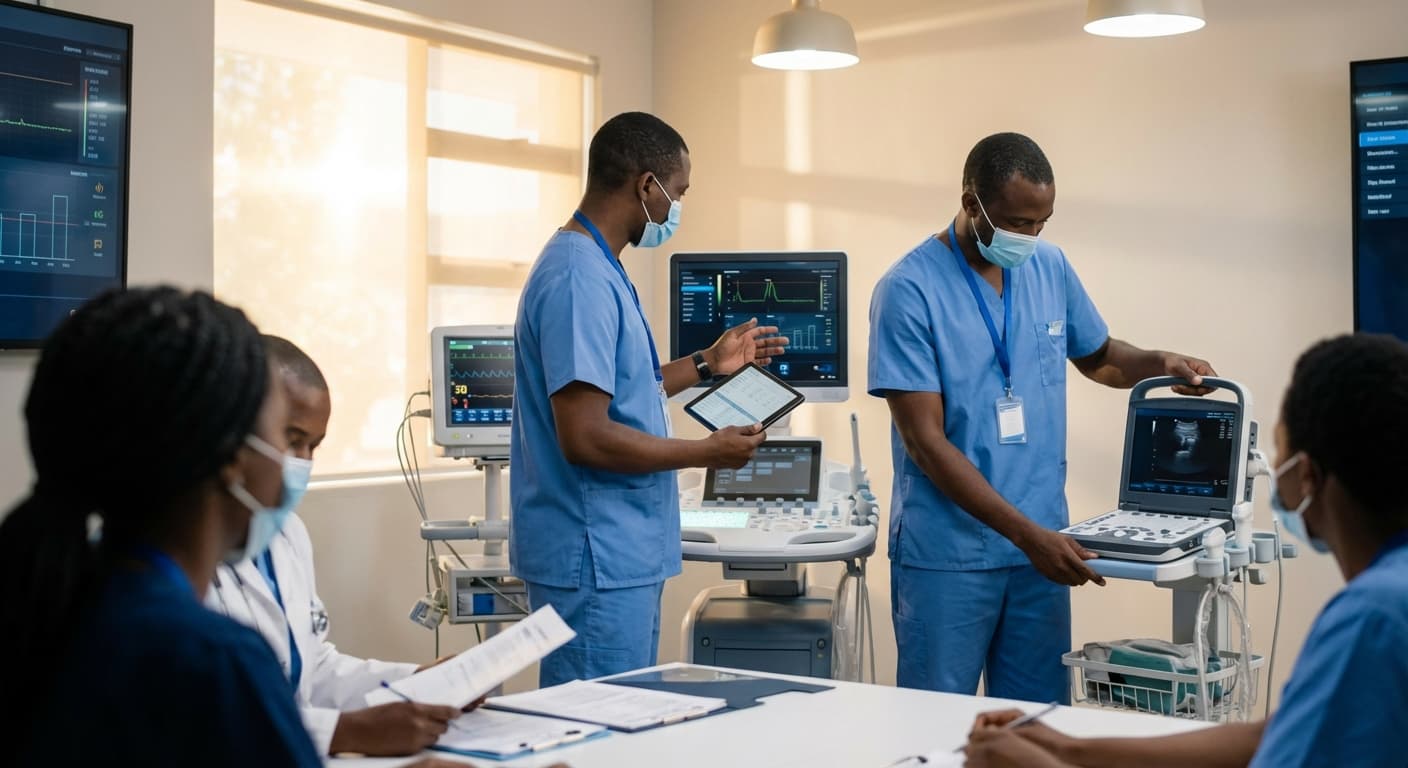
Clinical Needs Assessment for Medical Equipment in Guinea
Engineering Excellence & Technical Support
Clinical Needs Assessment for Medical Equipment High-standard technical execution following OEM protocols and local regulatory frameworks.
Comprehensive Needs Identification & Prioritization
Employs advanced data analysis techniques, including GIS mapping of health facility distribution and demographic profiling, to precisely identify critical unmet medical equipment needs. Prioritizes procurement based on disease burden, population density, and existing infrastructure gaps, ensuring maximum impact and resource optimization.
Interoperability & Infrastructure Integration
Assesses the technical compatibility of proposed medical equipment with existing power, IT, and maintenance infrastructure. Evaluates the capacity for integration into national health information systems, facilitating data-driven decision-making and seamless workflow integration for healthcare professionals.
Stakeholder Collaboration & Capacity Building Framework
Facilitates robust engagement with Ministry of Health officials, healthcare providers, local technical staff, and international partners. Develops a sustainable capacity building framework for equipment operation, maintenance, and repair, including training needs assessment and the identification of local expertise for long-term self-sufficiency.
What Is Clinical Needs Assessment For Medical Equipment In Guinea?
A Clinical Needs Assessment for Medical Equipment in Guinea is a systematic, data-driven evaluation process designed to identify, prioritize, and justify the procurement and deployment of medical devices required to address specific healthcare gaps and improve patient outcomes within the Guinean healthcare system. This service encompasses a comprehensive analysis of existing infrastructure, current clinical practices, disease prevalence, patient demographics, available human resources for healthcare, and budgetary constraints. The ultimate objective is to ensure that investments in medical equipment are strategic, sustainable, and aligned with national health priorities and international best practices, thereby enhancing the quality, accessibility, and efficiency of healthcare delivery.
| Stakeholder Group | Needs Assessment Relevance | Key Information Provided/Required |
|---|---|---|
| Ministry of Public Health (Ministère de la Santé Publique) of Guinea | Strategic planning, resource allocation, health policy development, national health sector reform. | National health priorities, disease burden data, existing infrastructure inventory, budgetary allocations, workforce distribution, policy directives. |
| Regional Health Directorates (Directions Régionales de la Santé) | Regional planning, needs assessment for specific geographic areas, resource distribution within regions. | Regional disease statistics, facility assessments, local workforce availability, regional budget constraints, operational challenges. |
| Public Healthcare Facilities (Hospitals, Health Centers) | Operational needs, clinical practice improvement, patient care enhancement, equipment maintenance and usage. | Current equipment inventory, maintenance records, patient flow, diagnostic and treatment protocols, staff feedback, space and utility assessments. |
| Healthcare Professionals (Physicians, Nurses, Technicians) | Identification of specific diagnostic, therapeutic, and monitoring equipment requirements for effective patient management. | Daily clinical challenges, unmet diagnostic needs, limitations in treatment options, training requirements, equipment performance feedback. |
| International Development Partners and NGOs | Targeted interventions, project design, funding allocation for specific health programs, capacity building. | Programmatic goals, geographical focus, sustainability considerations, technical specifications, impact indicators. |
| Medical Equipment Suppliers and Manufacturers | Understanding of market needs, demand forecasting, product development, after-sales service planning. | Technical specifications, user interface requirements, maintenance needs, training requirements, local support infrastructure. |
Key Components of a Clinical Needs Assessment for Medical Equipment in Guinea
- Healthcare Facility Audits: Evaluation of existing infrastructure, including power supply, water, sanitation, and space availability, to determine suitability for new equipment.
- Clinical Service Gap Analysis: Identification of areas where current diagnostic and therapeutic capabilities are insufficient to meet patient needs.
- Disease Burden and Epidemiological Data Review: Analysis of prevalent diseases and health conditions to inform equipment requirements for diagnosis, treatment, and monitoring.
- Human Resource Capacity Assessment: Evaluation of the availability of trained personnel to operate, maintain, and repair medical equipment.
- User Needs Consultation: Engagement with healthcare professionals (physicians, nurses, technicians) to gather insights on their operational requirements and challenges.
- Technological Feasibility and Appropriateness: Assessment of the suitability of specific technologies considering local maintenance capacity, spare parts availability, and user training requirements.
- Cost-Benefit Analysis and Budgetary Alignment: Evaluation of the economic feasibility of procuring and maintaining equipment, ensuring alignment with available financial resources.
- Prioritization Framework Development: Establishment of criteria for ranking equipment needs based on impact on patient care, cost-effectiveness, and strategic importance.
- Procurement Strategy and Implementation Planning: Development of guidelines for sourcing, purchasing, and deploying equipment, including considerations for import regulations and logistics.
- Monitoring and Evaluation Framework: Design of mechanisms to track the utilization, impact, and maintenance of acquired equipment.
Who Needs Clinical Needs Assessment For Medical Equipment In Guinea?
Clinical needs assessment for medical equipment in Guinea is a critical process designed to ensure that healthcare facilities acquire the most appropriate, functional, and cost-effective equipment to meet the specific health needs of the population. This assessment is vital for optimizing resource allocation, improving patient care outcomes, and building a sustainable healthcare infrastructure. Without a thorough needs assessment, healthcare providers risk purchasing outdated, unsuitable, or redundant equipment, leading to wasted financial resources and potential deficiencies in service delivery. The process involves a comprehensive evaluation of existing healthcare services, patient demographics, disease prevalence, current equipment inventory, infrastructure capabilities, and the skills of healthcare professionals. Ultimately, it aims to bridge the gap between available resources and the actual clinical demands within Guinea's healthcare system.
| Department/Facility Type | Key Needs & Considerations | Examples of Equipment Focus |
|---|---|---|
| Ministry of Health (Procurement/Planning) | National health priorities, disease burden, strategic goals, budget allocation, equipment standardization, national availability of consumables and maintenance. | Large-scale equipment for referral hospitals, public health programs (e.g., vaccination, malaria control), diagnostic imaging, surgical suites, laboratory infrastructure. |
| Public Hospitals (National/Regional) | Current service provision, patient volume, specialty areas, staff expertise, existing equipment condition, infrastructure capacity (power, water, space), maintenance support. | Operating theaters, intensive care units (ICUs), emergency departments, maternity wards, surgical equipment, anesthesia machines, ventilators, patient monitors, diagnostic equipment (X-ray, ultrasound). |
| Health Centers/Dispensaries | Primary healthcare needs, common morbidities, limited infrastructure, essential drug availability, basic diagnostic capabilities, community outreach. | Basic diagnostic tools (thermometers, stethoscopes, BP monitors), essential laboratory equipment (microscopes, simple centrifuges), basic surgical kits, nebulizers, basic sterilization equipment. |
| Specialized Medical Centers | Specific disease management requirements, advanced diagnostic and treatment modalities, highly specialized staff, research needs. | Cardiology equipment (ECG, echocardiography), oncology equipment (radiotherapy machines, chemotherapy infusion pumps), advanced laboratory analyzers, specialized surgical instruments, imaging equipment (CT scanners, MRI - if feasible). |
| NGOs/International Aid | Project-specific goals, partnership agreements, sustainability plans, alignment with national health strategies, capacity building for local staff. | Equipment tailored to specific health initiatives (e.g., maternal and child health, infectious disease control), mobile clinics, water and sanitation equipment, educational materials. |
| Medical Training Institutions | Curriculum requirements, practical training needs, simulation facilities, research capabilities, student-to-equipment ratios. | Anatomy models, simulation mannequins, laboratory equipment for teaching, basic clinical examination tools, audiovisual equipment for lectures. |
Target Customers and Departments for Clinical Needs Assessment in Guinea
- Ministry of Health and Public Hygiene (Centre National d'Approvisionnement en Produits Pharmaceutiques et Médicaux - CENAP), procurement departments, and planning units.
- Regional Health Directorates and their respective administrative and technical teams.
- District and Municipal Health Services.
- Public Hospitals (including national, regional, and district level hospitals).
- Specialized Medical Centers (e.g., oncology centers, cardiology centers, maternity hospitals, pediatric hospitals).
- Health Centers and Dispensaries (especially in rural and underserved areas).
- Non-Governmental Organizations (NGOs) and International Aid Organizations involved in healthcare provision and equipment donation/procurement.
- Medical Training Institutions and Universities with medical programs, for equipping teaching hospitals and simulation labs.
- Private Healthcare Providers and Clinics (where applicable and when seeking to upgrade or expand services).
- Research Institutions focused on health in Guinea.
Clinical Needs Assessment For Medical Equipment Process In Guinea
This document outlines the workflow for conducting a Clinical Needs Assessment for Medical Equipment in Guinea, from the initial inquiry to the final execution and validation of the acquired equipment. The process is designed to ensure that medical equipment procured meets the actual clinical demands and priorities of healthcare facilities within the country. It involves multiple stakeholders, including healthcare professionals, ministry of health representatives, procurement specialists, and equipment vendors.
| Phase | Description | Key Activities | Responsible Parties | Deliverables | Timeline (Indicative) |
|---|---|---|---|---|---|
| The process begins when a healthcare facility or a relevant health authority identifies a need for new or upgraded medical equipment. | Submission of a formal request/proposal outlining the perceived need and its justification. | Healthcare Facility Staff, Regional Health Directorates | Formal Request Document | 1-2 Weeks |
| A comprehensive assessment to understand the existing gaps, current patient load, disease prevalence, and strategic health priorities. | Site visits, stakeholder consultations, review of existing data (patient records, equipment inventory). | Ministry of Health (MoH) - Clinical Directorate, Needs Assessment Team, Facility Management | Needs Assessment Report, Prioritized Equipment List | 2-4 Weeks |
| Gathering detailed information on the specific types of equipment required, their intended use, and the context of their deployment. | Clinical staff interviews, review of standard treatment guidelines, consultation with technical experts. | Needs Assessment Team, Clinical Specialists, MoH Technical Advisors | Verified Equipment Requirements, Preliminary Specification Outline | 3-5 Weeks |
| Translating the identified clinical needs into precise technical specifications for the medical equipment. | Defining performance characteristics, safety standards, compatibility requirements, consumables, and service needs. | MoH Technical Committee, Biomedical Engineers, Clinical Users | Detailed Technical Specifications, Bill of Quantities (BoQ) | 4-6 Weeks |
| Developing a strategic plan for acquiring the specified equipment, considering budget, funding sources, and procurement methods. | Budget allocation, funding confirmation, selection of procurement modality (e.g., open tender, framework agreement). | MoH Procurement Unit, Ministry of Finance, Funding Agencies | Procurement Plan, Budget Approval | 2-3 Weeks |
| The formal process of inviting bids from suppliers and evaluating them to select the most suitable vendor. | Issuance of Request for Proposals (RFPs)/Tenders, bid opening, technical and financial evaluation, due diligence. | MoH Procurement Unit, Tender Evaluation Committee, Legal Department | Award Decision, Vendor Recommendation | 8-12 Weeks |
| Formalizing the agreement with the selected vendor and placing the official order for the equipment. | Contract negotiation, signing of contracts, issuance of Purchase Orders (POs). | MoH Legal Department, Procurement Unit, Selected Vendor | Signed Contract, Purchase Order | 2-4 Weeks |
| Ensuring the safe and timely transportation of the medical equipment to the designated healthcare facilities. | Coordination of shipping, customs clearance, insurance, and delivery to site. | Procurement Unit, Logistics Provider, Vendor, Customs Authorities | Delivery Confirmation, Shipment Tracking | 4-16 Weeks (depending on origin & volume) |
| Setting up and testing the equipment to ensure it functions correctly and meets the specified standards. | On-site installation, calibration, performance testing, safety checks. | Vendor Technicians, Biomedical Engineers, Facility Staff | Installation Report, Commissioning Certificate | 1-2 Weeks per equipment/site |
| Providing comprehensive training to healthcare professionals on the proper operation and maintenance of the new equipment. | User training, maintenance training for biomedical staff, provision of user manuals. | Vendor Trainers, Biomedical Engineers, Healthcare Professionals | Training Materials, Attendance Records, Competency Assessments | 1-2 Weeks per training session |
| Confirming that the acquired equipment effectively meets the initially identified clinical needs and is being utilized properly. | Post-installation site visits, user feedback collection, performance audits. | Needs Assessment Team, MoH Quality Assurance Unit, Facility Management | Post-Implementation Review Report, User Satisfaction Survey | 4-8 Weeks post-installation |
| Establishing a system for continuous monitoring of equipment performance, utilization, and maintenance needs. | Regular equipment maintenance schedules, performance tracking, data collection for future needs assessments. | Biomedical Engineering Department, Facility Management, MoH Health Information System | Maintenance Logs, Utilization Reports, Equipment Status Updates | Ongoing |
Clinical Needs Assessment Workflow for Medical Equipment in Guinea
- Inquiry & Initial Request
- Needs Identification & Prioritization
- Data Collection & Verification
- Technical Specification Development
- Procurement Planning
- Tendering & Vendor Selection
- Contracting & Ordering
- Logistics & Delivery
- Installation & Commissioning
- Training & Capacity Building
- Validation & Post-Implementation Review
- Ongoing Monitoring & Evaluation
Clinical Needs Assessment For Medical Equipment Cost In Guinea
This document outlines a clinical needs assessment focused on understanding the pricing factors and ranges of medical equipment within Guinea, expressed in the local currency, the Guinean Franc (GNF). Accurate cost data is crucial for effective healthcare planning, budgeting, and procurement, ensuring that essential medical technologies are accessible and sustainable within the Guinean healthcare system. Several factors significantly influence the cost of medical equipment in Guinea, including import duties, taxes, shipping and logistics, supplier markups, and the specific brand and model of the equipment. Furthermore, the availability of local service and maintenance can also impact the total cost of ownership.
The following sections will detail these pricing factors and provide illustrative cost ranges for common medical equipment categories, based on current market understanding and available information. It is important to note that these figures are estimates and can fluctuate based on market dynamics, negotiation, and specific supplier agreements. For precise budgeting, direct quotes from suppliers are highly recommended.
| Equipment Category | Estimated Price Range (GNF) | Notes |
|---|---|---|
| Basic Diagnostic Tools (e.g., Stethoscope, Blood Pressure Monitor) | 50,000 - 500,000 | Varies by brand and quality. Higher end may include digital models. |
| Laboratory Equipment (e.g., Microscope, Centrifuge) | 500,000 - 5,000,000 | Depends on complexity and automation. Basic manual centrifuges are at the lower end. |
| Patient Monitoring Systems (e.g., Vital Signs Monitor) | 1,000,000 - 10,000,000 | Includes parameters monitored and brand. Multi-parameter monitors are more expensive. |
| Surgical Instruments (Basic Set) | 300,000 - 2,000,000 | Price depends on the number and type of instruments in the set. Stainless steel quality is a factor. |
| Imaging Equipment (e.g., Portable Ultrasound) | 10,000,000 - 50,000,000 | Significant variation based on features, probes, and brand. Fixed X-ray machines would be considerably higher. |
| Anesthesia Machine (Basic) | 15,000,000 - 70,000,000 | Depends on integrated features like ventilators and vaporizers. |
| Hospital Beds (Manual) | 200,000 - 1,500,000 | Basic manual beds are more affordable than electric or specialized beds. |
| Oxygen Concentrators (Portable) | 800,000 - 5,000,000 | Flow rate and brand influence price. Higher flow rates are more costly. |
| Defibrillator (Manual) | 5,000,000 - 20,000,000 | AEDs (Automated External Defibrillators) might be at the lower end of this range. |
| Sterilizers (Autoclaves - Medium Size) | 3,000,000 - 15,000,000 | Capacity and steam pressure capabilities affect cost. |
Key Pricing Factors for Medical Equipment in Guinea
- Import Duties and Taxes: Guinea imposes various duties and taxes on imported goods, including medical equipment, which directly add to the final price.
- Shipping and Logistics: International shipping costs, customs clearance fees, and local transportation within Guinea contribute significantly to the overall expense.
- Supplier Markups: Local distributors and suppliers add their profit margins to the landed cost of the equipment.
- Brand and Model: Renowned international brands and advanced technological models generally command higher prices than generic or less sophisticated alternatives.
- New vs. Refurbished Equipment: The price difference between new and refurbished equipment can be substantial, offering a more affordable option for certain needs.
- Warranty and After-Sales Service: The inclusion of comprehensive warranties, installation, and training services often increases the initial purchase price but reduces long-term operational costs.
- Currency Fluctuations: The exchange rate between the US Dollar (often used for international pricing) and the Guinean Franc can impact the local currency cost.
- Local Availability and Demand: Scarcity of specific equipment or high demand can drive up prices.
Affordable Clinical Needs Assessment For Medical Equipment Options
Securing appropriate medical equipment is paramount for any healthcare facility. A comprehensive needs assessment, tailored to be affordable, ensures that investments are judicious and impactful. This process identifies essential equipment, avoids unnecessary purchases, and prioritizes items that offer the greatest clinical benefit. Affordability is achieved by exploring various acquisition models, understanding the total cost of ownership, and leveraging strategic purchasing. Value bundles and cost-saving strategies are crucial components in this approach, allowing organizations to maximize their budget without compromising on quality or patient care. By understanding these concepts, healthcare providers can make informed decisions that lead to both financial efficiency and improved clinical outcomes.
| Value Bundle Component | Description | Cost-Saving Benefit |
|---|---|---|
| Equipment Purchase | Acquisition of the core medical device. | Negotiated pricing, volume discounts, and competitive bidding can reduce upfront costs. |
| Installation & Training | Professional setup, calibration, and staff training on equipment operation. | Bundling can offer discounted rates compared to separate service agreements, ensuring efficient initial use and reducing errors. |
| Maintenance & Service Contract | Scheduled preventative maintenance, repairs, and technical support. | Predictable costs, reduced downtime, and extended equipment lifespan lead to lower long-term expenses. |
| Consumables & Accessories | Included essential supplies and accessories needed for operation. | Bulk purchasing and bundled pricing often provide better value than procuring items separately. |
| Software Updates & Upgrades | Access to necessary software improvements and feature enhancements. | Ensures equipment remains current and functional, preventing the need for premature replacement and associated costs. |
Key Cost-Saving Strategies for Medical Equipment Acquisition
- Thoroughly define clinical needs to avoid over-purchasing.
- Explore equipment leasing or rental options for short-term or specialized needs.
- Consider refurbished or reconditioned medical equipment from reputable vendors.
- Negotiate bulk purchase discounts and long-term service contracts.
- Prioritize equipment with lower total cost of ownership (TCO), including maintenance and consumables.
- Investigate open-source or cloud-based software solutions for diagnostic or management systems.
- Standardize equipment across departments where feasible to simplify training and maintenance.
- Leverage group purchasing organizations (GPOs) for collective bargaining power.
- Explore innovative financing options and payment plans.
- Implement robust preventative maintenance programs to extend equipment lifespan and reduce repair costs.
Verified Providers In Guinea
Finding reliable and trustworthy healthcare providers is paramount for individuals seeking medical services in Guinea. This is where verified providers, particularly those associated with Franance Health, stand out. Franance Health's rigorous credentialing process ensures that their network comprises highly qualified and ethical medical professionals, offering a level of assurance that is crucial for patient well-being. Their commitment to vetting providers means patients can access care with greater confidence, knowing they are in capable hands. The advantages of choosing a Franance Health-verified provider are multifaceted, ranging from enhanced patient safety to access to specialized treatments and a more streamlined healthcare experience.
| Credential Aspect | Franance Health Verification | Benefit to Patients |
|---|---|---|
| Medical Licenses & Certifications | Confirmed and current, meeting Guinean and international standards. | Ensures providers are legally authorized and possess the foundational knowledge. |
| Professional Experience & Training | Verified through detailed work history, references, and educational records. | Guarantees providers have practical experience and appropriate specialized training. |
| Clinical Competence | Assessed through peer reviews, case studies, and adherence to best practices. | Indicates a high level of skill in diagnosis and treatment. |
| Ethical Conduct & Reputation | Background checks and review of professional standing within the medical community. | Assures patients of trustworthy and responsible medical care. |
| Continuing Medical Education (CME) | Confirmation of ongoing professional development and updated knowledge. | Ensures providers are aware of the latest advancements and techniques. |
Why Franance Health Credentials Represent the Best Choice:
- Rigorous Vetting Process: Franance Health employs a comprehensive evaluation of medical professionals, scrutinizing qualifications, experience, and adherence to ethical standards.
- Enhanced Patient Safety: By ensuring providers meet high benchmarks, Franance Health minimizes risks and promotes a safer healthcare environment.
- Access to Top Talent: The network includes highly skilled doctors, nurses, and specialists, offering a wide range of medical expertise.
- Improved Patient Outcomes: Qualified and experienced providers are more likely to deliver effective diagnoses and treatments, leading to better health outcomes.
- Trust and Reliability: A Franance Health credential signifies a commitment to quality and patient care, fostering trust and confidence.
- Specialized Care Access: Verified providers often possess specialized skills and advanced training, enabling access to niche medical services.
- Streamlined Healthcare Experience: Knowing you are choosing a verified provider simplifies the decision-making process and reduces anxiety.
- Ethical Practice Assurance: Franance Health's verification includes a review of ethical conduct, ensuring practitioners uphold the highest professional standards.
Scope Of Work For Clinical Needs Assessment For Medical Equipment
This Scope of Work (SOW) outlines the requirements for conducting a comprehensive clinical needs assessment for medical equipment. The assessment will identify and prioritize essential medical equipment for [Healthcare Facility Name] across various clinical departments. The goal is to ensure that the facility is equipped with modern, appropriate, and cost-effective medical technology to meet current and future patient care demands. The technical deliverables will include detailed reports and specifications, while standard specifications will ensure consistency and quality.
| Phase | Activity | Deliverables | Timeline (Weeks) | Responsible Party |
|---|---|---|---|---|
| Project Kick-off Meeting, Stakeholder Identification, Data Collection Plan | Project Charter, Stakeholder Register, Data Collection Framework | 1-2 | Project Manager, Clinical Lead |
| Departmental Surveys, Interviews with Clinicians and Staff, Review of Patient Data and Service Utilization | Completed Surveys, Interview Summaries, Data Analysis Reports | 3-6 | Assessment Team, Departmental Representatives |
| Analysis of Collected Data, Identification of Equipment Gaps, Prioritization of Needs | Needs Assessment Report (Section 1: Current State, Section 2: Identified Gaps, Section 3: Prioritized Needs) | 7-9 | Assessment Team |
| Defining Functional Requirements, Performance Standards, Safety Features, Compatibility Requirements | Detailed Technical Specifications for each identified equipment category | 10-14 | Technical Specialists, Assessment Team |
| Procurement Recommendations, Budgetary Estimates, Lifecycle Planning Suggestions, Final Report Compilation | Final Needs Assessment Report, Equipment Procurement Recommendation Document, Standard Specification Guidelines | 15-17 | Assessment Team, Project Manager |
| Presentation of Findings to Stakeholders, Incorporating Feedback, Final Report Approval | Approved Final Needs Assessment Report | 18 | Senior Management, Steering Committee |
Key Objectives
- To identify the current and projected clinical needs for medical equipment across all departments.
- To evaluate the suitability and condition of existing medical equipment.
- To determine gaps in current medical equipment inventory.
- To define technical specifications and functional requirements for new and replacement equipment.
- To provide recommendations for equipment procurement, including prioritization and budget considerations.
- To establish a framework for ongoing equipment management and lifecycle planning.
- To ensure compliance with relevant regulatory standards and best practices.
Service Level Agreement For Clinical Needs Assessment For Medical Equipment
This Service Level Agreement (SLA) outlines the guaranteed response times and uptime for the Clinical Needs Assessment (CNA) service provided for medical equipment. The CNA service is critical for ensuring that medical facilities procure appropriate and effective equipment aligned with their clinical requirements. This SLA aims to define clear expectations for service availability and responsiveness.
| Service Component | Response Time Guarantee (Business Hours) | Uptime Guarantee |
|---|---|---|
| Initial acknowledgement of a CNA request submission | 2 Business Hours | N/A |
| Provision of preliminary assessment questions or data request | 8 Business Hours | N/A |
| Scheduling of stakeholder consultation meetings (based on availability) | 2 Business Days | N/A |
| Delivery of Draft CNA Report for review | 5 Business Days (after receipt of all required data and stakeholder input) | N/A |
| Delivery of Final CNA Report (after addressing feedback on draft) | 3 Business Days | N/A |
| Access to the CNA reporting platform/portal | N/A | 99.5% Uptime (excluding scheduled maintenance) |
| Support for clarification of CNA report content | 1 Business Day | N/A |
Scope of Service
- Clinical Needs Assessment (CNA) report generation for specified medical equipment categories.
- Review and validation of existing equipment utilization data.
- Consultation with clinical stakeholders to define functional and technical requirements.
- Documentation of findings and recommendations in a comprehensive CNA report.
- Ongoing support for understanding and implementing CNA report recommendations (limited to interpretation and clarification).
Frequently Asked Questions

Ready when you are
Let's scope your Clinical Needs Assessment for Medical Equipment in Guinea project in Guinea.

Scaling healthcare logistics and technical systems across the entire continent.