
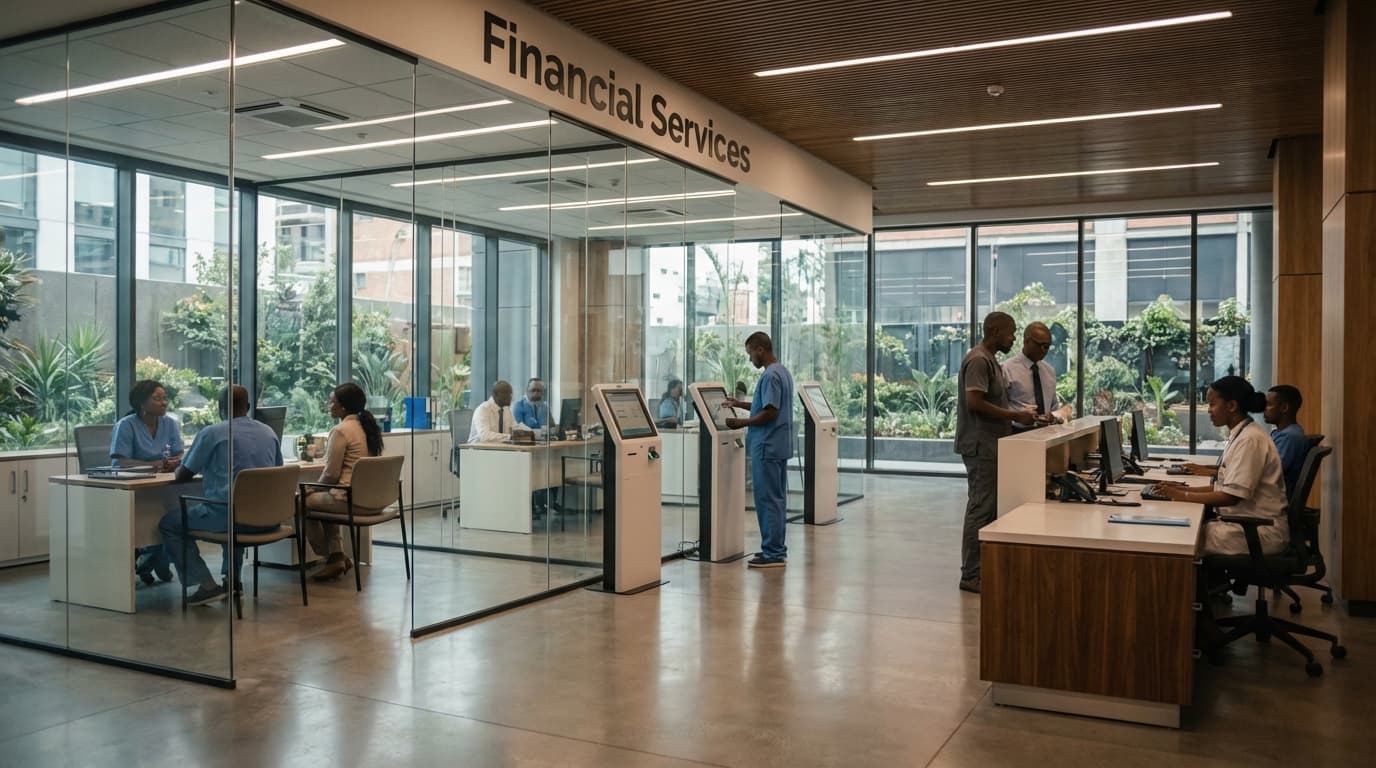
Medical Equipment Financing in Guinea
Engineering Excellence & Technical Support
Leasing and financing solutions for medical equipment High-standard technical execution following OEM protocols and local regulatory frameworks.
Accelerated Equipment Acquisition
Enabling Guinean healthcare providers to quickly acquire cutting-edge medical equipment through streamlined, flexible financing solutions, reducing wait times for critical technology upgrades and patient care improvements.
Bridging the Skills Gap with Modern Tech
Providing financing for advanced diagnostic and treatment equipment that facilitates enhanced medical training and skill development for healthcare professionals in Guinea, leading to improved diagnostic accuracy and treatment efficacy.
Boosting Healthcare Infrastructure Investment
Offering tailored financing packages for hospitals, clinics, and diagnostic centers in Guinea, empowering them to invest in essential medical infrastructure and expand service offerings to meet growing patient demands.
What Is Medical Equipment Financing In Guinea?
Medical equipment financing in Guinea refers to a suite of financial products and services designed to facilitate the acquisition, upgrade, or maintenance of medical technology and infrastructure by healthcare providers within the Republic of Guinea. This typically involves specialized loans, leases, or other credit facilities tailored to the unique demands and operational cycles of the healthcare sector. The service aims to bridge the capital expenditure gap, enabling institutions to access critical medical assets without immediate, full upfront payment, thereby enhancing diagnostic capabilities, treatment efficacy, and overall healthcare delivery standards.
| Who Needs Medical Equipment Financing in Guinea? | Typical Use Cases |
|---|---|
| Public Hospitals and Clinics: Government-funded healthcare facilities often require financing to upgrade aging infrastructure, expand service offerings, and meet the healthcare needs of the population. | Acquisition of diagnostic imaging equipment (e.g., X-ray, ultrasound, CT scanners). Procurement of surgical instruments and operating theatre suites. Installation of laboratory analysis systems and consumables. Purchase of patient monitoring devices and life support systems. Funding for specialized treatment units (e.g., dialysis centers, physiotherapy departments). Replacement of obsolete or underperforming medical technology. Expansion of existing healthcare facilities to accommodate new equipment. |
| Private Hospitals and Clinics: For-profit healthcare providers utilize financing to maintain competitiveness, adopt advanced medical technologies, and cater to a growing demand for private healthcare services. | Investment in advanced diagnostic and therapeutic equipment (e.g., MRI, PET scanners, robotic surgery systems). Establishment of new specialized medical centers (e.g., cardiology, oncology). Upgrading of IT infrastructure and electronic health record systems to support medical equipment. Acquisition of ambulances and emergency medical service vehicles. Refurbishment or expansion of existing private healthcare facilities. |
| Non-Governmental Organizations (NGOs) and Charities: Healthcare-focused NGOs operating in Guinea often seek financing for equipment to deliver essential medical services in underserved areas or for specific health programs. | Equipping mobile clinics for outreach programs. Setting up primary healthcare facilities in remote regions. Procurement of equipment for specific disease eradication or management initiatives (e.g., malaria, HIV/AIDS). Donation of essential medical devices through financed acquisition. |
| Medical Training and Research Institutions: Universities and research centers require access to modern medical equipment for educational purposes and scientific advancement. | Equipping teaching hospitals and laboratories. Acquiring advanced research instrumentation. Funding for simulation and training equipment for medical professionals. |
Key Aspects of Medical Equipment Financing in Guinea
- Financial Instruments: This encompasses term loans, operating leases, finance leases, and potentially asset-backed financing. Lenders often specialize in understanding the residual value and technological obsolescence of medical equipment.
- Collateralization: Medical equipment itself often serves as collateral. However, lenders may also consider other assets or require guarantees depending on the borrower's financial standing and the specific financing structure.
- Loan Tenors and Repayment Structures: Financing terms are typically structured to align with the expected useful life of the equipment and the revenue generation capacity of the healthcare provider. Repayment schedules can be fixed, variable, or tailored to cash flow patterns.
- Risk Assessment and Underwriting: Financial institutions conduct rigorous due diligence, assessing the creditworthiness of the healthcare provider, the market demand for the equipment, the vendor's reputation, and the regulatory environment in Guinea.
- Vendor Partnerships: Financing companies often collaborate with medical equipment manufacturers and distributors to offer bundled solutions, streamlining the procurement and financing process for end-users.
- Maintenance and Service Agreements: Financing packages may include provisions for ongoing maintenance, servicing, and upgrade options to ensure the long-term operational efficiency and technological relevance of the financed assets.
Who Needs Medical Equipment Financing In Guinea?
Medical equipment financing in Guinea is crucial for a range of healthcare providers aiming to upgrade, expand, or acquire essential medical technology. This financing plays a vital role in improving diagnostic capabilities, treatment effectiveness, and overall patient care quality across the nation. It allows institutions to access state-of-the-art equipment without the burden of immediate, large capital outlays, thus ensuring continuous service delivery and the adoption of modern medical practices. Furthermore, it supports the government's efforts to strengthen the healthcare infrastructure and address the growing demand for quality medical services.
| Target Customer | Key Departments Requiring Financing | Specific Equipment Needs |
|---|---|---|
| Public Hospitals and Clinics | General Medicine, Surgery, Pediatrics, Obstetrics & Gynecology, Emergency Care, Radiology, Laboratory Services | X-ray machines, ultrasound devices, patient monitors, surgical instruments, laboratory analysers, basic diagnostic tools, hospital beds, anesthesia machines |
| Private Hospitals and Clinics | Cardiology, Neurology, Oncology, Orthopedics, Ophthalmology, Dentistry, Dermatology, Gastroenterology | MRI scanners, CT scanners, advanced surgical equipment (laparoscopic, orthopedic), specialized diagnostic machines (endoscopes, ECGs), laser treatment devices, dental chairs, sophisticated laboratory equipment |
| Diagnostic Laboratories and Imaging Centers | Pathology, Microbiology, Hematology, Biochemistry, Radiology, Medical Imaging | Automated blood analysers, PCR machines, digital X-ray systems, ultrasound machines (Doppler), CT scanners, MRI scanners, microscopes, specimen refrigerators |
| Specialty Medical Centers | Cardiac Centers, Cancer Treatment Centers, Dialysis Centers, Fertility Clinics | Cardiac catheterization equipment, linear accelerators, radiotherapy machines, dialysis machines, incubators, IVF equipment |
| Non-Governmental Organizations (NGOs) with Healthcare Programs | Maternal and Child Health, Primary Healthcare, Mobile Clinics, Disease Control Programs | Portable ultrasound units, basic diagnostic kits, mobile X-ray units, vital signs monitors, essential surgical kits, educational medical models |
| Medical Training Institutions | Anatomy, Physiology, Pathology, Surgery, Nursing | Manikins, simulation equipment, anatomical models, dissection tools, teaching microscopes, basic laboratory equipment for practical sessions |
Who Needs Medical Equipment Financing in Guinea?
- Public Hospitals and Clinics
- Private Hospitals and Clinics
- Diagnostic Laboratories and Imaging Centers
- Specialty Medical Centers
- Non-Governmental Organizations (NGOs) with Healthcare Programs
- Medical Training Institutions
Medical Equipment Financing Process In Guinea
The process of obtaining medical equipment financing in Guinea, from initial inquiry to the final execution of the agreement, involves several distinct stages. This workflow is designed to ensure due diligence, assess financial viability, and secure the necessary approvals for both the borrower and the financing institution. Key players typically include healthcare providers (hospitals, clinics, individual practitioners), equipment suppliers, and financial institutions (banks, leasing companies).
| Stage | Description | Key Participants |
|---|---|---|
| Inquiry & Consultation | Initial contact to understand needs and discuss financing possibilities. | Healthcare Provider, Financial Institution, Equipment Supplier (optional) |
| Application Submission | Formal application with supporting documents. | Healthcare Provider, Financial Institution |
| Documentation Review | Verification of submitted information and assessment of borrower's financial health. | Financial Institution |
| Credit Assessment & Approval | Evaluation of creditworthiness and decision on loan approval. | Financial Institution (Credit Committee) |
| Equipment Sourcing | Finalizing equipment choice and obtaining quotes. | Healthcare Provider, Equipment Supplier |
| Offer Letter/Term Sheet | Presentation of proposed financing terms. | Financial Institution, Healthcare Provider |
| Acceptance & Negotiation | Formal agreement to terms or discussion of modifications. | Healthcare Provider, Financial Institution |
| Legal Documentation | Drafting and review of loan and security agreements. | Financial Institution, Healthcare Provider, Legal Counsel |
| Equipment Procurement | Purchase of the medical equipment. | Healthcare Provider, Equipment Supplier, Financial Institution (for payment) |
| Disbursement | Release of funds to the supplier or borrower. | Financial Institution |
| Installation & Commissioning | Setting up and testing the equipment. | Equipment Supplier, Healthcare Provider |
| Repayment & Monitoring | Scheduled payments and ongoing loan performance tracking. | Healthcare Provider, Financial Institution |
Key Stages in the Medical Equipment Financing Process in Guinea
- {"title":"Inquiry and Initial Consultation","description":"The healthcare provider expresses interest in financing medical equipment. This usually involves contacting a financial institution directly or through an equipment supplier's referral. A preliminary discussion is held to understand the provider's needs, the type and cost of equipment, and their initial financial situation."}
- {"title":"Application Submission","description":"The prospective borrower formally applies for financing. This involves completing an application form provided by the financial institution and submitting supporting documentation."}
- {"title":"Documentation Review and Due Diligence","description":"The financial institution meticulously reviews all submitted documents to verify the accuracy of information and assess the borrower's creditworthiness and capacity to repay the loan. This stage is critical for risk assessment."}
- {"title":"Credit Assessment and Approval","description":"Based on the due diligence, the financial institution conducts a thorough credit assessment. This includes analyzing financial statements, cash flow projections, existing debts, and the provider's operational history. A credit committee or relevant authority then makes a decision on whether to approve the financing."}
- {"title":"Equipment Sourcing and Quotation","description":"While the financing is being processed, the borrower typically finalizes the selection of the medical equipment and obtains detailed quotations from suppliers. This information is crucial for the financing agreement."}
- {"title":"Offer Letter and Term Sheet","description":"Upon approval, the financial institution issues an offer letter or term sheet outlining the proposed financing terms. This includes the loan amount, interest rate, repayment period, collateral requirements, and any associated fees."}
- {"title":"Acceptance and Negotiation","description":"The borrower reviews the offer letter. If the terms are acceptable, they formally accept. In some cases, minor negotiations on specific terms might occur."}
- {"title":"Legal Documentation and Agreements","description":"Once the terms are agreed upon, legal agreements are drafted. This typically includes a loan agreement, security agreements (if collateral is involved), and other relevant legal documentation. Both parties' legal counsel reviews these documents."}
- {"title":"Equipment Procurement and Delivery","description":"With the financing secured and agreements signed, the borrower or the financial institution (depending on the agreement) proceeds with purchasing the equipment from the supplier. The equipment is then delivered to the healthcare facility."}
- {"title":"Disbursement of Funds","description":"The financial institution disburses the approved loan amount, usually directly to the equipment supplier or to the borrower as per the agreed terms, to facilitate the final payment for the equipment."}
- {"title":"Installation and Commissioning","description":"The medical equipment is installed and commissioned at the healthcare facility. This ensures the equipment is operational and ready for use."}
- {"title":"Repayment and Monitoring","description":"The borrower begins making regular repayments according to the loan agreement. The financial institution monitors the loan performance and adherence to the repayment schedule."}
Medical Equipment Financing Cost In Guinea
Securing medical equipment financing in Guinea involves a complex interplay of pricing factors, leading to a range of costs that can vary significantly. These costs are typically denominated in the Guinean Franc (GNF). Understanding these determinants is crucial for healthcare providers seeking to acquire essential medical technology. Key pricing factors include the type and sophistication of the medical equipment itself. High-value, technologically advanced diagnostic imaging machines (like MRI or CT scanners) will naturally incur higher financing costs than basic laboratory equipment or hospital beds. The vendor's pricing, often influenced by import duties, shipping, and local market dynamics, is a foundational element. Furthermore, the financing institution's risk assessment plays a pivotal role. This includes the borrower's financial history, creditworthiness, and the overall economic stability of Guinea. Interest rates, a direct reflection of the perceived risk and the prevailing monetary policy in Guinea, are a primary driver of the overall financing cost. Loan tenure or repayment period also impacts the total cost, with longer tenures generally leading to higher cumulative interest. Additional fees, such as origination fees, processing charges, and insurance premiums, contribute to the overall expense.
| Equipment Category | Estimated Financing Cost Range (GNF per year/loan) | Notes |
|---|---|---|
| Basic Medical Supplies & Consumables | 500,000 - 2,000,000 | Lower-value items, often shorter-term financing or direct purchase. |
| General Hospital Furniture (beds, trolleys) | 1,000,000 - 5,000,000 | Moderate cost, repayment periods can vary. |
| Basic Laboratory Equipment (microscopes, centrifuges) | 2,000,000 - 10,000,000 | Costs depend on brand and specifications. |
| Diagnostic Imaging (X-ray, Ultrasound) | 15,000,000 - 150,000,000+ | Significant investment, often with specialized financing packages. Interest rates are a major component. |
| Advanced Medical Systems (CT, MRI) | 200,000,000 - 1,000,000,000+ | High-value assets requiring substantial capital and potentially longer-term, complex financing. Annualized costs can be a significant percentage of the equipment's value. |
Key Pricing Factors for Medical Equipment Financing in Guinea:
- Type and Sophistication of Medical Equipment
- Vendor Pricing (including import duties, shipping, etc.)
- Financing Institution's Risk Assessment (borrower's creditworthiness, economic stability)
- Interest Rates (influenced by monetary policy and risk)
- Loan Tenure/Repayment Period
- Additional Fees (origination, processing, insurance)
Affordable Medical Equipment Financing Options
Securing affordable medical equipment financing is crucial for healthcare providers aiming to expand services, upgrade technology, and maintain operational efficiency without jeopardizing financial stability. This involves exploring various financing avenues and implementing smart cost-saving strategies. Value bundles, in particular, offer a compelling way to acquire necessary equipment and associated services at a more attractive overall price point. These bundles often combine equipment purchase or lease with warranties, maintenance plans, training, and even software upgrades, providing a holistic solution that can reduce long-term expenditures and administrative burden.
| Strategy | Description | Benefits |
|---|---|---|
| Value Bundles | Package deals combining equipment with services like maintenance, training, and warranties. Often negotiated with manufacturers or vendors. | Reduced total cost of ownership, simplified procurement, predictable expenses, comprehensive support, potential for bulk discounts. |
| Negotiate Volume Discounts | Purchasing multiple pieces of equipment or consolidating orders with a single vendor to leverage purchasing power. | Lower per-unit cost, streamlined vendor relationships. |
| Consider Refurbished Equipment | Acquiring certified pre-owned or refurbished medical equipment from reputable suppliers. | Significant cost savings compared to new equipment, often comes with warranties, suitable for non-critical applications or budget-constrained departments. |
| Explore Leasing Options Carefully | Compare different lease types and terms. Understand residual values, buy-out options, and end-of-lease obligations. | Lower upfront capital outlay, predictable monthly payments, access to latest technology, potential tax advantages. |
| Lease vs. Buy Analysis | Conduct a thorough financial analysis to determine whether leasing or purchasing equipment is more cost-effective over its lifecycle. | Informed decision-making, optimization of financial resources. |
| Early Renewal Incentives | Inquire about discounts or favorable terms for renewing existing leases or service contracts before expiration. | Potential cost reductions, continued access to support, avoided downtime. |
| Bundled Service Contracts | Negotiate comprehensive service and maintenance contracts that cover routine checks, repairs, and replacement parts. | Reduced unexpected repair costs, minimized equipment downtime, extended equipment lifespan. |
| Evaluate Technology Lifecycle | Assess the expected lifespan and obsolescence rate of the equipment to make informed financing and upgrade decisions. | Avoid overpaying for equipment that will quickly become outdated, strategic capital allocation. |
Key Financing Options for Medical Equipment
- Leasing: A popular choice offering lower upfront costs. Various lease structures exist, including operating leases (off-balance sheet, regular payments) and finance leases (treated as an asset purchase, with an option to buy at the end).
- Equipment Loans: Traditional loans from banks or specialized lenders. These require a down payment and accrue interest over the loan term.
- Lines of Credit: Flexible option for ongoing equipment needs or smaller purchases. Funds can be drawn as needed and repaid.
- Sale-Leaseback: Allows providers to sell existing equipment to a financing company and then lease it back, freeing up capital for new acquisitions or operational expenses.
- Grants and Subsidies: Primarily for non-profit organizations, rural clinics, or for specific technology adoption, often requiring detailed applications and adherence to program guidelines.
Verified Providers In Guinea
When seeking healthcare services in Guinea, ensuring the credibility and quality of providers is paramount. Franance Health stands out as a leading platform for verified healthcare professionals, offering a comprehensive and transparent approach to medical care. This document outlines Franance Health's stringent credentialing process and elucidates why their network represents the best choice for patients in Guinea.
| Provider Type | Franance Health Verification Standard | Why It's the Best Choice for Patients |
|---|---|---|
| Doctors (General Practitioners & Specialists) | Verified medical degrees, valid licenses, proof of specialization, and clean professional records. | Patients can be confident they are receiving care from qualified and licensed medical professionals with the appropriate expertise. |
| Nurses | Certified nursing qualifications, current licenses, and demonstrated competency. | Ensures access to skilled and trustworthy nursing care for various health needs. |
| Pharmacists | Verified pharmacy degrees, active licenses, and adherence to dispensing regulations. | Guarantees the safe and accurate dispensing of medications by legitimate professionals. |
| Therapists (e.g., Physical Therapists, Psychologists) | Certified therapeutic qualifications, relevant licenses, and proof of specialized training. | Provides assurance of receiving evidence-based and effective therapeutic interventions from qualified practitioners. |
| Medical Laboratories | Accreditation or certification by relevant health authorities, evidence of quality control procedures. | Ensures reliable and accurate diagnostic testing, crucial for effective treatment planning. |
Franance Health's Commitment to Excellence: The Verification Process
- Rigorous Academic and Professional Verification: Franance Health meticulously verifies all educational degrees, certifications, and licenses of their listed providers. This includes cross-referencing with relevant national and international educational institutions and regulatory bodies.
- Experience and Specialization Validation: Beyond academic credentials, Franance Health assesses the practical experience and declared specializations of each healthcare professional. This ensures that patients are connected with practitioners who possess the specific expertise they require.
- Background Checks and Ethical Standards: Comprehensive background checks are conducted to ensure that all Franance Health providers adhere to high ethical standards and have no history of malpractice or disciplinary actions.
- Peer Review and Reputation Monitoring: Where applicable, Franance Health may incorporate a system of peer review and ongoing reputation monitoring to maintain the quality and integrity of its network.
- Continuous Professional Development: Franance Health encourages and may track the participation of its providers in continuous professional development programs, ensuring they remain up-to-date with the latest medical advancements and best practices.
Scope Of Work For Medical Equipment Financing
This Scope of Work (SOW) outlines the technical deliverables and standard specifications for medical equipment financing. The objective is to ensure that financed medical equipment meets the highest standards of quality, functionality, and safety, facilitating effective patient care and operational efficiency. This document serves as a guide for equipment vendors, financing institutions, and healthcare providers.
| Specification Category | Standard/Requirement | Description | Verification Method |
|---|---|---|---|
| Safety Standards | IEC 60601-1 | Electrical safety for medical electrical equipment. | Third-party certification, visual inspection, performance testing. |
| Performance Specifications | Manufacturer's Declared Specs | Minimum acceptable performance based on intended use (e.g., imaging resolution, measurement accuracy, processing speed). | Pre-shipment demonstration, on-site performance testing, user feedback. |
| Regulatory Compliance | Local Health Authority Approval | Equipment must be approved for use in the target geographical region. | Review of documentation, official registration confirmation. |
| Durability and Reliability | MTBF (Mean Time Between Failures) / Design Life | Minimum acceptable operational lifespan and reliability metrics. | Manufacturer's historical data, warranty terms, service records. |
| Interoperability | HL7 / DICOM (if applicable) | Ability to exchange data with existing hospital information systems. | Interface testing, documentation review, vendor confirmation. |
| Ergonomics and Usability | User Interface Design Principles | Intuitive controls, clear display, ease of operation for healthcare professionals. | User observation during demonstration, feedback forms. |
| Environmental Considerations | Operating Temperature and Humidity Range | Equipment must function within specified environmental conditions. | Manufacturer's specifications, site assessment report. |
| Cybersecurity | Data Encryption / Access Control | Protection of patient data and prevention of unauthorized access. | Vendor security policy review, penetration testing (if required). |
Key Technical Deliverables
- Detailed technical specifications of all proposed medical equipment, including model numbers, manufacturer, and key performance indicators (KPIs).
- Proof of compliance with relevant national and international regulatory standards (e.g., FDA, CE marking, ISO).
- Installation and commissioning reports, verifying proper setup and initial functionality.
- User manuals and technical documentation in the agreed-upon language(s).
- Training materials and session records for end-users and maintenance personnel.
- Warranty information, including duration, coverage, and claim procedures.
- Service and maintenance agreements, outlining scheduled maintenance, response times, and spare parts availability.
- Calibration certificates for equipment requiring precise measurements.
- Demonstration of all core functionalities and safety features during pre-shipment inspection or upon installation.
- Software licenses and updates, if applicable, with clear terms of use.
Service Level Agreement For Medical Equipment Financing
This Service Level Agreement (SLA) outlines the response times and uptime guarantees for the medical equipment financing services provided by [Your Company Name] to [Client Name]. This SLA is intended to ensure the reliable operation and timely support of financed medical equipment throughout the contract period.
| Equipment Category | Uptime Guarantee | Response Time (Business Hours) | Response Time (24/7/365) | Target Resolution Time (Business Hours) | Target Resolution Time (24/7/365) |
|---|---|---|---|---|---|
| Critical Equipment | 99.9% | 1 Hour | 30 Minutes | 4 Business Hours | 2 Business Hours |
| Major Equipment | 99.5% | 2 Business Hours | 1 Hour | 8 Business Hours | 4 Business Hours |
| Minor Equipment | 99.0% | 4 Business Hours | 2 Business Hours | 24 Business Hours | 8 Business Hours |
Key Definitions
- Critical Equipment: Medical equipment whose malfunction or unavailability directly and immediately impacts patient care and safety.
- Major Equipment: Medical equipment whose malfunction or unavailability causes significant disruption to patient care or operational workflow, but does not immediately threaten patient safety.
- Minor Equipment: Medical equipment whose malfunction or unavailability causes inconvenience but does not significantly impact patient care or operational workflow.
- Downtime: The period during which the financed medical equipment is not operational or available for its intended use due to issues related to the financing, maintenance, or support covered by this agreement.
- Response Time: The maximum time allowed for [Your Company Name]'s support team to acknowledge and begin actively addressing a reported issue.
- Resolution Time: The target time for [Your Company Name] to resolve a reported issue and restore the equipment to operational status. This is an aspirational goal and may vary based on the complexity of the issue and third-party dependencies.
- Uptime Guarantee: The minimum percentage of time the financed medical equipment is expected to be operational and available, excluding scheduled maintenance and agreed-upon outages.
Frequently Asked Questions

Ready when you are
Let's scope your Medical Equipment Financing in Guinea project in Guinea.

Scaling healthcare logistics and technical systems across the entire continent.