
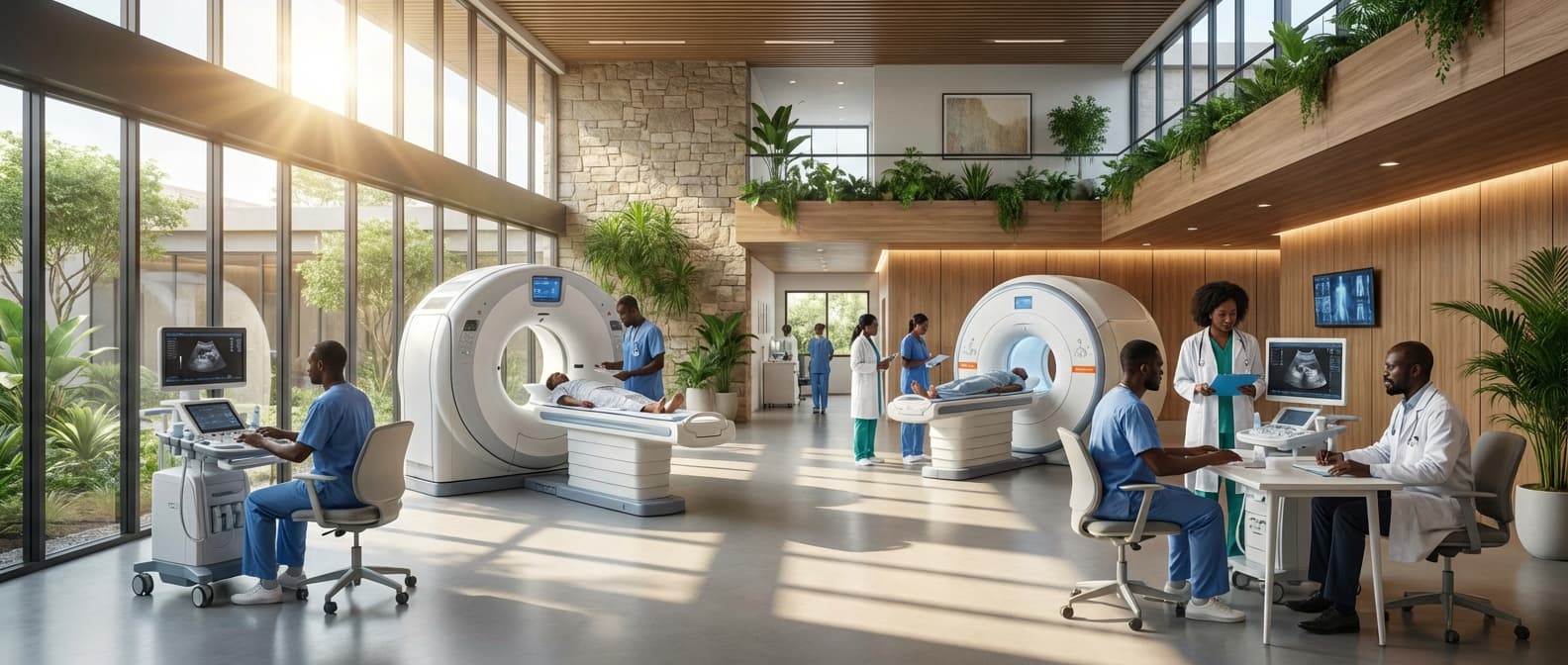
Endoscopy Solutions in Guinea
Engineering Excellence & Technical Support
Advanced endoscopic equipment delivering superior visualization and diagnostic precision for minimally invasive procedures. High-standard technical execution following OEM protocols and local regulatory frameworks.
Advanced Endoscopic Visualization
Leveraging state-of-the-art high-definition endoscopes with advanced imaging capabilities, providing unparalleled clarity for intricate diagnostic and therapeutic procedures. Our solutions empower Guinean medical professionals to visualize subtle pathological changes with exceptional detail.
Robotic-Assisted Endoscopy Integration
Introducing the potential for robotic-assisted endoscopy, offering enhanced precision, stability, and maneuverability for complex interventions. This cutting-edge technology aims to improve patient outcomes and reduce invasiveness in procedures performed in Guinea.
Integrated Tele-Endoscopy Platform
Implementing a secure and robust tele-endoscopy platform that enables remote consultation, expert guidance, and real-time image sharing. This solution facilitates knowledge transfer and access to specialized endoscopic expertise for healthcare providers across Guinea, even in remote areas.
What Is Endoscopy Solutions In Guinea?
Endoscopy solutions in Guinea refer to the provision of diagnostic and therapeutic procedures utilizing endoscopes. An endoscope is a long, flexible or rigid tube with a light and camera attached, allowing visualization of internal organs and cavities. These solutions encompass the equipment, trained personnel, and associated services required to perform endoscopic examinations and interventions. The objective is to minimally invasively visualize, diagnose, and treat conditions within the gastrointestinal tract, respiratory system, urinary tract, and other internal anatomical structures.
| Who Needs Endoscopy Solutions? | Typical Use Cases |
|---|---|
| Individuals experiencing persistent gastrointestinal symptoms: (e.g., abdominal pain, dysphagia, nausea, vomiting, unexplained weight loss, chronic diarrhea, constipation, rectal bleeding). | Diagnosis of peptic ulcers, gastritis, esophagitis, Helicobacter pylori infection, celiac disease, inflammatory bowel disease (Crohn's disease, ulcerative colitis), and gastrointestinal malignancies. |
| Patients with suspected or confirmed upper gastrointestinal bleeding. | Identification and management of bleeding sources in the esophagus, stomach, or duodenum; therapeutic interventions like cautery, clipping, or band ligation. |
| Individuals undergoing screening for colorectal cancer or with a family history of gastrointestinal polyps or cancer. | Colonoscopic examination for the detection and removal of colorectal polyps, early diagnosis of colorectal cancer, and surveillance for patients with a history of polyps or cancer. |
| Patients with persistent respiratory symptoms: (e.g., chronic cough, hemoptysis, unexplained wheezing, suspicion of lung mass). | Bronchoscopic evaluation of the airways and lungs for diagnosis of pneumonia, tuberculosis, lung cancer, foreign body aspiration, and interstitial lung diseases. |
| Individuals with urinary tract symptoms: (e.g., hematuria, recurrent urinary tract infections, urinary obstruction). | Cystoscopic examination of the bladder and urethra for diagnosis of bladder cancer, stones, strictures, and other abnormalities. |
| Patients requiring therapeutic interventions within the gastrointestinal tract. | Dilation of esophageal or pyloric strictures, removal of impacted food boluses, endoscopic retrograde cholangiopancreatography (ERCP) for bile duct stones or strictures, and endoscopic ultrasound (EUS) for detailed imaging and biopsy of adjacent structures. |
Key Components and Applications of Endoscopy Solutions in Guinea
- Diagnostic Endoscopy: Visual inspection of internal organs to identify abnormalities such as inflammation, ulcers, polyps, strictures, or malignancy.
- Therapeutic Endoscopy: Interventions performed during an endoscopic procedure, including polyp removal (polypectomy), biopsy, dilation of narrowed areas (stricturotomy), control of bleeding (hemostasis), and stent placement.
- Equipment and Technology: Availability of various endoscope types (gastroscopes, colonoscopes, bronchoscopes, cystoscopes), associated imaging systems, light sources, insufflators, and specialized endoscopic instruments.
- Trained Medical Professionals: Gastroenterologists, pulmonologists, urologists, surgeons, and specialized endoscopy technicians skilled in operating endoscopic equipment and interpreting findings.
- Ancillary Services: Patient preparation protocols, sedation or anesthesia administration, post-procedure monitoring, and pathological analysis of tissue samples.
- Infection Control: Strict sterilization and disinfection protocols for endoscopic equipment to prevent cross-contamination.
Who Needs Endoscopy Solutions In Guinea?
Endoscopy solutions are critical for diagnosing and treating a wide range of gastrointestinal and respiratory conditions. In Guinea, as in many developing nations, there's a growing need for accessible and reliable endoscopy services to address prevalent health issues, improve patient outcomes, and enhance the capacity of healthcare facilities. This document outlines the key target customers and departments that would benefit from and require advanced endoscopy solutions in the Guinean healthcare landscape.
| Customer Type | Key Needs/Applications | Departmental Focus | Potential Impact |
|---|---|---|---|
| Public Hospitals (Central & Regional) | Diagnosis of GI bleeds, ulcers, strictures, polyps, cancer screening. Evaluation of respiratory symptoms, pneumonia, TB, lung masses. Emergency procedures. | Gastroenterology, Pulmonology, Surgery, Internal Medicine, Emergency | Improved diagnostic accuracy, reduced need for exploratory surgery, better patient management for common and complex diseases, enhanced public health outcomes. |
| Private Hospitals and Clinics | Elective procedures: screening colonoscopies, upper endoscopies for dyspepsia, management of chronic GI conditions. Advanced diagnostic and therapeutic interventions. | Gastroenterology, Surgery, Internal Medicine | Expansion of service offerings, enhanced patient satisfaction, ability to attract and retain specialized medical professionals, increased revenue streams. |
| Specialty Gastroenterology/Pulmonology Centers | High-volume diagnostic and therapeutic endoscopy: ERCP, EUS, bronchoscopy with biopsies, foreign body removal. Research and training. | Gastroenterology, Pulmonology | Establishment as centers of excellence, advanced treatment capabilities, contribution to medical knowledge and training in specialized fields. |
| Diagnostic Laboratories | Biopsy processing and analysis from endoscopic procedures. Potential for integration with interventional endoscopy services. | Pathology/Histopathology | Streamlined diagnostic pathways, accurate tissue analysis supporting clinical decisions. |
| Medical Training & Research Institutions | Training of future endoscopists and pulmonologists. Clinical research on prevalent diseases and treatment efficacy. Development of local expertise. | All relevant clinical departments, Simulation Labs | Capacity building within the Guinean medical workforce, advancement of local research, adoption of international best practices. |
Target Customers and Departments for Endoscopy Solutions in Guinea
- {"items":["Public Hospitals (Central and Regional)","Private Hospitals and Clinics","Specialty Gastroenterology and Pulmonology Centers","Diagnostic Laboratories","Medical Training and Research Institutions"],"title":"Target Customers"}
- {"items":["Gastroenterology Department","Pulmonology Department","General Surgery Department","Internal Medicine Department","Oncology Department","Pediatric Department (for pediatric endoscopy)","Emergency Department (for acute bleeding or obstruction)","Diagnostic Imaging/Radiology Department (for collaborative procedures)"],"title":"Target Departments"}
Endoscopy Solutions Process In Guinea
This document outlines the typical workflow for Endoscopy Solutions in Guinea, from the initial inquiry stage through the successful execution of services. The process is designed to ensure efficient communication, accurate assessment, and seamless delivery of endoscopy procedures and related support.
| Stage | Description | Key Activities | Responsible Parties |
|---|---|---|---|
| Inquiry & Initial Contact | The process begins when a potential client (hospital, clinic, or individual) expresses interest in Endoscopy Solutions. | Client contacts Endoscopy Solutions via phone, email, or website form. Initial information gathering (type of service needed, location, urgency). | Client, Endoscopy Solutions Sales/Inquiry Team |
| Needs Assessment & Consultation | A detailed understanding of the client's specific requirements and the clinical context is established. | On-site or remote consultation with clinical staff. Assessment of existing equipment and infrastructure (if applicable). Discussion of patient volume, types of procedures, and desired outcomes. | Endoscopy Solutions Technical/Clinical Specialist, Client Clinical Staff |
| Proposal & Quotation | Based on the needs assessment, a tailored solution and pricing are presented. | Development of a detailed proposal outlining services, equipment, personnel, and timelines. Provision of a transparent and comprehensive quotation. | Endoscopy Solutions Sales/Proposal Team |
| Agreement & Scheduling | Formalization of the service agreement and coordination of logistics. | Review and negotiation of the proposal. Signing of the service agreement/contract. Joint scheduling of procedure dates, times, and locations. | Client, Endoscopy Solutions Management |
| Pre-Procedure Preparation | Ensuring all necessary resources and patient readiness are in place before the procedure. | Logistics coordination (transportation of equipment, personnel). Verification of necessary supplies and consumables. Patient scheduling and pre-procedure instructions (if applicable). Site readiness checks. | Endoscopy Solutions Operations Team, Client Site Manager |
| Procedure Execution | The core service delivery phase where the endoscopy procedure is performed. | Arrival of Endoscopy Solutions team and equipment. Set-up and equipment checks. Execution of the endoscopy procedure(s) by qualified personnel. Intra-procedure monitoring and documentation. | Endoscopy Solutions Medical Team (Gastroenterologist, Nurse, Technician), Client Clinical Staff |
| Post-Procedure Follow-up & Reporting | Ensuring comprehensive documentation and immediate post-procedure care. | Immediate patient recovery support. Detailed reporting of findings and procedures performed. Handover of relevant patient data to client's medical team. | Endoscopy Solutions Medical Team, Client Clinical Staff |
| Billing & Payment | Processing of invoices and settlement of payments. | Submission of final invoice based on agreed services. Processing of payments according to the contract terms. | Endoscopy Solutions Finance Department, Client Finance Department |
| Record Archiving & Support | Maintaining records and providing ongoing support. | Archiving of all procedure-related documentation and data. Post-service review and feedback collection. Ongoing technical or clinical support as per agreement. | Endoscopy Solutions Administration, Client Administration |
Endoscopy Solutions Process in Guinea: Workflow Stages
- Inquiry & Initial Contact
- Needs Assessment & Consultation
- Proposal & Quotation
- Agreement & Scheduling
- Pre-Procedure Preparation
- Procedure Execution
- Post-Procedure Follow-up & Reporting
- Billing & Payment
- Record Archiving & Support
Endoscopy Solutions Cost In Guinea
The cost of endoscopy procedures in Guinea can vary significantly depending on several factors, including the specific type of endoscopy required, the facility where the procedure is performed, the physician's fees, and the extent of any necessary diagnostic tests or treatments. Generally, you can expect a range of prices that will be reflected in the local currency, the Guinean Franc (GNF). It is crucial for patients to obtain detailed quotes from multiple healthcare providers to make an informed decision. Factors influencing the price include the complexity of the procedure (e.g., diagnostic vs. therapeutic, upper GI vs. lower GI), the use of anesthesia or sedation, the duration of the procedure, and whether biopsies or polyp removals are performed. The reputation and specialization of the medical facility, as well as the experience of the endoscopist, can also play a role in pricing.
| Procedure Type (Typical) | Estimated Cost Range (GNF) | Notes |
|---|---|---|
| Gastroscopy (Upper Endoscopy) | 700,000 - 1,500,000 | Basic diagnostic procedure. May increase with biopsies. |
| Colonoscopy (Lower Endoscopy) | 900,000 - 2,000,000 | Basic diagnostic procedure. Higher if polyps are removed. |
| Sigmoidoscopy | 500,000 - 1,000,000 | Examines the lower part of the colon. |
| Bronchoscopy | 1,000,000 - 2,500,000 | Examines airways. Can be more complex with biopsies. |
| Therapeutic Interventions (e.g., Polyp Removal) |
| Additional cost on top of the base procedure fee. |
| Biopsy and Pathology | 150,000 - 400,000 | Per sample, depending on the lab. |
Factors Influencing Endoscopy Costs in Guinea
- Type of Endoscopy (e.g., Gastroscopy, Colonoscopy, Sigmoidoscopy, Bronchoscopy)
- Facility Type (Public Hospital vs. Private Clinic)
- Physician's Fees and Specialization
- Anesthesia/Sedation Requirements
- Inclusion of Diagnostic Tests (e.g., biopsy, culture)
- Therapeutic Interventions (e.g., polyp removal, stenting)
- Duration and Complexity of the Procedure
- Geographic Location within Guinea (major cities may have higher costs)
Affordable Endoscopy Solutions Options
Affordable endoscopy solutions are increasingly in demand, driven by the need for accessible diagnostic and therapeutic procedures. These solutions aim to reduce the overall cost of endoscopy for both patients and healthcare providers without compromising on quality or safety. A key strategy involves value bundles, which are packages of services and related items offered at a fixed price. This approach simplifies billing, can incentivize efficient care delivery, and often results in cost savings. Beyond bundles, various cost-saving strategies are employed, focusing on procurement, operational efficiency, and patient management.
| Value Bundle Component | Description | Potential Cost Savings |
|---|---|---|
| Procedure Fee | Covers the physician's time, facility use, and basic diagnostic services. | Predictable cost for the patient and provider; can incentivize efficiency. |
| Supplies and Disposables | Includes biopsy forceps, snares, cleaning solutions, and other single-use items. | Bulk purchasing by the provider for the bundle; reduces per-procedure cost compared to unbundled billing. |
| Sedation and Anesthesia | Covers the cost of medications and the administering clinician. | Negotiated rates for medications and efficient sedation protocols within the bundle. |
| Pathology Services | Covers the analysis of tissue samples collected during the procedure. | Pre-negotiated rates with pathology labs for bundled services. |
| Post-Procedure Follow-up | Includes a limited number of follow-up appointments or telehealth consultations. | Reduced administrative overhead for scheduling; encourages adherence to care plans. |
Key Cost-Saving Strategies for Endoscopy
- Value-Based Purchasing: Shifting from fee-for-service to payment models that reward quality and cost-effectiveness.
- Centralized Procurement: Negotiating bulk discounts for supplies, equipment, and disposables.
- Reusable vs. Disposable Instruments: Carefully evaluating the total cost of ownership and sterilization processes for reusable items versus the per-procedure cost of disposables.
- Technology Optimization: Investing in durable, user-friendly equipment with lower maintenance costs and exploring shared-use models for expensive machinery.
- Streamlined Workflow: Implementing lean methodologies to reduce procedure time, minimize waste, and improve staff efficiency.
- Preventative Care and Screening Programs: Promoting early detection through accessible screening programs to reduce the need for more complex and costly procedures later.
- Outpatient vs. Inpatient Settings: Encouraging outpatient endoscopy when clinically appropriate, as it's generally less expensive than inpatient procedures.
- Telehealth Integration: Utilizing remote consultations for pre- and post-procedure follow-ups, reducing patient travel and staff time.
- Staff Training and Skill Mix: Optimizing staffing levels and ensuring staff are cross-trained to handle a variety of tasks efficiently.
- Bundled Payment Models: Offering fixed prices for specific endoscopy procedures that include all associated services, supplies, and even limited follow-up care.
Verified Providers In Guinea
In Guinea's evolving healthcare landscape, discerning reliable and ethical medical service providers is paramount. Franance Health stands out as a leading network of verified providers, distinguished by their commitment to stringent credentialing processes and patient-centered care. This rigorous verification ensures that all Franance Health network providers meet high standards of medical expertise, ethical practice, and patient safety, making them the best choice for accessible and trustworthy healthcare.
| Verification Aspect | Franance Health Standard | Benefit to Patients |
|---|---|---|
| Medical Licensing & Certification | Ensures all providers hold valid and current licenses and certifications from recognized bodies. | Guarantees that practitioners are legally qualified and competent to provide medical care. |
| Educational Background & Training | Verification of degrees, diplomas, and specialized training from accredited institutions. | Confirms that providers possess the foundational knowledge and specialized skills required for their practice. |
| Professional Experience | Thorough review of past employment, roles, and the duration of practice. | Provides assurance of practical experience and a track record of patient care. |
| Disciplinary Records & Background Checks | Screening for any history of malpractice claims, ethical violations, or criminal convictions. | Safeguards patients by ensuring providers have no history of serious misconduct. |
| Peer Review & Reputation | Where applicable, consideration of peer recommendations and professional standing. | Adds a layer of confidence in the provider's competence and ethical reputation within the medical community. |
Why Franance Health Providers are the Best Choice in Guinea
- Rigorous Credentialing: Every provider undergoes a comprehensive vetting process, including verification of medical licenses, educational qualifications, professional experience, and a clean disciplinary record.
- Commitment to Quality: Franance Health partners with facilities and practitioners dedicated to delivering high-quality medical services, adhering to best practices and international standards.
- Patient-Centric Approach: Verified providers prioritize patient well-being, emphasizing clear communication, empathy, and personalized treatment plans.
- Accessibility and Network Breadth: Access a wide network of specialists and general practitioners across various regions of Guinea, ensuring convenient healthcare options.
- Ethical Practice Standards: All Franance Health providers are committed to upholding the highest ethical principles, ensuring transparency, integrity, and respect in all patient interactions.
- Continuous Professional Development: Providers within the Franance Health network are encouraged and supported in their ongoing professional development, staying abreast of the latest medical advancements.
Scope Of Work For Endoscopy Solutions
This Scope of Work (SOW) outlines the technical deliverables and standard specifications for the provision and implementation of Endoscopy Solutions. It encompasses the procurement, installation, integration, and validation of endoscopic equipment and associated systems to meet the defined clinical and operational requirements.
| Category | Specification Type | Standard/Requirement | Description |
|---|---|---|---|
| Imaging Systems | Resolution | Full HD (1920x1080) or 4K (3840x2160) | High-definition video output for enhanced visualization |
| Imaging Systems | Color Fidelity | High Color Accuracy (CRI > 90) | Accurate representation of tissue colors for improved diagnostic capabilities |
| Imaging Systems | Frame Rate | Minimum 30 fps | Smooth motion rendering for dynamic procedures |
| Endoscopes | Outer Diameter | Industry Standard (e.g., 10mm for colonoscopy, 3mm for gastroscopy) | Patient comfort and procedural accessibility |
| Endoscopes | Working Channel Diameter | Sufficient for instrumentation (e.g., > 2.8mm for biopsy forceps) | Ability to pass necessary therapeutic and diagnostic tools |
| Endoscopes | Field of View (FOV) | Minimum 100 degrees (axial and lateral) | Comprehensive visualization of the examination area |
| Endoscopes | Angulation | Up/Down, Left/Right specifications as per clinical needs | Maneuverability within anatomical structures |
| Image Management | Storage Capacity | Scalable, based on projected usage (e.g., TB per year) | Adequate storage for recorded procedures and images |
| Image Management | Integration Protocol | DICOM 3.0 / HL7 compliant | Seamless integration with hospital PACS and EMR systems |
| Video Processors | Output Interfaces | HDMI, SDI, DVI | Compatibility with monitors and recording devices |
| Insufflators | Flow Rate | Adjustable, with safety limits | Controlled gas delivery for optimal visualization and patient safety |
| Insufflators | Pressure Monitoring | Real-time display and alarms | Ensures safe intra-abdominal/luminal pressure |
| General | Sterilization Compatibility | Autoclavable or compatible with approved HLD methods | Adherence to infection control standards |
| General | Connectivity | Network enabled (wired/wireless), USB | Facilitates data transfer, software updates, and remote support |
| General | Ergonomics | User-friendly interfaces and lightweight components | Optimized for clinician comfort and efficiency |
Key Technical Deliverables
- Endoscopic Imaging Systems (e.g., cameras, light sources, monitors)
- Endoscopes (e.g., flexible, rigid, specialty types)
- Video Processors and Recorders
- Image Management and Archiving Systems (PACS integration)
- Insufflators and Irrigation Systems
- Ancillary Equipment (e.g., carts, electrosurgical units, specialized instruments)
- Installation and Configuration Services
- System Integration with existing hospital IT infrastructure
- User Training Programs
- Validation and Testing Reports
- Post-Implementation Support and Maintenance Plan
Service Level Agreement For Endoscopy Solutions
This Service Level Agreement (SLA) outlines the guaranteed response times and uptime for the Endoscopy Solutions provided by [Provider Name] to [Client Name]. This SLA is an integral part of the Master Services Agreement (MSA) between the parties.
| Service Component | Uptime Guarantee (Monthly) | Response Time (Business Hours) | Resolution Time (Target - Business Hours) | ||||
|---|---|---|---|---|---|---|---|
| Endoscopy Solutions Platform (Core Functionality) | 99.9% | 1 Hour (Critical) | 4 Hours (Critical) | 2 Hours (High) | 8 Hours (High) | 4 Hours (Medium) | 24 Hours (Medium) |
| Data Storage and Retrieval | 99.8% | 2 Hours (High) | 8 Hours (High) | 4 Hours (Medium) | 24 Hours (Medium) | ||
| Remote Access and Connectivity | 99.9% | 1 Hour (Critical) | 4 Hours (Critical) | 2 Hours (High) | 8 Hours (High) | ||
| Support Portal and Ticketing System | 99.5% | 4 Business Hours | 24 Business Hours (for information requests) |
Key Definitions
- Service: Refers to the Endoscopy Solutions platform, including the imaging software, data storage, and remote access capabilities.
- Downtime: Means the total time during which the Service is unavailable to the Customer, excluding Scheduled Maintenance.
- Scheduled Maintenance: Planned downtime for updates, upgrades, or system maintenance, which will be communicated to the Customer at least [Number] days in advance.
- Response Time: The maximum time allowed for the Provider to acknowledge and begin working on a reported issue.
- Resolution Time: The maximum time allowed for the Provider to resolve a reported issue, depending on its severity.
- Service Credit: A credit applied to the Customer's account for failure to meet the uptime guarantee.
Frequently Asked Questions

Ready when you are
Let's scope your Endoscopy Solutions in Guinea project in Guinea.

Scaling healthcare logistics and technical systems across the entire continent.