
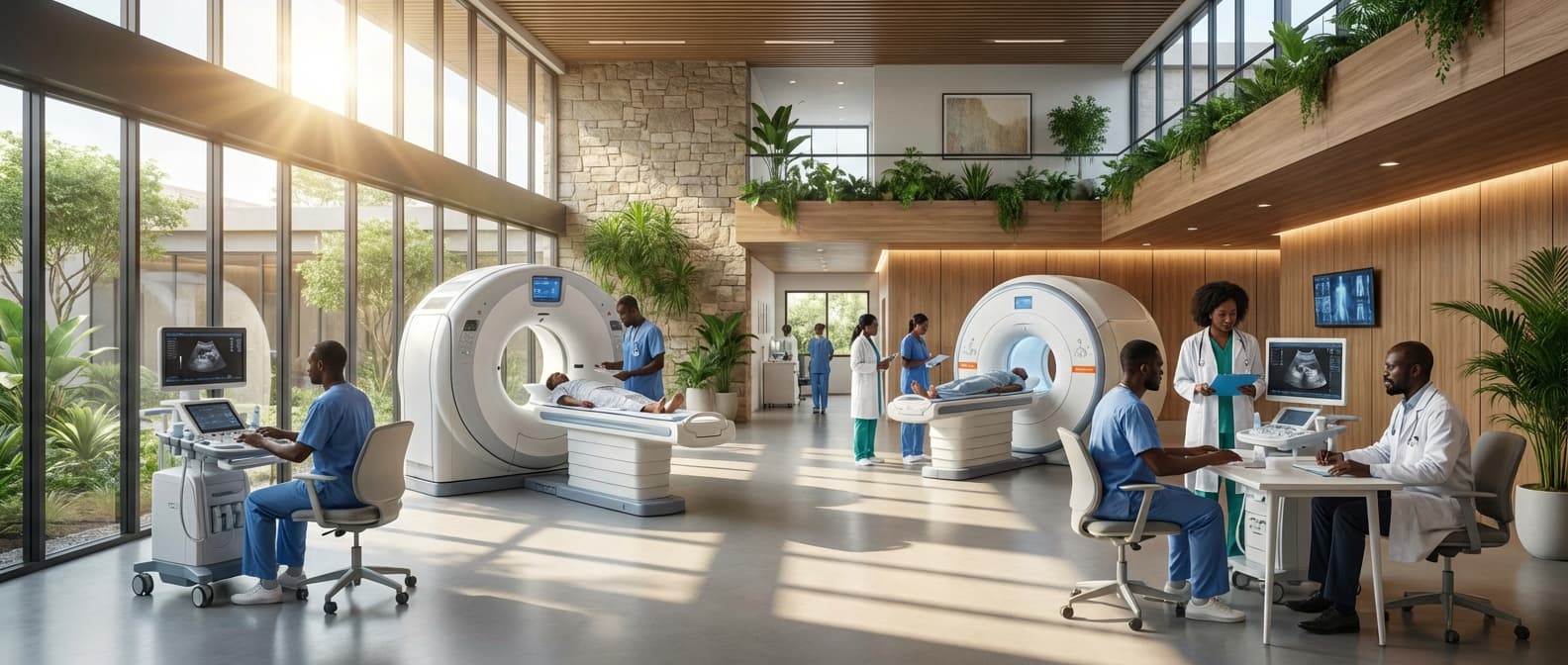
Diagnostic Imaging in Guinea
Engineering Excellence & Technical Support
High-resolution imaging systems including CT scanners, MRI, X-ray, and ultrasound technology for accurate clinical diagnosis. High-standard technical execution following OEM protocols and local regulatory frameworks.
Mobile X-ray Units for Remote Healthcare Access
Deployment of portable X-ray machines and trained technicians to remote villages and underserved areas, enabling early diagnosis of respiratory diseases like tuberculosis and pneumonia, significantly reducing patient travel time and improving public health outcomes.
Ultrasound Training and Equipment for Maternal Health
Introduction of modern ultrasound technology and comprehensive training programs for healthcare professionals in regional hospitals, leading to improved prenatal care, early detection of complications, and a reduction in maternal and infant mortality rates.
Digital Radiography for Enhanced Diagnostic Accuracy
Upgrading existing radiography facilities with digital systems, providing clearer images for more accurate interpretation of neurological conditions, bone fractures, and other critical ailments, thereby improving treatment planning and patient recovery.
What Is Diagnostic Imaging In Guinea?
Diagnostic imaging in Guinea refers to the medical use of specialized equipment and technologies to visualize the internal structures of the human body for the purpose of diagnosis, monitoring, and guiding medical interventions. This service is a cornerstone of modern healthcare, providing non-invasive or minimally invasive methods to assess a wide range of conditions. It encompasses various modalities, each leveraging different physical principles to generate images. The primary objective is to aid clinicians in identifying abnormalities, determining the extent of disease, and planning effective treatment strategies. The availability and sophistication of diagnostic imaging services in Guinea, as in many developing nations, can vary significantly based on infrastructure, resource allocation, and trained personnel.
| Who Needs Diagnostic Imaging? | Typical Use Cases | ||||||||
|---|---|---|---|---|---|---|---|---|---|
| Individuals presenting with acute or chronic pain (e.g., abdominal pain, chest pain, musculoskeletal pain). | Evaluation of suspected fractures, dislocations, or other orthopedic injuries. | Assessment of internal organ abnormalities (e.g., liver masses, kidney stones, enlarged spleen). | Diagnosis of respiratory conditions like pneumonia, tuberculosis, or pleural effusions. | Screening for certain cancers or monitoring known malignancies. | Patients with neurological symptoms (e.g., headache, dizziness, weakness) to rule out stroke, tumors, or other brain abnormalities. | Pre-operative assessment to plan surgical interventions. | Post-operative follow-up to assess healing or detect complications. | Pregnant women for prenatal monitoring of fetal development and maternal health. | Individuals with suspected cardiovascular diseases. |
| Radiography (X-ray): Detecting fractures, pneumonia, foreign bodies, and dental issues. | Ultrasound: Assessing abdominal organs, pelvic structures, superficial soft tissues, and fetal development; guiding biopsies. | Computed Tomography (CT): Detailed imaging of bone, soft tissues, and organs; evaluating trauma, stroke, and cancer staging. | Magnetic Resonance Imaging (MRI): High-resolution imaging of soft tissues, including the brain, spinal cord, muscles, and ligaments; detecting tumors and inflammatory conditions. | Mammography: Screening for breast cancer in women. | Fluoroscopy: Real-time X-ray imaging to visualize dynamic processes such as swallowing or the flow of contrast agents. |
Key Aspects of Diagnostic Imaging in Guinea
- Visualizing internal anatomical structures and physiological processes.
- Detecting and characterizing pathologies such as tumors, infections, trauma, and degenerative diseases.
- Monitoring disease progression or response to therapy.
- Guiding interventional procedures (e.g., biopsies, drain placements).
- Contributing to the differential diagnosis of complex medical presentations.
- Utilizing various imaging modalities to suit specific clinical questions.
Who Needs Diagnostic Imaging In Guinea?
Diagnostic imaging plays a crucial role in modern healthcare, enabling the accurate diagnosis and effective management of a wide range of medical conditions. In Guinea, a country with developing healthcare infrastructure, understanding the specific needs and target customers for diagnostic imaging services is essential for resource allocation, service delivery, and strategic planning.
| Department/Service | Primary Imaging Needs | Key Modalities | Rationale/Examples |
|---|---|---|---|
| Radiology Department | General diagnostic imaging for a wide range of conditions. | X-ray, Ultrasound, CT Scan (where available), MRI (limited) | Fracture detection, pneumonia diagnosis, abdominal pain investigation, organ assessment. |
| Emergency Department/Trauma Unit | Rapid assessment of acute injuries and life-threatening conditions. | X-ray, CT Scan (crucial) | Head trauma, internal bleeding, suspected fractures, chest injuries. |
| Surgical Departments (General Surgery, Orthopedics, Neurosurgery, etc.) | Pre-operative planning, post-operative monitoring, diagnosis of surgical complications. | X-ray, CT Scan, MRI | Appendicitis assessment, fracture repair planning, spinal cord injuries, tumor localization. |
| Internal Medicine/General Practice | Diagnosis of common medical conditions, monitoring of chronic diseases. | X-ray, Ultrasound | Pneumonia, heart conditions, kidney stones, gastrointestinal issues. |
| Obstetrics and Gynecology | Antenatal care, fetal assessment, diagnosis of gynecological abnormalities. | Ultrasound (primary), X-ray (limited) | Fetal growth monitoring, placenta previa, ovarian cysts, uterine fibroids. |
| Pediatrics | Diagnosis of childhood illnesses and congenital conditions. | X-ray, Ultrasound | Pneumonia, bone growth abnormalities, congenital heart defects, abdominal issues. |
| Cardiology | Assessment of heart structure and function (often in conjunction with other imaging). | Echocardiography (Ultrasound), CT Angiography (limited) | Valve function, chamber size, coronary artery assessment. |
| Oncology | Tumor detection, staging, treatment monitoring, and follow-up. | CT Scan, MRI, X-ray, Ultrasound | Cancer diagnosis, metastasis assessment, response to chemotherapy/radiation. |
| Neurology/Neurosurgery | Diagnosis of neurological disorders and brain/spinal cord conditions. | CT Scan, MRI | Stroke, brain tumors, spinal cord injuries, degenerative diseases. |
Target Customers for Diagnostic Imaging Services in Guinea
- {"item":"Public Hospitals and Health Centers","description":"These are the primary providers of healthcare for the majority of the population in Guinea. They require diagnostic imaging to support general medical practice, emergency care, and specialist consultations."}
- {"item":"Private Clinics and Hospitals","description":"As the private healthcare sector grows, these facilities will increasingly demand advanced diagnostic imaging capabilities to offer comprehensive services to a segment of the population that can afford them."}
- {"item":"Specialty Medical Centers","description":"Centers focusing on areas like cardiology, oncology, neurology, and orthopedics will have specific needs for advanced imaging techniques and equipment tailored to their specialties."}
- {"item":"Maternal and Child Health Services","description":"Facilities providing antenatal care, labor and delivery, and pediatric services will require ultrasound for obstetric and gynecological imaging, and potentially other modalities for pediatric diagnostics."}
- {"item":"Emergency and Trauma Units","description":"These units are critical for immediate diagnosis of injuries and acute conditions, necessitating rapid access to imaging like X-ray and CT scans."}
- {"item":"Research and Academic Institutions","description":"While potentially limited, institutions involved in medical research or training will require imaging facilities for both study and educational purposes."}
- {"item":"Non-Governmental Organizations (NGOs) and International Health Organizations","description":"Organizations involved in public health initiatives, disease surveillance, and specialized medical programs may require or fund diagnostic imaging services."}
- {"item":"Individuals seeking specialized care","description":"Patients referred by physicians for specific diagnostic needs, especially those with complex conditions or requiring advanced imaging techniques."}
Diagnostic Imaging Process In Guinea
Diagnostic imaging services in Guinea, like in many healthcare systems, follow a structured workflow to ensure accurate and timely patient care. This process typically begins with a clinical inquiry from a healthcare professional and culminates in the delivery of imaging results. The workflow can be broken down into several key stages, each involving specific actors and procedures. While access and efficiency can vary due to resource availability, the fundamental steps remain consistent.
| Stage | Description | Key Actors | Key Activities | Potential Challenges in Guinea |
|---|---|---|---|---|
| Inquiry & Referral | The process starts when a physician or other healthcare provider suspects a condition requiring diagnostic imaging. | Physician/Healthcare Provider, Patient | Clinical assessment, identification of need for imaging, verbal or written referral to imaging department. | Lack of readily available specialists for consultation, patient awareness of imaging options. |
| Scheduling & Preparation | Once a referral is made, the patient is scheduled for the imaging procedure. | Receptionist/Administrative Staff, Radiographer/Technologist, Patient | Appointment booking, providing instructions for preparation (e.g., fasting, contrast agent administration), patient registration. | Limited scheduling capacity, outdated equipment hindering complex scheduling, communication barriers with patients. |
| Imaging Procedure Execution | The actual imaging scan is performed by trained personnel using specialized equipment. | Radiographer/Technologist, Radiologist (sometimes present for guidance) | Patient positioning, operation of imaging equipment (X-ray, ultrasound, CT, MRI), administration of contrast agents if required. | Availability and maintenance of imaging equipment, shortage of trained radiographers/technologists, unreliable power supply, limited availability of contrast agents. |
| Image Processing & Interpretation | The acquired images are processed and then analyzed by a radiologist. | Radiographer/Technologist, Radiologist | Digital image processing (if applicable), qualitative and quantitative analysis of images, identification of abnormalities. | Lack of advanced imaging processing software, shortage of radiologists for interpretation, time lag in results due to workload or limited personnel. |
| Reporting & Communication | A formal report detailing the findings is generated and communicated back to the referring physician. | Radiologist, Referring Physician/Healthcare Provider, Administrative Staff | Dictation or typing of radiology report, review and signing of the report, delivery of the report (hard copy or electronic). | Delays in report generation and delivery, poor communication channels, paper-based systems being inefficient. |
| Follow-up & Treatment | Based on the imaging report, the referring physician makes a diagnosis and plans further management. | Referring Physician/Healthcare Provider, Patient | Review of imaging report, integration with clinical findings, planning of further investigations or treatment, patient consultation. | Limited access to specialized treatment options based on imaging findings, financial constraints for further investigations or treatment. |
Diagnostic Imaging Workflow in Guinea
- Inquiry & Referral
- Scheduling & Preparation
- Imaging Procedure Execution
- Image Processing & Interpretation
- Reporting & Communication
- Follow-up & Treatment
Diagnostic Imaging Cost In Guinea
Diagnostic imaging plays a crucial role in modern healthcare, but its accessibility and affordability can be significant challenges in many low- and middle-income countries. Guinea, a West African nation, is no exception. The cost of diagnostic imaging services in Guinea is influenced by a complex interplay of factors, leading to a range of prices in the local currency, the Guinean Franc (GNF).
| Imaging Service | Estimated Cost Range (GNF) | Notes |
|---|---|---|
| X-ray (Basic) | 50,000 - 150,000 | Per body part. Simple X-rays are generally the most affordable. |
| Ultrasound (Abdomen, Pelvis, etc.) | 100,000 - 300,000 | Varies based on the complexity of the scan and the area examined. |
| CT Scan (Head, Chest, Abdomen) | 800,000 - 2,500,000 | More complex scans or those requiring contrast agents will be at the higher end. Significant variation between public and private facilities. |
| MRI Scan | 1,500,000 - 4,000,000+ | Generally the most expensive. Availability is limited, and prices can be very high in private institutions. Specific body parts and contrast can increase cost. |
| Mammography | 200,000 - 600,000 | Often available in specialized women's health clinics or larger hospitals. |
Factors Influencing Diagnostic Imaging Costs in Guinea
- Technology and Equipment: The type and age of imaging equipment are primary cost drivers. Advanced technologies like MRI and CT scanners are significantly more expensive to acquire, maintain, and operate than older ultrasound machines or basic X-ray units. The availability of spare parts and specialized technicians for repairs also contributes to ongoing costs.
- Infrastructure and Utilities: Reliable electricity is essential for operating imaging equipment. Power outages and the need for backup generators or stable grid connections add to operational expenses. The cost of rent for facilities, especially in urban centers, also factors into the overall price.
- Skilled Personnel: The salaries of qualified radiologists, radiographers, technicians, and administrative staff are a substantial component of the cost. The scarcity of highly trained professionals in Guinea can drive up labor costs.
- Consumables and Maintenance: Contrast agents, films (though increasingly digital), and regular maintenance contracts for sophisticated equipment incur ongoing expenses. The import duties and taxes on these specialized supplies can also be significant.
- Location and Facility Type: Prices can vary considerably between public and private healthcare facilities. Private clinics and hospitals, often with newer equipment and more comprehensive services, generally charge higher prices than public institutions, which may be subsidized but can also have longer wait times and limited resources.
- Demand and Competition: Higher demand for specific imaging services in more populous areas or at leading hospitals can influence pricing. The level of competition among imaging providers in a particular region also plays a role.
- Government Regulations and Pricing Policies: While often limited, any government-imposed pricing guidelines or regulations can affect the final cost to patients.
- Geographic Accessibility and Transportation: For patients in remote areas, the cost of travel to facilities offering advanced imaging can be a substantial indirect expense, sometimes influencing their willingness to pay for the service itself.
Affordable Diagnostic Imaging Options
Accessing diagnostic imaging can be a significant healthcare expense. Fortunately, there are strategies and options to make these essential services more affordable. Understanding value bundles and exploring cost-saving tactics can empower patients to manage their out-of-pocket expenses effectively.
| Cost-Saving Strategy | Description | Tips for Implementation |
|---|---|---|
| Shop Around and Compare Prices | Different imaging facilities, even within the same network or geographic area, can have vastly different pricing for the same procedure. Do not assume prices are uniform. | Obtain price quotes from multiple imaging centers before scheduling your appointment. Ask for the 'cash price' if you are paying out-of-pocket, as this is often lower than insured rates. |
| Understand Your Insurance Benefits | Know your deductible, copay, coinsurance, and out-of-network costs. This will help you understand your financial responsibility. | Contact your insurance provider to confirm coverage for the specific imaging procedure and facility. Ask about in-network vs. out-of-network costs. |
| Negotiate Prices (Out-of-Pocket) | If you are paying for services yourself, you often have more leverage to negotiate prices. | Be polite but firm when discussing the cost. Highlight your out-of-pocket status and ask if a discounted rate is available. |
| Explore Outpatient Imaging Centers | Imaging services performed at independent outpatient centers are typically less expensive than those performed in hospital settings. | Ask your doctor if an outpatient facility is an option for your imaging needs. Verify that the center is accredited. |
| Utilize Advance Payment Discounts | Some providers offer discounts if you pay for the service in full before the procedure. | Inquire about this option when scheduling your appointment. Ensure you have a clear understanding of what the payment covers. |
| Ask About Generic or Lower-Cost Alternatives | In some cases, your doctor might be able to recommend a less expensive imaging modality that still provides the necessary diagnostic information. | Discuss the necessity and alternatives with your physician. Understand the pros and cons of any suggested alternatives. |
| Health Savings Accounts (HSAs) & Flexible Spending Accounts (FSAs) | These pre-tax accounts allow you to save money for qualified medical expenses, including diagnostic imaging. | Contribute regularly to your HSA/FSA and use these funds for imaging procedures to reduce your taxable income. |
Understanding Value Bundles in Diagnostic Imaging
- {"title":"What are Value Bundles?","description":"Value bundles are packages of healthcare services offered at a pre-determined price. In diagnostic imaging, this often means combining the imaging procedure (e.g., MRI, CT scan) with the radiologist's interpretation and report. This can simplify billing and often result in a lower overall cost compared to paying for each component separately."}
- {"title":"Benefits of Value Bundles","description":"1. Cost Predictability: You know the total cost upfront, reducing unexpected bills. 2. Potential Savings: Bundled pricing can be less expensive than individual service costs. 3. Simplified Billing: Fewer bills to track and manage. 4. Focus on Quality: Providers may offer bundles to showcase comprehensive care and quality outcomes."}
- {"title":"How to Find Value Bundles","description":"Inquire directly with imaging centers, hospitals, or healthcare providers if they offer bundled pricing for specific procedures. Some insurance plans may also have preferred providers or networks that offer bundled services."}
Verified Providers In Guinea
In Guinea, ensuring access to reliable and high-quality healthcare is paramount. When seeking medical services, it is crucial to identify Verified Providers. Franance Health stands out as a leading organization committed to upholding the highest standards in healthcare provision. Their rigorous credentialing process ensures that all affiliated providers meet stringent criteria for expertise, ethical practice, and patient safety. Choosing Franance Health-verified providers means opting for a level of assurance that translates directly into better health outcomes and peace of mind.
| Credential Aspect | Franance Health Verification Process | Benefit to Patients |
|---|---|---|
| Medical Licensing & Certification | Thorough examination of official licenses, certifications, and board recognitions. | Confirms providers are legally qualified and recognized in their specialties. |
| Educational Background | Verification of degrees, diplomas, and postgraduate training from accredited institutions. | Ensures a strong foundation of medical knowledge and training. |
| Professional Experience | Review of past work history, including specialization and duration of practice. | Indicates practical expertise and familiarity with various medical conditions. |
| Continuing Medical Education (CME) | Confirmation of ongoing participation in accredited CME programs. | Guarantees providers are up-to-date with the latest medical advancements and research. |
| Reputation & Peer Review | In some cases, includes discreet checks on professional reputation and peer feedback (where applicable and ethical). | Provides an added layer of assurance regarding professional conduct and patient care. |
| Adherence to Protocols | Assessment of compliance with established clinical protocols and best practices. | Promotes consistent, high-quality, and safe patient care. |
Why Franance Health Credentials Matter for Verified Providers in Guinea:
- Uncompromising Quality Assurance: Franance Health implements a multi-faceted verification system that scrutinizes the qualifications, training, and experience of every healthcare professional they endorse.
- Commitment to Ethical Practice: Providers under the Franance Health umbrella adhere to strict ethical guidelines, prioritizing patient well-being and confidentiality above all else.
- Enhanced Patient Safety: The credentialing process includes checks for adherence to safety protocols and best practices, minimizing risks and ensuring a secure healthcare environment.
- Access to Expert Care: Franance Health works with a network of specialists and general practitioners who have demonstrated exceptional skill and dedication in their respective fields.
- Trust and Reliability: The 'Franance Health Verified' stamp signifies a provider that has undergone thorough vetting, offering patients a reliable benchmark for choosing healthcare services.
- International Standards Alignment: Franance Health strives to align its verification processes with internationally recognized healthcare quality standards, ensuring a globally competitive level of care.
Scope Of Work For Diagnostic Imaging
This document outlines the Scope of Work (SOW) for Diagnostic Imaging services. It details the technical deliverables expected from the service provider and establishes standard specifications to ensure the quality, accuracy, and efficiency of all imaging procedures. The objective is to provide comprehensive and reliable diagnostic imaging to support patient care and clinical decision-making.
| Technical Deliverable | Description | Standard Specifications/Requirements |
|---|---|---|
| Imaging Reports | Comprehensive written reports detailing imaging findings, interpretations, and recommendations. | Reports shall be generated by board-certified radiologists, clearly written, concise, and available within 24-48 hours of study completion (excluding weekends/holidays, unless urgent). Reports must adhere to established reporting guidelines (e.g., ACR, SIR). Must include patient demographics, clinical indication, technique used, findings, impression, and recommendations. DICOM-compliant images must be associated with reports. |
| DICOM Images | Digital Imaging and Communications in Medicine (DICOM) compliant image files. | All acquired images must be in DICOM format, accurately tagged with patient identifiers, study information, and acquisition parameters. Images must be readily accessible for PACS integration or transfer via secure means. Resolution and image quality must meet diagnostic standards. |
| Image Archiving and Retrieval | Secure storage and efficient retrieval of all imaging studies and reports. | Provider must maintain a secure PACS system or equivalent for archiving images and reports for a minimum of 7 years (or as per local/national regulations). Retrieval of studies should be possible within minutes. Robust data backup and disaster recovery plans are essential. |
| Equipment Calibration and Maintenance | Regular calibration, maintenance, and quality control of all imaging equipment. | All imaging equipment must undergo scheduled preventative maintenance and calibration by certified technicians. Records of all maintenance and quality control procedures must be provided. Equipment must be current generation or demonstrably capable of producing diagnostic quality images. |
| Contrast Media Management | Safe and effective administration of contrast media. | Contrast agents used must be FDA-approved and appropriate for the specific imaging modality and patient. Protocols for administration, monitoring, and management of adverse reactions must be in place. Detailed records of contrast administration must be maintained. |
| Radiation Dose Management | Minimization of radiation exposure while maintaining diagnostic image quality. | Adherence to ALARA (As Low As Reasonably Achievable) principles. Regular monitoring and reporting of radiation doses for relevant procedures (CT, X-ray, Fluoroscopy). Utilization of dose reduction techniques where applicable and maintaining records of dose indices. |
| Technical Support and Troubleshooting | On-demand technical support for imaging equipment and systems. | Prompt response to technical issues or equipment malfunctions. Availability of on-site or remote technical support to minimize downtime. |
| Billing and Coding | Accurate and timely billing for all imaging services rendered. | Services must be billed using appropriate CPT codes and ICD-10 codes. Billing must be compliant with all relevant healthcare regulations (e.g., HIPAA, Medicare/Medicaid rules). Detailed itemized bills must be provided. |
| Data Security and Privacy | Strict adherence to data security and patient privacy regulations. | All patient data, including images and reports, must be handled in compliance with HIPAA and other relevant privacy laws. Secure data transmission and storage protocols must be implemented. |
| Turnaround Time (TAT) | Timely completion of imaging procedures and reporting. | Standard TAT for routine outpatient procedures: Reporting within 24-48 hours. STAT reporting within 1-2 hours. Patient scheduling efficiency to minimize wait times. Procedures to be performed promptly upon request. |
Key Components of Diagnostic Imaging Services
- Radiology (X-ray, Fluoroscopy, Mammography, Bone Densitometry)
- Computed Tomography (CT) Scans
- Magnetic Resonance Imaging (MRI)
- Ultrasound (General, Doppler, Echocardiography)
- Nuclear Medicine (PET, SPECT)
- Interventional Radiology Procedures
Service Level Agreement For Diagnostic Imaging
This Service Level Agreement (SLA) outlines the performance standards and guarantees for the provision of diagnostic imaging services, focusing on response times for critical imaging requests and overall system uptime. This SLA applies to all diagnostic imaging modalities including X-ray, CT, MRI, Ultrasound, and Nuclear Medicine.
| Service Component | Measurement | Service Level Target | Uptime/Response Guarantee | Remedy for Failure |
|---|---|---|---|---|
| Critical Imaging Request Response Time | Time from request submission to report availability | 95% of critical requests completed within 2 hours | 95% uptime for critical reporting systems | 10% discount on monthly service fees for every 5% decrease below the target |
| Routine Imaging Report Turnaround Time | Time from study completion to report availability | 90% of routine reports completed within 24 hours | N/A (performance-based) | Service credits equivalent to 1 day of service for every 10 reports exceeding the 24-hour target |
| Diagnostic Imaging System Uptime | Percentage of time systems are operational | 99.5% uptime across all modalities | 99.5% uptime | For every hour of unscheduled downtime exceeding 0.5%, a credit of 0.1% of the monthly fee will be applied |
| Image Availability for Review | Percentage of time completed images are accessible | 99.9% availability | 99.9% availability | Service credits equivalent to 0.5% of monthly fees for every 0.1% decrease below the target |
| Emergency Support Response | Time to acknowledge and begin troubleshooting critical system failures | Response within 30 minutes | N/A (time-based) | Escalation to senior support with priority resolution |
Key Performance Indicators (KPIs)
- Response Time for Critical Imaging Requests: The time elapsed from the moment a critical imaging request is submitted and acknowledged by the system to the availability of the completed diagnostic report.
- System Uptime: The percentage of time the diagnostic imaging systems are fully operational and accessible to authorized users.
- Image Availability: The percentage of time completed imaging studies are accessible for review by authorized medical personnel.
- Report Turnaround Time (Routine): The time elapsed from the completion of an imaging study to the availability of the final diagnostic report for non-critical cases.
- Image Quality: Adherence to established industry standards for image resolution, clarity, and artifact reduction.
Frequently Asked Questions

Ready when you are
Let's scope your Diagnostic Imaging in Guinea project in Guinea.

Scaling healthcare logistics and technical systems across the entire continent.