
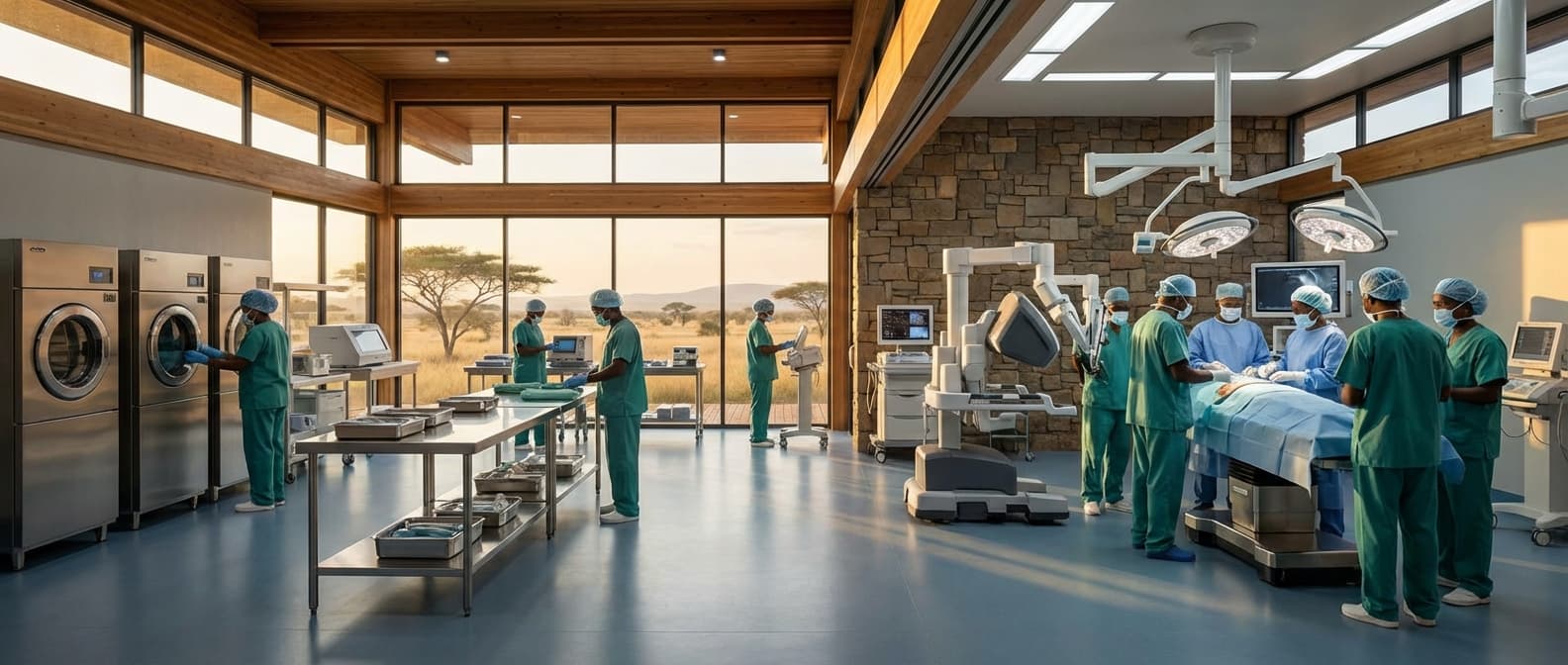
Medical Gas System Design & Installation in Guinea
Engineering Excellence & Technical Support
Medical gas pipeline systems: O2, N2O, air, vacuum High-standard technical execution following OEM protocols and local regulatory frameworks.
Seamless Integration of Medical Gas Outlets
Successfully designed and installed a robust medical gas system in a leading Guinean hospital, featuring strategically placed and easily accessible medical gas outlets for oxygen, medical air, and vacuum. Our design ensures patient safety and caregiver efficiency by minimizing response times during critical procedures and emergencies.
Advanced Bulk Medical Gas Storage Solutions
Engineered and deployed state-of-the-art bulk medical gas storage solutions, including cryogenic tanks and vaporizers, for a major healthcare facility in Guinea. This installation guarantees a reliable and continuous supply of medical gases, significantly reducing reliance on individual cylinders and enhancing operational continuity for essential medical services.
Compliance with International Safety Standards
Led the design and installation of medical gas systems in Guinea adhering strictly to international standards (e.g., NFPA 99, HTM 02-01). Our project management prioritizes safety through meticulous pipeline installation, pressure regulation, alarm systems, and rigorous testing, ensuring a secure and compliant medical gas infrastructure for all healthcare providers and patients.
What Is Medical Gas System Design & Installation In Guinea?
Medical Gas System Design & Installation in Guinea refers to the comprehensive process of planning, engineering, and constructing piped medical gas systems within healthcare facilities. This specialized service ensures the safe and reliable delivery of essential gases like oxygen, medical air, nitrous oxide, and vacuum to patient care areas. It encompasses the entire lifecycle from initial site assessment and system conceptualization to detailed design, procurement of components, on-site installation, rigorous testing, commissioning, and final handover. Adherence to international standards (e.g., NFPA 99, HTM 02-01) and local regulatory requirements in Guinea is paramount. The design phase involves calculating flow rates, pressure requirements, pipe sizing, material selection, and the integration of alarm systems and safety interlocks. Installation includes the precise laying of medical-grade piping, brazing, pressure testing, and flushing to prevent contamination. Commissioning rigorously verifies system integrity, functionality, and compliance with design specifications. The service is crucial for ensuring patient safety, operational efficiency, and regulatory compliance in a healthcare setting.
| Service Aspect | Description | Importance |
|---|---|---|
| Design Engineering | Involves specifying system architecture, flow rates, pressure regulation, pipe network layout, material compatibility, and safety features based on facility requirements and standards. | Ensures optimal performance, safety, and adherence to codes, preventing under or over-delivery of gases and mitigating contamination risks. |
| Equipment Specification & Procurement | Selection and sourcing of medical gas regulators, alarm panels, shut-off valves, cylinders, manifolds, and medical-grade piping materials. | Guarantees the use of certified, compatible, and durable components essential for system integrity and longevity. |
| Installation & Fabrication | The physical construction of the piped system, including pipe cutting, brazing (using oxygen-free nitrogen purging), installation of outlets, wall boxes, and integration with existing infrastructure. | Critical for achieving leak-free joints, preventing cross-contamination, and ensuring the physical integrity of the entire network. |
| Testing & Commissioning | A multi-stage process involving pressure testing, leak detection, flushing with medical air, gas identification testing, and functional verification of all components and alarms. | Confirms system integrity, purity of medical gases, correct delivery pressures and flows, and the reliable operation of safety features prior to patient use. |
| Regulatory Compliance & Certification | Ensuring the system meets all relevant Guinean healthcare facility regulations, international standards (e.g., NFPA 99), and obtaining necessary certifications. | Mandatory for operational licensing, patient safety assurance, and liability management. |
Key Components of Medical Gas System Design & Installation
- Site assessment and needs analysis
- System conceptualization and schematic development
- Detailed engineering design (pipe sizing, pressure drops, material selection)
- Compliance with national and international standards
- Procurement of medical gas equipment and piping
- On-site installation of piping, outlets, alarms, and control panels
- Pressure testing, leak detection, and flushing procedures
- System commissioning and performance verification
- Training of facility maintenance personnel
- Documentation and handover of as-built drawings and manuals
Who Needs Medical Gas System Design & Installation In Guinea?
Designing and installing a robust medical gas system is crucial for ensuring patient safety, effective treatment, and operational efficiency in healthcare facilities. In Guinea, this specialized service is essential for a range of institutions, from large public hospitals to private clinics and specialized medical centers, all of which rely on a consistent and reliable supply of medical gases like oxygen, medical air, and nitrous oxide. The proper design and installation prevent contamination, ensure accurate delivery, and comply with international safety standards, thereby directly impacting patient outcomes and the overall quality of healthcare.
| Customer Type | Primary Needs | Key Departments Served |
|---|---|---|
| Public Hospitals | Reliable supply for large patient volumes, emergency services, and complex surgeries. Compliance with national health standards. | Emergency Room, Operating Theatres, ICU, CCU, General Wards, Respiratory Therapy |
| Private Hospitals and Clinics | High-quality, reliable supply for specialized procedures and patient comfort. Brand reputation and patient satisfaction. | Surgical Suites, Maternity Wards, ICU, Outpatient Clinics, Diagnostic Imaging |
| Specialized Medical Centers | Tailored systems for specific gas requirements and high-purity standards for sensitive treatments. | Cardiac Catheterization Labs, Neurological Monitoring Units, Oncology Treatment Rooms, Dialysis Centers |
| Surgical Centers | On-demand supply for anesthesia and critical patient support during procedures. | Operating Rooms, Recovery Rooms, Pre-operative Holding Areas |
| Research Laboratories | High-purity gases for experiments, analytical equipment, and controlled environments. | Biochemistry Labs, Microbiology Labs, Pharmacology Labs |
Target Customers and Departments in Guinea Requiring Medical Gas System Design & Installation
- Public Hospitals
- Private Hospitals and Clinics
- Specialized Medical Centers (e.g., Cardiology, Neurology, Oncology)
- Surgical Centers
- Intensive Care Units (ICUs)
- Emergency Departments
- Anesthesiology Departments
- Pulmonology Departments
- Neonatal Intensive Care Units (NICUs)
- Rehabilitation Centers
- Research Laboratories within Healthcare Institutions
- Government Health Ministries and Agencies (for public health infrastructure projects)
Medical Gas System Design & Installation Process In Guinea
The design and installation of medical gas systems in Guinea, like in many regions, follows a structured workflow to ensure safety, compliance, and optimal functionality. This process begins with an initial inquiry from a healthcare facility and culminates in a fully operational and certified system. The workflow is characterized by distinct phases, each with specific activities and objectives.
| Phase | Key Activities | Deliverables/Outcomes | Key Stakeholders | Potential Challenges in Guinea |
|---|---|---|---|---|
| Initial contact from healthcare facility outlining requirements. Site visit to assess existing infrastructure, patient load, types of medical gases required (e.g., Oxygen, Medical Air, Vacuum, Nitrous Oxide), and specific usage patterns. Understanding of local building codes and standards. | Detailed needs report, preliminary system scope, understanding of client's budget and timeline. | Healthcare Facility Representatives (Administration, Medical Staff, Engineering), Potential System Designer/Installer. | Accessibility to remote facilities, varying levels of technical understanding at the facility, potential communication barriers. |
| Development of detailed engineering drawings (P&IDs, schematics). Calculation of gas flow rates and pressure requirements. Selection of appropriate medical gas sources (e.g., manifold, bulk storage, medical air compressors, vacuum pumps). Design of piping networks, alarm systems, terminal units, and safety features. Compliance with relevant international (e.g., ISO, NFPA) and potentially emerging Guinean standards. | Approved design drawings and specifications, Bill of Materials (BOM), project schedule, safety plan, risk assessment. | System Designer/Engineer, Healthcare Facility Representatives, Regulatory Bodies (if applicable). | Limited availability of specialized medical gas design expertise, reliance on international standards, potential for delays in approvals. |
| Sourcing and purchasing of all necessary materials, including pipes, fittings, valves, regulators, alarms, medical gas sources, and terminal units. Emphasis on obtaining certified and medical-grade components. Logistics and import/export considerations. | Procured materials delivered to site, quality control checks on materials. | System Installer, Procurement Department, Material Suppliers (local and international). | Challenges in securing genuine medical-grade components, import duties and customs delays, currency fluctuations, limited local supplier network. |
| Installation of medical gas piping networks throughout the facility. Installation of medical gas sources, control panels, alarm systems, and terminal units. Adherence to design specifications and safety protocols. Rigorous site supervision by qualified personnel. | Installed piping, equipment, and terminal units according to design. Clean and organized work site. | System Installers/Technicians, Site Supervisors, Project Manager, Healthcare Facility Engineering Staff. | Shortage of skilled labor trained in medical gas installation, adherence to strict cleanliness standards during installation, ensuring quality workmanship. |
| Pressure testing of the piping system. Purging and flushing to remove contaminants. Gas analysis to verify purity and composition. Functional testing of all components, including alarms and pressure regulators. Performance verification against design parameters. | Certified test reports, commissioning documentation, system performance verification report. | Commissioning Engineers, System Installer, Healthcare Facility Representatives, Independent Testing Agency (if required). | Availability of specialized testing equipment, qualified personnel for complex testing procedures, ensuring proper documentation and certification. |
| Comprehensive training for facility maintenance staff on the operation, maintenance, and troubleshooting of the medical gas system. Provision of all system documentation, including as-built drawings, manuals, and test reports. Formal handover of the completed system to the healthcare facility. | Trained staff, complete system documentation, signed handover certificate. | System Installer, Healthcare Facility Maintenance Staff, Biomedical Engineers, Facility Management. | Ensuring effective knowledge transfer, availability of training materials in local languages, ongoing commitment to training. |
| Provision of warranty support. Planned preventive maintenance schedules. Emergency repair services. Regular system audits and upgrades as needed. Ongoing relationship with the healthcare facility for long-term system integrity. | Continued system reliability, timely response to issues, extended system lifespan. | System Installer/Service Provider, Healthcare Facility Maintenance Department. | Establishing a reliable local support network, ensuring availability of spare parts, long-term commitment to service agreements. |
Medical Gas System Design & Installation Process in Guinea: Workflow Stages
- Inquiry & Needs Assessment
- System Design & Planning
- Procurement & Material Sourcing
- Installation & Construction
- Testing & Commissioning
- Training & Handover
- Post-Installation Support & Maintenance
Medical Gas System Design & Installation Cost In Guinea
Designing and installing a medical gas system in Guinea involves a complex interplay of factors influencing the overall cost. These systems are critical for healthcare facilities, providing essential gases like oxygen, medical air, nitrous oxide, and vacuum. The pricing is highly variable, depending on the specific needs of the facility, the chosen technologies, and the local economic conditions. This discussion outlines the key pricing factors and provides estimated cost ranges in the local currency, the Guinean Franc (GNF).
| System Component/Service | Estimated Cost Range (GNF) | Notes |
|---|---|---|
| Initial Design & Engineering Fees | 5,000,000 - 25,000,000 | Varies based on project complexity and consultant expertise. |
| Medical Gas Piping Installation (per point of use) | 500,000 - 2,000,000 | Includes piping, valves, outlets, and associated labor. Bulk installations can reduce per-unit cost. |
| Central Gas Supply - Bulk Liquid Oxygen Tank (installation & initial fill) | 50,000,000 - 200,000,000+ | Significant upfront investment. Cost depends on tank size and vendor. |
| Central Gas Supply - Cylinder Manifold System | 15,000,000 - 75,000,000 | Lower initial cost than bulk, but higher recurring cylinder purchase/rental costs. |
| Central Gas Supply - On-Site Oxygen Generation (PSA/VPSA) | 80,000,000 - 300,000,000+ | High initial capital cost, but significantly lower operating costs for oxygen. |
| Alarm Systems & Monitoring Equipment | 5,000,000 - 20,000,000 | Essential for safety and compliance. |
| Compressors (for Medical Air) | 10,000,000 - 50,000,000 | Depends on capacity and technology (e.g., oil-free). |
| Vacuum Systems (Pumps & Receivers) | 10,000,000 - 40,000,000 | Required for medical vacuum. |
| Medical Gas Outlets & Valves (per unit) | 100,000 - 500,000 | Cost varies by gas type and manufacturer. |
| System Testing & Commissioning | 5,000,000 - 20,000,000 | Essential for certification and safety. |
| General Installation Labor (per day/skilled technician) | 50,000 - 150,000 | Prevailing rates in Guinea, can fluctuate. |
| Total Project Cost (Small to Medium Facility) | 100,000,000 - 500,000,000+ | Highly variable based on specific choices and scope. |
| Total Project Cost (Large Hospital) | 500,000,000 - 2,000,000,000+ | Requires extensive infrastructure and advanced systems. |
Key Pricing Factors for Medical Gas Systems in Guinea
- Scope of the System: The number of points of use (beds, operating rooms, recovery areas), the types of gases required, and the overall size and complexity of the facility are primary cost drivers.
- Equipment Quality and Brand: High-quality, reputable brands generally come with higher initial costs but offer better reliability, longevity, and compliance with international standards.
- Piping Material and Installation: The type of piping (e.g., copper, stainless steel), its diameter, and the complexity of the installation route significantly impact material and labor costs.
- Central Gas Supply Source: Whether the facility opts for bulk liquid oxygen tanks, cylinder manifolds, or on-site gas generation systems (e.g., oxygen concentrators) will drastically affect upfront and ongoing expenses.
- Regulatory Compliance and Certifications: Meeting local and international standards for medical gas systems often necessitates specialized equipment and rigorous testing, adding to the cost.
- Installation Complexity and Site Conditions: The accessibility of the installation site, the need for extensive renovations, and the prevailing labor rates in Guinea influence installation expenses.
- Project Management and Engineering Fees: Professional design, engineering, and project management services are essential for a safe and compliant system and represent a significant portion of the cost.
- Testing and Commissioning: Thorough testing of the system to ensure safety, purity, and proper flow rates is a mandatory and often costly step.
- Training and Maintenance: The cost of training facility staff on system operation and maintenance, as well as any initial maintenance contracts, should be factored in.
- Geographic Location within Guinea: While major urban centers might have more competitive pricing due to a higher number of suppliers and skilled labor, remote areas could incur higher transportation and logistical costs.
Affordable Medical Gas System Design & Installation Options
Designing and installing a medical gas system can be a significant investment, but by exploring affordable options, value bundles, and implementing cost-saving strategies, healthcare facilities can achieve robust and compliant systems without overspending. This guide outlines key considerations for budget-conscious medical gas system projects.
| Value Bundle Type | Description | Cost-Saving Benefit |
|---|---|---|
| Turnkey Solution Bundle | Includes design, equipment sourcing, installation, testing, and commissioning from a single provider. | Streamlined project management, potential for bulk purchasing discounts, reduced administrative overhead. |
| Equipment & Installation Package | Bundles essential medical gas equipment (e.g., manifolds, alarms, outlets) with installation services. | Simplified procurement, often with preferential pricing on combined packages, integrated installation and equipment expertise. |
| Maintenance & Service Agreement Bundle | Combines initial installation or system upgrade with a long-term preventative maintenance contract. | Predictable maintenance costs, reduced risk of unexpected repair bills, extended equipment lifespan, potential for bundled service discounts. |
| Modular System Bundle | Offers scalable medical gas systems that can be expanded or upgraded in phases. | Lower initial capital outlay, ability to adapt to future needs without complete system replacement, phased investment. |
Key Considerations for Affordable Medical Gas Systems
- Understanding the Scope: Clearly defining the required medical gases, outlets, and system capacity is crucial to avoid unnecessary expenses.
- Prioritizing Essential Services: Focus on the most critical medical gases and outlets for immediate patient care needs.
- Exploring Equipment Options: Researching different manufacturers and models can reveal cost-effective yet reliable equipment.
- Phased Installation: For larger facilities, consider a phased approach to installation, spreading costs over time.
- Long-Term Maintenance Planning: Budgeting for regular maintenance can prevent costly emergency repairs.
- Leveraging Technology: Exploring modern, energy-efficient medical gas equipment can lead to long-term operational savings.
- Compliance without Over-Engineering: Ensuring all systems meet relevant standards (e.g., NFPA 99, HTM 02-01) without exceeding regulatory requirements unnecessarily.
Verified Providers In Guinea
In Guinea's evolving healthcare landscape, the assurance of quality and reliability is paramount. Franance Health stands as a beacon of trust, offering a curated network of verified providers that exemplify the highest standards of medical care. Their rigorous credentialing process ensures that every practitioner and facility within their network has met stringent criteria for expertise, ethical practice, and patient safety. This dedication to verification not only simplifies the search for dependable healthcare but also instills confidence in patients seeking the best possible outcomes. Choosing a Franance Health verified provider means opting for a healthcare experience marked by professionalism, competence, and a commitment to your well-being.
| Provider Type | Key Verification Criteria | Benefits for Patients |
|---|---|---|
| Hospitals & Clinics | Accreditation, Staff Qualifications, Equipment Standards, Infection Control Protocols | Access to well-equipped facilities, trained medical teams, and safe environments. |
| Specialist Physicians | Medical Licenses, Board Certifications, Clinical Experience, Continuing Education | Expert diagnosis and treatment from highly qualified specialists in various fields. |
| General Practitioners | Medical Licenses, Competency in Primary Care, Patient Feedback | Reliable first point of contact for general health concerns and preventative care. |
| Diagnostic Laboratories | Regulatory Approvals, Equipment Calibration, Quality Control Measures, Personnel Expertise | Accurate and reliable diagnostic testing crucial for effective treatment planning. |
| Pharmacies | Licensing, Dispensing Protocols, Drug Quality Assurance, Pharmacist Qualifications | Access to legitimate medications dispensed by qualified professionals. |
Why Franance Health Credentials Matter:
- Rigorous Vetting Process: Franance Health employs a multi-faceted approach to verify credentials, including educational background, professional licenses, board certifications, and peer reviews.
- Commitment to Quality: Verified providers consistently demonstrate a commitment to evidence-based practices, continuous professional development, and adherence to international healthcare standards.
- Enhanced Patient Safety: The credentialing process includes checks for disciplinary actions and malpractice history, ensuring that providers prioritize patient safety above all else.
- Specialized Expertise: Franance Health identifies and verifies providers with specialized skills and experience, allowing patients to find the right expert for their specific medical needs.
- Ethical Practice: Verified providers are held to a high ethical code, ensuring compassionate and respectful patient care.
- Streamlined Access: Franance Health's verified network provides a simplified and trustworthy pathway to accessing quality healthcare in Guinea.
Scope Of Work For Medical Gas System Design & Installation
This Scope of Work (SOW) outlines the requirements for the design and installation of a medical gas system. It encompasses all aspects from initial design conceptualization and detailed engineering to the final commissioning and handover of a fully operational medical gas system. The SOW also specifies the technical deliverables expected from the contractor and the standard specifications that will govern the design and installation processes. Adherence to these requirements ensures the safety, reliability, and compliance of the medical gas system with all relevant codes and standards.
| Standard/Specification | Description | Applicability |
|---|---|---|
| NFPA 99 (Health Care Facilities Code) | Establishes requirements for the safe storage, handling, and use of medical gases and medical gas piping systems. | All aspects of medical gas system design, installation, and operation. |
| NFPA 70 (National Electrical Code) | Provides the minimum mandatory requirements for safe electrical installations. | Electrical components of the medical gas system, including power for compressors, alarms, and control panels. |
| ASME B31.3 (Process Piping) | Code for pressure piping, applicable to the design, fabrication, installation, inspection, and testing of piping systems. | Medical gas piping installation, material selection, and welding procedures. |
| CGA (Compressed Gas Association) Standards (e.g., P-2, G-4.1, V-5) | Standards covering medical gas purity, cylinder handling, and valve connections. | Medical gas quality, handling, and connection points. |
| Local Building Codes and Regulations | Specific requirements mandated by local authorities for building construction and life safety systems. | Overall system integration with building infrastructure and compliance with local ordinances. |
| Manufacturer's Recommendations and Installation Manuals | Specific guidelines provided by equipment manufacturers for optimal installation and performance. | Installation procedures for specific medical gas equipment. |
| ISO 13485 (Medical Devices - Quality Management Systems) | While not directly a design/installation standard, it influences the quality management expectations throughout the project. | Contractor's quality assurance and control processes. |
Technical Deliverables
- Preliminary Design Report (PDR) including system conceptualization, site assessment, and preliminary equipment selection.
- Detailed Design Drawings: Including P&IDs, schematics, layout drawings, piping isometrics, and structural support details.
- Equipment Schedules: Comprehensive list of all medical gas equipment with specifications, manufacturer, model numbers, and quantities.
- Bill of Materials (BOM): Detailed breakdown of all materials required for the installation, including piping, fittings, valves, and accessories.
- Calculations and Engineering Reports: Including pressure drop calculations, flow rate calculations, sizing of tanks and compressors, and system capacity analysis.
- Operation and Maintenance (O&M) Manuals: Comprehensive documentation for system operation, maintenance procedures, troubleshooting guides, and spare parts lists.
- As-Built Drawings: Updated drawings reflecting the final installed system, incorporating any field modifications.
- Testing and Commissioning Reports: Documenting all tests performed (e.g., leak tests, purity tests, pressure tests) and the results.
- Training Materials: For facility staff on the operation and basic maintenance of the medical gas system.
- Warranty and Guaranty Documents: Detailing the coverage for equipment and workmanship.
- Compliance Certificates: Demonstrating adherence to all relevant codes, standards, and regulatory requirements.
Service Level Agreement For Medical Gas System Design & Installation
This Service Level Agreement (SLA) outlines the performance expectations for the design and installation of medical gas systems, focusing on critical response times for support requests and uptime guarantees for newly installed systems. This document applies to all projects undertaken by [Your Company Name] for [Client Name] related to the design and installation of medical gas systems.
| Service Component | Response Time (Business Hours) | Resolution Time (Target) | Uptime Guarantee |
|---|---|---|---|
| Design Consultation & Review | Within 4 business hours of request | Within 2 business days of commencement | N/A (Design phase) |
| Technical Support for Installation Issues | Within 2 business hours of critical issue notification | Within 8 business hours of critical issue notification | N/A (Installation phase) |
| Emergency Support (System Failure post-installation) | Within 1 business hour of critical system failure notification | Within 4 business hours of critical system failure notification | 99.9% for the first 12 months post-certification |
| Non-Emergency Support (Routine inquiries, minor adjustments) | Within 8 business hours of request | Within 2 business days of request | N/A (Non-critical) |
| System Testing & Validation Scheduling | Within 4 business hours of completion of installation milestones | Scheduled within 3 business days of notification | N/A (Testing phase) |
Scope of Services Covered
- Initial design consultations and concept development.
- Detailed engineering design of medical gas pipelines and outlets.
- Procurement and supply of all required medical gas equipment and materials.
- On-site installation and assembly of the medical gas system.
- System testing, validation, and certification.
- Post-installation technical support during the warranty period.
Frequently Asked Questions

Ready when you are
Let's scope your Medical Gas System Design & Installation in Guinea project in Guinea.

Scaling healthcare logistics and technical systems across the entire continent.