
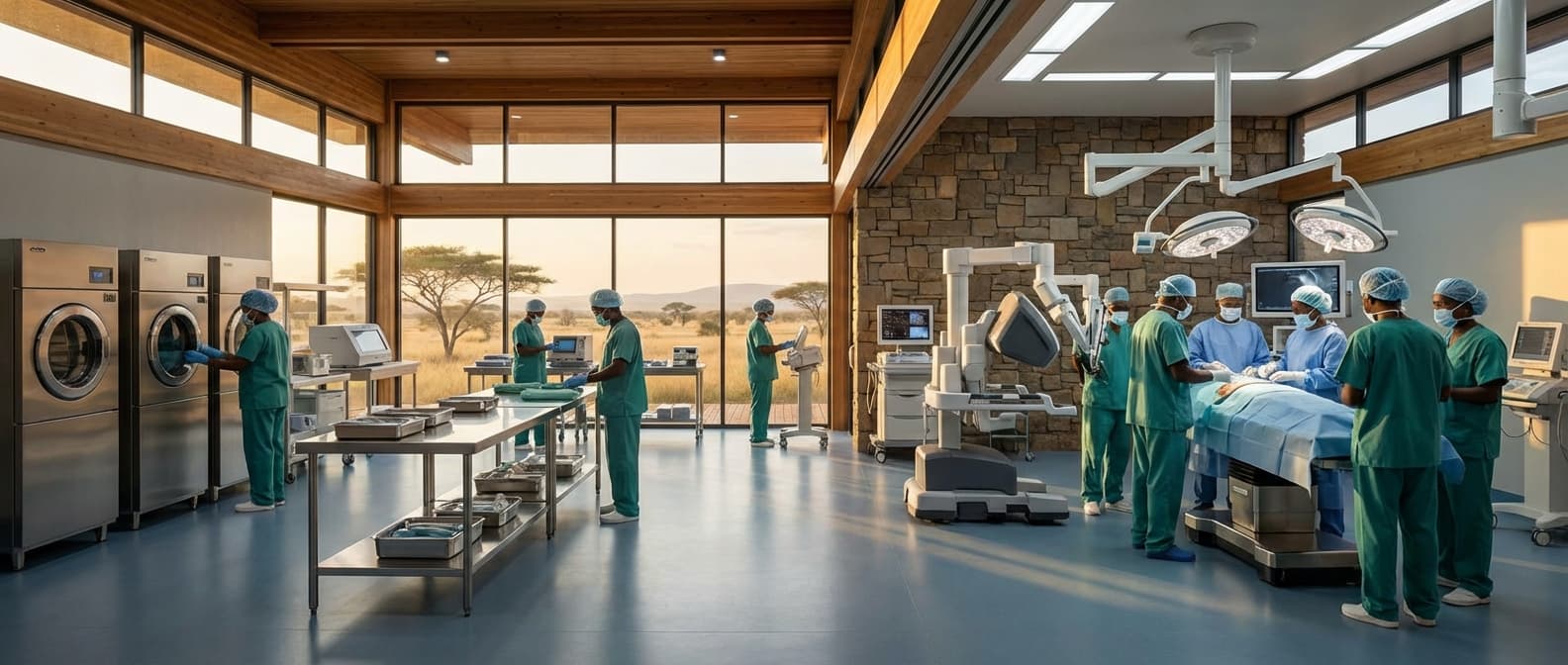
Endoscopy Reprocessing Validation in Guinea
Engineering Excellence & Technical Support
AER validation, SOP development and compliance High-standard technical execution following OEM protocols and local regulatory frameworks.
Comprehensive Validation Protocol
Established a rigorous validation protocol for all flexible and rigid endoscope reprocessing steps, adhering to international guidelines and local regulatory requirements in Guinea. This includes detailed testing of cleaning efficacy, high-level disinfection/sterilization parameters, and rinsing processes.
Bioburden and Sterility Testing
Implemented advanced bioburden and sterility testing methodologies for critical endoscope components and rinse water. This ensures the removal of all viable microorganisms and prevents cross-contamination during reprocessing, safeguarding patient safety in Guinean healthcare facilities.
Data-Driven Performance Monitoring
Developed a robust data collection and analysis system to continuously monitor the performance of reprocessing equipment and processes. This includes tracking key indicators like temperature, time, and chemical concentrations, enabling proactive identification and mitigation of deviations within the Guinean context.
What Is Endoscopy Reprocessing Validation In Guinea?
Endoscopy reprocessing validation in Guinea refers to the systematic and documented process of verifying that reusable endoscopes are cleaned, disinfected, and/or sterilized according to established protocols and regulatory requirements. This validation ensures that the reprocessing methods effectively eliminate or inactivate all viable microorganisms, thereby preventing patient-to-patient transmission of infectious agents. The service is critical for healthcare facilities performing endoscopic procedures.
| Who Needs Endoscopy Reprocessing Validation? | Typical Use Cases | |||||
|---|---|---|---|---|---|---|
| Hospitals and clinics performing any procedure utilizing reusable endoscopes (e.g., gastrointestinal endoscopy, bronchoscopy, urology, laparoscopy). | Initial setup and commissioning of new reprocessing areas or equipment. | Implementation of new reprocessing protocols or chemicals. | Following equipment malfunction or repair. | Periodic revalidation to ensure ongoing compliance and efficacy. | In response to outbreaks of healthcare-associated infections linked to endoscopes. | To meet national and international regulatory standards and guidelines (e.g., those set by the Ministry of Health in Guinea, WHO guidelines, IFU from endoscope manufacturers). |
Key Components of Endoscopy Reprocessing Validation
- Process Validation: Verifying that the cleaning, disinfection, and sterilization cycles consistently achieve the intended microbial reduction.
- Equipment Validation: Ensuring that the reprocessing equipment (e.g., automated endoscope reprocessors, sterilizers) functions as intended and meets performance specifications.
- Chemical Validation: Confirming the efficacy and proper concentration of cleaning and disinfection agents.
- Water Quality Testing: Assessing the microbial and chemical quality of water used in the reprocessing process.
- Personnel Training and Competency Assessment: Evaluating the knowledge and practical skills of staff involved in reprocessing.
- Documentation and Record Keeping: Establishing robust systems for recording all reprocessing steps, test results, and equipment maintenance.
- Microbiological Challenge Testing: In some advanced validation schemes, challenging the reprocessing process with known microbial loads to confirm efficacy.
Who Needs Endoscopy Reprocessing Validation In Guinea?
Ensuring the safety and efficacy of endoscopic procedures in Guinea hinges on robust reprocessing validation. This critical process confirms that reusable endoscopes are thoroughly cleaned and sterilized, eliminating the risk of patient-to-patient infection. While all healthcare facilities performing endoscopy require this validation, specific attention should be paid to institutions with high patient volumes, those serving underserved populations, and those with limited resources that might necessitate the reuse of equipment.
| Target Customer/Department | Description | Specific Needs/Concerns |
|---|---|---|
| Gastroenterology Departments | These departments are at the forefront of performing gastrointestinal endoscopies (gastroscopy, colonoscopy, sigmoidoscopy). | High volume of procedures, diverse range of instruments, need for consistent disinfection protocols. |
| Pulmonology Departments | Utilize bronchoscopes for diagnostic and therapeutic interventions in the respiratory tract. | Criticality of sterilizing complex, delicate instruments, preventing cross-contamination of respiratory pathogens. |
| Urology Departments | Employ cystoscopes and ureteroscopes for examining and treating the urinary tract. | Potential for exposure to bodily fluids, ensuring effective sterilization of instruments used in sensitive areas. |
| Operating Theatres (for specialized procedures) | Facilities performing laparoscopic or endoscopic surgeries require validated reprocessing for surgical endoscopes. | Stringent infection control requirements for surgical settings, compatibility of reprocessing with other surgical instruments. |
| Infection Control Committees/Departments | Responsible for overseeing and implementing infection prevention strategies within healthcare facilities. | Establishing and monitoring compliance with reprocessing standards, conducting audits, and ensuring staff training. |
| Biomedical Engineering Departments | Often responsible for the maintenance and repair of medical equipment, including endoscopes and reprocessing machinery. | Understanding the technical aspects of reprocessing equipment, ensuring validation aligns with equipment capabilities. |
| Healthcare Administrators/Management | Decision-makers responsible for resource allocation, quality improvement, and patient safety initiatives. | Budgetary considerations for validation services, long-term cost-effectiveness of robust reprocessing, legal and regulatory compliance. |
| Ministry of Health (Public Health Authorities) | Responsible for setting national healthcare standards, regulations, and guidelines. | Establishing national guidelines for endoscopy reprocessing, overseeing compliance across the healthcare system, public health impact. |
Who Needs Endoscopy Reprocessing Validation in Guinea?
- Hospitals (public and private)
- Specialized Endoscopy Clinics
- University Teaching Hospitals
- Referral Centers
- Facilities performing diagnostic and interventional endoscopy
Endoscopy Reprocessing Validation Process In Guinea
The Endoscopy Reprocessing Validation Process in Guinea outlines the systematic approach required to ensure that flexible endoscopes are cleaned and disinfected to a safe standard after each use. This process is critical for preventing the transmission of healthcare-associated infections. The workflow begins with an initial inquiry regarding the need for validation and culminates in the execution and documentation of the entire validation procedure. This comprehensive process involves multiple stakeholders, adherence to established guidelines, and rigorous testing.
| Stage | Key Activities | Responsible Parties | Documentation Requirements |
|---|---|---|---|
| Healthcare facility identifies the need for validating their endoscopy reprocessing procedures. This may be driven by new equipment, changes in guidelines, regulatory requirements, or internal quality improvement initiatives. The scope of validation (e.g., specific endoscope models, reprocessing steps) is defined. | Healthcare Facility Management, Infection Prevention and Control (IPC) Department, Endoscopy Unit Staff | Inquiry documentation, Meeting minutes, Scope of validation document |
| An assessment of current reprocessing practices is conducted. This involves reviewing existing Standard Operating Procedures (SOPs), equipment maintenance logs, staff training records, and the physical reprocessing environment. A gap analysis identifies areas where current practices may not meet validation requirements or best practices. | IPC Department, Endoscopy Unit Staff, Potentially external validation experts | Assessment reports, SOP review notes, Gap analysis findings |
| A detailed validation protocol is developed, outlining the methodology, acceptance criteria, testing procedures (e.g., microbial challenge testing, chemical indicator usage, lumen integrity checks), and data analysis plan. The protocol is reviewed and approved by relevant stakeholders, including regulatory bodies if applicable. | IPC Department, Endoscopy Unit Staff, Validation Expert (if engaged), Ministry of Health representatives (potentially) | Validation protocol document, Approval signatures |
| All necessary reprocessing equipment (e.g., automated endoscope reprocessors - AERs, washer-disinfectors) and chemical disinfectants are checked for proper functioning, calibration, and expiry dates. Appropriate training is provided to staff on the specific validation procedures. | Endoscopy Unit Staff, Biomedical Engineering Department, IPC Department | Equipment calibration records, Disinfectant expiry logs, Training records |
| The reprocessing procedures are performed according to the approved validation protocol. This includes simulated reprocessing of endoscopes with known microbial contamination (if applicable), monitoring of cleaning and disinfection parameters (e.g., temperature, time, chemical concentration), and collection of all relevant data points. | Endoscopy Unit Staff, IPC Department, Laboratory personnel (for testing) | Raw data logs, Test results (microbiological, chemical indicators), Process parameter recordings |
| All collected data is analyzed, and a comprehensive validation report is generated. This report details the methodology, results, and conclusions regarding the effectiveness and safety of the reprocessing procedures. The report is reviewed by a committee or designated authority for approval. | IPC Department, Validation Expert (if engaged), Review Committee | Validation report, Review meeting minutes, Approval documentation |
| Upon approval, the validated reprocessing procedures are formally implemented. A system for ongoing monitoring and periodic re-validation is established to ensure sustained compliance and address any deviations or changes in practice. This includes regular audits and quality control checks. | Endoscopy Unit Staff, IPC Department, Healthcare Facility Management | Implemented SOPs, Monitoring logs, Audit reports, Re-validation schedule |
Endoscopy Reprocessing Validation Process Workflow in Guinea
- Initial Inquiry and Scope Definition
- Pre-Validation Assessment and Gap Analysis
- Protocol Development and Review
- Equipment and Reagent Preparation
- Process Execution and Data Collection
- Validation Report Generation and Review
- Implementation and Ongoing Monitoring
Endoscopy Reprocessing Validation Cost In Guinea
Validating the reprocessing of endoscopic equipment in Guinea involves several key cost drivers, significantly influenced by the country's economic landscape, the specific type of validation required, and the geographical location within Guinea. The process is crucial for ensuring patient safety and preventing healthcare-associated infections, making it a non-negotiable but variable expense for healthcare facilities.
Key Pricing Factors:
- Type of Validation: The scope and depth of the validation are primary determinants. This can range from basic biological indicator testing to comprehensive process validation involving documented evidence of efficacy against a broad spectrum of microorganisms. More complex validations require specialized consumables, more time, and often external expertise, thus increasing costs.
- Validation Service Provider: Whether the validation is performed in-house by the hospital's sterile processing department or outsourced to a specialized third-party company will significantly impact the cost. Third-party providers often have established protocols, specialized equipment, and a team of trained professionals, which can translate to higher fees but potentially more robust and recognized validation.
- Number and Type of Endoscopes: The more endoscopes that need to be validated, and the more complex their types (e.g., flexible versus rigid, specific models with advanced features), the higher the overall cost. Each endoscope requires individual testing and documentation.
- Reagents and Consumables: The cost of biological indicators (BIs), chemical indicators (CIs), and other necessary reagents for testing and validation are significant. The availability and import costs of these specialized materials within Guinea play a crucial role.
- Equipment and Calibration: If validation is done in-house, the cost of specialized validation equipment and its regular calibration must be factored in. This can be a substantial upfront and ongoing expense.
- Personnel Training and Expertise: Highly trained personnel are essential for accurate validation. The cost of training, salaries, and ongoing professional development for sterile processing technicians and quality assurance staff contribute to the overall expense.
- Laboratory Access and Testing: Access to accredited laboratories for certain types of testing, if not available in-house, will incur laboratory fees. The distance to these laboratories and associated logistical costs can also add to the price.
- Geographical Location: Costs can vary between major urban centers like Conakry and more remote regions due to differences in the availability of services, transportation costs for reagents and personnel, and local labor rates.
- Regulatory Requirements: While Guinea may have general guidelines, specific mandated validation frequencies or standards set by the Ministry of Health or relevant regulatory bodies will influence the required scope and, consequently, the cost.
Estimated Pricing Ranges in Guinean Francs (GNF):
It is important to note that precise pricing in Guinea can be highly variable and often requires direct quotes from service providers. The following are estimations based on general understanding of healthcare costs and service provision in the region. These figures are subject to change based on market conditions, inflation, and specific service agreements.
- Basic Biological Indicator Testing (per endoscope): This might involve testing the efficacy of the cleaning and disinfection cycle.
* **Range:** 150,000 GNF - 400,000 GNF
- Comprehensive Process Validation (per endoscope/cycle): This includes a more thorough assessment of the entire reprocessing cycle, potentially involving multiple tests and documentation.
* **Range:** 500,000 GNF - 1,500,000 GNF
- Annual Contract for Validation Services (for a medium-sized hospital with 5-10 endoscopes): This would typically cover regular testing, documentation, and consultation.
* **Range:** 5,000,000 GNF - 15,000,000 GNF
- Cost of Consumables (per batch of tests): This includes biological and chemical indicators, culture media, etc.
* **Range:** 50,000 GNF - 200,000 GNF (depending on the specific kit and quantity)
- In-house Equipment Calibration and Maintenance (annual estimate): For hospitals performing their own validation.
* **Range:** 1,000,000 GNF - 5,000,000 GNF (highly dependent on the equipment)
It is strongly recommended that healthcare facilities in Guinea obtain detailed quotes from multiple potential service providers and carefully assess the scope of work and the specific deliverables included in each offer to ensure cost-effectiveness and compliance with patient safety standards.
| Service/Item | Estimated Range (GNF) | Notes |
|---|---|---|
| Basic Biological Indicator Testing (per endoscope) | 150,000 - 400,000 | Covers basic cleaning/disinfection efficacy checks. |
| Comprehensive Process Validation (per endoscope/cycle) | 500,000 - 1,500,000 | More thorough assessment, multiple tests, and documentation. |
| Annual Validation Services Contract (medium hospital, 5-10 endoscopes) | 5,000,000 - 15,000,000 | Includes regular testing, documentation, and consultation. |
| Consumables (e.g., Biological/Chemical Indicators, per batch) | 50,000 - 200,000 | Cost of essential testing materials. |
| In-house Equipment Calibration & Maintenance (annual) | 1,000,000 - 5,000,000 | For facilities performing validation internally. |
Factors Influencing Endoscopy Reprocessing Validation Costs in Guinea
- Type of Validation Required (Basic vs. Comprehensive)
- Service Provider (In-house vs. Third-Party)
- Number and Types of Endoscopes
- Cost of Reagents and Consumables (Biological & Chemical Indicators)
- Investment in Validation Equipment & Calibration (if in-house)
- Personnel Training and Expertise
- Access to Accredited Laboratories
- Geographical Location within Guinea
- Specific Regulatory Mandates
Affordable Endoscopy Reprocessing Validation Options
Ensuring the effectiveness of endoscopy reprocessing is paramount for patient safety and infection prevention. However, the validation process can be costly, presenting a challenge for facilities with limited budgets. This document explores affordable validation options, emphasizing value bundles and cost-saving strategies. It's crucial to understand that while cost is a consideration, maintaining the highest standards of reprocessing efficacy should never be compromised. The goal is to achieve compliance and confidence through smart, economical approaches.
| Strategy/Concept | Description | Cost-Saving Benefit | Considerations |
|---|---|---|---|
| Value Bundles | Purchasing validation services, supplies, and potentially equipment as a combined package from a single vendor. This often includes bundled discounts and integrated support. | Reduced per-unit cost, simplified procurement, streamlined vendor management, potential for integrated training and support. | Ensure the bundle meets all specific validation needs; compare individual vendor pricing to the bundle. |
| Manufacturer-Provided Validation Kits | Many endoscope and reprocessing equipment manufacturers offer validation kits tailored to their specific products. These kits often include the necessary reagents and tools for essential validation steps. | Convenience, product-specific accuracy, potential for integration with manufacturer support and warranty, often more cost-effective than piecing together supplies from multiple sources. | Verify that the kit covers all required validation parameters; check for expiry dates of reagents. |
| Third-Party Validation Services (Tiered) | Engaging specialized third-party companies to conduct validation. Opt for services that offer tiered packages based on the scope and frequency of validation required. | Expertise without in-house training costs, access to specialized equipment, objective assessment, scalability based on need. | Clearly define the scope of services; compare pricing and accreditation of different providers. |
| In-House Validation (with Training) | Training internal staff to perform validation tests using commercially available test kits and equipment. | Long-term cost savings by reducing reliance on external services, increased internal control and flexibility, staff skill development. | Requires investment in training, initial equipment purchase, and ongoing quality control; ensure staff proficiency and adherence to protocols. |
| Risk-Based Validation Frequency | Adjusting the frequency of validation tests based on the risk profile of the endoscope, procedure volume, and observed reprocessing outcomes. Less frequent validation for lower-risk scenarios. | Reduced consumption of testing supplies and labor over time; optimized resource allocation. | Requires a robust risk assessment framework and careful documentation to justify frequency changes to regulators. |
| Consumable Optimization | Buying validation consumables (e.g., biological indicators, chemical indicators, test strips) in bulk or through group purchasing organizations (GPOs). | Lower per-unit cost of essential validation materials. | Monitor expiration dates of consumables; ensure proper storage conditions. |
| Shared Validation Equipment | Collaborating with neighboring facilities to share specialized validation equipment that may be infrequently used. | Avoids the capital expenditure of purchasing expensive equipment outright. | Requires clear agreements on usage, maintenance, and calibration schedules. |
Affordable Endoscopy Reprocessing Validation Options
- Understanding Validation Requirements: Familiarize yourself with regulatory guidelines (e.g., FDA, CDC, AAMI) and manufacturer's instructions for use (IFUs) to ensure your validation efforts are targeted and comprehensive.
- Tiered Validation Approaches: Not all validation needs are equal. Consider a tiered approach, focusing intensive validation on high-risk procedures or equipment, while using more streamlined methods for routine processes.
- Leveraging Existing Resources: Utilize internal staff expertise, existing laboratory equipment (if available), and established relationships with reprocessing equipment manufacturers.
- Partnerships and Collaborations: Explore opportunities to collaborate with other healthcare facilities for shared validation resources or bulk purchasing of validation supplies.
- Phased Implementation: Instead of a complete overhaul, phase in validation activities over time, prioritizing critical areas and spreading the cost across multiple budget cycles.
- Digital Solutions for Documentation: Utilize digital platforms for record-keeping and data management, reducing the need for paper-based systems and associated costs.
- Focus on Critical Parameters: Prioritize validation of the most critical parameters of your reprocessing cycles (e.g., high-level disinfection efficacy, detergent removal) as defined by regulatory bodies and IFUs.
Verified Providers In Guinea
In the pursuit of reliable healthcare services in Guinea, identifying verified providers is paramount. Franance Health stands out as a leading organization, offering a robust network of credentialed healthcare professionals and facilities. This credentialing process is not merely a formality; it signifies adherence to stringent quality, safety, and ethical standards, ensuring that patients receive the highest caliber of care. Choosing Franance Health-credentialed providers means opting for a system that prioritizes patient well-being through rigorous vetting, continuous evaluation, and a commitment to excellence in healthcare delivery. Their verified providers represent the best choice for individuals and families seeking dependable and high-quality medical services in Guinea.
| Credentialing Aspect | Benefit for Patients |
|---|---|
| Professional Licensing Verification | Ensures providers are legally qualified and authorized to practice. |
| Education and Training Validation | Confirms that practitioners have received appropriate and up-to-date medical education. |
| Experience Assessment | Verifies practical experience and demonstrated proficiency in their specialty. |
| Background Checks | Ensures a safe and trustworthy healthcare environment. |
| Adherence to Clinical Guidelines | Promotes evidence-based practices and standardized quality of care. |
| Facility Accreditation (where applicable) | Confirms that healthcare facilities meet established standards for safety, equipment, and operational efficiency. |
Why Franance Health Credentials Represent the Best Choice:
- Rigorous Vetting Process: Franance Health employs a comprehensive evaluation of healthcare professionals and facilities, ensuring they meet established benchmarks for competence and quality.
- Commitment to Patient Safety: Credentials signify adherence to safety protocols and best practices, minimizing risks and ensuring a secure healthcare experience.
- Ethical Standards Assurance: Verified providers are expected to uphold the highest ethical principles in their practice, fostering trust and integrity in patient care.
- Continuous Quality Improvement: Franance Health's credentialing often involves ongoing monitoring and review, promoting a culture of continuous enhancement in healthcare services.
- Access to Trusted Providers: By choosing Franance Health-credentialed entities, patients gain access to a network of healthcare professionals known for their reliability and expertise.
- Enhanced Patient Confidence: The assurance of verified credentials provides patients with greater confidence in the quality and dependability of the medical services they receive.
Scope Of Work For Endoscopy Reprocessing Validation
This Scope of Work (SOW) outlines the requirements for validating the reprocessing of flexible endoscopes. The objective is to ensure that the established reprocessing procedures consistently and effectively render endoscopes safe for patient use by eliminating or inactivating pathogenic microorganisms. This validation will cover all critical steps of the manual and automated cleaning and high-level disinfection (HLD) or sterilization processes. The technical deliverables will include validation protocols, process flow diagrams, validation reports, and updated Standard Operating Procedures (SOPs). Standard specifications for testing will adhere to relevant regulatory guidelines (e.g., FDA, AAMI, ISO) and manufacturer's instructions for use (IFU).
| Deliverable | Description | Standard Specification / Reference | Acceptance Criteria |
|---|---|---|---|
| Validation Protocol | Detailed plan for executing the validation study, including scope, objectives, methodology, equipment, reagents, sampling plan, and acceptance criteria. | Internal SOPs, Manufacturer's IFU, Regulatory Guidelines (e.g., FDA Guidance, AAMI ST58, ISO 17664, ISO 15883 series) | Protocol approved by Quality Assurance and relevant stakeholders prior to execution. |
| Process Flow Diagrams | Visual representation of the entire endoscope reprocessing workflow, from pre-cleaning to storage. | Standard engineering/process diagramming conventions. | Accurate depiction of all steps, including manual cleaning, automated washing, HLD/sterilization, rinsing, and drying. |
| Cleaning Validation Report | Comprehensive report detailing the results of cleaning efficacy testing, including data analysis, interpretation, and conclusions. | Internal format, adhering to regulatory expectations. | Demonstration of consistent and effective removal of biological soil (protein, carbohydrate, hemoglobin) to acceptable residual levels for all tested endoscopes and accessories. |
| Disinfection/Sterilization Validation Report | Comprehensive report detailing the results of microbial challenge testing and/or environmental monitoring to confirm the efficacy of the HLD or sterilization process. | Internal format, adhering to regulatory expectations. | Demonstration of validated lethality against representative microorganisms, meeting established D-value or Log reduction targets. |
| Updated SOPs | Revised Standard Operating Procedures for all aspects of endoscope reprocessing, incorporating validated methods and parameters. | Internal SOP template and format. | SOPs reflect the validated processes, are clearly written, and approved by relevant departments (e.g., Infection Prevention, Clinical Engineering, Quality Assurance). |
| Validation Maintenance Plan | Document outlining the schedule and methodology for ongoing monitoring and revalidation to ensure continued process effectiveness. | Internal format, aligned with regulatory requirements. | Defines frequency of routine monitoring, periodic testing, and triggers for revalidation. |
Key Activities and Deliverables
- Develop comprehensive validation protocol outlining test methodology, acceptance criteria, and sampling plans.
- Conduct validation testing to assess cleaning efficacy (e.g., protein, carbohydrate, hemoglobin testing).
- Conduct validation testing to assess disinfection/sterilization efficacy (e.g., microbial challenge testing, environmental monitoring).
- Document all test results and deviations in a detailed validation report.
- Review and update existing SOPs for endoscope reprocessing based on validation findings.
- Provide training to reprocessing personnel on validated procedures.
- Develop a validation maintenance plan.
Service Level Agreement For Endoscopy Reprocessing Validation
This Service Level Agreement (SLA) outlines the performance standards for Endoscopy Reprocessing Validation services. It defines response times for critical issues and uptime guarantees for the validation platform and associated reporting tools.
| Service Component | Severity Level | Response Time Target | Resolution Time Target (Business Hours) | Uptime Guarantee |
|---|---|---|---|---|
| Endoscopy Reprocessing Validation Platform (Core Functionality) | Critical (Service Unusable/Data Loss Risk) | 1 Hour | 4 Business Hours | 99.9% |
| Endoscopy Reprocessing Validation Platform (Core Functionality) | High (Significant Functionality Impaired) | 2 Business Hours | 8 Business Hours | 99.9% |
| Endoscopy Reprocessing Validation Platform (Core Functionality) | Medium (Minor Functionality Impaired/Workaround Available) | 4 Business Hours | 24 Business Hours | 99.9% |
| Endoscopy Reprocessing Validation Reporting Tools (Access/Reporting Generation) | Critical (Unable to Access Reports) | 2 Business Hours | 6 Business Hours | 99.5% |
| Endoscopy Reprocessing Validation Reporting Tools (Access/Reporting Generation) | High (Report Data Inaccurate/Delayed) | 4 Business Hours | 12 Business Hours | 99.5% |
| Endoscopy Reprocessing Validation Reporting Tools (Access/Reporting Generation) | Medium (Minor Reporting Discrepancy/Cosmetic Issue) | 8 Business Hours | 48 Business Hours | 99.5% |
| Scheduled Maintenance | N/A | 7 Days Advance Notice | N/A | N/A (Maintenance windows will be communicated in advance and scheduled during off-peak hours) |
Key Performance Indicators
- Response Time: The maximum time allowed to acknowledge and begin addressing a reported issue.
- Resolution Time: The maximum time allowed to fully resolve a reported issue, as defined by the severity level.
- Uptime Guarantee: The percentage of time the Endoscopy Reprocessing Validation platform and reporting tools are available and functional.
Frequently Asked Questions

Ready when you are
Let's scope your Endoscopy Reprocessing Validation in Guinea project in Guinea.

Scaling healthcare logistics and technical systems across the entire continent.