
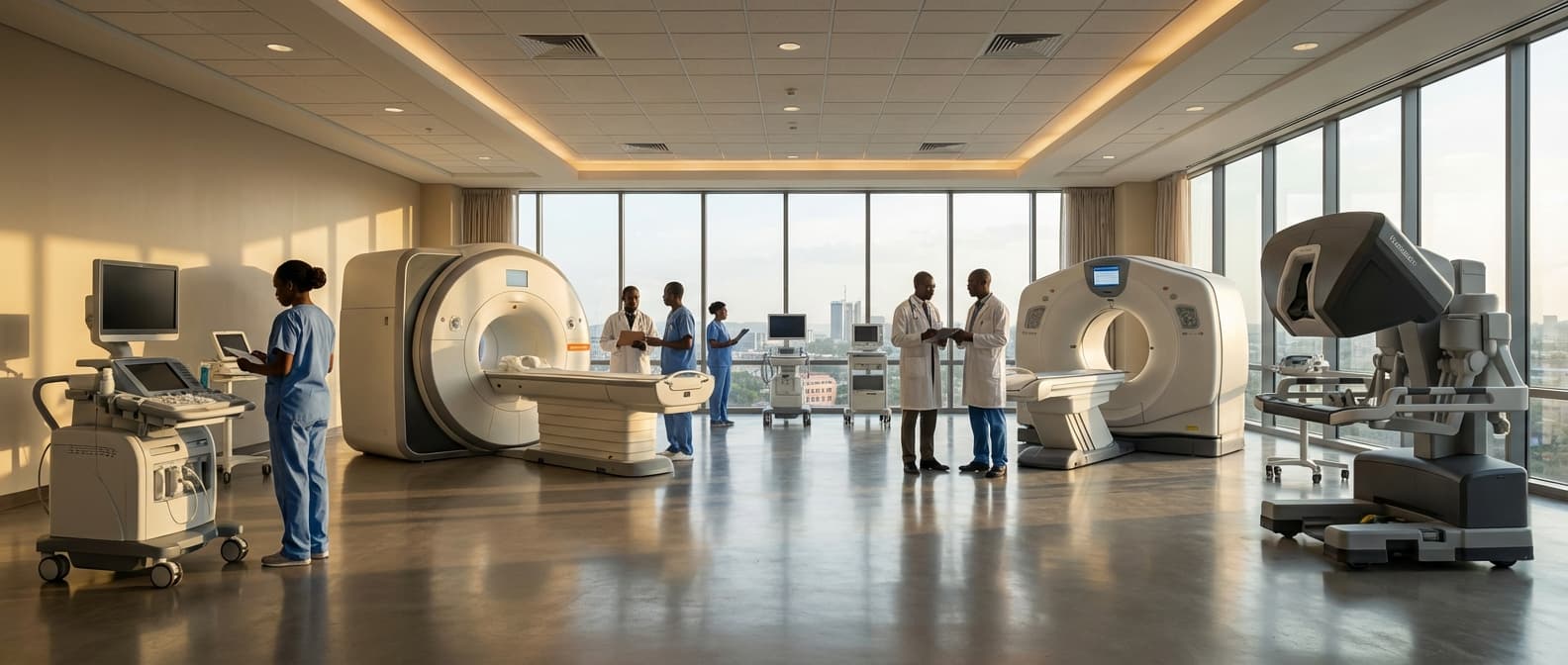
Renal Solutions in Guinea
Engineering Excellence & Technical Support
Complete dialysis systems and renal care equipment designed to deliver safe, effective, and patient-centered kidney treatment. High-standard technical execution following OEM protocols and local regulatory frameworks.
Advanced Dialysis Centers
Establish state-of-the-art dialysis centers equipped with the latest hemodialysis and peritoneal dialysis machines, ensuring high-quality care and improved patient outcomes across key regions of Guinea.
Robust Supply Chain Management
Implement a resilient and efficient supply chain network for essential dialysis consumables, medications, and equipment, guaranteeing uninterrupted availability and accessibility for all patients in need.
Capacity Building & Training Programs
Develop and deliver comprehensive training programs for Guinean healthcare professionals, including nephrologists, nurses, and technicians, fostering local expertise and enhancing the capacity to manage kidney diseases effectively.
What Is Renal Solutions In Guinea?
Renal Solutions in Guinea refers to a spectrum of medical services and interventions aimed at the diagnosis, treatment, and management of kidney-related diseases (nephropathies) within the Republic of Guinea. These services can range from basic renal function screening and medical management of chronic kidney disease (CKD) to advanced renal replacement therapies and surgical interventions. The primary objective is to preserve or restore kidney function, mitigate disease progression, and improve the quality of life for individuals affected by renal ailments. The accessibility and availability of comprehensive renal solutions are critical for addressing the growing burden of kidney disease in the region, which is often exacerbated by factors such as hypertension, diabetes mellitus, infectious diseases (e.g., malaria, HIV), and exposure to nephrotoxic agents.
| Category | Description | Target Population | Typical Use Cases |
|---|---|---|---|
| Diagnostic Services | Laboratory tests and imaging to identify kidney dysfunction and specific pathologies. | Individuals with suspected kidney disease, risk factors (hypertension, diabetes), or symptoms like edema, changes in urination. | Screening for diabetes-related nephropathy, evaluation of acute kidney injury (AKI), monitoring progression of CKD. |
| Medical Management of CKD | Non-dialytic treatments to control symptoms, slow progression, and manage complications. | Patients diagnosed with Stage 1-5 Chronic Kidney Disease. | Controlling blood pressure in hypertensive nephropathy, managing hyperglycemia in diabetic nephropathy, treating anemia of CKD. |
| Hemodialysis (HD) | Extracorporeal removal of waste products and excess fluid from the blood. | Patients with End-Stage Renal Disease (ESRD) or acute kidney injury requiring life support. | Survival for ESRD patients, management of severe fluid overload in AKI, treatment of certain intoxications. |
| Kidney Transplantation | Surgical implantation of a healthy kidney from a donor. | Select ESRD patients who are medically fit and have a suitable donor. | Long-term definitive treatment for ESRD, offering a better quality of life compared to RRT. |
| Preventive Nephrology | Strategies to reduce the incidence and prevalence of kidney disease. | General population, individuals with risk factors for kidney disease. | Public awareness campaigns on hypertension and diabetes control, access to primary healthcare for early detection. |
Components of Renal Solutions in Guinea
- Diagnostic Services: Includes urinalysis, serum creatinine and urea testing, glomerular filtration rate (GFR) estimation, renal ultrasonography, and potentially renal biopsy.
- Medical Management of CKD: Pharmacological interventions for hypertension, diabetes, anemia, hyperphosphatemia, and metabolic acidosis; dietary counseling and fluid management.
- Renal Replacement Therapies (RRT):
- Hemodialysis (HD): Both acute and chronic hemodialysis, requiring specialized equipment, trained personnel, and access to clean water and electricity.
- Peritoneal Dialysis (PD): While less common, it may be an option in select cases.
- Kidney Transplantation: A highly specialized service often requiring international collaboration or advanced infrastructure not widely available.
- Surgical Interventions: Management of complications such as urinary tract obstructions, renal calculi, and certain renal tumors.
- Patient Education and Support: Crucial for adherence to treatment regimens and lifestyle modifications.
- Preventive Nephrology: Public health initiatives focused on early detection and risk factor management.
Who Needs Renal Solutions In Guinea?
Renal Solutions is a hypothetical provider of products and services aimed at managing and treating kidney-related diseases. In Guinea, the demand for such solutions is driven by a growing prevalence of chronic kidney disease (CKD) and acute kidney injury (AKI), often exacerbated by underlying conditions like hypertension and diabetes. The healthcare infrastructure in Guinea, while developing, faces challenges in providing comprehensive renal care, creating a significant need for specialized support.
| Customer Segment | Specific Departments/Users | Needs Addressed by Renal Solutions |
|---|---|---|
| Hospitals (Public & Private) | Nephrology Department, Internal Medicine, Critical Care Units (ICU), Emergency Room, Urology Department, Dialysis Centers | Dialysis machines and consumables (hemodialysis, peritoneal dialysis), diagnostic tests for kidney function, medications for managing CKD complications (e.g., anemia, bone disease), training for healthcare professionals, equipment maintenance and support. |
| Specialty Clinics (Nephrology & Urology) | Nephrologists' offices, Urology clinics | Advanced diagnostic tools for kidney and urinary tract diseases, specialized treatment protocols and therapies, patient education materials, portable diagnostic equipment. |
| Diagnostic Laboratories | Clinical Chemistry, Hematology, Microbiology | Reagents and consumables for specialized renal function tests (e.g., eGFR, serum creatinine, BUN, electrolytes), quality control materials, automated analyzers for high-throughput testing. |
| Government Health Agencies | Ministry of Health, National Health Insurance Schemes (if applicable), Public Health Institutes | Data collection and surveillance tools for kidney disease prevalence, policy development support for renal care, procurement of essential renal medications and equipment for public health facilities, training programs for public health workers. |
| Non-Governmental Organizations (NGOs) | Health-focused NGOs, organizations providing primary healthcare, mobile clinics | Affordable and accessible diagnostic tools for basic kidney screening, educational resources for community health workers and patients, support for setting up or equipping rural health centers with basic renal care capabilities. |
| Research Institutions | Medical schools, research laboratories | High-precision laboratory equipment, specialized reagents for research on kidney disease etiology and novel treatments, data analysis software, collaboration opportunities for clinical trials. |
Target Customers and Departments for Renal Solutions in Guinea
- Hospitals (Public and Private)
- Specialty Clinics (Nephrology and Urology)
- Diagnostic Laboratories
- Government Health Agencies
- Non-Governmental Organizations (NGOs) focused on health
- Research Institutions
Renal Solutions Process In Guinea
The Renal Solutions Process in Guinea outlines the structured workflow involved in providing dialysis and related renal care services, from the initial point of contact with a patient or referring entity to the successful execution of treatment and ongoing management. This process ensures efficient, timely, and quality care delivery within the Guinean healthcare landscape.
| Stage | Key Activities | Responsible Party/Department | Duration (Typical) |
|---|---|---|---|
| Receive inquiry, gather basic patient info, schedule initial consultation. | Reception, Patient Relations, Administrative Staff | Immediate - 1-2 days |
| Formal registration, collect medical history, preliminary assessment. | Admitting Staff, Nurses | 1-2 days |
| Nephrologist consultation, review tests, confirm diagnosis, assess severity. | Nephrologist, Medical Team | 2-5 days |
| Create personalized dialysis plan, discuss with patient/family. | Nephrologist, Clinical Team | 1-3 days |
| Vascular access creation (if needed), patient/family education. | Surgeons, Nurses, Educators | Varies (days to weeks for access creation) |
| Administer scheduled dialysis treatments. | Dialysis Nurses, Technicians | Ongoing (per treatment schedule) |
| Regular vital sign checks, lab monitoring, treatment effectiveness assessment. | Nurses, Lab Technicians, Nephrologist | Continuous during and between sessions |
| Follow-up consultations, nutritional/psychological support, medication management. | Nephrologist, Dietitian, Social Worker, Nurses | Ongoing (long-term) |
| Coordinate care transfer, provide instructions. | Clinical Team, Case Manager | As needed |
| Record keeping, outcome tracking, reporting. | Health Information Management, Administration | Continuous |
Renal Solutions Process Workflow in Guinea
- {"title":"1. Inquiry & Initial Contact","description":"The process begins when a patient, a family member, or a referring healthcare professional (e.g., a physician from another hospital or clinic) contacts Renal Solutions or a designated partner in Guinea. This initial contact can be made via phone, email, or in-person visits to a clinic or administrative office. Information gathered at this stage typically includes patient demographics, suspected or diagnosed renal condition, and the reason for seeking renal solutions."}
- {"title":"2. Patient Registration & Screening","description":"Upon receiving an inquiry, the patient is registered in the Renal Solutions system. This involves collecting comprehensive personal details, medical history, and contact information. A preliminary screening is then conducted, which may involve a review of existing medical records, an initial consultation with a nurse or medical assistant, and potentially a basic physical assessment to understand the urgency and nature of the renal issue."}
- {"title":"3. Medical Assessment & Diagnosis Confirmation","description":"A qualified nephrologist or a designated medical team conducts a thorough medical assessment. This includes reviewing laboratory results (e.g., creatinine, urea, electrolytes, kidney function tests), imaging studies, and patient history. The primary goal is to confirm the diagnosis of the renal condition, assess its severity, and determine the most appropriate treatment pathway, such as hemodialysis, peritoneal dialysis, or other interventions. This stage might involve additional diagnostic tests if deemed necessary."}
- {"title":"4. Treatment Plan Development","description":"Based on the confirmed diagnosis and the patient's overall health status, a personalized treatment plan is developed. This plan specifies the type of dialysis (e.g., hemodialysis frequency, duration, type of dialyzer), pre-dialysis preparations, post-dialysis care, and any concurrent medical management required. The treatment plan is discussed with the patient and their family, and their consent is obtained."}
- {"title":"5. Pre-Treatment Preparations & Education","description":"Before initiating dialysis, patients undergo necessary preparations. This may include the creation of vascular access (e.g., AV fistula or graft, central venous catheter) performed by a surgeon. Patients and their caregivers receive comprehensive education on the dialysis procedure, dietary recommendations, fluid management, medication adherence, and signs of potential complications. This ensures the patient is well-informed and prepared for treatment."}
- {"title":"6. Dialysis Execution (Treatment Sessions)","description":"This is the core execution phase. Patients attend scheduled dialysis sessions at a Renal Solutions facility in Guinea. Each session involves connecting the patient to the dialysis machine, monitoring vital signs, administering prescribed medications, and conducting the dialysis treatment according to the developed plan. Trained nurses and technicians meticulously oversee each step of the process, ensuring patient safety and treatment efficacy."}
- {"title":"7. Monitoring & Evaluation","description":"Throughout the treatment sessions and between sessions, patients are continuously monitored. This includes regular physical assessments, vital sign checks, and periodic laboratory tests to evaluate the effectiveness of the dialysis and detect any adverse reactions or complications. The medical team regularly reviews the patient's progress and adjusts the treatment plan as needed."}
- {"title":"8. Ongoing Management & Support","description":"Renal Solutions provides ongoing management and support for patients. This includes regular follow-up appointments with nephrologists, nutritional counseling, psychological support, and assistance with medication management. The aim is to optimize the patient's quality of life and manage their chronic renal condition effectively. This also extends to educating patients on self-care and empowering them to manage their health."}
- {"title":"9. Discharge/Transition Planning (if applicable)","description":"In cases where a patient's condition improves significantly, or if they are transitioning to a different level of care or a different facility, a comprehensive discharge or transition plan is developed. This includes detailed instructions, follow-up arrangements, and coordination with other healthcare providers to ensure a seamless continuation of care."}
- {"title":"10. Data Management & Reporting","description":"Throughout the entire process, patient data, treatment records, and outcomes are meticulously documented and managed within Renal Solutions' secure information systems. This data is used for quality improvement, research, and reporting to regulatory bodies or stakeholders as required, ensuring accountability and continuous service enhancement."}
Renal Solutions Cost In Guinea
Renal solutions, essential for dialysis treatments, come with varying costs in Guinea. These costs are influenced by a multitude of factors, including the type of solution, brand, availability, import duties, transportation expenses, and the specific healthcare facility where the treatment is administered. Generally, the price is quoted in the local currency, the Guinean Franc (GNF). The range for renal solutions can fluctuate significantly, making it difficult to provide exact figures without specific context. However, understanding the pricing dynamics is crucial for patients and healthcare providers.
| Category | Estimated Price Range (GNF) | Notes |
|---|---|---|
| Standard Hemodialysis Solution (per liter) | 30,000 - 70,000 GNF | This is a broad estimate and can vary significantly based on the factors mentioned above. |
| Specialized or High-Purity Solutions (per liter) | 50,000 - 120,000+ GNF | Used for specific patient needs or advanced dialysis techniques. |
| Dialysate Concentrate (for mixing) | Prices vary greatly depending on concentrate type and volume. A typical 5-liter concentrate could range from 150,000 - 350,000 GNF. | |
| Peritoneal Dialysis Solutions (per bag/exchange) | 80,000 - 200,000+ GNF | Includes various concentrations and types of solutions for PD. |
Factors Influencing Renal Solution Costs in Guinea
- Type of Solution: Different formulations (e.g., bicarbonate-based, lactate-based, specific electrolyte concentrations) have different production costs and market demand.
- Brand and Manufacturer: Premium or internationally recognized brands often command higher prices compared to generic or locally sourced alternatives.
- Importation Costs: Guinea, like many nations, relies on imported medical supplies. Import duties, taxes, and shipping expenses directly impact the final price.
- Availability and Supply Chain: Scarcity or disruptions in the supply chain can lead to price increases due to limited stock.
- Healthcare Facility: The markup applied by hospitals, clinics, and dialysis centers will also affect the overall cost to the patient.
- Volume and Bulk Purchasing: Larger healthcare institutions may negotiate better prices through bulk purchases.
- Regulatory Compliance: Adherence to national and international quality and safety standards can influence manufacturing and thus pricing.
- Currency Exchange Rates: Fluctuations in the exchange rate between the Guinean Franc and the currencies of exporting countries can impact import costs.
- Storage and Handling: Proper temperature-controlled storage and handling requirements for sensitive medical solutions add to the overall operational costs for providers.
Affordable Renal Solutions Options
Navigating the costs associated with kidney disease can be overwhelming. Fortunately, there are several affordable renal solution options available, with value bundles and cost-saving strategies playing a crucial role in managing expenses. Value bundles often package various services and supplies together at a reduced overall price, while cost-saving strategies focus on proactive management, smart purchasing, and leveraging available resources.
| Category | Description | Examples & Benefits |
|---|---|---|
| Value Bundles | Pre-packaged sets of related renal products and services offered at a discounted price compared to purchasing them individually. | Dialysis Supply Bundles: May include dialyzers, tubing, saline, syringes, and other essentials at a lower per-unit cost. Benefit: Predictable expenses, bulk discounts, convenience. Medication Bundles: Combination of common renal medications (e.g., phosphate binders, iron supplements) in a single package. Benefit: Reduced co-pays, simplified medication management. Nutritional Support Bundles: Often include specialized renal supplements, meal replacement drinks, and educational resources. Benefit: Improved adherence to dietary recommendations, potential for reduced overall healthcare costs due to better health outcomes. |
| Cost-Saving Strategies | Proactive approaches and smart decision-making to minimize out-of-pocket expenses and maximize insurance coverage. | Generic Medications: Opting for generic versions of prescribed drugs, which are significantly cheaper than brand-name alternatives. Benefit: Direct cost reduction. Home Dialysis Training & Support: While an initial investment, home dialysis can be more cost-effective in the long run by reducing facility fees and transportation costs. Benefit: Long-term savings, increased independence. Telehealth & Remote Monitoring: Utilizing virtual appointments and remote monitoring devices to reduce the need for frequent in-person visits. Benefit: Saves time and travel expenses, potentially lower consultation fees. Insurance Optimization: Understanding your insurance plan thoroughly, including co-pays, deductibles, and out-of-pocket maximums. Working with your provider to ensure claims are submitted correctly. Benefit: Maximizes insurance benefits, avoids unexpected costs. Patient Assistance Programs (PAPs): Investigating PAPs offered by pharmaceutical companies or non-profit organizations for individuals who meet financial eligibility criteria. Benefit: Free or reduced-cost medications. Preventive Care & Lifestyle Modifications: Managing underlying conditions like diabetes and hypertension effectively can slow kidney disease progression, reducing the need for costly treatments. Benefit: Prevents costly complications and treatments. Bulk Purchasing (when appropriate): For certain non-perishable supplies or medications, buying in larger quantities may offer a lower per-unit cost, provided storage and expiration dates are managed. Benefit: Potential for unit cost savings. |
Key Affordable Renal Solution Components
- Value Bundles
- Cost-Saving Strategies
Verified Providers In Guinea
In Guinea, discerning patients and healthcare facilities seek out "Verified Providers." This designation signifies a commitment to the highest standards of medical practice, ethical conduct, and patient safety. Franance Health has established itself as a leading accreditation and verification body in the region, and their credentials represent the gold standard for healthcare providers. Understanding why Franance Health credentials are the best choice involves examining their rigorous evaluation process and the benefits they offer.
| Credential Type | Verification Criteria | Benefit for Patients | Benefit for Providers |
|---|---|---|---|
| Franance Health Certified Facility | Adherence to international quality standards, robust safety protocols, advanced infrastructure, skilled personnel, efficient management. | Access to safe, high-quality, and reliable medical services; increased trust and confidence. | Enhanced reputation, improved patient acquisition, potential for international partnerships, competitive advantage. |
| Franance Health Accredited Physician | Demonstrated clinical expertise, ongoing professional development, adherence to ethical guidelines, proven track record of patient care. | Trust in the physician's competence and commitment to patient well-being; assurance of up-to-date medical knowledge. | Recognition of expertise, professional validation, increased patient referrals, opportunities for leadership roles. |
| Franance Health Quality Assurance Seal | Indicates a facility or physician has successfully passed a specific quality assessment in a particular area of healthcare (e.g., surgical safety, maternity care). | Targeted assurance of excellence in specific medical services. | Demonstration of specialized proficiency and commitment to excellence in niche areas. |
Why Franance Health Credentials Represent the Best Choice:
- Rigorous and Comprehensive Evaluation: Franance Health employs a multi-faceted approach to verification, going beyond simple licensing. They assess clinical expertise, adherence to international best practices, patient care protocols, facility infrastructure, and administrative efficiency.
- Commitment to Patient Safety: A core tenet of Franance Health's verification is the unwavering focus on patient safety. This includes evaluating infection control measures, medication management, emergency preparedness, and the prevention of medical errors.
- Ethical Practice and Transparency: Franance Health scrutinizes the ethical conduct of providers, ensuring transparency in billing, informed consent procedures, and patient rights.
- Continuous Quality Improvement: Verification is not a one-time event. Franance Health mandates ongoing monitoring and re-evaluation to ensure providers maintain their high standards and adapt to evolving medical advancements.
- Enhanced Patient Trust and Confidence: For patients, a Franance Health verified provider offers peace of mind, knowing they are receiving care from a facility or practitioner that has met stringent, independent standards.
- Facilitates International Recognition: Franance Health credentials can assist Guinean healthcare providers in seeking recognition and partnerships with international medical institutions.
- Promotes Excellence in Healthcare Delivery: By setting a high bar for verification, Franance Health actively encourages and supports the continuous improvement of healthcare services across Guinea.
Scope Of Work For Renal Solutions
This document outlines the Scope of Work (SOW) for Renal Solutions, detailing the technical deliverables and standard specifications. The project aims to develop and implement a comprehensive software solution for managing renal patient data, treatment schedules, and laboratory results. This SOW specifies the technical requirements, functionalities, and quality standards to be met by the Renal Solutions platform.
| Deliverable | Description | Standard Specifications / Requirements |
|---|---|---|
| Patient Management Module | Core module for storing and managing all patient-related information, including demographics, medical history, allergies, medications, and contact details. | Secure data storage (encryption at rest and in transit). Role-based access control. Audit trails for all data modifications. Support for multiple patient profiles. Automated data validation. |
| Treatment Scheduling Module | Functionality for scheduling dialysis sessions, appointments with nephrologists, and other medical procedures. Includes resource allocation and conflict detection. | Calendar view with drag-and-drop functionality. Automatic notification system for schedule changes. Ability to assign staff and equipment. Recurring appointment management. Integration with external calendar systems (optional). |
| Laboratory Results Integration | Module to receive, store, and display laboratory results from external systems. Includes flagging of abnormal values. | Support for standard laboratory data formats (e.g., HL7). Automated import and parsing. Visual highlighting of critical/abnormal values. Trend analysis of lab results over time. Secure API integration. |
| Reporting and Analytics Dashboard | Generates reports on patient adherence, treatment outcomes, resource utilization, and key performance indicators (KPIs). | Pre-defined report templates. Customizable report generation. Data visualization (charts, graphs). Export options (PDF, CSV, Excel). Real-time data updates. User-defined dashboards. |
| User Authentication and Authorization | Secure system for user login, role management, and permission assignment. | Multi-factor authentication (MFA) support. Password complexity enforcement. Role-based access control (RBAC) with granular permissions. User activity logging. |
| Data Security and Privacy Compliance | Ensures all data handling practices comply with relevant healthcare regulations. | HIPAA, GDPR, and other applicable regulations. Regular security audits and vulnerability assessments. Data anonymization capabilities for research purposes. Secure data backups and disaster recovery plan. |
| User Interface (UI) and User Experience (UX) | Intuitive and easy-to-navigate interface for all user types. | Responsive design for web and mobile devices. Accessibility standards compliance (WCAG 2.1 AA). Clear and concise information presentation. Minimal clicks for common tasks. Customizable user preferences. |
| Technical Documentation | Comprehensive documentation for developers, administrators, and end-users. | System architecture diagrams. API documentation. Installation and configuration guides. User manuals. Troubleshooting guides. Training materials. |
| Testing and Quality Assurance | Rigorous testing process to ensure software quality and stability. | Unit testing. Integration testing. System testing. User Acceptance Testing (UAT). Performance testing. Security testing. Defect tracking and resolution process. |
| Deployment and Support | Procedures for deploying the solution and providing ongoing technical support. | Staged deployment process (development, staging, production). Rollback strategy. Post-deployment monitoring. Defined Service Level Agreements (SLAs) for support. Remote and on-site support options. |
Key Project Objectives
- Develop a secure and scalable web-based application for renal patient data management.
- Implement modules for tracking patient demographics, medical history, and dialysis treatments.
- Integrate functionality for scheduling appointments and managing staff assignments.
- Establish robust reporting capabilities for treatment efficacy, patient outcomes, and operational efficiency.
- Ensure compliance with relevant healthcare data privacy regulations (e.g., HIPAA, GDPR).
- Provide a user-friendly interface for healthcare professionals, patients, and administrators.
- Deliver comprehensive documentation and training materials for all user roles.
Service Level Agreement For Renal Solutions
This Service Level Agreement (SLA) outlines the commitment of Renal Solutions to its clients regarding the availability and performance of its services. It defines the response times for support requests and the guaranteed uptime for critical service components.
| Service Component | Uptime Guarantee | Downtime Window (per month) | Response Time (Critical Issue) | Response Time (Standard Issue) |
|---|---|---|---|---|
| Core Renal Management Platform (CRMP) | 99.9% | Approximately 43.2 minutes | 1 hour | 4 business hours |
| Patient Portal Availability | 99.5% | Approximately 3 hours 45 minutes | 2 hours | 8 business hours |
| Data Synchronization Reliability | 99.9% | Approximately 43.2 minutes | 1.5 hours | 6 business hours |
| Technical Support (General Inquiry) | N/A (Support availability is 24/7) | N/A | 4 business hours | 24 business hours |
Key Service Components and Guarantees
- Core Renal Management Platform (CRMP) Uptime
- Patient Portal Availability
- Data Synchronization Reliability
- Support Response Times
Frequently Asked Questions

Ready when you are
Let's scope your Renal Solutions in Guinea project in Guinea.

Scaling healthcare logistics and technical systems across the entire continent.