
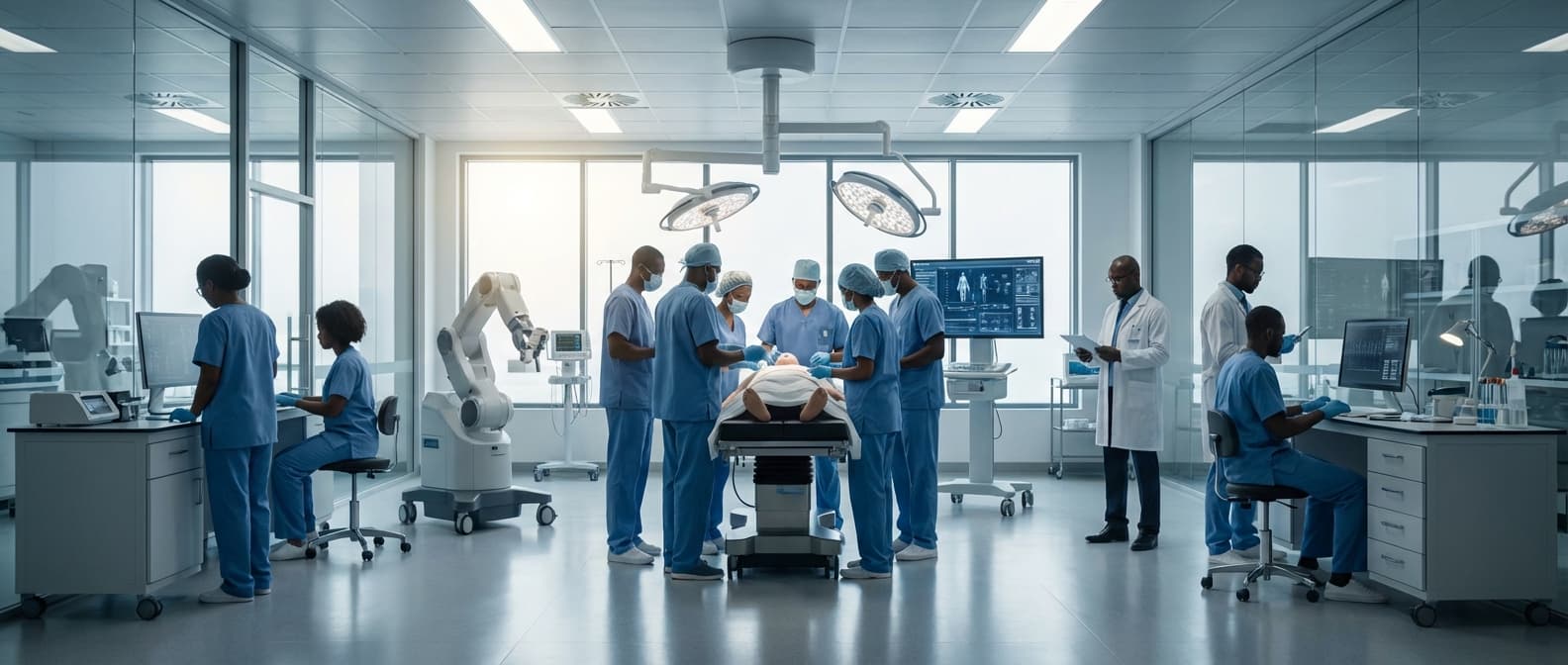
Managed Equipment Service (MES) in Guinea
Engineering Excellence & Technical Support
Long‑term equipment provision with uptime SLAs and lifecycle management. High-standard technical execution following OEM protocols and local regulatory frameworks.
Optimized Equipment Uptime & Performance
Leveraging advanced remote monitoring and predictive maintenance strategies, our MES ensures Guinea's critical industrial equipment operates at peak efficiency, minimizing unplanned downtime and maximizing productivity.
Enhanced Safety & Compliance Assurance
Our comprehensive MES protocols include rigorous safety inspections, adherence to international standards, and proactive risk mitigation, safeguarding personnel and ensuring seamless regulatory compliance for your operations in Guinea.
Streamlined Inventory & Lifecycle Management
We provide end-to-end inventory control and strategic lifecycle management for all managed equipment, ensuring optimal spare parts availability, reduced obsolescence, and cost-effective deployment in Guinea's unique operational landscape.
What Is Managed Equipment Service (Mes) In Guinea?
Managed Equipment Service (MES) in Guinea refers to a comprehensive outsourcing model wherein a third-party provider assumes responsibility for the entire lifecycle management of specific critical equipment for an organization. This encompasses planning, procurement, installation, operation, maintenance, repair, upgrades, and eventual decommissioning of the designated assets. The service is typically structured around a Service Level Agreement (SLA) that defines performance metrics, uptime guarantees, response times, and reporting requirements. MES allows organizations to shift the burden of capital expenditure, operational complexity, and technical expertise associated with equipment management to specialized providers, enabling them to focus on their core business functions.
| Who Needs MES in Guinea? | Typical Use Cases | ||||||
|---|---|---|---|---|---|---|---|
| Healthcare Facilities: Hospitals, clinics, diagnostic centers requiring advanced medical imaging equipment (MRI, CT scanners), laboratory equipment, and surgical instrumentation. | Industrial Operations: Manufacturing plants, mining operations, and energy production facilities needing specialized machinery, process control systems, and heavy-duty equipment. | Telecommunications Providers: Companies requiring network infrastructure, base stations, transmission equipment, and data center hardware. | Research & Development Institutions: Universities and private labs needing high-precision scientific instruments, analytical equipment, and specialized testing apparatus. | Government Agencies & Public Sector: Organizations managing critical infrastructure, defense systems, or public service equipment requiring reliable and well-maintained assets. | Large Enterprises with Diverse Equipment Needs: Companies with a significant portfolio of specialized or mission-critical equipment across various departments. | Companies Seeking to Reduce Capital Expenditure (CAPEX) and Operational Expenditure (OPEX): Organizations looking to convert fixed assets into variable operating costs and leverage economies of scale from specialized providers. | Businesses Lacking In-House Technical Expertise or Capacity: Companies that do not have the internal resources or specialized skills to manage complex equipment effectively. |
| Medical Imaging & Diagnostics: Ensuring high availability of imaging equipment for patient care, minimizing downtime for critical diagnostic procedures. | Industrial Automation & Production Lines: Guaranteeing uninterrupted operation of manufacturing equipment to meet production targets and avoid costly delays. | Telecommunications Network Uptime: Maintaining consistent network performance and availability for subscribers, crucial for service providers. | Scientific Research & Analysis: Providing access to and maintaining sophisticated laboratory instruments for accurate and repeatable research outcomes. | Mining & Extraction Operations: Managing and servicing heavy-duty machinery in remote or challenging environments to ensure resource extraction efficiency. | Energy Infrastructure Maintenance: Ensuring the reliability and performance of power generation and transmission equipment. | Fleet Management for Specialized Vehicles: Outsourcing the maintenance and operation of a fleet of specialized vehicles (e.g., construction equipment, specialized transport). | IT Infrastructure & Data Centers: Managing servers, networking equipment, and cooling systems to ensure data availability and integrity. |
Key Components of Managed Equipment Service (MES) in Guinea
- Equipment Selection & Procurement: MES providers often assist in identifying, specifying, and procuring the most suitable equipment based on client needs, market analysis, and technological trends.
- Installation & Commissioning: Professional installation, configuration, and rigorous testing to ensure optimal performance and integration with existing infrastructure.
- Operations & Monitoring: Continuous operational oversight, performance monitoring, and proactive intervention to prevent failures and optimize utilization.
- Preventive & Corrective Maintenance: Scheduled preventive maintenance to minimize downtime, coupled with rapid-response corrective maintenance and repair services.
- Spare Parts Management: Maintaining an adequate inventory of critical spare parts to ensure timely repairs and minimize lead times.
- Technical Support & Expertise: Access to specialized technical expertise, troubleshooting, and problem-solving capabilities.
- Performance Reporting & Analytics: Regular reporting on equipment performance, uptime, maintenance activities, and cost analysis, enabling data-driven decision-making.
- Asset Lifecycle Management: Managing the entire lifespan of the equipment, including upgrades, replacements, and responsible decommissioning or disposal.
- Risk Management & Compliance: Ensuring equipment operates within regulatory compliance frameworks and managing associated risks.
Who Needs Managed Equipment Service (Mes) In Guinea?
Managed Equipment Service (MES) is a comprehensive solution designed to optimize the acquisition, maintenance, and management of medical equipment for healthcare providers. In Guinea, where healthcare infrastructure is developing and facing unique challenges, MES can be a transformative approach. It offers a way to ensure that medical facilities have access to reliable, up-to-date, and properly maintained equipment, ultimately improving patient care and operational efficiency. The primary beneficiaries of MES in Guinea are organizations that rely heavily on medical technology but may lack the in-house expertise, capital, or resources to manage it effectively.
| Target Customer Type | Key Departments Benefiting from MES | Specific Needs Addressed by MES |
|---|---|---|
| Public Hospitals and Healthcare Centers | Radiology, Cardiology, Surgery, Intensive Care Units (ICUs), Laboratories, Emergency Departments | Ensuring consistent availability of diagnostic imaging equipment (X-ray, CT, MRI), critical care devices (ventilators, monitors), surgical tools, and laboratory analyzers. Reduced downtime, improved diagnostic accuracy, and cost predictability. |
| Private Hospitals and Clinics | All clinical departments, including specialized units like ophthalmology, dentistry, physiotherapy, and diagnostics. | Access to advanced and modern equipment without significant upfront capital investment. Competitive advantage through superior technology. Streamlined procurement and lifecycle management of diverse equipment. |
| Non-Governmental Organizations (NGOs) in Healthcare | Mobile clinics, remote health posts, specialized treatment centers (e.g., for maternal health, infectious diseases). | Reliable and durable equipment for challenging environments. Logistics and maintenance support in areas with limited local infrastructure. Focus on core healthcare delivery rather than equipment management. |
| Medical Training and Research Institutions | Simulation labs, research facilities, teaching hospitals. | Access to state-of-the-art equipment for training future healthcare professionals and conducting cutting-edge research. Ensuring equipment is current for educational and research standards. Managing a diverse and evolving technology landscape. |
| Large-scale Health Projects | Projects focused on specific disease areas (e.g., malaria, tuberculosis, HIV/AIDS), or national health system strengthening initiatives. | Centralized management of equipment for multiple sites. Standardization of equipment for easier training and maintenance. Ensuring long-term sustainability and operational readiness of equipment funded by the project. |
Target Customers for Managed Equipment Service (MES) in Guinea
- Public Hospitals and Healthcare Centers
- Private Hospitals and Clinics
- Non-Governmental Organizations (NGOs) involved in healthcare delivery
- Medical Training and Research Institutions
- Large-scale health projects funded by international organizations
Managed Equipment Service (Mes) Process In Guinea
The Managed Equipment Service (MES) process in Guinea, while specific to the context of healthcare equipment provision and maintenance, generally follows a structured workflow from the initial inquiry to the full execution of the service. This workflow ensures that healthcare facilities in Guinea can access and maintain essential medical equipment reliably, contributing to improved patient care. The process typically involves several key stages, each with defined activities and responsibilities.
| Stage | Key Activities | Involved Parties | Typical Outcomes/Deliverables |
|---|---|---|---|
| Inquiry and Needs Assessment | Healthcare facility expresses interest in MES. Site visits and detailed assessment of existing equipment, infrastructure, and specific medical needs. Identification of required new equipment and services. | Healthcare Facility (Ministry of Health, Hospital Management), MES Provider | Needs assessment report, preliminary equipment list, identification of gaps. |
| Proposal Development and Negotiation | MES provider develops a comprehensive proposal outlining equipment specifications, service packages (installation, maintenance, training, consumables), financing options, timelines, and pricing. Negotiations on scope, terms, and conditions. | MES Provider, Healthcare Facility (Procurement Department, Technical Teams) | Formal proposal, negotiated pricing and terms, scope of work document. |
| Contracting and Agreement | Finalization of the MES contract, including legal review and signing. This contract details all aspects of the service, including SLAs (Service Level Agreements), payment schedules, responsibilities, and dispute resolution mechanisms. | MES Provider, Healthcare Facility Legal Department, Ministry of Health | Signed MES contract, payment milestones, operational commencement date. |
| Equipment Procurement and Installation | MES provider procures, imports, and installs the agreed-upon medical equipment according to international standards and local regulations. Site preparation and infrastructure checks are conducted. | MES Provider (Procurement, Logistics, Technical Teams), Customs and Regulatory Authorities | Installed and commissioned medical equipment, installation reports. |
| Training and Handover | Comprehensive training for healthcare facility staff (doctors, nurses, technicians) on the operation, basic maintenance, and safety procedures for the new equipment. Formal handover of equipment and associated documentation. | MES Provider (Training Specialists, Technical Engineers), Healthcare Facility Staff | Trained personnel, user manuals, training certificates, handover documentation. |
| Ongoing Maintenance and Support | Routine preventive maintenance, corrective maintenance (breakdowns), supply of spare parts and consumables, and remote/on-site technical support as per the SLA. Continuous monitoring of equipment performance. | MES Provider (Field Service Engineers, Technical Support Team), Healthcare Facility Clinical and Technical Staff | Functional equipment, minimized downtime, availability of spare parts and consumables, response to service requests. |
| Performance Monitoring and Reporting | Regular monitoring of key performance indicators (KPIs) such as equipment uptime, response times, maintenance costs, and user satisfaction. Periodic reporting to the healthcare facility and relevant authorities. | MES Provider, Healthcare Facility Management, Ministry of Health (potentially) | Performance reports, data analysis, identification of areas for improvement. |
| Equipment Upgrade and Replacement | Based on equipment lifecycle, technological advancements, and evolving healthcare needs, the MES provider and facility may agree on upgrades or replacements of equipment at the end of their service life or when technologically obsolete. This can be part of contract renewal or renegotiation. | MES Provider, Healthcare Facility Management, Ministry of Health | Updated equipment inventory, enhanced service delivery, contract amendments or new agreements. |
Managed Equipment Service (MES) Workflow in Guinea
- Inquiry and Needs Assessment
- Proposal Development and Negotiation
- Contracting and Agreement
- Equipment Procurement and Installation
- Training and Handover
- Ongoing Maintenance and Support
- Performance Monitoring and Reporting
- Equipment Upgrade and Replacement
Managed Equipment Service (Mes) Cost In Guinea
Managed Equipment Service (MES) costs in Guinea are influenced by a complex interplay of factors, making it challenging to provide a definitive price range without specific project details. MES involves outsourcing the management, maintenance, and sometimes the procurement of specialized equipment to a third-party provider. This can span various industries, including healthcare, mining, and telecommunications. The overall cost is highly dynamic and depends on the scope of services, equipment type, contract duration, and the provider's operational model within Guinea.
| Service Type/Equipment Category | Estimated Monthly Cost Range (GNF) | Notes |
|---|---|---|
| Basic Maintenance & Repair (e.g., IT equipment, small office machinery) | 1,500,000 - 5,000,000 GNF | Covers routine checks, minor repairs, and call-out fees. Excludes major component replacement. |
| Intermediate MES (e.g., standard medical devices like X-ray, laboratory equipment) | 5,000,000 - 25,000,000 GNF | Includes scheduled maintenance, on-site technical support, and some spare parts. Dependent on equipment complexity and uptime guarantees. |
| Advanced MES (e.g., heavy industrial machinery in mining, complex CT/MRI scanners) | 25,000,000 - 150,000,000+ GNF | Comprehensive service, including proactive maintenance, 24/7 support, significant spare parts inventory, and potential performance-based contracts. Highly variable based on specific equipment and operational demands. |
| Telecommunications Infrastructure MES (e.g., base stations, network equipment) | 10,000,000 - 80,000,000+ GNF | Depends on the number of sites, technology, and required uptime. May include remote monitoring and proactive fault detection. |
Key Pricing Factors for MES in Guinea:
- Scope of Services: This is the most significant driver. Does MES cover procurement, installation, routine maintenance, repairs, spare parts, consumables, training, and decommissioning? A comprehensive service package will naturally be more expensive than a basic maintenance agreement.
- Type and Quantity of Equipment: High-value, specialized, or complex equipment (e.g., advanced medical imaging machines, heavy-duty mining machinery) will incur higher costs due to their purchase price, maintenance requirements, and the need for highly skilled technicians. The sheer volume of equipment also impacts pricing.
- Contract Duration: Longer-term contracts often come with better per-unit pricing due to the provider's ability to amortize their investment and operational costs over a more extended period. Shorter, more flexible contracts may command a premium.
- Service Level Agreements (SLAs): The criticality of the equipment and the required uptime will dictate the SLAs. Guaranteed response times, availability of spare parts, and the speed of repairs directly influence the cost, as providers need to invest in more robust infrastructure and staffing to meet these demands.
- Geographic Location within Guinea: Accessibility of the equipment's location can impact logistical costs (transport, travel for technicians, accommodation). Remote or challenging terrains will likely incur higher charges.
- Provider's Expertise and Reputation: Established MES providers with a proven track record, a strong local presence, and specialized expertise often charge more due to the added value and reduced risk they offer to the client.
- Spare Parts and Consumables: The availability and cost of genuine spare parts and specialized consumables for the equipment are crucial. If these are difficult to source locally or are imported, they can significantly drive up costs.
- Technology and Innovation: If the MES contract includes incorporating newer technologies or upgrading equipment, this will be factored into the pricing.
- Risk Sharing and Guarantees: Contracts that include performance guarantees or risk-sharing models will have different pricing structures compared to straightforward service agreements.
- Local Regulatory and Import Duties: Any applicable taxes, duties, or import regulations for equipment and spare parts within Guinea will be considered in the overall cost.
- Currency Exchange Rates and Inflation: For any imported components or services, fluctuations in the Guinean Franc (GNF) against other currencies, as well as local inflation, will affect the final price.
- Training and Skill Development: If the MES provider is also responsible for training client staff on equipment operation and basic maintenance, this will be an additional cost component.
Affordable Managed Equipment Service (Mes) Options
Affordable Managed Equipment Service (MES) is crucial for businesses looking to optimize their IT infrastructure without breaking the bank. MES can significantly reduce operational costs, improve efficiency, and ensure optimal equipment performance. This involves understanding how to leverage value bundles and implementing effective cost-saving strategies.
| Value Bundle Type | Description | Potential Cost Savings |
|---|---|---|
| Hardware & Maintenance Bundle | Includes acquisition, installation, ongoing maintenance, and proactive monitoring of hardware (servers, networking gear, workstations). | Reduced procurement costs through bulk purchasing, lower repair expenses due to preventative maintenance, minimized downtime costs. |
| Software & Licensing Bundle | Covers software acquisition, deployment, updates, and license management. Can also include cloud-based services. | Economies of scale on software licenses, efficient license utilization, avoidance of compliance penalties. |
| Full-Service MES Package | A comprehensive offering encompassing hardware, software, networking, security, and IT support services under a single contract. | Streamlined IT operations, unified vendor management, improved IT staff efficiency, reduced overhead. |
| Usage-Based or Tiered MES | Pricing adjusts based on actual equipment usage or predefined service tiers, offering flexibility. | Pay only for what you use, better alignment of costs with business activity, avoids paying for idle capacity. |
Key Components of Affordable MES
- Value Bundles: These packages offer a pre-defined set of services and equipment at a bundled price, often providing greater value than purchasing individual components separately.
- Cost-Saving Strategies: Proactive approaches and smart procurement practices to minimize expenditure while maximizing return on investment.
- Scalability: The ability to adjust services and equipment as your business needs evolve, avoiding overspending on unnecessary resources.
- Predictable Budgeting: MES allows for more accurate forecasting of IT expenses, making financial planning easier.
- Expert Management: Outsourcing equipment management to specialists ensures efficient operation and maintenance, reducing the risk of costly downtime or errors.
- Lifecycle Management: Strategic planning for equipment acquisition, maintenance, and eventual replacement to maximize lifespan and minimize total cost of ownership.
Verified Providers In Guinea
In Guinea, ensuring access to reliable and qualified healthcare providers is paramount. Franance Health has established itself as a leading credentialing body, meticulously verifying medical professionals and institutions. This rigorous process guarantees that all Franance Health-certified providers meet the highest standards of expertise, ethical practice, and patient safety. Choosing a Franance Health verified provider means entrusting your well-being to individuals and facilities that have undergone comprehensive scrutiny, offering peace of mind and confidence in the quality of care received. Their commitment to excellence translates into better health outcomes and a more trustworthy healthcare landscape in Guinea.
| Credentialing Aspect | Franance Health Standard | Benefit to Patient |
|---|---|---|
| Medical Education & Training | Verified against recognized national and international standards. | Ensures practitioners possess the foundational knowledge and skills. |
| Clinical Experience | Thorough review of past performance and areas of specialization. | Guarantees practical experience in relevant medical fields. |
| Licensing & Registration | Confirmation of valid and current professional licenses. | Confirms legal authorization to practice medicine. |
| Professional Conduct | Assessment of adherence to ethical codes and disciplinary history. | Provides assurance of trustworthy and patient-centered care. |
| Institutional Accreditation (if applicable) | Verification of facility compliance with healthcare quality standards. | Ensures a safe and well-equipped healthcare environment. |
Why Franance Health Credentials Matter
- Uncompromising Quality Assurance: Franance Health's verification process involves thorough background checks, validation of qualifications, and assessment of clinical experience.
- Ethical Practice Commitment: Certified providers adhere to strict ethical guidelines, ensuring patient rights and confidential care are paramount.
- Enhanced Patient Safety: The credentialing process directly contributes to minimizing risks and ensuring patients receive safe and effective medical treatments.
- Trust and Transparency: Franance Health's certification provides a transparent mark of trust, empowering patients to make informed decisions about their healthcare.
- Continuous Professional Development: Verified providers often demonstrate a commitment to ongoing learning and staying abreast of the latest medical advancements.
Scope Of Work For Managed Equipment Service (Mes)
This document outlines the Scope of Work (SOW) for a Managed Equipment Service (MES) contract, detailing the technical deliverables and standard specifications required for the successful implementation and ongoing management of the client's equipment infrastructure. The MES will encompass the procurement, installation, maintenance, repair, replacement, and disposal of specified medical and/or non-medical equipment across the client's facilities. The objective is to ensure optimal equipment performance, patient safety, operational efficiency, and cost predictability.
| Category | Deliverable Description | Standard Specifications/Requirements | Key Performance Indicators (KPIs) |
|---|---|---|---|
| Equipment Inventory Management System (EIMS) | Establish and maintain a comprehensive, real-time inventory of all managed equipment. | Unique asset tagging for all equipment, detailed equipment specifications (manufacturer, model, serial number, location, purchase date, warranty status), maintenance history logging, and software platform compatibility. | 99.9% inventory accuracy, data updated within 24 hours of any change. |
| Preventive Maintenance (PM) Program | Develop and execute a proactive PM schedule for all managed equipment. | PM schedules based on manufacturer recommendations, regulatory requirements, and best practices. Standardized PM checklists, qualified technicians, and scheduled downtime coordination. | 95% of scheduled PMs completed on time, reduction in unexpected equipment failures by 15%. |
| Corrective Maintenance (CM) Procedures | Respond to and resolve equipment malfunctions and breakdowns efficiently. | Defined response times based on equipment criticality, diagnostic procedures, on-site repair capabilities, and escalation protocols. Use of OEM-approved parts and qualified technicians. | Average repair time (ART) for critical equipment < 4 hours, ART for non-critical equipment < 8 hours, 90% first-time fix rate. |
| Calibration and Testing Protocols | Ensure all measuring and diagnostic equipment is accurately calibrated and tested. | Adherence to national/international calibration standards (e.g., ISO 17025), documented calibration certificates, traceability to national standards, and regular re-calibration cycles. | 100% compliance with calibration schedules, 0% out-of-calibration incidents. |
| Equipment Lifecycle Management Plan | Strategize and manage the entire lifespan of equipment from procurement to disposal. | Proactive replacement planning based on age, performance, and total cost of ownership (TCO). Identification of end-of-life equipment, budget forecasting for replacements, and technology adoption strategies. | Reduction in average equipment age by X%, optimized replacement cycles based on TCO. |
| Performance Monitoring and Reporting | Continuously monitor equipment performance and provide regular reports to the client. | Real-time performance data collection, analysis of uptime, repair history, maintenance costs, and utilization rates. Customizable reporting formats and frequency (e.g., monthly, quarterly). | Timely delivery of all reports, actionable insights provided in reports, client satisfaction with reporting accuracy. |
| Risk Management and Safety Compliance | Ensure all managed equipment meets safety standards and regulatory requirements. | Compliance with relevant healthcare regulations (e.g., FDA, Joint Commission, local health authorities), patient safety protocols, equipment safety testing, and incident reporting procedures. | 0 reportable patient safety incidents related to equipment, 100% compliance with regulatory audits. |
| Training and Competency Assessment | Provide training to client staff on the safe and effective use of managed equipment. | Standardized training modules, competency assessments, documentation of training records, and ongoing education for new equipment or software updates. | All relevant staff trained within 30 days of equipment deployment, 95% staff competency rate. |
| Spare Parts and Consumables Management | Maintain an adequate stock of critical spare parts and consumables. | Inventory of critical spares, just-in-time (JIT) delivery mechanisms for non-critical parts, optimized inventory levels to minimize holding costs and prevent stockouts, approved vendor management. | 98% availability of critical spare parts, 0% stockouts impacting service delivery. |
| Disposal and Decommissioning Plan | Manage the environmentally responsible and secure disposal of obsolete or replaced equipment. | Compliance with environmental regulations for disposal (e.g., e-waste), secure data sanitization for devices with storage, documentation of disposal records, and asset deactivation in EIMS. | 100% compliance with disposal regulations, secure data destruction certificates provided. |
| Integration with Client's IT Systems | Seamless integration of MES data with relevant client IT systems. | API development or data exchange protocols for EMR/EHR integration, ADT (Admission, Discharge, Transfer) data synchronization, and financial system integration. | Successful data exchange with designated systems, no data integrity issues. |
| Service Level Agreement (SLA) Compliance | Adherence to all agreed-upon service levels. | Proactive monitoring of SLA metrics, regular review meetings with the client to discuss performance against SLAs, and implementation of corrective actions for any breaches. | 99.5% adherence to all defined SLAs. |
Key Technical Deliverables
- Equipment Inventory Management System (EIMS)
- Preventive Maintenance (PM) Program
- Corrective Maintenance (CM) Procedures
- Calibration and Testing Protocols
- Equipment Lifecycle Management Plan
- Performance Monitoring and Reporting
- Risk Management and Safety Compliance
- Training and Competency Assessment
- Spare Parts and Consumables Management
- Disposal and Decommissioning Plan
- Integration with Client's IT Systems (e.g., EMR/EHR)
- Service Level Agreement (SLA) Compliance
Service Level Agreement For Managed Equipment Service (Mes)
This Service Level Agreement (SLA) outlines the response times and uptime guarantees for the Managed Equipment Service (MES). It defines the expected performance standards and remedies in case of non-compliance. This SLA applies to all equipment managed under the MES contract, as detailed in Appendix A.
| Equipment Category | Incident Priority | Response Time Target (Minutes) | Resolution Time Target (Hours) | Uptime Guarantee (%) |
|---|---|---|---|---|
| Medical Imaging (MRI, CT) | Critical (Complete Outage) | |||
| Medical Imaging (MRI, CT) | High (Significant Degradation) | |||
| Laboratory Analyzers | Critical (Complete Outage) | |||
| Laboratory Analyzers | High (Significant Degradation) | |||
| Patient Monitoring Systems | Critical (Complete Outage) | |||
| Patient Monitoring Systems | High (Significant Degradation) | |||
| General Biomedical Equipment | Medium (Minor Issue) | |||
| General Biomedical Equipment | Low (Preventive Maintenance Related) |
Key Service Metrics
- Response Time: The maximum time allowed for a qualified technician to acknowledge and begin working on a reported incident.
- Resolution Time: The maximum time allowed to resolve a reported incident, returning the equipment to full operational status.
- Uptime Guarantee: The minimum percentage of time the managed equipment is expected to be fully operational and available for use.
Frequently Asked Questions

Ready when you are
Let's scope your Managed Equipment Service (MES) in Guinea project in Guinea.

Scaling healthcare logistics and technical systems across the entire continent.