
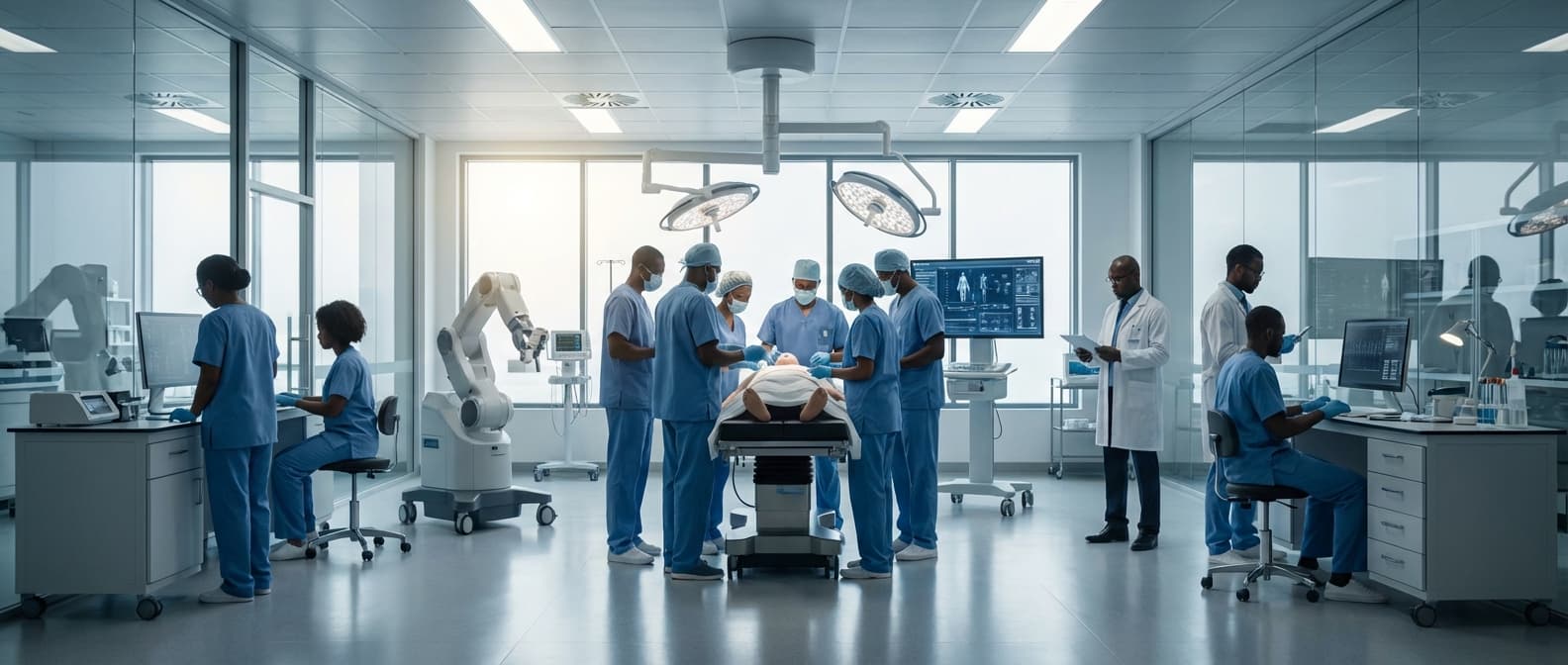
Biomedical Engineering Consulting in Guinea
Engineering Excellence & Technical Support
Equipment selection, procurement and implementation consulting High-standard technical execution following OEM protocols and local regulatory frameworks.
Optimizing Medical Device Sterilization Protocols
Leveraging advanced materials science and process engineering expertise, we design and validate robust sterilization protocols for critical medical devices, ensuring compliance with international standards (e.g., ISO 13485) and enhancing patient safety within Guinea's healthcare facilities.
Developing Accessible Diagnostic Infrastructure
We engineer cost-effective and sustainable solutions for diagnostic equipment deployment and maintenance, focusing on robust designs suitable for varied environmental conditions and limited resource settings. This includes training local technicians for long-term operational autonomy.
Biomaterial Selection for Tropical Disease Interventions
Our consulting team provides expert guidance on selecting biocompatible and durable materials for the development of medical products specifically tailored to address prevalent tropical diseases in Guinea, considering factors like local climate, pathogen resistance, and affordability.
What Is Biomedical Engineering Consulting In Guinea?
Biomedical Engineering Consulting in Guinea refers to the provision of specialized expertise and advisory services by qualified biomedical engineers to organizations and individuals within the Republic of Guinea. This service bridges the gap between advanced medical technology and its practical application, maintenance, and strategic integration within the healthcare ecosystem. It encompasses a broad spectrum of technical and managerial activities aimed at optimizing the use of medical devices, improving healthcare infrastructure, ensuring regulatory compliance, and facilitating innovation. Consultants leverage their in-depth knowledge of engineering principles, medical device technology, clinical workflows, and relevant regulatory frameworks to address complex challenges faced by healthcare providers, manufacturers, and government bodies.
| Who Needs Biomedical Engineering Consulting? | Typical Use Cases |
|---|---|
| Hospitals and Clinics (Public & Private): Facing challenges with aging equipment, limited technical expertise for maintenance, or planning for upgrades and expansion. | Developing a comprehensive preventive maintenance plan for the entire hospital's medical device inventory. Assessing the suitability of proposed imaging equipment for a new diagnostic wing. Implementing a system for tracking and managing medical equipment lifecycle. Ensuring compliance with national medical device regulations for imported equipment. |
| Government Health Ministries and Agencies: Responsible for national health policy, procurement, and regulatory oversight of medical technology. | Developing national guidelines for medical device procurement and maintenance. Establishing a framework for medical device registration and post-market surveillance. Advising on the implementation of a national biomedical engineering workforce development strategy. Assessing the safety and efficacy of new medical technologies proposed for public health programs. |
| Medical Device Manufacturers and Distributors: Seeking to enter or expand their presence in the Guinean market, requiring local expertise for regulatory affairs, distribution, and after-sales support. | Navigating the Guinean medical device registration process. Establishing a compliant distribution network and after-sales service infrastructure. Providing technical training to local partners and end-users. Conducting market feasibility studies for new product introductions. |
| Non-Governmental Organizations (NGOs) and International Aid Organizations: Implementing health projects and requiring technical support for the selection, installation, and maintenance of medical equipment in remote or resource-limited settings. | Setting up and equipping rural health centers with appropriate medical technologies. Developing sustainable maintenance models for equipment in challenging environments. Training local health workers on the basic operation and troubleshooting of essential medical devices. Ensuring the safety and efficacy of donated medical equipment. |
| Research Institutions and Universities: Involved in healthcare research and development, requiring expertise in specialized medical equipment and its application. | Advising on the acquisition and integration of advanced research instrumentation. Providing technical support for experimental setups involving medical devices. Ensuring the calibration and maintenance of equipment used in clinical trials. |
| Insurance Companies: Assessing the value and operational status of medical equipment for insurance purposes or claims. | Conducting valuations of medical equipment for insurance policies. Investigating equipment failures for insurance claim assessments. Advising on the cost-effectiveness of repairing versus replacing damaged medical devices. |
Key Aspects of Biomedical Engineering Consulting in Guinea
- Technical Assessment and Evaluation: Analyzing the performance, suitability, and condition of existing medical equipment.
- Procurement and Acquisition Support: Assisting in the selection, specification, and procurement of new medical technologies, ensuring alignment with clinical needs and budgetary constraints.
- Installation, Commissioning, and Calibration: Overseeing the proper installation, operational verification, and calibration of medical devices to ensure accuracy and safety.
- Maintenance and Repair Strategy Development: Creating robust preventive maintenance programs, advising on in-house repair capabilities versus outsourcing, and managing service contracts.
- Regulatory Compliance and Quality Assurance: Guiding clients through national and international regulatory requirements pertaining to medical devices, including registration, import/export, and quality management systems.
- Infrastructure Planning and Development: Contributing to the design and planning of healthcare facilities, including medical gas systems, clean rooms, and biomedical workshops.
- Technology Adoption and Integration: Advising on the integration of new medical technologies into existing clinical workflows and IT systems.
- Training and Capacity Building: Developing and delivering training programs for clinical staff and biomedical technicians on the operation, maintenance, and safety of medical equipment.
- Risk Management and Patient Safety: Identifying potential risks associated with medical technology and implementing strategies to mitigate them, thereby enhancing patient safety.
- Feasibility Studies and Business Case Development: Conducting analyses for new medical technology ventures or expansions.
- End-of-Life Management and Decommissioning: Planning for the safe and environmentally responsible disposal or recycling of obsolete medical equipment.
Who Needs Biomedical Engineering Consulting In Guinea?
Biomedical engineering consulting services are crucial for advancing healthcare infrastructure, improving medical device accessibility and maintenance, and ensuring regulatory compliance in Guinea. These services cater to a diverse range of stakeholders within the nation's healthcare ecosystem, from public health initiatives to private medical facilities and educational institutions. The objective is to bridge existing gaps in technical expertise and resources, ultimately leading to better patient care and a more robust healthcare system.
| Target Customer | Key Departments/Functions Involved | Specific Needs and Benefits of Consulting |
|---|---|---|
| Government Ministries and Agencies (e.g., Ministry of Health, Ministry of Higher Education) | Planning & Procurement, Technical Services, Regulatory Affairs, Training & Development | Developing national health technology strategies, optimizing medical equipment procurement, establishing robust maintenance frameworks, ensuring compliance with international medical device regulations, developing training programs for biomedical technicians. |
| Public Hospitals and Healthcare Centers (National, Regional, and District) | Biomedical Engineering Department (if existing), Hospital Administration, Procurement, Clinical Departments (Surgery, Radiology, etc.), IT Department | Needs assessment for medical equipment, equipment lifecycle management, preventive maintenance planning, repair and calibration services, infrastructure assessment (power, water for medical facilities), staff training on equipment usage and basic maintenance, selection and procurement of appropriate medical technologies. |
| Private Hospitals and Clinics | Hospital Management, Technical Services, Procurement, Clinical Staff | Ensuring high-quality patient care through reliable equipment, optimizing equipment investment, implementing quality control measures, upgrading existing facilities, advice on adopting new medical technologies, compliance with local health standards. |
| Medical Device Manufacturers and Distributors (Local and International) | Sales and Marketing, Technical Support, Regulatory Affairs, Training Departments | Navigating local regulatory requirements for device registration and import, market analysis and entry strategies, establishing local service and support networks, training local technicians and end-users, ensuring post-market surveillance compliance. |
| Non-Governmental Organizations (NGOs) and International Aid Organizations | Program Management, Procurement, Logistics, Technical Support Units | Effective deployment and management of donated medical equipment, needs assessments for health projects, establishing sustainable maintenance solutions in remote areas, training local healthcare providers, ensuring the appropriateness and safety of medical technologies in project settings. |
| Academic and Research Institutions (Universities, Medical Schools) | Engineering Departments, Biomedical Science Departments, Research Labs, Teaching Hospitals | Developing biomedical engineering curricula, setting up and maintaining laboratory equipment, advising on research infrastructure, facilitating collaborations with industry, training future biomedical engineers and technicians. |
| Pharmaceutical Companies | Quality Assurance, Medical Affairs, Technical Operations | Ensuring the proper storage and handling of temperature-sensitive pharmaceuticals through appropriate equipment (e.g., refrigerators, cold chain monitoring), advising on the technical aspects of drug delivery devices or diagnostic tools integrated with pharmaceuticals. |
Target Customers and Departments for Biomedical Engineering Consulting in Guinea
- Government Ministries and Agencies
- Public Hospitals and Healthcare Centers
- Private Hospitals and Clinics
- Medical Device Manufacturers and Distributors
- Non-Governmental Organizations (NGOs) and International Aid Organizations
- Academic and Research Institutions
- Pharmaceutical Companies
Biomedical Engineering Consulting Process In Guinea
Biomedical engineering consulting in Guinea involves a structured workflow to address the unique needs of healthcare institutions and innovators. This process ensures that projects are well-defined, technically sound, ethically compliant, and aligned with local regulations and resources. It typically begins with an initial inquiry and progresses through a series of defined phases, from understanding the client's requirements to delivering the final solution. The process emphasizes collaboration, thorough assessment, and practical implementation within the Guinean context.
| Phase | Key Activities | Deliverables | Considerations in Guinea |
|---|---|---|---|
| Client contacts the consulting firm with a problem, need, or idea. Initial meeting to understand the broad scope and objectives. | Understanding of client's core issue. Preliminary identification of potential consulting areas. | Understanding the local healthcare landscape, existing infrastructure, and immediate needs. Language barriers and cultural nuances in communication. |
| In-depth discussion with stakeholders. Site visits to healthcare facilities (if applicable). Gathering detailed requirements and constraints. Defining project objectives, scope, and deliverables. | Detailed Needs Assessment Report. Clearly defined Project Scope Statement. List of specific project goals. | Assessing the availability and condition of existing medical equipment. Understanding local regulatory frameworks (e.g., Ministry of Health approvals). Evaluating local technical expertise and available skilled labor. |
| Developing a comprehensive proposal outlining the proposed solution. Including methodology, timeline, budget, and team composition. Negotiation of terms and conditions. Formalizing the agreement through a contract. | Detailed Project Proposal. Formal Consulting Agreement/Contract. | Ensuring the proposal is realistic regarding local costs of materials and services. Clarifying payment terms in local currency or agreed-upon foreign currency. Adherence to Guinean contract law. |
| Developing a detailed project plan. Identifying and allocating necessary resources (personnel, equipment, materials). Risk assessment and mitigation planning. Establishing communication protocols. | Detailed Project Management Plan. Resource Allocation Schedule. Risk Management Plan. | Logistics and procurement challenges (importing specialized equipment/parts). Identifying and vetting local suppliers. Planning for travel and accommodation for the consulting team. |
| Carrying out the planned activities. Procurement of materials and equipment. Design and development (if applicable). Installation and setup. Addressing unforeseen challenges. | Progress Reports. Implemented solutions/systems. Procured equipment and materials. | Navigating customs procedures for imported goods. Adapting designs and solutions to available local infrastructure and power reliability. Engaging local technicians for support. |
| Rigorous testing of the implemented solution. Ensuring it meets all defined specifications and performance standards. Validation against local clinical needs and patient safety standards. Training relevant personnel on the use and maintenance of new systems/equipment. | Test Reports. Validation Certificates. Training Materials. Competent trained staff. | Ensuring training materials are translated into local languages if necessary. Assessing the literacy levels of trainees. Demonstrating practical application in the specific clinical context. |
| Compiling all project documentation. Including design specifications, user manuals, maintenance guides, and reports. Formal handover of the completed project to the client. Ensuring the client has all necessary information and access. | Final Project Report. Comprehensive Documentation Package. Formal Project Sign-off. | Providing documentation in accessible formats. Ensuring clear ownership and responsibility transfer. |
| Providing ongoing support as per the agreement. Troubleshooting any issues that arise. Gathering feedback from the client. Conducting a post-project review to assess success and identify lessons learned. | Support Logs. Client Feedback Report. Post-Project Evaluation Report. | Establishing a clear and accessible channel for remote or on-site support. Understanding long-term sustainability of the implemented solution within the Guinean context. Building long-term relationships for future engagements. |
Biomedical Engineering Consulting Workflow in Guinea
- Inquiry and Initial Consultation
- Needs Assessment and Scope Definition
- Proposal Development and Agreement
- Project Planning and Resource Allocation
- Execution and Implementation
- Testing, Validation, and Training
- Documentation and Handover
- Post-Project Support and Evaluation
Biomedical Engineering Consulting Cost In Guinea
Biomedical Engineering consulting costs in Guinea are influenced by a variety of factors, leading to a broad range of pricing. These factors include the complexity and scope of the project, the expertise and experience of the consultant or firm, the duration of the engagement, and the specific services required. Smaller, less complex projects like basic equipment troubleshooting or minor process assessments might be more affordable, while larger-scale projects such as facility design, advanced technology integration, or comprehensive regulatory compliance strategies will command higher fees. The "local currency" in Guinea is the Guinean Franc (GNF). It's crucial for clients to obtain detailed proposals outlining the scope of work, deliverables, and associated costs to ensure transparency and avoid unexpected expenses. Travel, accommodation, and administrative overhead for consultants also contribute to the overall cost, especially for projects located in remote areas.
| Service Type | Estimated Range (GNF per hour) | Notes |
|---|---|---|
| Basic Troubleshooting & Minor Repairs | 150,000 - 300,000 | For experienced technicians or junior consultants. |
| Equipment Evaluation & Procurement Advice | 200,000 - 400,000 | Involves needs assessment and market research. |
| Standard Operating Procedure (SOP) Development | 250,000 - 500,000 | Can be project-based or hourly. |
| Project Management (Medium Scale) | 300,000 - 600,000 | For implementation of new equipment or small renovations. |
| Regulatory Compliance & Quality Assurance | 400,000 - 800,000 | Requires specialized knowledge and thorough documentation. |
| Facility Design & Planning (Large Scale) | 500,000 - 1,000,000+ | Often involves architectural and engineering integration. Project-based fees are common. |
| Senior Consultant/Expert Witness | 700,000 - 1,500,000+ | For highly specialized advice or legal cases. |
Key Pricing Factors for Biomedical Engineering Consulting in Guinea:
- Project Complexity and Scope
- Consultant Expertise and Experience Level
- Duration of Engagement
- Specific Services Required (e.g., design, procurement, training, compliance)
- Geographic Location of the Project within Guinea
- Travel, Accommodation, and Per Diem Expenses
- Administrative Overhead and Reporting Requirements
Affordable Biomedical Engineering Consulting Options
Biomedical engineering consulting can be a valuable asset for startups and established companies alike, offering expertise in areas like product development, regulatory affairs, clinical trials, and market analysis. However, the perception of high costs can be a barrier. This document outlines affordable biomedical engineering consulting options, focusing on value bundles and cost-saving strategies to make expert guidance accessible.
| Cost-Saving Strategy | Description | Implementation Example |
|---|---|---|
| Phased Engagement | Breaking down a large project into smaller, manageable phases with clear deliverables and payment milestones. This allows for ongoing assessment and adjustment, reducing the risk of overspending on unnecessary services. | Instead of a full product design, engage for a 'Feasibility Study' phase. If successful, proceed to a 'Prototype Design' phase, and so on. |
| Retainer Agreements | Establishing a fixed monthly fee for a set number of consulting hours or a defined scope of ongoing advisory services. This can offer cost savings over ad-hoc hourly rates and ensures consistent access to expertise. | A startup might secure a retainer for 10 hours per month of regulatory guidance to address evolving questions as they develop their device. |
| Leveraging Junior Consultants/Trainees | For less complex or more time-intensive tasks, engaging junior consultants or supervised trainees under the guidance of senior experts can significantly reduce hourly rates. | Utilizing a junior consultant for detailed literature reviews or initial data analysis under the supervision of a senior biomedical engineer. |
| Shared Services / Consortium Models | Pooling resources with other companies facing similar challenges to share the cost of specialized consulting services. This is particularly effective for niche regulatory areas or shared market research. | A group of early-stage medical device companies pooling funds to hire a consultant to conduct a collective analysis of a specific international regulatory landscape. |
| Project Scope Definition & Management | Clearly defining the project scope from the outset and rigorously managing any scope creep. Uncontrolled expansion of project scope is a major driver of cost overruns. | Establishing a detailed Statement of Work (SOW) and a formal change control process for any proposed additions or modifications to the project. |
| Remote Consulting / Virtual Teams | Utilizing video conferencing, collaborative online tools, and digital documentation to conduct consulting remotely. This eliminates travel costs and can expand the pool of available experts globally. | Engaging a consultant from a different geographical region who specializes in a specific area of expertise, conducting all meetings via Zoom and sharing documents via cloud storage. |
| Outcome-Based or Performance-Based Pricing | While less common, some consultants may offer pricing structures tied to specific project milestones or outcomes. This aligns the consultant's success with the client's success. | A consultant might receive a bonus upon successful FDA submission, in addition to their base fee. |
Understanding Value Bundles in Consulting
- {"title":"What are Value Bundles?","description":"Value bundles are pre-packaged service offerings designed to provide a comprehensive solution to a specific client need at a potentially reduced overall cost compared to procuring individual services. They are curated to deliver synergistic benefits and a more predictable outcome."}
- {"title":"Common Bundle Examples","description":"Bundles often combine related services. For instance, a 'Product Development Kickstart' bundle might include market research, initial concept feasibility, and preliminary design considerations. Another could be a 'Regulatory Pathway Navigator' that combines pre-submission strategy, documentation preparation, and submission guidance."}
- {"title":"Benefits of Bundles","description":"Clients benefit from a streamlined process, integrated expertise, clearer pricing, and often a discount over standalone services. Consultants gain efficiency by standardizing workflows and delivering integrated solutions."}
- {"title":"Customizable Bundles","description":"Reputable consulting firms often offer flexibility within bundles, allowing clients to tailor specific components to their unique project requirements. This ensures you're paying for what you need."}
Verified Providers In Guinea
In Guinea's evolving healthcare landscape, identifying trustworthy and skilled medical professionals is paramount for quality patient care. Franance Health has emerged as a leading platform dedicated to verifying and showcasing healthcare providers who meet stringent criteria. This commitment to credentialing ensures that patients can access reliable medical expertise. Franance Health's rigorous verification process sets them apart, making their listed providers the best choice for those seeking quality healthcare in Guinea.
| Provider Type | Franance Health Verification Benefits | Why They Are the Best Choice |
|---|---|---|
| Doctors (General & Specialists) | Confirms board certifications, surgical training, and areas of expertise. | Ensures access to highly qualified professionals with proven track records in specific medical fields. |
| Nurses (RNs, LPNs) | Validates nursing degrees, licenses, and specialized certifications (e.g., critical care, pediatrics). | Guarantees competent and compassionate nursing care, vital for patient recovery and well-being. |
| Pharmacists | Verifies pharmacy degrees, licenses, and knowledge of drug interactions and dispensing. | Ensures safe and accurate medication management, reducing risks of adverse drug events. |
| Therapists (Physical, Occupational, etc.) | Confirms credentials, licensure, and specialized training in rehabilitation therapies. | Provides access to skilled professionals dedicated to improving patient mobility and functional independence. |
| Diagnostic Technicians (Radiology, Lab) | Validates certifications, training in operating medical equipment, and adherence to safety protocols. | Ensures accurate and reliable diagnostic results, crucial for effective treatment planning. |
Key Aspects of Franance Health's Verification Process
- Thorough review of medical licenses and certifications.
- Verification of educational qualifications from accredited institutions.
- Assessment of professional experience and specialization.
- Background checks for ethical conduct and adherence to medical standards.
- Continuous monitoring of provider performance and patient feedback.
Scope Of Work For Biomedical Engineering Consulting
This document outlines the Scope of Work for Biomedical Engineering Consulting services, detailing technical deliverables and standard specifications. The consulting engagement will focus on [Specific Area of Biomedical Engineering, e.g., Medical Device Design and Development, Regulatory Compliance, Biocompatibility Testing, Clinical Trial Support, etc.]. The primary objective is to provide expert technical guidance and support to achieve [Client's Project Goals].
| Specification Standard | Description | Relevance to Deliverables |
|---|---|---|
| ISO 13485:2016 | Medical devices – Quality management systems – Requirements for regulatory purposes | Ensures quality management throughout the product lifecycle, impacting all deliverables requiring documented processes and traceability. |
| ISO 14971:2019 | Medical devices – Application of risk management to medical devices | Foundation for risk management files, hazard analyses, and mitigation strategies integrated into design and V&V. |
| IEC 62304:2006 (+A1:2015) | Medical device software – Software life cycle processes | Mandatory for software-driven medical devices; dictates software development, verification, and validation processes for SRS, SDS, and software V&V reports. |
| IEC 62366-1:2015 | Medical devices – Part 1: Application of usability engineering to medical devices | Ensures safe and effective use of medical devices; critical for usability engineering files and user interface design. |
| ISO 10993 (Series) | Biological evaluation of medical devices | Guides the assessment of biocompatibility; essential for biocompatibility assessment reports and material selection. |
| FDA 21 CFR Part 820 | Quality System Regulation | US regulatory requirement for QMS; influences documentation and process controls for all deliverables destined for the US market. |
| MDR (EU) 2017/745 | Medical Device Regulation (European Union) | Comprehensive EU regulatory framework; impacts technical file content, risk management, and clinical evaluation. |
| IEC 60601 (Series) | Medical electrical equipment | Safety and essential performance standards for electrical medical equipment; relevant for device design, testing, and V&V. |
| IEC 61010 (Series) | Safety requirements for electrical equipment for measurement, control, and laboratory use | Applicable for certain laboratory and measurement devices; influences design and safety testing. |
Technical Deliverables
- Design Documentation (e.g., schematics, CAD models, Bill of Materials)
- Risk Management Files (ISO 14971 compliant)
- Usability Engineering Files (IEC 62366 compliant)
- Verification and Validation (V&V) Protocols and Reports
- Biocompatibility Assessment Reports (ISO 10993 compliant)
- Software Requirements Specifications (SRS)
- Software Design Specifications (SDS)
- Software V&V Plans and Reports (IEC 62304 compliant)
- Manufacturing Process Flowcharts and Control Plans
- Technical Files / Design Dossiers for Regulatory Submissions
- Post-Market Surveillance (PMS) Plans and Reports
- User Manuals and Technical Service Manuals
- Intellectual Property Landscape Analysis Reports
Service Level Agreement For Biomedical Engineering Consulting
This Service Level Agreement (SLA) outlines the commitment of [Consulting Firm Name] (hereinafter referred to as "Consultant") to its clients (hereinafter referred to as "Client") regarding the provision of biomedical engineering consulting services. This SLA specifically addresses response times for support requests and uptime guarantees for any managed or hosted services directly related to the consulting engagement.
| Service Level | Description | Target Response Time | Uptime Guarantee |
|---|---|---|---|
| Critical Support | Issues impacting patient safety, critical medical device functionality, or project halt. | 1 Business Hour (initial acknowledgement) | 99.9% (for managed/hosted services) |
| High Priority Support | Significant functional impairment of a medical device or system, or major process disruption. | 4 Business Hours (initial acknowledgement) | 99.5% (for managed/hosted services) |
| Medium Priority Support | Minor functional issues, non-critical system errors, or requests for information impacting project progress. | 8 Business Hours (initial acknowledgement) | N/A (standard consulting response) |
| Low Priority Support | General inquiries, requests for documentation, or non-urgent consultation. | 2 Business Days (initial acknowledgement) | N/A (standard consulting response) |
Key Service Metrics
- This SLA is applicable for all active consulting projects and support contracts between Consultant and Client.
- Definitions of service levels and their corresponding response times are detailed below.
- Uptime guarantees are applicable to any cloud-hosted platforms, software, or data management systems provided or managed by the Consultant as part of the agreed-upon services.
- Exclusions for downtime include scheduled maintenance, force majeure events, and Client-caused issues.
- Penalties for failing to meet service levels are outlined in the 'Remedies' section of the full SLA document (not detailed here).
- This SLA is a contractual agreement and should be read in conjunction with the Master Service Agreement (MSA) between the parties.
Frequently Asked Questions

Ready when you are
Let's scope your Biomedical Engineering Consulting in Guinea project in Guinea.

Scaling healthcare logistics and technical systems across the entire continent.