
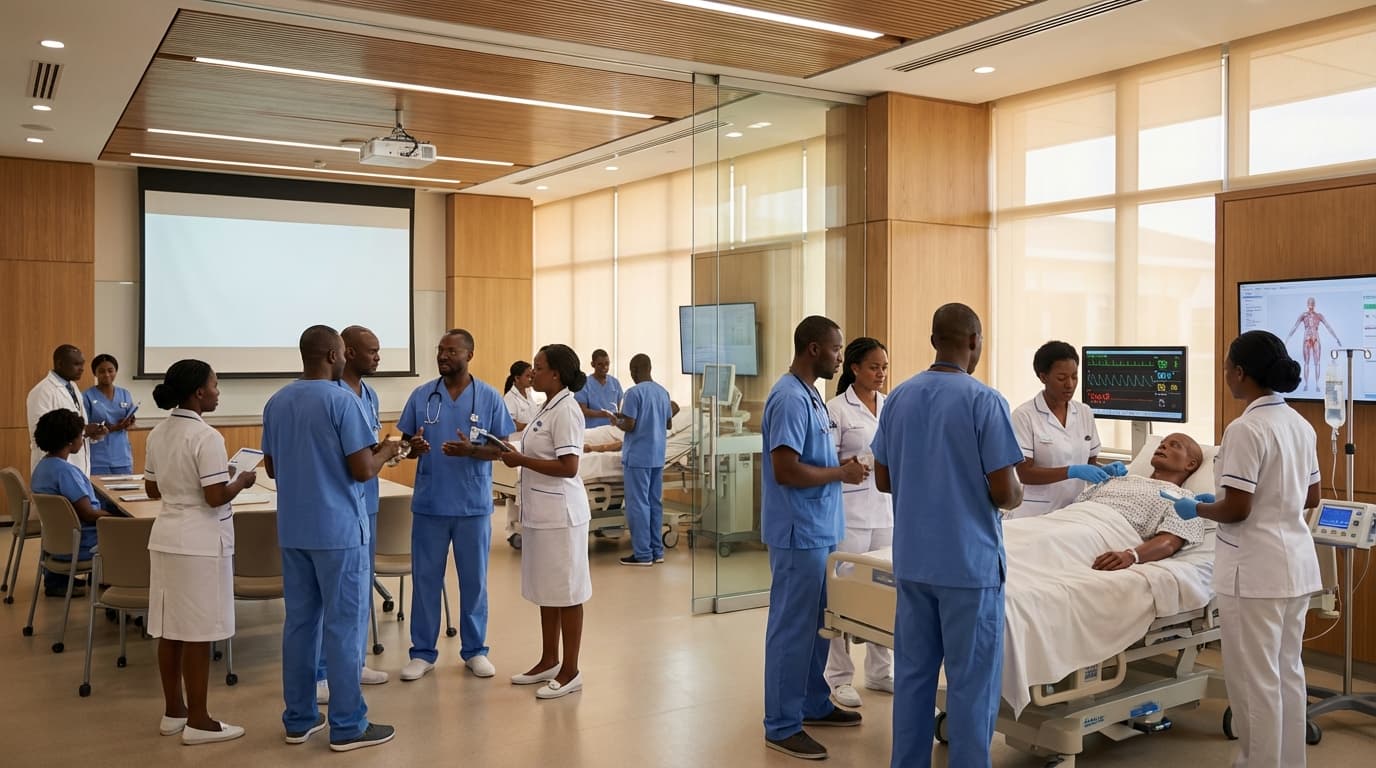
Equipment Training & Education in Guinea-Bissau
Engineering Excellence & Technical Support
Comprehensive equipment training and certification programs High-standard technical execution following OEM protocols and local regulatory frameworks.
Hands-on Technical Skill Development
Our training programs emphasize practical, hands-on experience with essential heavy machinery and specialized equipment. Trainees will develop proficiency in operation, maintenance, and troubleshooting, ensuring they are job-ready for critical infrastructure projects across Guinea-Bissau.
Advanced Diagnostics & Troubleshooting
Equip your workforce with the ability to identify and resolve complex equipment issues. Our curriculum incorporates modern diagnostic tools and methodologies, enabling faster, more effective repairs and minimizing costly downtime for vital agricultural, construction, and mining sectors.
Certified Competency & Safety Standards
Achieve internationally recognized certifications and adhere to stringent safety protocols. Our training ensures compliance with global best practices, empowering operators and technicians with validated skills and a deep understanding of safety procedures, reducing workplace incidents and enhancing operational efficiency.
What Is Equipment Training & Education In Guinea-bissau?
Equipment training and education in Guinea-Bissau refers to the systematic process of imparting knowledge, skills, and understanding related to the safe, efficient, and effective operation, maintenance, and troubleshooting of specific types of equipment. This service is crucial for enhancing workforce competency, ensuring operational longevity of assets, and mitigating risks associated with improper equipment handling.
| Target Audience | Training Needs | Typical Use Cases |
|---|---|---|
| Agricultural Workers: Farmers, farm managers, cooperative members. | Operation and basic maintenance of tractors, harvesters, irrigation systems, processing machinery (e.g., rice hullers, cashew processing units). | Enhancing crop yields, reducing post-harvest losses, improving efficiency in farming operations. |
| Healthcare Professionals: Doctors, nurses, technicians, biomedical engineers. | Safe operation, sterilization, basic troubleshooting, and preventative maintenance of medical devices (e.g., diagnostic equipment, surgical instruments, patient monitoring systems). | Ensuring accurate diagnostics, effective patient care, and extending the lifespan of critical medical infrastructure. |
| Industrial Operators & Technicians: Factory workers, maintenance staff, factory supervisors. | Operation and maintenance of manufacturing equipment, power generation units, construction machinery, and specialized industrial tools. | Optimizing production output, minimizing downtime, ensuring workplace safety in industrial settings. |
| IT Support Staff: System administrators, network technicians, help desk personnel. | Installation, configuration, maintenance, and troubleshooting of computer hardware, networking equipment, and peripheral devices. | Maintaining IT infrastructure stability, ensuring data security, and providing technical support to end-users. |
| Logistics & Transportation Personnel: Drivers, warehouse staff, fleet managers. | Operation and maintenance of vehicles (trucks, buses), material handling equipment (forklifts), and loading/unloading machinery. | Improving supply chain efficiency, reducing transportation costs, and ensuring the safe movement of goods. |
| Fishery & Aquaculture Technicians: Fishermen, aquaculture farm operators, processing plant workers. | Operation and maintenance of fishing gear, boat engines, processing equipment (e.g., freezing, packaging), and aquaculture systems. | Improving fishing efficiency, ensuring product quality, and enhancing sustainable aquaculture practices. |
Key Components of Equipment Training & Education
- Theoretical Instruction: Classroom-based learning covering principles of operation, technical specifications, safety protocols, regulatory compliance, and theoretical maintenance procedures.
- Practical Demonstration: Hands-on sessions where instructors exhibit correct operation, calibration, and routine maintenance tasks on actual equipment.
- Hands-on Practice: Supervised opportunities for trainees to perform operational and maintenance tasks, reinforcing learned skills under guidance.
- Troubleshooting and Diagnostics: Training focused on identifying common equipment malfunctions, diagnosing issues using diagnostic tools, and implementing corrective actions.
- Safety and Hazard Awareness: Comprehensive modules on identifying, assessing, and mitigating risks associated with equipment use, including personal protective equipment (PPE) and emergency procedures.
- Documentation and Record-Keeping: Training on proper use of equipment manuals, maintenance logs, and reporting mechanisms.
- Refresher Training and Continuous Professional Development: Periodic sessions to update skills, introduce new technologies, and address evolving operational requirements.
Who Needs Equipment Training & Education In Guinea-bissau?
In Guinea-Bissau, comprehensive equipment training and education are vital for a wide range of individuals and organizations to ensure safe, efficient, and productive use of machinery across various sectors. This training is not a luxury but a necessity for operational excellence, accident prevention, and skill development. The demand spans across government agencies, private businesses, non-governmental organizations, and vocational training institutions.
| Target Customer Group | Key Departments/Sectors Involved | Types of Equipment/Training Needs |
|---|---|---|
| Government | Ministry of Public Works, Ministry of Agriculture, Ministry of Defense, Ministry of Health | Construction machinery (bulldozers, excavators), agricultural machinery (tractors, harvesters), vehicles, medical equipment, water treatment plant machinery |
| Private Businesses | Construction companies, agricultural enterprises, logistics firms, manufacturing units, mining operations | Heavy machinery, specialized tools, forklifts, trucks, industrial machinery, safety equipment, maintenance and repair training |
| NGOs and Aid Agencies | Project implementation teams, logistics departments, field operations | Generators, water pumps, vehicles, medical equipment, communication devices, basic machinery for community projects |
| Educational Institutions | Technical and vocational schools, university engineering departments | Workshop equipment, laboratory instruments, diagnostic tools, curriculum development support |
| Individual Professionals | Machine operators, mechanics, technicians, foremen, supervisors | Specific equipment operation (e.g., crane operator, forklift operator), preventive maintenance, troubleshooting, safety certifications |
| Agricultural Sector | Farmers, farm managers, cooperative leaders | Tractor operation and maintenance, irrigation system operation, small-scale processing machinery, post-harvest handling equipment |
Target Customers and Departments for Equipment Training & Education in Guinea-Bissau
- Government Ministries and Agencies: Essential for maintaining and operating public infrastructure, agricultural machinery, and defense equipment.
- Private Sector Businesses: Crucial for industries relying on mechanical, construction, agricultural, and transport equipment.
- Non-Governmental Organizations (NGOs) and International Aid Agencies: For effective deployment and maintenance of equipment used in development projects, healthcare, and disaster relief.
- Vocational Training Centers and Technical Schools: To equip students with the skills needed for employment in industries that heavily utilize machinery.
- Individual Operators and Technicians: To enhance their professional skills, safety knowledge, and career advancement opportunities.
- Agricultural Cooperatives and Farmers' Associations: To improve the utilization and maintenance of farming equipment, boosting productivity.
- Logistics and Transportation Companies: For the safe and efficient operation of vehicles, cranes, and other material handling equipment.
- Construction and Infrastructure Development Companies: To ensure the proper and safe operation of heavy machinery on project sites.
- Health and Medical Institutions: For the operation and maintenance of specialized medical equipment.
Equipment Training & Education Process In Guinea-bissau
The equipment training and education process in Guinea-Bissau, from initial inquiry to successful execution, involves a structured workflow designed to ensure effective knowledge transfer and skill development for users of specialized equipment. This process typically begins with a clear identification of training needs and culminates in a comprehensive evaluation of the training's impact. It's crucial for organizations operating in Guinea-Bissau to adapt these general steps to their specific context, considering local languages, cultural nuances, and available resources.
| Stage | Description | Key Activities in Guinea-Bissau Context | Responsible Parties | Deliverables/Outcomes |
|---|---|---|---|---|
| Inquiry & Needs Assessment | Initial request for training and a thorough evaluation of the specific knowledge and skills required for operating particular equipment. | Identifying the target audience (e.g., technicians, operators, maintenance staff). Assessing current skill levels through interviews, pre-tests, or observation. Defining learning objectives specific to the equipment and its application in Guinea-Bissau's environment. Understanding language requirements (Portuguese, local dialects). | Client/Requester, Training Department/Provider, Subject Matter Experts (SMEs) | Detailed training needs report, defined learning objectives, list of participants. |
| Curriculum Development & Material Preparation | Designing the training program, content, and supporting educational materials tailored to the identified needs. | Developing training modules covering theoretical concepts, practical operation, safety procedures, troubleshooting, and maintenance. Creating visual aids (diagrams, charts), presentations, and hands-on exercises. Translating materials into Portuguese or relevant local languages. Incorporating case studies relevant to Guinea-Bissau's operational context. | Training Developers, SMEs, Technical Writers, Translators | Training curriculum, participant manuals, instructor guides, presentation slides, assessment tools. |
| Logistics & Scheduling | Planning and organizing all practical aspects of the training, including venue, equipment, and participant availability. | Identifying and securing a suitable training venue (on-site or off-site). Ensuring the availability and functionality of the actual equipment for hands-on practice. Coordinating participant schedules, considering work commitments and travel. Arranging for necessary tools, consumables, and safety equipment. Booking trainers and potentially accommodation/transport for them. | Training Coordinator, Logistics Team, Equipment Management | Confirmed training schedule, booked venue, ready training equipment, confirmed participant list, logistical arrangements. |
| Training Delivery & Execution | The actual delivery of the training program to the participants. | Conducting theoretical sessions using presentations and discussions. Facilitating hands-on practical sessions with the equipment, emphasizing safety. Providing real-time feedback and answering participant questions. Demonstrating best practices and troubleshooting techniques. Adapting delivery style to suit the learning pace and understanding of the participants. | Certified Trainers, SMEs, Participants | Completion of training sessions, acquired practical skills, enhanced theoretical knowledge. |
| Post-Training Support & Follow-up | Providing ongoing assistance and reinforcement after the formal training period to ensure sustained learning and application. | Offering a helpline or dedicated contact for technical queries. Scheduling follow-up visits or remote sessions to assess skill retention and address emerging challenges. Providing refresher training or advanced modules as needed. Sharing best practices and lessons learned among trained personnel. | Technical Support Team, Training Department, Mentors | Reduced errors, improved equipment performance, ongoing skill development, accessible support. |
| Evaluation & Feedback | Assessing the effectiveness of the training program and gathering feedback for continuous improvement. | Administering post-training assessments (practical tests, written exams) to measure knowledge and skill acquisition. Collecting feedback from participants and supervisors on the training's relevance, delivery, and impact. Analyzing feedback and assessment results to identify areas for improvement in future training programs. Reporting on training outcomes and ROI. | Training Department/Provider, Participants, Supervisors, Management | Training evaluation report, participant feedback summaries, recommendations for future training, documented impact on performance. |
Workflow Stages of Equipment Training & Education in Guinea-Bissau
- Inquiry & Needs Assessment
- Curriculum Development & Material Preparation
- Logistics & Scheduling
- Training Delivery & Execution
- Post-Training Support & Follow-up
- Evaluation & Feedback
Equipment Training & Education Cost In Guinea-bissau
Providing accurate and up-to-date pricing for equipment training and education in Guinea-Bissau can be challenging due to several factors. The economy is relatively small, and specialized training providers might be limited. However, we can outline the typical pricing factors and provide estimated ranges in the local currency, the West African CFA franc (XOF).
| Training Type/Scope | Estimated Range (XOF) |
|---|---|
| Basic Equipment Operation (e.g., simple tools, office equipment) | 15,000 - 40,000 XOF per person (half-day to full-day) |
| Intermediate Equipment Training (e.g., basic machinery, IT software) | 40,000 - 120,000 XOF per person (1-3 days) |
| Advanced/Specialized Equipment Training (e.g., industrial machinery, medical devices, complex IT systems) | 100,000 - 500,000+ XOF per person (multi-day to weeks, depending on complexity) |
| On-site Training (additional travel/logistics costs may apply) | Variable, often a daily or project-based fee for the instructor(s) + travel expenses. Can add 30-70% to the base training cost. |
| Custom Curriculum Development | Can range from 50,000 XOF to several hundred thousand XOF, depending on the scope and depth required. |
| Certification Fees (if applicable) | 20,000 - 100,000 XOF (often added to the training cost) |
Key Pricing Factors for Equipment Training & Education in Guinea-Bissau
- Type and Complexity of Equipment: Training on basic tools will be less expensive than on specialized industrial machinery, medical equipment, or advanced IT systems. The more complex the equipment, the higher the training cost.
- Duration of Training: Shorter, introductory sessions will naturally cost less than comprehensive, multi-day or multi-week courses. The depth of knowledge and skill acquisition required directly influences the duration and thus the price.
- Provider's Expertise and Reputation: Established training institutions or individual experts with a strong track record and specialized knowledge will command higher fees. Their experience in delivering effective training and certifications contributes to the overall value.
- Location of Training: Training conducted at the provider's facility might differ in price from on-site training at the client's location. On-site training may incur additional costs for travel, accommodation, and per diems for instructors, especially if it requires travel to remote areas within Guinea-Bissau.
- Customization and Curriculum Development: If the training requires a bespoke curriculum tailored to specific operational needs or equipment models not commonly covered, this will add to the cost due to the development effort involved.
- Materials and Resources: The provision of training manuals, practical exercises, simulation software, or access to actual equipment for hands-on practice will impact the final price. The quality and quantity of these resources are important.
- Certification: If the training leads to a recognized certification, this often adds a fee to cover the examination process, administrative costs, and the value of the certification itself.
- Group Size: Per-person costs might decrease for larger groups as fixed costs (like instructor fees and venue rental) are spread across more participants. However, very large groups might require additional instructors or smaller breakout sessions, which could increase overall costs.
- Travel and Logistics (for remote/on-site): For training conducted outside major urban centers, the costs associated with instructor travel, accommodation, and subsistence can significantly influence the total price. This is particularly relevant in Guinea-Bissau where infrastructure can be a challenge.
Affordable Equipment Training & Education Options
Investing in proper equipment training and education is crucial for ensuring safety, efficiency, and longevity of your machinery. Fortunately, there are numerous affordable options available, and by understanding value bundles and implementing cost-saving strategies, organizations can significantly reduce their training expenses while maximizing learning outcomes.
| Strategy | Description | Cost-Saving Benefit |
|---|---|---|
| Value Bundles | Combining multiple training modules or courses into a discounted package. This can include introductory courses, advanced modules, refresher sessions, and even certification. Often offered by training providers or manufacturers. | Reduced per-module cost, encourages comprehensive learning, predictable budgeting. |
| Volume Discounts | Negotiating lower per-person costs when training a larger group of employees from the same organization. | Significant savings for companies with many operators or maintenance staff. |
| Subscription Models | Access to a library of online courses or regular updates for a recurring fee. Ideal for continuous learning and staying current with new equipment or safety protocols. | Cost-effective for ongoing training needs, access to a wide range of content. |
| Leverage Free Resources | Utilizing readily available online content such as manufacturer manuals, safety guidelines, YouTube tutorials, and free webinars to supplement formal training. | Minimizes expenditure on foundational knowledge and basic operational understanding. |
| Train-the-Trainer Programs | Investing in a select group of employees to become internal trainers. They can then train other staff, reducing the need for external instructors for repetitive training. | Long-term cost reduction, tailored training content, increased internal expertise. |
| Blended Learning | Combining online learning (for theoretical aspects) with hands-on, in-person sessions (for practical skills). This optimizes resource allocation and can reduce travel costs. | Reduces instructor time and travel expenses, efficient use of training facilities. |
| Group Purchasing/Consortia | Collaborating with other organizations to collectively purchase training services, leveraging group buying power for better rates. | Access to potentially more expensive training at a significantly lower cost per participant. |
| Customized Training Packages | Working with providers to tailor training content to specific equipment and operational needs, avoiding unnecessary modules and focusing on essential skills. | Ensures training is relevant and efficient, avoiding wasted time and resources on irrelevant topics. |
Affordable Equipment Training & Education Options
- Online Courses and E-learning Modules
- Manufacturer-Provided Training
- Community College and Vocational School Programs
- Industry Association Workshops
- Train-the-Trainer Programs
- On-the-Job Training and Mentorship
- Free Resources and Webinars
Verified Providers In Guinea-bissau
In the pursuit of reliable healthcare, identifying verified providers in Guinea-Bissau is paramount. Franance Health stands out as a beacon of trust and quality, offering a comprehensive network of accredited healthcare professionals and facilities. Their rigorous credentialing process ensures that every provider associated with Franance Health meets the highest standards of medical expertise, ethical practice, and patient care. This dedication to verification translates into a safer and more effective healthcare experience for individuals seeking treatment and medical services in Guinea-Bissau. By choosing Franance Health, patients are not only accessing medical care but are investing in a system built on integrity, transparency, and a commitment to well-being.
| Credentialing Aspect | Franance Health's Approach | Benefit to Patients |
|---|---|---|
| Medical Licensing | Mandatory verification of all active and valid medical licenses with the relevant authorities in Guinea-Bissau and internationally. | Ensures practitioners are legally permitted to practice medicine and meet basic competency requirements. |
| Educational Background | Thorough review of medical degrees, diplomas, and postgraduate certifications from recognized institutions. | Confirms that providers possess the foundational knowledge and specialized training required for their practice. |
| Professional Experience | Evaluation of past work history, including clinical experience, hospital affiliations, and peer reviews where applicable. | Provides insight into the provider's practical skills and ability to manage diverse medical cases. |
| Ethical Conduct | Checks for any history of disciplinary actions, malpractice suits, or breaches of professional ethics. | Guarantees that providers adhere to a high moral and ethical standard in patient care. |
| Continuing Medical Education (CME) | Requirement for providers to demonstrate ongoing engagement in professional development and training. | Ensures providers stay updated with the latest medical advancements, techniques, and research. |
Why Franance Health Credentials Represent the Best Choice:
- Rigorous Verification Process: Franance Health employs a multi-faceted credentialing system that thoroughly vets all providers. This includes verifying medical licenses, educational qualifications, professional history, and adherence to ethical guidelines.
- Commitment to Quality: Their accreditation signifies a dedication to delivering high-quality medical services. Patients can be confident in the competence and skills of Franance Health-affiliated professionals.
- Enhanced Patient Safety: By ensuring all providers are verified, Franance Health significantly minimizes risks associated with unqualified practitioners, prioritizing patient safety above all else.
- Access to Expertise: Franance Health connects patients with a network of specialists and general practitioners who have been recognized for their knowledge and experience.
- Transparency and Trust: The clear and open nature of their credentialing process builds trust between patients and providers, fostering a more positive and reassuring healthcare journey.
- Improved Health Outcomes: The combination of qualified professionals and a commitment to best practices ultimately leads to better health outcomes for patients in Guinea-Bissau.
Scope Of Work For Equipment Training & Education
This Scope of Work (SOW) outlines the requirements for comprehensive training and educational services related to the operation, maintenance, and troubleshooting of newly acquired [Equipment Name/System]. The objective is to ensure that designated personnel achieve a proficient understanding of the equipment, enabling safe, efficient, and effective utilization, thereby maximizing its lifespan and performance. This SOW details the technical deliverables, standard specifications, and expected outcomes of the training program.
| Category | Specification/Requirement | Description | Acceptance Criteria |
|---|---|---|---|
| Training Program Design | Curriculum Customization | Training content tailored to specific equipment model(s) and end-user roles (e.g., operators, maintenance technicians). | Training curriculum reviewed and approved by the client prior to commencement. |
| Training Program Design | Training Methodology | Blended learning approach incorporating theoretical instruction, practical hands-on exercises, simulations, and case studies. | Demonstrated engagement and skill application by participants during practical sessions. |
| Training Delivery | Instructor Qualifications | Trainers must possess verifiable expertise and experience with the specific equipment, holding relevant industry certifications. | Resumes and certifications of proposed trainers provided for client review and approval. |
| Training Delivery | Training Environment | Training to be conducted at a designated client facility or a professional training center, equipped with the actual equipment or a functional equivalent. | Training environment to be free from distractions and conducive to learning. Equipment to be fully operational and calibrated. |
| Training Delivery | Training Duration & Schedule | Duration and schedule to be mutually agreed upon, accommodating operational needs. | Training to be completed within the agreed timeframe and scheduled periods. |
| Post-Training Support | Knowledge Assessment | Formal and informal assessments to gauge understanding and skill acquisition. | Minimum pass rate of [e.g., 80%] on written/practical assessments. |
| Post-Training Support | Refresher Training Availability | Option for scheduled refresher training sessions or on-demand support for a defined period post-initial training. | Availability of refresher training options and defined response times for support queries. |
| Documentation | Manual Clarity & Accuracy | All training materials to be clear, concise, accurate, and easy to understand. | Documentation to be free from grammatical errors and technical inaccuracies, verified by client subject matter experts. |
| Documentation | Format & Accessibility | Deliverables to be provided in agreed-upon formats (e.g., searchable PDFs, interactive e-learning modules). | All digital deliverables accessible on client's specified platforms or via secure download. |
| Safety & Compliance | Adherence to Safety Protocols | All training activities to strictly adhere to client's safety policies and relevant industry regulations. | No safety incidents reported during training sessions. Training plan to include safety modules. |
Technical Deliverables
- Customized Training Manuals/User Guides (Digital and/or Hardcopy)
- Operational Procedures & Best Practices Documentation
- Maintenance Schedules & Troubleshooting Guides
- Post-Training Assessment Reports (including knowledge retention scores)
- Certification of Training Completion for all participants
- On-site Equipment Operation Demonstrations
- Interactive Q&A Sessions with Certified Trainers
- Access to Online Training Resources (if applicable, e.g., videos, FAQs)
Service Level Agreement For Equipment Training & Education
This Service Level Agreement (SLA) outlines the commitment of [Your Company Name/Trainer Name] to the delivery of Equipment Training & Education services to [Client Company Name]. It defines the expected response times for support requests and uptime guarantees for delivered training materials and platforms.
| Service Component | Service Level Objective (SLO) | Measurement & Reporting |
|---|---|---|
| Support Request Response Times | Acknowledgement of all Support Requests within 4 business hours. Resolution or provision of a workaround within 24 business hours for standard inquiries. Critical issues impacting training delivery will be escalated and addressed with higher priority. | Support requests logged via [Ticketing System/Email Address/Phone Number]. Response times tracked by the ticketing system. Reporting provided monthly or upon request. |
| Training Platform Uptime Guarantee | 99.5% Uptime for the Training Platform during scheduled training hours. | Measured by [Monitoring Tool/Platform Provider]. Uptime reports will be generated monthly. Scheduled maintenance will be communicated at least 48 hours in advance and will not count towards Downtime. |
| Training Material Accessibility | All provided digital training materials will be accessible 24/7, barring planned maintenance or unforeseen technical issues beyond our control. | Accessibility monitored through [Internal checks/User feedback]. Issues will be addressed promptly, with a target resolution of 8 business hours for reported accessibility problems. |
Key Definitions
- Training Materials: Digital or physical resources provided as part of the training program (e.g., manuals, videos, presentations, online modules).
- Training Platform: Any online system or software used to deliver, manage, or host training content (e.g., Learning Management System - LMS, virtual classroom).
- Support Request: A formal communication from the Client to [Your Company Name/Trainer Name] seeking assistance with training materials, the training platform, or general inquiries related to the training.
- Response Time: The maximum time allowed for [Your Company Name/Trainer Name] to acknowledge and initiate action on a Support Request.
- Uptime: The percentage of time that the Training Platform is operational and accessible to the Client's users.
- Downtime: The percentage of time that the Training Platform is unavailable or inaccessible to the Client's users.
Frequently Asked Questions

Ready when you are
Let's scope your Equipment Training & Education in Guinea-Bissau project in Guinea-Bissau.

Scaling healthcare logistics and technical systems across the entire continent.