
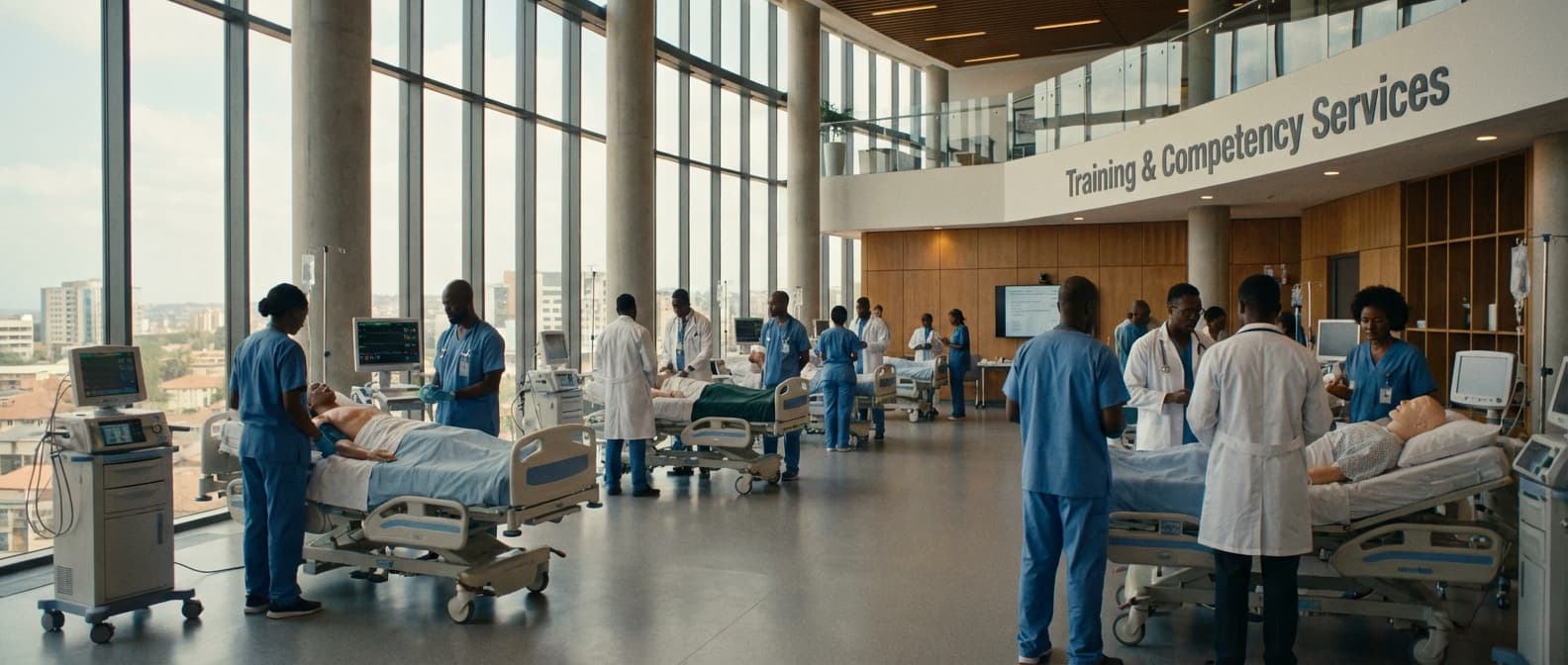
Ultrasound Application Training Service (Protocol-Based) in Guinea-Bissau
Engineering Excellence & Technical Support
Ultrasound Application Training Service (Protocol-Based) High-standard technical execution following OEM protocols and local regulatory frameworks.
Standardized Protocol Adherence
Our training emphasizes strict adherence to established ultrasound protocols for enhanced diagnostic accuracy and consistency, crucial for reliable patient care in Guinea-Bissau.
Culturally-Adapted Ultrasound Education
Leveraging local expertise and tailored teaching methods, our protocol-based training is designed to be highly effective and relevant for healthcare professionals practicing in the specific context of Guinea-Bissau.
Competency-Focused Ultrasound Skills
Our program focuses on developing practical, protocol-driven ultrasound skills, ensuring trainees can confidently perform and interpret scans to improve diagnostic outcomes for common conditions in Guinea-Bissau.
What Is Ultrasound Application Training Service (Protocol-based) In Guinea-bissau?
Ultrasound Application Training Service (Protocol-Based) in Guinea-Bissau refers to a specialized educational program designed to equip healthcare professionals with the skills and knowledge to effectively utilize diagnostic ultrasound imaging within the established clinical protocols prevalent in the country's healthcare system. This service focuses on practical application, adhering to standardized procedures for various examinations, ensuring consistency, accuracy, and optimal patient care in resource-constrained environments. It emphasizes hands-on competency development, troubleshooting, and interpretation of ultrasound findings in the context of common pathologies and diagnostic challenges encountered in Guinea-Bissau.
| Target Audience | Rationale for Need | Typical Use Cases in Guinea-Bissau |
|---|---|---|
| Medical Doctors (General Practitioners, Specialists) | To enhance diagnostic capabilities in primary and secondary healthcare facilities, reduce reliance on external referrals, and improve patient management. | Screening for pregnancy complications (e.g., pre-eclampsia, fetal growth restriction), diagnosing abdominal pain (e.g., appendicitis, cholecystitis), evaluating gynecological abnormalities (e.g., ovarian cysts, fibroids), initial cardiac assessments, and screening for pleural effusions or ascites. |
| Radiologists and Imaging Specialists | To standardize advanced ultrasound applications, refine interpretation skills, and train junior colleagues. | Advanced obstetric scans (e.g., anomaly scans), complex abdominal pathologies, interventional ultrasound guidance (e.g., biopsies, drainages), and specialized vascular examinations. |
| Nurses and Midwives (with advanced clinical roles) | To empower them with basic diagnostic ultrasound skills for point-of-care assessment and early detection of critical conditions. | Basic obstetric scans in remote areas, screening for urinary tract infections (e.g., hydronephrosis), and initial assessment of trauma. |
| Paramedical Staff and Technicians | To provide foundational knowledge for operating ultrasound equipment and assisting in examinations. | Assisting radiologists or doctors during scans, performing standardized preparatory steps, and basic equipment maintenance. |
Key Components of Ultrasound Application Training Service (Protocol-Based):
- Didactic lectures covering fundamental principles of ultrasound physics, machine operation, and safety.
- Protocol-driven scanning techniques for specific anatomical regions and clinical indications (e.g., obstetric, abdominal, gynecological, cardiac, vascular).
- Hands-on practical sessions with phantoms and, where ethically permissible and feasible, on human models or patients under expert supervision.
- Image optimization and artifact recognition training.
- Standardized image acquisition and documentation procedures.
- Interpretation of normal and abnormal ultrasound findings.
- Case study reviews and clinical correlation exercises.
- Familiarization with reporting templates and documentation requirements.
- Troubleshooting common equipment issues.
- Emphasis on cost-effective and sustainable ultrasound practice in the Guinean context.
Who Needs Ultrasound Application Training Service (Protocol-based) In Guinea-bissau?
This document outlines the critical need for specialized Ultrasound Application Training Services (Protocol-Based) in Guinea-Bissau. Such training is essential for healthcare professionals to accurately and effectively utilize ultrasound technology for diagnosis and patient management. The focus on protocol-based training ensures standardized, reproducible, and high-quality ultrasound examinations across various clinical settings.
| Department/Specialty | Specific Needs Addressed by Training | Typical User Roles |
|---|---|---|
| Radiology/Imaging Departments | General abdominal, gynecological, obstetric, pediatric, vascular, and superficial imaging protocols. Advanced applications like Doppler studies. Image optimization and interpretation. | Radiologists, Sonographers, Radiology Technicians |
| Obstetrics and Gynecology (OB/GYN) | Fetal biometry, anomaly scans, placental assessment, gynecological imaging (uterus, ovaries), early pregnancy assessment, and interventional ultrasound guidance. | Obstetricians, Gynecologists, Midwives |
| Pediatrics | Neonatal cranial ultrasound, abdominal and pelvic imaging in children, cardiac assessment, and musculoskeletal ultrasound in pediatric patients. | Pediatricians, Pediatric Radiologists, Pediatric Surgeons |
| Internal Medicine/General Practice | Basic abdominal ultrasound (e.g., gallbladder, kidneys), pleural effusions, and initial assessment of superficial lumps. Point-of-care ultrasound (POCUS) principles. | General Practitioners, Internists, Family Physicians |
| Emergency Medicine | FAST (Focused Assessment with Sonography for Trauma) scans, eFAST, basic cardiac assessment (e.g., pericardial effusion), and assessment of common acute conditions (e.g., DVT). | Emergency Physicians, Trauma Surgeons, Paramedics |
| Cardiology | Transthoracic echocardiography (TTE) protocols for assessing cardiac structure and function, valvular heart disease, and chamber dilation. Basic interpretation of cardiac views. | Cardiologists, Cardiac Sonographers |
| Surgery (General and Specialized) | Pre-operative assessment, intra-operative guidance (e.g., biopsies), post-operative monitoring, and assessment of complications (e.g., fluid collections, abscesses). | Surgeons (General, Orthopedic, Urology, etc.) |
| Anesthesiology | Nerve blocks and regional anesthesia guidance using ultrasound. Vascular access. | Anesthesiologists |
| Public Health and Outreach Programs | Basic obstetric ultrasound for antenatal care in remote areas, identification of common pathologies, and referral guidance. Training for community health workers on basic screening ultrasound. | Public Health Officers, Community Health Workers, Visiting Clinicians |
Target Customers and Departments for Ultrasound Application Training Service in Guinea-Bissau
- Hospitals (Public and Private)
- Health Centers and Clinics
- Diagnostic Imaging Centers
- Maternity and Obstetric Clinics
- Pediatric Centers
- Emergency and Trauma Units
- Remote and Underserved Areas requiring mobile ultrasound capabilities
Ultrasound Application Training Service (Protocol-based) Process In Guinea-bissau
This document outlines the workflow for providing Ultrasound Application Training Services (Protocol-Based) in Guinea-Bissau. The process begins with an inquiry from a client and culminates in the successful execution and follow-up of the training program.
| Phase | Key Activities | Responsible Parties | Deliverables/Outcomes | Timeline (Indicative) |
|---|---|---|---|---|
| Inquiry & Initial Consultation | Client contacts training provider with interest in ultrasound application training. Discusses general needs, target audience, and desired outcomes. Provider shares overview of services and initial information on protocol-based training. | Client, Training Provider | Initial understanding of client needs, preliminary service interest. | 1-3 Business Days |
| Needs Assessment & Proposal Development | Detailed discussion to understand specific ultrasound applications, current skill levels, available equipment, number of trainees, desired protocols, and logistical considerations (location, dates, language). Provider develops a tailored training proposal outlining scope, curriculum, methodology, trainers, duration, costs, and expected learning objectives. | Client, Training Provider | Detailed needs assessment report, comprehensive training proposal. | 3-7 Business Days |
| Agreement & Contract Finalization | Client reviews proposal and provides feedback. Negotiations may occur. Formal agreement/contract is drafted, signed by both parties, outlining terms, payment schedule, cancellation policy, and intellectual property rights. | Client, Training Provider | Signed Service Agreement/Contract. | 5-10 Business Days |
| Pre-Training Preparations | Provider confirms trainer availability and logistics (travel, accommodation). Curriculum is finalized based on agreed protocols. Training materials (presentations, handouts, case studies) are developed or adapted. Any necessary equipment or simulation devices are sourced. Client confirms trainee list, schedules, and venue readiness. Pre-training assessments may be distributed. | Training Provider, Client | Confirmed trainers and logistics, finalized curriculum and materials, ready training venue, pre-training assessment results (if applicable). | 2-4 Weeks prior to training |
| Training Execution | Delivery of theoretical lectures, practical demonstrations, hands-on scanning sessions using ultrasound equipment and patient simulators or consenting patients (adhering to ethical guidelines and local regulations). Focus on agreed-upon protocols and case-based learning. Q&A sessions and interactive exercises. | Training Provider (Trainers), Client (Trainees) | Completed training sessions, observed practical skills, engagement with learning materials. | Duration as per contract (e.g., 1-5 Days per module) |
| Post-Training Evaluation & Support | Conducts post-training assessments (theoretical and practical) to measure learning outcomes. Gathers feedback from trainees and client via evaluation forms. Provides immediate post-training support and answers to any lingering questions. May offer follow-up consultations or remote support. | Training Provider, Client | Post-training assessment results, completed evaluation forms, trainee feedback summary, immediate support provided. | Immediately after training, ongoing for a defined period |
| Reporting & Documentation | Provider prepares a comprehensive training report detailing the training activities, participants, learning achievements, assessment results, feedback summary, and any recommendations for future training or practice. This report is submitted to the client. | Training Provider | Final Training Report, Certificate of Completion for trainees. | 1-2 Weeks after training completion |
Ultrasound Application Training Service (Protocol-Based) Workflow in Guinea-Bissau
- Inquiry & Initial Consultation
- Needs Assessment & Proposal Development
- Agreement & Contract Finalization
- Pre-Training Preparations
- Training Execution
- Post-Training Evaluation & Support
- Reporting & Documentation
Ultrasound Application Training Service (Protocol-based) Cost In Guinea-bissau
Providing ultrasound application training services in Guinea-Bissau, especially those that are protocol-based, involves several cost factors that influence the final price. These factors range from the trainer's expertise and the duration of the training to the location of the training and the specific ultrasound applications covered. As Guinea-Bissau is a developing country, costs can be influenced by logistical challenges, local market rates, and the availability of specialized trainers.
| Training Scope/Type | Estimated Price Range (XOF) | Notes |
|---|---|---|
| Basic Ultrasound Principles & Operation (e.g., 1-2 days workshop) | 100,000 - 300,000 | Covers fundamental concepts, machine controls, and basic image acquisition. May be delivered by experienced local technicians or general practitioners. |
| Protocol-Based General Abdominal Ultrasound Training (e.g., 3-5 days) | 250,000 - 750,000 | Focuses on standardized protocols for examining abdominal organs. Typically requires an experienced sonographer or radiologist. May include supervised practical sessions. |
| Protocol-Based Obstetric Ultrasound Training (e.g., 5-7 days) | 400,000 - 1,200,000 | Covers standard obstetric scanning protocols (dating, anomaly scans, growth monitoring). Requires specialized trainers with OB/GYN ultrasound expertise. High demand application. |
| Specialized Application Training (e.g., Echocardiography, Small Parts, Doppler - 3-5 days) | 350,000 - 1,000,000+ | Advanced techniques. Cost varies significantly based on the complexity and scarcity of the trainer. Might include specialized simulation or advanced theoretical components. |
| On-site Institutional Training (per day rate for trainer) | 75,000 - 250,000+ | This is a daily rate for the trainer's service. Actual total cost will depend on the number of days, number of participants, and any travel/accommodation expenses. |
| Individual Mentorship/Advanced Sessions (per hour) | 20,000 - 75,000+ | For highly specific skill refinement or complex case discussions. Typically offered by senior specialists. |
Key Pricing Factors for Ultrasound Application Training in Guinea-Bissau
- Trainer's Expertise and Credentials: Highly experienced sonographers, radiologists, or physicians with specialized knowledge in specific ultrasound applications (e.g., obstetrics, cardiology, abdominal) will command higher fees.
- Training Duration and Intensity: Longer training programs and those with more hands-on practice sessions will naturally be more expensive than shorter, theoretical-only workshops.
- Specific Ultrasound Applications: Training in more complex or niche ultrasound areas often requires specialized equipment and highly skilled instructors, leading to higher costs.
- Number of Participants: Group training is typically more cost-effective per participant than individual one-on-one sessions.
- Location and Logistics: Training conducted in remote areas or requiring extensive travel for the trainer will incur additional travel, accommodation, and per diem expenses.
- Training Venue and Equipment: If the training is held at a facility requiring rental, or if specialized ultrasound equipment needs to be provided or rented for the training, these costs will be factored in.
- Protocol-Based vs. General Training: Protocol-based training, which often involves standardized procedures and evaluation metrics, might require more structured curriculum development and potentially specialized software or documentation, influencing the cost.
- Curriculum Development and Customization: If the training requires significant customization of the curriculum to meet the specific needs of an institution or group, this adds to the development cost.
- Certification and Assessment: Inclusion of formal assessments, examinations, and the provision of certificates can add to the overall training cost.
- Language of Instruction: While Portuguese is the official language, if training needs to be conducted in other local dialects or requires translation services, this can increase expenses.
- Local Economic Conditions and Currency Exchange Rates: Fluctuations in the Guinean Franc (XOF) and general economic stability can impact the cost of services and supplies.
Affordable Ultrasound Application Training Service (Protocol-based) Options
This service provides comprehensive ultrasound application training designed to be affordable and protocol-based. We offer flexible options to suit various learning needs and budgets, focusing on practical skill development and adherence to established imaging protocols. Our approach emphasizes efficiency and effectiveness, ensuring trainees gain proficiency quickly and confidently. We understand that cost is a significant factor, so we've developed value bundles and cost-saving strategies to make high-quality ultrasound education accessible.
| Training Package | Description | Estimated Savings (%) | Ideal For | |
|---|---|---|---|---|
| Abdominal Essentials Bundle | Covers standard abdominal ultrasound protocols, including liver, gallbladder, kidneys, and pancreas. Includes on-demand video lectures and case studies. | 15-20% | Entry-level sonographers, medical students, allied health professionals. | |
| OB/GYN Foundations Package | Includes modules on early pregnancy, fetal biometry, and basic gynecological imaging. Features protocol checklists and simulation exercises. | 18-23% | New OB/GYN sonographers, residents, nurses. | |
| Vascular Introductory Course | Focuses on carotid, peripheral venous, and arterial Doppler principles and protocols. Comes with simulated patient scenarios. | 10-15% | Sonographers expanding into vascular, general radiologists. | 25% |
| Comprehensive Core Bundle | Combines Abdominal Essentials, OB/GYN Foundations, and Vascular Introductory Course at a significant discount. Ideal for multi-skilled sonographers. | 25-30% | Sonographers aiming for broad skillsets, imaging departments. | |
| Simulator Practice Pack (10 Hours) | Pre-purchased blocks of simulator time for hands-on practice. Can be added to any training package. | 20% | All trainees seeking enhanced practical experience. | |
| Institutional Starter Pack | Includes 5 licenses for a chosen core bundle and 10 hours of simulator time, with a dedicated account manager. | Negotiable (based on volume) | Clinics, small hospitals, educational institutions. |
Value Bundles and Cost-Saving Strategies
- Core Application Bundles: Grouped training modules for specific ultrasound specialties (e.g., Abdominal, OB/GYN, Small Parts, Vascular). Purchasing a bundle offers a discounted rate compared to individual module enrollment.
- Introductory Special: A discounted package for new trainees, covering fundamental ultrasound principles and basic probe handling, ideal for those starting their ultrasound journey.
- Team/Group Discounts: Reduced per-person costs for organizations or groups enrolling multiple trainees. The more individuals enrolled, the greater the per-person savings.
- Early Bird Registration: Significant discounts for trainees who register and pay well in advance of the training commencement date.
- Bundle & Save: Combine a core application bundle with advanced modules or simulator time for an additional tiered discount.
- Referral Program: Existing trainees can earn discounts on future training by referring new participants.
- On-Demand Access Extensions: While standard access is included, purchasing extended on-demand access at a reduced rate offers flexibility for learners who require more time to review materials.
- Simulator Time Packages: Pre-purchasing blocks of simulator time at a lower per-hour rate than ad-hoc bookings.
- Protocol Resource Library Access: Access to our curated digital library of ultrasound protocols can be bundled with training for a nominal fee, providing ongoing reference material.
- Payment Plans: Flexible payment options, including installment plans, to spread the cost of training over manageable periods.
- Customizable Training Paths: While bundles offer pre-set value, we can work with institutions to create customized training curricula that align with specific needs and budgets, often resulting in cost efficiencies.
- Refresher Courses: Discounted rates for past trainees seeking to refresh their skills or learn new applications.
Verified Providers In Guinea-bissau
In Guinea-Bissau, ensuring you are accessing healthcare services from verified providers is paramount for your safety and well-being. Franance Health stands out as a leading organization committed to upholding the highest standards of medical care and patient safety. Their rigorous credentialing process and dedication to quality make them the premier choice for healthcare services in the region.
| Criterion | Franance Health's Approach | Benefit to Patients |
|---|---|---|
| Provider Qualification | Thorough verification of medical licenses, certifications, and educational backgrounds. | Ensures access to competent and formally trained medical professionals. |
| Clinical Experience | Assessment of practical experience and proven track record in specific medical fields. | Increases the likelihood of receiving effective and appropriate treatment. |
| Adherence to Ethics | Mandatory commitment to patient rights, confidentiality, and ethical medical conduct. | Guarantees respectful and trustworthy patient care. |
| Quality of Care | Encouragement of continuous learning and adoption of evidence-based medical practices. | Promotes access to modern and effective healthcare solutions. |
| Patient Safety | Ongoing monitoring and feedback mechanisms to ensure high safety standards. | Minimizes risks and promotes a secure healthcare experience. |
What Makes Franance Health the Best Choice?
- Rigorous Verification Process: Franance Health employs a multi-faceted approach to credentialing, meticulously vetting all participating healthcare providers. This includes comprehensive background checks, verification of licenses and certifications, and an assessment of their clinical experience and educational qualifications.
- Commitment to Quality Standards: Beyond basic verification, Franance Health actively promotes adherence to international best practices in healthcare delivery. They encourage continuous professional development and ensure providers meet stringent quality benchmarks.
- Patient-Centric Approach: The organization prioritizes patient well-being and satisfaction. Verified providers associated with Franance Health are expected to demonstrate empathy, clear communication, and a commitment to ethical medical practices.
- Accessibility and Network: Franance Health has cultivated a robust network of trusted healthcare professionals across Guinea-Bissau, making it easier for individuals to find reliable medical assistance when and where they need it.
- Enhanced Trust and Peace of Mind: By choosing a Franance Health-affiliated provider, patients can be confident that they are receiving care from qualified and ethical professionals, reducing anxieties associated with seeking medical treatment in any region.
Scope Of Work For Ultrasound Application Training Service (Protocol-based)
This Scope of Work (SOW) outlines the requirements for a protocol-based Ultrasound Application Training Service. The service will focus on equipping participants with the necessary knowledge and skills to perform ultrasound examinations according to established clinical protocols. The training will be delivered through a combination of theoretical instruction, practical hands-on sessions, and assessment. The technical deliverables and standard specifications are detailed below.
| Deliverable/Specification | Description | Standard/Requirement |
|---|---|---|
| Training Curriculum | A structured and detailed curriculum outlining the learning objectives, topics, duration, and methodology for each training module. | Must align with recognized professional standards (e.g., ARDMS, AIUM guidelines) and specific clinical protocols provided by the client. |
| Ultrasound Phantoms | High-fidelity ultrasound phantoms that accurately simulate various tissue types, anatomical structures, and pathological conditions relevant to the targeted applications. | Phantoms should be approved by the training provider and client, and maintained in good working condition. |
| Ultrasound Machines | Sufficient number of functional, up-to-date ultrasound machines with probes appropriate for the training modules. | Machines must be calibrated, regularly maintained, and equipped with features necessary for protocol execution (e.g., specific transducer types, software capabilities). |
| Training Manuals and Guides | Comprehensive, well-organized, and visually appealing training materials. | Content must be accurate, up-to-date, and directly support the training curriculum and protocols. Available in digital or print format as agreed upon. |
| Protocol Documentation | Clearly defined and detailed ultrasound examination protocols for each application area. | Protocols must specify scanning planes, anatomical landmarks, image optimization settings, and required documentation. Client-provided or jointly developed. |
| Assessment Tools | Validated assessment tools for evaluating theoretical knowledge and practical skills. | Includes written tests (multiple choice, short answer), practical skill checklists, and simulated patient evaluations. Must be objective and reliable. |
| Certified Instructors | Highly qualified and experienced ultrasound instructors with demonstrable expertise in the specific applications being taught. | Instructors must possess relevant certifications and a proven track record in ultrasound education. |
| Training Environment | A suitable learning environment conducive to effective training. | Includes adequate space for lectures, practical scanning sessions, and appropriate lighting and acoustics. Access to electricity and internet connectivity. |
| Post-Training Support | Limited post-training support for participants to address follow-up questions or clarifications. | Defined scope and duration of support (e.g., email inquiries, access to online resources). |
Key Components of the Ultrasound Application Training Service
- Theoretical Instruction: Comprehensive lectures and discussions covering ultrasound physics, instrumentation, image optimization, safety, and specific protocol requirements for various anatomical regions.
- Hands-on Practical Sessions: Supervised practical training using ultrasound phantoms and, where applicable and ethically permissible, simulated patient scenarios, allowing participants to practice scanning techniques and protocol adherence.
- Protocol Review and Application: Detailed exploration and practice of standardized ultrasound protocols for target applications (e.g., abdominal, obstetric, vascular, musculoskeletal).
- Image Interpretation and Documentation: Training on recognizing normal and abnormal findings, as well as proper image acquisition, labeling, and documentation according to protocol standards.
- Case Study Analysis: Review of real-world ultrasound cases to reinforce learning and enhance diagnostic reasoning skills.
- Competency Assessment: Evaluation of participant knowledge and practical skills through written examinations, practical demonstrations, and protocol adherence checks.
- Feedback and Remediation: Provision of constructive feedback to participants and development of individual remediation plans for areas requiring improvement.
- Training Materials: Development and provision of high-quality training manuals, presentations, protocol guides, and other relevant learning resources.
Service Level Agreement For Ultrasound Application Training Service (Protocol-based)
This Service Level Agreement (SLA) outlines the response times and uptime guarantees for the Ultrasound Application Training Service, a protocol-based training solution. This SLA is an integral part of the overall Service Agreement between [Your Company Name] (hereinafter referred to as 'Provider') and [Client Company Name] (hereinafter referred to as 'Client').
| Service Component | Uptime Guarantee | Response Time Guarantee (Business Hours) | Target Resolution Time (Business Hours) | ||
|---|---|---|---|---|---|
| Ultrasound Application Training Service (Core Functionality) | 99.5% (excluding Scheduled Downtime) | 1 Hour (for Critical Incidents) | 4 Business Hours (for Critical Incidents) | 8 Business Hours (for Major Incidents) | 2 Business Days (for Minor Incidents/Requests) |
| Reporting and Analytics Module | 99.0% (excluding Scheduled Downtime) | 2 Business Hours (for Major Incidents) | 8 Business Hours (for Major Incidents) | 4 Business Days (for Minor Incidents/Requests) | |
| User Management and Access Control | 99.5% (excluding Scheduled Downtime) | 2 Business Hours (for Critical/Major Incidents) | 8 Business Hours (for Critical/Major Incidents) | 3 Business Days (for Minor Incidents/Requests) |
Key Definitions
- Training System Availability (Uptime): The percentage of time the Ultrasound Application Training Service is operational and accessible to the Client's authorized users. Availability is measured from the beginning of the month to the end of the month.
- Scheduled Downtime: Pre-announced periods when the Training System will be unavailable for planned maintenance, upgrades, or other necessary service interruptions. Scheduled Downtime is communicated to the Client at least [Number, e.g., 48] hours in advance.
- Unscheduled Downtime: Any period when the Training System is unavailable to the Client that is not Scheduled Downtime. This includes, but is not limited to, hardware failures, network outages, software errors, or other unforeseen events.
- Response Time: The maximum time within which the Provider will acknowledge and begin to address a reported incident or request for support.
- Resolution Time: The target time within which the Provider aims to resolve a reported incident or fulfill a request for support. Resolution times are indicative and may vary based on the complexity of the issue.
- Support Hours: The hours during which the Provider's support team is available to respond to incidents and requests. This is typically [Specify Days of Week, e.g., Monday to Friday] from [Start Time] to [End Time] [Time Zone, e.g., EST].
- Critical Incident: An issue that renders the core functionality of the Ultrasound Application Training Service completely unusable or causes significant data loss, impacting a large number of users or the entire user base.
Frequently Asked Questions

Ready when you are
Let's scope your Ultrasound Application Training Service (Protocol-Based) in Guinea-Bissau project in Guinea-Bissau.

Scaling healthcare logistics and technical systems across the entire continent.