
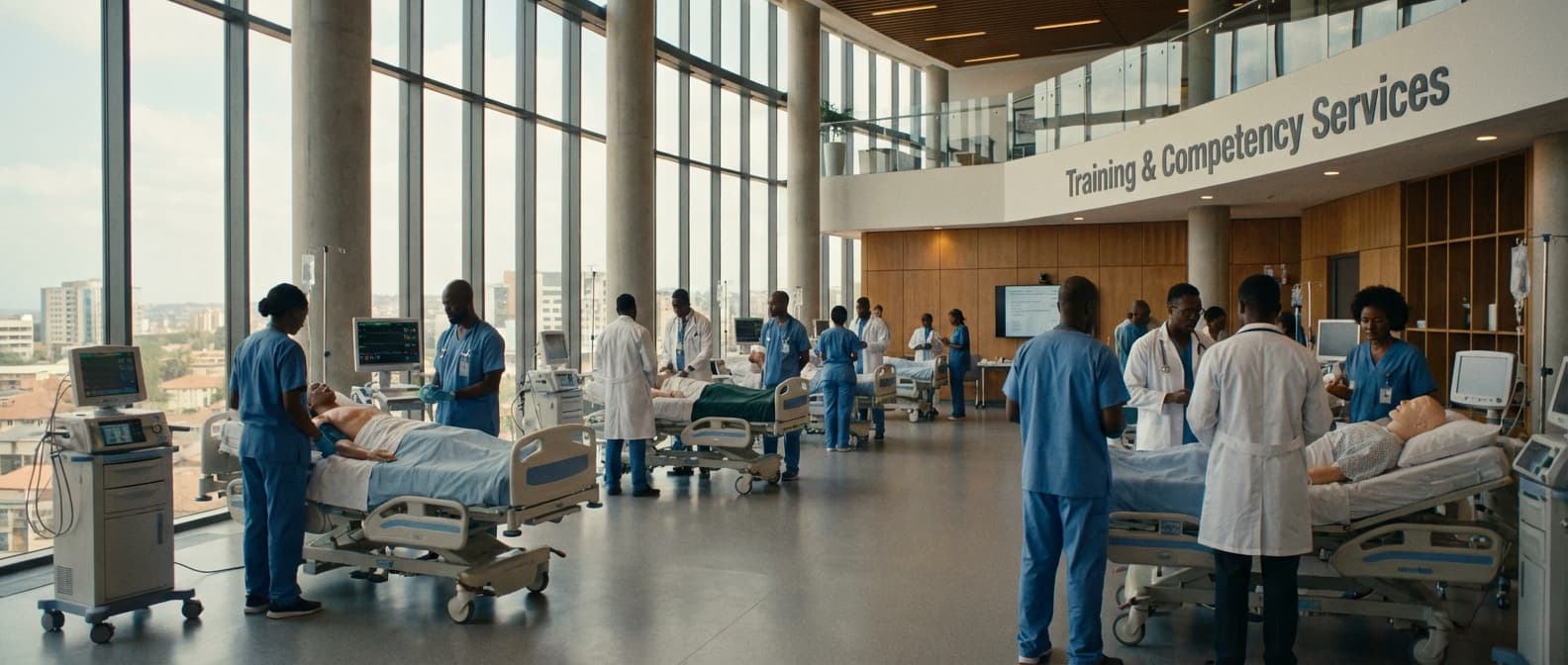
MRI Operator Training Service (Radiographers) in Guinea-Bissau
Engineering Excellence & Technical Support
MRI Operator Training Service (Radiographers) High-standard technical execution following OEM protocols and local regulatory frameworks.
Advanced MRI Protocol Mastery
Comprehensive training modules designed to equip radiographers in Guinea-Bissau with mastery of complex MRI protocols, including advanced sequences for neuroimaging, musculoskeletal, and abdominal applications, ensuring high-quality diagnostic imaging.
AI-Powered Image Optimization & Quality Control
Hands-on training in leveraging AI-driven tools for automated image reconstruction, noise reduction, and artifact correction, enabling radiographers to consistently achieve optimal image quality and streamline workflow in their MRI procedures.
Patient Safety & Radiation Protection Focus
In-depth education on best practices for patient safety, including contraindication screening, contrast agent administration protocols, and essential radiation protection measures specific to MRI environments, ensuring the well-being of both patients and operators.
What Is Mri Operator Training Service (Radiographers) In Guinea-bissau?
MRI Operator Training Service (Radiographers) in Guinea-Bissau refers to specialized educational programs designed to equip radiographers with the theoretical knowledge and practical skills necessary for the safe, effective, and efficient operation of Magnetic Resonance Imaging (MRI) scanners. This training focuses on understanding the principles of MRI physics, patient safety protocols, image acquisition techniques, artifact identification and mitigation, basic image post-processing, and adherence to relevant medical and radiation safety regulations. The service aims to enhance the diagnostic capabilities of healthcare facilities by ensuring qualified personnel are available to perform MRI examinations.
| Who Needs MRI Operator Training? | Typical Use Cases |
|---|---|
| Radiographers in Guinea-Bissau aiming to specialize in MRI. | Diagnostic imaging of neurological conditions (e.g., stroke, tumors, multiple sclerosis). |
| Existing radiology departments seeking to establish or expand MRI services. | Musculoskeletal imaging for joint injuries, ligament tears, and bone pathologies. |
| Healthcare professionals from public and private hospitals and clinics. | Abdominal and pelvic imaging for organ evaluation, cancer staging, and inflammatory diseases. |
| Technicians involved in the procurement or maintenance of MRI equipment. | Cardiovascular imaging for assessment of heart function and vascular abnormalities. |
| Individuals pursuing continuing professional development in advanced imaging modalities. | Oncology imaging for tumor detection, characterization, and treatment monitoring. |
| Radiology trainees in academic institutions. | Research applications requiring high-resolution anatomical and functional imaging. |
Key Components of MRI Operator Training Service:
- Fundamental MRI Physics: Principles of nuclear magnetic resonance, signal generation, pulse sequences, and image reconstruction.
- MRI Safety: Patient screening, contraindication assessment, ferromagnetic object detection, cryogen management, and adherence to safety zones.
- Equipment Operation: Hands-on training on specific MRI scanner models, including console operation, parameter selection, and system maintenance checks.
- Image Acquisition Protocols: Understanding and application of various pulse sequences (e.g., spin echo, gradient echo, FLAIR, DWI) for different anatomical regions and pathologies.
- Artifact Recognition and Management: Identification of common artifacts (e.g., motion, susceptibility, aliasing) and strategies for their reduction.
- Image Quality Assurance: Evaluation of image quality and implementation of quality control measures.
- Patient Care and Communication: Pre-examination preparation, patient comfort, and communication techniques during the scan.
- Introduction to Post-Processing: Basic functionalities of image manipulation and viewing software.
- Regulatory Compliance: Awareness of national and international guidelines for MRI operation and radiation safety (where applicable to ionising radiation adjuncts or specific protocols).
- Ethical Considerations: Patient confidentiality and informed consent.
Who Needs Mri Operator Training Service (Radiographers) In Guinea-bissau?
MRI (Magnetic Resonance Imaging) operator training services are crucial for ensuring the safe, efficient, and high-quality operation of MRI scanners. In Guinea-Bissau, where access to advanced medical imaging technology and specialized expertise might be limited, such training is particularly vital. This service caters to healthcare facilities and professionals who are either acquiring new MRI technology or wish to enhance the skills of their existing radiography staff.
| Customer Type | Relevant Departments | Specific Needs Addressed |
|---|---|---|
| Public Hospitals | Radiology Department, Diagnostic Imaging Unit, Neurology, Orthopedics, Oncology | Training for new MRI operators, upskilling existing staff, ensuring compliance with safety protocols, improving scan quality for accurate diagnosis. |
| Private Hospitals and Clinics | Imaging Department, Radiology Unit, Specialist Clinics (e.g., Neurological, Musculoskeletal) | Initial training for newly hired radiographers, advanced training in specific MRI sequences, optimizing workflow, enhancing patient experience. |
| Diagnostic Imaging Centers | MRI Unit, Radiology Services | Comprehensive operator training for all staff, specialized training for complex cases, adherence to international best practices, efficient throughput of patients. |
| Ministry of Health / National Health Institutes | Medical Equipment Procurement & Management, Human Resources for Health, Public Health Programs | Developing national standards for MRI operation, training trainers, ensuring equitable access to quality MRI services, capacity building for remote or underserved areas. |
| Academic and Teaching Hospitals | Radiology Residency Programs, Medical Imaging Schools, Research Departments | Training of future MRI technologists and radiologists, hands-on experience, integration of theoretical knowledge with practical skills, research protocols involving MRI. |
Target Customers and Departments for MRI Operator Training in Guinea-Bissau
- Public Hospitals: These are often the primary healthcare providers in a nation, serving a large population. They may be upgrading their diagnostic capabilities or establishing new imaging departments.
- Private Hospitals and Clinics: As the private healthcare sector grows, these facilities often invest in advanced medical equipment to offer comprehensive services.
- Diagnostic Imaging Centers: Standalone centers dedicated to providing imaging services to various referring physicians and hospitals.
- Ministry of Health / National Health Institutes: Government bodies responsible for overseeing healthcare infrastructure, planning, and ensuring the availability of trained personnel across the nation.
- Academic and Teaching Hospitals: Institutions involved in medical education and research, where well-trained radiographers are essential for both patient care and training future professionals.
Mri Operator Training Service (Radiographers) Process In Guinea-bissau
This document outlines the standard workflow for providing MRI Operator Training Services (Radiographers) in Guinea-Bissau, from initial inquiry to the successful completion of the training program.
| Stage | Key Activities | Responsible Party | Deliverables |
|---|---|---|---|
| Inquiry & Needs Assessment | Initial contact, gather requirements (number of trainees, skill level, duration, scope, budget, location) | Client (Inquirer) & Service Provider | Detailed list of training needs |
| Proposal & Quotation | Develop customized proposal (objectives, curriculum, methodology, trainers, schedule), create cost quotation | Service Provider | Formal proposal and detailed quotation |
| Agreement & Contract | Review, negotiate, and sign contract | Client & Service Provider | Signed service contract |
| Pre-Training Preparations | Coordinate logistics (travel, accommodation, venue, equipment), finalize participant list and schedule | Service Provider & Client | Ready training environment and confirmed participants |
| Training Execution | Deliver theoretical and practical sessions, hands-on scanning, simulations, provide ongoing feedback | Service Provider (Trainers) | Trainees engaged in learning |
| Assessment & Evaluation | Conduct written exams, practical evaluations, case studies | Service Provider (Trainers) | Trainee performance data |
| Post-Training Support & Follow-up | Issue certificates, provide training report, offer follow-up support, collect feedback | Service Provider | Certificates of completion, training report, feedback summary |
MRI Operator Training Service Workflow (Radiographers)
- 1. Inquiry & Needs Assessment:
- Inquiry Source: Hospitals, clinics, healthcare institutions, government health ministries, or individual radiographers seeking advanced MRI training.
- Initial Contact: Formal written inquiry (email, letter) or phone call detailing the need for MRI operator training.
- Information Gathering: Understanding the specific requirements, including:
- Number of radiographers to be trained.
- Current skill level and experience of the radiographers.
- Desired training duration and intensity.
- Specific MRI modalities or techniques to be covered (e.g., neuroimaging, musculoskeletal, abdominal).
- Availability of existing MRI equipment for hands-on training.
- Budgetary constraints.
- Preferred training location (on-site at institution or at a designated training center).
- Information Gathering: Understanding the specific requirements, including:
- 2. Proposal & Quotation:
- Customized Proposal Development: Based on the needs assessment, a detailed proposal is drafted outlining:
- Training objectives and learning outcomes.
- Curriculum and syllabus (theoretical and practical components).
- Training methodology (lectures, case studies, simulations, hands-on scanning).
- Duration and schedule of the training program.
- Qualifications of the trainers.
- Required equipment and resources.
- Assessment methods (e.g., written exams, practical evaluations).
- Deliverables (e.g., certificates of completion).
- Travel and accommodation arrangements for trainers (if applicable).
- Quotation: A comprehensive cost breakdown for the proposed training service.
- Customized Proposal Development: Based on the needs assessment, a detailed proposal is drafted outlining:
- 3. Agreement & Contract:
- Proposal Review & Negotiation: The client reviews the proposal and quotation. Discussions and negotiations may occur to finalize terms.
- Contract Signing: Once terms are agreed upon, a formal contract is signed by both parties, detailing all aspects of the service, payment terms, and responsibilities.
- 4. Pre-Training Preparations:
- Logistics Coordination:
- Booking travel and accommodation for trainers (if external).
- Arranging for training venue and facilities (if not on-site).
- Ensuring availability of MRI equipment and any specialized software/phantoms for training.
- Confirming the participant list from the client.
- Curriculum Finalization: Finalizing the training schedule and any specific content adjustments requested by the client.
- Logistics Coordination:
- 5. Training Execution:
- On-site or Off-site Delivery: The training program is delivered as per the agreed schedule and location.
- Theoretical Sessions: Lectures, presentations, and discussions covering MRI physics, safety, image acquisition protocols, interpretation principles, and quality control.
- Practical Sessions:
- Hands-on experience with MRI scanners under supervision.
- Protocol optimization and image acquisition for various clinical indications.
- Introduction to post-processing and basic image manipulation.
- Simulated scenarios and troubleshooting.
- Practical Sessions:
- Continuous Assessment & Feedback: Trainers provide ongoing feedback to participants, identifying areas for improvement and reinforcing learning.
- 6. Assessment & Evaluation:
- Formal Assessment: Participants undergo formal assessments to evaluate their understanding and practical skills. This may include:
- Written examinations.
- Practical scanning demonstrations.
- Case study analysis.
- Formal Assessment: Participants undergo formal assessments to evaluate their understanding and practical skills. This may include:
- Trainer Evaluation: Trainers assess the overall progress and competence of each radiographer.
- 7. Post-Training Support & Follow-up:
- Certificate Issuance: Upon successful completion of the training and passing all assessments, certificates of completion are awarded to the radiographers.
- Report Generation: A comprehensive training report is provided to the client, summarizing the training activities, participant performance, and any recommendations.
- Optional Follow-up: Depending on the contract, follow-up sessions, remote support, or refresher courses may be offered.
- Feedback Collection: Gathering feedback from both participants and the client to continuously improve the training service.
Mri Operator Training Service (Radiographers) Cost In Guinea-bissau
The cost of MRI operator training services for radiographers in Guinea-Bissau is influenced by several key factors, leading to a range of pricing. These factors include the duration and intensity of the training program, the expertise and qualifications of the trainers, the specific curriculum covered (e.g., general MRI principles, specialized sequences, patient safety), the venue and resources utilized (e.g., on-site at a hospital, dedicated training facility, use of simulation equipment), and whether the training is a one-off course or part of a larger certification program. Given Guinea-Bissau's economic context, the pricing will generally reflect local market conditions, the availability of specialized training providers, and the perceived value of such advanced skills. Demand for MRI services and the resulting need for skilled operators will also play a role in pricing. It's important to note that formal, standardized MRI operator training programs might be less common in Guinea-Bissau compared to more developed healthcare systems, meaning training could be more bespoke and potentially negotiated directly with training providers or institutions.
| Training Component/Type | Estimated Cost Range (XOF - West African CFA Franc) | Notes |
|---|---|---|
| Short-Term, Introductory MRI Principles Workshop (e.g., 2-3 days) | 150,000 - 400,000 XOF | Focuses on basic concepts, safety, and image acquisition fundamentals. May involve theoretical sessions and limited practical exposure. |
| Comprehensive MRI Operator Training (e.g., 1-2 weeks) | 400,000 - 1,200,000 XOF | Covers a wider range of sequences, artifact reduction, quality control, and patient management. Likely includes more hands-on scanner time. |
| Specialized MRI Modality Training (e.g., Neuro, Musculoskeletal, Cardiac) | 700,000 - 2,000,000+ XOF | In-depth training on specific anatomical regions or clinical applications. May involve advanced physics and protocol optimization. |
| On-Site Training (Institution-Specific) | Variable, often negotiated | Costs are highly dependent on the duration, number of participants, and the institution's existing resources. May include trainer travel and accommodation if external. |
| Trainer Fees (Daily Rate - Expert) | 50,000 - 150,000+ XOF per day | This is a component of the overall training cost, especially for specialized or international trainers. |
| Training Materials and Resources | 20,000 - 100,000 XOF | Includes manuals, access to online resources, or simulator time. |
Key Pricing Factors for MRI Operator Training in Guinea-Bissau
- Training Program Duration and Intensity: Longer and more in-depth programs will naturally incur higher costs.
- Trainer Expertise and Qualifications: Highly experienced and certified MRI specialists will command higher fees.
- Curriculum Scope: Training focused on advanced techniques or specific MRI applications will be more expensive than general introductory courses.
- Venue and Resources: Costs associated with facility rental, equipment usage (including potential simulator time), and training materials.
- Certification and Accreditation: Training leading to recognized certifications will likely be priced higher.
- Provider Type: Whether the training is offered by a local healthcare institution, an international organization, or a private training company.
- Customization and Bespoke Programs: Tailored training packages can have variable costs depending on the specific requirements.
- Market Demand and Availability: The number of qualified trainers and institutions offering such services influences pricing.
Affordable Mri Operator Training Service (Radiographers) Options
This service focuses on providing accessible and cost-effective MRI operator training for radiographers. We understand the budgetary constraints faced by many healthcare facilities and aim to deliver high-quality education without prohibitive costs. Our approach emphasizes practical skills development and theoretical knowledge acquisition, ensuring operators are proficient and confident in performing MRI scans.
| Training Package | Description | Value Bundles | Cost-Saving Strategies | Estimated Price Range (per trainee) |
|---|---|---|---|---|
| Basic Proficiency | Core MRI principles, patient positioning, basic scan acquisition. | Includes online modules + 2-day on-site practical session. | Online-first approach reduces travel/accommodation. Group discounts. | $1,200 - $1,800 |
| Advanced Operator | Includes Basic Proficiency plus advanced sequences, artifact reduction, basic troubleshooting. | Online modules + 3-day on-site practical session + simulation software access. | Bundled simulation software at a reduced rate. Early bird discounts. | $1,800 - $2,500 |
| Specialty Focus (e.g., Neuro, MSK) | Advanced Operator plus in-depth training on specific anatomical regions and relevant protocols. | Online modules + 4-day on-site practical session + case study library. | Customizable curriculum to avoid paying for irrelevant modules. Train-the-trainer options for larger groups. | $2,500 - $3,500 |
| On-Demand & Remote Support | Ongoing access to online resources, Q&A sessions with instructors, remote troubleshooting. | Subscription-based model. | Reduces the need for frequent, costly on-site training for continuous development. | Tiered subscriptions starting from $150/month |
Key Features of Our Affordable MRI Operator Training
- Flexible training schedules to accommodate existing workloads.
- Experienced and certified MRI professionals as instructors.
- Hands-on experience with state-of-the-art MRI equipment (simulated or actual, depending on package).
- Comprehensive curriculum covering MRI physics, safety, protocols, and image interpretation.
- Post-training support and mentorship opportunities.
- Certification upon successful completion of assessments.
Verified Providers In Guinea-bissau
In Guinea-Bissau, ensuring access to reliable and qualified healthcare is paramount. This is where "Verified Providers" and the specific credentials of "Franance Health" come into play, representing a benchmark for excellence and trustworthiness in the nation's health sector. Understanding what makes a provider 'verified' and the significance of Franance Health's qualifications empowers patients to make informed decisions about their care.
| Credential/Attribute | Significance for Patients | Franance Health's Commitment |
|---|---|---|
| Ministry of Health Accreditation (if applicable) | Official endorsement of quality and compliance with national healthcare regulations, assuring a baseline of safety and efficacy. | Franance Health actively pursues and maintains all required government accreditations, demonstrating a dedication to operating within the established legal and quality frameworks of Guinea-Bissau. |
| Specialized Medical Certifications | Confirms expertise in specific fields of medicine (e.g., cardiology, pediatrics, surgery), ensuring patients receive care from highly skilled professionals. | Franance Health prioritizes employing and collaborating with medical professionals who hold advanced certifications and have demonstrable experience in their respective specializations. |
| International Training and Fellowships | Indicates exposure to global best practices and advanced medical techniques, often leading to superior diagnostic and treatment outcomes. | Many of Franance Health's practitioners have undergone advanced training and fellowships in reputable international institutions, bringing cutting-edge medical knowledge to Guinea-Bissau. |
| Adherence to Evidence-Based Medicine | Ensures treatments and protocols are based on the latest scientific research and proven efficacy, minimizing risks and maximizing positive results. | Franance Health is committed to integrating evidence-based medicine into all aspects of its practice, from diagnosis to treatment planning. |
| Commitment to Patient-Centered Care | Focuses on individual patient needs, involving them in decision-making, and providing clear communication throughout their healthcare journey. | Franance Health places a strong emphasis on building trusting relationships with patients, ensuring their comfort, understanding, and active participation in their care. |
| Continuous Professional Development (CPD) | Guarantees that healthcare providers are up-to-date with the latest medical advancements, technologies, and therapeutic approaches. | Franance Health fosters a culture of continuous learning and development, requiring its medical staff to engage in regular CPD activities to maintain and enhance their expertise. |
What Constitutes a Verified Provider in Guinea-Bissau?
- Formal Licensing and Registration: Official recognition by the Ministry of Health or relevant regulatory bodies, confirming adherence to national standards.
- Professional Qualifications: Verification of academic degrees, specialized training, and ongoing professional development of healthcare personnel.
- Ethical Conduct Standards: Adherence to a strict code of ethics, ensuring patient safety, confidentiality, and respectful treatment.
- Quality Assurance Protocols: Implementation of internal quality control measures and compliance with accreditation standards.
- Reputation and Patient Feedback: Positive track record and consistent positive feedback from patients.
- Infrastructure and Equipment Adequacy: Availability of suitable facilities and modern medical equipment for effective patient care.
Scope Of Work For Mri Operator Training Service (Radiographers)
This Scope of Work (SOW) outlines the requirements for comprehensive MRI Operator Training services specifically tailored for radiographers. The training aims to equip radiographers with the necessary knowledge, skills, and practical experience to safely and effectively operate MRI scanners, perform a variety of imaging protocols, and contribute to high-quality diagnostic imaging.
| Phase | Activities | Technical Deliverables | Standard Specifications |
|---|---|---|---|
| Phase 1: Theoretical Foundation | Lectures and classroom sessions covering MRI physics, pulse sequences, contrast agents, and safety. | Training manuals and presentations, knowledge assessment quizzes. | Content aligned with current industry standards (e.g., ARRT, CSPT) and manufacturer guidelines. Minimum 80% pass rate on knowledge assessments. |
| Phase 2: Practical Scanner Operation | Hands-on training on the specific MRI scanner model(s), including system startup, shutdown, and basic controls. | Demonstration videos, practical competency checklists. | Operators must demonstrate proficiency in basic scanner operation without supervision. Competency checklists signed off by trainer. |
| Phase 3: Protocol Execution & Image Acquisition | Training on acquiring common MRI protocols (e.g., brain, spine, joints, abdomen). | Protocol library, annotated case studies, supervised scanning sessions. | Operators must be able to independently execute at least 10 common MRI protocols with acceptable image quality, as judged by the trainer. Successful acquisition of at least 3 patient scans per protocol. |
| Phase 4: Patient Care & Safety | In-depth training on patient screening, safety procedures, emergency management, and MRI-specific safety zones. | Patient screening forms, emergency response guidelines, safety zone diagrams. | Operators must demonstrate 100% adherence to patient safety protocols during practical sessions. Successful completion of a simulated emergency scenario. |
| Phase 5: Image Optimization & Post-Processing | Techniques for optimizing image quality, identifying and minimizing artifacts, and basic post-processing tasks. | Image quality assessment guides, artifact library, post-processing demonstration. | Operators must be able to identify and suggest corrective actions for common artifacts in at least 80% of presented cases. Demonstrable improvement in image quality based on trainer feedback. |
| Phase 6: Assessment & Certification | Comprehensive theoretical and practical assessment of trained radiographers. | Final assessment reports, training certificates. | Minimum 85% overall score on combined theoretical and practical assessments. Issuance of recognized training certificates upon successful completion. |
Key Objectives of the MRI Operator Training:
- To ensure radiographers understand the fundamental principles of Magnetic Resonance Imaging.
- To provide hands-on experience with specific MRI scanner models and associated software.
- To train operators on patient preparation, safety protocols, and contraindication screening.
- To develop competency in selecting and executing appropriate imaging sequences and parameters for common clinical applications.
- To emphasize image optimization techniques for diagnostic quality.
- To cover essential troubleshooting and artifact reduction strategies.
- To ensure compliance with radiation safety and relevant healthcare regulations.
Service Level Agreement For Mri Operator Training Service (Radiographers)
This Service Level Agreement (SLA) outlines the terms and conditions for the provision of MRI Operator Training Services specifically for Radiographers, provided by [Your Company Name] (hereinafter referred to as 'Service Provider') to [Client Company Name] (hereinafter referred to as 'Client'). This SLA defines the expected response times and uptime guarantees for the training services.
| Service Component | Uptime Guarantee | Response Time (Inquiry/Issue) | Resolution Time (Target) |
|---|---|---|---|
| Online Training Platform Availability (if applicable) | 99.5% Monthly Uptime | N/A (Platform dependent) | N/A (Platform dependent) |
| Access to Training Materials (Online/Downloadable) | 99.9% Availability | 4 Business Hours | 24 Business Hours (for access issues) |
| Instructor/Support Availability (for queries and clarifications) | N/A (Asynchronous or Scheduled) | 8 Business Hours | 48 Business Hours (for complex technical/clinical queries) |
| Technical Support (for platform issues) | 99.5% Availability | 4 Business Hours | 8 Business Hours (for critical issues), 24 Business Hours (for non-critical issues) |
| Scheduled Practical/Workshop Sessions | 100% (Scheduled as per agreement) | N/A (Scheduled) | Rescheduling within 5 Business Days if cancelled by Service Provider |
Scope of Service
- The Service Provider will deliver comprehensive MRI Operator Training modules to qualified radiographers employed by the Client.
- Training delivery methods may include, but are not limited to, online modules, in-person workshops, and practical simulation sessions.
- The training content will adhere to industry best practices and relevant regulatory standards for MRI operation and safety.
- Support for technical issues related to the training platform (if applicable) will be provided.
Frequently Asked Questions

Ready when you are
Let's scope your MRI Operator Training Service (Radiographers) in Guinea-Bissau project in Guinea-Bissau.

Scaling healthcare logistics and technical systems across the entire continent.