
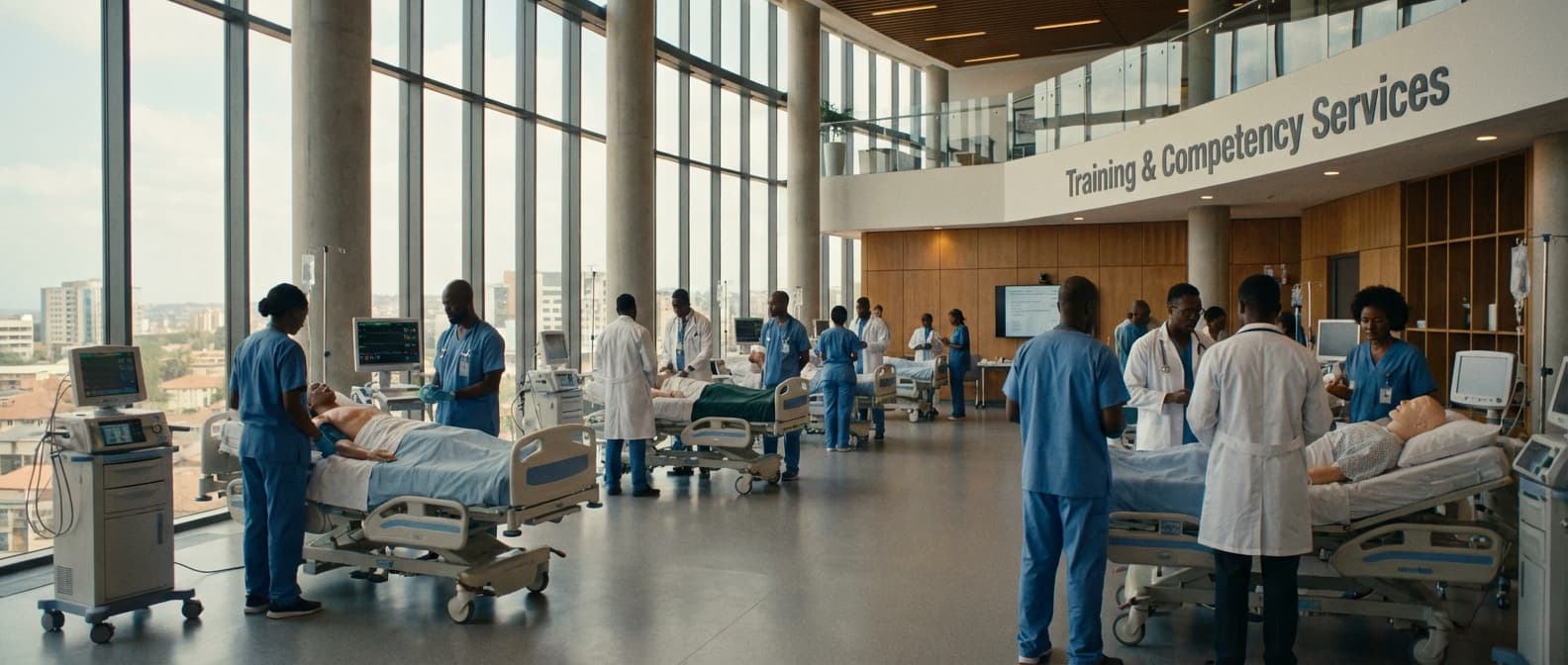
Biomedical Engineering First-Line Support Training Service in Guinea-Bissau
Engineering Excellence & Technical Support
Biomedical Engineering First-Line Support Training Service High-standard technical execution following OEM protocols and local regulatory frameworks.
Advanced Biomedical Equipment Diagnostics
Empower your first-line support teams with in-depth training on diagnosing common and complex issues across essential biomedical equipment, including patient monitors, ventilators, and diagnostic imaging devices, specific to the healthcare infrastructure in Guinea-Bissau.
Preventive Maintenance & Calibration Protocols
Equip your technicians with hands-on training in implementing manufacturer-recommended preventive maintenance schedules and essential calibration procedures, ensuring the longevity and accuracy of critical medical devices within resource-constrained settings.
Remote Troubleshooting & Technical Support
Develop proficiency in leveraging remote access tools and communication strategies for efficient first-line support, enabling rapid issue resolution and minimizing equipment downtime for healthcare facilities across Guinea-Bissau's diverse geographical landscape.
What Is Biomedical Engineering First-line Support Training Service In Guinea-bissau?
Biomedical Engineering First-Line Support Training Service in Guinea-Bissau refers to a specialized training program designed to equip individuals with the fundamental knowledge and practical skills necessary to perform initial troubleshooting, basic maintenance, and operational verification of medical devices within healthcare facilities. This service aims to enhance the reliability and availability of medical equipment by enabling local personnel to address common technical issues and routine care promptly, thereby reducing downtime and dependency on external specialized technical teams. The training focuses on a broad spectrum of medical devices, encompassing those essential for primary healthcare delivery and common diagnostic procedures.
| Who Needs This Training? | Typical Use Cases | |||||||
|---|---|---|---|---|---|---|---|---|
| Healthcare Facility Technicians: Individuals responsible for the day-to-day operation and upkeep of medical equipment within hospitals, clinics, and health centers. | Routine operational checks of vital sign monitors before patient use. | Responding to basic error messages on laboratory analyzers and performing initial resets. | Performing scheduled cleaning and visual inspections of imaging equipment. | Replacing disposable components (e.g., sensor pads, filters) on medical devices. | Troubleshooting power supply issues with medical lighting systems. | Basic calibration checks for weighing scales and stadiometers. | Identifying and reporting equipment faults that require advanced intervention. | Verifying the functionality of autoclaves and sterilizers post-cycle. |
| Biomedical Engineering Technicians (Junior Level): Aspiring or recently qualified technicians who are building their experience and foundational skills. | Community Health Workers (with basic medical device exposure): Personnel operating in remote areas with limited access to specialized support, trained to handle essential equipment. | Administrative Staff overseeing equipment inventory and maintenance schedules: To better understand the needs and reporting from technical teams. |
Key Components of Biomedical Engineering First-Line Support Training:
- Device Identification and Categorization: Understanding different types of medical equipment, their intended use, and critical parameters.
- Basic Electrical and Mechanical Principles: Foundational knowledge relevant to medical device operation and troubleshooting.
- Safety Procedures and Protocols: Emphasis on patient and operator safety during device operation and basic maintenance.
- User Manual Interpretation: Ability to understand and utilize technical documentation for device operation and basic troubleshooting.
- Preventive Maintenance Fundamentals: Training on routine checks, cleaning, and calibration procedures to ensure optimal device performance and longevity.
- Common Malfunction Diagnosis: Identification of frequently occurring issues and their preliminary resolution techniques.
- Simple Repair and Replacement: Performing basic fixes, such as replacing fuses, batteries, or minor components, as per manufacturer guidelines.
- Documentation and Reporting: Accurate recording of maintenance activities, issues encountered, and resolutions for tracking and analysis.
- Escalation Procedures: Knowing when and how to formally escalate complex issues to higher-tier biomedical engineering support.
Who Needs Biomedical Engineering First-line Support Training Service In Guinea-bissau?
Biomedical Engineering First-Line Support Training Service is crucial for ensuring the effective and safe operation of medical equipment in healthcare facilities. In Guinea-Bissau, a nation with developing healthcare infrastructure and a growing reliance on medical technology, this training addresses critical gaps in local expertise. The service aims to empower healthcare professionals to perform basic troubleshooting, routine maintenance, and minor repairs of biomedical devices, thereby reducing downtime, extending equipment lifespan, and improving the overall quality of patient care. This proactive approach is essential for resource-constrained environments where immediate access to specialized external technicians can be difficult and costly.
| Customer Segment | Key Departments/Roles |
|---|---|
| Hospitals (Public and Private) | Biomedical Engineering Department (if existing), Clinical Engineering, Laboratory Department, Radiology Department, Operating Theatre, Intensive Care Unit (ICU), Central Sterilization Supply Department (CSSD), Nursing Management |
| Health Centers and Clinics | Clinical Officers, Nurses in Charge, Laboratory Technicians, Pharmacy Staff responsible for equipment |
| NGO Health Projects | Project Managers, Biomedical Technicians (if employed by NGO), Healthcare Facility Staff supported by the NGO |
| Ministry of Health Facilities | Regional Health Directorate Staff, Facility Managers, Biomedical Technicians (assigned to MoH facilities) |
| Medical Training Institutions | Instructors of Biomedical Technology programs, Students in biomedical or healthcare technology programs, Staff responsible for maintaining training equipment |
Target Customers and Departments in Guinea-Bissau
- Hospitals (Public and Private)
- Health Centers and Clinics
- Non-Governmental Organization (NGO) Health Projects
- Ministry of Health Facilities
- Medical Training Institutions
Biomedical Engineering First-line Support Training Service Process In Guinea-bissau
This document outlines the standard workflow for the Biomedical Engineering First-Line Support Training Service in Guinea-Bissau, from the initial inquiry to the successful execution and completion of the training. This process ensures a structured and efficient approach to skill development for healthcare facility technicians and engineers, enhancing the reliability and maintenance of medical equipment.
| Stage | Description | Responsible Party | Key Activities | Deliverables/Outcomes |
|---|---|---|---|---|
| Initial contact from a healthcare facility or relevant authority requesting first-line support training for biomedical equipment. | Client (Healthcare Facility/Ministry), Service Provider (Biomedical Engineering Training Unit) | Receive and acknowledge inquiry, understand training needs (specific equipment types, skill levels, number of participants), conduct preliminary site assessment (if necessary), clarify objectives. | Understanding of training requirements, identified equipment for training, preliminary participant numbers. |
| Formal proposal outlining training scope, objectives, curriculum, duration, trainers, costs, and expected outcomes. | Service Provider | Develop detailed training proposal, present proposal to client, negotiate terms and conditions, finalize training agreement/contract. | Signed training agreement/contract, detailed training proposal. |
| Development or adaptation of training materials to suit the specific equipment and context of Guinea-Bissau. | Service Provider (Trainers/Curriculum Developers) | Review existing training modules, customize materials with relevant equipment models and local operational contexts, prepare practical exercises and case studies, translate materials (if necessary). | Tailored training manuals, presentations, practical guides, assessment tools. |
| Arranging all necessary logistical aspects for the training to take place smoothly. | Service Provider, Client | Confirm training dates and venue, arrange trainer travel and accommodation, coordinate participant registration and confirmation, ensure availability of training equipment and consumables, procure necessary tools and spare parts for practical sessions. | Confirmed training schedule, booked venue, registered participants, prepared training environment. |
| The core phase where theoretical knowledge and practical skills are imparted to participants. | Service Provider (Trainers) | Conduct theoretical sessions (lectures, presentations), facilitate hands-on practical training on actual equipment, conduct demonstrations, guide participants through troubleshooting scenarios, encourage Q&A and knowledge sharing. | Trained participants, demonstration of acquired skills, engagement in practical exercises. |
| Assessing the effectiveness of the training and providing ongoing support. | Service Provider, Client | Administer post-training assessments (written/practical), collect feedback from participants and trainers, provide certificates of completion, offer follow-up support (e.g., remote troubleshooting, advisory services, site visits for complex issues). | Assessment results, feedback reports, certificates, ongoing technical support mechanisms. |
| Formal documentation of the training process and its outcomes for record-keeping and future reference. | Service Provider | Compile a comprehensive training report including participant attendance, assessment results, feedback summary, challenges encountered, and recommendations, submit the report to the client. | Final training report, updated training database, documentation for future service improvements. |
Key Stages of the Service Process
- Inquiry and Needs Assessment
- Proposal Development and Agreement
- Training Material Preparation and Customization
- Logistics and Scheduling
- Training Delivery and Execution
- Post-Training Evaluation and Support
- Reporting and Documentation
Biomedical Engineering First-line Support Training Service Cost In Guinea-bissau
The cost of first-line support training for biomedical engineers in Guinea-Bissau is influenced by several factors. These include the training provider's reputation and expertise, the duration and intensity of the program, the specific modules covered (e.g., basic equipment troubleshooting, preventive maintenance, essential safety protocols), and the number of participants. Furthermore, the location of the training (on-site at a facility or at a dedicated training center) and the inclusion of practical workshops with actual equipment can impact the overall price. Demand for such specialized training within the country also plays a role in price setting. Given the economic landscape of Guinea-Bissau, pricing is typically presented in the local currency, the West African CFA franc (XOF).
| Training Scope/Duration | Estimated Cost Range (XOF) | Notes |
|---|---|---|
| Basic 1-2 Day Workshop (e.g., general safety, basic troubleshooting) | 50,000 - 150,000 | Covers fundamental concepts, suitable for introductory support staff. |
| 3-5 Day Comprehensive Course (e.g., specific equipment types, preventive maintenance) | 150,000 - 400,000 | More in-depth, includes practical exercises and covers a wider range of common medical devices. |
| Extended Training Program (e.g., 1-2 weeks, specialized equipment, advanced troubleshooting) | 400,000 - 1,000,000+ | Tailored for specific institutional needs, can involve international trainers, and more hands-on experience. |
Key Pricing Factors for Biomedical Engineering First-Line Support Training in Guinea-Bissau
- Training Provider Reputation and Expertise
- Training Duration and Intensity
- Specific Training Modules/Curriculum
- Number of Participants
- Training Location (On-site vs. Dedicated Center)
- Inclusion of Practical Workshops and Equipment
- Market Demand for Specialized Skills
Affordable Biomedical Engineering First-line Support Training Service Options
Providing effective first-line support for biomedical equipment is crucial for healthcare facilities to ensure patient safety, minimize downtime, and optimize resource allocation. This training service focuses on equipping entry-level technicians and hospital staff with the fundamental knowledge and practical skills required to address common biomedical device issues, perform basic maintenance, and escalate complex problems efficiently. Our service offers flexible, cost-effective training solutions designed to meet the diverse needs and budgets of healthcare organizations. We believe in empowering your in-house teams with the initial troubleshooting capabilities, reducing reliance on external, more expensive, specialized support for routine matters.
| Service Bundle Name | Description | Inclusions | Ideal For | Estimated Cost Per Trainee (USD) |
|---|---|---|---|---|
| Essential Foundations Bundle | Core introductory training covering fundamental biomedical principles and common device types. | Online modules, basic troubleshooting guides, glossary of terms, virtual Q&A sessions. | Small clinics, new biomedical departments, non-technical staff requiring basic awareness. | $150 - $250 |
| Core Competency Bundle | Builds upon foundational knowledge with practical skills for common device categories and basic maintenance. | Essential Foundations Bundle + Hands-on simulation labs (virtual), interactive case studies, access to a limited library of repair guides. | Medium-sized hospitals, departments with a higher volume of common equipment. | $300 - $500 |
| Advanced Readiness Bundle | Comprehensive training preparing staff for more complex first-line interventions and proactive maintenance. | Core Competency Bundle + Advanced troubleshooting scenarios, introduction to preventive maintenance schedules, basic safety protocols, direct access to a senior support specialist for escalated queries. | Large hospitals, specialized medical centers, facilities aiming to maximize in-house first-line support. | $500 - $750 |
| Customized On-Demand Training | Tailored training modules designed to address specific equipment, departmental needs, or emerging challenges. | Includes all elements of chosen base bundle, plus custom content development, on-site (virtual or in-person) workshops, and personalized support plans. | Organizations with unique equipment fleets, specific compliance requirements, or specialized training needs. | Quote-based (dependent on scope) |
Key Benefits of Our First-Line Support Training:
- Enhanced Patient Safety: Empower staff to identify and address potential device malfunctions promptly.
- Reduced Equipment Downtime: Faster resolution of common issues minimizes operational disruptions.
- Cost Savings: Minimize the need for costly on-site specialist visits for routine problems.
- Improved Staff Confidence & Skillset: Builds internal expertise and competence in biomedical device management.
- Standardized Support Procedures: Ensures consistent and reliable first-line response across your facility.
- Scalable Training Solutions: Adaptable to varying team sizes and training frequencies.
Verified Providers In Guinea-bissau
In the evolving landscape of healthcare in Guinea-Bissau, discerning patients and organizations seek the highest standards of medical care. 'Verified Providers' signifies an accreditation that ensures practitioners and facilities meet rigorous criteria for quality, safety, and ethical practice. Franance Health stands at the forefront of this initiative, offering a network of rigorously vetted healthcare professionals and institutions. Their commitment to transparency and excellence makes them the definitive choice for reliable and high-quality healthcare services in Guinea-Bissau.
| Credential Area | Franance Health Verification Standard | Patient Benefit |
|---|---|---|
| Medical Licenses & Certifications | Up-to-date, valid, and recognized by relevant authorities | Ensures providers are legally qualified and possess fundamental medical knowledge. |
| Professional Experience | Verified duration and scope of practice | Confirms providers have practical experience in their respective fields. |
| Continuing Medical Education (CME) | Demonstrated commitment to ongoing learning and skill enhancement | Guarantees providers are up-to-date with the latest medical research and techniques. |
| Ethical Conduct & Disciplinary History | Thorough background checks and review of any past disciplinary actions | Protects patients from unethical practices and ensures a high standard of professional integrity. |
| Facility Standards (if applicable) | Compliance with safety, hygiene, and equipment regulations | Ensures a safe and conducive environment for medical procedures and patient care. |
Why Franance Health Represents the Best Choice:
- Uncompromising Verification Process: Franance Health employs a multi-faceted vetting system, scrutinizing credentials, experience, training, and adherence to ethical guidelines for every provider.
- Commitment to Patient Safety: All Franance Health verified providers adhere to stringent safety protocols and best practices, ensuring the well-being of every patient.
- Access to Specialized Care: Their network includes a diverse range of specialists, facilitating access to comprehensive and advanced medical treatments within Guinea-Bissau.
- Enhanced Trust and Transparency: The 'Verified Provider' status offers an added layer of assurance, empowering patients to make informed decisions about their healthcare.
- Continuous Quality Improvement: Franance Health actively monitors and supports its network, promoting ongoing professional development and the adoption of the latest medical advancements.
Scope Of Work For Biomedical Engineering First-line Support Training Service
This Scope of Work (SOW) outlines the requirements for providing a comprehensive First-Line Support Training Service for Biomedical Engineering personnel. The training aims to equip technicians with the fundamental knowledge and practical skills necessary to effectively diagnose, troubleshoot, and resolve common issues with biomedical equipment, escalating complex problems appropriately. This SOW details the technical deliverables and standard specifications for the training program.
| Specification Category | Standard Specification | Description |
|---|---|---|
| Training Content | Industry Best Practices | Training content will align with current industry best practices and standards for biomedical equipment maintenance and support, including relevant regulatory guidelines (e.g., FDA, IEC). |
| Training Methodology | Blended Learning Approach | A blended learning approach will be employed, combining theoretical instruction, interactive discussions, practical hands-on exercises, and simulated troubleshooting scenarios. |
| Hands-on Labs | Simulated and Actual Equipment | Hands-on lab sessions will utilize either simulated equipment environments or access to a representative sample of commonly encountered biomedical devices, allowing trainees to practice troubleshooting techniques in a safe and controlled setting. |
| Troubleshooting Framework | Systematic Approach | The training will impart a systematic troubleshooting framework, emphasizing logical problem-solving steps, data gathering, hypothesis testing, and documentation. |
| Safety Protocols | Adherence to Biomedical Safety Standards | All training activities, particularly hands-on labs, will strictly adhere to established biomedical equipment safety protocols, including lockout/tagout procedures and electrostatic discharge (ESD) precautions. |
| Assessment Validity | Criterion-Referenced | Assessments will be criterion-referenced, meaning they will measure a trainee's mastery of specific learning objectives and skills defined in the curriculum, rather than relative to other trainees. |
| Scalability | Adaptable to Group Size | The training program and its delivery methodology will be scalable to accommodate varying group sizes, from small cohorts to larger training sessions. |
| Documentation Standards | Clear and Concise | All training materials and reports will be documented in a clear, concise, and easily understandable format, utilizing appropriate technical terminology. |
| Trainer Expertise | Certified and Experienced | Trainers will possess relevant certifications (e.g., CBET, CRES) and a minimum of [Specify Number, e.g., 5] years of practical experience in biomedical engineering support and training. |
Technical Deliverables
- Training Curriculum Document: A detailed document outlining the learning objectives, modules, topics covered, duration of each module, and assessment methods for the First-Line Support Training.
- Training Materials: Comprehensive set of learning resources including presentation slides, student workbooks, hands-on lab guides, case studies, and troubleshooting flowcharts.
- Competency Assessment Tools: Developed and validated assessments (e.g., quizzes, practical exams, scenario-based evaluations) to measure trainee competency in key areas.
- Trainer Qualification Report: Documentation confirming the qualifications, experience, and certifications of the trainers delivering the program.
- Training Delivery Report: A comprehensive report summarizing the training delivery, including attendance records, assessment results, feedback analysis, and recommendations for improvement.
- Post-Training Support Plan: A documented plan outlining how trainees will receive continued support and resources after the formal training period.
- Certificate of Completion: Standardized certificates issued to trainees who successfully complete the training program and meet the defined competency standards.
Service Level Agreement For Biomedical Engineering First-line Support Training Service
This Service Level Agreement (SLA) outlines the response times and uptime guarantees for the Biomedical Engineering First-Line Support Training Service. This service provides essential training for personnel responsible for the initial troubleshooting and support of biomedical equipment. The objective is to ensure timely and effective resolution of user queries and to maintain the availability of the training platform and its associated resources.
| Service Component | Uptime Guarantee | Response Time (Standard Inquiry) | Response Time (Critical Issue) |
|---|---|---|---|
| Online Training Portal & Learning Management System (LMS) | 99.5% Uptime (excluding scheduled maintenance) | Within 4 business hours | Within 1 business hour |
| Access to Training Materials (documents, videos) | 99.8% Uptime | Within 2 business hours | Within 1 business hour |
| Technical Support for Platform Access Issues | N/A (covered by Portal uptime) | Within 3 business hours | Within 1 business hour |
| Inquiries regarding Training Content/Curriculum | N/A (handled by training administrators) | Within 1 business day | N/A |
Service Objectives
- To provide prompt and accurate responses to user inquiries regarding the training materials and platform.
- To ensure high availability of the online training portal and its content.
- To facilitate efficient knowledge transfer and skill development for first-line support personnel.
- To minimize disruption to the training schedule due to technical issues.
Frequently Asked Questions

Ready when you are
Let's scope your Biomedical Engineering First-Line Support Training Service in Guinea-Bissau project in Guinea-Bissau.

Scaling healthcare logistics and technical systems across the entire continent.