
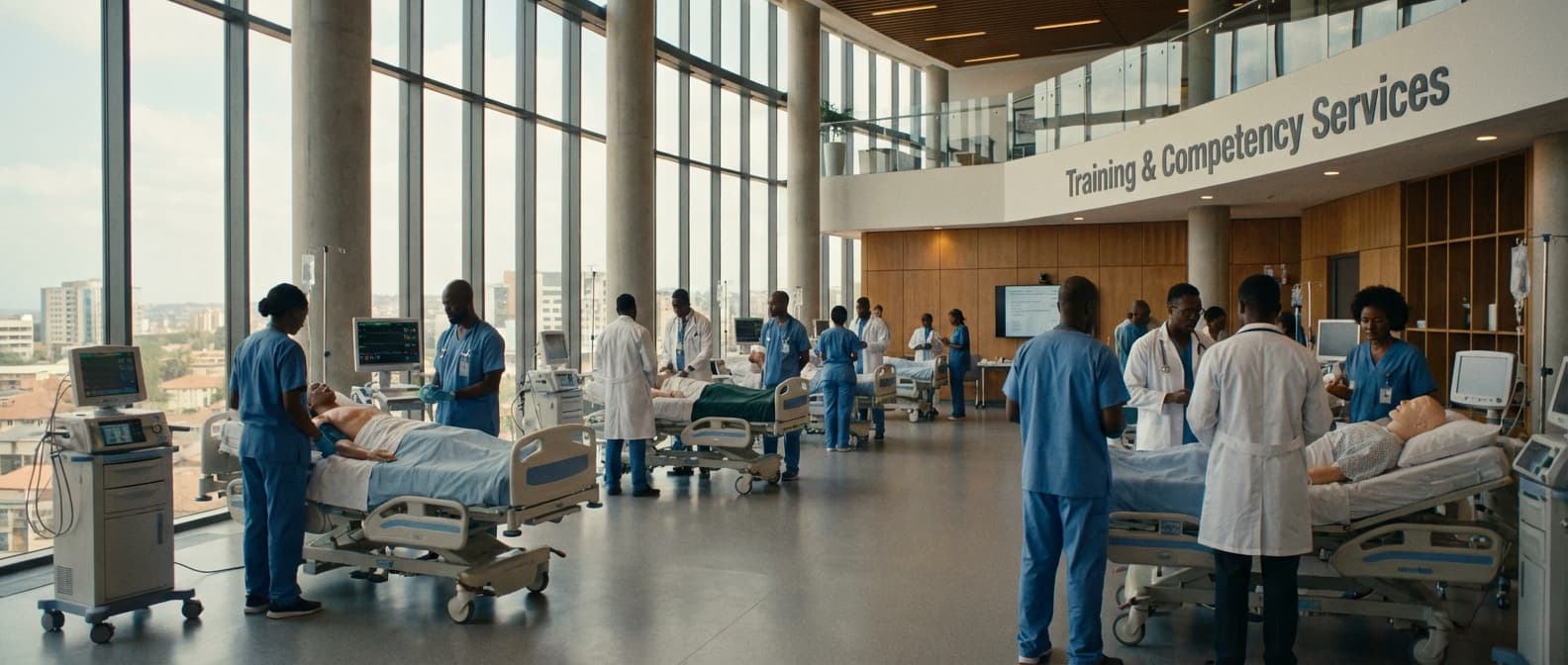
Anesthesia Workstation User Training Service in Guinea-Bissau
Engineering Excellence & Technical Support
Anesthesia Workstation User Training Service High-standard technical execution following OEM protocols and local regulatory frameworks.
Mastering Ventilator Modes
Comprehensive training on navigating and optimizing various ventilation modes (e.g., volume control, pressure control, SIMV, PEEP) for safe and effective patient ventilation in diverse clinical scenarios encountered in Guinea-Bissau.
Advanced Drug Infusion Protocols
In-depth sessions covering precise titration and management of anesthetic and analgesic infusions, including propofol, remifentanil, and opioids, with a focus on local availability and cost-effective alternatives.
Emergency Scenario Simulation
Hands-on simulation exercises focusing on identifying and managing critical events such as malignant hyperthermia, difficult intubation, and cardiovascular collapse, tailored to the resource realities and common challenges in Guinea-Bissau's healthcare settings.
What Is Anesthesia Workstation User Training Service In Guinea-bissau?
Anesthesia Workstation User Training Service in Guinea-Bissau refers to the provision of specialized educational programs designed to equip healthcare professionals with the knowledge and practical skills required for the safe, effective, and efficient operation of anesthesia workstations within the healthcare facilities of Guinea-Bissau. This service is crucial for ensuring patient safety, optimizing anesthetic delivery, and facilitating the proper maintenance and troubleshooting of advanced medical equipment in the specific context of the country's healthcare infrastructure and resource availability.
| Target Audience | Rationale for Training | Typical Use Cases |
|---|---|---|
| Anesthesiologists | To ensure proficiency in operating complex anesthesia delivery systems, critical for patient care in surgical and procedural settings. | Pre-operative assessment and planning, intra-operative anesthetic management, post-operative recovery monitoring, management of challenging airway cases. |
| Anesthesia Residents and Trainees | To build foundational knowledge and practical skills necessary for independent practice and safe patient management. | Learning core anesthetic techniques, practicing ventilator management, understanding monitoring parameters, developing troubleshooting skills. |
| Certified Registered Nurse Anesthetists (CRNAs) / Nurse Anesthetists | To enable competent and safe administration of anesthesia, often working collaboratively with anesthesiologists or in independent roles. | Similar to anesthesiologists, with a focus on workflow efficiency and patient monitoring within their scope of practice. |
| Biomedical Engineers and Technicians | To provide the technical expertise for installation, calibration, maintenance, and repair of anesthesia workstations. | Routine equipment servicing, calibration checks, fault diagnosis, corrective maintenance, ensuring equipment functionality and safety. |
| Hospital Administrators and Department Heads | To understand the capabilities and maintenance requirements of the equipment to ensure adequate resources and staff competency. | Resource allocation, staff development planning, ensuring compliance with equipment standards, assessing training needs. |
Key Components of Anesthesia Workstation User Training Service
- Equipment Familiarization: Detailed understanding of the anesthesia workstation's components, including ventilators, vaporizers, gas delivery systems, monitoring modules (e.g., ECG, SpO2, EtCO2, NIBP), and their integrated functionalities.
- Anesthetic Gas Management: Training on the safe handling, administration, and monitoring of volatile anesthetic agents and medical gases, including flow control, calibration, and leak detection.
- Ventilator Management: Comprehensive instruction on various ventilation modes, setting parameters (e.g., tidal volume, respiratory rate, PEEP, FiO2), understanding waveforms, and managing patient-ventilator synchrony.
- Patient Monitoring Integration: Training on utilizing integrated patient monitoring systems, interpreting physiological data, recognizing alarms, and responding to critical events.
- Pharmacological Principles in Anesthesia: Review of the pharmacology of commonly used anesthetic agents and adjuncts as they relate to workstation operation and patient response.
- Troubleshooting and Maintenance: Basic diagnostic procedures, identification of common equipment malfunctions, and fundamental preventative maintenance protocols.
- Emergency Procedures: Protocols for responding to equipment failure or critical patient events during anesthesia delivery using the workstation.
- Infection Control and Sterilization: Proper procedures for cleaning and disinfecting workstation components to prevent cross-contamination.
- Regulatory and Safety Compliance: Adherence to local and international guidelines and standards for anesthesia practice and equipment use.
- Scenario-Based Training: Practical simulations of various clinical scenarios to reinforce learned skills and decision-making processes.
Who Needs Anesthesia Workstation User Training Service In Guinea-bissau?
Anesthesia Workstation User Training Services are crucial for ensuring the safe, effective, and efficient operation of advanced anesthesia equipment. This specialized training is not just about basic functionality but also covers advanced features, troubleshooting, and emergency protocols. In Guinea-Bissau, where healthcare infrastructure is developing and access to specialized medical technology may be limited, such training plays a vital role in bridging the knowledge gap and empowering healthcare professionals.
| Department/Role | Specific Needs & Benefits of Training |
|---|---|
| Anesthesiology Department | Ensuring anesthesiologists are proficient in operating complex workstations, understanding ventilation modes, gas delivery, patient monitoring integration, and emergency procedures. This directly impacts patient safety and surgical outcomes. |
| Operating Room (OR) Nursing Staff | Training OR nurses on the setup, daily checks, basic operation, and troubleshooting of the anesthesia workstation. They are often the first point of contact for equipment issues during surgery. |
| Biomedical Engineering/Technical Support | Equipping biomedical technicians with the knowledge to perform routine maintenance, calibration, and basic troubleshooting of anesthesia workstations. This reduces downtime and reliance on external support. |
| Surgical Department Heads/Chiefs of Surgery | Understanding the capabilities of the anesthesia workstations allows surgical leaders to better plan procedures, optimize resource allocation, and ensure their teams have the necessary skills for complex surgeries. |
| Procurement and Logistics Teams | While not direct users, understanding the training requirements and support needs associated with anesthesia workstations can inform better purchasing decisions and long-term equipment management strategies. |
Target Customers and Departments Requiring Anesthesia Workstation User Training Service in Guinea-Bissau:
- {"title":"Hospitals and Major Healthcare Facilities","description":"These are the primary institutions that would invest in and utilize anesthesia workstations. Training ensures their medical staff can maximize the benefits of these critical devices."}
- {"title":"Government Health Ministries and Agencies","description":"These bodies are responsible for national health policy, procurement of medical equipment, and the overall quality of healthcare. They may sponsor or mandate training for public hospitals."}
- {"title":"Non-Governmental Organizations (NGOs) and International Aid Organizations","description":"Organizations working to improve healthcare access and quality in Guinea-Bissau often procure advanced medical equipment. Training is essential for the sustainability of their projects and the effective use of donated equipment."}
- {"title":"Medical Training and Education Institutions","description":"Universities, medical schools, and nursing colleges that offer anesthesiology or surgical programs can integrate this training into their curriculum to prepare future healthcare professionals."}
Anesthesia Workstation User Training Service Process In Guinea-bissau
This document outlines the user training service process for anesthesia workstations in Guinea-Bissau. It details the workflow from the initial customer inquiry to the successful execution of the training program. The process is designed to be efficient, transparent, and tailored to the specific needs of healthcare facilities in Guinea-Bissau, ensuring users are competent and confident in operating anesthesia workstations.
| Phase | Step | Description | Key Activities | Responsible Parties | Timeline (Indicative) |
|---|---|---|---|---|---|
| Phase 1: Inquiry and Needs Assessment | 1.1 Initial Contact | Customer (hospital, clinic, government health agency) expresses interest in anesthesia workstation user training. | Receive inquiry via email, phone, or dedicated contact form. Acknowledge receipt. | Customer, Training Provider | 1-2 Business Days |
| 1.2 Preliminary Discussion | Understand the customer's specific requirements, current equipment, and training objectives. | Conduct a remote or in-person meeting. Discuss number of trainees, workstation models, existing skill levels, desired outcomes. | Training Provider, Customer | 2-5 Business Days | |
| 1.3 Site Assessment (if applicable) | Evaluate the training environment and available resources at the customer's facility. | Visit the facility to assess training room suitability, power availability, network access, and actual workstations to be used. | Training Provider, Customer | 3-7 Business Days (depending on location) | |
| Phase 2: Proposal and Agreement | 2.1 Proposal Development | Create a detailed proposal outlining the training scope, methodology, duration, curriculum, and cost. | Define learning objectives, modules, hands-on practice sessions, assessment methods, trainer profiles, and deliverables. | Training Provider | 5-7 Business Days |
| 2.2 Proposal Review and Negotiation | Customer reviews the proposal and discusses any modifications or clarifications. | Allow for Q&A, adjustments to content or schedule, and budget discussions. | Customer, Training Provider | 3-5 Business Days | |
| 2.3 Contract/Agreement Signing | Formalize the training service agreement. | Both parties sign a contract detailing terms, conditions, payment schedule, and responsibilities. | Customer, Training Provider | 2-3 Business Days | |
| Phase 3: Pre-Training Preparation | 3.1 Curriculum Customization | Tailor the training content based on the agreed-upon needs assessment and proposal. | Develop or adapt training materials, presentations, manuals, and practical exercises. | Training Provider | 5-10 Business Days |
| 3.2 Trainer Assignment and Briefing | Select and brief the appropriate trainers for the specific workstation models and customer context. | Ensure trainers are qualified, experienced, and understand the project objectives. | Training Provider | 2-3 Business Days | |
| 3.3 Logistics and Scheduling | Coordinate all logistical aspects for the training. | Finalize training dates, venue booking (if external), travel and accommodation for trainers, equipment delivery (if applicable), and trainee registration. | Training Provider, Customer | 7-14 Business Days | |
| 3.4 Participant Communication | Inform registered participants about the training schedule, location, and any prerequisites. | Send out official invitations, joining instructions, and pre-reading materials (if any). | Training Provider | 3-5 Business Days before training | |
| Phase 4: Training Execution | 4.1 On-site/Remote Training Delivery | Conduct the training sessions as per the agreed curriculum and schedule. | Deliver theoretical modules, practical demonstrations, hands-on exercises, and case studies. | Training Provider (Trainer) | Duration of training (e.g., 2-5 days) |
| 4.2 Skill Assessment | Evaluate the participants' understanding and practical skills. | Conduct quizzes, practical skill tests, and observational assessments. | Training Provider (Trainer) | During and at the end of training | |
| 4.3 Feedback Collection | Gather feedback from participants on the training delivery and content. | Distribute feedback forms and conduct informal discussions. | Training Provider (Trainer) | At the end of training | |
| Phase 5: Post-Training Support and Evaluation | 5.1 Certification and Reporting | Issue certificates of completion to successful participants and provide a training report. | Compile assessment results, feedback summaries, and generate certificates. | Training Provider | 3-5 Business Days after training |
| 5.2 Post-Training Follow-up | Offer ongoing support and address any immediate post-training queries. | Provide a contact point for questions, troubleshoot issues encountered in practice. | Training Provider | Ongoing for a defined period (e.g., 1 month) | |
| 5.3 Performance Evaluation | Assess the long-term impact of the training on user competence and workstation utilization. | Conduct follow-up surveys or site visits (if agreed). | Training Provider, Customer | 1-3 Months after training | |
| 5.4 Service Review | Review the overall training service provided and identify areas for improvement. | Analyze feedback, performance data, and customer satisfaction. | Training Provider | Ongoing |
Anesthesia Workstation User Training Service Process in Guinea-Bissau
- Phase 1: Inquiry and Needs Assessment
- Phase 2: Proposal and Agreement
- Phase 3: Pre-Training Preparation
- Phase 4: Training Execution
- Phase 5: Post-Training Support and Evaluation
Anesthesia Workstation User Training Service Cost In Guinea-bissau
Providing anesthesia workstation user training services in Guinea-Bissau involves several cost factors that influence the overall pricing. These services are crucial for ensuring medical professionals can safely and effectively operate complex anesthesia equipment, which directly impacts patient care. The cost is typically determined by a combination of logistical, human resource, and service-specific elements.
| Service Component | Estimated Cost Range (GNF) | Notes |
|---|---|---|
| Basic Operator Training (1-2 days per workstation model) | 300,000 - 750,000 | Covers fundamental operations, safety features. Price can vary based on number of participants and trainer's level. |
| Advanced Operation & Troubleshooting Training (3-5 days per workstation model) | 700,000 - 1,500,000 | Includes in-depth system diagnostics, maintenance basics, and complex scenario handling. |
| On-Site Training Fee (per day, excluding trainer's per diem/travel) | 150,000 - 300,000 | This is a base daily rate for the trainer's time at the location. |
| Trainer's Travel & Accommodation (per diem, round trip) | Variable (e.g., 100,000 - 400,000+ depending on distance) | Includes flights, local transport, and hotel costs for the trainer. |
| Training Materials (per participant) | 20,000 - 50,000 | Cost for manuals, handouts, and supplementary resources. |
| Customization Fee (per project) | 50,000 - 200,000 | For tailoring the curriculum to specific institutional needs or workstation configurations. |
| Certification/Assessment Fee (per participant) | 30,000 - 70,000 | Covers the cost of creating and administering assessments and issuing certificates. |
Key Pricing Factors for Anesthesia Workstation User Training in Guinea-Bissau:
- Trainer's Expertise and Experience: Highly qualified and experienced anesthesia trainers, especially those with international certifications or extensive experience with specific workstation models, command higher fees. Their ability to impart knowledge effectively and troubleshoot issues is a significant value proposition.
- Duration and Intensity of Training: The length of the training program (e.g., a few days for basic operation vs. a week for advanced features and troubleshooting) directly impacts the cost. More intensive and comprehensive programs will naturally be more expensive.
- Number of Participants: While some trainers might charge a flat fee per training session, others will adjust pricing based on the number of attendees. Larger groups may incur additional costs for materials, logistical arrangements, and potentially a higher trainer-to-participant ratio for effective learning.
- Location and Logistics: Training conducted in remote areas of Guinea-Bissau can incur higher costs due to travel expenses for the trainers (transportation, accommodation, per diem). If the training is held at the client's facility, the provider will factor in the logistical challenges of reaching that location.
- Workstation Model Specificity: Training focused on highly specialized or advanced anesthesia workstations may require trainers with specific expertise in those models. The complexity of the equipment can also dictate the depth and duration of the training, thus affecting cost.
- Training Materials and Equipment: The cost of developing and providing training manuals, simulation equipment, or access to functional workstations for hands-on practice will be factored into the overall price.
- Customization of Training: Tailoring the training curriculum to meet the specific needs and existing skill levels of the medical staff can add to the cost due to the extra development and planning required.
- Certification and Assessment: If the training includes formal certification or assessment processes, these elements will contribute to the overall service cost. This often involves creating and administering tests, and providing certificates upon successful completion.
- Provider's Overhead and Profit Margin: Like any business, training providers have operational costs (office space, administration, insurance) and aim to make a profit, which is reflected in their pricing.
Affordable Anesthesia Workstation User Training Service Options
Providing comprehensive and accessible user training for affordable anesthesia workstations is crucial for ensuring safe and effective patient care. This service focuses on equipping healthcare professionals with the knowledge and skills to operate these cost-effective anesthesia machines proficiently. We offer flexible training options designed to meet diverse institutional needs and budgets, emphasizing value bundles and cost-saving strategies.
| Value Bundle Name | Included Services | Ideal For | Cost-Saving Strategy |
|---|---|---|---|
| Essentials Package | Basic operation, core safety features, essential maintenance overview. | New users, smaller clinics, initial onboarding. | Covers fundamental knowledge at a base price. |
| Proficiency Package | Essentials Package + advanced ventilation modes, drug calculation integration, common troubleshooting scenarios. | Mid-sized departments, users seeking deeper understanding. | Bundled training for more comprehensive skills at a reduced per-module cost. |
| Expertise Package | Proficiency Package + complex case simulations, advanced troubleshooting, integration with other hospital systems, train-the-trainer options. | Larger hospitals, teaching institutions, departments requiring in-depth expertise. | Maximizes skill development and knowledge transfer, reducing long-term training needs. |
| Customized Solutions | Tailored training modules based on specific institutional needs and existing skill levels. | Institutions with unique requirements or specialized workflows. | Directly addresses needs, avoiding unnecessary training components. |
Key Features of Our Anesthesia Workstation Training Services:
- On-site and remote training modules tailored to specific workstation models.
- Hands-on practical sessions with simulated scenarios.
- Certification for trained personnel.
- Post-training support and refresher courses.
- Customizable training curricula to address specific departmental requirements.
- Focus on essential features, safety protocols, and troubleshooting.
- Integration of best practices in anesthesia delivery.
Verified Providers In Guinea-bissau
When seeking healthcare services in Guinea-Bissau, it's crucial to engage with verified providers who meet stringent quality and ethical standards. Franance Health has emerged as a leading organization dedicated to ensuring the integrity and accessibility of healthcare. Their credentialing process for providers is rigorous, focusing on qualifications, experience, ethical conduct, and adherence to international best practices. This meticulous approach guarantees that patients receive care from competent and trustworthy professionals.
| Category | Franance Health Verification Criteria | Benefits for Patients |
|---|---|---|
| Medical Practitioners | Valid medical license, specialized training, continuous professional development, clean disciplinary record. | Access to skilled doctors and specialists for accurate diagnosis and effective treatment. |
| Healthcare Facilities | Adherence to hygiene and safety standards, availability of essential equipment, trained support staff, proper waste management. | Safe and well-equipped environments for consultations, procedures, and recovery. |
| Specialized Services | Certification in specific medical fields, experienced personnel in niche areas, advanced technological capabilities. | Access to specialized treatments and advanced medical interventions. |
| Emergency Care | Availability of emergency response teams, well-equipped ambulances, trained paramedics, established protocols for critical situations. | Timely and effective response to medical emergencies, potentially saving lives. |
| Pharmaceutical Services | Licensed pharmacies, sourcing of authentic medications, proper storage and dispensing procedures, qualified pharmacists. | Reliable access to safe and effective prescription and over-the-counter medications. |
Why Franance Health Credentials Matter:
- Ensures qualified and experienced medical professionals.
- Upholds ethical standards and patient-centered care.
- Promotes compliance with national and international health regulations.
- Facilitates access to a network of reliable healthcare facilities.
- Builds trust and confidence in the healthcare system for both local communities and international visitors.
Scope Of Work For Anesthesia Workstation User Training Service
This Scope of Work (SOW) outlines the requirements for providing comprehensive user training services for Anesthesia Workstations. The objective is to ensure that healthcare professionals are proficient in the safe, effective, and efficient operation of the anesthesia workstation, thereby enhancing patient care and minimizing operational risks.
| Technical Deliverable | Description | Standard Specification / Format | Acceptance Criteria |
|---|---|---|---|
| Training Curriculum Development | Creation of a comprehensive training program covering all aspects of anesthesia workstation operation. | Modular structure with clear learning objectives for each module. Content to be aligned with manufacturer guidelines and relevant clinical standards. Format: Digital document (PDF, DOCX) and presentation slides (PPTX). | Curriculum reviewed and approved by the client's clinical and biomedical engineering departments. Covers all specified learning objectives. |
| Training Materials | Development and provision of all necessary training materials for participants. | User manuals, quick reference guides, cheat sheets, case studies, interactive exercises. Format: Digital (PDF) and/or printed copies as specified by the client. Language: English (or specified language). | Materials are accurate, up-to-date, easy to understand, and directly support the curriculum. Sufficient copies provided for all trainees. |
| Instructor-Led Training Sessions | Delivery of interactive training sessions by qualified instructors. | On-site or remote (virtual) sessions as agreed. Sessions to include theoretical explanations, practical demonstrations, hands-on exercises, and Q&A. Minimum instructor-to-trainee ratio as per industry standards (e.g., 1:10). | Successful completion of sessions by the majority of trainees (e.g., >90%). Positive feedback from trainees on instructor's knowledge and delivery. |
| Hands-on Practical Sessions | Opportunity for trainees to operate the anesthesia workstation under supervision. | Utilizing actual or simulated anesthesia workstations. Exercises to cover common workflows, alarm responses, and troubleshooting scenarios. Adequate supervision provided. | Trainees demonstrate proficiency in operating key functions and responding to simulated scenarios. No critical errors observed during practical assessment. |
| Competency Assessment | Evaluation of trainee knowledge and practical skills post-training. | Written examinations, practical skill demonstrations, simulation-based assessments. Clear pass/fail criteria established prior to assessment. Format: Digital or printed assessment forms. | Trainees achieve a minimum passing score (e.g., 80%) on both written and practical assessments. Individual feedback provided to trainees. |
| Post-Training Support | Provision of limited post-training support to address user queries. | Email or phone support for a defined period (e.g., 30 days) following the training completion. Response time within agreed SLA (e.g., 24 business hours). | Queries addressed promptly and accurately. Client satisfaction with the level of support provided. |
| Training Report | Summary report detailing the training activities and outcomes. | Includes number of sessions, number of trainees, assessment results, feedback summary, and any recommendations. Format: Digital document (PDF). | Report submitted within agreed timeframe (e.g., 7 days post-training). Report is comprehensive and accurately reflects training delivery and outcomes. |
| Trainer Qualifications | Demonstration of instructor expertise and experience. | Resumes of trainers highlighting relevant clinical experience, anesthesia workstation expertise, and adult learning principles. Certifications where applicable. Format: Digital documents (PDF). | Trainers possess documented experience and qualifications relevant to the anesthesia workstation and user training. |
Key Objectives of Training
- To equip users with a thorough understanding of the anesthesia workstation's features, functionalities, and operational principles.
- To train users on proper setup, calibration, and pre-use checks.
- To ensure users can competently operate the workstation during various anesthesia procedures, including routine and emergent situations.
- To educate users on alarm management, troubleshooting common issues, and appropriate response protocols.
- To familiarize users with maintenance, cleaning, and disinfection procedures.
- To promote adherence to best practices and safety guidelines related to anesthesia workstation usage.
- To provide users with the knowledge to interpret workstation data and make informed clinical decisions.
Service Level Agreement For Anesthesia Workstation User Training Service
This Service Level Agreement (SLA) outlines the guaranteed response times and uptime for the Anesthesia Workstation User Training Service provided by [Your Company Name]. This SLA is intended to ensure a high level of service availability and prompt support for all users of the Anesthesia Workstation. It applies to the training platform, associated digital resources, and technical support dedicated to the training service.
| Service Component | Uptime Guarantee | Response Time (Standard Support) | Response Time (Critical Support) |
|---|---|---|---|
| Anesthesia Workstation Training Platform Access | 99.5% (Measured monthly, excluding scheduled maintenance) | Within 4 business hours | Within 1 business hour |
| Digital Training Modules and Resources | 99.8% (Content availability within the platform) | Within 8 business hours | Within 4 business hours |
| Technical Support for Training Platform Issues | N/A (Support is a reactive service) | Within 4 business hours | Within 1 business hour |
| Scheduled Training Session Availability (if applicable) | 100% (for confirmed scheduled sessions) | N/A (sessions are pre-booked) | N/A (sessions are pre-booked) |
Key Service Components Covered
- Anesthesia Workstation Training Platform Access
- Digital Training Modules and Resources
- Technical Support for Training Platform Issues
- Scheduled Training Session Availability (if applicable)
Frequently Asked Questions

Ready when you are
Let's scope your Anesthesia Workstation User Training Service in Guinea-Bissau project in Guinea-Bissau.

Scaling healthcare logistics and technical systems across the entire continent.