
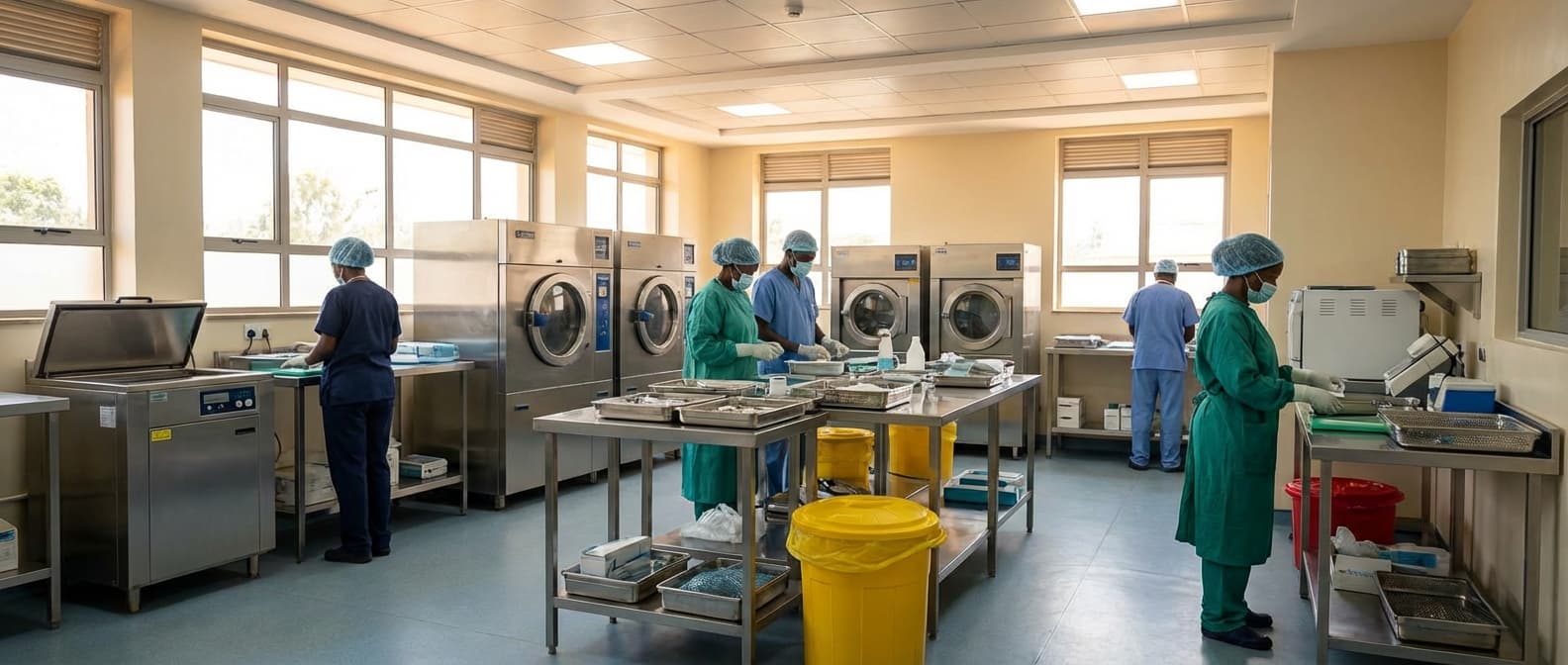
Infection-Control Readiness Support Service for Reusable Equipment in Guinea-Bissau
Engineering Excellence & Technical Support
Infection-Control Readiness Support Service for Reusable Equipment High-standard technical execution following OEM protocols and local regulatory frameworks.
Advanced Sterilization Protocols
We implement globally recognized sterilization and disinfection protocols tailored for reusable medical equipment, ensuring maximum efficacy against a broad spectrum of pathogens and significantly reducing healthcare-associated infections.
Equipment Maintenance & Calibration
Our service includes routine maintenance and precise calibration of infection control equipment (e.g., autoclaves, washer-disinfectors), guaranteeing their operational integrity and consistent performance for safe and effective sterilization.
Traceability & Supply Chain Management
We establish robust traceability systems for reusable equipment, from decontamination to patient use, coupled with optimized supply chain management for sterile consumables, ensuring accountability and preventing breaches in the infection control cycle.
What Is Infection-control Readiness Support Service For Reusable Equipment In Guinea-bissau?
Infection-Control Readiness Support Service for Reusable Equipment in Guinea-Bissau refers to a specialized consultancy and technical assistance program designed to enhance the capacity of healthcare facilities and related organizations within Guinea-Bissau to safely and effectively manage reusable medical equipment. This service addresses critical gaps in infection prevention and control (IPC) practices related to the decontamination, sterilization, and storage of instruments and devices that are intended for multiple patient uses. The overarching objective is to minimize the risk of healthcare-associated infections (HAIs) transmitted via contaminated reusable equipment.
| Who Needs the Service? | Typical Use Cases | ||||||||
|---|---|---|---|---|---|---|---|---|---|
| Public Healthcare Facilities: Hospitals, health centers, and clinics operating under the Ministry of Health, particularly those with surgical departments, maternity wards, and outpatient services requiring reusable instruments. | Private Healthcare Providers: Clinics and hospitals in the private sector seeking to meet national healthcare standards and ensure patient safety. | Non-Governmental Organizations (NGOs) and International Health Organizations: Implementing or supporting healthcare infrastructure projects, mobile clinics, or specialized medical missions where consistent IPC for reusable equipment is paramount. | Training Institutions: Medical and nursing schools aiming to integrate robust IPC principles into their curricula, especially concerning practical skills for managing reusable medical devices. | Government Ministries and Regulatory Bodies: Seeking to establish or strengthen national IPC guidelines and oversight mechanisms for healthcare facilities. | Facilities with High Patient Throughput: Any healthcare setting where a large volume of reusable instruments necessitates efficient and safe reprocessing. | Facilities Experiencing Increased HAIs: Situations where a rise in infections linked to medical procedures or equipment prompts a review of current IPC practices. | New Facility Setups or Renovations: Establishing or upgrading sterile processing areas to ensure optimal design and functionality. | Introduction of New Surgical Procedures or Equipment: Requiring updated protocols for the reprocessing of novel instruments or devices. | Post-Conflict or Post-Disaster Settings: Rebuilding or strengthening healthcare systems where IPC infrastructure may have been compromised. |
Key Components of the Service:
- Needs Assessment and Gap Analysis: Comprehensive evaluation of existing IPC protocols, infrastructure, equipment, consumables, and staff training related to reusable equipment management.
- Protocol Development and Refinement: Designing or optimizing Standard Operating Procedures (SOPs) for the entire lifecycle of reusable equipment, from point-of-use cleaning to final sterile storage.
- Training and Capacity Building: Conducting targeted training for healthcare personnel, including nurses, technicians, and sterilization staff, on best practices in cleaning, disinfection, sterilization (e.g., autoclaving, chemical sterilization), packaging, and handling.
- Equipment Assessment and Recommendation: Evaluating the suitability and functionality of existing sterilization and disinfection equipment, and providing recommendations for acquisition, maintenance, and calibration.
- Supply Chain and Consumables Management: Advising on the procurement and inventory management of essential disinfectants, sterilants, detergents, packaging materials, and monitoring devices.
- Monitoring and Evaluation (M&E) System Development: Establishing frameworks for routine monitoring of sterilization processes (e.g., biological and chemical indicators) and assessing the overall effectiveness of the IPC program.
- Infrastructure and Workflow Optimization: Providing guidance on the design and organization of sterile processing departments (SPDs) or central sterile supply departments (CSSDs) to ensure efficient workflow and prevent cross-contamination.
- Regulatory Compliance Support: Assisting facilities in adhering to national and international guidelines and standards for medical device reprocessing.
- Emergency Preparedness and Response Planning: Incorporating considerations for maintaining reusable equipment IPC during public health emergencies or disruptions.
Who Needs Infection-control Readiness Support Service For Reusable Equipment In Guinea-bissau?
This service is crucial for healthcare facilities in Guinea-Bissau that handle reusable medical equipment. It aims to strengthen their capacity to effectively disinfect, sterilize, and manage reusable items to prevent healthcare-associated infections (HAIs) and ensure patient safety.
| Target Customer Group | Key Departments/Units Involved | Specific Needs/Challenges |
|---|---|---|
| Hospitals (Public and Private) | Central Sterile Supply Department (CSSD)/Sterilization Units, Operating Rooms, Intensive Care Units (ICUs), Emergency Departments, Maternity Wards, Inpatient Wards, Dental Units, Laboratories | Inadequate infrastructure for sterilization, insufficient or broken equipment, lack of standardized protocols, insufficient training of staff on disinfection and sterilization, challenges in sourcing appropriate cleaning agents and disinfectants, poor waste management of contaminated materials. |
| Health Centers (Centros de Saúde) & Clinics | Consultation Rooms, Minor Procedure Rooms, Maternity Units, Nursing Stations | Limited access to advanced sterilization equipment, reliance on manual cleaning methods, potential for cross-contamination due to shared equipment, often lack of dedicated sterilization areas, staff may have broader responsibilities and less specialized training in infection control. |
| Surgical Centers | Operating Rooms, Post-Anesthesia Care Units (PACUs), CSSD/Sterilization Units | High volume of reusable surgical instruments requiring stringent sterilization, risk of surgical site infections (SSIs), need for rapid turnaround of sterile instruments, potential for equipment malfunction or inadequate sterilization. |
| Maternity Wards | Delivery Rooms, Newborn Nurseries, Postpartum Wards | Sterilization of instruments used in childbirth (e.g., speculums, forceps), management of reusable feeding equipment for infants, prevention of neonatal infections, potential for exposure to bodily fluids. |
| Laboratories | Microbiology Labs, Pathology Labs, Blood Banks (if handling reusable collection/processing equipment) | Sterilization of glassware, culture media preparation equipment, dissection tools, and other reusable laboratory items, prevention of laboratory-acquired infections, ensuring accuracy of diagnostic tests. |
| NGO Health Facilities | Varies depending on the services offered (e.g., primary care, surgical camps, maternal health) | Often operate with limited resources and infrastructure, may face similar challenges to public health centers, need for context-specific solutions and training, reliance on external support for advanced equipment and supplies. |
Target Customers and Departments
- Hospitals (Public and Private)
- Health Centers (Centros de Saúde)
- Clinics
- Surgical Centers
- Maternity Wards
- Dental Clinics
- Laboratories (handling reusable consumables)
- Non-governmental Organization (NGO) health facilities
Infection-control Readiness Support Service For Reusable Equipment Process In Guinea-bissau
This document outlines the workflow for the Infection-Control Readiness Support Service for Reusable Equipment (ICRSS-RE) process in Guinea-Bissau. The service aims to enhance the safe reprocessing of reusable medical devices, thereby improving patient safety and reducing healthcare-associated infections. The workflow encompasses stages from the initial inquiry about the service to its full execution and subsequent follow-up.
| Stage | Description | Key Activities | Responsible Parties | Expected Outcome |
|---|---|---|---|---|
| Initial contact from a healthcare facility seeking support for their reusable equipment reprocessing. This stage involves understanding the facility's current challenges and needs. | Healthcare facility expresses interest; Service provider responds; Initial discussion to understand needs; Information gathering on existing practices. | Healthcare Facility Management, Infection Control Committee, Service Provider Focal Point | Clear understanding of the facility's interest and basic needs; Agreement to proceed with further assessment. |
| Based on the initial inquiry, a formal proposal is developed, outlining the scope of services, methodology, timeline, and costs. This leads to a formal agreement. | Service provider develops a detailed proposal; Facility reviews proposal; Negotiation of terms; Signing of Memorandum of Understanding (MoU) or Service Agreement. | Service Provider (Technical Team), Healthcare Facility Management, Ministry of Health (if applicable) | Formal commitment to the service; Defined scope, timeline, and responsibilities. |
| A comprehensive on-site assessment of the existing reusable equipment reprocessing practices, infrastructure, human resources, and infection control protocols. | Site visit; Observation of current practices (cleaning, disinfection, sterilization); Interviews with staff; Review of documentation; Identification of gaps and bottlenecks; Collection of baseline data. | Service Provider (Assessment Team), Healthcare Facility Staff (various departments) | Detailed understanding of the current state of reprocessing; Identification of specific areas for improvement; Baseline data for future evaluation. |
| A customized action plan is created based on the assessment findings, outlining specific interventions, objectives, timelines, and responsible persons for each improvement area. | Analysis of assessment data; Prioritization of interventions; Development of specific, measurable, achievable, relevant, and time-bound (SMART) objectives; Identification of required resources; Consultation with facility stakeholders. | Service Provider (Technical Team), Healthcare Facility Infection Control Committee and Management | A clear roadmap for improvement; Agreement on prioritized interventions and activities. |
| Provision of targeted training to healthcare workers involved in the reprocessing of reusable equipment, covering best practices, standard operating procedures (SOPs), and the use of equipment. | Development of training modules; Delivery of theoretical and practical training sessions; Competency assessments; On-the-job coaching. | Service Provider (Trainers), Healthcare Facility Staff (Nurses, Technicians, Cleaners, Biomedical Engineers) | Increased knowledge and skills of staff; Improved understanding of infection control principles; Enhanced competency in reprocessing procedures. |
| In cases where the assessment reveals a lack of essential supplies or functional equipment, the service may include the provision or facilitation of procurement. | Identification of critical supply and equipment needs; Procurement or donation of disinfectants, detergents, PPE, sterilizers, etc.; Installation and initial training on new equipment. | Service Provider (Logistics/Procurement), Healthcare Facility Management, Ministry of Health | Availability of necessary resources for safe reprocessing; Functional equipment in place. |
| Ongoing support and mentorship to the healthcare facility as they implement the action plan and new practices. This involves troubleshooting and reinforcing learning. | Regular follow-up visits; On-site supervision and guidance; Problem-solving sessions; Mentoring of key personnel; Reinforcement of training concepts. | Service Provider (Field Officers/Mentors), Healthcare Facility Staff | Successful adoption of new practices; Overcoming implementation challenges; Sustained adherence to protocols. |
| Regular monitoring of the implemented interventions to assess progress, identify any deviations, and measure the impact of the service. This includes data collection and analysis. | Data collection on key indicators (e.g., adherence to SOPs, reduction in infections, equipment functionality); Periodic review meetings; Mid-term and final evaluations; Reporting on progress and outcomes. | Service Provider (M&E Team), Healthcare Facility Staff, Ministry of Health | Evidence of progress and impact; Identification of areas needing further attention; Data-driven decision-making. |
| Ensuring the long-term sustainability of improved reprocessing practices through continued support, capacity building, and integration into existing facility systems. | Development of sustainability plans; Training of internal champions; Integration of reprocessing into quality improvement frameworks; Linkages with national guidelines and resources; Follow-up consultations. | Service Provider (Consultants), Healthcare Facility Management, Ministry of Health | Sustained adherence to best practices; Institutionalization of infection control for reusable equipment; Reduced risk of healthcare-associated infections. |
Infection-Control Readiness Support Service for Reusable Equipment Process Workflow
- Inquiry and Needs Assessment
- Service Proposal and Agreement
- On-site Assessment and Baseline Evaluation
- Development of Tailored Action Plan
- Training and Capacity Building
- Provision of Supplies and Equipment (if applicable)
- Implementation Support and Mentorship
- Monitoring and Evaluation
- Post-Service Support and Sustainability
Infection-control Readiness Support Service For Reusable Equipment Cost In Guinea-bissau
This document outlines the pricing factors and estimated cost ranges for an Infection-Control Readiness Support Service for Reusable Equipment in Guinea-Bissau. The service aims to ensure that healthcare facilities have the necessary infrastructure, training, and supplies to safely clean, disinfect, and sterilize reusable medical equipment, thereby reducing healthcare-associated infections (HAIs). The pricing is presented in Guinean Franc (XOF), the local currency.
| Service Component | Estimated Cost Range (XOF per facility, per year) | Notes |
|---|---|---|
| Initial Assessment and Planning | 150,000 - 400,000 | Covers site visits, needs assessment, report generation, and action plan development. Varies by facility complexity. |
| Training of Healthcare Workers | 200,000 - 600,000 | Includes curriculum development, trainer fees, materials, and logistics for training sessions. Dependent on the number of staff and training modules. |
| Supply Chain Management (Disinfectants, Consumables) | 300,000 - 1,000,000+ | Cost of procuring and managing essential cleaning agents, disinfectants, PPE, and sterilization consumables. Highly variable based on usage and procurement volume. |
| Equipment Maintenance and Calibration | 100,000 - 500,000 | Includes routine maintenance, minor repairs, and calibration of sterilization and disinfection equipment. May be higher if new equipment is procured. |
| Monitoring and Quality Assurance | 100,000 - 300,000 | Costs for regular site visits, data collection, supervision, and reporting on infection control practices. |
| Logistics and Administration | 50,000 - 200,000 | Covers travel, communication, project management, and administrative overhead. |
| Full-Service Package (Example: Small Health Center) | 900,000 - 2,000,000 | Includes a combination of the above services for a typical small healthcare facility. |
| Full-Service Package (Example: Medium Hospital) | 2,500,000 - 6,000,000+ | Includes a more comprehensive package for a larger healthcare institution with higher patient volumes and more complex needs. |
Key Pricing Factors:
- Scope of Service: The complexity and breadth of the support offered (e.g., assessment, training, supply chain management, equipment maintenance, monitoring).
- Facility Size and Type: The number of healthcare facilities involved, their size (number of beds, patient volume), and the types of services they offer (e.g., primary health center vs. referral hospital).
- Current Infrastructure: The existing state of infection control facilities, availability of water and electricity, and the condition of current equipment.
- Training Needs: The level of training required for healthcare workers, the number of personnel to be trained, and the duration and intensity of the training programs.
- Supply Chain Establishment: The cost of setting up or improving the supply chain for disinfectants, cleaning agents, personal protective equipment (PPE), and sterilization consumables.
- Equipment Procurement/Maintenance: Costs associated with the purchase of new equipment, maintenance of existing equipment, or calibration services.
- Geographic Accessibility: Travel and logistics costs for service providers to reach remote or difficult-to-access healthcare facilities.
- Duration of Support: The length of the contract for the support service.
- Monitoring and Evaluation: The resources required for ongoing monitoring of infection control practices and evaluation of service impact.
- Local Context and Inflation: Fluctuations in the local economy, inflation rates, and the availability of local suppliers can influence pricing.
Affordable Infection-control Readiness Support Service For Reusable Equipment Options
Our Affordable Infection-Control Readiness Support Service for Reusable Equipment Options is designed to empower healthcare facilities with comprehensive and cost-effective solutions for ensuring the safety and compliance of their reusable medical devices. We understand the critical importance of robust infection control practices and the financial pressures healthcare providers face. This service offers a tiered approach, allowing facilities to select the level of support that best meets their needs and budget, while implementing strategic cost-saving measures throughout the process.
| Cost-Saving Strategy | Description | Impact on Service Delivery |
|---|---|---|
| Standardized Protocols | Implementing uniform cleaning, disinfection, and sterilization procedures across all relevant equipment reduces errors, rework, and wasted resources. | Ensures consistency and efficiency in all bundled service levels, leading to predictable outcomes and reduced staff training complexity. |
| Optimized Inventory Management | Analyzing reusable equipment inventory to identify underutilized or redundant items, and implementing efficient tracking systems minimizes capital expenditure and operational costs. | Supports the assessment phase of all bundles, enabling more targeted recommendations for cost reduction. Particularly impactful in the Premium bundle for ongoing optimization. |
| Preventative Maintenance Integration | Incorporating regular preventative maintenance checks for reprocessing equipment identifies potential issues before they lead to costly breakdowns or reprocessing failures. | Reduces the likelihood of service interruptions and associated costs. Contributes to the reliability of processes supported in all bundles, especially critical for the Premium bundle's continuous monitoring. |
| Staff Training and Competency Assessment | Investing in effective, targeted training ensures staff are proficient in reprocessing procedures, minimizing errors and the need for re-training or remediation. | Reduces the cost of errors and rework. Foundational to all bundles, with increasing depth and customization in higher tiers. |
| Technology Integration (where applicable) | Leveraging appropriate technology for tracking, monitoring, and reporting can improve efficiency and accuracy, leading to long-term cost savings. | Can enhance the effectiveness of reporting and monitoring in the Enhanced and Premium bundles, providing better data for decision-making and identifying further cost-saving opportunities. |
| Bulk Purchasing & Partnership Discounts | Negotiating for bundled supplies and equipment through our service can leverage economies of scale for our clients. | Can potentially reduce the overall cost of supplies and equipment necessary for effective infection control, indirectly benefiting the affordability of the service and the facility's operational budget. |
Value Bundles for Comprehensive Support
- {"title":"Essential Readiness Bundle","features":["On-site assessment of current reusable equipment handling processes.","Development of standardized cleaning, disinfection, and sterilization protocols.","Basic staff training on best practices and regulatory requirements.","Review of existing equipment inventory and usage patterns.","Monthly remote support via email and phone."],"description":"This foundational bundle provides core services for basic infection control preparedness. It's ideal for facilities seeking to establish fundamental protocols and ensure compliance with essential guidelines for reusable equipment."}
- {"title":"Enhanced Compliance Bundle","features":["All features of the Essential Readiness Bundle.","Advanced training modules on specific equipment types and pathogens.","Development of a comprehensive infection control manual.","Risk assessment for high-risk reusable equipment.","Data analysis of infection rates and equipment reprocessing effectiveness (limited scope).","Quarterly on-site review and process refinement."],"description":"Building upon the Essential bundle, this option offers more in-depth support for facilities aiming for higher levels of compliance and risk mitigation. It includes advanced training and more detailed process optimization."}
- {"title":"Premium Performance Bundle","features":["All features of the Enhanced Compliance Bundle.","Development and implementation of a full-scale infection control program.","Continuous monitoring and audit of reprocessing cycles.","Advanced data analytics and reporting for identifying trends and areas for improvement.","Benchmarking against industry best practices.","Customized training programs for all relevant staff.","Regular strategic planning sessions for infection control initiatives.","Priority remote and on-site support."],"description":"This premium bundle provides end-to-end support for facilities seeking to optimize their infection control operations for maximum efficiency, compliance, and patient safety. It includes proactive monitoring and advanced data analytics."}
Verified Providers In Guinea-bissau
In Guinea-Bissau's evolving healthcare landscape, identifying reliable and credentialed medical service providers is paramount for individuals seeking quality care. Franance Health has emerged as a leading entity, distinguished by its rigorous credentialing process and commitment to patient well-being. This document outlines why Franance Health providers represent the best choice for healthcare services in Guinea-Bissau.
| Credentialing Aspect | Franance Health's Approach | Benefit to Patients |
|---|---|---|
| Medical License Verification | Thorough checks with official regulatory bodies in Guinea-Bissau and internationally. | Ensures providers are legally authorized to practice medicine. |
| Educational Background & Training | Verification of degrees, diplomas, and specialized training from recognized institutions. | Confirms providers have the necessary foundational knowledge and skills. |
| Professional Experience | Detailed review of past clinical experience, including duration and areas of practice. | Assesses practical application of knowledge and ability to handle diverse cases. |
| Ethical Conduct & Reputation | Checks for any disciplinary actions or complaints from professional bodies or previous patients. | Upholds the integrity of the medical profession and builds patient trust. |
| Continuing Medical Education (CME) | Ensures providers actively participate in ongoing professional development. | Guarantees providers stay updated with the latest medical advancements and techniques. |
Why Franance Health Providers are the Best Choice in Guinea-Bissau:
- Unwavering Commitment to Credentialing: Franance Health employs a multi-faceted credentialing process that goes beyond basic qualifications. This includes verifying medical licenses, educational backgrounds, professional experience, and ensuring adherence to ethical standards. This meticulous approach guarantees that all affiliated providers are not only competent but also trustworthy.
- Access to Specialized Expertise: Through its extensive network, Franance Health connects patients with a diverse range of medical specialists. Whether you require general medical attention, surgical procedures, or treatment for specific conditions, Franance Health ensures access to practitioners with the most relevant and advanced expertise available in Guinea-Bissau.
- Focus on Patient-Centered Care: Franance Health's philosophy centers on the patient. Providers are selected for their empathetic approach, clear communication skills, and dedication to understanding and addressing individual patient needs. This ensures a supportive and comfortable healthcare experience.
- Adherence to International Standards: Franance Health strives to align its credentialing and operational standards with international best practices in healthcare delivery. This commitment translates to a higher quality of care, improved patient safety, and a more effective healthcare system for the population of Guinea-Bissau.
- Reduced Risk and Enhanced Trust: Partnering with a Franance Health verified provider significantly reduces the risk of encountering unqualified or fraudulent practitioners. This fosters a sense of trust and confidence for patients, allowing them to focus on their health with peace of mind.
- Facilitated Access to Modern Healthcare: Franance Health actively works to integrate modern medical practices and technologies into the healthcare services offered by its verified providers, thereby improving diagnostic accuracy and treatment outcomes.
Scope Of Work For Infection-control Readiness Support Service For Reusable Equipment
This Scope of Work (SOW) outlines the requirements for Infection-Control Readiness Support Services for Reusable Equipment. The service provider will be responsible for assessing, advising on, and supporting the implementation of robust infection control practices for all reusable medical equipment within the client's facilities. This includes, but is not limited to, developing and refining policies and procedures, providing training, and ensuring compliance with current best practices and regulatory standards. The objective is to minimize the risk of healthcare-associated infections (HAIs) transmitted through improperly processed reusable equipment.
| Deliverable | Description | Standard Specification / Compliance Requirement | Timeline (Example) | Acceptance Criteria |
|---|---|---|---|---|
| Assessment Report | Detailed analysis of existing workflows, equipment, staff knowledge, and documentation related to reusable equipment reprocessing. | Adherence to CDC Guidelines for Disinfection and Sterilization in Health-care Facilities, AAMI standards (e.g., ST90, ST58), and relevant local regulations. | Week 2-3 | Report is comprehensive, clearly identifies strengths and weaknesses, and is delivered in a structured format. |
| Revised Policies & Procedures | Development or amendment of policies and procedures covering all aspects of reusable equipment reprocessing, including decontamination, cleaning, disinfection, sterilization, storage, and distribution. | Aligned with latest WHO guidelines, national healthcare infection control guidelines, and manufacturer's instructions for use (IFUs) for all equipment. | Week 5-7 | Policies are clear, actionable, auditable, and approved by client's Infection Control Committee. |
| Training Program | Creation of tailored training modules and delivery of on-site training sessions for all staff involved in the reprocessing cycle. | Content covers principles of infection control, proper handling of contaminated equipment, specific reprocessing steps for different equipment types, documentation, and quality control. | Week 8-12 | Training materials are well-structured, easy to understand. Competency of trainees demonstrated through assessments. |
| Gap Analysis & Recommendations | Identification of discrepancies between current practices and best practices/standards, with actionable recommendations for improvement. | Focus on areas such as equipment maintenance, validation of cleaning/sterilization processes, staff training needs, and environmental controls. | Week 4 | Report clearly outlines gaps and provides practical, evidence-based recommendations. |
| Post-Implementation Review | Evaluation of the effectiveness of implemented changes through audits and data analysis. | Metrics may include reduction in infection rates, compliance scores, and staff feedback. | Week 16-18 | Report details impact of changes, identifies any residual issues, and proposes further optimization. |
| Technology Recommendations | Guidance on selecting and implementing appropriate technologies for cleaning, disinfection, and sterilization based on equipment types and facility needs. | Consideration of cost-effectiveness, efficiency, regulatory compliance, and user-friendliness. Reference to AAMI TIR34 for water quality if applicable. | Ongoing (during assessment and recommendation phases) | Recommendations are justified, technically sound, and align with client's budget and infrastructure. |
| Compliance Audit Report | Independent audit of the client's reusable equipment reprocessing processes against established standards. | Includes direct observation, documentation review, and staff interviews. Compliance with ISO 13485 for medical device reprocessing if applicable. | Week 14-15 | Audit is thorough, findings are objectively presented, and any non-compliance is clearly flagged with corrective action suggestions. |
Technical Deliverables
- Comprehensive assessment report of current reusable equipment infection control processes.
- Revised/New Infection Control Policies and Procedures document for reusable equipment.
- Training materials (presentations, handouts, competency checklists) for staff involved in reprocessing.
- On-site training sessions delivered to relevant personnel.
- Gap analysis report identifying areas for improvement and recommended corrective actions.
- Post-implementation review report assessing the effectiveness of implemented changes.
- Recommendations for appropriate cleaning, disinfection, and sterilization equipment and technologies.
- Compliance audit report against relevant national and international standards.
Service Level Agreement For Infection-control Readiness Support Service For Reusable Equipment
This Service Level Agreement (SLA) outlines the response times and uptime guarantees for the Infection-Control Readiness Support Service for Reusable Equipment. This service ensures that support is available to address critical issues related to the infection control readiness of reusable medical equipment, aiming to minimize disruption to patient care.
| Service Level | Priority Level | Response Time Guarantee | Uptime Guarantee (Support Availability) |
|---|---|---|---|
| Infection-Control Readiness Support | Critical (Impacts patient safety or widespread operational disruption) | Within 30 minutes | 99.5% (24/7 Availability) |
| Infection-Control Readiness Support | High (Significant impact on a specific area or process) | Within 2 hours | 99.5% (24/7 Availability) |
| Infection-Control Readiness Support | Medium (Minor impact, workaround available) | Within 8 business hours | 99.5% (Business Hours: Monday - Friday, 8:00 AM - 6:00 PM Local Time) |
| Infection-Control Readiness Support | Low (Inquiry, information request, or non-urgent issue) | Within 24 business hours | 99.5% (Business Hours: Monday - Friday, 8:00 AM - 6:00 PM Local Time) |
Scope of Support
- Initial response to reported incidents affecting infection control readiness of reusable equipment.
- Guidance and troubleshooting for infection control protocols related to reusable equipment.
- Escalation support for critical equipment failures impacting infection control.
- Access to a knowledge base and best practices for reusable equipment infection control.
Frequently Asked Questions

Ready when you are
Let's scope your Infection-Control Readiness Support Service for Reusable Equipment in Guinea-Bissau project in Guinea-Bissau.

Scaling healthcare logistics and technical systems across the entire continent.