
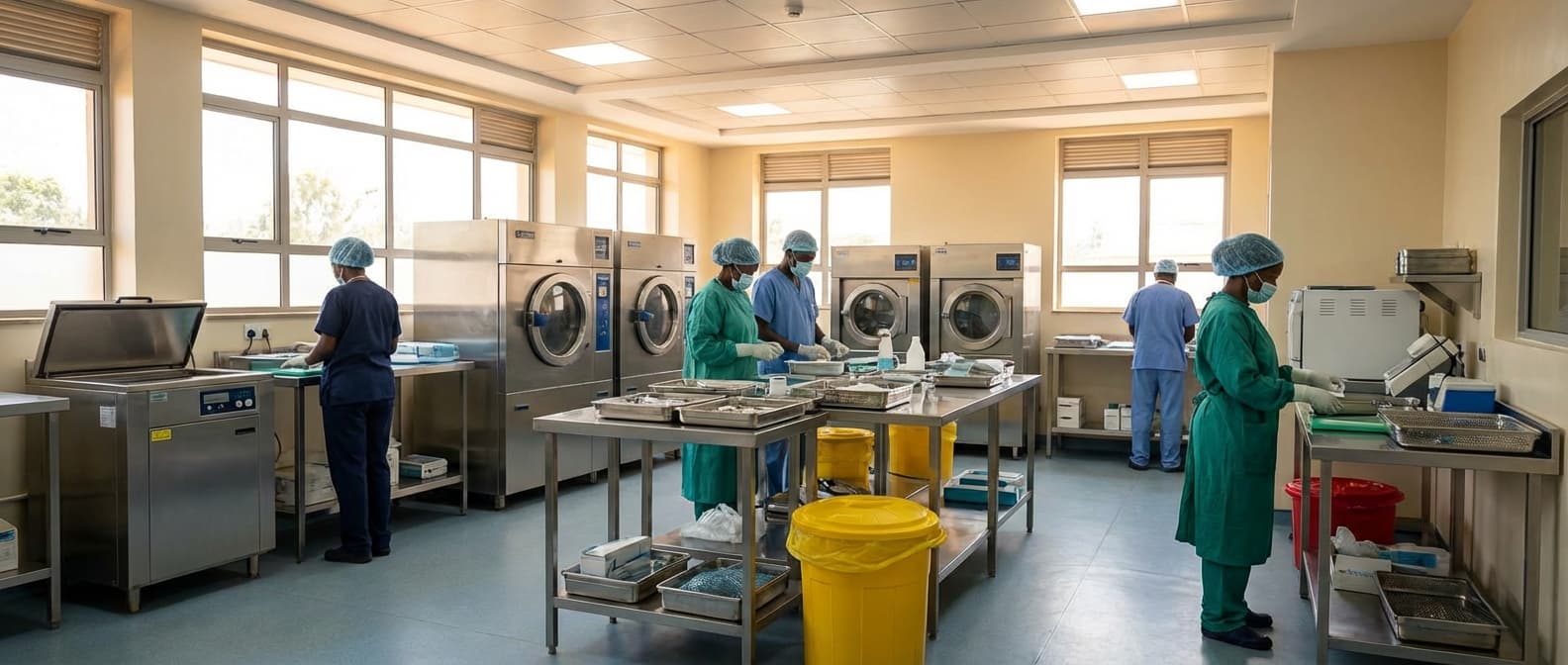
Autoclave Validation Support Service in Guinea-Bissau
Engineering Excellence & Technical Support
Autoclave Validation Support Service High-standard technical execution following OEM protocols and local regulatory frameworks.
Rigorous Sterilization Cycle Verification
We perform comprehensive validation of autoclave cycles using calibrated biological and chemical indicators, ensuring consistent and effective sterilization of critical medical equipment according to international standards. Our service guarantees the elimination of microbial life and reduces the risk of healthcare-associated infections in Guinea-Bissau.
Data-Driven Performance Analysis
Our expert technicians meticulously collect and analyze temperature, pressure, and time data from each autoclave cycle. This data-driven approach identifies potential deviations and allows for precise calibration and optimization, ensuring optimal performance and compliance for healthcare facilities in Guinea-Bissau.
Compliance & Risk Mitigation Assurance
We provide complete documentation and reporting that meets regulatory requirements, offering peace of mind and robust risk mitigation. Our autoclave validation services help healthcare providers in Guinea-Bissau maintain the highest standards of patient safety and operational integrity, demonstrating a commitment to infection control.
What Is Autoclave Validation Support Service In Guinea-bissau?
Autoclave validation support services in Guinea-Bissau refer to the comprehensive technical assistance required to ensure that steam sterilizers (autoclaves) used in healthcare and research facilities consistently and effectively achieve the desired level of microbial inactivation. This validation process is critical for preventing the transmission of infectious agents and ensuring the safety and efficacy of medical devices, laboratory equipment, and other materials requiring sterilization. The service encompasses a systematic approach to confirm that the autoclave's operational parameters (temperature, pressure, time, and steam penetration) are within specified limits for the intended sterilization cycles and load types. This validation is not a one-time event but an ongoing requirement, often mandated by regulatory bodies and quality management systems. The goal is to provide documented evidence that the sterilization process is reproducible and reliable, thereby safeguarding patient safety and maintaining the integrity of scientific research.
| Who Needs Autoclave Validation Support Services? | Typical Use Cases |
|---|---|
| Hospitals and Clinics (Operating Rooms, Sterilization Central Supply Departments - CSSDs, Dental Clinics, Laboratories) | Sterilization of surgical instruments, medical devices, implants, dressings, glassware, and media in healthcare settings. |
| Research and Development Laboratories (Biotechnology, Pharmaceutical, Chemical, Academic) | Sterilization of laboratory glassware, media, disposable plasticware, tools, and waste to prevent contamination and ensure experimental integrity. |
| Veterinary Clinics and Animal Research Facilities | Sterilization of surgical instruments and equipment used in animal care and research. |
| Biopharmaceutical Manufacturing Facilities | Sterilization of critical equipment, components, and consumables used in the production of biopharmaceuticals. |
| Any facility using autoclaves to ensure the safety and efficacy of sterilized materials, especially where regulatory compliance or stringent quality control is mandated. |
Key Components of Autoclave Validation Support Services
- Installation Qualification (IQ): Verifying that the autoclave is installed correctly according to the manufacturer's specifications and relevant standards.
- Operational Qualification (OQ): Testing the autoclave's operational parameters (e.g., temperature, pressure, cycle times) to ensure they fall within acceptable ranges under various load conditions.
- Performance Qualification (PQ): Challenging the autoclave with representative loads to demonstrate its ability to achieve and maintain the required lethality (e.g., using biological indicators or chemical indicators) throughout the entire chamber.
- Validation Protocol Development: Designing detailed protocols outlining the methodology, acceptance criteria, and responsibilities for each validation phase.
- Calibration of Monitoring Devices: Ensuring that all temperature, pressure, and time monitoring instruments are calibrated and traceable to national or international standards.
- Biological Indicator (BI) and Chemical Indicator (CI) Studies: Utilizing these indicators to directly assess the effectiveness of the sterilization process in killing microorganisms.
- Documentation and Reporting: Generating comprehensive reports that detail the validation activities, results, deviations, and conclusions, forming a crucial part of the facility's quality assurance system.
- Revalidation and Periodic Monitoring: Establishing schedules and procedures for revalidating the autoclave after major repairs, modifications, or at predetermined intervals, as well as routine periodic monitoring.
- Consultation and Training: Providing expert advice on best practices for autoclave operation, maintenance, and validation, and training facility personnel.
Who Needs Autoclave Validation Support Service In Guinea-bissau?
In Guinea-Bissau, the need for robust autoclave validation support services is critical for ensuring the sterility of medical equipment. This is paramount for preventing healthcare-associated infections (HAIs) and maintaining patient safety. Organizations and departments that rely on effective sterilization processes are the primary beneficiaries of such specialized services.
| Customer Type | Key Departments Requiring Support |
|---|---|
| Hospitals (Public and Private) | Central Sterile Supply Department (CSSD), Operating Rooms, Emergency Departments, Outpatient Clinics, Dental Units, Laboratories |
| Clinics and Health Centers | Treatment Rooms, Minor Procedure Rooms, Sterilization Areas |
| Laboratories (Medical and Research) | Microbiology Labs, Pathology Labs, Research Labs (where sterile equipment is used for specimen handling and analysis) |
| Dental Practices | Sterilization Rooms, Treatment Areas |
| Veterinary Clinics | Surgical Suites, Treatment Areas |
| Surgical Centers | Sterile Processing Departments, Operating Rooms |
| Non-Governmental Organizations (NGOs) with Healthcare Programs | Mobile Clinics, Field Hospitals, Health Posts, Training Centers |
| Government Health Agencies | Regulatory Compliance Departments, Public Health Laboratories, Training Institutions |
Target Customers and Departments for Autoclave Validation Support Service in Guinea-Bissau
- Hospitals (Public and Private)
- Clinics and Health Centers
- Laboratories (Medical and Research)
- Dental Practices
- Veterinary Clinics
- Surgical Centers
- Non-Governmental Organizations (NGOs) with Healthcare Programs
- Government Health Agencies
Autoclave Validation Support Service Process In Guinea-bissau
This document outlines the standard workflow for Autoclave Validation Support Services provided in Guinea-Bissau, from the initial client inquiry through to the successful execution and reporting of validation activities. The process is designed to be transparent, efficient, and compliant with relevant international standards.
| Stage | Key Activities | Deliverables | Responsible Party |
|---|---|---|---|
| Inquiry | Initial contact, needs assessment, preliminary discussion | Understanding of client requirements | Client & Service Provider |
| Proposal | Scope definition, protocol outline, quotation | Formal Proposal & Quotation | Service Provider |
| Planning | Protocol development, planning, client approval | Approved Validation Protocols | Service Provider & Client |
| Preparation | Equipment calibration, material procurement, team briefing | Calibrated Equipment, Validation Materials | Service Provider |
| Execution | On-site testing (IQ, OQ, PQ), data collection | Raw Data, Logged Parameters, Field Notes | Service Provider Team |
| Analysis & Reporting | Data review, interpretation, report compilation | Draft Validation Report | Service Provider |
| Finalization | Report review, revisions, final delivery | Final Approved Validation Report | Client & Service Provider |
Autoclave Validation Support Service Process Workflow
- {"steps":["Client submits an inquiry regarding autoclave validation requirements via email, phone, or website contact form.","Initial consultation is scheduled to understand the client's specific needs, including the type and number of autoclaves, intended use, regulatory requirements, and desired validation parameters.","A preliminary assessment of the scope of work and potential challenges is conducted.","A general overview of the validation process and expected outcomes is provided."],"title":"Phase 1: Inquiry and Initial Consultation"}
- {"steps":["Based on the initial consultation, a detailed proposal is prepared, outlining the scope of services, methodology, validation protocols, timelines, and deliverables.","A comprehensive quotation is provided, including all associated costs for personnel, equipment, consumables, travel, and reporting.","The proposal and quotation are submitted to the client for review and approval."],"title":"Phase 2: Proposal and Quotation"}
- {"steps":["Upon client approval, a detailed validation plan is developed in collaboration with the client.","Specific validation protocols are drafted, aligning with international standards (e.g., ISO 17665, AAMI ST46) and any specific client or regulatory requirements.","This includes defining test cycles, biological indicators (BIs), chemical indicators (CIs), temperature/pressure mapping strategies, and acceptance criteria.","The validation protocols are submitted to the client for review and formal approval."],"title":"Phase 3: Planning and Protocol Development"}
- {"steps":["Scheduling of validation activities, coordinating with the client's operational staff to minimize disruption.","Procurement and calibration of all necessary validation equipment (temperature loggers, pressure sensors, data acquisition systems).","Acquisition of validated biological and chemical indicators.","Briefing of the validation team on the specific protocols and client site procedures."],"title":"Phase 4: Pre-Validation Preparations"}
- {"steps":["The validation team arrives at the client's facility in Guinea-Bissau.","Initial checks of the autoclave's operational status and calibration records are performed.","Installation qualification (IQ) is conducted (if applicable) to verify correct installation and configuration.","Operational qualification (OQ) is performed to verify that the autoclave operates within its specified parameters throughout its operational range.","Performance qualification (PQ) is executed by running multiple validation cycles with appropriate BIs and CIs placed strategically within the chamber to demonstrate effective sterilization.","Data from temperature, pressure, and cycle parameters are continuously monitored and logged.","All observations, deviations, and actions taken are meticulously documented in real-time."],"title":"Phase 5: On-Site Execution"}
- {"steps":["Post-execution, all collected data is analyzed and compared against the approved acceptance criteria.","Results from BIs and CIs are interpreted.","A comprehensive validation report is compiled, including an executive summary, detailed methodologies, raw data, analysis, interpretation of results, and conclusions.","The report will clearly state whether the autoclave has passed or failed validation and provide recommendations if necessary."],"title":"Phase 6: Data Analysis and Reporting"}
- {"steps":["The draft validation report is submitted to the client for review and feedback.","Any necessary revisions are made based on client feedback.","The final, approved validation report is delivered to the client.","A post-validation discussion may be held to address any questions or concerns and to plan for future re-validation activities."],"title":"Phase 7: Finalization and Follow-up"}
Autoclave Validation Support Service Cost In Guinea-bissau
Autoclave validation is a critical process for ensuring the sterility of medical and laboratory equipment in Guinea-Bissau. The cost of this service can vary significantly based on several factors. Understanding these factors is essential for facilities to budget effectively and ensure compliance with health and safety regulations. While precise, universally published price lists are uncommon, we can outline the typical considerations and provide estimated cost ranges in local currency (West African CFA Franc - XOF).
| Service Component | Estimated Cost Range (XOF) | Notes |
|---|---|---|
| Basic Operational Qualification (OQ) for a small to medium autoclave | 150,000 - 300,000 XOF | Covers initial checks and calibration. |
| Full Validation (OQ/IQ/PQ) for a standard laboratory autoclave | 300,000 - 750,000 XOF | Includes installation, operational, and performance qualification. |
| Validation for a large capacity medical autoclave | 600,000 - 1,500,000+ XOF | Depends heavily on size and complexity. |
| Travel and Logistics (per visit) | 50,000 - 200,000 XOF | Varies based on distance from the service provider's base. |
| Annual Maintenance Contract (including validation) | Negotiable (often a discount on individual validation costs) | Can provide cost savings and ensure regular service. |
Key Factors Influencing Autoclave Validation Costs:
- Type and Size of Autoclave: Larger and more complex autoclaves generally require more time and resources for validation, thus increasing the cost. This includes steam sterilizers, chemical sterilizers, etc.
- Number of Autoclaves: A single validation for one autoclave will be less expensive than validating multiple units within the same facility.
- Frequency of Validation: Validation is typically required periodically (e.g., annually or bi-annually). The cost per validation event might be slightly reduced for long-term service contracts.
- Scope of Validation: The extent of validation required will impact cost. This can range from a basic operational qualification (OQ) to a more comprehensive performance qualification (PQ) that involves multiple cycles with different load types.
- Geographic Location within Guinea-Bissau: Travel and logistical expenses for the validation technician can influence the overall cost, especially for facilities located in more remote areas.
- Service Provider Expertise and Reputation: Highly experienced and reputable validation service providers may command higher fees.
- Specific Regulatory Requirements: Certain industries or regulatory bodies may have stricter validation protocols, leading to more extensive testing and higher costs.
- Inclusion of Re-validation or Troubleshooting: If the initial validation reveals issues requiring adjustments and re-testing, additional charges may apply.
Affordable Autoclave Validation Support Service Options
Ensuring the proper functioning of autoclaves through regular validation is crucial for sterilization efficacy and regulatory compliance in various industries, including healthcare, pharmaceuticals, and laboratories. However, the cost of professional validation services can be a significant concern for smaller organizations or those with tight budgets. This document outlines affordable autoclave validation support service options, focusing on value bundles and cost-saving strategies to make essential validation accessible.
| Service Option | Description | Value Proposition | Cost-Saving Strategy |
|---|---|---|---|
| Basic Validation Package | Includes essential performance testing (e.g., temperature, pressure, time monitoring) and documentation for a single autoclave. Focuses on core parameters required for standard compliance. | Cost-effective for organizations with minimal autoclaves or basic compliance needs. Provides a foundational level of assurance. | Bundled services reduce per-test pricing. Choosing annual or bi-annual packages can offer discounts compared to ad-hoc services. |
| Comprehensive Validation Bundle | Encompasses a wider range of tests, including biological indicator testing, steam penetration studies, and full system qualification (IQ/OQ/PQ). Suitable for higher-risk applications or stringent regulatory environments. | Offers a higher degree of assurance and caters to more demanding compliance requirements. Provides a holistic view of autoclave performance. | Often includes a discount for booking multiple services or for multiple autoclaves within the same facility. Long-term contracts can secure preferential rates. |
| Multi-Autoclave Discount | A tiered pricing structure where the cost per autoclave decreases as the number of units validated increases within a single service agreement. | Significant cost savings for facilities with multiple autoclaves, ensuring consistent validation across all equipment. | Direct volume-based discount. Can be combined with other bundle offers for maximum savings. |
| Remote Support & Consultation | Provides expert guidance, protocol review, and troubleshooting support without requiring an on-site technician for every instance. Can assist in preparing for validation or interpreting results. | Reduces on-site service costs by leveraging remote expertise. Empowers in-house staff to understand and manage validation processes. | Hourly or retainer-based for flexible support. Avoids unnecessary on-site visits for minor queries or preparation. |
| DIY Validation Support Kits (with expert oversight) | Provides pre-calibrated equipment, consumables (e.g., biological indicators), and detailed protocols for in-house personnel to conduct certain validation steps. Expert oversight is provided remotely or through periodic checks. | Empowers internal teams to manage aspects of validation, reducing reliance on external technicians. Highly cost-effective for organizations with trained personnel. | Reduces labor costs associated with external validation technicians. The service provider's expertise ensures accuracy and compliance even with internal execution. |
| Preventative Maintenance Bundles | Combines routine maintenance checks and minor repairs with validation services, ensuring the autoclave is in optimal condition before validation is performed. | Proactive maintenance reduces the likelihood of validation failures, saving time and money. A well-maintained autoclave performs more reliably. | Bundling maintenance with validation offers a discount compared to separate service agreements. Predictable costs and reduced unexpected repair expenses. |
Why Autoclave Validation is Essential
- Ensures effective sterilization of instruments and materials.
- Maintains patient safety and prevents healthcare-associated infections.
- Complies with regulatory standards (e.g., FDA, ISO).
- Minimizes the risk of costly recalls or re-sterilization.
- Optimizes autoclave performance and longevity.
Verified Providers In Guinea-bissau
When seeking healthcare services in Guinea-Bissau, it is paramount to choose providers who have undergone rigorous verification processes and possess recognized credentials. This ensures the quality, safety, and efficacy of the medical care you receive. Franance Health stands out as a leader in this regard, offering a network of verified providers whose credentials signify a commitment to excellence and patient well-being. Their rigorous vetting process, combined with a focus on continuous professional development, positions Franance Health as the premier choice for reliable healthcare in Guinea-Bissau.
| Credential Type | What it Signifies | Franance Health's Verification Process |
|---|---|---|
| Medical License | Legal authorization to practice medicine in Guinea-Bissau; adherence to national regulations. | Mandatory. Franance Health cross-references with the official registry of the Ministry of Health and other relevant bodies to confirm current validity and absence of restrictions. |
| Specialty Board Certification | Expertise and advanced competency in a specific medical field (e.g., cardiology, pediatrics). | Verified through official certificates from recognized national and international medical boards. Recognition of the certifying body's accreditation is crucial. |
| Diplomas and Transcripts | Completion of accredited medical education from recognized institutions. | Official copies of diplomas and transcripts are reviewed. Accreditation status of the educational institution is confirmed. |
| Continuing Medical Education (CME) Records | Commitment to lifelong learning and staying updated with medical advancements. | Providers are required to submit proof of completed CME credits annually or bi-annually, ensuring their knowledge remains current. |
| Criminal Background Check | Ensures patient safety and integrity; absence of a criminal record relevant to professional practice. | Conducted through reliable third-party agencies in accordance with legal frameworks in Guinea-Bissau. |
Key Credentials and Why They Matter for Verified Providers
- Medical Licensure and Registration: All Franance Health-affiliated providers hold valid licenses and registrations with the relevant national medical boards in Guinea-Bissau. This is the fundamental requirement, ensuring they are legally authorized to practice medicine and adhere to established professional standards.
- Educational Background and Academic Degrees: Verification includes scrutinizing medical school diplomas, specialty certifications, and advanced degrees from accredited institutions. This confirms the provider's foundational knowledge and specialized expertise.
- Post-Graduate Training and Residencies: Successful completion of residency programs and specialized fellowships is a critical indicator of advanced clinical skills and experience. Franance Health ensures their providers have undergone comprehensive practical training.
- Professional Certifications: Beyond basic licensure, many specialists hold certifications from recognized national and international bodies. These certifications demonstrate mastery in specific medical fields and a commitment to staying current with advancements.
- Continuing Medical Education (CME): A commitment to ongoing learning is essential in the rapidly evolving medical landscape. Franance Health verifies that its providers actively participate in CME programs to maintain and enhance their knowledge and skills.
- Clean Disciplinary Record: Thorough background checks are conducted to ensure providers have no history of malpractice, ethical violations, or disciplinary actions that could compromise patient care.
- Affiliations with Reputable Hospitals and Clinics: While not a credential in itself, affiliation with accredited and well-regarded healthcare facilities often reflects a provider's standing and commitment to high standards of practice.
- Peer Reviews and Recommendations: In some cases, peer reviews and recommendations from other trusted medical professionals can contribute to the verification process, offering insights into a provider's collaborative abilities and reputation.
Scope Of Work For Autoclave Validation Support Service
This Scope of Work (SOW) outlines the requirements for Autoclave Validation Support Services, including the provision of technical deliverables and adherence to standard specifications. The service aims to ensure the consistent and effective sterilization of materials using an autoclave through a comprehensive validation process.
| Deliverable | Description | Standard Specification / Methodology | Format |
|---|---|---|---|
| Installation Qualification (IQ) Report | Documentary evidence that the autoclave has been installed in accordance with manufacturer's specifications and relevant standards. | ISO 17665, EN 285, Manufacturer's Installation Manual, Site Acceptance Criteria (SAC). | PDF, Word Document |
| Operational Qualification (OQ) Protocol | Plan outlining the tests and criteria to verify the autoclave operates as intended within its specified operating ranges. | ISO 17665, EN 285, Manufacturer's Operating Manual, User Requirement Specification (URS), Defined critical operating parameters (e.g., temperature, pressure, time, drying effectiveness). | PDF, Word Document |
| Operational Qualification (OQ) Report | Report detailing the execution of the OQ protocol, including raw data, analysis, and conclusions on operational performance. | ISO 17665, EN 285, OQ Protocol, Calibration records of validation instruments, Test results. | PDF, Word Document |
| Performance Qualification (PQ) Protocol | Plan to verify the autoclave consistently sterilizes the intended loads under normal operating conditions. | ISO 17665, EN 285, Defined product/load types, Biological Indicator (BI) efficacy, Chemical Indicator (CI) efficacy, Microbiological challenge studies. | PDF, Word Document |
| Performance Qualification (PQ) Report | Report detailing the execution of the PQ protocol, including raw data, analysis, and conclusions on the autoclave's ability to achieve sterilization. | ISO 17665, EN 285, PQ Protocol, BI and CI results, Sterility assurance level (SAL) assessment, Cycle definition and reproducibility. | PDF, Word Document |
| Calibration Certificates for Validation Instruments | Documentation confirming that all instruments used for validation (e.g., temperature probes, pressure transducers) have been calibrated against traceable standards. | NIST Traceable Calibration, ISO 13485 requirements (if applicable), Certificate issued by an accredited calibration laboratory. | |
| Validation Summary Report | An executive summary of the entire validation process, encompassing IQ, OQ, and PQ, highlighting key findings and recommendations. | Consolidated IQ, OQ, PQ Reports, Executive Summary of Findings, Deviations, Recommendations, Final Validation Status. | PDF, Word Document |
| Training Material/Session (Optional) | Documentation or a conducted session for client personnel on the operation and maintenance of the validated autoclave. | Manufacturer's Operating Manual, Standard Operating Procedures (SOPs). | PDF, Presentation Slides |
Objective of Service
- To perform IQ, OQ, and PQ for specified autoclaves.
- To generate comprehensive validation reports for regulatory compliance.
- To ensure the autoclave operates within predefined performance parameters.
- To provide expert guidance and support throughout the validation lifecycle.
Service Level Agreement For Autoclave Validation Support Service
This Service Level Agreement (SLA) outlines the response times and uptime guarantees for the Autoclave Validation Support Service provided by [Your Company Name]. This SLA aims to ensure the reliability and performance of the support provided for autoclave validation processes, minimizing downtime and ensuring prompt assistance.
| Service Level | Priority Level | Response Time Target | Resolution Time Target (Best Effort) | Uptime Guarantee |
|---|---|---|---|---|
| Autoclave Validation Support Service | Critical (System Down, Validation Inoperable) | 1 Hour | 4 Business Hours | 99.5% |
| Autoclave Validation Support Service | High (Significant Impact on Validation Process, Partial Functionality Lost) | 2 Business Hours | 8 Business Hours | 99.5% |
| Autoclave Validation Support Service | Medium (Minor Impact on Validation Process, Workaround Available) | 4 Business Hours | 2 Business Days | 99.5% |
| Autoclave Validation Support Service | Low (General Inquiry, Non-Urgent Request) | 8 Business Hours | 5 Business Days | 99.5% |
Key Service Metrics
- Response Time: The maximum time taken for our technical support team to acknowledge and begin working on a reported issue.
- Resolution Time: The target time to fully resolve an issue, dependent on the severity and complexity.
- Uptime Guarantee: The percentage of time the Autoclave Validation Support Service is expected to be available and operational.
- Maintenance Windows: Scheduled periods for system updates and maintenance, during which service may be temporarily unavailable.
- Exclusions: Specific circumstances or events that are not covered by this SLA.
Frequently Asked Questions

Ready when you are
Let's scope your Autoclave Validation Support Service in Guinea-Bissau project in Guinea-Bissau.

Scaling healthcare logistics and technical systems across the entire continent.