
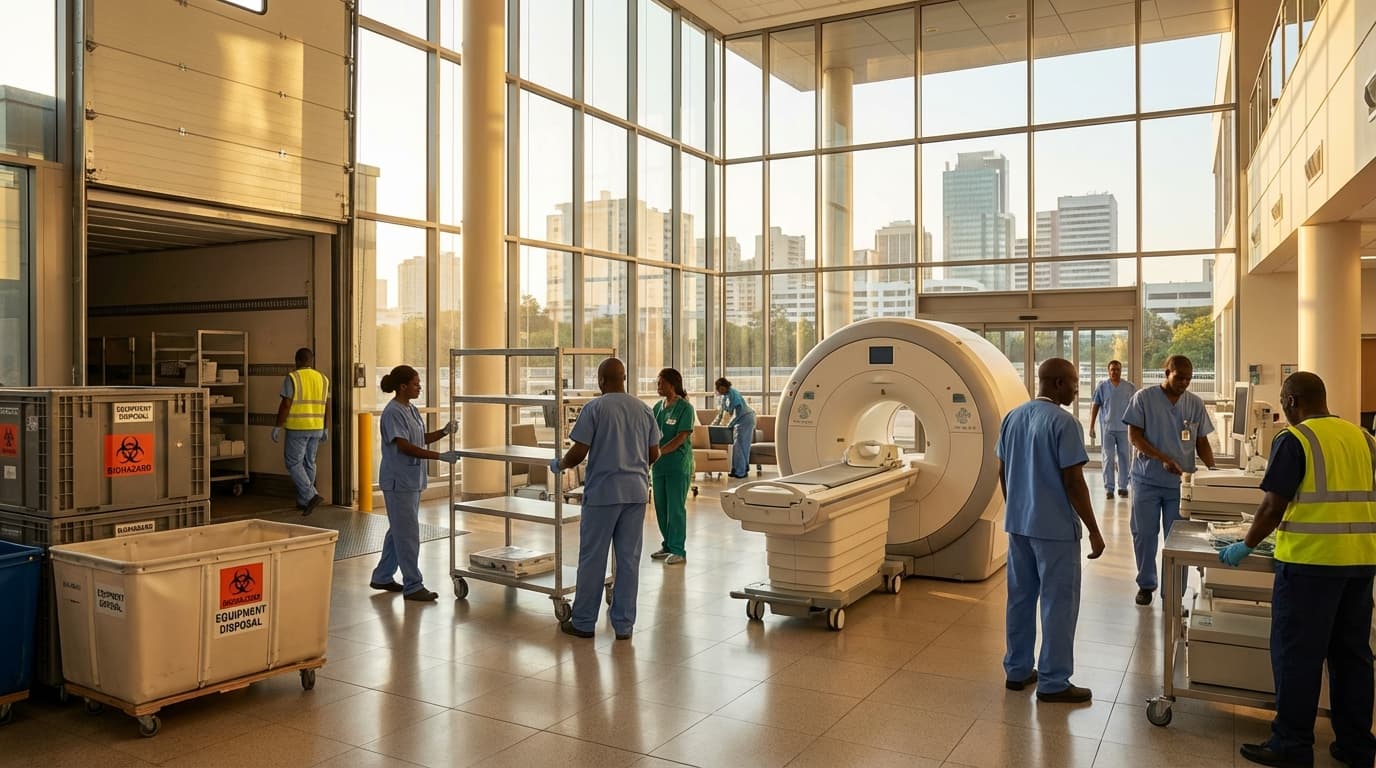
Medical Equipment Relocation Service (Move & Re-Install) in Guinea-Bissau
Engineering Excellence & Technical Support
Medical Equipment Relocation Service (Move & Re-Install) High-standard technical execution following OEM protocols and local regulatory frameworks.
Specialized Medical Equipment Logistics
Our Guinea-Bissau team is trained in the secure and precise transport of sensitive medical equipment. We utilize climate-controlled vehicles, shock-absorbent packaging, and trained personnel to ensure the integrity of your high-value assets throughout the entire relocation process.
Certified Re-Installation & Calibration
Beyond moving, we offer expert re-installation and calibration services for a wide range of medical devices. Our certified technicians in Guinea-Bissau ensure your equipment is set up correctly, calibrated to manufacturer specifications, and ready for immediate clinical use, minimizing downtime.
Seamless Cross-Border & Local Operations
Navigating the complexities of relocation within Guinea-Bissau and across borders is our expertise. We handle all necessary permits, customs clearances, and logistical coordination, providing a smooth, end-to-end relocation solution for your medical facilities.
What Is Medical Equipment Relocation Service (Move & Re-install) In Guinea-bissau?
Medical Equipment Relocation Service (Move & Re-Install) in Guinea-Bissau refers to a specialized logistical and technical process encompassing the safe transportation, meticulous unpacking, and expert reassembly/recalibration of medical devices and equipment within or between healthcare facilities in Guinea-Bissau. This service is critical for ensuring the continuity of patient care and operational efficiency during facility upgrades, renovations, mergers, or relocations. It demands adherence to stringent safety protocols, specialized handling techniques, and the expertise of trained technicians and logistics professionals to prevent damage, maintain calibration, and ensure the immediate operational readiness of the relocated equipment.
| Who Needs Medical Equipment Relocation Service? | Typical Use Cases |
|---|---|
| Hospitals and Clinics (Public and Private) | Facility renovations or expansions requiring temporary or permanent equipment relocation. Mergers or acquisitions involving the consolidation of medical assets. Relocation to new or upgraded healthcare facilities. Establishment of new specialized medical units or departments. |
| Diagnostic Imaging Centers | Installation of new imaging modalities (MRI, CT scanners, X-ray machines). Upgrades or replacement of existing imaging equipment. Relocation within a larger healthcare complex. |
| Laboratories (Clinical and Research) | Installation of advanced analytical instruments (e.g., mass spectrometers, sequencers). Relocation of entire laboratory setups during facility moves. Expansion of laboratory capabilities. |
| Surgical Centers and Operating Theaters | Installation of new surgical equipment (e.g., robotic surgery systems, advanced anesthesia machines). Relocation of operating rooms for renovation or modernization. Setup of temporary surgical facilities. |
| Medical Training and Simulation Centers | Relocation of complex simulation mannequins and diagnostic training equipment. Setup of new training facilities. |
| Government Health Ministries and NGOs | Distribution and installation of donated or procured medical equipment to various health posts and centers across Guinea-Bissau. Establishment of new health infrastructure in remote or underserved areas. |
Key Components of Medical Equipment Relocation Service (Move & Re-Install):
- Pre-Relocation Assessment & Planning: Detailed inventory of equipment, assessment of site access, identification of specialized handling requirements (e.g., climate control, vibration dampening), and development of a comprehensive relocation strategy and schedule.
- Dismantling & Decommissioning: Safe and documented disconnection of power, utilities, and any integrated systems. Professional dismantling of complex equipment where necessary, following manufacturer guidelines.
- Specialized Packing & Protection: Utilization of custom crating, anti-static materials, shock-absorbent padding, and environmental controls (temperature, humidity) to safeguard sensitive medical instruments during transit.
- Secure Transportation: Deployment of appropriate vehicles (e.g., climate-controlled trucks, air-ride suspension) and trained personnel to manage the physical move, minimizing transit stress and risk of damage.
- Unpacking & Inspection: Careful unpacking at the destination, immediate visual inspection for any signs of transit damage, and verification against the initial inventory.
- Re-installation & Reassembly: Precise reassembly of dismantled equipment and professional installation according to site-specific requirements and manufacturer specifications.
- Calibration & Performance Verification: Essential recalibration of critical diagnostic and therapeutic equipment using certified test equipment and adherence to manufacturer-recommended parameters. Comprehensive performance testing to ensure accuracy, functionality, and safety.
- System Integration & Testing: Verification of connectivity and interoperability with existing hospital information systems (HIS), Picture Archiving and Communication Systems (PACS), or other relevant infrastructure.
- Documentation & Handover: Provision of detailed records of the relocation process, including pre- and post-relocation inspection reports, calibration certificates, and performance test results. Formal handover to facility staff with a demonstration of operational readiness.
Who Needs Medical Equipment Relocation Service (Move & Re-install) In Guinea-bissau?
Moving and re-installing sensitive medical equipment in Guinea-Bissau presents unique challenges, requiring specialized expertise to ensure its integrity and functionality. This service is crucial for a diverse range of institutions and organizations operating within the healthcare sector. The successful relocation and re-establishment of medical devices are vital for maintaining continuity of care, upgrading facilities, and expanding healthcare access across the nation.
| Target Customer/Department | Specific Needs & Equipment Examples | Reasons for Relocation |
|---|---|---|
| Hospitals (Public & Private) | Radiology Departments: X-ray machines, CT scanners, MRI machines, ultrasound equipment. Operating Theaters: Anesthesia machines, surgical lights, patient monitors, electrosurgical units. Intensive Care Units (ICUs): Ventilators, infusion pumps, dialysis machines, ECG monitors. Laboratories: Automated analyzers, microscopes, centrifuges. | Facility renovations or expansions, upgrading to newer technology, consolidating services, opening new hospital wings, or relocating entire departments due to infrastructure issues. |
| Clinics and Health Centers | Basic diagnostic equipment like blood pressure monitors, stethoscopes, thermometers, ECG machines, basic lab analysis kits, sterilizers. | Relocation to new premises, expansion of services, replacement of outdated equipment, or moving between different project sites for NGOs. |
| Diagnostic Laboratories | Hematology analyzers, chemistry analyzers, immunoassay systems, PCR machines, centrifuges, incubators. | Upgrading facilities, moving to a larger or more specialized lab space, or consolidating multiple lab sites. |
| Specialty Medical Practices (e.g., Cardiology, Ophthalmology, Dentistry) | Echocardiography machines, slit lamps, dental chairs, X-ray units, specialized diagnostic tools. | Relocating to new offices, expanding practice size, or upgrading specialized equipment. |
| Non-Governmental Organizations (NGOs) & International Aid Organizations | Portable X-ray units, ultrasound machines, mobile clinic equipment, water purification systems with medical applications, diagnostic kits. | Setting up new health posts, relocating equipment between remote project sites, responding to health emergencies, or decommissioning/transferring equipment after project completion. |
| Government Ministries of Health | Equipment for national laboratories, training centers, or mobile health units; potentially large-scale hospital equipment during public health initiatives. | Implementing national health strategies, decentralizing healthcare services, or managing national medical asset distribution. |
| Research Institutions | Sophisticated laboratory equipment, imaging devices for research purposes, specialized analytical instruments. | Relocation of research facilities, upgrading research capabilities, or establishing new research centers. |
Who Needs Medical Equipment Relocation Service (Move & Re-Install) in Guinea-Bissau?
- Hospitals (Public and Private)
- Clinics and Health Centers
- Diagnostic Laboratories
- Specialty Medical Practices
- Non-Governmental Organizations (NGOs) involved in healthcare
- Government Ministries of Health
- Research Institutions
- International Aid Organizations
Medical Equipment Relocation Service (Move & Re-install) Process In Guinea-bissau
This document outlines the comprehensive workflow for medical equipment relocation and re-installation services within Guinea-Bissau. The process is designed to ensure minimal disruption to healthcare operations, safeguarding the integrity and functionality of critical medical devices throughout the relocation lifecycle. It encompasses initial client engagement, meticulous planning, safe transportation, and precise re-installation and validation.
| Stage | Description | Key Activities | Responsible Parties | Deliverables |
|---|---|---|---|---|
| Inquiry & Initial Consultation | The client initiates contact to request relocation services. This stage focuses on understanding the scope of the project and client needs. | Receive and review client inquiry, conduct initial needs assessment, discuss service offerings and general timelines. | Client, Service Provider Sales/Consultation Team | Understanding of client requirements, preliminary service proposal outline. |
| Site Assessment & Planning | A thorough on-site evaluation to gather detailed information for planning and logistical execution. | Detailed inventory of equipment, assessment of access routes, power requirements, environmental conditions, identification of potential risks, development of a detailed project plan, risk assessment, creation of a moving schedule, securing necessary permits. | Service Provider Project Manager, Technical Specialists, Client Representative | Detailed equipment inventory, site survey report, comprehensive project plan, moving schedule, risk mitigation strategies. |
| Dismantling & Decontamination | Safe and careful disassembly of equipment, ensuring proper procedures are followed, and any necessary cleaning is performed. | Professional dismantling of equipment by trained technicians, adherence to manufacturer guidelines, thorough cleaning and decontamination as per medical standards. | Service Provider Technical Specialists | Dismantled equipment components, decontamination certificates (if applicable). |
| Packaging & Logistics | Secure and protective packaging of equipment to prevent damage during transit. | Use of specialized packaging materials (e.g., anti-static, shock-absorbent), custom crating for fragile items, labeling of all packages with equipment details and handling instructions, coordination of logistics and transportation arrangements. | Service Provider Logistics Team, Technical Specialists | Properly packaged and labeled equipment, confirmed transportation bookings. |
| Transportation | Safe and secure movement of equipment from the origin to the destination within Guinea-Bissau. | Loading of equipment onto appropriate transport vehicles, adherence to traffic regulations and safety protocols, real-time tracking of shipments (if available), secure transit to the new location. | Service Provider Logistics Team, Transport Personnel | Delivered equipment at the destination. |
| Unpacking & Re-installation | Careful unpacking of equipment and precise re-assembly and installation at the new site. | Unpacking of equipment in the designated areas, re-assembly by certified technicians, connection to power and other utilities, adherence to manufacturer's installation specifications. | Service Provider Technical Specialists | Re-installed medical equipment ready for testing. |
| Testing & Calibration | Verification of equipment functionality and accuracy to ensure optimal performance. | Comprehensive functional testing, performance checks, calibration against industry standards and manufacturer specifications, generation of test reports. | Service Provider Technical Specialists, Accredited Calibration Technicians (if required) | Validated and calibrated equipment, test and calibration reports. |
| Client Handover & Training | Formal handover of the re-installed equipment to the client, including user training. | Demonstration of re-installed equipment functionality, provision of operational manuals, on-site training for relevant personnel on equipment usage and basic maintenance, confirmation of client satisfaction. | Service Provider Project Manager, Technical Specialists, Client Representative | Signed handover documentation, trained personnel, client acceptance. |
| Post-Relocation Support | Ongoing support to address any immediate concerns or questions post-relocation. | Provision of contact information for support, addressing any minor issues or queries, potential for follow-up technical checks if agreed upon. | Service Provider Support Team | Client satisfaction, resolution of any immediate post-relocation issues. |
Key Stages of Medical Equipment Relocation & Re-Installation in Guinea-Bissau
- Inquiry & Initial Consultation
- Site Assessment & Planning
- Dismantling & Decontamination
- Packaging & Logistics
- Transportation
- Unpacking & Re-installation
- Testing & Calibration
- Client Handover & Training
- Post-Relocation Support
Medical Equipment Relocation Service (Move & Re-install) Cost In Guinea-bissau
Relocating medical equipment in Guinea-Bissau, especially when involving re-installation, is a complex service influenced by several factors. The cost can vary significantly based on the type of equipment, its fragility, the distance of the move, the need for specialized handling, and the expertise required for re-installation. Local currency is the West African CFA franc (XOF). It's crucial to obtain detailed quotes from reputable relocation and technical service providers to ensure accurate budgeting. Factors influencing the cost include: Equipment Size and Weight, Distance of Relocation, Special Handling Requirements, Re-installation Complexity and Expertise, Ancillary Services, and Accessibility of Locations.
| Equipment Category | Estimated Cost Range (XOF) | Notes |
|---|---|---|
| Small Laboratory Equipment (e.g., Centrifuge, Pipettes, Basic Analyzers) | 50,000 - 150,000 XOF | Includes basic packing, loading, transport, and unpacking. Re-installation is usually straightforward. |
| Medium Diagnostic Equipment (e.g., Ultrasound Machines, X-ray Units, Dental Chairs) | 150,000 - 500,000 XOF | May require specialized packing, careful handling. Re-installation may involve basic calibration. |
| Large Imaging Equipment (e.g., CT Scanners, MRI Machines, Linear Accelerators) | 500,000 - 3,000,000+ XOF | Extensive specialized packing, heavy lifting, specialized transport. Re-installation requires highly skilled technicians and rigorous testing/calibration, significantly impacting the cost. |
| Surgical Equipment (e.g., Operating Tables, Anesthesia Machines) | 100,000 - 700,000 XOF | Depends on size, complexity, and required calibration upon re-installation. |
| General Hospital Furniture (e.g., Beds, Trolleys) | 20,000 - 80,000 XOF | Lower cost, primarily for transport and basic assembly. |
Key Pricing Factors for Medical Equipment Relocation & Re-installation in Guinea-Bissau
- Equipment Size and Weight: Larger and heavier equipment (e.g., MRI machines, CT scanners) will incur higher costs due to the need for specialized lifting equipment, larger transport vehicles, and more personnel.
- Distance of Relocation: Local moves within a city will be less expensive than inter-regional or cross-border relocations. Longer distances translate to higher fuel, labor, and transit time costs.
- Special Handling Requirements: Highly sensitive or fragile equipment (e.g., microscopes, laboratory analyzers) may require custom crating, climate-controlled transport, and expert packing, all of which add to the overall expense.
- Re-installation Complexity and Expertise: The complexity of re-installing medical equipment varies greatly. Basic equipment might only require physical setup, while advanced machinery may need calibration, testing, and integration with existing systems by specialized technicians. This often involves certified engineers, leading to higher service fees.
- Ancillary Services: This can include services like dismantling, professional packing, unpacking, storage, insurance, and disposal of old equipment. Each of these adds to the total cost.
- Accessibility of Locations: Difficult access to either the pick-up or delivery location (e.g., narrow streets, lack of loading docks, upper floors without elevators) can significantly increase labor and time, thereby raising the price.
Affordable Medical Equipment Relocation Service (Move & Re-install) Options
Relocating medical equipment can be a complex and costly undertaking. Our Affordable Medical Equipment Relocation Service (Move & Re-Install) is designed to alleviate this burden by offering specialized handling, secure transportation, and expert re-installation. We understand the critical nature of your medical devices and the importance of minimizing downtime. Our services are structured to provide value through comprehensive bundles and strategic cost-saving measures, ensuring your equipment arrives safely and is back in operation efficiently.
| Value Bundle Option | Included Services | Ideal For | Cost-Saving Strategies Integrated |
|---|---|---|---|
| Basic Move & Connect | Secure transportation of medical equipment, basic connection to power/existing network points. | Smaller clinics, single-item moves, or when on-site IT support is readily available. | Standardized packing, efficient route planning, leveraging our existing logistics network. |
| Standard Move & Re-Install | Secure transportation, professional re-installation of up to 3 devices, basic functional check. | Mid-sized practices, departmental relocations, standard diagnostic equipment. | Bulk packing discounts, coordinated scheduling to optimize team deployment, reduced re-site visits. |
| Comprehensive Move & Calibrate | Secure transportation, expert re-installation of multiple devices, full functional testing and calibration, basic training for staff on re-installed equipment. | Hospitals, large medical centers, complex imaging systems, or critical care equipment. | Pre-move site assessment to identify potential challenges, dedicated project management, bundled calibration services for efficiency. |
| Custom Relocation Plan | Tailored to specific needs, can include decommissioning, specialized crating, third-party integration, or temporary storage. | Unique equipment types, large-scale facility transitions, or specialized project requirements. | Strategic sourcing of materials, phased relocation to manage resources, negotiation of bulk transport rates for large projects. |
Key Features and Benefits of Our Service
- Specialized Handling & Packaging: Medical equipment requires specific packing materials and techniques to prevent damage during transit. Our trained professionals ensure each item is secured according to its unique requirements.
- Secure & Climate-Controlled Transportation: We utilize specialized vehicles equipped to maintain stable temperatures and humidity levels, crucial for sensitive medical instruments. GPS tracking provides real-time visibility throughout the journey.
- Expert Re-Installation & Calibration: Our technicians are experienced in re-installing a wide range of medical equipment, ensuring proper functionality. Calibration services can be added to guarantee accuracy post-relocation.
- Insurance Coverage: Comprehensive insurance is included for peace of mind, covering your valuable equipment from pickup to final installation.
- Minimized Downtime: Our efficient processes and dedicated teams aim to reduce the time your equipment is out of commission, ensuring operational continuity.
- Flexible Scheduling: We work around your operational needs to schedule moves at times that cause the least disruption.
Verified Providers In Guinea-bissau
In Guinea-Bissau, ensuring access to high-quality healthcare is paramount. When seeking medical services, it is crucial to engage with verified providers who adhere to stringent professional standards. Franance Health stands out as a leading entity in this regard, offering a robust credentialing process that guarantees the competence and reliability of its network of healthcare professionals. Their commitment to verification ensures that patients receive care from practitioners who are not only licensed but also possess proven expertise and a dedication to ethical medical practices. This rigorous approach to provider selection makes Franance Health a trusted partner for individuals seeking the best possible healthcare outcomes in Guinea-Bissau.
| Credentialing Aspect | Franance Health Approach | Benefit to Patients |
|---|---|---|
| Licensure and Certification | Verification of active and valid medical licenses and specialty certifications. | Ensures providers are legally authorized to practice and possess recognized expertise. |
| Educational Background | Scrutiny of medical school diplomas, residency completion, and postgraduate training. | Confirms a strong foundational and specialized medical education. |
| Professional Experience | Review of past practice history, peer references, and areas of specialization. | Validates practical application of skills and established professional reputation. |
| Continuing Medical Education (CME) | Confirmation of ongoing participation in accredited CME programs. | Guarantees that providers stay updated with the latest medical advancements and best practices. |
| Background Checks | Inclusion of checks for any disciplinary actions or malpractice claims. | Protects patients from providers with a history of misconduct. |
Why Franance Health Credentials Matter:
- Rigorous Verification Process: Franance Health meticulously vets all its healthcare providers, ensuring they meet and exceed industry standards for qualifications, experience, and ethical conduct.
- Access to Expertise: Patients gain access to a network of specialists and general practitioners who are recognized for their advanced knowledge and practical skills.
- Patient Safety and Trust: The credentialing process directly contributes to patient safety by minimizing risks associated with unqualified or substandard medical care.
- Commitment to Quality: Franance Health's emphasis on verified credentials underscores its unwavering dedication to delivering high-quality healthcare services.
- Enhanced Patient Confidence: Knowing that a provider has been thoroughly vetted by a reputable organization like Franance Health instills confidence and peace of mind for patients.
Scope Of Work For Medical Equipment Relocation Service (Move & Re-install)
This Scope of Work (SOW) outlines the requirements for a professional medical equipment relocation service, including the dismantling, safe transportation, and re-installation of specified medical devices. The objective is to ensure minimal disruption to clinical operations, maintain equipment integrity, and restore full functionality post-relocation. This document details the technical deliverables, standard specifications, and responsibilities of both the service provider and the client.
| Technical Deliverable | Standard Specification | Description |
|---|---|---|
| Pre-Relocation Survey & Planning | ISO 9001 / ISO 13485 Principles | On-site assessment of all equipment, identification of potential risks, development of a detailed relocation strategy including timelines, resource allocation, and communication protocols. Includes CAD drawings of new layout if required. |
| Dismantling | Manufacturer's Service Manuals / GMP Guidelines | Careful and systematic disassembly of equipment by certified technicians. Proper labeling and inventory of all components and connections. Use of specialized tools and techniques to avoid damage. |
| Packing & Protection | ANSI/AAMI Standards / Anti-static Packaging | Use of appropriate protective materials (e.g., anti-static wraps, custom-built crates, shock-absorbing padding) to prevent damage during transit. Equipment to be secured within packaging to prevent movement. |
| Transportation | DOT Regulations / Climate-Controlled Transport (where applicable) | Secure loading and transportation using appropriate vehicles. Maintaining equipment stability and environmental conditions (temperature, humidity) as specified by the manufacturer. Real-time tracking if requested. |
| Unpacking & Placement | Manufacturer's Installation Manuals | Careful unpacking and positioning of equipment in the designated new location according to the approved layout plan. Verification of all components and absence of transit damage. |
| Re-Assembly | Manufacturer's Service Manuals / GMP Guidelines | Professional re-assembly of equipment by qualified technicians, ensuring all connections and components are correctly re-instated as per manufacturer specifications. Use of manufacturer-recommended torque settings and procedures. |
| Testing & Calibration | Manufacturer's Specifications / Validated Test Protocols | Post-re-assembly functional testing to ensure all operational parameters are met. Calibration of critical components to verify accuracy and performance. Generation of test reports. |
| Performance Verification & Certification | ISO 17025 Accredited Testing (where applicable) / FDA Guidance | Comprehensive testing to confirm equipment meets or exceeds original performance specifications. Issuance of a Certificate of Performance Verification, documenting test results and successful re-installation. |
| Documentation & Handover | Client-Provider Agreement / Project Management Standards | Provision of all relevant documentation, including relocation plan, risk assessment, test reports, calibration certificates, and a handover checklist. Formal sign-off by client representatives upon successful completion. |
| Decontamination & Cleaning | CDC Guidelines / Hospital Infection Control Protocols | Thorough cleaning and decontamination of equipment prior to and after relocation, in accordance with established infection control standards. Provision of cleaning logs. |
Key Responsibilities
- Service Provider: Professional dismantling, packing, transportation, unpacking, re-assembly, testing, and commissioning of medical equipment.
- Service Provider: Adherence to all relevant safety regulations, industry standards, and manufacturer guidelines.
- Service Provider: Provision of qualified and experienced technicians with expertise in medical equipment handling.
- Service Provider: Comprehensive risk assessment and development of a detailed relocation plan.
- Service Provider: Insurance coverage for all equipment during the relocation process.
- Client: Provision of accurate and complete equipment inventory and specifications.
- Client: Clear demarcation of pick-up and delivery locations, including access routes and any site-specific requirements.
- Client: Availability of designated personnel for site coordination and sign-off.
- Client: Ensuring all necessary utilities (power, water, gas, ventilation) are available and functional at the new location prior to re-installation.
- Client: Obtaining any required permits or approvals for the relocation.
Service Level Agreement For Medical Equipment Relocation Service (Move & Re-install)
This Service Level Agreement (SLA) outlines the response times and uptime guarantees for the Medical Equipment Relocation Service (Move & Re-Install) provided by [Your Company Name] to [Client Name]. This SLA is an integral part of the Master Service Agreement (MSA) between the parties.
| Equipment Category | Response Time (Business Hours) | Resolution Time (Business Hours) | Uptime Guarantee (Post Re-Install) |
|---|---|---|---|
| Critical Equipment | 1 Hour | 4 Business Hours | 99.5% |
| Non-Critical Equipment | 4 Business Hours | 8 Business Hours | 98.0% |
Key Service Definitions
- Critical Equipment: Medical equipment whose malfunction or downtime directly impacts patient care, safety, or regulatory compliance. Examples include life support systems, imaging equipment, and surgical robots.
- Non-Critical Equipment: Medical equipment whose malfunction or downtime has a minimal or no immediate impact on patient care or safety. Examples include administrative equipment, non-essential diagnostic tools.
- Downtime: The period during which the relocated medical equipment is not operational and available for its intended use after the agreed-upon re-installation completion time, due to issues directly attributable to the relocation or re-installation process by [Your Company Name].
- Response Time: The maximum time allowed for [Your Company Name] to acknowledge a reported issue and initiate troubleshooting or remedial action after receiving a notification from [Client Name].
- Resolution Time: The maximum time allowed for [Your Company Name] to restore the relocated medical equipment to its operational state and meet performance specifications after the issue is reported.
- Uptime Guarantee: The percentage of time the relocated medical equipment is expected to be operational and performing within agreed-upon specifications after successful re-installation.
Frequently Asked Questions

Ready when you are
Let's scope your Medical Equipment Relocation Service (Move & Re-Install) in Guinea-Bissau project in Guinea-Bissau.

Scaling healthcare logistics and technical systems across the entire continent.