
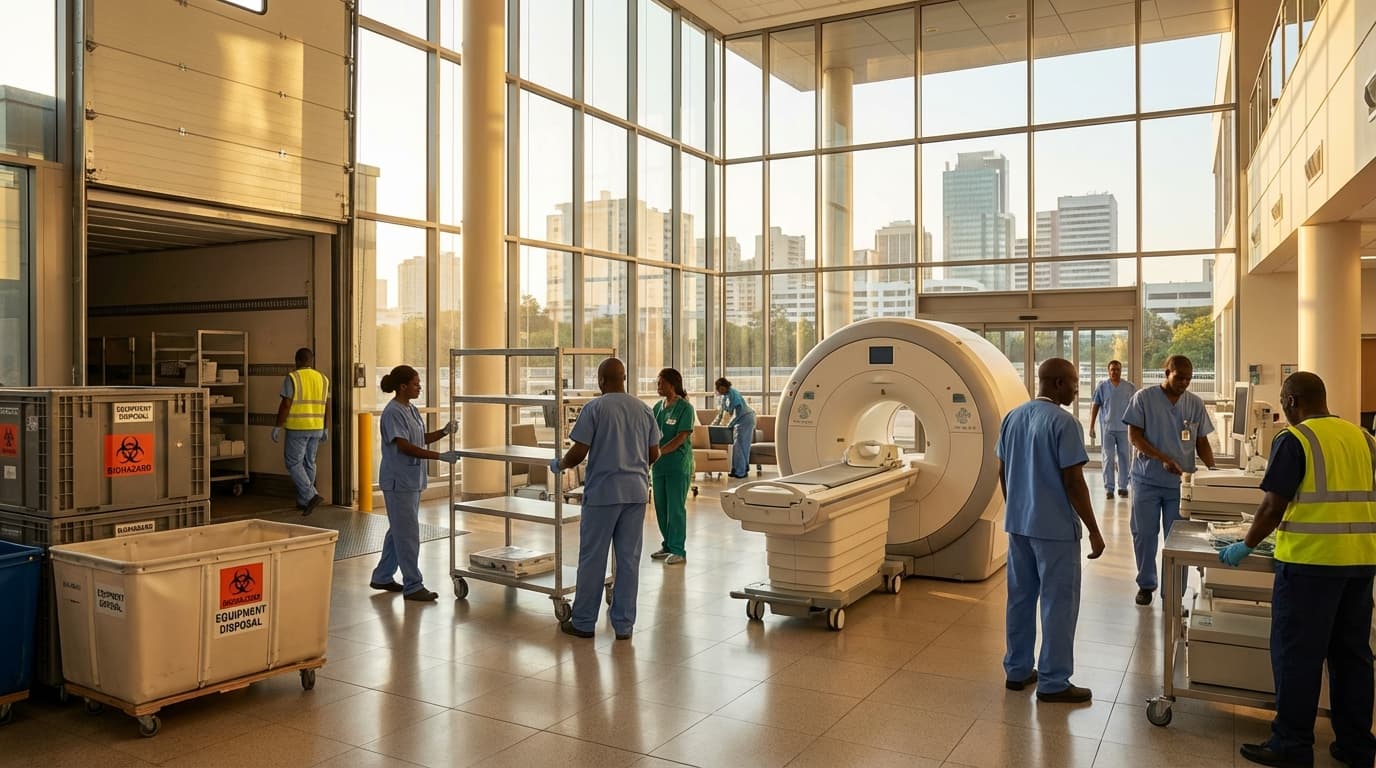
Decommissioning Service for Medical Devices in Guinea-Bissau
Engineering Excellence & Technical Support
Decommissioning Service for Medical Devices High-standard technical execution following OEM protocols and local regulatory frameworks.
Secure Data Eradication
Ensures complete and irretrievable deletion of all patient and operational data from medical devices prior to disposal, adhering to international privacy standards and mitigating risks of data breaches in Guinea-Bissau.
Environmentally Responsible Disposal
Implements certified, eco-friendly disposal methods for medical devices, prioritizing recycling, material recovery, and safe hazardous waste management in line with global best practices and local environmental regulations in Guinea-Bissau.
End-to-End Regulatory Compliance
Manages the entire decommissioning process from asset inventory to final disposal certificates, guaranteeing full compliance with all national and international regulations governing medical device lifecycle management and healthcare waste in Guinea-Bissau.
What Is Decommissioning Service For Medical Devices In Guinea-bissau?
Decommissioning service for medical devices in Guinea-Bissau refers to the systematic process of retiring, removing, and disposing of medical equipment that has reached the end of its operational lifespan, is no longer required, or poses a safety or environmental risk. This service ensures that medical devices are handled in a manner that complies with regulatory requirements, protects patient and staff safety, and minimizes environmental impact. It encompasses a series of critical steps beyond mere disposal, involving secure data erasure, environmental considerations, and proper documentation.
| Who Needs Decommissioning Service? | Typical Use Cases | |||||||
|---|---|---|---|---|---|---|---|---|
| Hospitals and Healthcare Facilities (public and private) | Obsolescence due to age or technological advancements | End of manufacturer's support and maintenance | Damage or malfunction rendering the device non-operational or unsafe | Relocation of facilities or departments | Upgrade to new medical technology | Consolidation of medical equipment inventory | Devices with expired calibration or safety certifications | Medical equipment no longer meeting current clinical needs or standards |
| Clinics and Diagnostic Centers | Outdated imaging equipment (X-ray, CT scanners) | Defunct laboratory analyzers | Non-functional surgical instruments | Discarded patient monitoring systems | Worn-out sterilization equipment | Expired or damaged therapeutic devices | Unused or superseded medical furniture and fixtures | Faulty diagnostic tools |
| Medical Research Institutions | Experimental equipment no longer in use | Decommissioned analytical instruments | Outdated biomedical research apparatus | |||||
| Government Health Agencies | Management of surplus or obsolete equipment from national health programs | Ensuring responsible disposal of donated or seized medical devices |
Key Components of Medical Device Decommissioning Service
- Asset Inventory and Identification: Cataloging all medical devices slated for decommissioning, including serial numbers, model numbers, and current location.
- Data Security and Erasure: Securely erasing any sensitive patient data or operational parameters stored on the device, adhering to data privacy regulations (e.g., anonymization, physical destruction of storage media).
- Functional Assessment for Reuse/Donation: Evaluating the device's condition to determine if it can be safely refurbished for reuse internally, donated to other facilities, or requires immediate disposal.
- Environmental Risk Assessment: Identifying potential hazards associated with the device, such as hazardous materials (e.g., mercury, radioactive components), and planning for their safe handling and disposal.
- Disassembly and Component Segregation: Dismantling devices into constituent parts for efficient recycling, recovery of valuable materials, or specialized disposal of hazardous components.
- Secure Transportation: Arranging for the safe and secure transport of decommissioned devices from the healthcare facility to the designated disposal or recycling facility.
- Certified Disposal/Recycling: Utilizing licensed and certified vendors for the environmentally responsible disposal or recycling of medical devices, particularly those containing hazardous materials.
- Regulatory Compliance Documentation: Maintaining comprehensive records of the entire decommissioning process, including asset tracking, data erasure certificates, waste manifests, and disposal certificates, to meet national and international regulatory standards.
- Site Remediation (if applicable): Addressing any residual environmental concerns at the site where the device was located.
Who Needs Decommissioning Service For Medical Devices In Guinea-bissau?
Decommissioning medical devices in Guinea-Bissau is a crucial process for ensuring proper disposal, data security, and environmental protection. This service is essential for a variety of organizations that utilize medical equipment and are nearing the end of its operational lifecycle. The target customers are primarily institutions and facilities that house and operate medical devices. The services are most relevant to departments responsible for asset management, IT security, facilities management, and environmental health and safety.
| Customer Type | Key Departments Involved | Reasons for Decommissioning Service |
|---|---|---|
| Public Hospitals (e.g., Hospital Central de Bissau) | Biomedical Engineering Department, IT Department, Procurement Department, Environmental Health & Safety Officer | Equipment obsolescence, malfunction, data security risks on devices with memory, compliance with disposal regulations, freeing up space. |
| Private Clinics and Polyclinics | Administration, Technical Staff, IT Security Officer | Upgrade of equipment, cost-effectiveness of repairs, data privacy of patient information, regulatory compliance. |
| Diagnostic Laboratories (Public & Private) | Laboratory Management, IT Department, Facilities Management | Replacement of outdated diagnostic machines, data security of patient results, proper disposal of hazardous materials if applicable, space optimization. |
| Government Health Ministry / Regional Health Directorates | Asset Management Unit, Procurement and Logistics Department, Environmental Health Department | Inventory management, compliance with national health policies, ensuring safe disposal of government-owned assets, public health and environmental protection. |
| NGOs with Healthcare Projects (e.g., MSF, WHO supported facilities) | Program Managers, Logistics Officers, Biomedical Technicians | Project lifecycle completion, donation of functioning equipment (if applicable), responsible disposal of end-of-life assets, adherence to donor requirements. |
| Research Institutions & Universities (with medical research facilities) | Research Leads, IT Security, Facilities Management, Procurement | End of research projects, data integrity and security, disposal of specialized equipment, compliance with research ethics and disposal protocols. |
| Medical Equipment Suppliers/Distributors | Sales Department, Technical Service Department, After-Sales Support | Offering end-of-life management services to their clients, responsible product stewardship, data security of demo or returned units, regulatory compliance. |
Target Customers and Departments for Medical Device Decommissioning Services in Guinea-Bissau
- Hospitals and Clinics
- Diagnostic Laboratories
- Research Institutions
- Government Health Ministries
- Non-Governmental Organizations (NGOs) with Healthcare Programs
- Private Healthcare Providers
- Medical Equipment Suppliers (for end-of-life management)
Decommissioning Service For Medical Devices Process In Guinea-bissau
This document outlines the standard workflow for decommissioning medical devices in Guinea-Bissau, from initial inquiry to successful execution. The process emphasizes safety, environmental responsibility, and adherence to regulatory guidelines.
| Stage | Description | Key Activities | Responsible Parties | Expected Outcome |
|---|---|---|---|---|
| The process begins when a healthcare facility or organization expresses interest in decommissioning medical devices. | Receive inquiry, understand the scope, identify the type and quantity of devices, confirm location. | Client (Healthcare Facility/Organization), Service Provider (Decommissioning Company) | Clear understanding of the client's needs and initial project scope. |
| A physical inspection of the devices and the site where they are located. | On-site assessment of each device, inventory verification, assessment of accessibility, identification of potential hazards (e.g., hazardous materials, electrical connections). | Service Provider (Technical Team) | Detailed inventory of devices, assessment of decommissioning complexity, identification of specialized requirements. |
| Based on the evaluation, a comprehensive proposal and cost estimate are provided. | Develop a detailed proposal outlining services, methodology, timelines, safety protocols, and waste management plan. Provide a formal quotation. | Service Provider | Clear understanding of the proposed service, associated costs, and timeline for the client. |
| Formalization of the service agreement between the client and the service provider. | Review and negotiation of terms and conditions, signing of the decommissioning contract. | Client, Service Provider | Legally binding agreement for the decommissioning service. |
| Detailed planning of the decommissioning activities. | Develop a detailed project plan, including resource allocation, equipment mobilization, specific dismantling procedures, and scheduling of personnel. | Service Provider (Project Manager) | Optimized plan for efficient and safe execution of the decommissioning. |
| The physical process of safely dismantling and preparing the devices for disposal or recycling. | Disconnection of power and other utilities, dismantling of components, removal of hazardous materials (if applicable), secure packaging of devices/components. | Service Provider (Decommissioning Technicians, Safety Officers) | Devices safely dismantled and prepared for the next stage of waste management. |
| Proper handling and disposal of the decommissioned medical devices and any associated waste. | Segregation of waste streams (e.g., hazardous, non-hazardous, recyclable), transportation to authorized disposal/recycling facilities, adherence to environmental regulations. | Service Provider (Waste Management Team) | Environmentally responsible disposal or recycling of medical devices and waste. |
| Providing proof of completed decommissioning and proper disposal. | Issuance of a Certificate of Decommissioning and Disposal, including details of devices decommissioned, methods used, and disposal locations. Provide waste manifests. | Service Provider | Client receives official documentation confirming the legal and safe decommissioning. |
| A final review to ensure client satisfaction and gather feedback. | Client feedback collection, project closure, resolution of any outstanding issues. | Service Provider, Client | Ensured client satisfaction and continuous improvement of services. |
Decommissioning Service Workflow for Medical Devices in Guinea-Bissau
- Inquiry and Initial Assessment
- Site Visit and Device Evaluation
- Proposal and Quotation
- Contract Agreement
- Planning and Scheduling
- Decommissioning Execution
- Waste Management and Disposal
- Documentation and Certification
- Post-Decommissioning Review
Decommissioning Service For Medical Devices Cost In Guinea-bissau
Decommissioning medical devices in Guinea-Bissau involves a range of costs influenced by several factors. The complexity of the device, its size, the materials it's made from (especially if hazardous), and the required method of disposal (e.g., incineration, secure landfill, recycling) all contribute to the overall price. Furthermore, the licensing and permitting fees associated with proper medical waste disposal in Guinea-Bissau, along with transportation logistics to authorized facilities, are significant cost drivers. The availability and cost of specialized disposal services within the country can also impact pricing. Due to the nascent stage of specialized medical device decommissioning services in Guinea-Bissau, pricing can be highly variable and often negotiated on a case-by-case basis. There is a lack of publicly standardized pricing, making it essential for institutions to obtain multiple quotes from service providers.
| Device Category | Estimated Cost Range (GWP) |
|---|---|
| Small Disposable Items (e.g., syringes, gloves, bandages) | 1,000 - 5,000 |
| Medium-Sized Equipment (e.g., centrifuges, basic laboratory equipment) | 10,000 - 50,000 |
| Large Medical Equipment (e.g., X-ray machines, anesthesia machines, basic imaging devices) | 75,000 - 250,000+ |
| Highly Specialized or Hazardous Equipment (e.g., older CT scanners, equipment with radioactive components) | Negotiable / > 300,000 |
Key Pricing Factors for Medical Device Decommissioning in Guinea-Bissau
- Device Complexity and Type: Simple devices like examination gloves will be cheaper than complex imaging machines requiring specialized handling.
- Size and Weight: Larger and heavier devices incur higher transportation and disposal costs.
- Material Composition: Devices containing hazardous materials (e.g., mercury, radioactive isotopes) require specialized and more expensive disposal methods.
- Disposal Method: Incineration, secure landfill, and recycling have different cost structures.
- Licensing and Permitting: Fees associated with regulatory compliance for medical waste disposal.
- Transportation and Logistics: Distance to the disposal facility and the cost of specialized transport vehicles.
- Service Provider's Operational Costs: Including labor, equipment maintenance, and overhead.
- Geographic Location within Guinea-Bissau: Accessibility and remoteness can influence transportation costs.
Affordable Decommissioning Service For Medical Devices Options
Decommissioning medical devices responsibly and compliantly is a critical, yet often overlooked, aspect of healthcare operations. This process involves the safe removal, disposal, or repurposing of equipment that is no longer in use, damaged, or outdated. Seeking affordable decommissioning services is essential for managing budgets effectively without compromising patient safety or regulatory adherence. Healthcare facilities can explore various service providers and strategies to achieve cost savings while ensuring a thorough and secure decommissioning process. This includes understanding the different service models available and leveraging options that align with the organization's specific needs and financial constraints. Key to this is identifying providers who offer transparent pricing and flexible solutions, allowing for tailored approaches to device management and disposal.
| Service Component | Potential Cost-Saving Strategy | Impact on Affordability | |
|---|---|---|---|
| Data Sanitization | On-site data wiping; bulk processing | Reduces transport costs; volume discounts | Reduces transport costs; volume discounts |
| Physical Removal & Transportation | Scheduled bulk removals; regional consolidation | Lower per-unit transport fees; reduced logistics overhead | |
| Disposal/Recycling | Prioritize certified e-recyclers; asset recovery | Reduced landfill fees; potential revenue from salvage | |
| Documentation & Certification | Standardized reporting templates; bundled compliance packages | Streamlined administrative process; predictable compliance costs | |
| Provider Selection | Obtain multiple quotes; negotiate long-term contracts | Competitive pricing; guaranteed rates |
Understanding Value Bundles and Cost-Saving Strategies
- Value Bundles: These are service packages that combine multiple decommissioning tasks into a single, often discounted, offering. Bundles can streamline operations and provide predictable costs. Examples include:
- Full-Service Decommissioning: Includes inventory, data sanitization, physical removal, transportation, and certified disposal/recycling of a specified quantity or type of device.
- Data Destruction & Disposal Bundle: Focuses specifically on ensuring secure data erasure from medical devices and their environmentally sound disposal, often a primary concern for compliance.
- Asset Recovery & Decommissioning: Combines the removal and disposal of unusable devices with the potential to recover value from functional or salvageable equipment through resale or donation.
- Compliance & Documentation Bundle: Guarantees that all decommissioning activities meet regulatory requirements (e.g., HIPAA, FDA, environmental regulations) and provides comprehensive audit trails and certificates of destruction.
- Cost-Saving Strategies: Beyond choosing the right bundle, several proactive strategies can significantly reduce decommissioning expenses:
- Bulk Decommissioning: Consolidating decommissioning for multiple devices or departments into a single service request can often lead to volume discounts.
- Extended Service Contracts: Negotiating long-term contracts with a preferred decommissioning provider can secure better rates and ensure consistent service.
- On-Site Data Sanitization: Performing data erasure on-site, if feasible and secure, can reduce transportation costs associated with transporting devices with sensitive data.
- Asset Tagging & Inventory Management: Maintaining an accurate and up-to-date inventory of medical devices allows for better planning and can prevent unnecessary decommissioning of active equipment.
- Strategic Partnering: Collaborating with other healthcare facilities in your region to pool resources and negotiate bulk pricing for decommissioning services.
- Prioritize Environmental Disposal: Choosing providers who prioritize environmentally responsible recycling and disposal methods can sometimes be more cost-effective in the long run due to reduced landfill fees and potential for material reclamation.
- Negotiate Pricing & Scope: Clearly define the scope of work required and don't hesitate to negotiate pricing with service providers. Request multiple quotes to ensure competitive rates.
Verified Providers In Guinea-bissau
When seeking healthcare services in Guinea-Bissau, it is paramount to identify providers who possess verified credentials and adhere to the highest standards of medical practice. Franance Health stands out as a leading organization in this regard, consistently demonstrating a commitment to quality, patient safety, and ethical healthcare delivery. Their rigorous vetting process and dedication to continuous improvement make them an indispensable resource for individuals and families navigating the healthcare landscape in Guinea-Bissau.
| Credential Type | Verification Standard | Franance Health Assurance |
|---|---|---|
| Medical Licenses | Current and valid licenses from recognized medical councils. | Verified active status and compliance with national regulatory bodies. |
| Educational Qualifications | Degrees and diplomas from accredited medical institutions. | Authenticity confirmed through academic records and institutional verification. |
| Board Certifications | Specialty certifications from recognized professional boards. | Confirmation of successful completion of rigorous examination processes. |
| Professional Experience | Documented years of practice and relevant clinical experience. | Background checks and reference verification for a comprehensive overview. |
| Continuing Medical Education (CME) | Evidence of participation in ongoing professional development. | Assurance that providers are up-to-date with current medical knowledge and techniques. |
| Criminal Background Checks | Screening for any history of misconduct or criminal activity. | Ensuring the integrity and trustworthiness of all affiliated healthcare professionals. |
Why Franance Health Credentials Matter:
- Rigorous Verification Process: Franance Health employs a stringent verification protocol for all affiliated healthcare professionals. This includes thorough checks of medical licenses, educational qualifications, board certifications, and professional references.
- Commitment to Ethical Practice: Beyond technical expertise, Franance Health emphasizes the ethical conduct of its providers, ensuring patient-centered care, transparency, and respect for patient rights.
- Specialized Expertise: The network comprises a diverse range of specialists, ensuring access to high-quality care across various medical disciplines.
- Patient Safety Focus: Franance Health prioritizes patient safety through the selection of providers who demonstrate adherence to best practices in infection control, diagnostic accuracy, and treatment protocols.
- Continuous Professional Development: Affiliated providers are encouraged and often required to engage in ongoing training and education, keeping them abreast of the latest advancements in medical knowledge and technology.
- Accessibility and Reliability: Franance Health aims to connect patients with trusted and accessible healthcare providers, reducing uncertainty and facilitating timely access to essential medical services.
Scope Of Work For Decommissioning Service For Medical Devices
This document outlines the Scope of Work (SOW) for the decommissioning of medical devices. It details the technical deliverables and standard specifications required to ensure safe, compliant, and environmentally responsible removal and disposal of medical equipment. The process includes data sanitization, physical dismantling, and appropriate waste management. This SOW is intended for service providers responsible for executing the decommissioning activities and for the client's oversight and acceptance.
| Phase/Activity | Description | Technical Deliverables | Standard Specifications / Requirements |
|---|---|---|---|
| Planning and Preparation | Defining the scope, identifying devices, scheduling, and obtaining necessary approvals. | Decommissioning plan, device inventory, risk assessment, schedule, authorization forms. | Compliance with local regulations, client's internal policies, and data privacy laws (e.g., HIPAA). Manufacturer's guidelines for device removal. |
| Site Survey and Assessment | On-site inspection to assess device accessibility, power requirements, environmental considerations, and safety hazards. | Site survey report, hazard identification log, preliminary disposal pathway assessment. | Adherence to OSHA or equivalent safety standards. Environmental impact assessment. |
| Data Sanitization and Destruction | Ensuring all patient, operational, and proprietary data is securely erased or physically destroyed from devices with storage capabilities. | Data sanitization certificates, evidence of physical destruction (e.g., photos, logs). | Compliance with NIST SP 800-88 (Rev. 1) or equivalent data erasure standards. Secure chain of custody for data-bearing media. |
| Physical Decommissioning and Dismantling | Safely disconnecting, disassembling, and removing medical devices from their installed locations. | Decommissioned device components, detailed removal logs, photos of pre- and post-removal state. | Qualified technicians with specific device expertise. Lockout/tagout procedures. Containment of hazardous materials (e.g., refrigerants, mercury). Safe handling of sharps. |
| Waste Segregation and Disposal | Categorizing and disposing of device components and associated waste in accordance with environmental regulations. | Waste manifest, certificates of destruction/recycling for specific components, disposal receipts. | Compliance with EPA, RCRA, and local environmental regulations. Use of licensed waste disposal facilities. Prioritization of recycling and reuse where feasible. |
| Documentation and Certification | Providing comprehensive documentation of all decommissioning activities and certifying completion. | Final decommissioning report, certificates of data destruction, waste disposal certificates, project sign-off form. | Traceable records for all activities. Clear and accurate reporting. Final acceptance by the client. |
Key Phases and Activities
- Planning and Preparation
- Site Survey and Assessment
- Data Sanitization and Destruction
- Physical Decommissioning and Dismantling
- Waste Segregation and Disposal
- Documentation and Certification
Service Level Agreement For Decommissioning Service For Medical Devices
This Service Level Agreement (SLA) outlines the guaranteed response times and uptime for the Decommissioning Service for Medical Devices, provided by [Your Company Name] to [Client Company Name]. This SLA is effective from [Start Date] to [End Date].
| Service Element | SLA Guarantee | Measurement Period | Remedy for Breach |
|---|---|---|---|
| Response Time - Critical Incident: (e.g., immediate data breach risk, complete service outage impacting multiple devices) | Within [Number] minutes | 24x7x365 | Service credit of [Percentage]% of monthly fee for each incident. |
| Response Time - Major Incident: (e.g., significant scheduling delay, individual device data sanitization failure) | Within [Number] hours | Business Hours ([Specify Business Hours]) | Service credit of [Percentage]% of monthly fee for each incident. |
| Service Availability (Uptime): | 99.5% | Monthly | Service credit of [Percentage]% of monthly fee if uptime falls below guarantee. |
| Notification of Scheduled Maintenance: | [Number] business days prior | N/A | N/A |
Definitions
- Decommissioning Service: The comprehensive process of safely and securely retiring medical devices from use, including data sanitization, physical dismantling, and environmentally responsible disposal, in compliance with all relevant regulations.
- Critical Incident: An event that significantly impacts the ability to decommission a device or poses a risk to patient safety, data security, or regulatory compliance.
- Major Incident: An event that impairs the decommissioning process but does not immediately pose a critical risk. This may include delays in scheduling or minor technical issues.
- Response Time: The maximum time allowed from the initiation of a support request by the Client to the first acknowledgement and engagement by the Service Provider's technical personnel.
- Uptime: The percentage of time the Decommissioning Service is available and operational as defined by the scope of services. Uptime excludes scheduled maintenance periods.
- Scheduled Maintenance: Pre-planned periods during which the Decommissioning Service may be temporarily unavailable for updates, upgrades, or preventative maintenance. Clients will be notified at least [Number] days in advance.
Frequently Asked Questions

Ready when you are
Let's scope your Decommissioning Service for Medical Devices in Guinea-Bissau project in Guinea-Bissau.

Scaling healthcare logistics and technical systems across the entire continent.