
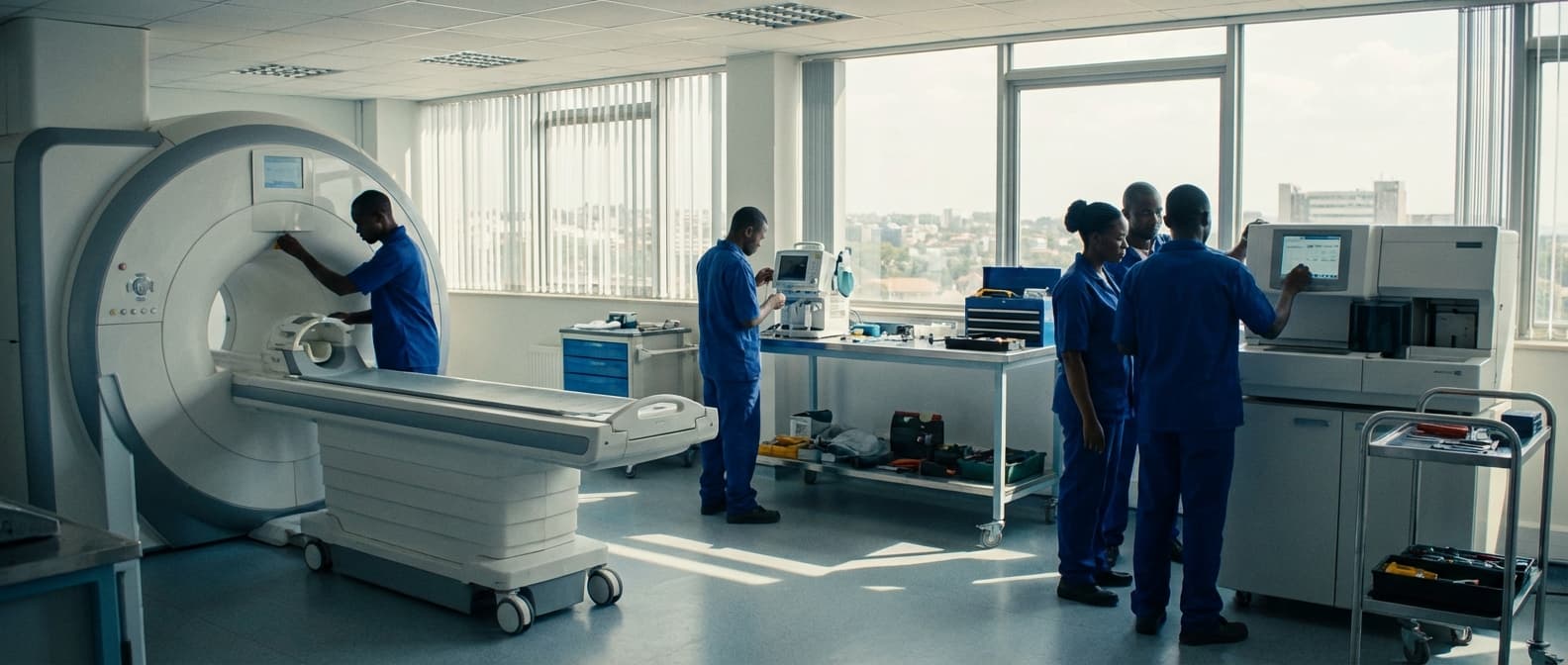
Uptime, Downtime & Root-Cause Analysis Reporting Service in Guinea-Bissau
Engineering Excellence & Technical Support
Uptime, Downtime & Root-Cause Analysis Reporting Service High-standard technical execution following OEM protocols and local regulatory frameworks.
Real-time Uptime Monitoring & Alerting
Gain immediate visibility into the availability of your critical systems in Guinea-Bissau. Our service provides continuous, real-time uptime monitoring with instant alerts, allowing your IT teams to proactively address potential disruptions before they impact your operations and revenue.
Comprehensive Downtime Analysis & Reporting
Understand the full scope of downtime events. We deliver detailed reports on incident duration, affected services, and potential impact, enabling data-driven decisions for infrastructure improvements and disaster recovery planning within the unique Guinean business landscape.
Automated Root-Cause Analysis (RCA) with Actionable Insights
Move beyond simply identifying problems. Our advanced RCA tools automatically pinpoint the underlying causes of downtime in Guinea-Bissau. We provide clear, actionable insights and recommended remediation steps, accelerating problem resolution and preventing future recurrences.
What Is Uptime, Downtime & Root-cause Analysis Reporting Service In Guinea-bissau?
Uptime, Downtime & Root-Cause Analysis Reporting Service in Guinea-Bissau refers to a specialized offering designed to monitor, measure, and meticulously investigate the operational availability and unavailability of critical IT infrastructure and business systems within organizations operating in Guinea-Bissau. This service aims to provide comprehensive visibility into system performance, identify the precise causes of service disruptions, and deliver actionable insights for preventing future occurrences. It encompasses the systematic tracking of system operational status (uptime) and interruptions (downtime), coupled with a rigorous process of root-cause analysis (RCA) to pinpoint the underlying factors leading to such outages. The output is typically presented in structured reports, often with visual aids, facilitating informed decision-making and strategic improvements in system resilience and reliability.
| Who Needs This Service | Typical Use Cases | |||||||||||||
|---|---|---|---|---|---|---|---|---|---|---|---|---|---|---|
| Organizations reliant on IT infrastructure for core operations: This includes businesses of all sizes, from small enterprises to large corporations, that depend on their IT systems for day-to-day functioning. | Financial Institutions (Banks, Microfinance): Ensuring continuous availability of banking platforms, ATMs, online transaction processing, and payment gateways is paramount to maintain customer trust and regulatory compliance. | Telecommunications Providers: Uptime of mobile networks, internet services, and communication infrastructure directly impacts subscriber satisfaction and revenue. | Government Agencies & Public Services: Maintaining operational integrity of citizen-facing portals, critical infrastructure management systems, and internal administrative platforms. | Healthcare Providers: Ensuring uninterrupted access to electronic health records (EHRs), medical imaging systems, and patient management software is vital for patient care. | E-commerce Businesses: Downtime directly translates to lost sales and customer attrition. High availability of online stores and order fulfillment systems is critical. | Cloud Service Providers & Data Centers: Offering guaranteed uptime SLAs (Service Level Agreements) to their clients necessitates robust monitoring and RCA capabilities. | Organizations with complex IT environments: Enterprises managing distributed systems, hybrid cloud setups, and multiple interconnected applications benefit from detailed performance insights. | Companies seeking to improve operational efficiency and reduce costs: By identifying and rectifying recurring issues, organizations can minimize waste, optimize resource allocation, and reduce the financial burden of unplanned downtime. | Businesses operating in regions with potentially less stable infrastructure: In Guinea-Bissau, where external factors like power outages can impact IT systems, proactive monitoring and RCA are even more critical. | IT Operations & Support Teams: Essential for troubleshooting, incident management, and capacity planning. | System Administrators & Network Engineers: To diagnose and resolve technical issues. | Business Continuity & Disaster Recovery Planners: To assess risks and develop effective recovery strategies. | Management & Executive Leadership: To understand system reliability, financial impact of outages, and make strategic decisions regarding IT investments. | Auditing & Compliance Officers: To verify adherence to uptime requirements and regulatory standards. |
Key Components of the Service
- Uptime Monitoring: Continuous, real-time tracking of system availability, measuring the percentage of time services are operational and accessible.
- Downtime Event Detection & Logging: Automated or manual identification of service interruptions, including start/end times, affected systems, and initial impact assessments.
- Root-Cause Analysis (RCA): A structured investigative process to determine the fundamental reason(s) behind a downtime event. This often involves techniques such as the '5 Whys', Fishbone diagrams, fault tree analysis, and log review.
- Impact Assessment: Quantifying the business impact of downtime, including financial losses, reputational damage, and operational disruption.
- Reporting & Documentation: Generation of regular and ad-hoc reports detailing uptime/downtime metrics, RCA findings, and recommended corrective and preventative actions.
- Alerting & Notification: Proactive notifications to relevant stakeholders upon detection of downtime events or critical performance anomalies.
Who Needs Uptime, Downtime & Root-cause Analysis Reporting Service In Guinea-bissau?
The Uptime, Downtime & Root-Cause Analysis Reporting Service is crucial for organizations in Guinea-Bissau that rely heavily on their IT infrastructure and operational continuity. This service provides critical insights into system availability, identifies the causes of disruptions, and helps prevent future occurrences, ultimately leading to improved efficiency, reduced costs, and enhanced customer satisfaction. The target customers range from large enterprises with complex systems to government agencies and critical service providers.
| Customer Type | Key Departments Benefiting |
|---|---|
| Telecommunications Companies | Network Operations Center (NOC), IT Operations, Service Assurance, Customer Support |
| Financial Institutions | IT Operations, Security Operations Center (SOC), Risk Management, Compliance, Business Continuity |
| Energy & Utilities Providers | Operations Control Center, IT Infrastructure, Maintenance, SCADA/ICS Management, Customer Service |
| Government Agencies | IT Departments, Public Service Delivery Units, National Security, Digital Transformation Offices |
| Logistics & Transportation | Operations Management, IT & Systems, Fleet Management, Supply Chain Management |
| Healthcare Providers | IT Department, Clinical Operations, Facility Management, Patient Records Management |
| Large Enterprises | IT Infrastructure, Help Desk, Business Operations, Senior Management, Department Heads |
| Internet Service Providers | Network Operations, Technical Support, Customer Service, Service Delivery |
| E-commerce & Online Services | Platform Operations, IT Engineering, Customer Experience, Digital Marketing |
| Mining & Natural Resources | Operations Technology (OT), IT Infrastructure, Safety & Compliance, Logistics |
| Educational Institutions | IT Services, Academic Administration, Research & Development, Student Support |
Target Customers & Departments in Guinea-Bissau
- Telecommunications Companies
- Financial Institutions (Banks, Microfinance)
- Energy & Utilities Providers (Electricity, Water)
- Government Agencies & Public Services
- Logistics & Transportation Companies
- Healthcare Providers (Hospitals, Clinics)
- Large Enterprises & Corporations
- Internet Service Providers (ISPs)
- E-commerce & Online Service Providers
- Mining & Natural Resources Sector
- Educational Institutions (Universities, Research Centers)
Uptime, Downtime & Root-cause Analysis Reporting Service Process In Guinea-bissau
This document outlines the workflow for our Uptime, Downtime & Root-Cause Analysis (RCA) Reporting Service, specifically tailored for clients operating in Guinea-Bissau. The process is designed to be transparent, efficient, and to provide actionable insights for improving system reliability and performance. It covers the journey from an initial client inquiry to the final delivery of a comprehensive RCA report.
| Stage | Description | Key Activities | Deliverables | Timeline (Indicative) |
|---|---|---|---|---|
| The client initiates contact to understand our RCA reporting services for their operations in Guinea-Bissau. | Initial consultation, understanding client's infrastructure, critical systems, and reporting requirements. Site visit (if necessary and feasible). | Needs assessment summary, preliminary service proposal. | 1-3 business days |
| Formalizing the engagement and clearly defining the scope of services. | Drafting and negotiating the Service Level Agreement (SLA), defining the scope of systems to be monitored, reporting frequency, escalation procedures, and confidentiality clauses. Formalizing pricing and payment terms. | Signed Service Agreement, defined Service Level Objectives (SLOs). | 3-7 business days |
| Establishing the necessary infrastructure for collecting uptime/downtime data and enabling proactive monitoring. | Deploying monitoring agents or configuring remote access to client's systems, setting up data aggregation platforms, defining alert thresholds, establishing communication channels for incident notification. | Configured monitoring tools, baseline uptime data. Documentation of monitoring setup. | 5-10 business days (depending on client infrastructure complexity) |
| Real-time identification of any deviations from expected system availability. | Continuous monitoring of defined parameters, automatic detection of downtime events, initial alert generation and notification to the client's designated contact(s) and our incident response team. | Downtime alert notification. | Immediate upon incident detection |
| Investigating the underlying reasons for any detected downtime. | Collecting logs, system metrics, configuration changes, and user reports related to the downtime event. Analyzing data to identify the primary cause, contributing factors, and impact. Conducting interviews with relevant personnel if necessary. | Preliminary RCA findings. | Varies based on complexity (e.g., 1-5 business days for a typical incident) |
| Compiling the findings into a comprehensive and structured report. | Drafting the detailed RCA report including incident timeline, impact assessment, identified root cause(s), corrective actions taken or recommended, and preventative measures. Internal quality assurance review of the report. | Draft RCA Report. | 2-4 business days (post-RCA completion) |
| Formally submitting the RCA report to the client and explaining the findings. | Delivering the final RCA report to the client via secure channels. Scheduling and conducting a presentation of the report to key stakeholders, answering questions, and clarifying any points. | Final RCA Report, Presentation meeting. | 1-2 business days (post-review) |
| Ensuring the client understands and can act upon the report's recommendations. | Providing ongoing support for understanding and implementing recommended corrective and preventative actions. Tracking the progress of implemented recommendations. Offering further consultation as needed. | Implementation support, progress reports (if agreed upon). | Ongoing as per SLA |
Workflow Stages
- Inquiry & Needs Assessment
- Service Agreement & Scope Definition
- Data Collection & Monitoring Setup
- Incident Detection & Initial Response
- Root-Cause Analysis (RCA)
- Report Generation & Review
- Report Delivery & Presentation
- Follow-up & Recommendations Implementation Support
Uptime, Downtime & Root-cause Analysis Reporting Service Cost In Guinea-bissau
Providing uptime, downtime, and root-cause analysis (RCA) reporting services in Guinea-Bissau involves a nuanced pricing structure influenced by several key factors. The cost is not a fixed commodity but rather a reflection of the complexity, scope, and expertise required for each client's specific needs. This service is crucial for businesses relying on stable IT infrastructure to maintain operational efficiency and customer satisfaction. Understanding these pricing dynamics is essential for accurate budgeting and procurement.
| Service Tier/Scope | Estimated Cost Range (GNF) | Typical Inclusions |
|---|---|---|
| Basic Uptime Monitoring & Reporting | 300,000 - 750,000 GNF/month | Monthly uptime reports, basic incident notifications, periodic system availability checks for a limited number of critical systems. |
| Standard Uptime & Downtime Analysis | 750,000 - 1,500,000 GNF/month | Weekly/Bi-weekly uptime and downtime reports, incident trend analysis, basic root cause identification for common issues, notification of service disruptions. |
| Advanced Uptime, Downtime & RCA (Single System/App) | 1,500,000 - 3,000,000 GNF/month | Daily/Weekly detailed uptime and downtime reports, in-depth root cause analysis for significant incidents, incident timeline reconstruction, recommendations for prevention for a specific system or application. |
| Comprehensive Uptime, Downtime & RCA (Complex Infrastructure) | 3,000,000 - 8,000,000+ GNF/month | Real-time monitoring, highly detailed reports on uptime, downtime, and performance metrics, comprehensive root cause analysis for all incidents across a complex IT environment, proactive issue identification, post-incident reviews, ongoing optimization recommendations, SLA management. |
| Project-Based RCA (Single Major Incident) | 500,000 - 2,500,000 GNF (per incident) | Dedicated investigation for a single, significant outage, detailed RCA report, lessons learned, and remediation plan. Cost depends on the complexity and duration of the investigation. |
Key Pricing Factors for Uptime, Downtime & Root-Cause Analysis Reporting Services in Guinea-Bissau
- Scope of Services: The breadth and depth of reporting required significantly impact cost. This includes the number of systems or applications monitored, the frequency of reporting (e.g., daily, weekly, monthly), and the level of detail in the RCA (e.g., high-level summaries vs. in-depth technical investigations).
- Complexity of Infrastructure: Businesses with more intricate IT environments, involving multiple vendors, cloud services, on-premises servers, and interconnected systems, will generally incur higher costs. Diagnosing issues in such complex setups demands greater expertise and specialized tools.
- Service Level Agreements (SLAs): The promised uptime percentages and response times for addressing incidents play a substantial role. Higher uptime guarantees and faster remediation often come with a premium.
- Monitoring Tools and Technologies: The sophistication and cost of the monitoring tools employed by the service provider are factored in. Advanced, real-time monitoring solutions with AI-driven anomaly detection are more expensive than basic ping checks.
- Expertise and Experience of Analysts: The qualifications, certifications, and years of experience of the RCA analysts are a direct cost driver. Highly skilled professionals capable of swift and accurate problem identification are more valuable and command higher rates.
- Data Volume and Retention: The amount of data generated by monitoring systems and the required data retention period can influence storage and processing costs, which are passed on to the client.
- On-Demand vs. Retainer Basis: Whether services are provided on an ad-hoc, project basis or through a recurring retainer agreement will affect pricing. Retainers often offer more predictable costs and priority service.
- Geographic Location and Accessibility: While the services are delivered remotely in many cases, on-site investigations or client meetings in specific regions of Guinea-Bissau might incur additional travel and logistical expenses.
- Reporting Format and Customization: The need for custom report templates, dashboards, or integration with existing client reporting systems can add to the development and implementation costs.
- Security and Compliance Requirements: If the client has stringent security or regulatory compliance needs that the RCA process must adhere to, this can increase the complexity and cost of service delivery.
Affordable Uptime, Downtime & Root-cause Analysis Reporting Service Options
Our service provides comprehensive uptime, downtime, and root-cause analysis (RCA) reporting, designed to be both effective and budget-friendly. We understand that proactive monitoring and insightful analysis are crucial for business continuity and operational efficiency, without breaking the bank. Our tiered value bundles and strategic cost-saving options ensure you get the maximum benefit for your investment.
| Value Bundle | Included Services | Ideal For | Price (Monthly/Annual) |
|---|---|---|---|
| Basic Insights | Real-time Uptime Monitoring, Basic Downtime Alerts, Monthly Summary Report | Small businesses, startups, or those needing foundational monitoring. | $50 / $540 |
| Proactive Performance | Real-time Uptime/Downtime Monitoring, Advanced Alerts (SMS/Email), Weekly RCA Snapshot, Bi-weekly Trend Report | Growing businesses, e-commerce sites, or applications requiring more detailed insights. | $150 / $1620 |
| Enterprise Guardian | 24/7 Uptime/Downtime Monitoring, Customizable Alerts, Full RCA for all Incidents, Daily Performance Dashboards, Monthly Deep-Dive Analysis, Priority Support | Large enterprises, critical infrastructure, or businesses with high-availability requirements. | $300 / $3240 |
| Custom Solution | Tailored to specific needs. Contact us for a personalized quote. | Unique requirements or specific integration needs. | Quote Based |
Key Features & Benefits
- Real-time uptime and downtime monitoring.
- Automated and customizable downtime alerts.
- In-depth root-cause analysis (RCA) for incidents.
- Clear, actionable reporting for quick resolution.
- Historical data for trend analysis and proactive improvements.
- Scalable solutions to grow with your business needs.
- Dedicated support for seamless integration and ongoing assistance.
Verified Providers In Guinea-bissau
In Guinea-Bissau, ensuring you are engaging with verified healthcare providers is paramount for receiving safe and effective medical care. Among the institutions that stand out for their rigorous credentialing and commitment to quality are those aligned with or accredited by organizations like Franance Health. Franance Health's verification process signifies a dedication to upholding high standards of medical practice, ethical conduct, and patient safety. Choosing providers with Franance Health credentials means opting for a level of assurance that can significantly impact the quality of your healthcare experience.
| Verification Aspect | Franance Health Assurance | Benefit for Patients |
|---|---|---|
| Medical Qualifications | Verified degrees, licenses, and specialty certifications. | Ensures competence and appropriate expertise for your medical needs. |
| Professional Experience | Assessment of practical experience and track record. | Indicates a history of successful patient care and problem-solving. |
| Ethical Conduct | Adherence to a strict code of medical ethics. | Promotes patient trust, respect, and confidentiality. |
| Facility Standards | Evaluation of infrastructure, equipment, and hygiene. | Guarantees a safe, clean, and well-equipped environment for treatment. |
| Patient Care Protocols | Implementation of standardized patient care procedures. | Ensures consistent, high-quality, and efficient service delivery. |
Why Franance Health Credentials Represent the Best Choice:
- Rigorous Vetting Process: Franance Health employs a stringent vetting procedure to assess the qualifications, experience, and ethical standing of healthcare professionals and facilities. This ensures that only competent and trustworthy providers are granted their accreditation.
- Commitment to Quality Standards: Accreditation by Franance Health indicates adherence to established national and international quality benchmarks in healthcare delivery, patient care, and operational efficiency.
- Enhanced Patient Safety: Verified providers have demonstrated a commitment to patient safety protocols, infection control measures, and transparent communication, reducing risks and promoting a secure healthcare environment.
- Professional Accountability: Franance Health credentials foster a culture of professional accountability. Providers are held to a defined set of ethical guidelines and performance standards, with mechanisms for review and recourse.
- Access to Competent Professionals: By choosing Franance Health-verified providers, you gain access to a network of healthcare professionals who have met specific criteria for their expertise and ability to deliver appropriate care.
- Trust and Reliability: The Franance Health mark serves as a trusted symbol, assuring patients that the provider has undergone independent verification and meets a recognized standard of excellence.
Scope Of Work For Uptime, Downtime & Root-cause Analysis Reporting Service
This Scope of Work (SOW) outlines the requirements and deliverables for a comprehensive Uptime, Downtime & Root-Cause Analysis (RCA) Reporting Service. The service aims to provide clients with detailed, actionable insights into system availability, disruptions, and the underlying causes of these events. This document specifies the technical deliverables, standard specifications, and reporting formats.
| Deliverable Type | Description | Frequency/Trigger | Format | Standard Specifications |
|---|---|---|---|---|
| Uptime/Downtime Report | Detailed breakdown of system availability, including total uptime percentage, planned and unplanned downtime durations, and specific event logs. | Daily, Weekly, Monthly (configurable) | PDF, CSV, Interactive Dashboard (web-based) | Uptime percentage (%), Total Uptime (HH:MM:SS), Total Downtime (HH:MM:SS), Planned Downtime (HH:MM:SS), Unplanned Downtime (HH:MM:SS), List of downtime events with timestamps, duration, and brief description. |
| Downtime Incident Report | In-depth analysis of individual downtime incidents, including timelines, impact assessment, affected services/users, and initial troubleshooting steps. | Per significant downtime event (> 5 minutes or as defined by SLA) | PDF, Email Notification | Incident ID, Incident Start Time, Incident End Time, Duration, Affected Services/Systems, Business Impact (qualitative/quantitative), Affected User Count, Initial Symptoms, Initial Troubleshooting Steps Taken. |
| Root-Cause Analysis (RCA) Report | Comprehensive investigation into the fundamental cause of downtime incidents, including contributing factors, lessons learned, and recommended corrective actions. | Per significant downtime event, typically within 24-72 hours of incident resolution | PDF, Word Document, Presentation (optional) | Incident ID (linked to Downtime Incident Report), Problem Statement, Timeline of Events (detailed), Root Cause Identification (using methodologies like 5 Whys, Fishbone Diagram), Contributing Factors, Impact Assessment (technical and business), Corrective Actions (immediate and preventative), Recommendations for Future Prevention, Ownership of Recommendations, Target Completion Dates for Recommendations, Lessons Learned. |
| Trend Analysis Report | Aggregated data and insights from multiple downtime incidents to identify recurring patterns, common root causes, and areas for systemic improvement. | Monthly, Quarterly | PDF, Presentation | Analysis of downtime trends over time, identification of top root causes, identification of frequently impacted systems/services, correlation analysis (e.g., deployment vs. downtime), recommendations for proactive improvements, performance metrics (e.g., MTTR - Mean Time To Recover). |
| Service Level Agreement (SLA) Compliance Report | Assessment of service availability against pre-defined SLA targets, highlighting any breaches or areas of concern. | Monthly, Quarterly | SLA Uptime Target (%), Actual Uptime Achieved (%), Downtime Exceeding SLA (HH:MM:SS), SLA Breach Incidents (Count), Explanation of any SLA breaches. |
Service Objectives
- To accurately monitor and report on system uptime and downtime.
- To conduct thorough root-cause analysis for all identified downtime events.
- To provide clear, concise, and actionable reports to stakeholders.
- To identify trends and recurring issues to proactively improve system reliability.
- To establish a consistent and standardized reporting framework.
Service Level Agreement For Uptime, Downtime & Root-cause Analysis Reporting Service
This Service Level Agreement (SLA) outlines the guaranteed uptime, acceptable downtime, and reporting procedures for the Root-Cause Analysis (RCA) service provided by [Your Company Name] (hereinafter referred to as 'Provider') to [Client Company Name] (hereinafter referred to as 'Customer'). This SLA aims to ensure transparency, reliability, and prompt resolution of any service disruptions.
| Service Component | Uptime Guarantee (Monthly) | Maximum Permitted Unscheduled Downtime (Monthly) | Response Time Target (for High Severity Incidents) | RCA Report Delivery Timeline (Post-Resolution) |
|---|---|---|---|---|
| RCA Service Availability | 99.9% | 43.2 minutes | 15 minutes | Within 48 business hours |
| RCA Data Ingestion & Processing | 99.9% | 43.2 minutes | 15 minutes | Within 48 business hours |
| RCA Reporting Interface Access | 99.9% | 43.2 minutes | 15 minutes | Within 48 business hours |
Definitions
- Uptime: The percentage of time during a given period that the RCA service is available and operational.
- Downtime: The percentage of time during a given period that the RCA service is unavailable, inaccessible, or not functioning as expected.
- Scheduled Downtime: Pre-announced periods where the RCA service will be unavailable for maintenance or upgrades. This downtime is excluded from Uptime calculations.
- Unscheduled Downtime: Any period where the RCA service is unavailable that is not Scheduled Downtime.
- Root-Cause Analysis (RCA): The process of identifying the fundamental reason for a service incident or failure.
- Incident: Any event that causes or may cause an interruption to or a reduction in the quality of the RCA service.
- Response Time: The time taken by the Provider to acknowledge and begin actively working on an reported incident.
- Resolution Time: The time taken by the Provider to restore the RCA service to normal operation after an incident has been reported.
Frequently Asked Questions

Ready when you are
Let's scope your Uptime, Downtime & Root-Cause Analysis Reporting Service in Guinea-Bissau project in Guinea-Bissau.

Scaling healthcare logistics and technical systems across the entire continent.