
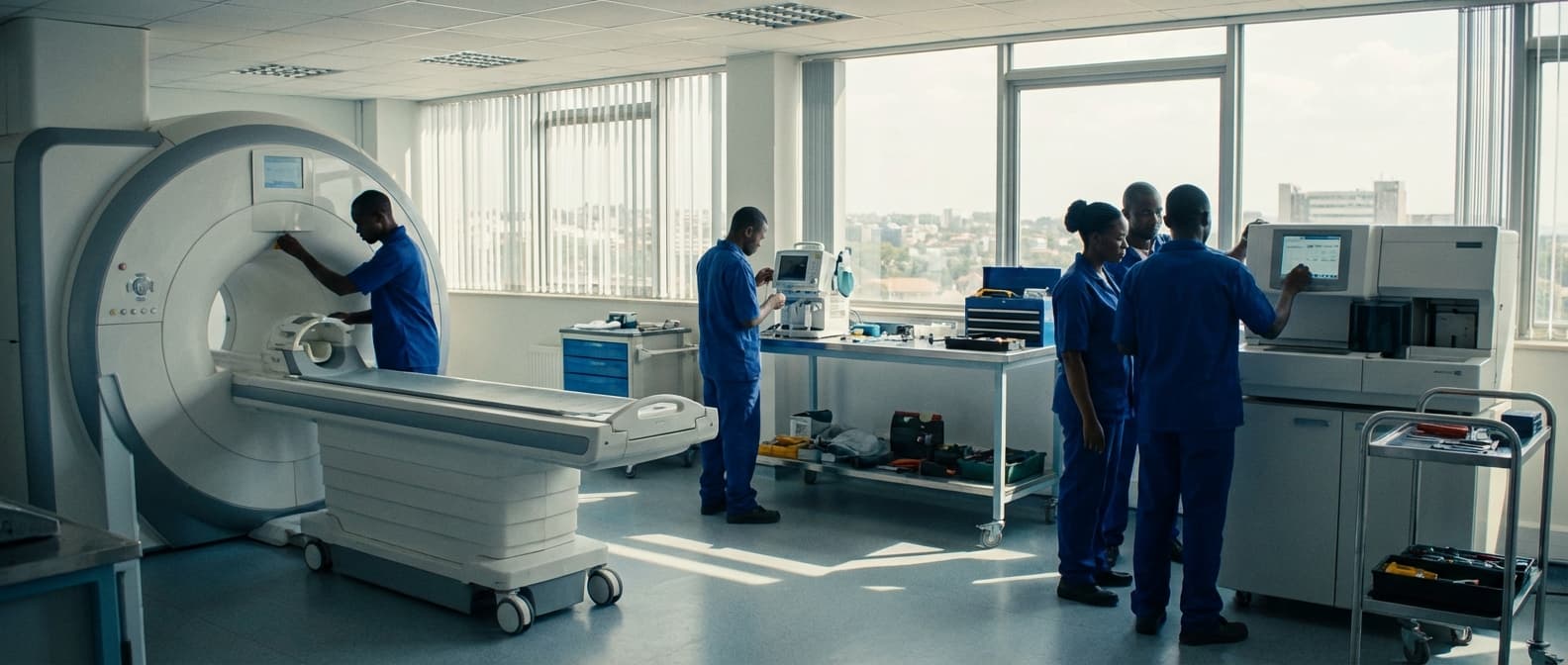
Comprehensive Maintenance Contract (CMC) Management Service (Parts & Labor) in Guinea-Bissau
Engineering Excellence & Technical Support
Comprehensive Maintenance Contract (CMC) Management Service (Parts & Labor) High-standard technical execution following OEM protocols and local regulatory frameworks.
Full Spectrum Component Coverage
Our CMC guarantees end-to-end management of all essential parts and labor for your critical infrastructure in Guinea-Bissau. From routine replacements to unforeseen component failures, we ensure seamless operational continuity with pre-approved, high-quality parts and certified technician deployment.
Proactive Predictive Maintenance Integration
Leveraging advanced diagnostics and monitoring systems, our CMC in Guinea-Bissau shifts maintenance from reactive to proactive. We identify potential issues before they escalate, minimizing downtime and optimizing equipment lifespan through expert labor interventions based on data-driven insights.
Localized Expertise, Global Standards
Our service in Guinea-Bissau combines in-depth understanding of the local operating environment with adherence to international best practices for parts procurement and labor execution. This dual focus ensures efficient, compliant, and cost-effective maintenance solutions tailored to your specific needs.
What Is Comprehensive Maintenance Contract (Cmc) Management Service (Parts & Labor) In Guinea-bissau?
Comprehensive Maintenance Contract (CMC) Management Service (Parts & Labor) in Guinea-Bissau refers to the outsourced provision and oversight of all aspects of maintaining critical equipment and infrastructure, encompassing both the cost of replacement parts and the labor required for repair, servicing, and preventive upkeep. This service aims to ensure optimal operational performance, minimize downtime, and extend the lifespan of assets through proactive and reactive maintenance strategies.
It involves the rigorous planning, execution, and financial management of maintenance activities. A CMC Management Service provider acts as a single point of accountability, coordinating with original equipment manufacturers (OEMs), authorized service providers, and parts suppliers to deliver a seamless and cost-effective maintenance solution. This typically includes defining service level agreements (SLAs), scheduling preventive maintenance, managing emergency repairs, sourcing and stocking spare parts, tracking maintenance history, and reporting on asset performance and expenditure.
| Who Needs It? | Typical Use Cases | ||||||
|---|---|---|---|---|---|---|---|
| Government ministries and agencies (e.g., Ministry of Health, Ministry of Education, Ministry of Transport) responsible for public infrastructure and services. | Maintenance of medical equipment in public hospitals and clinics (e.g., diagnostic imaging machines, laboratory analyzers, surgical equipment). | Educational institutions (universities, technical schools) requiring upkeep of IT infrastructure, laboratory equipment, and facilities. | Telecommunications companies managing critical network infrastructure and customer-facing equipment. | Energy and utility providers responsible for maintaining power generation, transmission, and distribution assets. | Industrial facilities (e.g., manufacturing plants, processing units) with complex machinery and production lines. | Logistics and transportation companies operating fleets of vehicles and specialized cargo handling equipment. | Large commercial enterprises with significant investments in IT hardware, building management systems, and specialized operational equipment. |
Key Components of CMC Management Service (Parts & Labor)
- Preventive Maintenance Scheduling and Execution
- Corrective Maintenance and Emergency Repair Management
- Spare Parts Procurement, Inventory Management, and Logistics
- Labor Management and Technician Deployment
- Performance Monitoring and Reporting
- Contract Negotiation and Vendor Management
- Budgeting and Cost Control
- Risk Assessment and Mitigation
- Compliance and Regulatory Adherence
Who Needs Comprehensive Maintenance Contract (Cmc) Management Service (Parts & Labor) In Guinea-bissau?
Comprehensive Maintenance Contract (CMC) Management Services, encompassing both parts and labor, are crucial for organizations in Guinea-Bissau that rely on critical machinery, equipment, or infrastructure for their operations. These services ensure optimal uptime, extend asset lifespan, reduce unexpected repair costs, and guarantee access to skilled technicians and necessary spare parts. Without effective CMC management, businesses risk significant operational disruptions, financial losses, and safety hazards.
| Customer Type | Key Departments/Functions Requiring CMC Management |
|---|---|
| Agricultural Enterprises | Operations Management, Farm Machinery Maintenance, Processing Plant Management |
| Industrial Manufacturers | Production Management, Maintenance Engineering, Supply Chain |
| Mining and Extractive | Mine Operations, Equipment Maintenance, Logistics |
| Energy and Utilities | Operations Control, Plant Engineering, Infrastructure Maintenance |
| Telecommunications | Network Operations, Field Service, Infrastructure Management |
| Transportation & Logistics | Fleet Management, Operations, Maintenance Workshops |
| Healthcare Institutions | Biomedical Engineering, Facilities Management, Clinical Operations |
| Construction Companies | Plant and Equipment Management, Site Operations, Maintenance Teams |
| Government Agencies | Infrastructure Management, Public Works, IT Departments |
| International Organizations/NGOs | Logistics, Operations, Technical Support |
Target Customers for CMC Management Service (Parts & Labor) in Guinea-Bissau:
- Large-scale agricultural enterprises (e.g., mechanized farming operations, processing plants)
- Industrial manufacturing facilities (e.g., food processing, textiles, light manufacturing)
- Mining and extractive industries
- Energy and utility providers (e.g., power generation, water treatment)
- Telecommunications companies
- Transportation and logistics companies (e.g., fleet management, port operations)
- Healthcare institutions (e.g., hospitals, clinics with advanced medical equipment)
- Construction companies with significant heavy machinery fleets
- Government agencies and public institutions managing critical infrastructure
- International organizations and NGOs with field operations and equipment
Comprehensive Maintenance Contract (Cmc) Management Service (Parts & Labor) Process In Guinea-bissau
This document outlines the Comprehensive Maintenance Contract (CMC) Management Service (Parts & Labor) process in Guinea-Bissau, detailing the workflow from initial inquiry to the full execution of services. This process ensures efficient and effective maintenance, repair, and replacement of equipment under contract, encompassing both necessary parts and skilled labor.
| Stage | Description | Key Activities | Responsible Parties | Documentation |
|---|---|---|---|---|
| Inquiry & Pre-qualification | Initial contact from a potential client seeking CMC services for their equipment. | Receive and acknowledge inquiry, gather basic information about equipment, site location, and existing maintenance arrangements. Conduct initial assessment of feasibility and capability. | Client, Service Provider (Sales/Business Development) | Inquiry Form, Initial Correspondence |
| Proposal & Quotation Generation | Developing a tailored proposal outlining the scope of services, technical specifications, and pricing. | Conduct detailed site survey and equipment assessment. Define scope of work (preventive, corrective, parts, labor). Prepare detailed technical and commercial proposal. Generate quotation with pricing for parts, labor, and service fees. | Service Provider (Technical Team, Sales Team, Procurement) | Technical Assessment Report, Commercial Proposal, Quotation |
| Contract Negotiation & Finalization | Discussing and agreeing upon the terms and conditions of the CMC agreement. | Client and Service Provider negotiate pricing, payment terms, contract duration, warranties, liabilities, and specific service inclusions/exclusions. Formalize the agreement. | Client, Service Provider (Legal Department, Management) | Draft Contract, Final Signed CMC Contract |
| Service Level Agreement (SLA) Definition | Establishing clear performance metrics and response times for maintenance services. | Define response times for breakdown calls, repair times, uptime guarantees, preventive maintenance frequency, and reporting requirements. Agree on key performance indicators (KPIs). | Client, Service Provider (Operations Management, Technical Lead) | Service Level Agreement (SLA) Document |
| Preventive Maintenance Scheduling | Proactively scheduling routine maintenance to prevent breakdowns. | Develop a comprehensive preventive maintenance schedule based on manufacturer recommendations and equipment usage. Communicate schedule to client and deploy technicians for routine checks, cleaning, lubrication, and minor adjustments. | Service Provider (Operations Department, Field Technicians) | Preventive Maintenance Schedule, Maintenance Reports |
| Corrective Maintenance (Breakdown) Management | Responding to equipment failures and performing necessary repairs. | Client reports a breakdown. Service Provider acknowledges the report, diagnoses the issue remotely or on-site. Dispatch technicians with necessary tools and parts. Perform repairs and restore equipment functionality. | Client (Operator), Service Provider (Help Desk, Field Technicians, Logistics) | Breakdown Report, Service Request Ticket, Repair Logs |
| Parts Procurement & Inventory Management | Ensuring availability of necessary spare parts. | Maintain an inventory of commonly used spare parts. Procure specialized or unavailable parts from authorized suppliers. Manage inventory levels to minimize downtime. | Service Provider (Procurement Department, Warehouse Management) | Inventory Records, Purchase Orders, Supplier Agreements |
| Labor Deployment & Execution | Assigning and managing skilled technicians for service. | Deploy qualified and experienced technicians based on the nature of the maintenance task (preventive or corrective). Ensure technicians have the necessary training, tools, and safety equipment. | Service Provider (Operations Department, Team Leads) | Technician Assignment Records, Skill Matrix |
| Quality Assurance & Inspection | Verifying the quality and effectiveness of maintenance services. | Conduct post-maintenance inspections. Review repair logs and client feedback. Ensure work is completed to agreed standards and meets SLA requirements. Perform root cause analysis for recurring issues. | Service Provider (Quality Control Department, Senior Technicians), Client (End User) | Quality Inspection Reports, Client Feedback Forms |
| Reporting & Invoicing | Documenting services rendered and issuing invoices. | Compile detailed reports on all maintenance activities performed (preventive and corrective), including parts used and labor hours. Submit service reports and invoices to the client for payment according to the contract terms. | Service Provider (Administration, Finance Department) | Service Reports, Invoices, Payment Receipts |
| Contract Renewal & Review | Evaluating contract performance and planning for future agreements. | Conduct periodic reviews of contract performance against SLAs. Discuss client satisfaction and any required adjustments to services. Initiate renewal discussions or re-negotiations for ongoing contracts. | Client, Service Provider (Management, Account Management) | Performance Review Reports, Contract Renewal Proposals |
Key Stages in the CMC Management Service Process
- Inquiry & Pre-qualification
- Proposal & Quotation Generation
- Contract Negotiation & Finalization
- Service Level Agreement (SLA) Definition
- Preventive Maintenance Scheduling
- Corrective Maintenance (Breakdown) Management
- Parts Procurement & Inventory Management
- Labor Deployment & Execution
- Quality Assurance & Inspection
- Reporting & Invoicing
- Contract Renewal & Review
Comprehensive Maintenance Contract (Cmc) Management Service (Parts & Labor) Cost In Guinea-bissau
Managing Comprehensive Maintenance Contracts (CMC) for parts and labor in Guinea-Bissau involves a nuanced approach to pricing. The cost of such services is not a fixed figure but rather a dynamic reflection of various influencing factors. These factors can be broadly categorized into the nature of the equipment being maintained, the scope and duration of the contract, the service provider's expertise, and the prevailing economic conditions in Guinea-Bissau. Understanding these elements is crucial for both clients seeking reliable maintenance and service providers determining fair pricing. The local currency, the West African CFA franc (XOF), is used for all pricing considerations, with exchange rates to major international currencies fluctuating.
| Equipment Category | Estimated Annual CMC Cost (XOF) - Low End | Estimated Annual CMC Cost (XOF) - High End | Notes |
|---|---|---|---|
| Office Equipment (Printers, Copiers, PCs) | 150,000 - 300,000 XOF | 400,000 - 750,000 XOF | Covers routine servicing, minor part replacement, and on-site support. Parts are generally readily available. |
| Light Industrial Machinery (Small Generators, Basic Manufacturing Equipment) | 500,000 - 1,500,000 XOF | 2,000,000 - 5,000,000 XOF | Includes regular checks, lubrication, filter changes, and replacement of common wear-and-tear parts. Specialized parts might increase costs. |
| Heavy Industrial Machinery (Large Generators, Manufacturing Lines, Construction Equipment) | 2,000,000 - 7,500,000 XOF | 10,000,000 - 30,000,000+ XOF | Significant costs due to complexity, specialized technicians, potential for imported parts, and longer downtime implications. Might involve international technicians. |
| Specialized IT Infrastructure (Servers, Network Equipment, Data Centers) | 1,000,000 - 3,000,000 XOF | 5,000,000 - 15,000,000 XOF | Depends heavily on redundancy, uptime guarantees, and the need for certified engineers. Access to original parts is critical. |
| Medical Equipment (Diagnostic Machines, Surgical Tools) | 800,000 - 2,500,000 XOF | 4,000,000 - 12,000,000 XOF | High precision, regulatory compliance, and specialized training for technicians. Sourcing of approved parts is paramount. |
Key Pricing Factors for CMC (Parts & Labor) in Guinea-Bissau
- Equipment Type and Complexity: Highly specialized, industrial, or technologically advanced equipment will naturally incur higher maintenance costs due to the need for specific expertise, specialized tools, and potentially imported spare parts.
- Age and Condition of Equipment: Older or poorly maintained equipment may require more frequent and extensive repairs, leading to higher labor and parts costs. Predictive maintenance strategies can help mitigate this, but initial assessments are key.
- Scope of Coverage: Does the contract cover routine preventive maintenance, emergency repairs, on-site support, or a combination? The breadth of services directly impacts the price.
- Response Time Guarantees: Contracts with guaranteed rapid response times for breakdowns (e.g., within 4 hours) will command a premium due to the need for on-call personnel and readiness.
- Downtime Penalties/Service Level Agreements (SLAs): Agreements with penalties for non-compliance or failure to meet uptime targets will be priced higher to account for the service provider's risk and commitment.
- Parts Availability and Sourcing: The cost and availability of spare parts are significant. If parts are scarce locally, require importation (with associated customs duties, shipping, and potential delays), the overall cost will increase.
- Labor Rates and Skill Level: The availability of skilled technicians with specific certifications and experience is a major driver. Higher skill levels and demand will lead to higher labor rates.
- Geographic Location of Equipment: Maintenance services for equipment located in remote or difficult-to-access areas within Guinea-Bissau will incur additional travel and logistical costs.
- Contract Duration: Longer-term contracts may offer economies of scale, potentially leading to slightly lower annual rates compared to short-term agreements, but this depends on the provider's strategy.
- Preventive vs. Corrective Maintenance Focus: Contracts heavily weighted towards preventive maintenance, aimed at reducing breakdowns, might have a different cost structure than those primarily focused on reactive repairs.
- Exclusivity and Vendor Lock-in: Exclusive maintenance agreements with a single provider might offer bundled discounts but also limit negotiation flexibility.
Affordable Comprehensive Maintenance Contract (Cmc) Management Service (Parts & Labor) Options
Managing Maintenance Contracts effectively is crucial for businesses to ensure operational continuity and control costs. Our Affordable Comprehensive Maintenance Contract (CMC) Management Service offers a streamlined approach to handling all aspects of your equipment maintenance, encompassing both parts and labor. We aim to maximize the value you receive by offering flexible 'value bundles' and implementing strategic cost-saving measures.
| Value Bundle Options | Description | Key Benefits | Ideal For |
|---|---|---|---|
| Essential Care Bundle | Covers routine preventative maintenance, scheduled inspections, and essential spare parts. Includes basic labor for scheduled tasks. | Predictable maintenance costs, reduced minor breakdowns, extended equipment lifespan. | Businesses with standard equipment, focus on reliability and budget certainty. |
| Proactive Performance Bundle | Includes Essential Care plus priority response times, on-site diagnostic support, and a wider range of critical spare parts inventory. Covers unscheduled repairs with pre-negotiated labor rates. | Minimized downtime, faster resolution of issues, increased operational efficiency. | Businesses with critical machinery, high-demand operations, and a need for rapid support. |
| Total Uptime Bundle | The most comprehensive option, encompassing Proactive Performance with guaranteed uptime SLAs, remote monitoring capabilities, remote diagnostics, and full parts and labor coverage for all unforeseen events. Includes dedicated account management. | Maximum operational continuity, peace of mind, comprehensive cost predictability, strategic asset management. | Large enterprises, businesses with highly specialized or legacy equipment, and those with stringent uptime requirements. |
Key Features of Our CMC Management Service
- Proactive Maintenance Scheduling: Preventative measures to minimize downtime and costly emergency repairs.
- Vendor Management: Centralized coordination and negotiation with multiple service providers.
- Parts Procurement Optimization: Leveraging bulk purchasing and preferred vendor relationships for reduced parts costs.
- Labor Cost Control: Strategic deployment of technicians and fair negotiation of labor rates.
- Performance Monitoring & Reporting: Transparent tracking of service events, costs, and equipment uptime.
- Contract Renewal Management: Ensuring optimal terms and pricing for future contract periods.
- Compliance & Warranty Adherence: Guaranteeing all maintenance activities meet manufacturer specifications and warranty requirements.
Verified Providers In Guinea-bissau
When seeking healthcare services in Guinea-Bissau, particularly those with an international standard of quality and ethical practice, it is crucial to identify 'Verified Providers'. These are healthcare facilities and professionals who have undergone rigorous vetting processes, ensuring they meet established benchmarks for medical expertise, patient safety, operational integrity, and adherence to international health regulations. In this regard, Franance Health stands out as a leading organization whose credentials signify a commitment to excellence, making them the best choice for many seeking reliable healthcare solutions in the region.
| Credential Aspect | Franance Health Verification Standard | Benefit to Patients |
|---|---|---|
| Medical Expertise & Training | Adherence to internationally recognized medical education and continuing professional development standards. | Access to highly skilled and up-to-date medical professionals. |
| Patient Safety & Quality Assurance | Implementation of robust infection control, risk management, and quality improvement programs. | Reduced risk of complications and assurance of high-quality care delivery. |
| Ethical Practices & Transparency | Strict adherence to ethical codes, transparent billing, and informed consent protocols. | Trustworthy and fair treatment, clear understanding of medical procedures and costs. |
| Infrastructure & Technology | Verification of appropriate medical equipment, facilities, and technological integration. | Access to modern diagnostic and treatment capabilities. |
| Regulatory Compliance | Ensuring full compliance with national and relevant international health regulations. | Guaranteed legal and operational legitimacy of services. |
Why Franance Health Credentials Represent the Best Choice:
- Rigorous Accreditation and Certification: Franance Health is known for its stringent accreditation processes, which go beyond basic licensing. They often partner with or adhere to standards set by international health organizations, ensuring alignment with global best practices in patient care, safety protocols, and facility management.
- Demonstrated Clinical Excellence: Their network comprises healthcare professionals and institutions with proven track records. This includes a focus on continuous professional development, utilization of advanced medical technologies, and a commitment to evidence-based medicine.
- Patient-Centric Approach: A core tenet of Franance Health's verification is a deep commitment to patient well-being and satisfaction. This translates to transparent communication, respectful treatment, accessible services, and robust patient feedback mechanisms.
- Ethical Operations and Transparency: Verified providers under the Franance Health umbrella are held to high ethical standards. This includes transparency in billing, informed consent procedures, and a zero-tolerance policy for fraudulent practices. Their operational integrity builds trust and reliability for patients.
- Comprehensive Service Offerings: Franance Health often verifies a broad spectrum of healthcare services, from primary care to specialized treatments, ensuring that patients can find comprehensive and integrated medical solutions within their verified network.
- Commitment to Quality Improvement: Verification is not a one-time event. Franance Health maintains ongoing monitoring and evaluation of its providers, pushing for continuous improvement in service delivery and patient outcomes.
- International Recognition and Trust: The credentials associated with Franance Health often carry international recognition, making it easier for expatriates, tourists, and those seeking specialized care to trust and engage with healthcare providers in Guinea-Bissau.
Scope Of Work For Comprehensive Maintenance Contract (Cmc) Management Service (Parts & Labor)
This Scope of Work (SOW) outlines the requirements for a Comprehensive Maintenance Contract (CMC) Management Service, encompassing both parts and labor. The service provider will be responsible for the proactive and reactive maintenance of designated equipment to ensure optimal performance, longevity, and minimal downtime. This includes planning, execution, and reporting of all maintenance activities according to established technical deliverables and standard specifications.
| Technical Deliverable | Description | Standard Specifications / Metrics |
|---|---|---|
| Preventive Maintenance (PM) Plan | Detailed plan outlining scheduled maintenance activities for each equipment type, including frequency, tasks, and required resources. | PM completion rate of 98% within the scheduled window. Adherence to manufacturer-recommended PM schedules or established internal benchmarks. PM checklist completion for each service. |
| Reactive Maintenance (RM) Response Time | Time taken from reporting a breakdown to the arrival of a qualified technician on-site to commence work. | Critical equipment: < 4 hours. Non-critical equipment: < 8 hours. (Specific times to be defined based on equipment criticality and geographical location). |
| RM Resolution Time | Time taken from the commencement of work to the restoration of equipment functionality to operational status. | To be defined on a per-equipment basis, aiming for minimal downtime. Average resolution time < 24 hours for critical equipment. First-time fix rate of > 90%. |
| Spare Parts Management | Ensuring availability of critical spare parts, efficient inventory control, and timely procurement. | Stock availability of critical spares at > 95%. Lead time for non-stocked critical spares < 48 hours. Inventory accuracy > 99%. Parts usage tracking against maintenance activities. |
| Maintenance Reporting | Regular reports detailing all maintenance activities performed, including PM and RM, parts consumed, labor hours, and equipment status. | Monthly reporting package including: PM compliance, RM incident summary, Mean Time Between Failures (MTBF), Mean Time To Repair (MTTR), parts consumption analysis, labor utilization, and equipment availability/uptime metrics. Reports to be submitted within 5 business days of the reporting period end. |
| Equipment Uptime/Availability | Percentage of time equipment is operational and available for use. | Target uptime for critical equipment > 98%. Target uptime for non-critical equipment > 95%. (Specific targets to be agreed upon). |
| Safety Compliance | Adherence to all relevant safety regulations and protocols during maintenance activities. | Zero safety incidents reported during maintenance activities. Compliance with local and international safety standards (e.g., OSHA, ISO 45001).. |
| Technical Documentation | Maintenance of up-to-date technical documentation, including manuals, schematics, and service history for all equipment. | All technical documentation accessible to authorized personnel. Service history logs maintained for each asset. Updates to documentation within 7 days of significant changes. |
| Technician Qualification | Ensuring all technicians performing maintenance are appropriately trained, certified, and experienced. | Technicians to possess relevant certifications and demonstrable experience for the equipment they service. Minimum of 2 years of experience for specialized equipment. |
| Quality Assurance (QA) Checks | Regular checks to ensure maintenance activities are performed to a high standard. | Scheduled and ad-hoc QA checks on completed PM and RM tasks. Feedback incorporated into training and process improvement. |
Key Responsibilities of the CMC Management Service Provider
- Development and implementation of a proactive maintenance schedule for all covered equipment.
- Prompt and efficient execution of all scheduled preventive maintenance tasks.
- Rapid response and resolution of all equipment breakdowns and malfunctions (reactive maintenance).
- Management of spare parts inventory, including procurement, stocking, and utilization.
- Coordination and oversight of all third-party labor engaged for maintenance or repair activities.
- Comprehensive record-keeping and reporting of all maintenance activities, parts used, and labor hours.
- Ensuring compliance with all manufacturer recommendations, industry best practices, and safety regulations.
- Regular assessment and reporting on equipment condition and potential areas for improvement.
- Management of warranty claims and coordination with manufacturers for covered repairs.
- Development and maintenance of an asset register for all covered equipment.
Service Level Agreement For Comprehensive Maintenance Contract (Cmc) Management Service (Parts & Labor)
This Service Level Agreement (SLA) outlines the response times and uptime guarantees for the Comprehensive Maintenance Contract (CMC) Management Service, covering both parts and labor. This SLA is an integral part of the agreement between [Your Company Name] (hereinafter referred to as "Provider") and [Client Company Name] (hereinafter referred to as "Client").
| Service Category | Priority Level | Response Time (Technical Contact) | Resolution Time Target | Uptime Guarantee |
|---|---|---|---|---|
| Scheduled Maintenance | Low | 24 Business Hours | As per scheduled plan | N/A (proactive maintenance) |
| Minor Issues / Technical Support | Medium | 4 Business Hours | 8 Business Hours | 99.5% (cumulative monthly downtime for non-critical systems) |
| Major Equipment Failure / Critical System Down | High | 2 Business Hours | 12 Business Hours | 99.9% (cumulative monthly downtime for critical systems) |
| Emergency / Catastrophic Failure | Critical | 1 Business Hour | 4 Business Hours | 99.99% (cumulative monthly downtime for mission-critical systems) |
Service Scope
- Parts Management: Procurement, stocking, and timely delivery of all necessary spare parts for covered equipment.
- Labor Services: Provision of qualified technicians for scheduled and unscheduled maintenance, repairs, and troubleshooting.
- Equipment Covered: All equipment specified in the attached Annex A (Equipment Schedule).
Frequently Asked Questions

Ready when you are
Let's scope your Comprehensive Maintenance Contract (CMC) Management Service (Parts & Labor) in Guinea-Bissau project in Guinea-Bissau.

Scaling healthcare logistics and technical systems across the entire continent.