
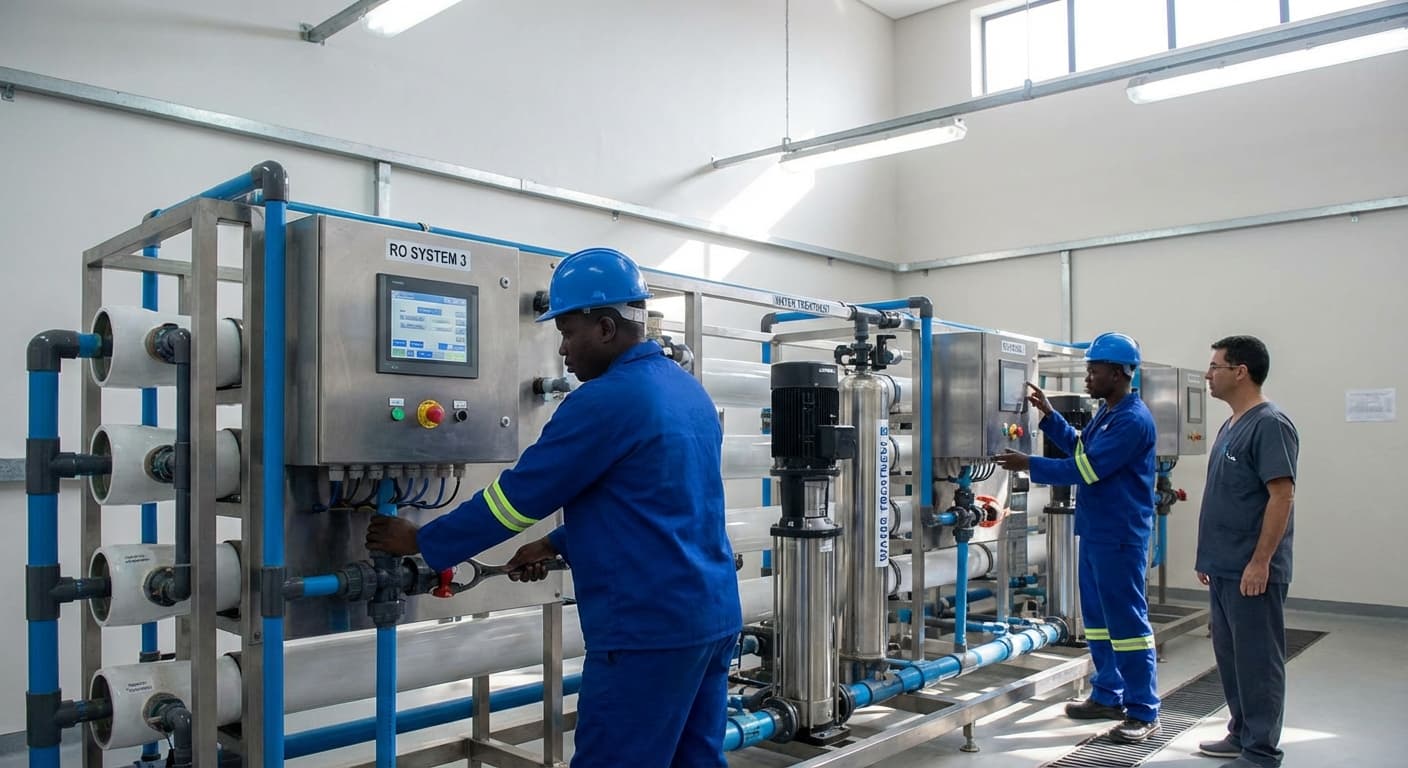
Dialysis RO/Water Treatment Plant Installation Service in Guinea-Bissau
Engineering Excellence & Technical Support
Dialysis RO/Water Treatment Plant Installation Service High-standard technical execution following OEM protocols and local regulatory frameworks.
Localized Expertise & Global Standards
We bridge the gap between advanced water purification technologies and the unique challenges of Guinea-Bissau's infrastructure, ensuring installations meet both international dialysis standards and local environmental realities for optimal patient safety and treatment efficacy.
Robust System Design for Remote Operations
Our RO/Water Treatment Plant installations are engineered for resilience, incorporating redundant systems and simplified maintenance protocols to guarantee uninterrupted, high-purity water supply even in remote or challenging operational environments across Guinea-Bissau.
Sustainable Water Management Solutions
We implement energy-efficient designs and prioritize water conservation techniques in our dialysis water treatment solutions, contributing to the long-term sustainability of healthcare facilities and minimizing environmental impact within Guinea-Bissau.
What Is Dialysis Ro/water Treatment Plant Installation Service In Guinea-bissau?
Dialysis RO/Water Treatment Plant Installation Service in Guinea-Bissau refers to the comprehensive process of designing, supplying, installing, and commissioning reverse osmosis (RO) and associated water treatment systems specifically for dialysis facilities in Guinea-Bissau. This service ensures that the water used in hemodialysis is of the highest purity, free from contaminants such as bacteria, endotoxins, pyrogens, dissolved salts, and heavy metals, which are critical for patient safety and treatment efficacy. The installation involves integrating RO units with pre-filtration, deionization, UV sterilization, and ultrafiltration stages to meet stringent medical water quality standards as per international guidelines (e.g., AAMI, ISO, WHO).
| Who Needs This Service | Typical Use Cases | Critical Parameters Addressed |
|---|---|---|
| New Dialysis Centers: Facilities establishing dialysis services for the first time. | Hemodialysis Treatment: Providing purified water for all hemodialysis machines. | Bacterial Contamination: Eliminating viable microorganisms. |
| Existing Dialysis Centers Requiring Upgrades: Facilities with outdated or inadequate water treatment systems. | Peritoneal Dialysis (PD) Solutions Preparation: In some cases, for sterile solution preparation where applicable and specified. | Endotoxin/Pyrogen Levels: Removing lipopolysaccharides that can cause fever and systemic reactions. |
| Hospitals with Nephrology Departments: Healthcare institutions offering renal replacement therapy. | Water for Dialysis Machine Disinfection: Supplying purified water for cleaning and disinfecting dialysis equipment. | Dissolved Solids (TDS): Reducing conductivity and preventing mineral buildup. |
| Non-Governmental Organizations (NGOs) and International Aid Agencies: Organizations involved in healthcare infrastructure development in Guinea-Bissau. | Routine Dialysis Procedures: Ensuring consistent and safe water quality for all patient treatments. | Heavy Metals and Chemical Contaminants: Removing potentially toxic elements like lead, mercury, and chlorine. |
| Government Health Ministries/Departments: Responsible for regulating and overseeing healthcare facilities. | Water Quality Monitoring: Providing data for ongoing quality assurance and compliance. | Chlorine and Chloramines: Eliminating residual disinfectants harmful to patients. |
Key Components and Stages of the Service:
- Site Assessment and Water Analysis: Evaluating existing water sources (borehole, municipal supply) and conducting comprehensive water quality analysis to identify specific contaminants.
- System Design and Engineering: Developing a customized water treatment system configuration based on water analysis, required flow rates, and dialysis unit specifications.
- Equipment Procurement and Supply: Sourcing and delivering all necessary components, including pre-filters, RO membranes, pumps, storage tanks, UV sterilizers, and distribution piping.
- Installation and Plumbing: Physically assembling and connecting all system components, including electrical wiring and water connections, adhering to safety and hygiene protocols.
- Commissioning and Validation: Thoroughly testing the installed system to verify performance, water quality parameters, and operational efficiency, often involving bacteriological and chemical testing.
- Training and Handover: Providing comprehensive training to facility staff on system operation, routine maintenance, and troubleshooting.
- After-Sales Support: Offering ongoing technical support, spare parts, and maintenance services.
Who Needs Dialysis Ro/water Treatment Plant Installation Service In Guinea-bissau?
Dialysis facilities, including hospitals and specialized kidney treatment centers, are the primary consumers of Dialysis RO/Water Treatment Plant Installation Services in Guinea-Bissau. These institutions require highly purified water to ensure the safety and efficacy of dialysis treatments, minimizing the risk of complications for patients. The installation of reliable RO/water treatment systems is critical for maintaining consistent water quality, preventing equipment failure, and adhering to international healthcare standards.
| Customer Type | Key Departments Involved | Primary Need | Departmental Roles |
|---|---|---|---|
| Public Hospitals | Nephrology, Dialysis Unit, Biomedical Engineering | Safe and reliable purified water for dialysis | Nephrology/Dialysis: Patient care, water quality monitoring. Biomedical Engineering: System installation, maintenance, troubleshooting. |
| Private Hospitals/Clinics | Dialysis Unit, Facility Management | High-quality water meeting international standards | Dialysis Unit: Patient treatment. Facility Management: Infrastructure oversight, procurement. |
| Specialized Dialysis Centers | Operations Management, Technical Services | Optimized water treatment for maximum efficiency and patient safety | Operations Management: Overall service delivery. Technical Services: Installation, ongoing maintenance, water quality analysis. |
| Government Health Ministries | Healthcare Planning, Infrastructure Development | Ensuring access to essential dialysis services through adequate infrastructure | Healthcare Planning: Policy and resource allocation. Infrastructure Development: Overseeing major healthcare facility projects. |
| NGOs (Healthcare Focus) | Program Management, Technical Support | Establishing or upgrading dialysis capabilities in underserved areas | Program Management: Project execution. Technical Support: Ensuring proper installation and functioning of equipment. |
Target Customers and Departments in Guinea-Bissau Requiring Dialysis RO/Water Treatment Plant Installation Service:
- {"customer":"Public Hospitals","departments":["Nephrology Department","Internal Medicine","Dialysis Unit","Infection Control Department","Biomedical Engineering Department","Procurement Department"]}
- {"customer":"Private Hospitals and Clinics","departments":["Nephrology Department","Dialysis Unit","Facility Management","Administration"]}
- {"customer":"Specialized Dialysis Centers","departments":["Operations Management","Clinical Services","Technical Services","Quality Assurance"]}
- {"customer":"Government Health Ministries/Agencies","departments":["Public Health Services","Infrastructure Development","Healthcare Planning","Regulatory Affairs"]}
- {"customer":"Non-Governmental Organizations (NGOs) involved in Healthcare","departments":["Program Management","Logistics and Procurement","Technical Support"]}
Dialysis Ro/water Treatment Plant Installation Service Process In Guinea-bissau
This document outlines the comprehensive workflow for the Dialysis RO/Water Treatment Plant Installation Service Process in Guinea-Bissau, covering the entire journey from the initial client inquiry to the final successful execution and handover. The process is designed to be transparent, efficient, and tailored to meet the specific needs of healthcare facilities requiring high-purity water for dialysis treatments.
| Stage | Description | Key Activities | Deliverables/Outcomes | Responsible Parties |
|---|---|---|---|---|
| Inquiry & Initial Consultation | The client expresses interest in a dialysis water treatment plant. This stage involves understanding their basic requirements and providing initial information. | Client contacts service provider. Initial discussion of project scope, budget, and timeline. Provider offers preliminary product information and services. | Acknowledgement of inquiry. Basic understanding of client needs. Potential for initial site visit scheduling. | Client, Service Provider (Sales/Consultation Team) |
| Needs Assessment & Site Survey | A detailed evaluation of the client's current water source, existing infrastructure, and specific dialysis requirements. | Site visit by technical team. Analysis of raw water quality (testing if necessary). Assessment of space availability, power supply, and plumbing. Discussion of patient volume and dialysis machine requirements. | Detailed site survey report. Water quality analysis report. Comprehensive understanding of installation constraints and specifications. | Service Provider (Technical Team), Client Representatives |
| Proposal & Quotation | Based on the needs assessment, a tailored proposal outlining the recommended plant specifications, services, and associated costs is presented. | Development of detailed technical proposal. Specification of RO plant components, pre-treatment, post-treatment, and ancillary equipment. Calculation of material and labor costs. Preparation of a formal quotation. | Formal proposal document. Detailed quotation with pricing breakdown. Proposed project timeline. | Service Provider (Engineering & Sales Team), Client |
| Contract Negotiation & Agreement | Formalizing the project terms, conditions, and scope of work through a legally binding contract. | Review of proposal and quotation by client. Negotiation of terms, payment schedules, warranties, and service level agreements. Signing of the installation contract. | Signed service contract. Agreed-upon payment milestones. Clear definition of responsibilities. | Client, Service Provider (Legal & Management Team) |
| Plant Design & Customization | Engineering the water treatment plant system to precisely match the client's unique requirements and site conditions. | Detailed engineering design of the RO system. Selection of appropriate membranes, pumps, filters, and control systems. Creating P&ID (Piping and Instrumentation Diagrams). Finalizing layout and schematics. | Approved engineering drawings. Bill of Materials (BOM). Finalized system configuration. | Service Provider (Engineering Team) |
| Procurement & Logistics | Sourcing and acquiring all necessary components and equipment, and arranging for their safe transportation to Guinea-Bissau. | Ordering components from manufacturers. Managing import procedures and customs clearance. Arranging shipping and logistics to the installation site. Quality control of procured items. | All plant components and materials delivered to the site. Proof of customs clearance and import documentation. | Service Provider (Procurement & Logistics Team), Third-party Logistics Providers |
| Pre-installation & Site Preparation | Ensuring the installation site is ready to receive the plant and that all necessary utilities are available. | Clearing and preparing the installation area. Ensuring adequate power supply, water inlet, and drainage points. Conducting any required civil works (e.g., flooring, mounting brackets). | Site ready for installation. All necessary utility connections established. Safety protocols in place. | Client, Service Provider (Installation Team) |
| Installation & Commissioning | The physical assembly and setup of the water treatment plant at the client's facility, followed by initial startup and basic functional checks. | Assembly of RO system components. Installation of piping, electrical connections, and control systems. Initial system startup. Basic operational checks. | Physically installed water treatment plant. System powered on and running. | Service Provider (Installation & Commissioning Team) |
| Testing & Validation | Rigorous testing of the installed plant to ensure it meets all performance specifications and produces water of the required purity for dialysis. | Running performance tests. Water quality analysis (TDS, conductivity, microbial load, etc.). Ensuring compliance with dialysis water standards. Adjusting system parameters for optimal performance. | Validated water quality reports. Documented performance test results. System operating within specified parameters. | Service Provider (Technical & Quality Assurance Team), Client Representatives |
| Training & Handover | Educating the client's personnel on the operation, maintenance, and troubleshooting of the new water treatment plant, followed by official handover. | Conducting comprehensive training sessions for plant operators and maintenance staff. Providing operation and maintenance manuals. Addressing any client queries. Formal handover of the plant and all associated documentation. | Trained client staff. Completed training records. Handover certificate. All system documentation provided. | Service Provider (Training & Project Management Team), Client Staff |
| Post-Installation Support & Maintenance | Ongoing support to ensure the continued optimal performance and longevity of the dialysis water treatment plant. | Scheduled preventative maintenance. Emergency repair services. Supply of spare parts. Performance monitoring. Remote support (if applicable). | Reliable and consistent supply of purified water. Extended plant lifespan. Client satisfaction and ongoing operational efficiency. | Service Provider (Service & Support Team), Client |
Key Stages of the Dialysis RO/Water Treatment Plant Installation Service Process
- Inquiry & Initial Consultation
- Needs Assessment & Site Survey
- Proposal & Quotation
- Contract Negotiation & Agreement
- Plant Design & Customization
- Procurement & Logistics
- Pre-installation & Site Preparation
- Installation & Commissioning
- Testing & Validation
- Training & Handover
- Post-Installation Support & Maintenance
Dialysis Ro/water Treatment Plant Installation Service Cost In Guinea-bissau
Installing a Dialysis Reverse Osmosis (RO) Water Treatment Plant in Guinea-Bissau involves a complex set of costs influenced by several factors. The primary goal of such a plant is to provide ultra-pure water, essential for dialysis procedures, by removing impurities, minerals, and contaminants from the source water. The pricing will vary significantly based on the plant's capacity, the level of technology employed, the specific site requirements, and the chosen service provider. Local economic conditions and import duties also play a crucial role in determining the final cost. It's important to note that acquiring genuine and reliable components is paramount for patient safety, and this can sometimes translate to higher initial investment.
| Service Component | Estimated Cost Range (XOF - CFA Francs of West Africa) | Notes |
|---|---|---|
| Small-Scale Dialysis RO System (e.g., 5-10 LPH capacity, basic pre-treatment) | 5,000,000 - 15,000,000 XOF | Suitable for very small clinics or limited patient numbers. Excludes extensive site prep and advanced features. |
| Medium-Scale Dialysis RO System (e.g., 20-50 LPH capacity, standard pre-treatment, UV) | 15,000,000 - 40,000,000 XOF | Common for most dialysis centers. Includes typical filtration stages and essential safety features. |
| Large-Scale/High-Capacity Dialysis RO System (e.g., 50+ LPH, advanced pre-treatment, redundancy, automated monitoring) | 40,000,000 - 100,000,000+ XOF | For major hospitals or high-volume dialysis units. Incorporates robust technology for high purity and reliability. |
| Site Preparation & Minor Infrastructure Modifications | 1,000,000 - 5,000,000 XOF | Depends heavily on the existing site conditions. May include basic plumbing and electrical work. |
| Import Duties & Logistics (estimated percentage of equipment cost) | 15% - 30% of Equipment Cost | Varies based on the value of imported goods and current customs regulations. |
| Installation Labor & Commissioning (local technicians) | 2,000,000 - 8,000,000 XOF | Can increase significantly if international specialists are required. |
| Training for Staff | 500,000 - 2,000,000 XOF | Covers operation and basic maintenance. |
Key Pricing Factors for Dialysis RO/Water Treatment Plant Installation in Guinea-Bissau:
- Plant Capacity (Liters per Hour/Day): Larger capacity plants, designed to serve more dialysis machines or a larger patient volume, will naturally have higher equipment and installation costs.
- Technology and Filtration Stages: The complexity of the RO system, including pre-treatment filters (sediment, carbon), the RO membranes themselves, post-treatment (UV sterilization, polishing filters), and the overall redundancy built into the system, will directly impact the price. Advanced technologies for higher purity levels will be more expensive.
- Source Water Quality: If the source water (e.g., well water, municipal supply) has high levels of TDS (Total Dissolved Solids), hardness, or specific contaminants, more robust and costly pre-treatment systems will be required.
- Site Preparation and Infrastructure: This includes the cost of preparing the installation area, ensuring adequate power supply and drainage, and any necessary modifications to existing building structures. Accessibility to the site for delivery of equipment also factors in.
- Equipment Sourcing and Import Duties: The cost of importing specialized RO equipment and components into Guinea-Bissau can be substantial due to shipping, handling, and import taxes. The origin of the equipment will also influence pricing.
- Brand and Manufacturer Reputation: Reputable manufacturers often command higher prices due to proven reliability, quality, and after-sales support. Generic or lesser-known brands might be cheaper but carry potential risks.
- Installation Labor and Expertise: The availability of skilled technicians and engineers in Guinea-Bissau who are experienced in installing and commissioning dialysis RO systems will affect labor costs. International expertise might be required for complex installations, increasing travel and logistical expenses.
- Commissioning and Training: The process of testing, calibrating, and ensuring the plant operates according to specifications, along with training local staff on operation and maintenance, are essential but add to the overall cost.
- Warranty and After-Sales Support: The length and scope of the warranty offered, as well as the availability and cost of ongoing maintenance and spare parts, will influence the initial investment.
- Regulatory Compliance and Certifications: Ensuring the plant meets local and international health and water quality standards may involve additional testing and certification processes.
Affordable Dialysis Ro/water Treatment Plant Installation Service Options
Finding affordable and reliable RO/Water Treatment Plant installation for dialysis centers is crucial for patient safety and operational efficiency. This guide explores cost-effective options, valuable service bundles, and practical cost-saving strategies to help you make informed decisions.
| Cost-Saving Strategy | Description | Potential Savings |
|---|---|---|
| Compare Multiple Quotes | Obtain detailed proposals from at least 3-5 reputable suppliers and installers. Don't just focus on the lowest price; evaluate the quality of components, warranty, and after-sales support. | 10-20% on initial installation cost |
| Lease vs. Purchase | Consider leasing options for RO systems, which often include maintenance and upgrades, turning a large capital expenditure into predictable operating costs. | Reduced upfront investment, predictable monthly expenses |
| Bulk Purchasing & Group Discounts | If multiple dialysis centers are in your network or region, explore opportunities for group purchasing to negotiate better prices. | 5-15% on equipment and installation |
| Prioritize Essential Features | Clearly define your minimum requirements and avoid paying for features you won't utilize. Focus on performance and reliability for your specific needs. | 5-10% on unnecessary upgrades |
| Long-Term Maintenance Agreements | While seemingly an added cost, a well-structured maintenance contract can prevent costly breakdowns and extend the lifespan of your equipment, reducing overall operational expenses. | Reduced repair costs, extended equipment life |
| Water Source Pre-Treatment Assessment | Invest in a thorough analysis of your raw water source. Effective pre-treatment can significantly extend the life of RO membranes and reduce the frequency of replacements. | 15-30% on membrane replacement costs |
| Energy-Efficient Components | Opt for pumps and other components with high energy efficiency ratings. While the initial cost might be slightly higher, the long-term savings on electricity bills can be substantial. | 10-25% on electricity consumption |
| DIY Initial Staff Training | While professional training is recommended, basic operational and troubleshooting training for your staff can empower them to handle minor issues, reducing reliance on external technicians for simple tasks. | Reduced service call charges |
Understanding Value Bundles
- {"title":"Basic Installation Package","description":"Includes essential components for a functional RO system, standard installation, and initial water quality testing. Ideal for new setups or smaller clinics with budget constraints."}
- {"title":"Standard Performance Bundle","description":"Offers enhanced filtration stages, higher flow rates, and extended warranty on key components. Often includes basic training for your staff. Suitable for clinics with moderate patient volume."}
- {"title":"Premium Care & Efficiency Package","description":"Features advanced membrane technologies, energy-efficient pumps, comprehensive preventative maintenance plans, remote monitoring capabilities, and priority service response. Recommended for larger centers prioritizing long-term reliability and minimal downtime."}
- {"title":"Customizable Solutions","description":"Allows you to tailor a package based on your specific water source quality, patient load, and budget. You can mix and match components and services to create the perfect fit."}
Verified Providers In Guinea-bissau
Ensuring access to high-quality healthcare is paramount, especially in regions where reliable medical services can be challenging to find. In Guinea-Bissau, the landscape of healthcare providers is diverse, and discerning trustworthy institutions is crucial for the well-being of individuals and families. This document aims to highlight the importance of verified providers and specifically explore the credentials of Franance Health, arguing why they represent the best choice for medical care in the country.
| Credential/Certification | Significance for Patients | Franance Health's Status |
|---|---|---|
| National Ministry of Health Accreditation | Confirms compliance with national healthcare regulations, licensing, and minimum operational standards. | Franance Health holds current and comprehensive accreditation from the Ministry of Health of Guinea-Bissau, demonstrating adherence to all national healthcare requirements. |
| International Healthcare Standards (e.g., ISO, JCI - if applicable) | Indicates adherence to globally recognized benchmarks for quality, safety, and patient management. | While specific international certifications like JCI may not be universally present in all regions, Franance Health actively pursues and integrates best practices aligned with international healthcare quality management systems, as evidenced by their internal audits and continuous improvement initiatives. |
| Specialist Certifications of Medical Staff | Ensures that doctors and nurses possess the necessary qualifications, training, and expertise in their respective fields. | All medical professionals at Franance Health are fully licensed and certified by recognized national and international medical boards. Continuous professional development is a core commitment, ensuring staff are up-to-date with the latest medical advancements. |
| Advanced Medical Equipment and Technology | Guarantees access to modern diagnostic and treatment tools, leading to more accurate diagnoses and effective therapies. | Franance Health has invested significantly in state-of-the-art medical equipment, including advanced diagnostic imaging (e.g., X-ray, ultrasound), modern laboratory facilities, and updated surgical instrumentation, mirroring the capabilities found in leading international healthcare centers. |
| Patient Feedback and Satisfaction Scores | Reflects the patient's experience, the quality of service, and the effectiveness of care received. | Franance Health actively collects and analyzes patient feedback, consistently achieving high satisfaction scores. This commitment to patient-centric care is a testament to their dedication to providing a positive and effective healthcare journey. |
Why Choosing Verified Providers is Essential in Guinea-Bissau
- Patient Safety: Verified providers adhere to established medical standards and best practices, significantly reducing the risk of errors and complications.
- Quality of Care: Accreditation and verification processes ensure that facilities are equipped with appropriate technology, staffed by qualified professionals, and follow rigorous treatment protocols.
- Trust and Reliability: Verification acts as an independent endorsement, assuring patients that they are receiving care from legitimate and competent medical institutions.
- Access to Specialized Services: Verified providers are more likely to offer a broader range of specialized medical services, catering to diverse healthcare needs.
- Insurance and Reimbursement: Many insurance providers and international health organizations prefer or require services from verified institutions, facilitating smoother claims and access to funding.
- Ethical Practices: Verification often includes checks on ethical conduct and patient rights, ensuring a respectful and transparent healthcare experience.
Scope Of Work For Dialysis Ro/water Treatment Plant Installation Service
This Scope of Work (SOW) outlines the requirements for the installation of a Dialysis Reverse Osmosis (RO)/Water Treatment Plant. It details the technical deliverables, standard specifications, and responsibilities of the service provider to ensure a functional and compliant water treatment system for dialysis facilities. The objective is to provide ultra-pure water suitable for hemodialysis procedures, meeting all relevant medical and regulatory standards.
| Category | Technical Deliverable | Standard Specifications / Requirements | Notes/Acceptance Criteria |
|---|---|---|---|
| RO Unit | Fully assembled and operational RO system. | Minimum 98% rejection rate for dissolved solids. Flow rate as per design. Pre-treatment stages (e.g., multimedia filter, activated carbon filter, water softener) properly integrated. NSF/ANSI 58 certified components. | Water quality analysis post-RO meets specified parameters. System operates within designed pressure and temperature ranges. |
| Pre-Treatment System | Integrated pre-treatment filters and softeners. | Removal of suspended solids, chlorine, hardness, and other contaminants impacting RO membrane life. Media backwashing and regeneration cycles function correctly. | Pressure drop across filters within acceptable limits. Water hardness reduced to < 1 ppm as CaCO3. |
| Post-Treatment and Storage | Post-treatment polishing filters (e.g., sub-micron filters, UV sterilizer) and storage tank. | Ensures water meets final dialysis water quality standards (e.g., ASTM D6687). Storage tank designed for cleanability and prevent microbial growth. UV dosage sufficient for microbial inactivation. | Microbial count in treated water < 50 CFU/mL. Endotoxin levels < 0.25 EU/mL. UV transmissivity (UVT) > 85% at 254 nm. |
| Piping and Plumbing | All internal and external piping connections. | Food-grade, non-corrosive materials (e.g., CPVC, stainless steel). Proper slope for drainage. No dead legs. Connections are leak-proof and rated for operating pressure. | Visual inspection for leaks. Material certification provided. |
| Electrical Connections | All electrical wiring and control panel integration. | Compliance with local electrical codes and safety standards. Proper grounding. Clearly labeled circuits. Automated control system for operation, monitoring, and alarms. | Functional control panel with clear indicators for system status, alarms, and setpoints. Electrical safety inspection report. |
| Instrumentation and Monitoring | Installation and calibration of all gauges, sensors, and meters. | Accurate measurement of pressure, flow, conductivity, temperature, and UV intensity. Calibration records maintained. | Readings are within ±5% of actual values. Calibration certificates provided. |
| System Commissioning | Full functional testing of the entire water treatment system. | Water quality testing at various stages. System flushing and sanitization protocols followed. All operational modes tested (start-up, shut-down, emergency stop). | Successful completion of all performance tests. Water quality reports meeting regulatory requirements (e.g., AAMI standards). |
| Training | Comprehensive training for facility staff. | Operation, routine maintenance, troubleshooting, and emergency procedures. Training materials provided. | Staff demonstrates proficiency in operating and maintaining the system. |
| Documentation | Final as-built drawings, O&M manuals, and test reports. | All documentation shall be in English. Includes schematics, electrical diagrams, component lists, and maintenance schedules. | Complete and accurate documentation provided in the agreed format. |
Key Project Phases and Activities
- Phase 1: Planning and Design Verification
- Phase 2: Site Preparation and Infrastructure
- Phase 3: Equipment Installation and Assembly
- Phase 4: Piping and Electrical Connections
- Phase 5: Commissioning and Performance Testing
- Phase 6: Training and Handover
- Phase 7: Documentation and Reporting
Service Level Agreement For Dialysis Ro/water Treatment Plant Installation Service
This Service Level Agreement (SLA) outlines the response times and uptime guarantees for the installation services of Dialysis Reverse Osmosis (RO) and Water Treatment Plants. It is designed to ensure minimal disruption and rapid resolution of issues during the critical installation phase.
| Service Component | Response Time (Business Hours) | Uptime Guarantee (During Installation) |
|---|---|---|
| Initial Site Assessment & Planning | 4 Business Hours | N/A |
| On-site Installation Commencement (Post-Agreement) | 2 Business Days | N/A |
| Critical System Malfunction (During Installation Testing/Commissioning) | 2 Business Hours (for remote diagnosis) | N/A |
| On-site Technician Dispatch (for Critical Malfunction) | 4 Business Hours | N/A |
| Resolution of Installation Defects | Within 24 Business Hours of diagnosis | N/A |
| Overall System Availability (During Installation Phase) | N/A | 98% (excluding scheduled downtime for planned activities) |
Scope of Service
- Installation of new Dialysis RO/Water Treatment Plant equipment as per agreed specifications.
- Testing and commissioning of the installed system.
- On-site training for the client's technical staff on operation and basic maintenance.
- Troubleshooting and rectification of any installation-related defects.
Frequently Asked Questions

Ready when you are
Let's scope your Dialysis RO/Water Treatment Plant Installation Service in Guinea-Bissau project in Guinea-Bissau.

Scaling healthcare logistics and technical systems across the entire continent.