
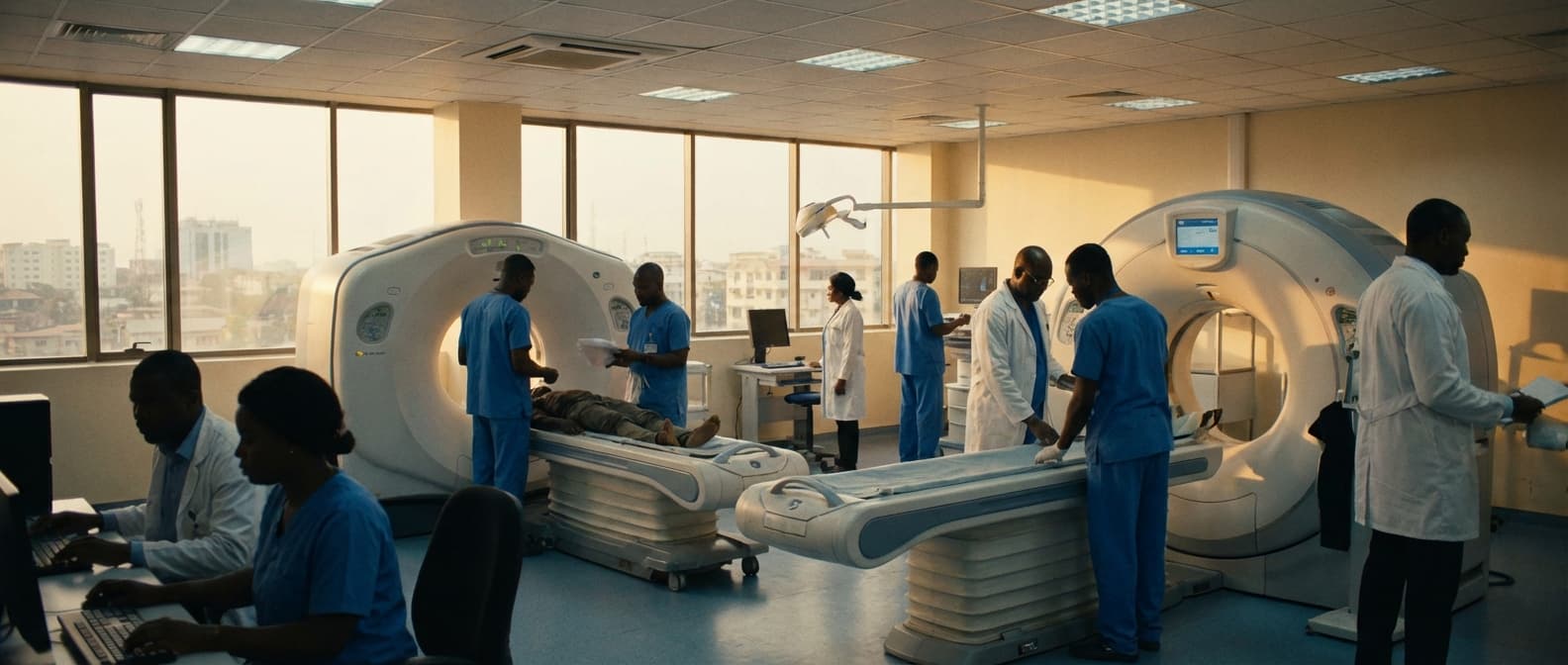
Radiology Room Design & Shielding Calculation in Guinea-Bissau
Engineering Excellence & Technical Support
Turnkey room planning, shielding drawings and approvals for imaging suites. High-standard technical execution following OEM protocols and local regulatory frameworks.
Advanced Radiation Shielding Calculations
Implementing precise lead-equivalent calculations for walls, doors, and windows to ensure optimal radiation protection for patients and staff in accordance with international safety standards, tailored to the local environmental conditions and building materials available in Guinea-Bissau.
Optimized Radiology Room Layouts
Designing functional and efficient radiology room layouts that minimize radiation scatter, improve workflow for medical professionals, and accommodate modern imaging equipment, considering space constraints and energy efficiency relevant to Guinea-Bissau's infrastructure.
Compliance with National & International Standards
Ensuring all radiology room designs and shielding calculations rigorously adhere to both the evolving national health regulations of Guinea-Bissau and relevant international guidelines (e.g., IAEA safety standards), promoting a safe and secure diagnostic imaging environment.
What Is Radiology Room Design & Shielding Calculation In Guinea-bissau?
Radiology room design and shielding calculations in Guinea-Bissau are critical engineering and physics-based services focused on ensuring the safe and effective operation of medical imaging facilities. These services delineate the physical layout and construction specifications of radiology suites, with a paramount emphasis on radiation protection for patients, medical personnel, and the general public. The core objective is to mitigate radiation exposure to acceptable levels, adhering to national and international safety standards, while simultaneously optimizing workflow and diagnostic efficacy. This involves a comprehensive assessment of radiation sources, beam characteristics, workload, occupancy factors, and the attenuation properties of various building materials. The 'shielding calculation' component specifically quantifies the required thickness and type of protective materials (e.g., lead, concrete, barytes concrete) for walls, floors, ceilings, doors, and viewing windows to prevent uncontrolled radiation leakage.
| Service Component | Description | Application in Guinea-Bissau |
|---|---|---|
| Room Layout and Space Planning | Determining the optimal spatial arrangement of imaging equipment, control rooms, patient holding areas, and ancillary spaces to ensure efficient workflow and minimize radiation exposure. | Essential for establishing new diagnostic imaging centers or renovating existing ones, accommodating both diagnostic radiography, CT, MRI, and potentially more advanced modalities if available or planned. |
| Radiation Shielding Design | Calculating the necessary protective barriers to attenuate ionizing radiation to specified dose limits. This includes specifying material types and thicknesses for walls, floors, ceilings, doors, and windows. | Crucial for all facilities utilizing ionizing radiation for medical imaging, including public and private hospitals, clinics, and specialized diagnostic centers, to meet safety standards and prevent occupational health risks. |
| Shielding Verification and Acceptance Testing | Post-construction measurements to confirm that the installed shielding meets the calculated specifications and regulatory requirements. | A mandatory step before a radiology facility can become operational, ensuring the safety of staff and the public in accordance with regulatory oversight. |
| Compliance Consultation | Providing guidance and expertise to ensure that the facility design and shielding calculations adhere to the relevant radiation protection regulations and standards applicable in Guinea-Bissau, or international standards if local regulations are nascent. | Assists healthcare providers in navigating regulatory requirements, often in collaboration with the national health authorities or a designated radiation protection agency. |
| Equipment Integration Planning | Considering the physical and electrical requirements of specific imaging equipment during the design phase, ensuring seamless integration and optimal performance within the shielded environment. | Necessary for facilities acquiring new or upgrading existing radiology equipment, from basic X-ray units to more complex CT scanners. |
Key Components of Radiology Room Design & Shielding Calculation
- Radiation Source Characterization (e.g., X-ray tubes, linear accelerators, gamma emitters)
- Workload Assessment (e.g., number of procedures per week, beam time per procedure)
- Occupancy Factor Determination (e.g., controlled vs. supervised areas, patient waiting areas)
- Transmission Factor (T) and Dose Equivalent Rate (H) Calculations
- Attenuation Material Selection and Thickness Determination (e.g., lead equivalence, concrete density)
- Structural Integrity and Integration with Building Systems
- Workflow Optimization and Ergonomics
- Equipment Placement and Maintenance Access
- Ventilation and Environmental Control
- Electrical and Plumbing Requirements
- Compliance with National Radiation Protection Regulations (as applicable in Guinea-Bissau and international best practices)
Who Needs Radiology Room Design & Shielding Calculation In Guinea-bissau?
Radiology room design and shielding calculations are critical for ensuring the safety of both patients and healthcare professionals from ionizing radiation. These specialized services are essential for any facility that houses diagnostic imaging equipment emitting X-rays or gamma rays. While the need exists globally, in Guinea-Bissau, the implementation and awareness of such specialized design and safety protocols might be in its nascent stages. Therefore, identifying the potential beneficiaries and departments requiring these services is paramount for promoting safe and effective radiology practices. The primary objective is to prevent radiation exposure to occupational workers and the public while optimizing the functionality and workflow of the radiology department.
| Department | Imaging Modalities Requiring Shielding | Specific Design Considerations | Rationale for Shielding Calculation |
|---|---|---|---|
| Radiology/Medical Imaging Department | X-ray (General Radiography, Fluoroscopy), CT Scans, Mammography | Shielding for walls, doors, and viewing windows (lead-lined). Room layout for workflow efficiency and radiation containment. Ventilation and electrical requirements. | Preventing scatter radiation exposure to staff and patients in adjacent areas. Ensuring compliance with radiation safety regulations (if established or in development). Minimizing dose to the public. |
| Emergency Department (if equipped with X-ray) | X-ray | Temporary or permanent shielding solutions for imaging bays. Integration with existing ED layout. | Protecting healthcare workers and other patients in high-traffic areas. Minimizing radiation leakage during urgent diagnostic procedures. |
| Surgical Departments (with C-arm fluoroscopy) | Fluoroscopy (C-arm) | Shielding for mobile C-arms, potentially lead aprons for staff, and designated procedural areas. Consideration for scatter radiation during intraoperative imaging. | Protecting surgeons, nurses, and anesthetists from direct and scattered radiation during live imaging procedures. |
| Orthopedics Department (if equipped with X-ray) | X-ray | Shielding for dedicated X-ray rooms or imaging stations. | Ensuring safe imaging of musculoskeletal conditions for both patients and staff, especially for repetitive procedures. |
| Pediatric Departments (if equipped with X-ray) | X-ray | Specialized room design to accommodate children, potentially with child-friendly aesthetics. Accurate shielding calculations for reduced dose imaging techniques. | Protecting developing bodies from unnecessary radiation exposure. Ensuring a less intimidating environment for young patients. |
Target Customers and Departments Requiring Radiology Room Design & Shielding Calculation in Guinea-Bissau:
- Hospitals (Public and Private)
- Clinics with Diagnostic Imaging Capabilities
- Medical Centers
- Diagnostic Imaging Centers
- Specialized Healthcare Facilities (e.g., Oncology Centers, if present)
Radiology Room Design & Shielding Calculation Process In Guinea-bissau
Designing and implementing radiology room shielding in Guinea-Bissau involves a structured workflow to ensure safety and compliance with radiation protection principles. This process begins with an initial inquiry and culminates in the successful execution of shielding measures. The workflow is crucial for safeguarding both patients and healthcare professionals from unnecessary radiation exposure.
| Phase | Description | Key Activities | Responsible Parties | Deliverables |
|---|---|---|---|---|
| Understanding the client's requirements for a new or upgraded radiology facility. | Receive inquiry, understand facility type (X-ray, CT, etc.), equipment specifications, desired room layout, and budget constraints. | Client (Hospital/Clinic Management), Project Coordinator | Project brief, preliminary scope of work. |
| Evaluating the existing or planned physical space for suitability. | On-site visit, measure room dimensions, assess structural integrity, review architectural drawings, identify adjacent occupied areas, note existing infrastructure (power, ventilation). | Architectural Consultant, Project Coordinator, RPO | Site survey report, annotated architectural plans. |
| Engaging a qualified RPO to guide radiation safety aspects. | Initial meeting with RPO, review equipment specifications and workload, discuss regulatory requirements (if available or based on international standards). | RPO, Project Coordinator, Client | RPO's preliminary recommendations, identification of critical shielding parameters. |
| Determining the precise shielding requirements based on equipment, usage, and occupancy. | Perform workload and occupancy calculations, identify primary and secondary radiation barriers, calculate required thickness of lead, concrete, or other shielding materials using established formulas (e.g., NCRP Report 147 or IAEA recommendations). Design shielding layout for walls, doors, windows, and floors. | RPO, Medical Physicist (if available), Engineering Consultant | Detailed shielding calculations report, shielding design drawings (showing barrier thicknesses). |
| Choosing and sourcing appropriate shielding materials. | Specify lead sheeting, concrete density, or other materials based on calculations. Obtain quotes, manage procurement process, ensure quality and compliance of materials. | Procurement Department, Project Coordinator, RPO | Material specifications, purchase orders, material delivery. |
| Implementing the shielding design during the construction or renovation phase. | Supervise installation of lead sheeting, concrete pours, and other shielding elements. Ensure precise adherence to the design specifications. Install shielding for doors, windows, and any penetrations. | Construction Team, Site Supervisor, RPO (for supervision/verification) | Physically installed shielding, construction progress reports. |
| Ensuring the installed shielding meets the calculated requirements. | Conduct post-installation radiation surveys to measure actual dose rates in adjacent areas. Verify the integrity and completeness of shielding. Compare survey results with design calculations and regulatory limits. | RPO, Medical Physicist (if available) | Radiation survey report, QA/QC documentation. |
| Obtaining necessary permits and licenses for operation. | Submit shielding design and survey reports to relevant national or local authorities (if established). Facilitate inspections and approvals required for the facility to operate legally. | Client, RPO, Project Coordinator | Operating license, regulatory compliance documentation. |
| Ensuring staff understand radiation safety protocols and maintaining records. | Train radiology staff on safe operating procedures, shielding awareness, and emergency protocols. Maintain comprehensive documentation of design calculations, installation, and survey results for future reference and audits. | RPO, Hospital Management, Radiology Staff | Training records, operating manuals, final project documentation package. |
Radiology Room Design & Shielding Calculation Process in Guinea-Bissau
- Initial Inquiry & Needs Assessment
- Site Survey & Architectural Review
- Radiation Protection Officer (RPO) Consultation
- Shielding Calculation & Design
- Material Selection & Procurement
- Construction & Installation
- Quality Assurance & Verification
- Regulatory Approval & Licensing
- Training & Documentation
Radiology Room Design & Shielding Calculation Cost In Guinea-bissau
Designing and calculating shielding for radiology rooms in Guinea-Bissau involves a unique set of pricing factors influenced by local economic conditions, availability of expertise, and import costs. Unlike more developed economies, specialized services and imported materials can significantly drive up expenses. This discussion outlines the key pricing elements and provides estimated ranges in Guinea-Bissau's local currency, the West African CFA franc (XOF).
| Service Component | Estimated Range (XOF) |
|---|---|
| Initial Consultation & Site Assessment (per day) | 150,000 - 400,000 |
| Basic Radiology Room Shielding Calculation (single room, standard X-ray) | 750,000 - 1,500,000 |
| Complex Imaging Suite Design & Shielding Calculation (CT, MRI, multiple rooms) | 2,000,000 - 8,000,000+ |
| Inclusion of International Consultant Fees (daily rate, excluding travel) | 500,000 - 1,200,000 |
| Regulatory Liaison & Permit Assistance | 200,000 - 750,000 |
| Comprehensive Design & Shielding Report | 500,000 - 2,000,000 |
Key Pricing Factors for Radiology Room Design & Shielding Calculations in Guinea-Bissau
- Scope of Work: The complexity of the radiology suite (e.g., number of rooms, types of imaging equipment, planned procedures) directly impacts design and calculation time.
- Expertise and Availability: The scarcity of specialized radiation physicists and experienced radiology designers in Guinea-Bissau can lead to higher consultation fees, potentially involving international consultants. The cost of bringing in external expertise needs to be factored in.
- Site Assessment and Surveys: Initial site visits, structural assessments, and existing radiation level surveys (if applicable) contribute to the overall cost.
- Design Software and Tools: While some basic calculations can be done manually, advanced design and simulation software used by professionals represent a cost that is often passed on.
- Shielding Material Calculations: Determining the precise thickness and type of shielding materials (lead, concrete, specialized composites) is a core component. The cost is tied to the complexity of the radiation output of the equipment.
- Regulatory Compliance and Approvals: Navigating local health and safety regulations, and obtaining necessary permits from relevant authorities, can involve fees and administrative costs.
- Reporting and Documentation: Comprehensive reports detailing the design, shielding calculations, and recommendations are standard. The depth and detail of these reports influence pricing.
- Travel and Accommodation (if applicable): If consultants or designers need to travel to Guinea-Bissau, their travel, accommodation, and per diem expenses will be added to the project cost.
- Material Procurement Challenges: While this section focuses on calculation and design, it's worth noting that the cost of procuring shielding materials in Guinea-Bissau can be a significant factor influencing the overall project budget, even if not directly part of the design calculation fee. This can include import duties, shipping costs, and local markups.
- Currency Fluctuations: The XOF is pegged to the Euro, so fluctuations in the Euro's value can indirectly affect the cost of imported services and materials.
Affordable Radiology Room Design & Shielding Calculation Options
Designing and equipping a radiology room involves significant investment, particularly concerning shielding and specialized equipment. However, careful planning and strategic choices can lead to substantial cost savings without compromising safety or diagnostic capabilities. This document outlines affordable radiology room design considerations and shielding calculation options, highlighting value bundles and cost-saving strategies.
| Value Bundle/Strategy | Description | Cost-Saving Benefit |
|---|---|---|
| Integrated Design & Shielding Package | A comprehensive service where a single provider offers room design, architectural planning, and precise shielding calculations and material specifications. This often includes pre-fabricated shielding components. | Reduces coordination costs between multiple vendors, minimizes design errors, and often leverages bulk material purchasing for discounts. Streamlines the construction process. |
| Modular Shielding Solutions | Utilizing pre-fabricated lead-lined panels or modular shielded rooms that can be assembled on-site. These are often designed for specific equipment and radiation levels. | Faster installation times reduce labor costs and minimize disruption. Can be disassembled and relocated if necessary, offering flexibility. Often more cost-effective for smaller or temporary installations. |
| Hybrid Shielding Approaches | Combining different shielding materials. For example, using lead-lined drywall for lower-risk areas and a more robust solution (e.g., leaded glass, thicker concrete) only where absolutely necessary based on precise calculations. | Reduces the overall amount of expensive lead required, leading to significant material cost savings. Requires accurate calculation to ensure all areas meet safety standards. |
| Consultant Collaboration (Early Stage) | Engaging a radiation physicist or shielding consultant during the initial design phase, rather than as an afterthought. They can guide material choices and optimize shielding thickness. | Prevents costly redesigns due to incorrect shielding assumptions. Ensures compliance and safety from the start, avoiding rework and potential fines. Can identify cost-effective alternative materials. |
| Phased Implementation (for larger facilities) | If a full-scale radiology suite is being built, consider phasing in certain specialized rooms or equipment as budget allows, starting with essential modalities and expanding over time. | Manages upfront capital expenditure. Allows for learning and adaptation from initial phases. Lessens the immediate financial burden. |
| Lease-to-Own or Refurbished Equipment Integration | While not directly room design, the choice of equipment impacts shielding needs. Exploring lease-to-own programs or well-maintained refurbished equipment can free up capital for the room itself. | Lower initial equipment cost allows for more budget allocation to a properly designed and shielded room. Facilitates a better overall investment. |
Key Considerations for Affordable Radiology Room Design & Shielding
- Optimizing Space & Workflow: Efficient room layout minimizes wasted space and reduces the need for larger, more expensive construction. Consider single-wall or modular designs where appropriate.
- Shielding Material Selection: Lead is the most common and effective shielding material, but alternative or supplementary materials like concrete, baryte plaster, or specialized drywall can offer cost-effective solutions depending on the radiation source and intensity.
- Shielding Calculation Expertise: Accurate shielding calculations are paramount to avoid over- or under-shielding, both of which can lead to unnecessary costs or safety risks. Engaging with experienced radiation physicists or specialized consultants is crucial.
- Equipment Integration: Plan for equipment placement early to optimize power, ventilation, and shielding requirements, preventing costly retrofits.
- Reusability & Future-Proofing: Consider designs and materials that can be easily adapted for future technology upgrades or changes in modality, extending the lifespan of the investment.
- Compliance & Regulations: Thorough understanding of local and national radiation safety regulations is essential to avoid penalties and ensure compliance from the outset.
Verified Providers In Guinea-bissau
In Guinea-Bissau, ensuring access to reliable and qualified healthcare providers is paramount. Franance Health stands out as a leading platform that meticulously vets and verifies its network of healthcare professionals. This commitment to quality assurance means patients can trust that the providers they find through Franance Health possess the necessary credentials, experience, and ethical standards to deliver excellent care. Choosing Franance Health offers significant advantages, including peace of mind, access to specialized expertise, and a streamlined process for finding the right medical professional for your needs.
| Provider Type | Key Credentials/Qualifications | Franance Health Verification Standard |
|---|---|---|
| General Practitioner | Medical Degree (MD/MBBS), National Medical License, Registration with the Ministry of Health | Verified educational background, valid medical license, and proof of ongoing professional development. |
| Specialist Physician (e.g., Cardiologist, Pediatrician) | Medical Degree, Specialization Certification, National Medical License, Ministry of Health Registration | Confirmed specialization training and certification from accredited institutions, alongside all General Practitioner requirements. |
| Surgeon | Medical Degree, Surgical Residency/Fellowship, National Medical License, Ministry of Health Registration | Thorough verification of surgical training completion and board certification, in addition to standard medical licensing. |
| Nurse | Nursing Diploma/Degree, Nursing License, Ministry of Health Registration | Validated nursing qualifications and current, valid nursing license. |
| Pharmacist | Pharmacy Degree, Pharmacy License, Ministry of Health Registration | Confirmed pharmacy degree and active license to practice pharmacy. |
Why Franance Health is the Premier Choice for Verified Providers in Guinea-Bissau
- Rigorous Verification Process: Franance Health employs a comprehensive vetting system to confirm the credentials, licenses, and qualifications of all listed providers.
- Access to Top Talent: Our platform connects you with highly skilled and experienced doctors, specialists, and healthcare professionals across various disciplines.
- Patient-Centric Approach: We prioritize patient safety and satisfaction by ensuring that all providers adhere to the highest ethical and professional standards.
- Convenience and Accessibility: Find and book appointments with verified providers easily, saving you time and effort in your healthcare journey.
- Transparency and Trust: Franance Health fosters trust through transparent provider profiles and a commitment to quality care.
Scope Of Work For Radiology Room Design & Shielding Calculation
This Scope of Work (SOW) outlines the requirements for the design and shielding calculations for a new or renovated radiology room. The objective is to ensure a safe and functional environment for both patients and staff, meeting all relevant regulatory and industry standards for radiation protection.
| Section | Description | Applicable Standards/Specifications | Deliverable Item |
|---|---|---|---|
| Room Layout & Design | Detailed architectural and engineering drawings showing room dimensions, equipment placement, patient and staff areas, control booth, and access points. | Architectural standards, healthcare facility design guidelines (e.g., AIA Guidelines for Design and Construction), client-specific requirements. | Layout Drawings, Equipment Placement Plan |
| Radiation Shielding Calculations | Calculation of required shielding thicknesses for walls, floor, ceiling, doors, and viewing windows based on projected radiation levels, workload, occupancy, and distance to occupied areas. | NCRP Report No. 147, NCRP Report No. 151, IEC 60601-2-33, ICRP Publication 101, local radiation regulations. | Shielding Calculation Report, Barrier Thickness Specifications |
| Material Specifications | Detailed specifications for all shielding materials, including type, density, thickness, and installation methods. | ASTM standards for lead, concrete, and other shielding materials; manufacturer data sheets. | Material Specification Sheets |
| Equipment Integration | Consideration of specific equipment radiation output, beam angulation, and integration with structural elements and shielding. | Equipment manufacturer specifications, radiation safety manuals. | Equipment Interface Drawings, Shielding Verification Plan |
| Control Booth Design | Design of the control booth, including dimensions, viewing window specifications, door swing, and ventilation, to ensure adequate radiation protection. | NCRP Report No. 147, NCRP Report No. 151, architectural standards. | Control Booth Design Drawings |
| Electrical & Mechanical Systems | Integration of electrical and mechanical systems, including interlocks, warning lights, and ventilation, to support radiation safety protocols. | Local building codes, electrical codes, HVAC standards, equipment-specific requirements. | Electrical & Mechanical Integration Plan |
| Regulatory Compliance | Ensuring all design elements and calculations meet the requirements of relevant regulatory bodies. | FDA regulations, state/local health department regulations, NRC regulations (if applicable). | Compliance Documentation, Regulatory Submittal Package |
Technical Deliverables
- Comprehensive radiology room layout drawings, including equipment placement, patient access, control booth, and waiting areas.
- Detailed structural and architectural plans incorporating shielding specifications.
- Complete radiation shielding calculations for all barrier types (walls, floor, ceiling, doors, windows) based on intended equipment, workload, and occupancy factors.
- Material specifications for all shielding components (e.g., lead, concrete density and thickness).
- Electrical and mechanical system integration plans relevant to radiation safety (e.g., interlocks, ventilation).
- Compliance documentation demonstrating adherence to local, national, and international radiation safety standards and regulations.
- Final report summarizing design decisions, calculation methodologies, and safety recommendations.
- Equipment selection and placement recommendations for optimal workflow and radiation safety.
- Workflow analysis and design considerations for patient throughput and staff efficiency.
- Coordination with equipment vendors for precise placement and interface requirements.
Service Level Agreement For Radiology Room Design & Shielding Calculation
This Service Level Agreement (SLA) outlines the performance standards and guarantees for the Radiology Room Design and Shielding Calculation services provided by [Your Company Name] (hereinafter referred to as "Provider") to [Client Name] (hereinafter referred to as "Client"). This SLA covers response times for service requests and uptime guarantees for critical system components involved in the design and calculation process.
| Service Element | Response Time Target | Uptime Guarantee | Definition / Scope | Remedy for Breach |
|---|---|---|---|---|
| Initial Consultation Request | Within 2 business hours | N/A | Acknowledgement of client's initial request for radiology room design or shielding calculation services. | A formal acknowledgement email or call confirming receipt of the request and outlining next steps or a preliminary timeline. |
| Preliminary Design Concept Submission | Within 5 business days (following full information receipt) | N/A | Submission of an initial conceptual design for the radiology room, including layout and basic shielding considerations, after receiving all necessary project details (e.g., equipment specifications, room dimensions, occupancy). | An extension of the project timeline by 1 business day for each 24-hour period of delay beyond the target. |
| Shielding Calculation Report Submission | Within 7 business days (following design approval & full information receipt) | N/A | Delivery of the comprehensive radiation shielding calculation report, detailing material specifications and thicknesses, after client approval of the preliminary design and receipt of all required data. | A discount of 5% on the next service invoice for each 48-hour period of delay beyond the target. |
| Critical Design Software Availability | N/A | 99.5% during standard business hours (9 AM - 5 PM Local Time, Mon-Fri) | Availability of specialized software used for CAD, simulation, and shielding calculations, crucial for performing the services. | A service credit of 0.25% of the monthly service fee for every hour of unplanned downtime exceeding the guaranteed uptime. |
| Communication Channel Availability (Email/Phone) | Within 4 business hours | 99.8% during standard business hours | Ability of the client to reach the designated project manager or technical lead via email or phone for urgent inquiries. | If response targets are consistently missed for 3 consecutive business days, the client may escalate to a designated account manager for priority resolution. |
Key Service Components
- Radiology Room Design Consultation & Planning
- Shielding Material Specification
- Radiation Shielding Calculations (e.g., Lead, Concrete)
- Compliance Review with Regulatory Standards (e.g., NCRP, ICRP)
- Deliverable Generation (e.g., Design Drawings, Shielding Reports)
Frequently Asked Questions

Ready when you are
Let's scope your Radiology Room Design & Shielding Calculation in Guinea-Bissau project in Guinea-Bissau.

Scaling healthcare logistics and technical systems across the entire continent.