
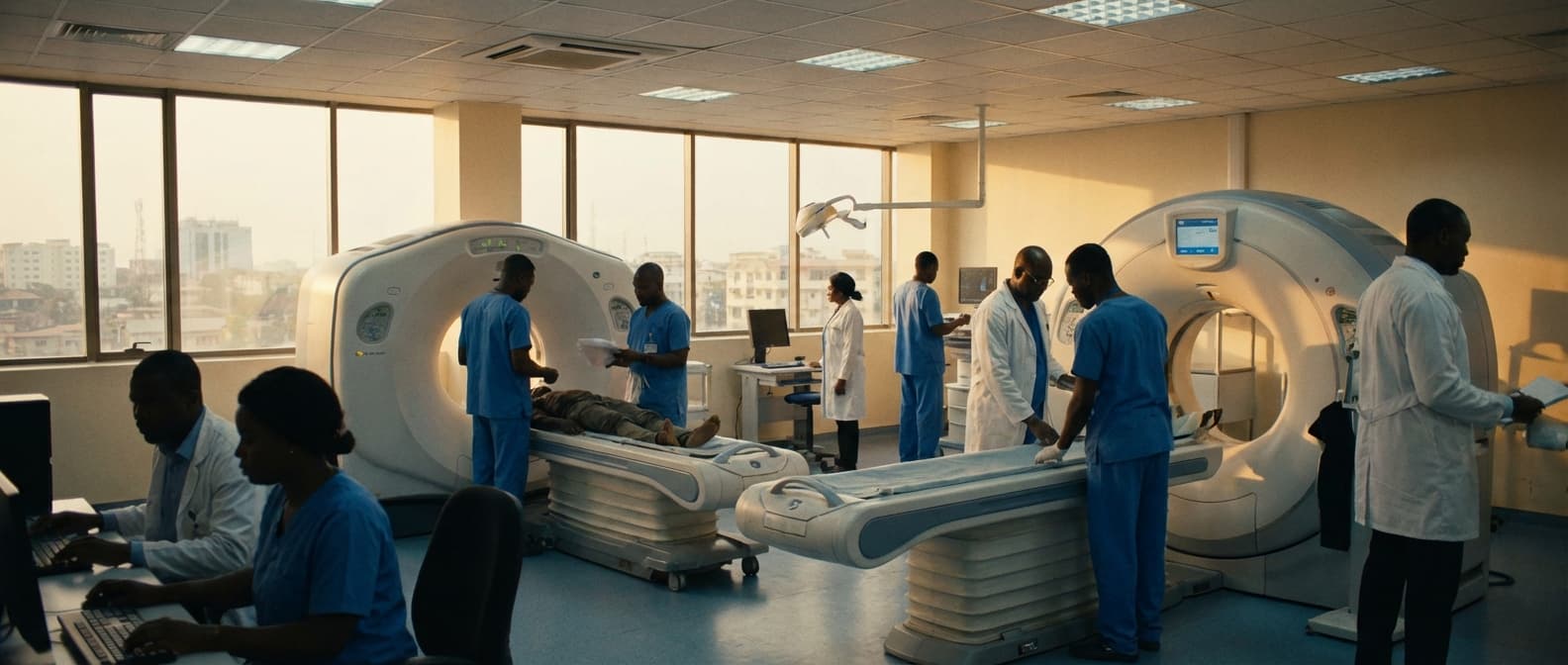
Imaging Acceptance Testing & QA in Guinea-Bissau
Engineering Excellence & Technical Support
Commissioning and periodic QA for CT/MRI/X‑ray/US/Mammo. High-standard technical execution following OEM protocols and local regulatory frameworks.
Rigorous Image Quality Calibration
Implementing ISO 12233 compliant resolution charts and controlled lighting environments to ensure pixel-perfect image capture and objective quantitative analysis of image fidelity for all imaging devices under test.
Automated Workflow Integration
Developing custom scripts and integrating with existing lab equipment for automated acquisition, processing, and comparison of test images, significantly reducing manual effort and increasing testing throughput for imaging acceptance.
Defect Detection & Classification Module
Utilizing advanced image processing algorithms, including edge detection and texture analysis, to automatically identify, quantify, and categorize image artifacts and defects, ensuring adherence to predefined quality standards for all imaging hardware.
What Is Imaging Acceptance Testing & Qa In Guinea-bissau?
Imaging Acceptance Testing & Quality Assurance (QA) in Guinea-Bissau refers to a systematic process of verifying that medical imaging systems, software, and associated workflows meet predefined specifications, functional requirements, and regulatory standards before deployment or after significant updates. This service ensures that the imaging equipment and its output are accurate, reliable, safe, and interoperable within the healthcare infrastructure of Guinea-Bissau. It encompasses validation of image quality, data integrity, system performance, user interface usability, and compliance with national and international healthcare guidelines relevant to the region.
| Who Needs Imaging Acceptance Testing & QA? | Typical Use Cases | ||||||||||
|---|---|---|---|---|---|---|---|---|---|---|---|
| Healthcare Facilities (Hospitals, Clinics, Diagnostic Centers) in Guinea-Bissau acquiring new imaging equipment (e.g., X-ray, CT, MRI, Ultrasound). | Validation of newly installed diagnostic imaging modalities to ensure they perform to manufacturer specifications and clinical requirements. | Healthcare Institutions implementing or upgrading PACS/RIS (Radiology Information System) solutions. | Verification of software updates or patches applied to existing imaging systems to confirm no regressions or new issues are introduced. | Manufacturers or vendors of medical imaging equipment and software operating or selling in Guinea-Bissau. | Performance testing and validation of imaging devices prior to their widespread deployment in the country. | Government health agencies or regulatory bodies overseeing healthcare technology in Guinea-Bissau. | Ensuring that procured medical imaging equipment meets national standards for quality, safety, and interoperability. | Research institutions or academic medical centers utilizing advanced imaging technologies. | Testing and validation of specialized imaging equipment or research-oriented software for scientific applications. | Third-party IT service providers managing healthcare IT infrastructure. | Assessing the readiness and performance of imaging systems within a managed service contract. |
Key Components of Imaging Acceptance Testing & QA:
- Systematic Verification: Rigorous testing protocols to confirm that all functionalities operate as intended.
- Image Quality Assessment: Evaluating diagnostic image clarity, resolution, contrast, and absence of artifacts.
- Data Integrity and Security: Ensuring patient data is accurately captured, stored, transmitted securely, and remains uncorrupted.
- Performance Benchmarking: Assessing system speed, response times, and throughput under various load conditions.
- Workflow Integration: Validating seamless integration with existing Picture Archiving and Communication Systems (PACS), Electronic Health Records (EHR), and other hospital information systems.
- User Interface (UI) and User Experience (UX) Evaluation: Confirming intuitive navigation, ease of use for clinical staff, and efficient operation.
- Regulatory Compliance: Adherence to relevant national health regulations, medical device standards, and data privacy laws applicable in Guinea-Bissau.
- Interoperability Testing: Ensuring compatibility with other medical devices and IT systems within the healthcare network.
- Training and Documentation Review: Verifying the adequacy and accuracy of user manuals and training materials.
Who Needs Imaging Acceptance Testing & Qa In Guinea-bissau?
Imaging Acceptance Testing & Quality Assurance (QA) is crucial for ensuring the reliable and accurate performance of medical imaging equipment in Guinea-Bissau. This process verifies that new or repaired imaging systems meet specified performance standards and are safe for patient use. It's not just about the technology; it's about delivering high-quality diagnostic information essential for patient care and effective healthcare management. This testing mitigates risks, prevents misdiagnosis, and optimizes the lifespan and efficiency of valuable medical assets.
| Customer/Department | Specific Needs/Benefits of Imaging Acceptance Testing & QA | Types of Imaging Equipment Relevant |
|---|---|---|
| Hospital Radiology Departments | Ensures diagnostic image quality, patient safety, optimal system performance, compliance with protocols, reduced downtime, and accurate diagnosis. Essential for X-ray, CT, MRI, Ultrasound, Mammography, etc. | X-ray (General & Mobile), CT Scanners, MRI Scanners, Ultrasound Machines, Mammography Units, Fluoroscopy Systems, Digital Radiography (DR) & Computed Radiography (CR) systems. |
| Surgical/Operating Rooms | Verifies the functionality and image clarity of intraoperative imaging devices for real-time guidance, ensuring surgical precision and patient safety during procedures. | C-Arms, Mobile X-ray units for intraoperative use. |
| Cardiology Departments | Confirms the accurate functioning of echocardiography and other cardiac imaging modalities for precise diagnosis and monitoring of cardiovascular conditions. | Echocardiography Machines, Angiography/Fluoroscopy systems for cardiac procedures. |
| Oncology Centers | Guarantees the accuracy of imaging used for tumor detection, staging, and treatment monitoring (e.g., radiotherapy planning imaging). | CT Scanners, MRI Scanners, PET-CT Scanners (if available), X-ray units. |
| Emergency Departments | Ensures rapid and reliable imaging capabilities for timely diagnosis and treatment of critical conditions. | Mobile X-ray units, CT Scanners, Ultrasound machines. |
| Maternal and Child Health Clinics | Verifies the quality and safety of ultrasound equipment for prenatal care and pediatric diagnostics. | Ultrasound Machines (Obstetric & Pediatric). |
| Government Health Ministries/Agencies | Ensures standardization of imaging services across public health facilities, supports procurement decisions, and maintains national health infrastructure integrity. Aids in resource allocation and public health program effectiveness. | All types of medical imaging equipment deployed in public health facilities. |
| NGOs and International Aid Organizations | Crucial for ensuring that donated or procured equipment functions optimally and safely, maximizing the impact of their healthcare initiatives in resource-limited settings. | All types of medical imaging equipment utilized in their projects. |
| Training and Research Institutions | Validates equipment performance for educational purposes and ensures the reliability of data for medical research. Supports the development of skilled imaging professionals. | All types of medical imaging equipment used for teaching and research. |
Target Customers and Departments for Imaging Acceptance Testing & QA in Guinea-Bissau:
- Hospitals (Public and Private)
- Specialized Clinics (e.g., Radiology Centers, Cardiology Clinics)
- Government Health Ministries and Agencies
- Non-Governmental Organizations (NGOs) involved in healthcare provision
- Research Institutions and Universities with medical imaging programs
Imaging Acceptance Testing & Qa Process In Guinea-bissau
This document outlines the Imaging Acceptance Testing & Quality Assurance (QA) process for new imaging equipment and software implemented in Guinea-Bissau. The workflow ensures that all deployed imaging solutions meet the required standards for performance, accuracy, and usability before being integrated into clinical workflows. This process is crucial for maintaining high-quality diagnostic imaging services and patient care.
| Stage | Key Activities | Involved Parties | Deliverables/Outcomes |
|---|---|---|---|
| Inquiry & Needs Assessment | Define project scope, identify imaging needs, stakeholder consultation. | Healthcare Facility Staff (Radiologists, Technologists, IT, Admin), Government Health Bodies. | Project requirements document, scope definition. |
| Vendor Selection & Procurement | Tender process, proposal evaluation, contract negotiation. | Procurement Department, Selection Committee, Legal Counsel, Vendors. | Selected vendor contract, purchased equipment/software. |
| Installation & Initial Setup | Physical installation, infrastructure checks, basic configuration. | Vendor Technicians, Healthcare Facility IT Support. | Installed and powered-on equipment/software. |
| Pre-Acceptance Testing (PAT) | Vendor's internal system diagnostics and functionality checks. | Vendor Technical Team. | Preliminary test results, initial issue identification. |
| Acceptance Testing (AT) | Comprehensive testing of functionality, performance, image quality, usability, integration, security, protocols, and training. | Clinical Users (Radiologists, Technologists), IT Specialists, QA Personnel, Vendor Support. | Detailed test reports, identified defects, performance metrics. |
| Defect Reporting & Resolution | Documenting issues, communicating with vendor, re-testing fixes. | QA Team, Clinical Users, Vendor Technical Team. | Defect log, updated test results, resolved issues. |
| Final Acceptance & Sign-off | Formal approval after successful resolution of all critical issues. | Project Manager, Department Head, Designated Client Representative. | Signed acceptance form, project completion confirmation. |
| Post-Acceptance Monitoring & Ongoing QA | Live environment observation, performance checks, user feedback. | Clinical Users, IT Support, QA Team. | Performance reports, user feedback summaries, ongoing maintenance plans. |
| Documentation & Handover | Finalizing all project-related documents. | Vendor, QA Team, Healthcare Facility IT. | Complete project documentation package. |
Workflow Stages
- Inquiry & Needs Assessment: The process begins when a healthcare facility or government health body identifies a need for new imaging technology or an upgrade to existing systems. This involves defining the scope of the project, the specific imaging modalities required, and the expected clinical benefits. Stakeholders, including radiologists, technologists, IT personnel, and administrators, are involved in this initial stage.
- Vendor Selection & Procurement: Based on the needs assessment, a competitive bidding process is initiated. Potential vendors submit proposals outlining their equipment specifications, software features, implementation plans, training programs, and maintenance agreements. A selection committee evaluates these proposals against predefined criteria, leading to the procurement of the chosen solution.
- Installation & Initial Setup: Once procured, the vendor is responsible for the physical installation of the imaging equipment and the setup of associated software. This includes necessary infrastructure checks (power, network, room preparation) and basic system configuration as per vendor specifications.
- Pre-Acceptance Testing (PAT) - Vendor Led: Before the formal acceptance testing, the vendor conducts a series of internal tests to verify that the equipment and software are functioning according to their specifications. This may involve phantom scans, system diagnostics, and basic workflow simulations. The goal is to identify and rectify any immediate issues before client-side testing begins.
- Acceptance Testing (AT) - Client Led: This is the core of the QA process. A dedicated testing team, comprising clinical users (radiologists, technologists), IT specialists, and QA personnel, rigorously evaluates the installed system. This stage involves: * Functionality Testing: Verifying all specified features and functions of the imaging equipment and software work as intended. * Performance Testing: Assessing the speed, image quality, and responsiveness of the system under realistic load conditions. * Image Quality Assessment: Evaluating the diagnostic quality of images produced across various protocols, comparing them against established benchmarks or previous systems. * Usability Testing: Assessing the ease of use for clinical staff, including the user interface, workflow efficiency, and learning curve. * Integration Testing: Ensuring seamless integration with existing Picture Archiving and Communication Systems (PACS), Electronic Health Records (EHRs), and other relevant IT infrastructure. * Data Integrity & Security Testing: Verifying the secure storage, retrieval, and transmission of patient data, adhering to local regulations and international best practices. * Protocol Verification: Confirming that all pre-configured imaging protocols are accurate and appropriate for clinical use. * Training Effectiveness Evaluation: Assessing the adequacy and effectiveness of the vendor-provided training for clinical and technical staff.
- Defect Reporting & Resolution: Any discrepancies, malfunctions, or unmet requirements identified during Acceptance Testing are formally documented in a defect log. These defects are communicated to the vendor, who is responsible for rectifying them. The testing team then re-tests the resolved issues to confirm correction.
- Final Acceptance & Sign-off: Once all critical and major defects have been resolved and the system demonstrably meets all defined requirements, the client formally accepts the imaging solution. This is typically documented through a signed acceptance form, signifying the successful completion of the testing and QA process.
- Post-Acceptance Monitoring & Ongoing QA: After formal acceptance, a period of post-acceptance monitoring is often implemented to ensure continued stable operation in the live clinical environment. Ongoing QA activities include regular system checks, periodic image quality reviews, and user feedback mechanisms to identify and address any emerging issues and maintain optimal performance over time.
- Documentation & Handover: Comprehensive documentation, including test reports, defect logs, user manuals, and training materials, is finalized and handed over to the healthcare facility. This ensures proper knowledge transfer and facilitates future maintenance and troubleshooting.
Imaging Acceptance Testing & Qa Cost In Guinea-bissau
Acceptance Testing and Quality Assurance (QA) for imaging systems in Guinea-Bissau involve a range of costs influenced by several factors. These include the complexity and type of imaging technology (e.g., X-ray, MRI, CT scanners, ultrasound), the vendor's pricing structure, the scope of testing required (functional, performance, integration, user acceptance), the experience and expertise of the QA personnel, and the location within Guinea-Bissau. Testing can also be influenced by the need for specialized calibration equipment and consumables. As a developing nation, the market for such specialized services might be smaller, potentially leading to less competitive pricing but also requiring careful consideration of vendor qualifications.
| Service Component | Estimated Cost Range (XOF) | Notes |
|---|---|---|
| Basic Functional Testing (per modality) | 150,000 - 500,000 | Covers fundamental checks of imaging acquisition and display. |
| Performance & Stress Testing | 200,000 - 750,000 | Assesses system speed, reliability under load, and data throughput. |
| Integration Testing (with PACS/RIS) | 250,000 - 1,000,000 | Crucial for ensuring seamless data flow between imaging equipment and hospital information systems. |
| User Acceptance Testing (UAT) Support | 100,000 - 400,000 (per day) | Assistance and validation by end-users, often priced daily. |
| Calibration & Verification | 300,000 - 1,200,000 | Requires specialized equipment and certified personnel. Can be a significant cost driver. |
| Comprehensive QA Package (per advanced modality) | 1,000,000 - 5,000,000+ | Includes a combination of all testing types for complex systems like CT or MRI. |
| Travel & Logistics (if applicable) | 50,000 - 300,000+ | Dependent on distance and number of personnel. |
Key Pricing Factors for Imaging Acceptance Testing & QA in Guinea-Bissau
- System Complexity and Type: Advanced imaging modalities (MRI, CT) will naturally incur higher testing costs than basic ultrasound or digital X-ray.
- Scope of Testing: Comprehensive QA encompassing multiple test types (functional, performance, security, user acceptance) will increase the overall price.
- Vendor Pricing & Support Agreements: Costs can vary significantly between different vendors and their standard support packages.
- Personnel Expertise and Experience: Highly skilled and experienced QA engineers and technicians command higher rates.
- Location of Testing: Remote or less accessible areas might incur additional travel and logistical costs.
- Calibration and Certification Requirements: Specialized calibration and certification processes add to the expense.
- Duration of Testing: The length of time required to complete all testing phases directly impacts labor costs.
- Third-Party or Independent Testing Services: Engaging external QA providers may have different pricing structures than vendor-provided services.
Affordable Imaging Acceptance Testing & Qa Options
Acceptance Testing (AT) and Quality Assurance (QA) are critical for ensuring imaging systems perform as expected, are safe for patients, and meet regulatory requirements. However, the cost of comprehensive AT/QA can be a significant barrier, especially for smaller practices, research institutions, or those on a tight budget. This guide explores affordable imaging AT/QA options, focusing on value bundles and cost-saving strategies to make these essential services more accessible.
| Strategy | Description | Potential Savings |
|---|---|---|
| Bundled Service Packages | Many vendors and third-party service providers offer AT/QA as part of broader service agreements (e.g., with equipment purchase, maintenance contracts). These bundles often provide a discounted rate compared to purchasing services à la carte. | 10-30% (on average, compared to standalone services) |
| Tiered AT/QA Offerings | Providers may offer different levels of testing: basic (essential compliance), standard (comprehensive system checks), and premium (advanced performance optimization). Choosing a tier that aligns with your specific needs can save costs. | 15-40% (by selecting a lower tier) |
| Remote & Automated Testing | Leveraging remote access and automated QA tools can reduce the need for on-site visits, lowering travel costs and technician time. This is particularly effective for routine, repeatable tests. | 20-50% (for travel and labor) |
| Scheduled & Grouped Services | Consolidating AT/QA for multiple systems or scheduling them during off-peak hours can allow providers to optimize their schedules and offer better pricing. | 5-15% (for efficiency) |
| Third-Party Independent Providers | Specialized third-party AT/QA companies can often provide competitive pricing due to their focus and expertise, especially when compared to manufacturer-exclusive services. | 10-25% (can be more competitive) |
| In-House Training & Basic Testing | For very basic, ongoing QA checks (e.g., visual inspections, daily phantoms), training internal staff can reduce reliance on external technicians for routine tasks. | Variable (depends on staff time and training investment) |
| Long-Term Contracts & Commitments | Committing to longer-term AT/QA contracts can unlock volume discounts and more stable, predictable pricing. | 5-20% (for commitment) |
Why AT/QA is Crucial (Even on a Budget)
- Patient Safety: Identifies and corrects potential issues that could lead to misdiagnosis or harm.
- Regulatory Compliance: Meets mandates from bodies like the FDA, ensuring legal operation.
- System Performance: Guarantees optimal image quality, diagnostic accuracy, and workflow efficiency.
- Reduced Downtime: Proactive testing prevents costly equipment failures and service interruptions.
- Cost Containment: Prevents expensive rework, recalls, or penalties associated with non-compliance.
Verified Providers In Guinea-bissau
Navigating healthcare in Guinea-Bissau requires trust and reliability. Identifying verified providers is paramount to ensuring quality care. Franance Health stands out as a leading organization dedicated to this mission, offering a robust credentialing process that sets a benchmark for excellence. This commitment to verification ensures that patients can access safe, effective, and ethical healthcare services. By prioritizing transparency and accountability, Franance Health empowers individuals to make informed decisions about their health, contributing to a healthier community in Guinea-Bissau.
| Credentialing Aspect | Franance Health Standard | Benefit to Patients |
|---|---|---|
| Professional Licensing & Registration | Mandatory verification of current and valid licenses with relevant national and international bodies. | Ensures providers are legally qualified and authorized to practice. |
| Educational Background & Training | Thorough review of degrees, certifications, and specialized training from accredited institutions. | Guarantees a solid foundation of medical knowledge and expertise. |
| Clinical Experience & Competence | Assessment of practical experience, surgical skills (where applicable), and demonstrated competence in chosen specialties. | Confirms hands-on ability to deliver effective treatments and procedures. |
| Ethical Conduct & Professionalism | Background checks and reference verifications to ensure a history of ethical practice and patient-centered care. | Promotes a safe and respectful healthcare environment, free from malpractice or misconduct. |
| Continuous Professional Development | Requirement for providers to engage in ongoing training and stay updated with the latest medical advancements. | Ensures patients receive care informed by current best practices and innovations. |
Why Franance Health Credentials Matter in Guinea-Bissau:
- Rigorous Verification Process: Franance Health employs a comprehensive vetting system for healthcare providers, scrutinizing qualifications, experience, and ethical standing.
- Enhanced Patient Safety: Their credentials guarantee that providers meet stringent standards, minimizing risks and promoting patient well-being.
- Access to Quality Care: By partnering with accredited professionals, Franance Health ensures access to competent and reliable medical services.
- Promoting Trust and Transparency: Their visible accreditation builds confidence between patients and healthcare providers, fostering a more reliable healthcare ecosystem.
- Commitment to Ethical Practices: Franance Health advocates for high ethical standards, ensuring providers adhere to best practices and patient rights.
Scope Of Work For Imaging Acceptance Testing & Qa
This Scope of Work (SOW) outlines the requirements for Imaging Acceptance Testing and Quality Assurance (QA) for the [Project Name] project. It defines the technical deliverables, standard specifications, and testing procedures to ensure the successful integration and performance of the imaging system.
| Testing Phase | Description | Key Activities | Deliverables | Standard Specifications / Metrics |
|---|---|---|---|---|
| System Integration Testing (SIT) | Verifies the proper interaction between different imaging sub-systems and connected IT systems. | Connectivity checks, data flow validation, interface compatibility testing, interoperability testing. | SIT Report, Interface Specifications Documentation, Issue Log. | Successful data exchange between systems, adherence to defined API specifications, defined latency thresholds (< 2 seconds for data transfer). |
| Performance Testing | Evaluates the system's responsiveness, throughput, and stability under various load conditions. | Load testing, stress testing, endurance testing, throughput measurement. | Performance Test Report, System Resource Utilization Report, Bottleneck Analysis. | Image acquisition time (< 5 seconds per image), image processing time (< 10 seconds per image), system uptime (> 99.9%), concurrent user support (minimum 50 users). |
| Functional Testing | Confirms that all imaging functionalities operate as per requirements. | Image capture, image viewing, image manipulation (zoom, pan, annotate), image storage, image retrieval, reporting, user access control. | Functional Test Cases, Test Execution Report, Defect Log. | All documented functionalities executed without error, adherence to functional specifications, compliance with user stories. |
| Usability Testing | Assesses the ease of use and intuitiveness of the imaging system for end-users. | User interface (UI) and user experience (UX) evaluation, task completion rate, user satisfaction surveys. | Usability Test Report, User Feedback Summary, UI/UX Recommendations. | Task completion success rate (> 95%), average time to complete key tasks (< 60 seconds), user satisfaction score (> 4 out of 5). |
| Security Testing | Ensures the system is protected against unauthorized access, data breaches, and other security threats. | Vulnerability scanning, penetration testing, access control validation, data encryption verification. | Security Test Report, Vulnerability Assessment Report, Access Control Matrix. | No critical or high-severity vulnerabilities identified, compliance with HIPAA/GDPR regulations, data encryption in transit and at rest. |
| Data Integrity and Validation | Verifies the accuracy, completeness, and consistency of imaging data. | Data validation rules, checksum verification, data comparison between source and destination. | Data Integrity Report, Validation Script Results, Audit Trail. | Zero data loss or corruption, 100% consistency between source and target data, adherence to data format standards. |
| Disaster Recovery and Business Continuity Testing (DR/BC) | Confirms the system's ability to recover from failures and maintain operations. | Backup and restore procedures, failover testing, recovery time objective (RTO) and recovery point objective (RPO) validation. | DR/BC Test Report, Recovery Plan Documentation, RTO/RPO Compliance Statement. | RTO < 4 hours, RPO < 1 hour, successful data restoration within defined timeframes. |
Key Objectives
- Verify that all imaging components meet or exceed specified performance standards.
- Ensure seamless integration of the imaging system with existing IT infrastructure.
- Validate data integrity, security, and compliance with relevant regulations.
- Confirm user satisfaction and system usability for all intended workflows.
- Identify and resolve any defects or performance issues prior to full system deployment.
Service Level Agreement For Imaging Acceptance Testing & Qa
This Service Level Agreement (SLA) outlines the terms and conditions for Imaging Acceptance Testing & Quality Assurance (QA) services provided by [Your Company Name] to [Client Company Name]. It defines the expected response times for critical issues and the guaranteed uptime of the testing environment. This SLA aims to ensure the efficient and reliable execution of imaging tests, leading to high-quality imaging outputs.
| Issue Severity | Response Time Guarantee | Resolution Time Guarantee (Best Effort) | Uptime Guarantee (Test Environment) |
|---|---|---|---|
| Critical Issue | 1 Business Hour | 4 Business Hours | 99.5% |
| Major Issue | 4 Business Hours | 8 Business Hours | 99.5% |
| Minor Issue | 8 Business Hours | 2 Business Days | 99.5% |
Key Definitions
- Imaging Acceptance Testing: The process of verifying that imaging systems and outputs meet predefined functional, performance, and quality standards before deployment or release.
- Quality Assurance (QA): The systematic process of reviewing and monitoring the quality of imaging processes and outputs throughout their lifecycle.
- Production System: The live imaging system that is being tested or monitored.
- Test Environment: A dedicated environment, virtual or physical, used for performing acceptance testing and QA activities. This may include specialized hardware, software, and datasets.
- Critical Issue: A defect or malfunction that renders the imaging system or a significant portion of its functionality unusable, preventing the execution of core acceptance testing procedures or impacting the integrity of QA.
- Major Issue: A defect or malfunction that significantly impacts the usability or performance of the imaging system, hindering specific testing scenarios or leading to incorrect QA results, but does not prevent all core functionality.
- Minor Issue: A defect or malfunction that has a limited impact on the imaging system's usability or performance, causing minor inconveniences or requiring workarounds, but does not prevent core functionality or QA activities.
- Response Time: The maximum time allowed for [Your Company Name] to acknowledge receipt of a reported issue and initiate investigation.
- Resolution Time: The maximum time allowed for [Your Company Name] to provide a fix, workaround, or definitive plan for resolving an issue.
- Uptime: The percentage of time the Test Environment is available and operational for its intended use.
Frequently Asked Questions

Ready when you are
Let's scope your Imaging Acceptance Testing & QA in Guinea-Bissau project in Guinea-Bissau.

Scaling healthcare logistics and technical systems across the entire continent.