
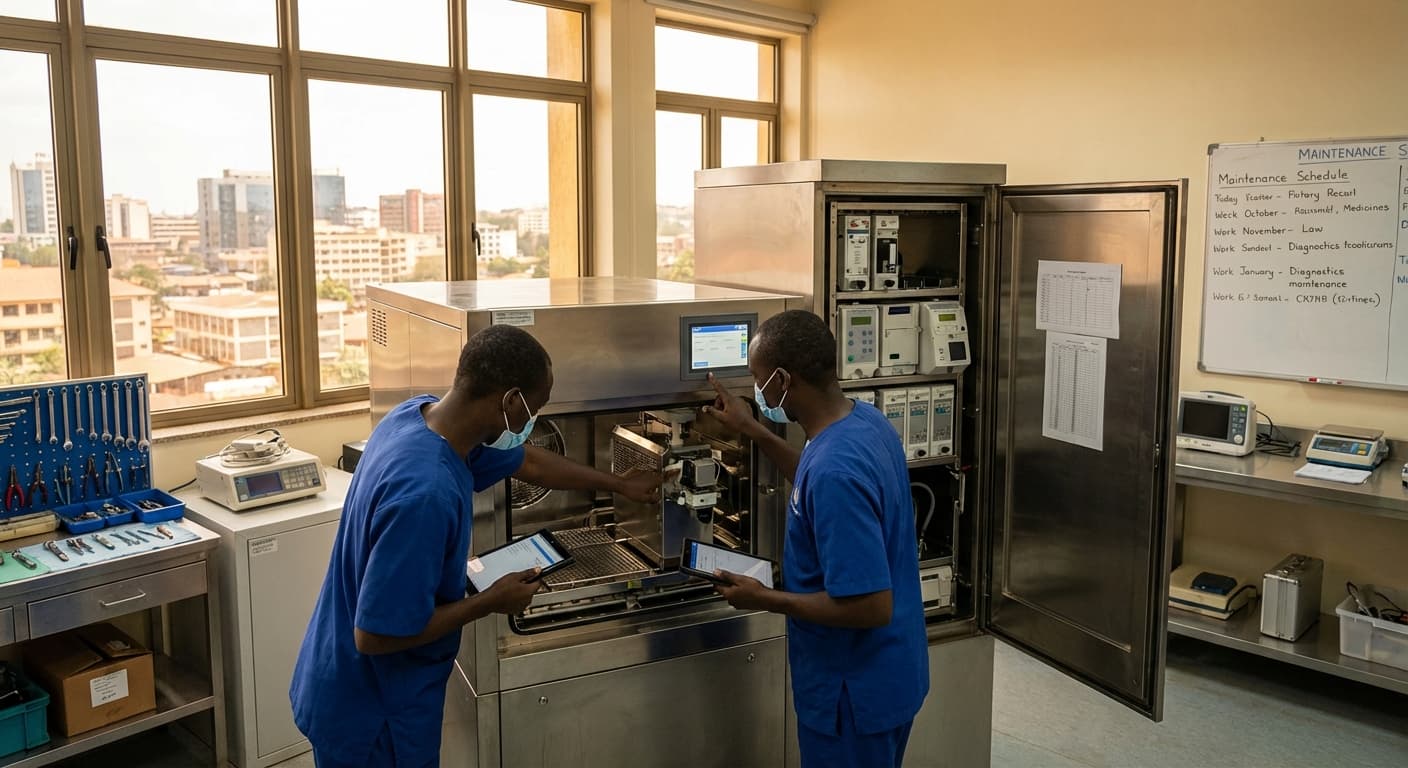
Total Cost of Ownership (TCO) & Lifecycle Budgeting Service in Guinea-Bissau
Engineering Excellence & Technical Support
Total Cost of Ownership (TCO) & Lifecycle Budgeting Service High-standard technical execution following OEM protocols and local regulatory frameworks.
Optimized Resource Allocation
Leveraging advanced modeling techniques, we provide granular TCO analysis for critical infrastructure and asset investments in Guinea-Bissau, ensuring optimal resource allocation and minimizing wasteful expenditure throughout the entire lifecycle.
Predictive Lifecycle Cost Forecasting
Our service employs data-driven forecasting to anticipate future operational, maintenance, and disposal costs for assets in Guinea-Bissau, enabling proactive risk mitigation and budget stabilization against unforeseen expenses.
Sustainable Investment Strategy
We integrate environmental and social considerations into TCO calculations, guiding Guinea-Bissau organizations towards investments that offer long-term economic viability and contribute to sustainable development goals, beyond initial purchase price.
What Is Total Cost Of Ownership (Tco) & Lifecycle Budgeting Service In Guinea-bissau?
Total Cost of Ownership (TCO) & Lifecycle Budgeting Service in Guinea-Bissau refers to a comprehensive financial management and strategic planning offering designed to assess, quantify, and manage all direct and indirect costs associated with an asset, project, or system throughout its entire lifespan. This service extends beyond the initial acquisition price to encompass acquisition, operation, maintenance, upgrade, disposal, and eventual retirement costs. Lifecycle Budgeting, a core component of TCO, involves projecting these costs over the defined operational life of the asset or system, enabling informed decision-making regarding investment, resource allocation, and risk mitigation. In the context of Guinea-Bissau, this service is particularly relevant given the unique economic landscape, infrastructure development needs, and potential challenges related to import duties, logistical complexities, and currency fluctuations.
| Who Needs This Service? | Typical Use Cases | ||||||
|---|---|---|---|---|---|---|---|
| Government Ministries & Agencies (e.g., Infrastructure, Energy, Health, Education): For long-term planning and procurement of public assets, such as infrastructure projects (roads, power plants), medical equipment, or educational facilities. Understanding TCO is crucial for fiscal responsibility and ensuring sustainability of public services. | Procurement and Investment Decisions: Evaluating the long-term financial viability of large capital expenditures, such as acquiring fleets of vehicles, purchasing industrial machinery, or implementing new IT systems. | Large-Scale Infrastructure Projects: Assessing the total cost of developing and maintaining critical infrastructure like ports, airports, telecommunications networks, and energy grids over their operational life. | Private Sector Enterprises (Manufacturing, Mining, Agriculture, Telecoms, Finance): For businesses investing in significant operational assets, technology upgrades, or expansion projects. This helps in budgeting, financial planning, and maximizing return on investment. | Real Estate Development & Management: Calculating the TCO of commercial buildings, residential complexes, and industrial properties, including construction, maintenance, utilities, and eventual renovation or demolition. | International Development Organizations & NGOs: When funding and managing development projects in Guinea-Bissau, TCO analysis ensures the long-term sustainability and cost-effectiveness of interventions, including the procurement of essential equipment and infrastructure. | Asset Management & Fleet Management: For organizations managing a significant number of assets (vehicles, machinery, IT equipment) to optimize operational costs, maintenance schedules, and replacement strategies. | Technology Implementation & Upgrades: Evaluating the full cost of acquiring, deploying, and maintaining new software, hardware, or network infrastructure over its entire lifecycle, including training, support, and eventual decommissioning. |
Key Components of TCO & Lifecycle Budgeting Service
- Cost Identification and Quantification: Detailing all cost categories from initial procurement through end-of-life.
- Scenario Analysis: Modeling various operational and economic scenarios to assess cost impacts.
- Risk Assessment: Identifying potential cost overruns and developing mitigation strategies.
- Budget Forecasting: Developing realistic long-term budgets based on projected costs.
- Performance Benchmarking: Comparing TCO against industry standards or alternative solutions.
- Life-Cycle Cost Modeling: Employing sophisticated financial models to project cumulative costs.
- Disposal and Decommissioning Planning: Accounting for environmental and financial implications of asset retirement.
- Recommendations for Optimization: Suggesting strategies for cost reduction and value enhancement.
Who Needs Total Cost Of Ownership (Tco) & Lifecycle Budgeting Service In Guinea-bissau?
In Guinea-Bissau, organizations grappling with significant capital investments, long-term operational expenditures, and the need for strategic financial planning will find immense value in Total Cost of Ownership (TCO) and Lifecycle Budgeting services. These services are crucial for making informed decisions regarding asset acquisition, maintenance, and eventual disposal, ultimately leading to greater financial efficiency and predictability. The focus is on understanding the complete financial picture beyond the initial purchase price, encompassing all costs incurred throughout an asset's lifespan.
| Customer Segment | Key Departments Benefiting | Primary Challenges Addressed | Expected Outcomes |
|---|---|---|---|
| Government Ministries & Agencies | Finance, Public Works, Energy, Health, Education, Procurement | Budget overruns, inefficient resource allocation, long-term asset maintenance backlogs, lack of transparency in public spending. | Improved public financial management, sustainable infrastructure development, enhanced service delivery, strategic capital planning. |
| State-Owned Enterprises (SOEs) | Finance, Operations, Engineering, Procurement | High operational costs, outdated infrastructure, difficulty in planning for asset replacement, limited return on investment. | Increased operational efficiency, optimized capital expenditure, improved service quality, enhanced financial performance. |
| Large Private Sector Companies | Finance, Procurement, Operations, IT, Asset Management | Underestimating true costs of ownership, unexpected maintenance expenses, suboptimal equipment utilization, reactive decision-making. | Informed purchasing decisions, reduced operational expenditure, predictable budgeting, improved asset lifecycle management, competitive advantage. |
| International Development Organizations & NGOs | PMOs, Procurement, Finance, Project Implementation | Ensuring long-term sustainability of projects, accountability for donor funds, cost-effectiveness of interventions, risk mitigation. | Effective project execution, enhanced program impact, transparent financial reporting, increased donor confidence. |
| Mining & Extractive Industries | Asset Management, Capital Projects, Finance, Operations | Managing significant capital investments, unpredictable operating and maintenance costs, optimizing asset utilization, environmental and decommissioning liabilities. | Minimized total cost of ownership for heavy equipment, optimized operational efficiency, enhanced safety, predictable financial forecasting for long-term projects. |
Target Customers & Departments Requiring TCO & Lifecycle Budgeting Services in Guinea-Bissau
- {"customer":"Government Ministries and Agencies","departments":["Ministry of Finance","Ministry of Public Works and Transport (for infrastructure projects like roads, ports, airports, and public buildings)","Ministry of Energy and Natural Resources (for power generation, distribution, and mining equipment)","Ministry of Health (for medical equipment, facilities, and technology)","Ministry of Education (for school infrastructure, IT equipment, and learning resources)","Ministry of Information and Communication Technologies","Procurement Departments"],"description":"Essential for managing large-scale public projects, ensuring efficient use of taxpayer money, and planning for long-term asset sustainability and replacement."}
- {"customer":"State-Owned Enterprises (SOEs)","departments":["Energy and Water Utilities","Telecommunications Companies","Transportation Authorities (e.g., port operators, airline companies)","National Oil and Gas Companies","Financial Departments","Operations Departments"],"description":"Critical for optimizing investments in infrastructure, equipment, and technology to maintain service delivery, enhance operational efficiency, and ensure profitability."}
- {"customer":"Large Private Sector Companies","departments":["Manufacturing and Industrial Firms","Telecommunications Providers","Financial Institutions (for IT infrastructure, branch networks)","Logistics and Transportation Companies","Agribusinesses","Finance/Accounting Departments","Procurement Departments","Operations Departments","IT Departments"],"description":"Beneficial for making strategic decisions on significant asset purchases (e.g., machinery, vehicles, IT systems), managing operational costs, and forecasting future expenditure."}
- {"customer":"International Development Organizations and NGOs","departments":["Project Management Offices (PMOs)","Procurement and Logistics","Finance Departments","Program Implementation Teams"],"description":"Crucial for managing donor-funded projects, ensuring the long-term viability and cost-effectiveness of procured assets and infrastructure, and demonstrating accountability for funds."}
- {"customer":"Mining and Extractive Industries","departments":["Asset Management","Capital Projects","Finance","Operations","Procurement"],"description":"Essential for managing the high costs associated with heavy machinery, exploration equipment, and infrastructure with long operational lifespans in a challenging environment."}
Total Cost Of Ownership (Tco) & Lifecycle Budgeting Service Process In Guinea-bissau
This document outlines the workflow for delivering Total Cost of Ownership (TCO) and Lifecycle Budgeting services in Guinea-Bissau, from initial client inquiry to the final execution of the service. This process is designed to ensure clarity, efficiency, and a comprehensive understanding of asset costs over their entire lifespan for clients operating within Guinea-Bissau. The services involve a deep dive into all direct and indirect costs associated with an asset or project, from acquisition and operation to maintenance, disposal, and potential residual value. Our approach is tailored to the specific economic and operational context of Guinea-Bissau, taking into account local regulations, market conditions, and availability of resources.
| Stage | Description | Key Activities | Deliverables | Timeframe (Indicative) |
|---|---|---|---|---|
| The client expresses interest in TCO & Lifecycle Budgeting services. | Initial contact via phone, email, or website form. Discuss client's high-level needs and objectives. Understand their industry and asset types relevant to Guinea-Bissau. | Initial understanding of client's requirements. Confirmation of service feasibility. | 1-3 business days |
| A detailed understanding of the client's specific requirements and the assets/projects to be analyzed is established. | Conduct in-depth discussions with key client stakeholders. Identify specific assets, projects, or portfolios for TCO analysis. Define the lifecycle period and key cost categories to be considered. Clarify objectives (e.g., investment decisions, cost optimization, risk assessment). | Detailed Scope of Work document. Defined TCO/Lifecycle period. Identified cost categories and assumptions. List of key client contacts. | 3-7 business days |
| A formal proposal outlining the service, methodology, timeline, and cost is presented to the client. | Develop a tailored proposal based on the Scope of Work. Include proposed methodology (considering Guinea-Bissau's context), phased approach, detailed timeline, team expertise, and pricing structure. Present proposal to the client. Negotiate terms and finalize the service agreement. | Formal Service Proposal. Signed Service Agreement. Advance payment/deposit if applicable. | 5-10 business days |
| Gathering all relevant financial, operational, and technical data for the defined scope. | Collaborate closely with client teams. Collect historical cost data (acquisition, O&M, energy, labor, etc.). Gather performance data, maintenance records, and expected lifespan information. Research local market prices for goods and services in Guinea-Bissau. Identify and quantify potential risks and their impact on costs. | Comprehensive dataset. Data validation reports. Initial risk assessment matrix. | 1-4 weeks (depending on scope complexity and data availability) |
| Building a robust model to forecast and analyze costs over the asset's/project's lifecycle. | Utilize specialized TCO/Lifecycle Budgeting software and methodologies. Incorporate inflation rates, discount rates, and local economic factors specific to Guinea-Bissau. Develop scenarios (e.g., best-case, worst-case, most likely). Calculate key TCO metrics (e.g., Net Present Value, Annualized Cost). | Developed TCO/Lifecycle Budget Model. Scenario analysis results. Key TCO metrics calculations. | 2-3 weeks |
| Communicating the findings and recommendations to the client in a clear and actionable manner. | Prepare a comprehensive TCO & Lifecycle Budget Report. Include executive summary, detailed methodology, data analysis, findings, cost breakdowns, risk analysis, and strategic recommendations. Present findings to client stakeholders, addressing questions and clarifying insights. Tailor presentation to the audience (technical vs. management). | Final TCO & Lifecycle Budget Report. Presentation slides. Summary of recommendations. | 1-2 weeks |
| Providing ongoing assistance to the client in implementing the recommendations. | Assist in developing action plans based on the TCO analysis. Provide guidance on procurement strategies, maintenance optimization, or technology upgrades. Support in vendor selection and contract negotiation within Guinea-Bissau's legal framework. | Action plans. Support documentation. Vendor selection recommendations. | Ongoing, as agreed |
| Periodic reviews to ensure the TCO model remains relevant and to incorporate any changes. | Schedule follow-up meetings to review actual costs against the model. Update the model with new data or changing market conditions in Guinea-Bissau. Provide recommendations for refining the TCO process for future applications. | Updated TCO model (if required). Performance review of initial recommendations. Lessons learned documentation. | As scheduled or upon client request |
Service Workflow: TCO & Lifecycle Budgeting in Guinea-Bissau
- Inquiry and Initial Consultation
- Needs Assessment and Scope Definition
- Proposal Development and Agreement
- Data Collection and Analysis
- TCO & Lifecycle Budget Model Development
- Reporting and Presentation
- Implementation Support (Optional)
- Review and Refinement
Total Cost Of Ownership (Tco) & Lifecycle Budgeting Service Cost In Guinea-bissau
The Total Cost of Ownership (TCO) and Lifecycle Budgeting services in Guinea-Bissau are crucial for businesses to accurately forecast and manage their expenses over the entire lifespan of an asset or project. These services go beyond initial purchase prices, encompassing all direct and indirect costs from acquisition to disposal. The pricing for these services is influenced by several factors specific to the Guinean context, including the complexity of the asset/project, the duration of the lifecycle being analyzed, the availability and reliability of data, and the expertise of the service provider. Given Guinea-Bissau's developing economy, specialized TCO and lifecycle budgeting expertise might be less readily available compared to more developed markets, potentially influencing hourly rates and project fees. Economic stability, inflation rates, and currency fluctuations (West African CFA franc - XOF) also play a significant role in cost estimations and budgeting.
| Service Component / Provider Type | Estimated Price Range (XOF) | Notes |
|---|---|---|
| TCO & Lifecycle Budgeting Consultant (Independent/Freelancer) | 15,000 - 50,000 per hour | Varies based on experience, specialization, and project complexity. May offer project-based fixed fees. |
| Specialized Consulting Firm (Local) | 20,000 - 70,000 per hour | Generally higher rates due to overhead, team involvement, and established methodologies. Project-based fees are common. |
| Specialized Consulting Firm (International - for complex projects) | 50,000 - 150,000+ per hour | Higher rates reflect international expertise, travel, and potentially higher operational costs. Often for large-scale infrastructure or industrial projects. |
| Data Collection & Analysis (Basic) | 300,000 - 1,500,000 (Project-based) | For simpler assets with readily available data. May be a subset of a larger TCO service. |
| Full TCO & Lifecycle Budgeting Study (Small to Medium Asset/Project) | 1,000,000 - 5,000,000 (Project-based) | Includes data gathering, analysis, reporting, and initial recommendations. Duration of lifecycle analyzed is a key driver. |
| Comprehensive TCO & Lifecycle Budgeting Study (Large Asset/Project) | 5,000,000 - 20,000,000+ (Project-based) | For complex, long-lifecycle assets (e.g., industrial plants, transportation fleets). Involves extensive data validation, risk analysis, and scenario modeling. |
| Ongoing Monitoring & Updates (Annual Fee) | 500,000 - 2,500,000 | For clients requiring continuous budget tracking and updates to TCO models. Percentage of initial project cost can also be a basis. |
Key Pricing Factors for TCO & Lifecycle Budgeting Services in Guinea-Bissau
- Complexity of the Asset/Project: Analyzing a simple piece of equipment versus a complex industrial facility or a multi-year infrastructure project will significantly impact service costs.
- Lifecycle Duration: The longer the lifecycle being budgeted (e.g., 5 years vs. 25 years), the more data collection, analysis, and forecasting are required.
- Data Availability and Quality: Access to accurate historical data, maintenance records, operational costs, and market intelligence is vital. If data is scarce or unreliable, more effort will be needed for estimation, increasing costs.
- Provider Expertise and Reputation: Highly experienced and reputable TCO/lifecycle budgeting consultants or firms will command higher fees due to their specialized knowledge and proven track record.
- Scope of Services: Whether the service includes only TCO analysis, full lifecycle budgeting, risk assessment, scenario planning, or ongoing monitoring will affect the overall price.
- Geographical Reach and Site Visits: If the analysis requires extensive on-site visits to various locations within Guinea-Bissau or even internationally, travel and accommodation expenses will be added.
- Reporting and Deliverables: The depth and format of the final reports and presentations can influence the pricing.
- Regulatory and Economic Environment: Understanding and incorporating local regulations, taxes, import duties, and economic forecasts specific to Guinea-Bissau adds complexity and cost.
- Currency Fluctuations (XOF): The stability of the West African CFA franc and its exchange rates with other major currencies can impact the cost of imported components and services, requiring careful consideration in long-term budgets.
Affordable Total Cost Of Ownership (Tco) & Lifecycle Budgeting Service Options
Our Affordable Total Cost of Ownership (TCO) & Lifecycle Budgeting service is designed to help your organization make informed financial decisions by understanding the true cost of assets and projects over their entire lifespan. We offer flexible value bundles and proven cost-saving strategies to maximize your return on investment. By meticulously analyzing acquisition costs, operational expenses, maintenance, and eventual disposal, we empower you to optimize your budget and achieve long-term financial efficiency.
| Value Bundle Tier | Core Services Included | Advanced Services | Ideal For | Estimated Price Range (Illustrative) |
|---|---|---|---|---|
| Bronze Essentials | Basic TCO calculation, Standard lifecycle cost modeling, Initial risk identification, Core budgeting recommendations | None | Small businesses, new projects with limited scope | $1,500 - $3,000 |
| Silver Strategic | Comprehensive TCO analysis, Detailed lifecycle cost modeling, Risk assessment & mitigation plan, Budget optimization strategies, Basic scenario planning | Performance benchmarking (limited) | Medium-sized businesses, established asset portfolios, moderate project complexity | $4,000 - $7,500 |
| Gold Enterprise | In-depth TCO analysis across multiple asset classes, Advanced lifecycle cost modeling with AI integration, Comprehensive risk mitigation & contingency planning, Tailored budget optimization strategies, Robust scenario planning & forecasting, Full performance benchmarking, Customized reporting & dashboards | Ongoing TCO monitoring & updates, Strategic financial advisory | Large enterprises, complex supply chains, mission-critical assets, strategic long-term planning | $8,000+ |
| Custom Solutions | Tailored to specific client needs and project scopes. Can include any combination of core and advanced services. | N/A | Organizations with unique requirements or specialized needs | Quoted per project |
Key Components of Our TCO & Lifecycle Budgeting Service
- Comprehensive TCO Analysis: We go beyond initial purchase prices to include all direct and indirect costs associated with an asset or project.
- Lifecycle Cost Modeling: Developing detailed models that forecast expenses across acquisition, operation, maintenance, and disposal phases.
- Risk Assessment & Mitigation: Identifying potential cost overruns and developing strategies to minimize financial risks.
- Budget Optimization Strategies: Recommending actionable steps to reduce costs throughout the lifecycle.
- Scenario Planning & Forecasting: Creating 'what-if' scenarios to understand the financial impact of different decisions.
- Performance Benchmarking: Comparing your TCO against industry standards and best practices.
- Customized Reporting & Dashboards: Providing clear, actionable insights tailored to your specific needs.
Verified Providers In Guinea-bissau
Navigating healthcare in any country can be challenging, and Guinea-Bissau is no exception. For individuals and organizations seeking reliable medical services, identifying verified providers is paramount. This is where Franance Health distinguishes itself, offering a trusted network of healthcare professionals and facilities that meet rigorous credentialing standards. Their commitment to quality assurance ensures that patients receive competent, ethical, and effective care. Choosing Franance Health means opting for peace of mind, knowing you are connected with providers who have undergone thorough vetting, possess the necessary qualifications, and adhere to best practices in healthcare delivery.
| Credentialing Aspect | Franance Health's Verification Process | Why it Matters for Patients |
|---|---|---|
| Professional Licenses & Certifications | Mandatory verification of all medical licenses, board certifications, and specialized training from recognized institutions. | Ensures providers have met the minimum educational and practical requirements for their practice. |
| Experience & Track Record | Review of clinical experience, past performance, and peer references to assess competence and reliability. | Guarantees that providers have a proven history of successful patient care. |
| Ethical Standards & Compliance | Adherence to a strict code of ethics and compliance with national and international healthcare regulations. | Protects patients from unethical practices and ensures a high standard of professional conduct. |
| Facility Standards (where applicable) | Inspection and verification of healthcare facilities for hygiene, equipment, and operational standards. | Confirms that the environment in which care is delivered is safe and conducive to healing. |
| Continuous Professional Development | Encouragement and verification of ongoing training and education to stay updated with medical advancements. | Ensures patients benefit from the latest medical knowledge and techniques. |
Key Advantages of Choosing Franance Health Verified Providers:
- Unwavering commitment to quality and patient safety.
- Access to a network of highly qualified and licensed medical professionals.
- Reduced risk of encountering substandard or fraudulent healthcare services.
- Streamlined access to a range of specialized medical treatments and consultations.
- Enhanced trust and confidence in the healthcare services received.
Scope Of Work For Total Cost Of Ownership (Tco) & Lifecycle Budgeting Service
This Scope of Work (SOW) outlines the services to be provided for the Total Cost of Ownership (TCO) and Lifecycle Budgeting Service. The objective is to establish a comprehensive understanding of the financial implications of an asset, system, or project throughout its entire lifespan, enabling informed decision-making and optimized resource allocation.
| Phase/Activity | Description | Technical Deliverables | Standard Specifications |
|---|---|---|---|
| Project Initiation & Planning | Define the scope of the TCO analysis, identify key assets/systems/projects, and establish project timelines and resources. | TCO/Lifecycle Budgeting Project Plan, Stakeholder Register, Initial Scope Definition Document. | Project plan to adhere to generally accepted project management methodologies (e.g., PMI). Scope definition to clearly delineate boundaries and exclusions. |
| Data Collection & Validation | Gather all relevant cost data across all lifecycle phases, including capital, operational, maintenance, and disposal costs. Validate data accuracy and completeness. | Raw Cost Data Repository, Data Validation Report, Identified Data Gaps & Assumptions Log. | Data collected from internal systems, vendor quotes, historical records, and expert interviews. Validation to include cross-referencing and sanity checks. |
| Cost Categorization & Allocation | Categorize collected costs into defined lifecycle cost elements (e.g., acquisition, installation, operation, maintenance, repair, upgrade, disposal). Allocate costs to specific assets/systems/projects. | Cost Breakdown Structure (CBS), Cost Allocation Matrix, Defined Cost Categories Document. | CBS to follow industry-standard frameworks (e.g., ISO 15686) or client-specific taxonomy. Allocation methods to be documented and justifiable. |
| TCO Modeling & Analysis | Develop TCO models using appropriate methodologies (e.g., Net Present Value - NPV, Internal Rate of Return - IRR, Payback Period). Analyze cost drivers and identify trends. | TCO Model(s), Sensitivity Analysis Report, Cost Driver Identification Report. | Models to incorporate discount rates relevant to the organization. Sensitivity analysis to explore impact of key variables. |
| Lifecycle Budget Development | Create a detailed lifecycle budget forecast for the defined period, incorporating all identified costs and TCO insights. | Lifecycle Budget Forecast (e.g., Annual breakdown, Capital Expenditure Plan - CAPEX, Operational Expenditure Plan - OPEX). | Budget to be presented in a clear, auditable format. Assumptions underlying the budget to be explicitly stated. |
| Risk Assessment & Mitigation Planning | Identify potential financial risks associated with the lifecycle of assets/systems/projects and develop mitigation strategies. | Risk Register (Financial Focus), Risk Mitigation Action Plan. | Risks to be assessed based on probability and impact. Mitigation plans to be actionable and assigned ownership. |
| Reporting & Recommendations | Prepare comprehensive reports summarizing TCO analysis, lifecycle budget, risk assessment, and provide actionable recommendations for cost optimization and strategic decision-making. | Final TCO & Lifecycle Budgeting Report, Executive Summary, Presentation Slides, Actionable Recommendations Log. | Reports to be tailored to the target audience (e.g., executive, operational). Recommendations to be clear, specific, and measurable. |
| Knowledge Transfer & Training (Optional) | Provide training to client personnel on TCO principles, the developed models, and ongoing lifecycle budgeting practices. | Training Materials, Conducted Training Sessions. | Training content to be practical and relevant to the client's operational environment. |
Service Objectives
- To quantify all direct and indirect costs associated with an asset/system/project from acquisition through disposal.
- To develop a robust lifecycle budget that accounts for all anticipated expenditures.
- To identify cost-saving opportunities and areas for efficiency improvements.
- To provide data-driven insights for strategic planning and investment decisions.
- To establish a baseline for future cost tracking and performance evaluation.
- To support risk mitigation by identifying potential financial exposures throughout the lifecycle.
Service Level Agreement For Total Cost Of Ownership (Tco) & Lifecycle Budgeting Service
This Service Level Agreement (SLA) outlines the performance and availability commitments for the Total Cost of Ownership (TCO) & Lifecycle Budgeting Service. This service aims to provide accurate, comprehensive, and timely data and analysis to support strategic financial planning and decision-making.
| Service Component | Response Time Guarantee | Uptime Guarantee |
|---|---|---|
| TCO Calculation Generation (Standard Complexity) | Within 4 business hours of complete data submission | 99.5% during standard business hours (9 AM - 5 PM, local time) |
| Lifecycle Budgeting Forecast Generation (Standard Complexity) | Within 8 business hours of complete data submission | 99.5% during standard business hours (9 AM - 5 PM, local time) |
| Platform Availability (Web Portal/Access) | N/A (continuous availability expected) | 99.8% annualized |
| Support Inquiries (Email/Ticketing System) | Initial response within 2 business hours | N/A |
| Support Inquiries (Urgent - Critical System Impact) | Initial response within 1 business hour | N/A |
| Data Integrity Checks & Audits | Scheduled, as per operational procedures | N/A |
Service Objectives
- To deliver accurate TCO calculations based on provided inputs and established methodologies.
- To provide comprehensive lifecycle budgeting forecasts with clear assumptions and dependencies.
- To ensure the availability of the TCO & Lifecycle Budgeting Service platform and associated tools.
- To respond promptly to user inquiries and support requests related to the service.
- To maintain the integrity and security of all data processed and stored by the service.
Frequently Asked Questions

Ready when you are
Let's scope your Total Cost of Ownership (TCO) & Lifecycle Budgeting Service in Guinea-Bissau project in Guinea-Bissau.

Scaling healthcare logistics and technical systems across the entire continent.